Paine’s Furniture Factory // 1871

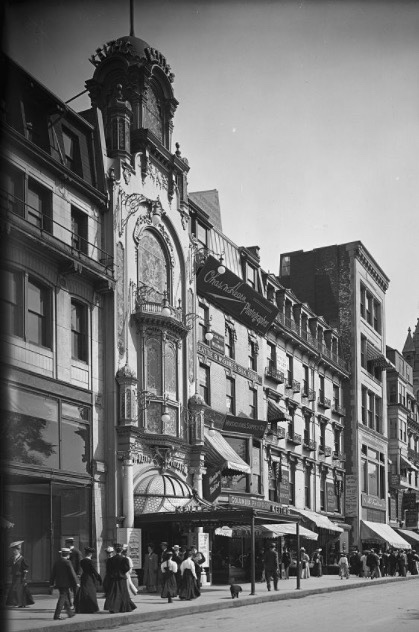
Founded in 1835, Paine’s Furniture Company was at one time the largest furniture manufacturer and dealer in New England and had a nationwide business. The company was founded by Leonard Baker Shearer, who was joined in business in 1845 by John S. Paine, his son-in-law. Upon the death of Shearer in 1864, the name of the firm was changed to Paine’s Furniture Company. The company occupied a couple wooden and metal buildings on this site in the Bulfinch Triangle until a fire destroyed the complex. The growing firm took this opportunity to hire one of the most successful architect Gridley J. F. Bryant who worked with a colleague, Louis P. Rogers, to design the fire-proof building. The Second Empire style building with mansard roof was split into three sections with the rear two rented out to other companies, while Paine’s occupied the south-facing (main) facade. When Paine’s moved to their new building in the Back Bay, they sold this building and later alterations severely diminished the original design of the building. The current hodgepodge of alterations creates a mess of what was once an undeniable architectural landmark.

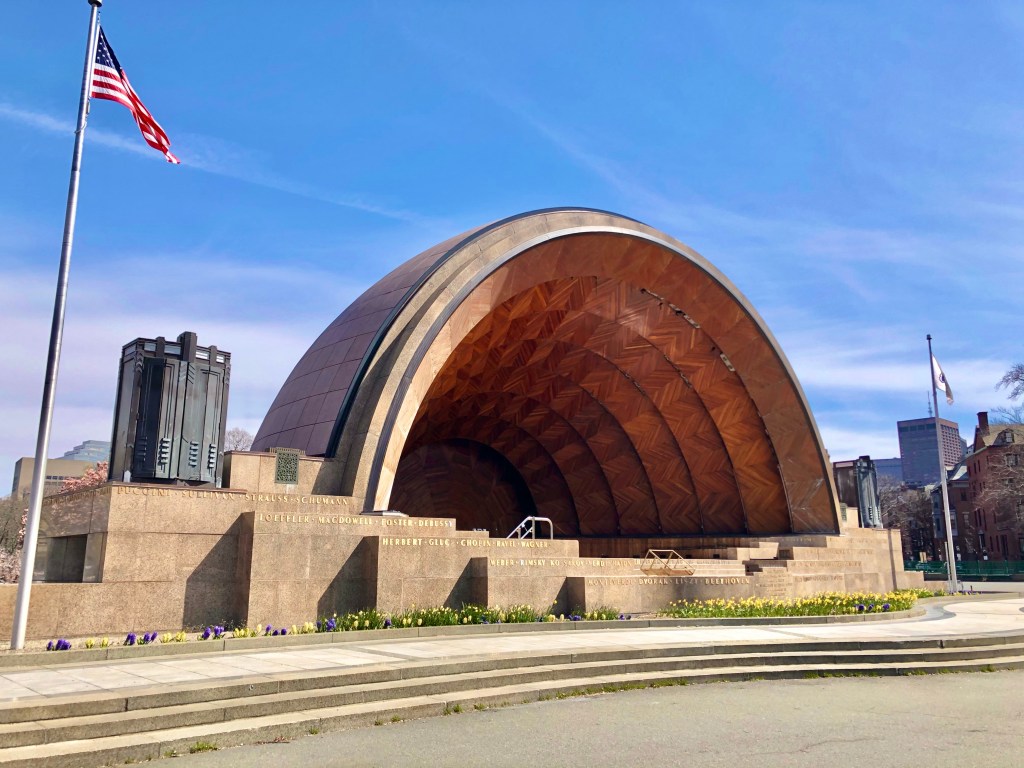
Hatch Memorial Shell // 1940

Located at the Charles River Esplanade in Boston, the Hatch Memorial Shell has long been an iconic landmark and meeting place for Bostonians and tourists alike. Built in 1940, this outdoor amphitheater structure replaced an earlier 1920s shell, envisioned by Arthur Fiedler, the first permanent conductor of the Boston Symphony Orchestra. Construction began on the first shell in 1928 and Arthur Fiedler conducted the first Boston Pops concert there on July 4, 1929, followed by a month of concerts during that first summer, a tradition that has continued to this day. A second temporary shell was constructed of metal in 1934, which was unsatisfactory for the famous orchestra. In 1940, the construction of the new music shell took place, donated by benefactor Maria Hatch, to build a memorial for her late brother, Edward, who it is named after to this day. The permanent shell was designed by Richard J. Shaw, a Boston architect known for designing churches. The Art Deco design, with intricate woodwork adorning the interior and a terrazzo tile roof, was dedicated on July 2, 1940, just in time for Independence Day celebrations.

Dutch House // 1893

Located on the appropriately named Netherlands Road in Brookline, MA, this house was actually designed as a temporary structure as part of the 1893 World’s Fair, also known as the World’s Columbian Exposition or the White City, depicted in the great book, Devil in the White City. The Dutch House was constructed in 1893 by the Van Houten Cocoa Company of the Netherlands, as a display pavilion and cocoa house. It was located at one end of the Manufactures and Liberal Arts Building (the largest building ever constructed at the time). The Dutch House as we know of it today, was greatly inspired in design by the Franeker City Hall (c. 1591) in the Netherlands. While attending the World’s Fair, Captain Charles Brooks Appleton of Brookline be.came so captivated with the structure that after the Fair, he purchased the building and had it dismantled and transported to Brookline. By the early 2000s, much of the amazing carvings on the building had fallen off, until a new homeowner had them all restored from drawings and images of the building, to the iconic landmark we see today.

Hooper Mansion // 1860

Located on Commonwealth Avenue in Boston’s Back Bay neighborhood, the Hooper Mansion represents one of the most elegant examples of Second Empire architecture style in the city. This home was actually constructed as a double-house for Samuel Hooper and his wife Anne, with a separate, semi-detached home for his son and his own family. The double-mansion was designed by esteemed architect Arthur Gilman, who used pressed brick contrasted with the tan sandstone on the home. Additionally, he designed the dentillated cornice, lavish door and window surrounds, and octagonal bays, all capped with a mansard roof with many windows laid inset to the roof, a stunning feature. The house was designed symmetrically, with entrances on each side elevation. In the early 1890s, later owners extended the eastern half of the façade so that it would be on the same plane as the western half, with an entrance at street level (seen in the right of this photo). Today, the double house is broken up into four large condominium units. When the conversion was approved, the developer wrote into the deed that the open space at the corner, used as a garden, would remain open space in perpetuity.

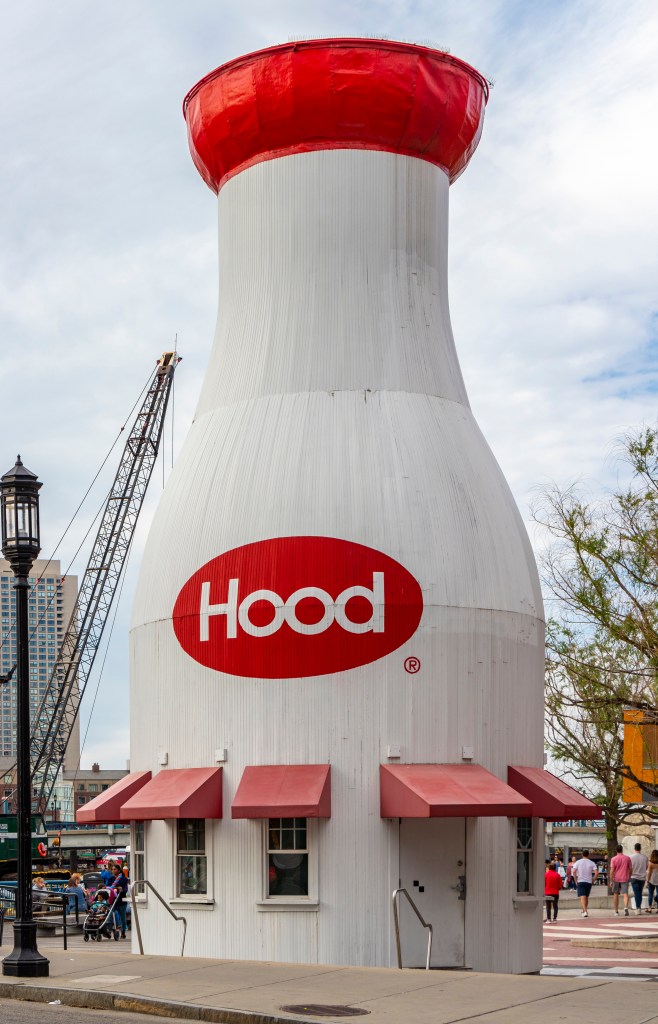
Hood Milk Bottle // 1934

Photo courtesy of Brandon Bartozek

Boston’s iconic Hood Milk Bottle has been an iconic fixture in the city’s built environment for decades, but do you know about the history behind it? The architectural oddity was born in 1933-4 in Taunton, Massachusetts, the brainchild of Arthur Gagner who created it as roadside attraction in which he could sell his homemade ice cream. The Milk Bottle beckoned to local families with its impressive size (the structure is 40 feet tall, 18 feet wide, weighs 15,000 pounds, and would hold 58,620 gallons of milk, if it were a real milk bottle)! As car ownership became commonplace, giant donuts, coffee pots, hot dogs, and other surreal shapes rose up on roadsides across the country, enticing motorists to pull over from the busy, new freeways. Gagner peddled sweet treats from his whimsical wooden stand for a decade before selling the building to the Sankey family, who also used it to sell ice cream. But by 1967, the bottle had been abandoned. In 1974, photographer Walker Evans took a Polaroid of the forlorn building, which brought Hood Milk, native to Charlestown, to the table. With a quote of $25,000 to repair it, Hood agreed to cover that cost if the Bottle could be renamed The Hood Milk Bottle, and the structure was to be located on City Hall Plaza, until the architect of the plaza called the Mayor’s Office stating their displeasure with that idea. They then contacted the newly relocated Boston Children’s Museum, who agreed to locate the bottle on their property. The Hood Milk Bottle was delivered to the Museum in 1977 from Quincy (where the repairs were made) on a barge with two fire boats steaming alongside, on a voyage the Hood Company dubbed the “Great Bottle Sail”, where it has remained to this day. It recently underwent a $350,000 renovation, restoring it to its former glory. So no crying over spilled milk!

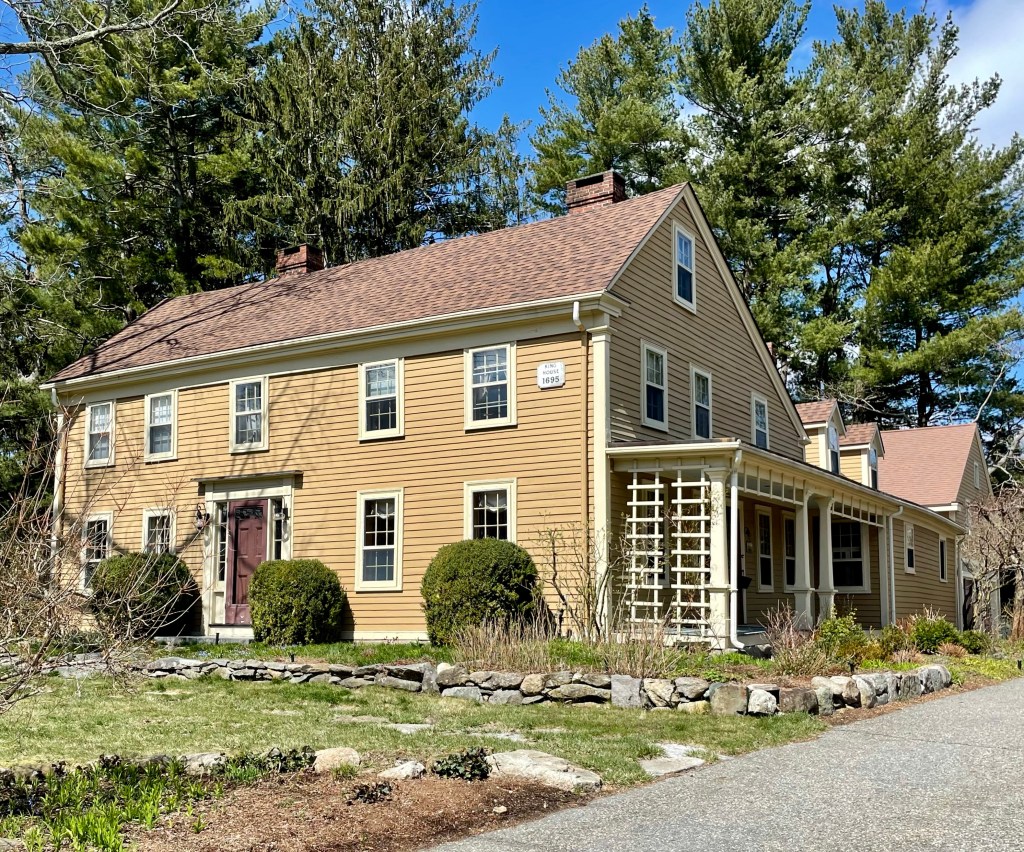
Dike-King House // c.1740

Located in the Oak Hill Village of Newton, the Dike-King House remains as one of a few pre-Revolution houses, but the history is a little murky from what I found. Oak Hill was the most remote village of Newton historically and has maintained much of its open space to this day, as it did not see the suburban development following the streetcar in other villages in town connecting to nearby Boston. This house was apparently built by Jonathan Dike (1673-1751), a cooper, who lived here with his second wife Experience French (yes that was her name). The home he built was likely a much smaller dwelling and was added onto as the family grew. Jonathan died in 1751 and the home went to his eldest living son and later sold to Noah King in 1796. The house plaque on the house gives a date of 1795 as King purchased a house on the lot, but it was likely much older than one year old. Noah King was a housewright, deacon, and son of Dr. John King a prominent civic leader in the town. With his expertise as a housewright, he likely rebuilt much of the house into what we see today. Starting in 1796 through 1923 the property was run as a farm by members of the King family, but land was sold off around the Great Depression for much needed funds. Due to the asymmetry of the house, it is likely that it started as a half-house with just three bays with the door at the left-most bay, with the saltbox roof added around that time.

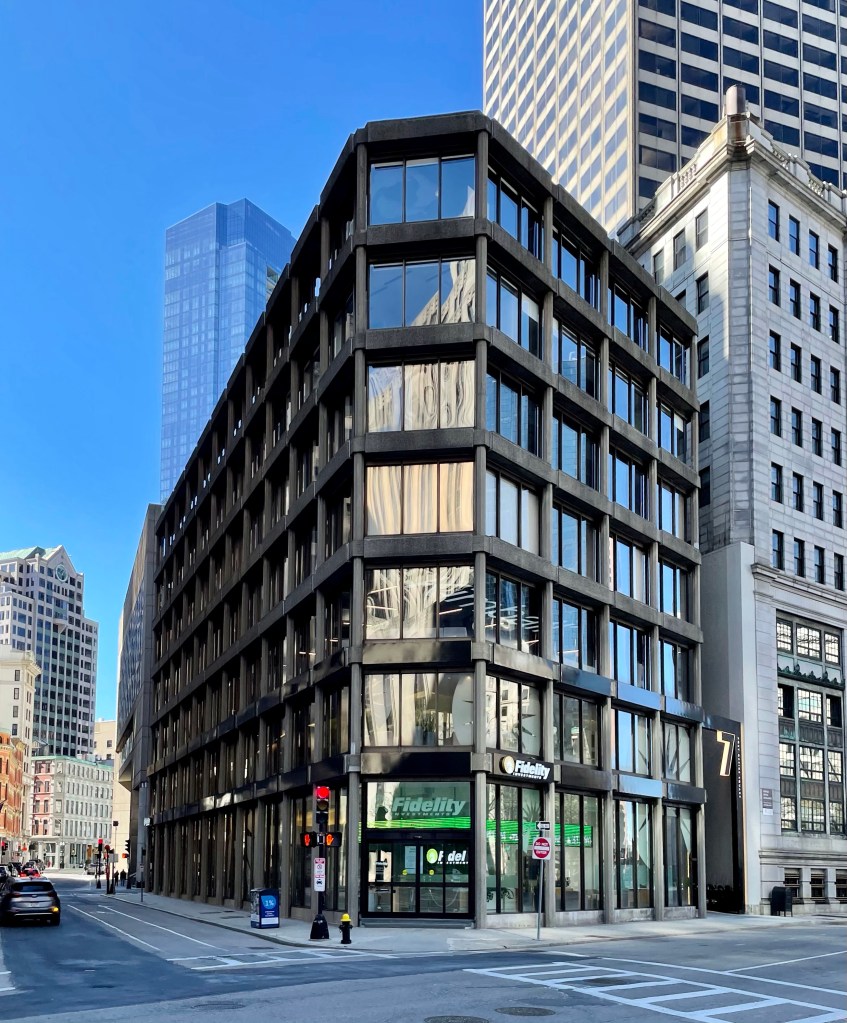
Massachusetts General Life Building // 1965

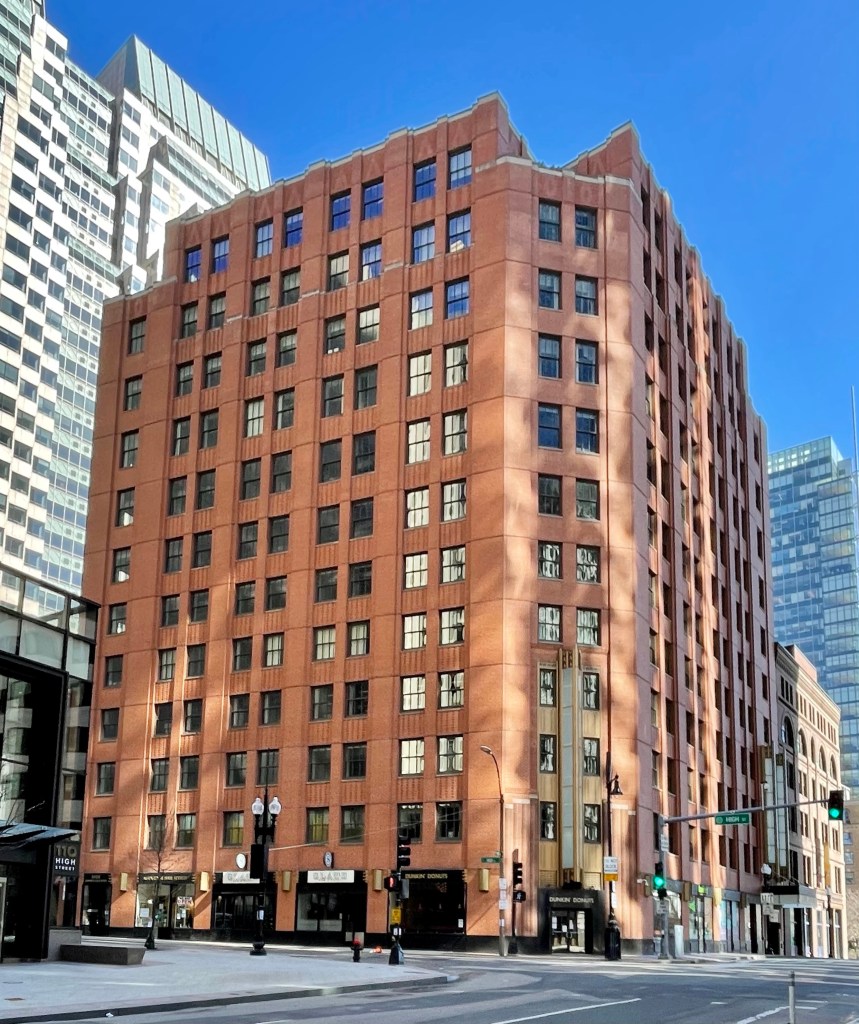
One of the lesser-known and written about examples of Brutalism in Boston is this refined, elegant take on the style, found in Downtown Boston. While many of you may dislike or even despise Brutalism, this building is a lighter version of the strong mass that we all know. The Massachusetts General Life Building was designed by Boston architect Frederick A. Stahl, who was trained in architecture locally at Harvard’s Graduate School of Design and MIT. Frederick Stahl was a perfect architect for Boston, he often worked on preservation projects including the rehabilitation of the Old South Meeting House, but showcased how 1960s architecture could compliment historic forms in a big way. For this building, he re-envisioned the historic granite commercial blocks found scattered around Boston, but showcased the ability of concrete to do more for much less massing. One of the key features of the design is that the two entrances are somewhat hidden, and are recessed in 14′ wide slots where the building is connected to the adjacent historic building. This was the aim to make this structure recess and not try and command the prominent corner. In the Mass. General Life Building, tenants also included the Loeb, Rhoades & Company, a brokerage firm based out of New York, that had offices in buildings in major financial centers all over the country. They later merged with Hornblower & Weeks, a Boston based firm, who had their own building in Boston.

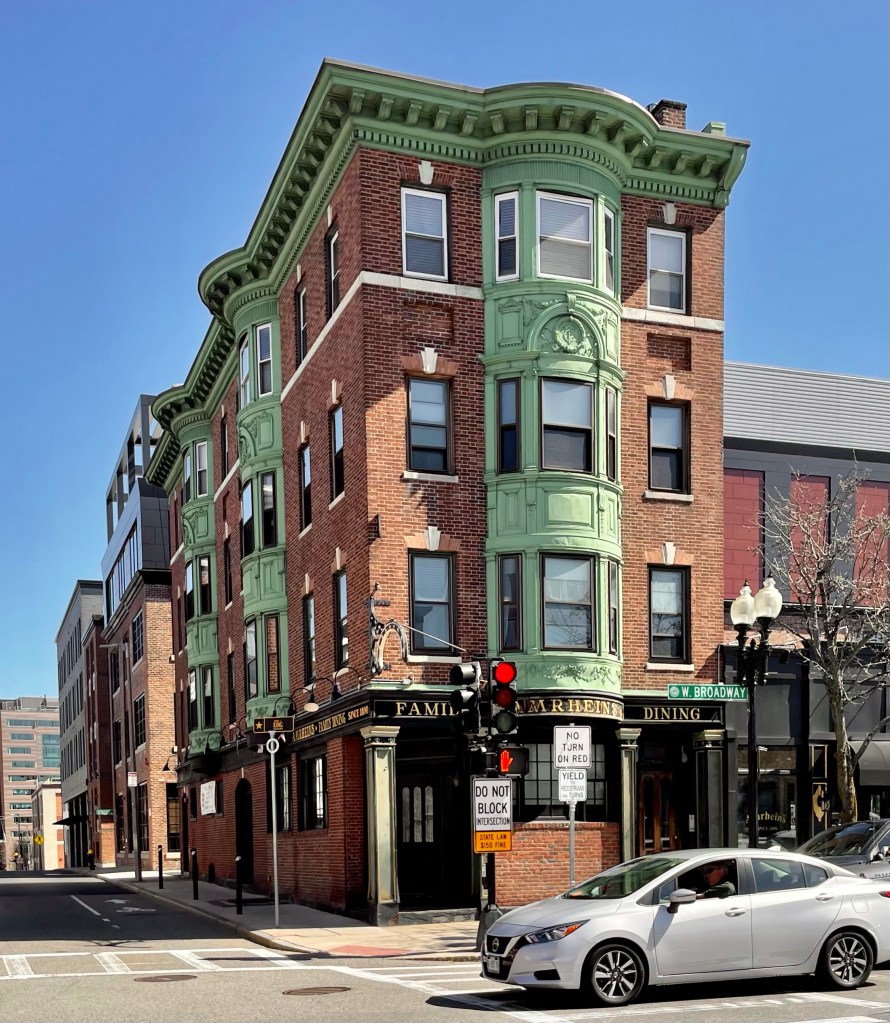
Thomas Casey Building // 1896

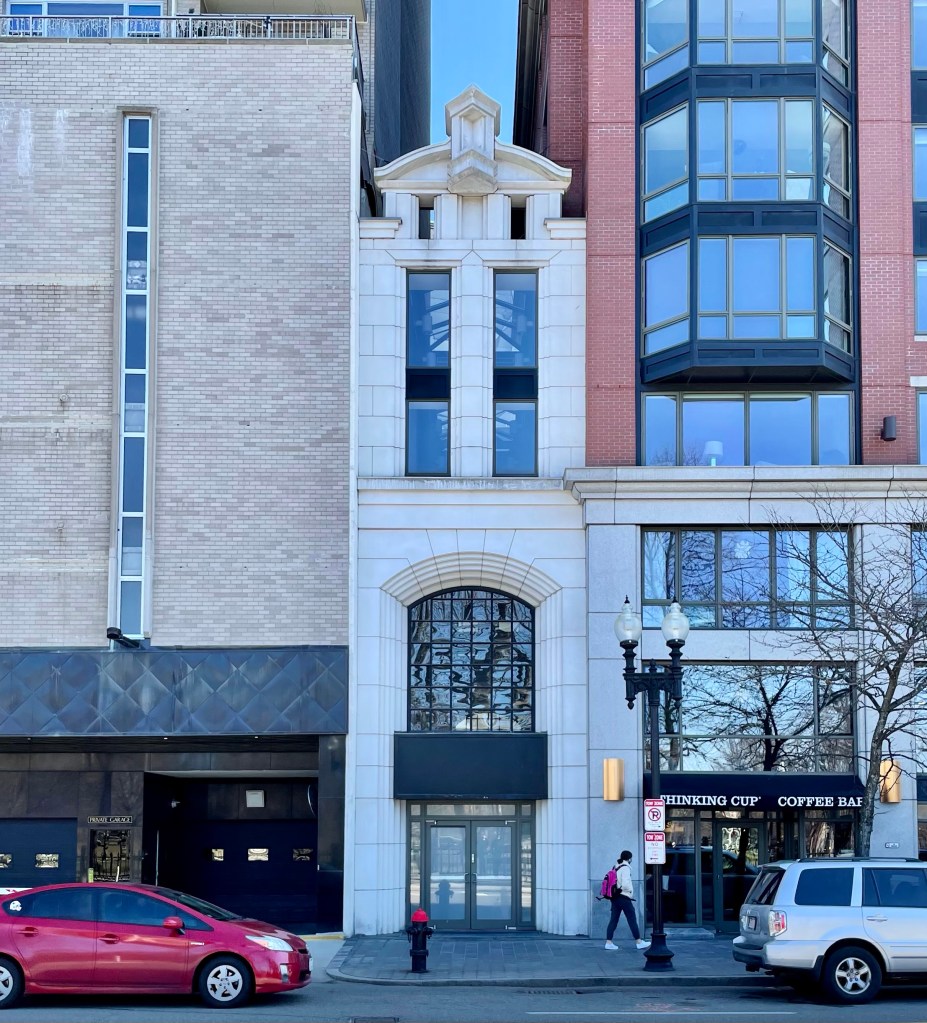
Located on West Broadway in a section of South Boston that has almost been stripped of all of its architectural character and history, sits this historic commercial building, which soon may face the wrecking ball. This building was constructed in 1896 for Thomas Casey, an Irish liquor dealer. He hired Irish-born architect Charles Donagh Maginnis who emigrated to Boston at age 18 and got his first job apprenticing for architect Edmund M. Wheelwright, the city architect of Boston, as a draftsman. The result was a four-story Colonial Revival commercial building, significant for the series of rounded copper bays and cornice. Of special note, there are wreath inlays designed into the bays between the third and fourth floors with the letters “T” and “C” within, representing Thomas Casey. Years after the building was constructed, it was purchased by Emma A. Amrhein, and has – until recently – been home to Amrhein’s Restaurant and Bar. The local landmark had two (unconfirmed) claims to fame; the oldest hand carved bar in America and the first draft beer pump in Boston. The large property was sold, and the developers proposed a large housing development on the site, retaining the Casey-Amrhein building. However, some have recently pushed for the demolition of this building to make the project slightly larger than would be with the historic building.

Beacon Hill Reservoir // 1849-1883

Did you know there was once a massive granite reservoir in Beacon Hill?

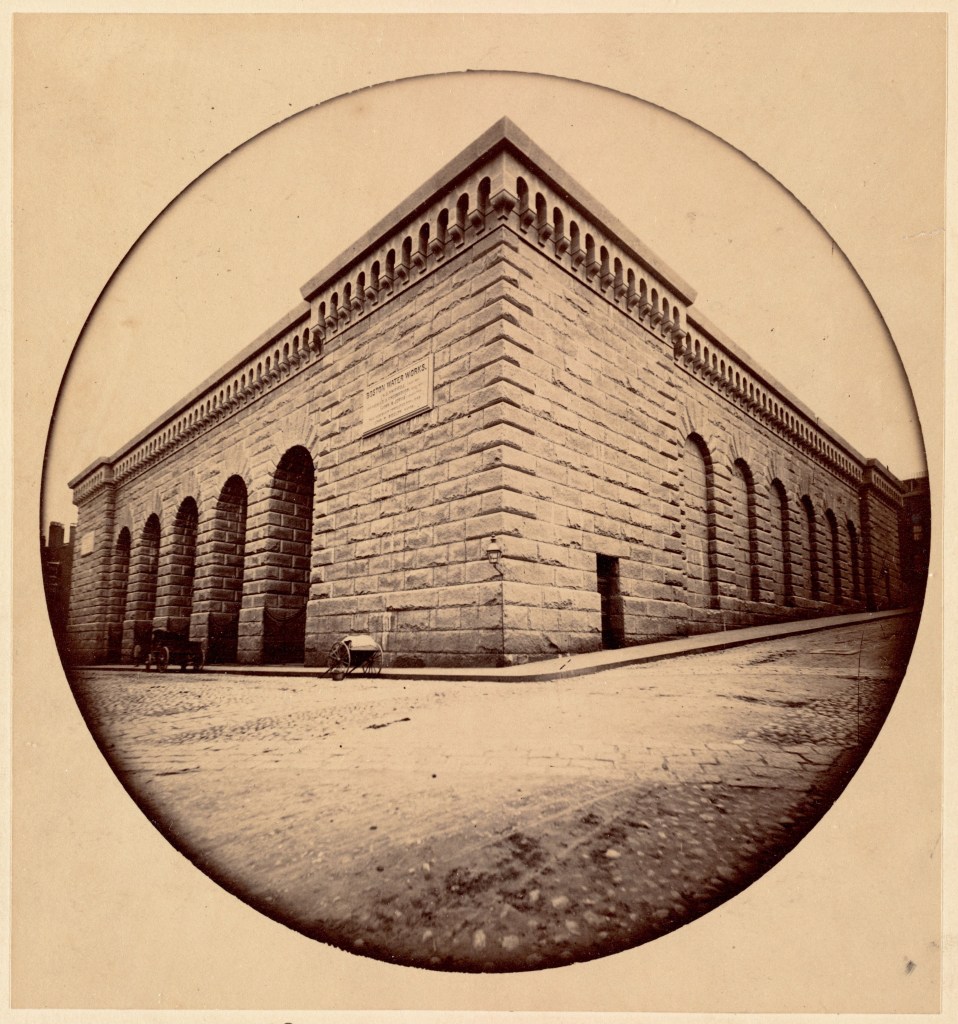
Long before the Wachusett and Quabbin Reservoirs that now supply water to Boston, the city’s original municipal water supply was Lake Cochituate, a reservoir in Metro-west. Due to Beacon Hill’s high elevation, the city selected the site behind the recently completed Massachusetts State House, to store and distribute water to the city. The site was too steep, so it had to be graded. Therefore, the top of Beacon Hill, where the beacon had long been standing, needed to be lowered to accommodate the reservoir. The soil was dug by hand and hauled by cart down to fill the old Mill Dam in the Bulfinch Triangle area. The reservoir, which opened in 1849, was unique in its approach. The design of the structure needed to minimize its footprint and reflect well on its surroundings in the prestigious location. In lieu of earthen bermed walls, as was the convention in most period distribution reservoirs, the design chose to create a watertight tank within a masonry structure. This made the structure the first elevated storage tank constructed in New England. Sheet lead was used to make the reservoir watertight (which likely led to a lot of health issues (hindsight is 20/20). By 1870, the poor water pressure made the Boston Waterworks build the Roxbury Standpipe, which relegated the Beacon Hill Reservoir to being an emergency water source for use only in case of fire or accident to the pumping-mains. In 1883, Boston Water Works sold the structure to the Commonwealth, who demolished it for the addition to the State House.

Boston Consolidated Gas Company Building // 1927

The Boston Gas Light Company was incorporated in 1823 and for thirty years was the sole company producing coal gas in the City of Boston. In the second half of the 19th century, several additional gas light companies were formed in and around Boston to make loads of money with the booming industrial growth seen there. They continued until it was determined that with the proximity of competing pipelines and the overlap of service areas it would be more efficient to consolidate into a single company. The Boston Consolidated Gas Company was chartered in 1903 to to combine numerous smaller corporations operating in the City of Boston under one conglomerate. The organization had a small building in Downtown, which was outgrown decades later. The company hired the local firm of Parker, Thomas & Rice, to design the new mid-rise office building on the outskirts of the fashionable Back Bay neighborhood. The base of the Classical Revival building follows the base, shaft and capital form. The base is traditional with three stories of rustication, ornamental capitals, carved detail at the arches and the elegant bronze window frames. The central stories are clad in dressed limestone, streamlined with punched openings, emphasizing verticality. Stories 12 and 13 are framed by colossal engaged columns with arched windows and bas reliefs. The ground floor today is home to a recently opened restaurant, Nusr-Et Boston, which was created by the famous chef, Salt Bae.