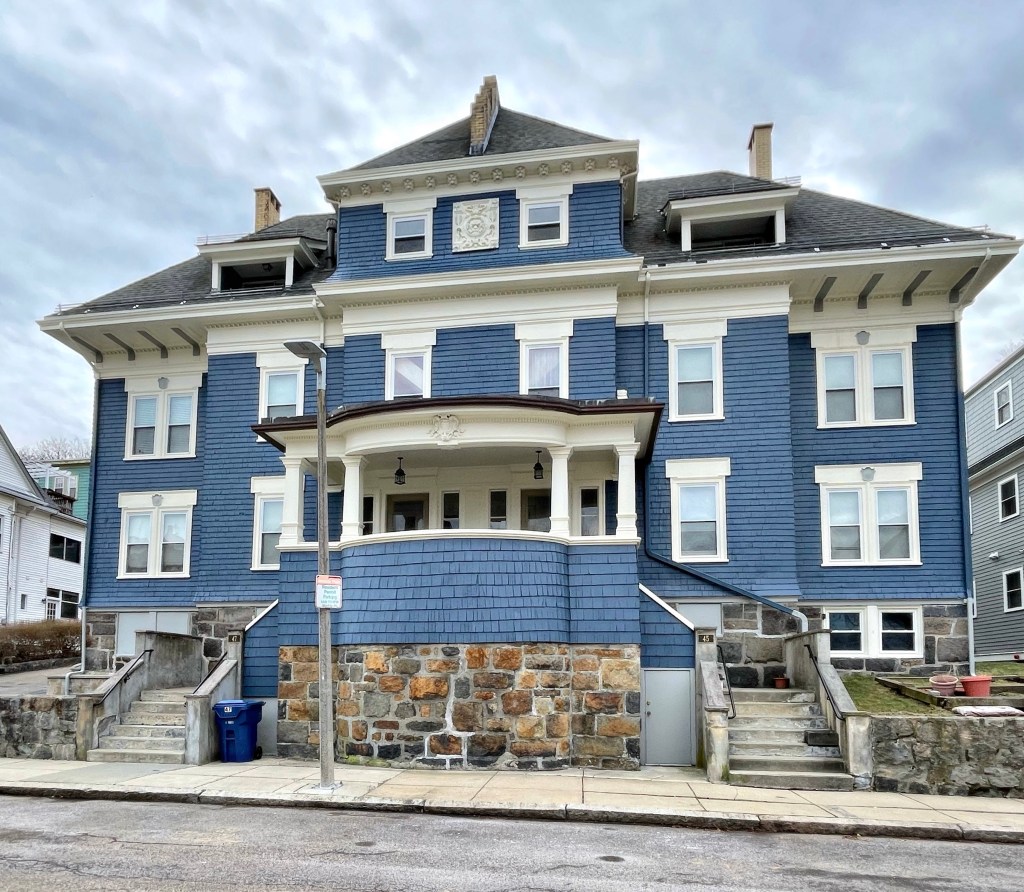
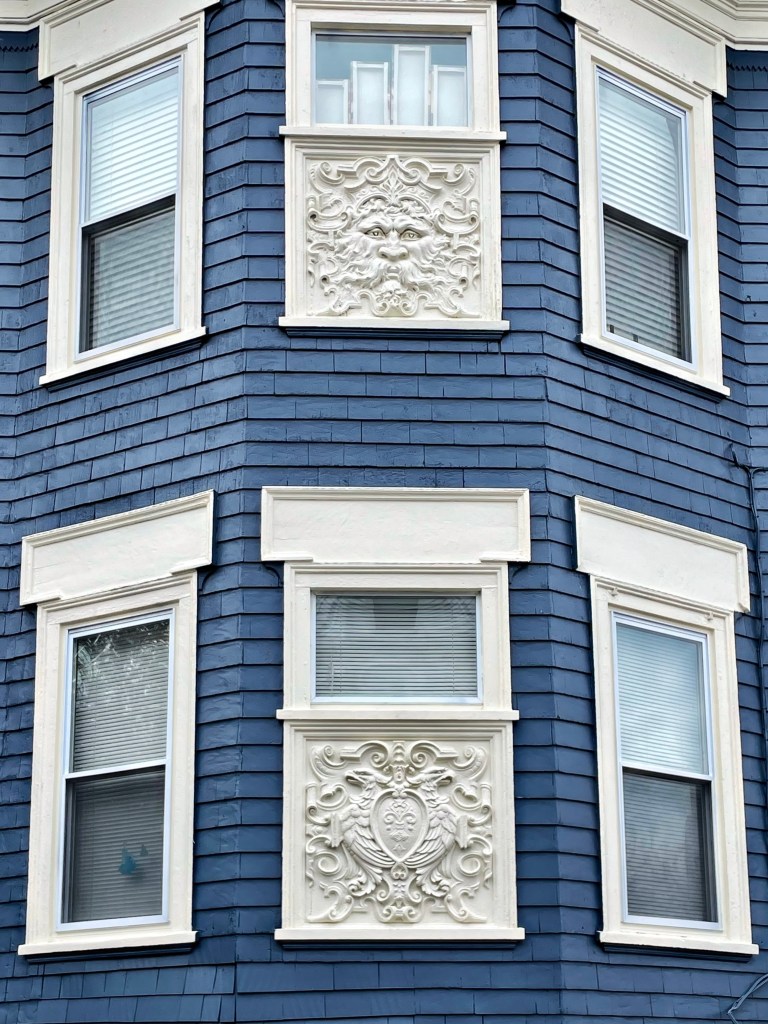
In 1896, architectural sculptor Charles Emmel purchased land in the rapidly developing Forest Hills section of Jamaica Plain, Boston. He hired local architect George Zimmer, to design a massive double-house which would serve as an income-producing investment, and could also be a sort of advertisement for his sculpture work. The result is this massive Colonial Revival style property, perched atop a puddingstone foundation. Architectural ornament has been lovingly preserved, a testament to the owners of the building today and the amazing work of the original owner, Mr. Emmel. I found myself staring at the building for a while when walking by, looking at all the hidden detail and architectural ornament which adds so much to the building.
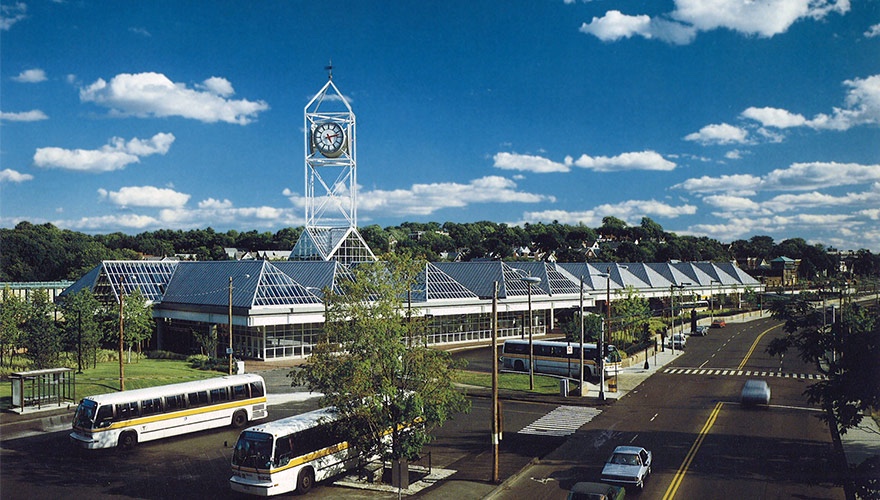
While the demolition of the 1909 Forest Hills Station in Jamaica Plain (last post) was a huge architectural and historic loss for the city of Boston, the present building is a landmark in its own right. The present building was built in 1987 as a pivotal project in the MBTA’s Southwest Corridor Improvement Program, which was largely unfinished (thanks to neighborhood pushback and protests against the proposed highway to cut through the neighborhoods). The existing station, designed by local firm Cambridge Seven, is situated between two important points in Boston’s “Emerald Necklace” park system, and thus was given the appearance of a greenhouse by the architects. The distinctive clock tower, rising 120 feet above the station, signals the station location and is a nod to the days when stations once had prominent clocks to help passengers keep tabs on the time, before the days of cellphones!
This historic rowhouse in the South End of Boston was home to the Women’s Service Club, a social and volunteer organization made up of Black women to uplift Black Bostonians of varied backgrounds, including soldiers, students, migrants and mothers. “464,” as some locals admiringly called it, was formed in the early 20th century as Boston. The city, once known as “Freedom’s Birthplace” and the “Athens of America” as a hub of abolitionist activity leading up to the Civil War, saw extreme segregation in housing and education for its Black residents by the early 20th century. From this, local activist Mary Evans Wilson organized a knitting group in 1917 to support soldiers of color fighting in World War I. An estimated 350 women joined the group, donating their talents to produce scarves and gloves for servicemen. Humanitarianism guided the activity of the Women’s Service Club’s over the next half century. This building was purchased in 1919 and operated as part-meeting space and part-settlement house. “A Home Away from Home,” as some described it, the building offered affordable shelter to female workers, migrants, and college students barred from on-campus housing due to racist policies. One of the club’s most prominent members was Melnea Cass (1896–1978), who served as its President for more than fifteen years. Cass initiated the Homemakers Training Program which certified domestic workers so they would be assured a liveable minimum wage, social security and other benefits. The club continues to do great work, but could use funding to restore the landmark building!
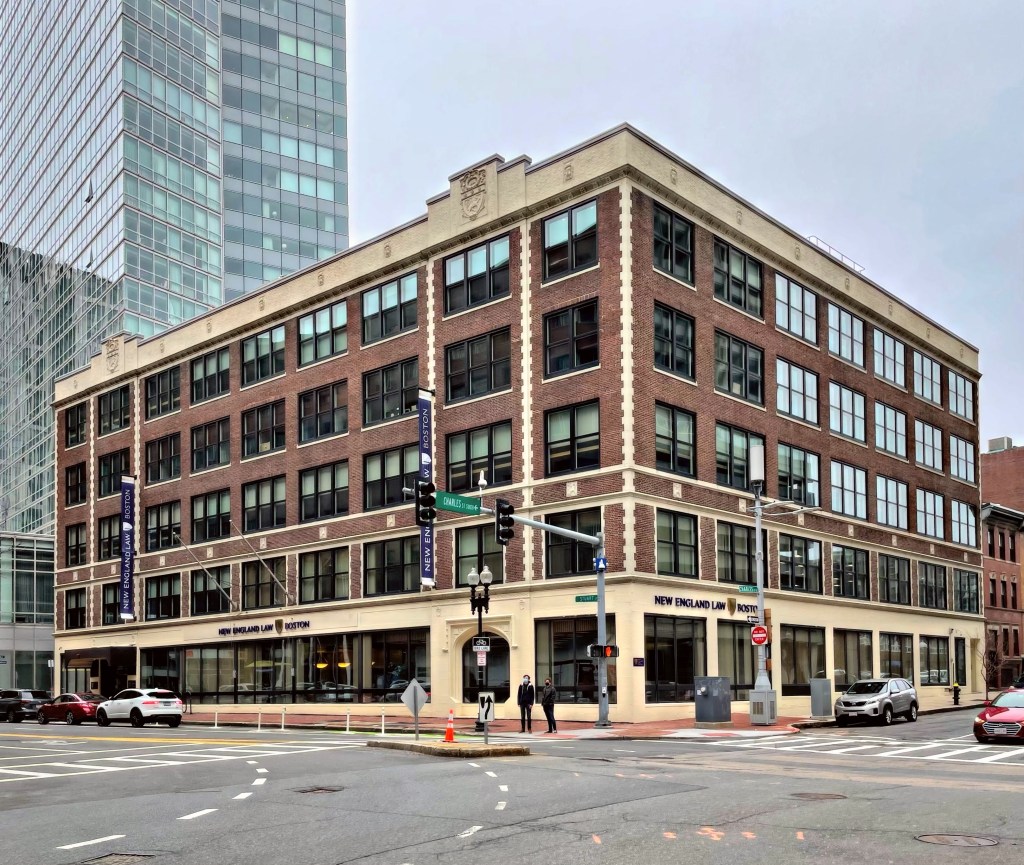
In 1921, Stuart Street was widened and extended between Boston’s Back Bay and Bay Village neighborhoods, which necessitated razing of all buildings along the route. From this, new lots were platted along the street where once thriving businesses were. Some relocated and others rebuilt. In 1927, the Park Square Corporation purchased seven contiguous lots at the corner of Stuart and Charles Streets and began construction of a large office building with storefronts on the ground floor. The Burdett Building opened in 1928. The building was built for Burdett College, which was founded in 1879 and focused on business and shorthand courses for students as a junior college. Architect Thomas H. James wanted the building to be like the new buildings at Princeton and Yale. The design featured Gothic inspired entrances and stone carvings of books and lions. Burdett College occupied the building until the 1950s and it was subsequently sold. By 1980, the building was acquired by the New England School of Law, who occupy it to this day as a place of learning.
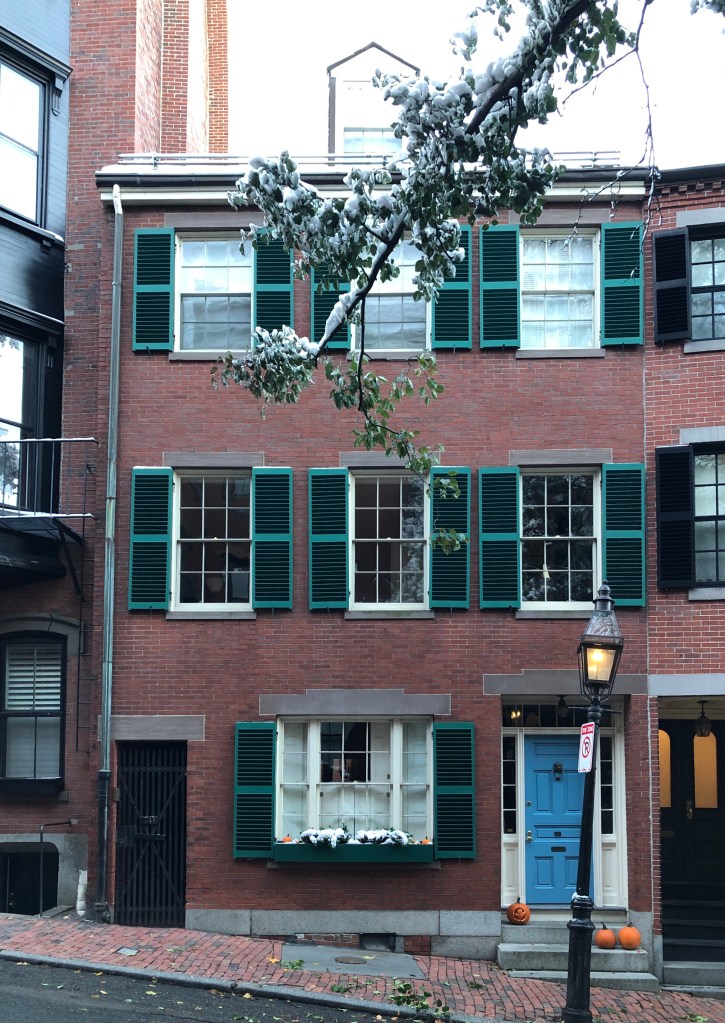
One of my favorite houses in Boston is this absolutely perfect townhouse on Pinckney Street in Beacon Hill. This house was built on speculation in 1829-1830 for Hollis Chapin by architect John Kutts. Kutts was active as a Boston architect between 1828 and 1838, but he is much less well-known compared to his peers today. I hope someone who is a better researcher than me stumbles upon this article because I would love to learn more about this architect! Kutts (possibly also Kutz) is a unique name for Boston, so it is likely he was a German immigrant who settled in Pennsylvania before moving up here. Back to the house. It was finished and sold in 1830 to Ebenezer T. Pope for four thousand dollars. The home was quickly bought and sold a couple more times as the values on Beacon Hill continued to grow. The property was purchased in the 1870s by Noah Bodge, as a rental property and it remained in the family through the 1920s. The home retains all the original details and provides a needed pop of color with the door and shutters.
I love historic hotels, so when I decided that I was overdue for a “stay-cation” in Boston, spending time unwinding in an old building was mandatory. When walking around the Back Bay, I always loved the old Boston Police Department Headquarters building and used this as an opportunity to learn more about its history! The Boston Police Department Headquarters building on Berkeley Street was built in 1925, and was designed by the architectural firm of Ritchie, Parsons & Taylor, a firm that specialized in civic and institutional buildings. Prior to this building, the Boston Police Department was based out of an old townhouse in Pemberton Square. By the 1920s, such an out-dated and small building was not a good symbol for one of America’s premier police forces, so the City of Boston purchased a lot in the Back Bay and funded the new modern building. The structure is a late example of Italian Renaissance Revival architecture in the city, and is classically refined. The brick building is clad with limestone, which is rusticated on the ground two floors. The building housed police department offices for over 70 years until 1997, when they built a new, Modern building in Roxbury. This building was boarded up for years until it was sold to an Irish hotel chain, who added two additional floors at the roof. They quickly went out of business and sold the hotel. The hotel today is operated by Loews, and they do a great job of highlighting the history of the building, from the meeting rooms named after significant police department employees of the past, the appropriately named Precinct Bar, to the Police-blue lanterns flanking the main entrance.
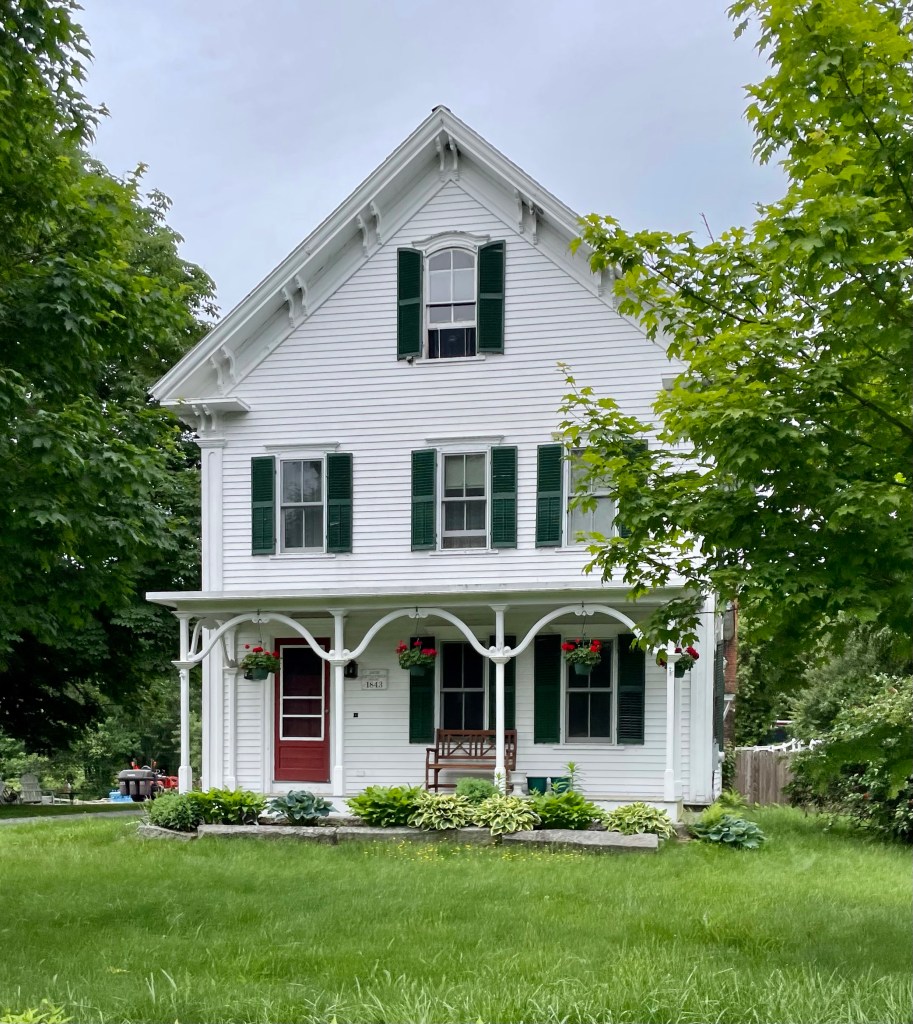
One thing I really love about small towns in New England is the prevalence of amazing old homes on the winding back roads. Located in Boxborough, MA, the Jacob Littlefield Farmhouse showcases the agricultural character and charm seen in the town. The farmhouse and outbuildings were built by Jacob Littlefield, who likely hired a housewright from town as the home is a near match to a home built on a nearby street. Mr. Littlefield was a farmer from Wells, Maine with seven children and a wife named Anna. After his death, his wife Anna owned the farm, until her death in 1896. Their son Albert ran the farm from about 1896-1922, after which time Jacob’s grandson Earl was the owner. Earl was taxed in 1928 for ownership of two horses, 17 cows, a bull, the house, barn and shed, tool house, ice house, root house, hen house, garage, and a second house on 101 acres. He resided here until 1929 when it was sold out of the family. Since then, subsequent owners have restored the home and the various outbuildings to maintain the architectural and historic integrity of the property. We need more stewards of old homes like this!
Did you know that Boston once had it’s own Hogwarts? While we didn’t have wizards and witches in the streets, we did have young magicians learning the tricks of the trade! The Boston School of Magic was founded in the 1880s by William Davis LeRoy (1862-1919), a professional magician who also served as President of the Conjuror’s Club of Boston. Upon opening its doors, the Boston School of Magic was one of a handful of such schools in the country. For $75, you could learn how to escape from a pair of handcuffs from a professional instructor at W.D. Leroy’s “School of Magic”, and even buy some magic items for shows from his large catalogue. Mr. LeRoy was also friends with the famous Harry Houdini, who purchased items from his store and consulted with him on new acts. Houdini was extremely popular in Boston and held many acts and feats of strength here. The Boston School of Magic was located in the second floor of the Blanchard Building at 103 Court Street, a brick commercial building with stone facade constructed in the middle of the 19th century. The building was demolished in the 1920s and replaced with a two-story structure, which too was razed for Government Center.
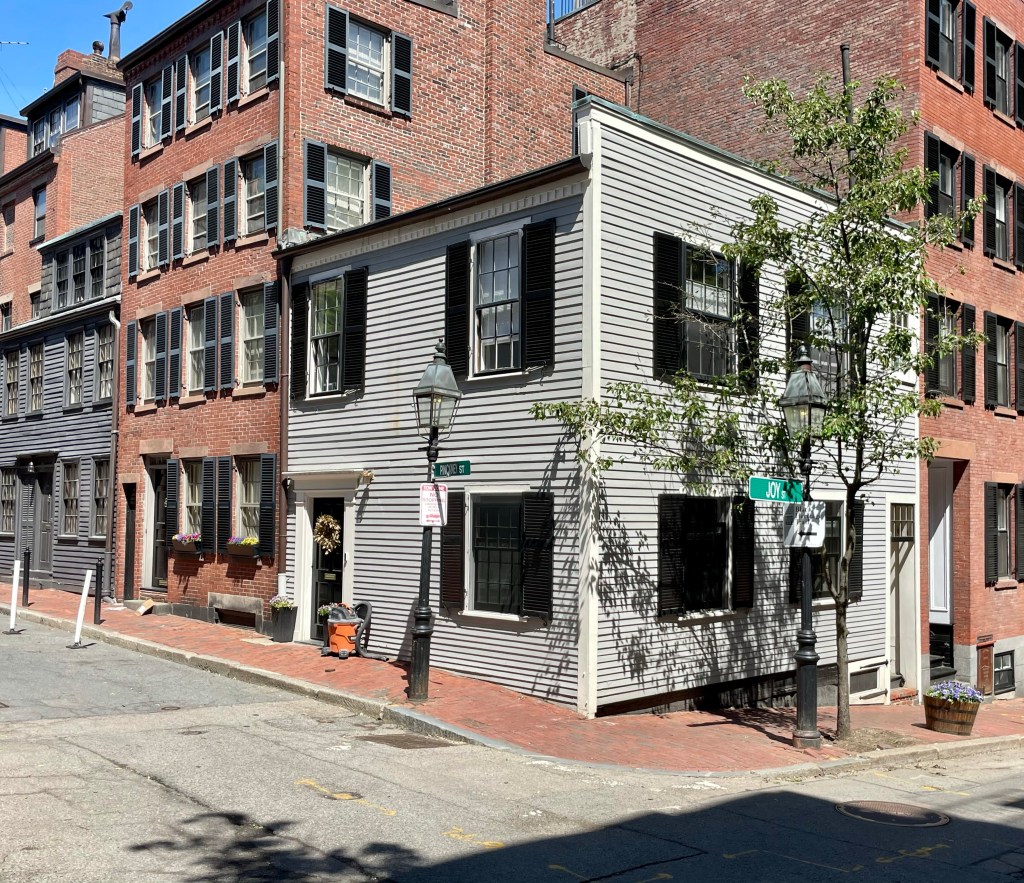
Less than a dozen wood-frame buildings exist on Beacon Hill in Boston, and this curious building is one of them, and also happens to be one of the oldest structures in the neighborhood! Built by 1800, this structure was constructed as an ell/addition to the Glapion-Middleton House at 5 Pinckney Street in Boston. The Glapion-Middleton House (previously featured) was constructed in 1787 after two Black men, George Middleton and Louis Glapion and their wives, built a small double house in the abolitionist center of Boston, Beacon Hill. In recent years, some have speculated that due to this living arrangement and other accounts, that Glapion and Middleton were in-fact gay men, but this is unsubstantiated. After the home was constructed, a two-story, five-bay ell was constructed which connected the home to Joy Street at the corner. The ell served as additional space for the two families and they appear to have had a workshop or store in part of the building. In 1855, owners demolished the center bay of the ell and erected a brick townhouse, similar to others in the neighborhood. The ell in this building was occupied as a store for the majority of its life and became an Italian restaurant and soon after a “Boyer’s Creamery Luncheon”. The property has since been converted to a residence.
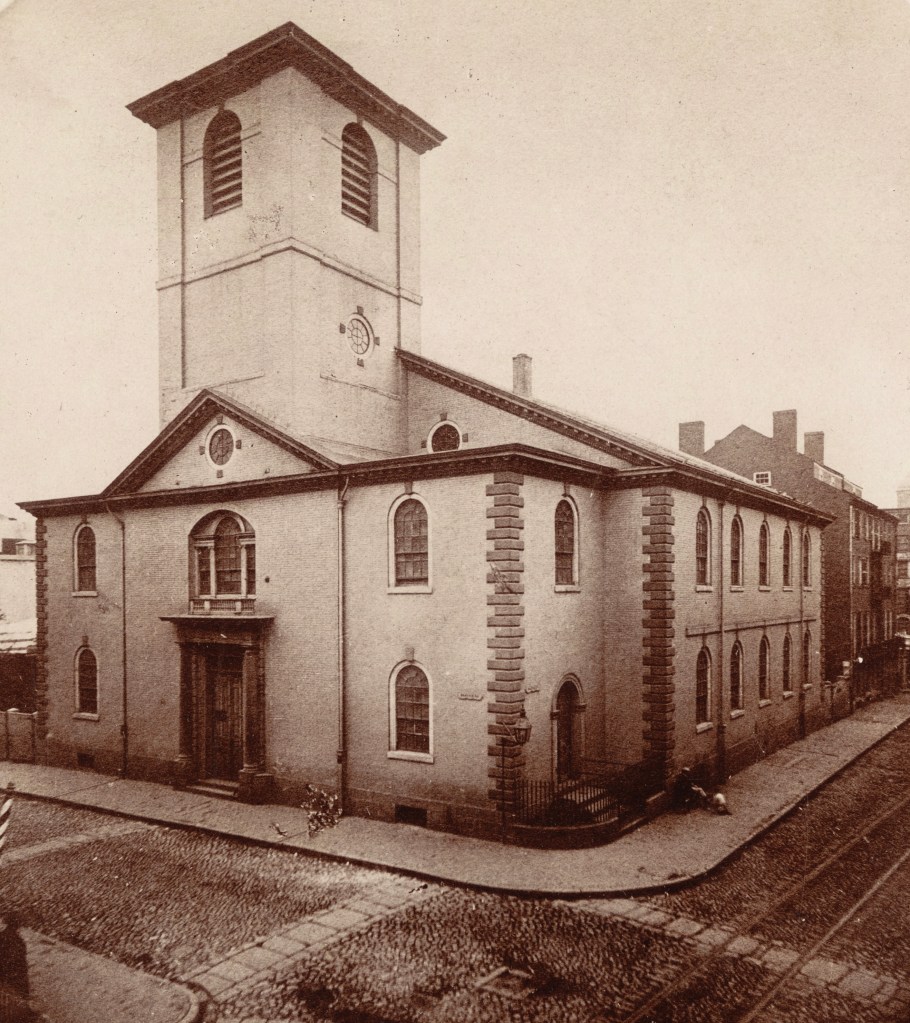
Boston’s constant churning of development has given us amazing architectural landmarks, and incredibly unfathomable architectural loss. One of such cases of loss is the former Brattle Street Church which was located on Brattle Street, roughly where the main entrance to Boston City Hall is located today. Demolition of significant architecture in Boston began way before the period of Urban Renewal in the mid-20th century, and the loss of the Brattle Street Church in Downtown Boston showcases this. The Brattle Street Church had been founded in the 1690s by a group of merchants seeking an alternative to the authority exercised by Increase and Cotton Mather in Boston’s existing congregations. Despite these beginnings, the church remained Congregational through the 18th century. At the time of the Revolution, Brattle Street counted such figures as John Hancock, Samuel Adams, Joseph Warren, and John and Abigail Adams among its parishioners. The original wooden church was replaced in 1772 by this stunning brick building, designed by Thomas Dawes. Just years after the doors opened, the American Revolution upended life in Boston. This building was a survivor, and was apparently hit by cannon-fire by the American batteries at the siege of Boston. A cannonball can be seen lodged into the building at the second floor, to the right of the Palladian window. After the American Civil War, development of the Back Bay led to a shifting population away from the downtown core, and a new church was erected for the congregation, the Brattle Square Church, designed by Henry Hobson Richardson. This church was demolished in 1872, just 100 years after it opened its doors and took a cannon for America.



 Buildings of New England