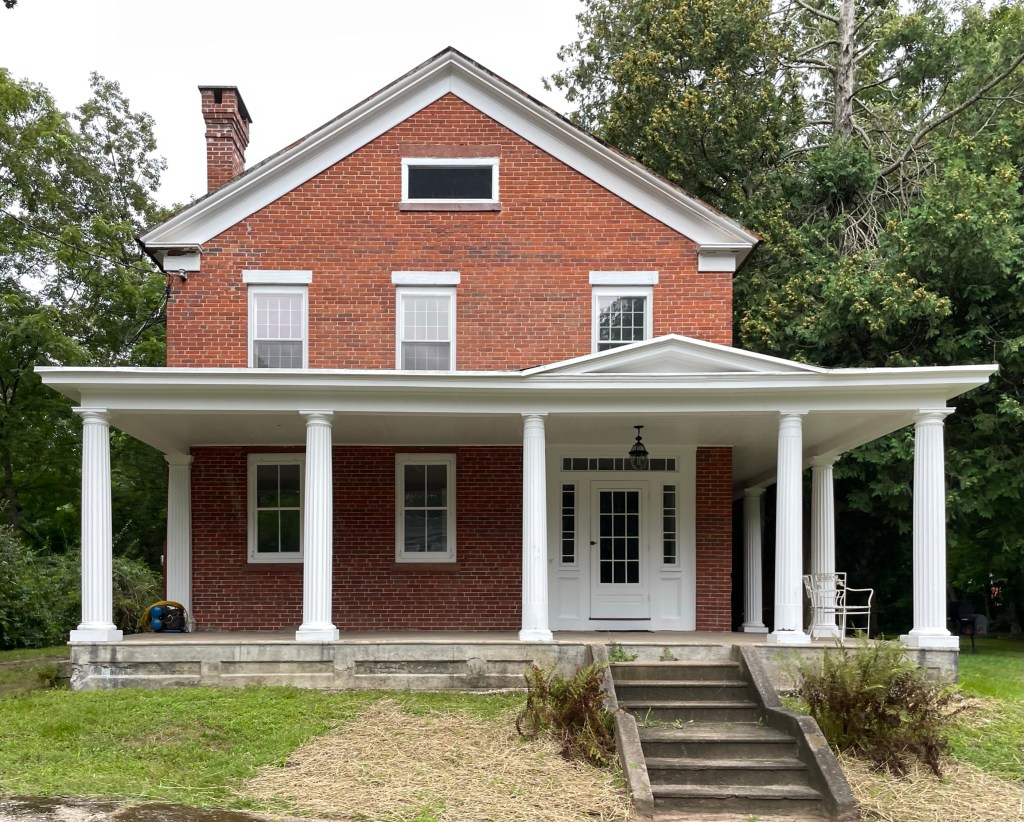
Judson Manville House // 1835

Greek Revival style houses in brick are amazing to find “in the wild”, when I stumble upon them! This example is located in the South Britain village of Southbury, Connecticut. The brick house was built for Judson Manville in 1835 and it was constructed of locally manufactured bricks. Judson operated a hat manufacture next door to this property and it clearly made him some money. The property was eventually acquired by the Hawkins Company at the turn of the 20th century and it was operated as the company offices. It was during this time that the 20th century wrap-around porch was added. It is now a private residence.

Benjamin Stiles House // 1787

Built for Revolutionary War veteran and local lawyer Benjamin Stiles, this stunning Georgian mansion is unique for its use of brick in construction, a material not too common for some of Southbury’s earliest homes. Local tradition holds that a French engineer in General Rochambeau’s army provided assistance in designing the building, using the metric system, likely on the march from Newport to Yorktown. Benjamin’s father was one of the original settlers who migrated from present-day Stratford to the un-developed Southbury. The hip-on-hip roof with pedimented dormers is really a stunner, and unique for the town!

Clements Apartment Building // c.1885

Brookline is pretty great as you can find unique and well-preserved examples of nearly every type of building in almost every architectural style! Staying in Brookline Village, this apartment building stands out as one of the best panel-brick apartments I have seen. The property was developed in the mid-1880s by Thomas W. Clements, who served in the Army during the American Civil War and later settled in the Boston area working as a dentist. Thomas married Lydia R. Clements, who is much more interesting than her husband! She was a graduate of the Boston University School of Medicine and worked locally for years, but wanted more. In the spring of 1898, she set out with a party of men and women, determined to make their fortune in the gold fields of the Klondike. During the months long trek, all of the other women and some of the men in her party left the expedition before reaching their goal, but Lydia Clements persevered and became one of the first white women — possibly the first from the East — to cross the Chilkoot Pass into the Klondike region. She never made a fortune, but upon returning, she was more spiritual, and got involved in the occult philosophy of Prof. Charles H. Mackay and his West Gate School of Philosophy in Boston. She used her new learnings to go back to Alaska to make her fortune, but there is no indication that Clements ever did make her fortune. She did however, remain in Nome and elsewhere in Alaska for more than a decade, hiring men and mining tin and gold. She retained her Brookline residence here on Davis Avenue and travelled back and forth across the continent many times before returning to Brookline, before dying there in February 1927.

Sarah and John Tillinghast House // 1904

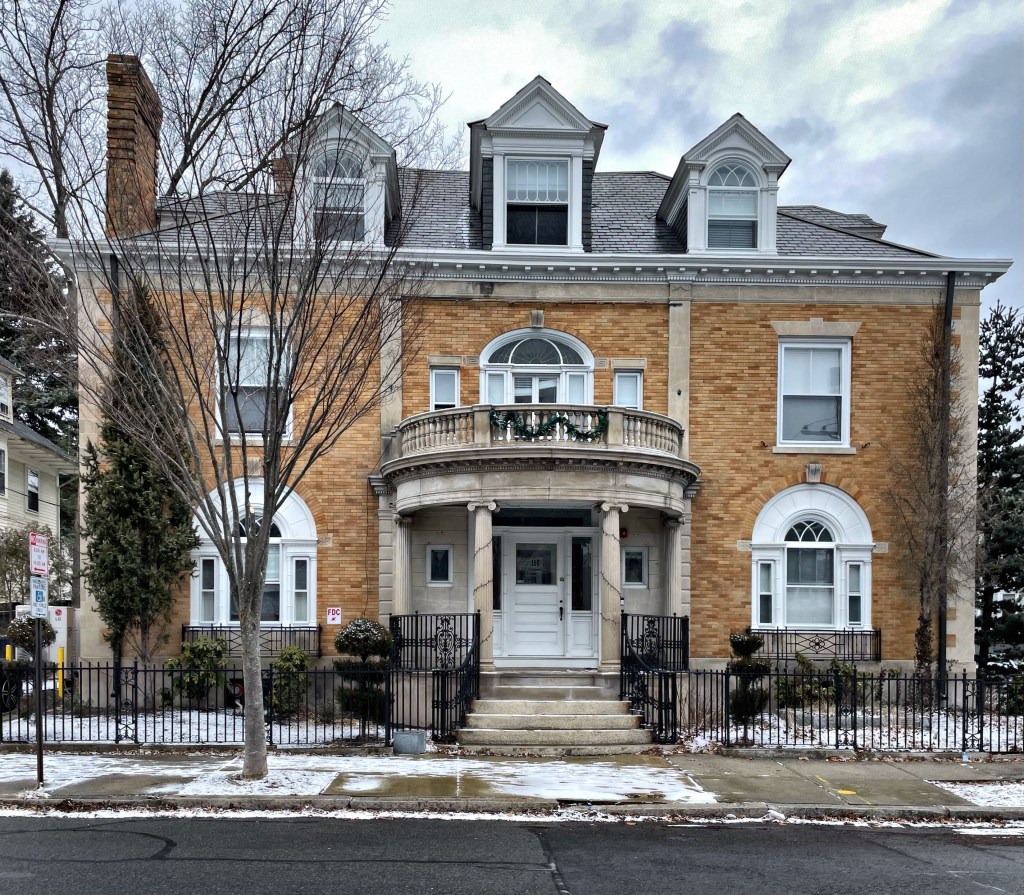
This stately yellow brick Colonial Revival sits on the edge of the College Hill neighborhood of Providence, and I couldn’t help but to take a few photos! This residence was completed in 1904 for Sarah and John Tillinghast in the later years of John’s life (he died less than two years of moving into this home). The house exhibits a large semi-circular portico with balustrade above, the portico is flanked and surmounted by Palladian windows with elliptical reveals. The house was recently proposed to serve as a suboxone clinic, but that was shut down by neighbors. It appears to be divided into residential units now.

William Binney House // 1859

Another of Providence’s stunning monumental Italianate mansions on College Hill is this, the William Binney House, which was built in 1859 from plans by local architect Alpheus C. Morse. In the mode of an Italian Renaissance palace, it features a strong, symmetrical facade, molded string course, classic trim detail at the windows and doors in brownstone, and a shallow hip roof. The original owner, William Binney (1825-1909) was born in Philadelphia and became a prominent attorney and became involved on various boards, building more wealth. Additionally, he was elected as member of the Rhode Island Assembly and the Providence City Council continuously 1857 to 1874. The house’s rear ell and wooden bay would provide sweeping views to Downtown Providence even today from the aptly named Prospect Street.

Winona and Winslow Blanchard House // c.1915

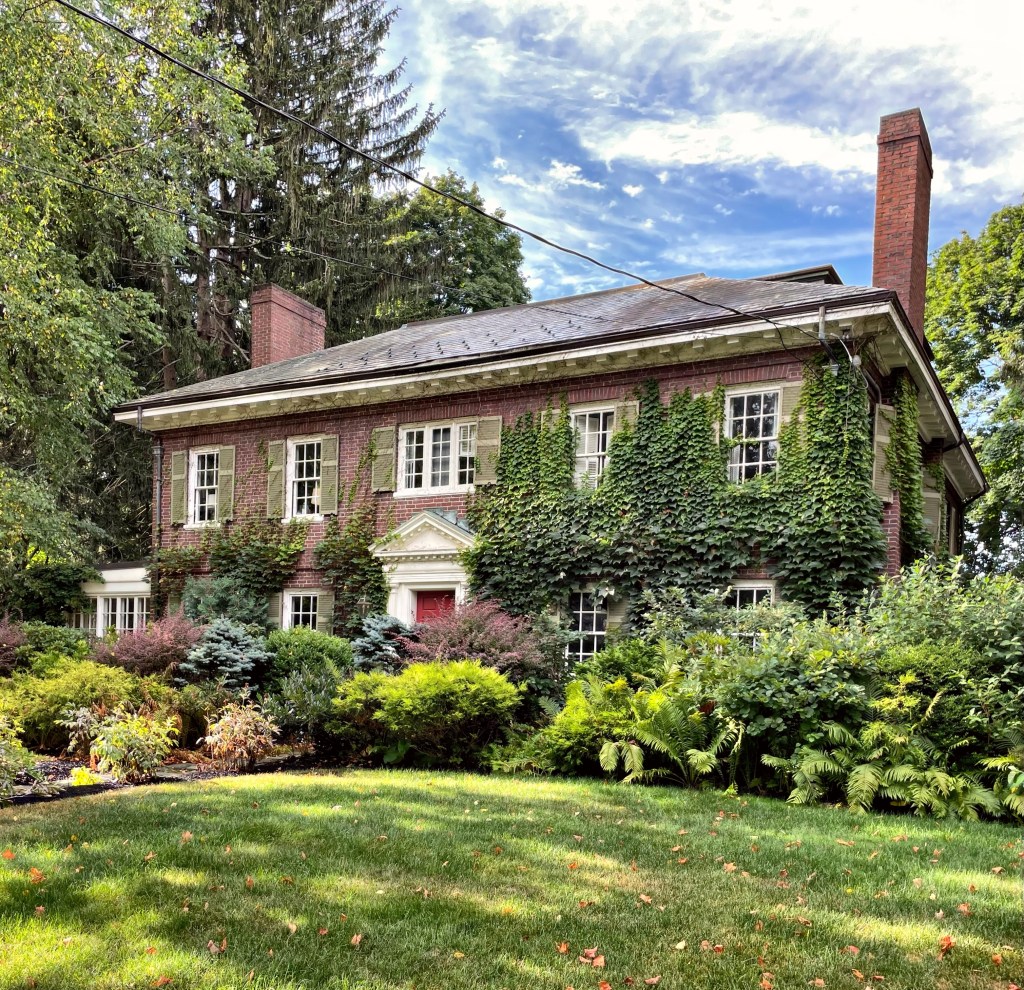
This Colonial Revival house on Pine Ridge Road in Waban Village, Newton, is one of a handful of the brick houses in the neighborhood, and one of the more refined examples of the style in the neighborhood without architectural embellishments from other styles. The home was built around 1915 for Winslow Blanchard and his wife Winona. Winslow was an engineer who served as President of the Blanchard Machine Company in Cambridge. It is probable that the couple hired Dorchester-based architect Edwin J. Lewis to design the home; as Winona grew up in the Ashmont section of town where Lewis lived. Additionally, the couple hired Lewis to make alterations to their recently completed home in 1919. The house retains its original slate roof, front door with pedimented entry, and is covered in climbing ivy, which isn’t great for the masonry but looks so good!

Peter Wheeler House // 1832

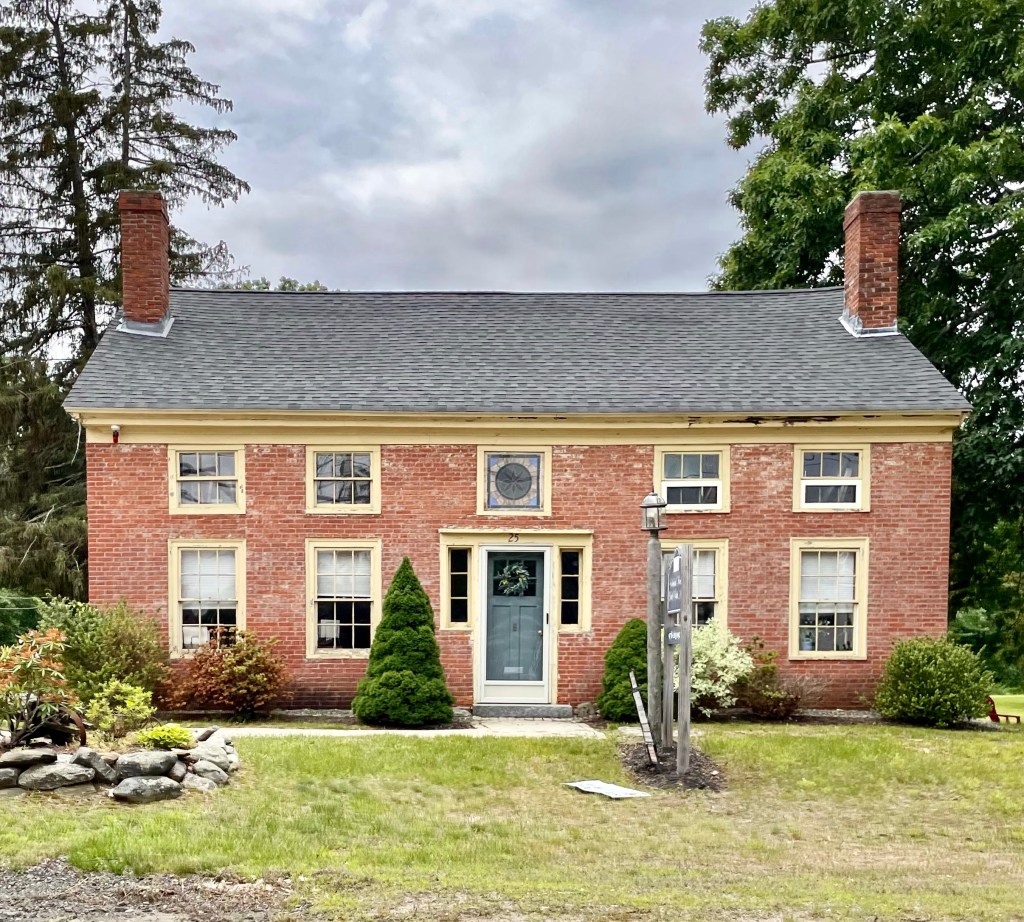
This cute brick house in Boxborough, MA, was built c. 1832 by the Revolutionary War veteran Peter Wheeler where he lived until his death in 1847. The home sits on a heavily trafficked street, yet retains much of its architecture and even historic windows, despite its conversion to commercial use! The brick house features e 6/6 double-hung units on the first story and 3/3 in the second, with the central window featuring stunning stained glass.

Dr. Daniel Robbins House // 1804

Damn I just love old brick Federal houses! This home in Boxborough, MA was constructed in 1804 for Dr. Daniel Robbins, who owned a one-story wooden home on the site in 1798. As building materials were expensive at the time, Robbins likely incorporated that structure as one of the side additions to this new brick house you see here. Robbins served as a town doctor until his death in 1837, and would treat patients in his home or ride on horseback to treat sick residents nearby.

Frederick W. Lewis Mansion // 1876

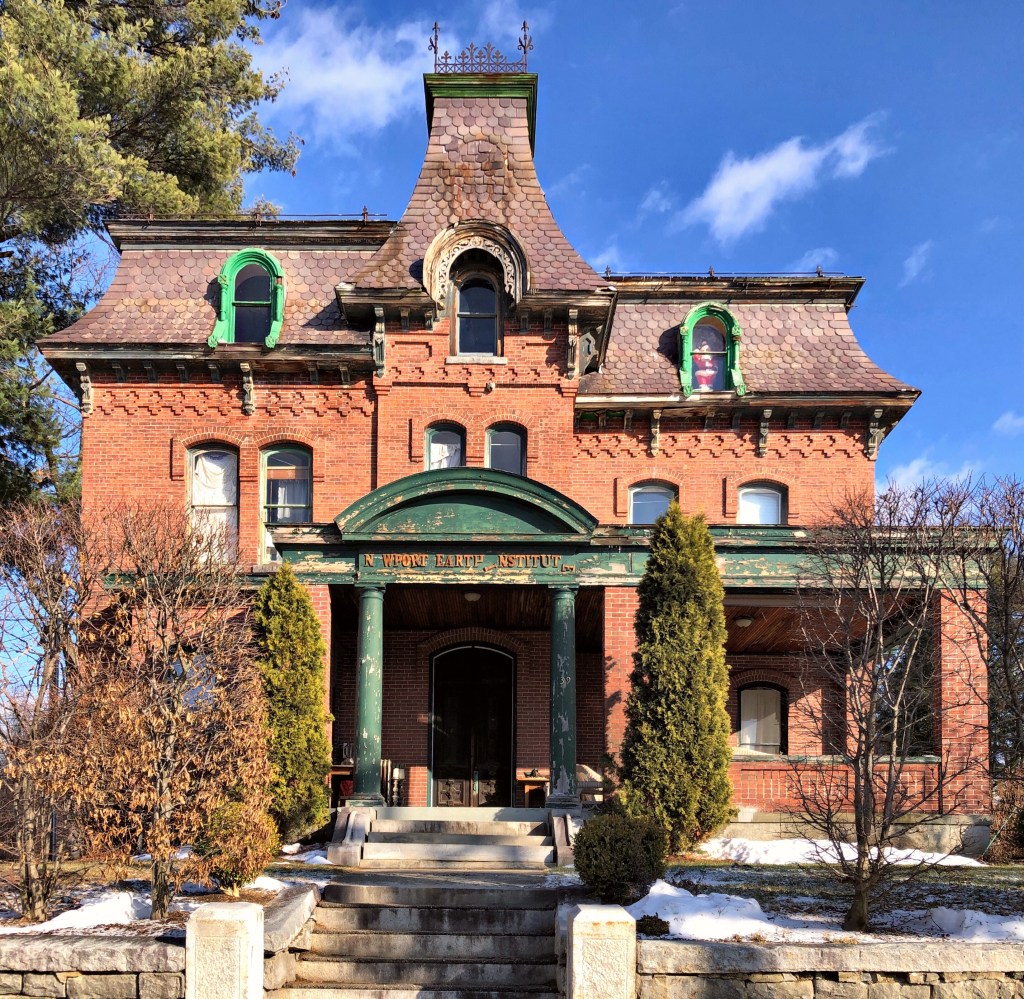
The Frederick W. Lewis Mansion in Newport, New Hampshire is a unique, late-Second Empire home constructed of brick. The home was built in 1876 for Frederick W. Lewis, a merchant who climbed the ranks as a young man, eventually purchasing the store he worked at as a 14-year-old. In 1862, he became cashier of the Sugar River Bank, and held the position until 1865, when the bank was re-organized as a national bank, taking the name of “The First National Bank of Newport.” He then leveraged his position to get into local politics, and took an active role in the development of the town, even incentivizing the railroad to build a stop in town. From this wealth and position, he built this large home. After his death, the home went to his son. By the 1940s, a group of over 30 residents of town purchased the home as a Veteran’s Home. By the end of the 20th century, the home was occupied by the Newport Earth Institute, a school created by esoteric historian and researcher Reverend Vincent Bridges, who died in 2014. The property appears to be vacant now and the home is in much need of some TLC.

Thomas Carter House // 1830

All I want for Christmas is a brick Federal house! This home in Stockbridge, Massachusetts was constructed in 1830 by Thomas Carter (1777-1863) and his wife Anna. The couple farmed the property and had eleven children (plus two who died in childbirth). According to a family history, the lime for the mortar on the home was burned in a kiln on the property by Thomas. The ancestral home remained in the family for generations, including by John Calvin Calhoun Carter, a town selectman, who added a full-length porch on the home in the mid-late 19th century (since removed). The home’s rural charm remains even-though it sits on a busy road in the Berkshires.