Richmond Court // 1898

Believe it or not, but this apartment building on Beacon Street in Brookline, Massachusetts is one of the most significant buildings of the type in the Boston area! This is Richmond Court, which is one of the oldest (if not the first) apartment house built in the northeastern United States that resembled an English Tudor manor house. The apartment building was constructed in 1898 from plans by architect Ralph Adams Cram, one of the best American architects of the late 19th and 20th centuries. Cram even moved into the building briefly before moving into a townhouse in the Back Bay neighborhood of Boston. The building set the tone architecturally for later apartment buildings in the Boston area, with many architects attempting (largely not as effectively) to design Tudor-influenced apartment buildings regionally. The development is also significant in that at a time when most Boston-area developers were building apartment houses that maximized the buildable square footage, as they do to this day, Richmond Court included a landscaped courtyard to provide residents with more light and air circulation. The development also included two separate town houses on either side of the apartment block.

Longwood Towers // 1925

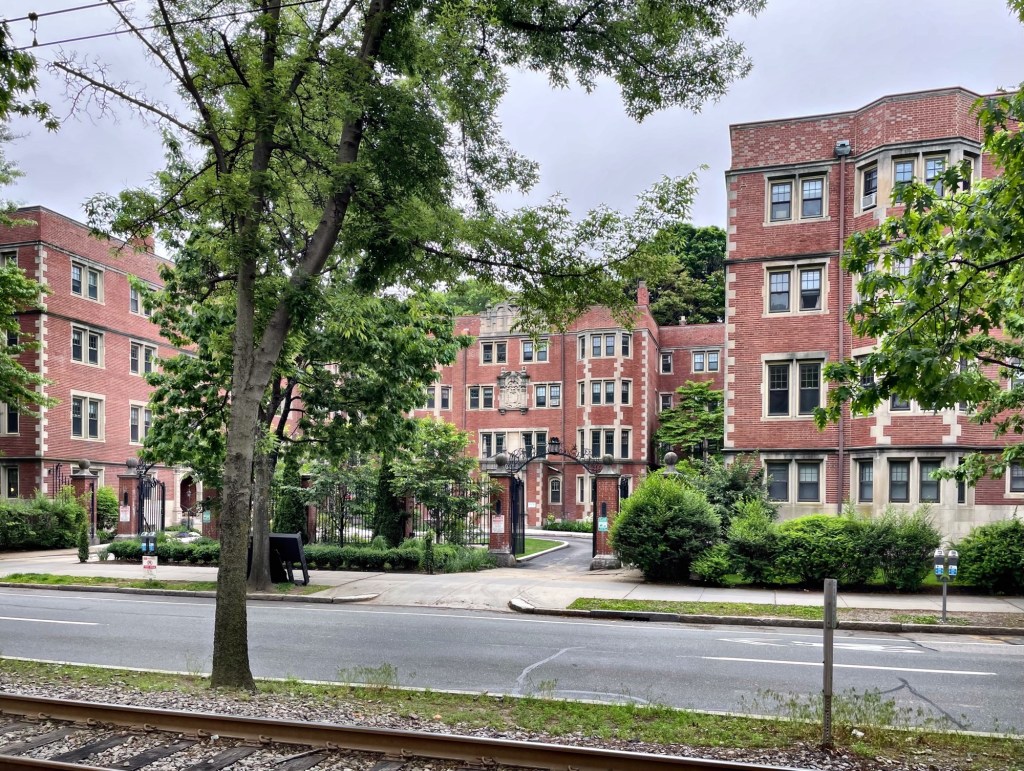
No trip to Longwood in Brookline would be complete without checking in on one of the finest multi-family housing developments of New England… This is Longwood Towers. The development was originally built in 1925 from plans by architectural/engineering firm Kenneth DeVos and Co. who built three near-identical developments in the early 1920s: Detroit (1922)Brookline (1925), and finally Philadelphia (1928). The complexes were all originally called Alden Park Manor. Kenneth DeVos worked with local architects for each project to oversee construction details and furnish interior detailing as needed. For Brookline, he hired Harold Field Kellogg, who earlier served as the first director of the Boston Housing Authority. The design is Tudor Revival in style with towers connected by social spaces and a lobby linking the towers with a dining room for residents, a ballroom, lounge, day care facilities, barber and beauty shops, and a garage. The idea of a parking garage incorporated into an apartment complex was a very new idea when these were built, so much so it was written about as a new amenity for future developments to emulate. Another interesting tidbit about the complex is that it was featured in architectural journals in 1926 as it solved the “garbage problem” with trash chutes on each floor which terminated down in a brick incinerator (no longer in use). The Longwood Towers in Brookline were eyed as innovative and set trends for later developments, here’s to hoping future developers take cues to what makes good design and finishes rather than just profit with so many new boxy, uninspiring 5-over-1 apartment buildings going up all over the region.