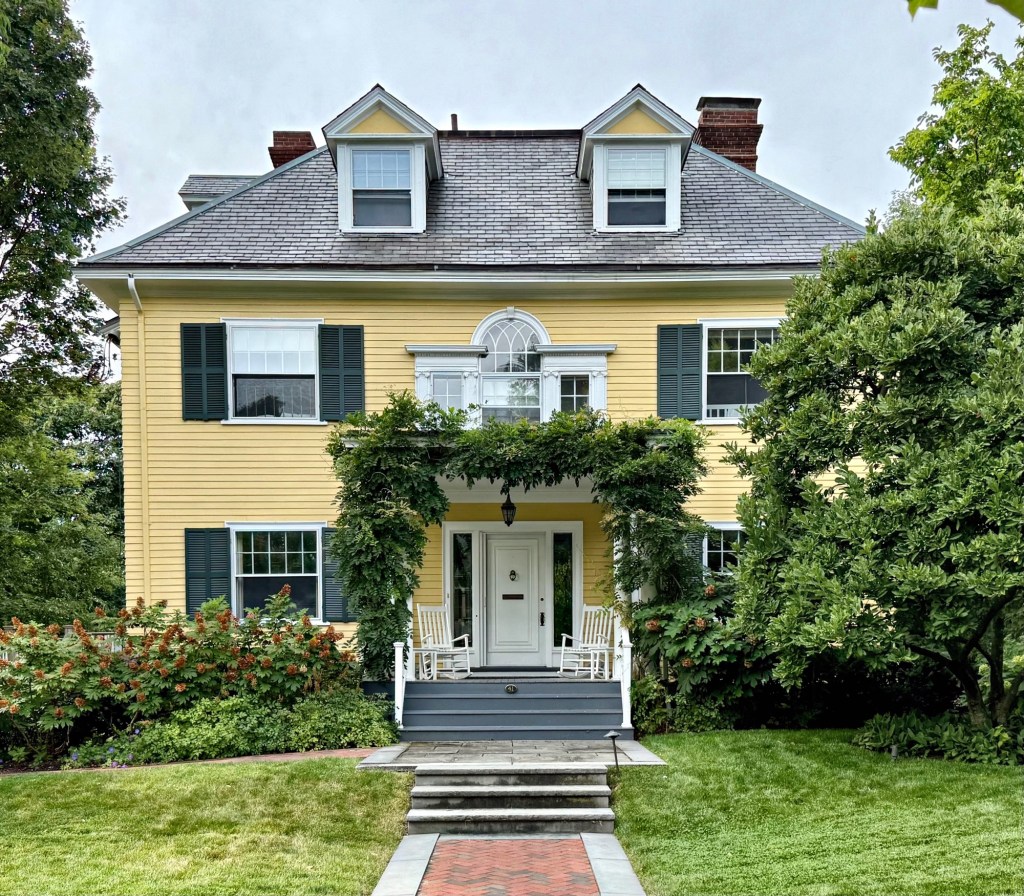
Joseph and Jane Cotton House // c.1905

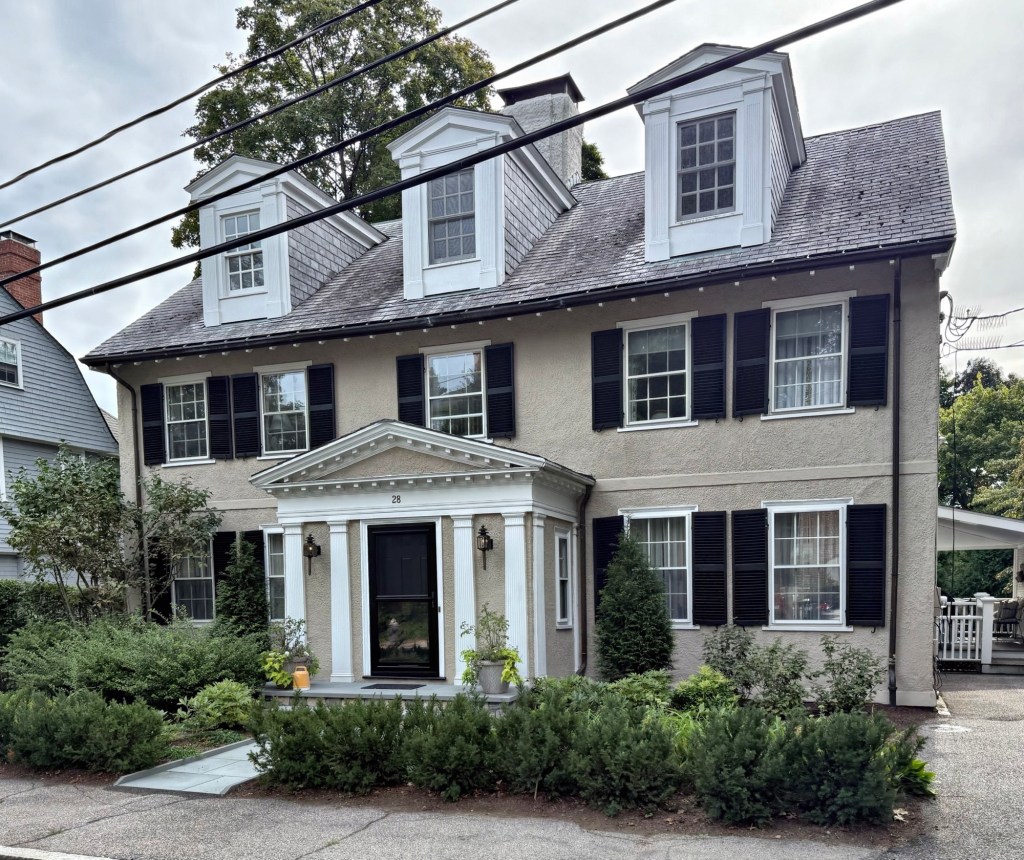
As the heirs of Amos A. Lawrence began subdividing and selling off desirable house lots in the Cottage Farm neighborhood of Brookline in the 20th century, we can see a visual representation as to the ever-changing architectural tastes of wealthy residents, from Colonial Revival to Tudor Revival. This residence, the Joseph and Jane Cotton House, was built adjacent to the Amos A. Lawrence Cottage, and is an excellent example of a Colonial Revival style brick home. The property was built for Joseph Hall Cotton (1869-1919), treasurer of the American Tube Works, and his wife, Jane Eaton Cotton. The couple remained in the home for about a decade until they relocated to the Back Bay neighborhood of Boston. The architectural firm of Chapman & Frazer, esteemed suburban architects, designed the house as an elongated rectangle with projecting columned porches on the first floor, pilastered entrance and window above, and hipped roof with overhanging eaves and shed dormers, a nod to the Arts and Crafts style.

John Wales House // c.1885

In the mid-1880s, John Wales, a wealthy hardware dealer with offices in Downtown Boston, purchased house lots in the Cottage Farm area of Brookline from Amos A. Lawrence, and set out develop the site with two stately Victorian homes. This lovely home was first occupied by John’s son, George Wales and his wife, Mabel, the year of their marriage in 1885. While the architect is unclear, it is probable that the design can be attributed to architect William Whitney Lewis, who was hired by John Wales the year prior to design a stable near his home in an adjacent neighborhood. The house was rented by Wales and subsequent owners for years. The elaborate Queen Anne style house exhibits an asymmetrical plan with recessed entrance set within an arched opening, shinged and brick walls with a prominent chimney at the facade containing a decorative terra cotta panel, and the most unique stucco gables containing what appear to be terracotta balls in geometric forms. This house is a perfect example of what is so special about the Queen Anne style!

Frederick and Erna Gibbs House // 1936

Built at a time when Colonial Revival and Tudor Revival styles dominated the suburban landscape of the Boston area and elsewhere, the Frederick and Erna Gibbs House on Chilton Street in the Cottage Farm neighborhood of Brookline, Massachusetts stands out. Built in 1936 for Frederic and Erna Gibbs, the house is said to be the first International style single-family home built in the Boston area, predating the famous Gropius House in Lincoln by a couple years. Erna Leonhardt-Gibbs (1904–1987), a German-born pioneer in the development of electroencephalography (EEG) technology, in 1930, married Frederic A. Gibbs, a neurologist, and would soon-after vacation in Germany, seeing the Modern revolution of architecture there in the interwar period. Upon returning the States, the couple hired architect Samuel Glaser, to design their dream home in the Bauhaus style. Set amongst a street of 1930s Tudor houses, the Gibbs residence stands out for its stark white stucco walls, boxy form, with elongated and block windows. While set behind a tall fence and hedge, the house is a landmark example of the style and appears much as it did when built 90 years ago.

Edmund and Eliza Leland House // 1905

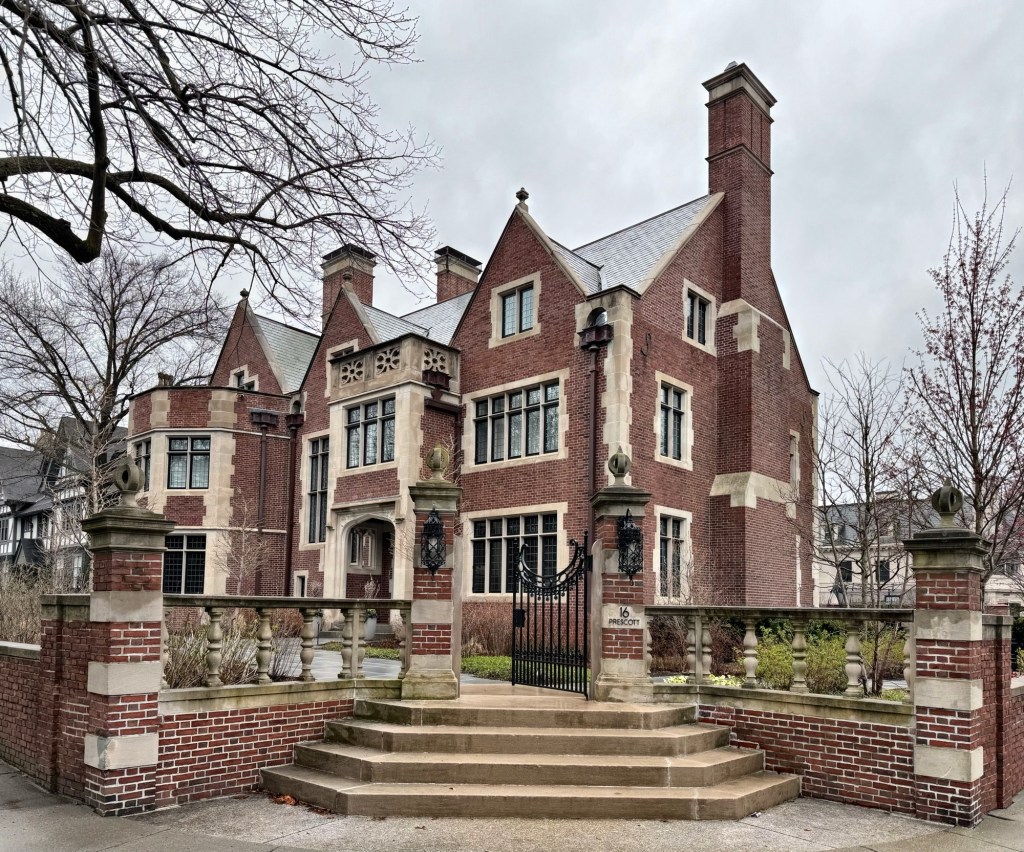
One of the few truly eclectic houses in the Cottage Farm neighborhood of Brookline can be found here at the corner of Prescott and Euston streets. Built in 1905 for Edmund Francis Leland Jr. (1868-1963), a wool merchant, and wife, Eliza Smith Leland (1872-1949), the house exhibits elements of Tudor Revival, Colonial Revival, and Arts & Crafts styles under one roof. The house was designed by the firm of Kilham & Hopkins who incorporated many design features found in early 20th century architecture. The steep gable roof, diamond pane door and half timbering is typical of the Tudor Revival style; the columned entry and large Palladian window on the side elevation are evidence of the Colonial Revival style; and the use of stucco and shingle siding, and the overhanging eaves with brackets and exposed rafters at the roof and second floor, are typical in the Arts & Crafts mode.

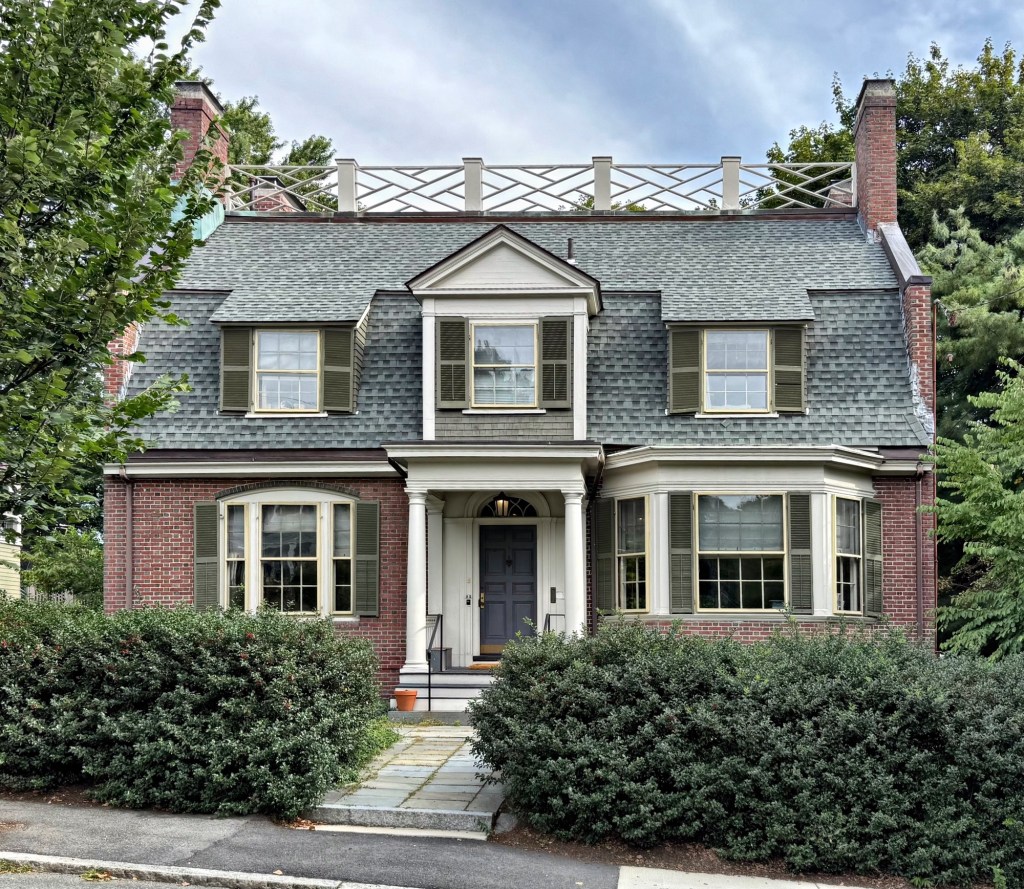
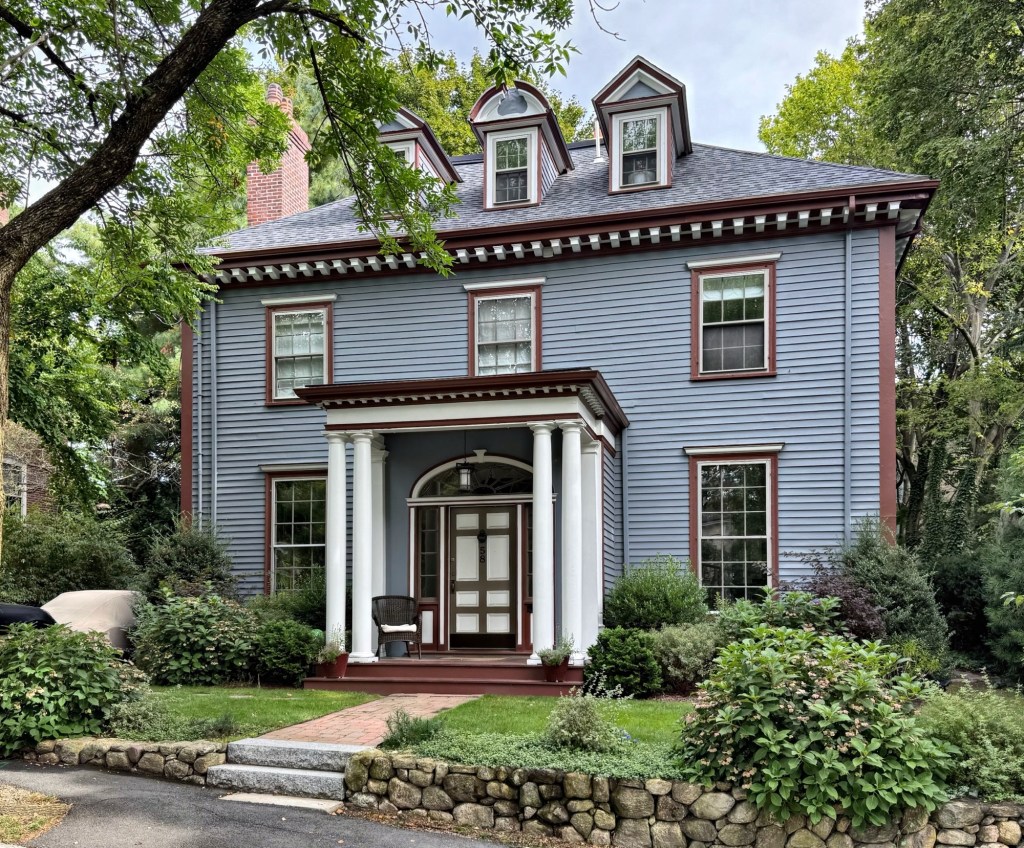
Briggs-Lyman House // 1903

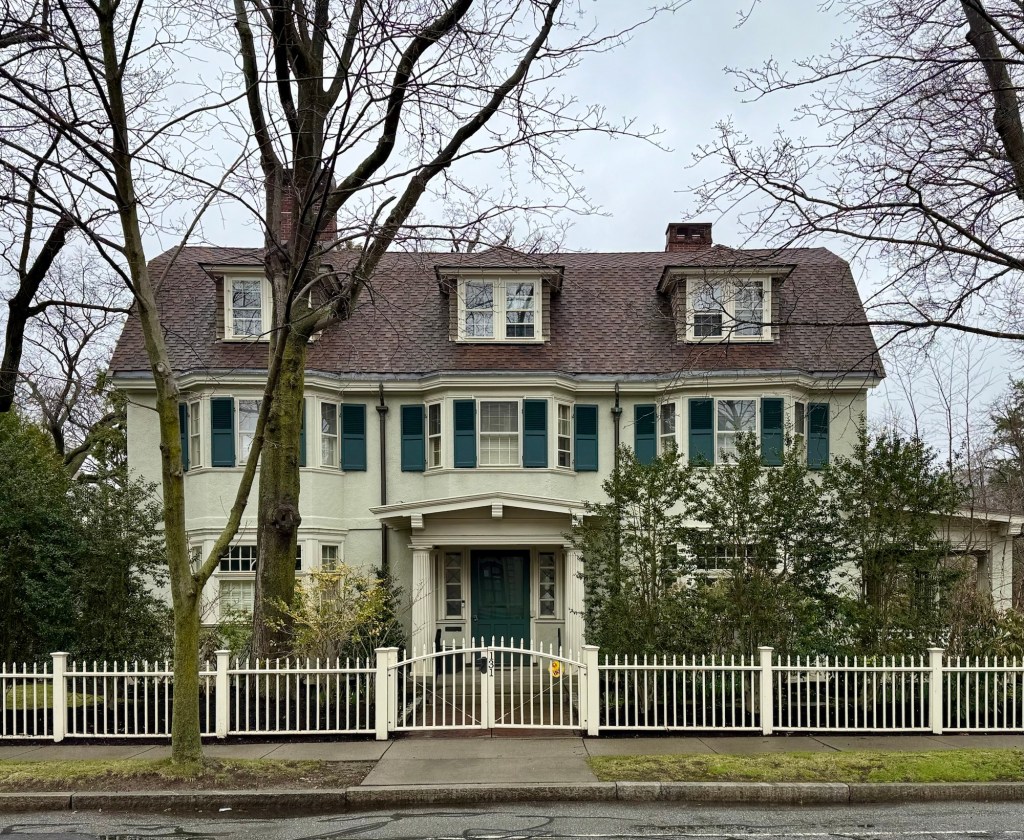
Built in 1903 for Walter Briggs, this stately Colonial Revival style residence showcases the bold proportions and scale of the style. Located on Euston Street in the Cottage Farm neighborhood, this house was designed by Walter H. Kilham of the firm, Kilham & Hopkins, who specialized in large, suburban homes in the Boston area during the early decades of the 20th century. The symmetrical facade includes a projecting center vestibule, an arched window with blind fan above, bold window trim, and a shallow hip roof broken by two pedimented dormers. The house is so special that it was featured in a 1909 publication highlighting 100 country houses of various styles of the United States.

Rowe House // 1911

The Rowe House at 11 Mason Street is an over-the-top, and high-style example of the Colonial Revival style, showcasing the oversized proportions and scale that architects in the early 20th century followed when referencing Colonial American architecture. The house here was built in 1911 for Edward Prescott Rowe (1879-1936) and his wife, Eleanor Livingstone. Designed by the firm of Rowe & Keyes of Boston and New York, the commission was likely a relative of Mr. and Mrs. Rowe. The symmetrical house features a broad gambrel roof with Palladian windows in the side gable and central dormer at the facade, large pilasters breaking up the bays on the facade, a projecting Colonial Revival entry, and squat windows at the second floor terminating at the entablature above. The property even retains its Colonial Revival gateway.

John Endicott Peabody House – Ivy Street School // 1910

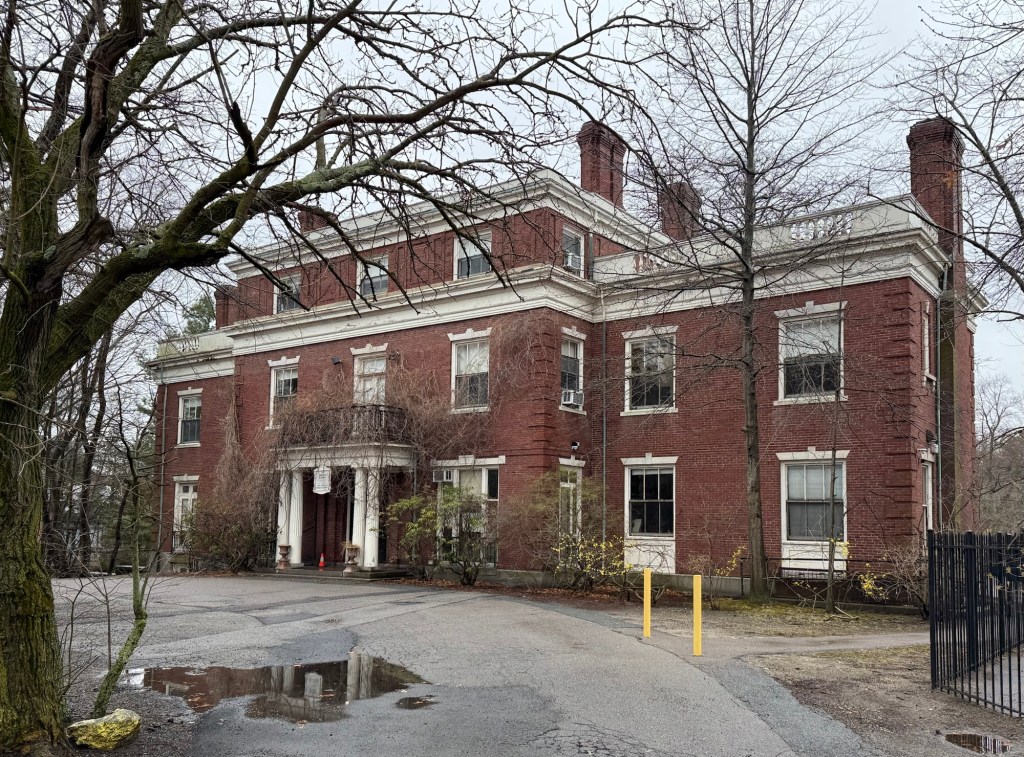
This stately mansion is located at 200 Ivy Street in the Cottage Farm neighborhood of Brookline and was built in 1910 for Martha and John Endicott Peabody. Designed in a Renaissance/Colonial Revival style by architect John Worthington Ames, the house has since been converted to institutional use, but retains much of its original character. John Endicott Peabody (1853-1921) was a businessman and later got involved with the arts in Boston. The building was acquired for institutional use beginning in the 1950’s and was occupied as the St. Dominic’s Institute and has been owned by the Massachusetts Association for the Blind since 1976, and today is occupied by the organization’s Ivy Street School, a special education residential and day high school for neurodivergent youth to help prepare pupils for adulthood with the tools they need to achieve their greatest independence. The brick house is covered in stucco and features an elaborate stone door surround, symmetrical facade, and massive chimneys.

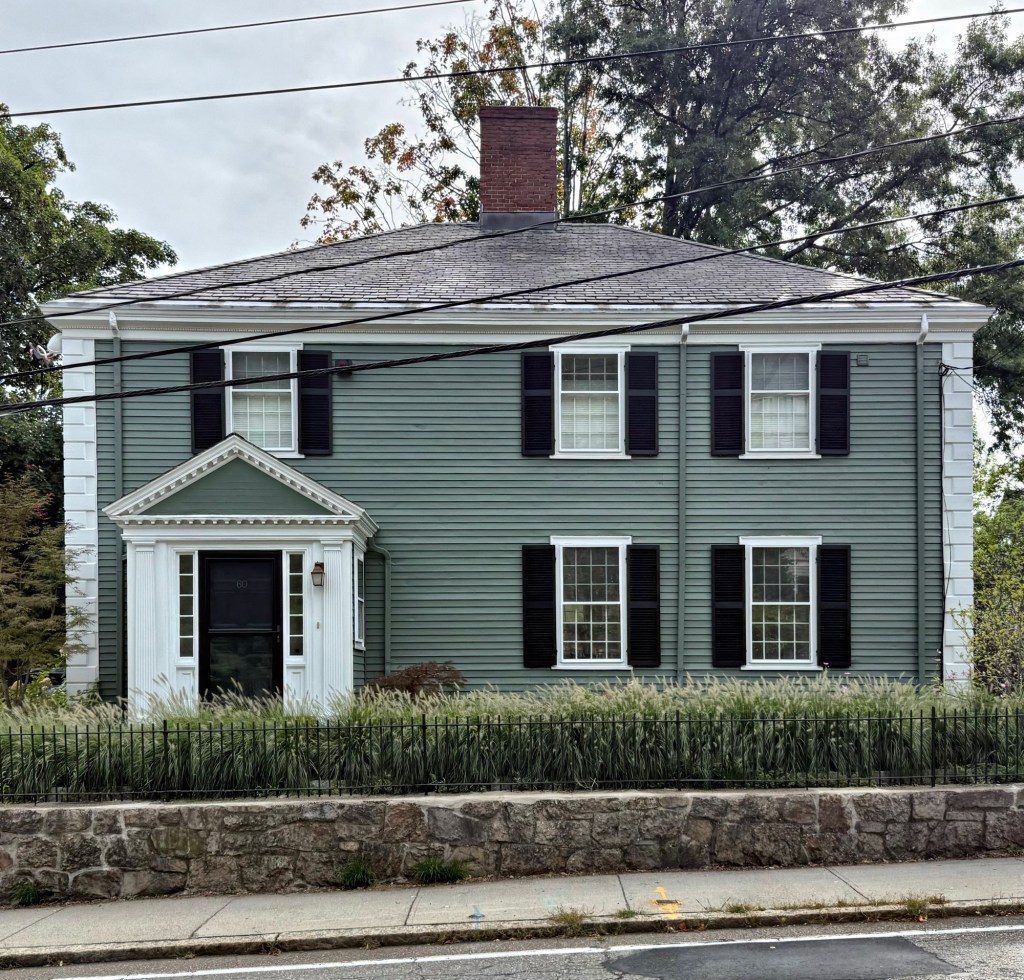
Wells-Bullard House // c.1868

One of the finest Second Empire style houses in Brookline can be found on Prescott Street in the fashionable Cottage Farm neighborhood of the city. Built around 1868 by Amos A. Lawrence, who lived in a house nearby, this “cottage” was rented out to John Wells (1819-1875), a Judge on the Massachusetts State Supreme Court until his death. The property remained in the Lawrence family into the 20th century and was later rented to George E. Bullard, a banker. The brick house is notable for its siting at the center of the lot, corner quoins, brick corbelled cornice, arched door and windows, and slate mansard roof.

Lawrence-Parker House // 1864

Built in 1864 as one of the rental properties owned by Amos A. Lawrence as part of his exclusive Cottage Farm neighborhood in Brookline, this house has been extensively altered and even moved but retains significance as a surviving mid-19th century “cottage” in the neighborhood. The house was likely constructed as a one-story, stone cottage with a second floor contained within a mansard roof. In 1903, Mrs. Francis W. Lawrence hired the well-known architect and Brookline resident, Julius A. Schweinfurth, to make extensive alterations to the cottage, replacing the mansard roof with a new second floor with gable roof, along with a new porch. Schweinfurth’s design included wood shingle siding for the upper floors, which were replaced with stucco in 1970. The house was moved to its current site at the corner of Carlton and Mountfort streets in 1929 when the street was re-oriented to follow the old Boston & Albany Railroad tracks. When moved, the cottage was occupied by Philip Stanley Parker, a judge, and his wife, Eleanor. Today, the cottage is owned by Boston University and known as the Core House.

Renton Whidden House // 1912

One of the finest Arts and Crafts style “cottages” in the Cottage Farm neighborhood of Brookline, Massachusetts, can be found on Ivy Street as the Whidden House. The property here was developed by Renton Whidden (1859-1942), a real estate developer and politician elected into the Massachusetts House of Representatives, who purchased a house lot from Thomas B. Hall, who owned a house next door. Renton Whidden hired architect, Arthur Hunnewell Bowditch, to furnish plans for the large home, which was completed in 1912. The stucco house features a brick entrance with projecting roof off the front, a unique twin gabled facade, segmental arched dormers, and a Palladianesque window and balconette above the front door.