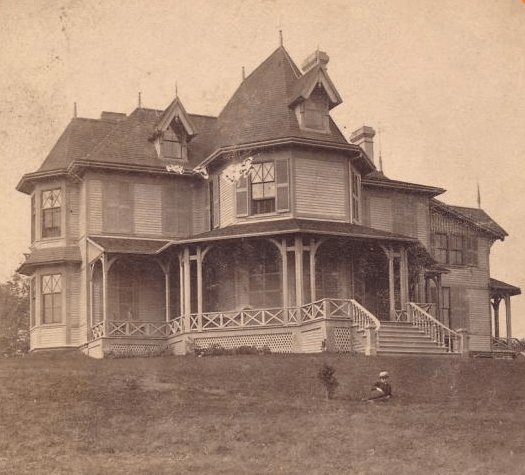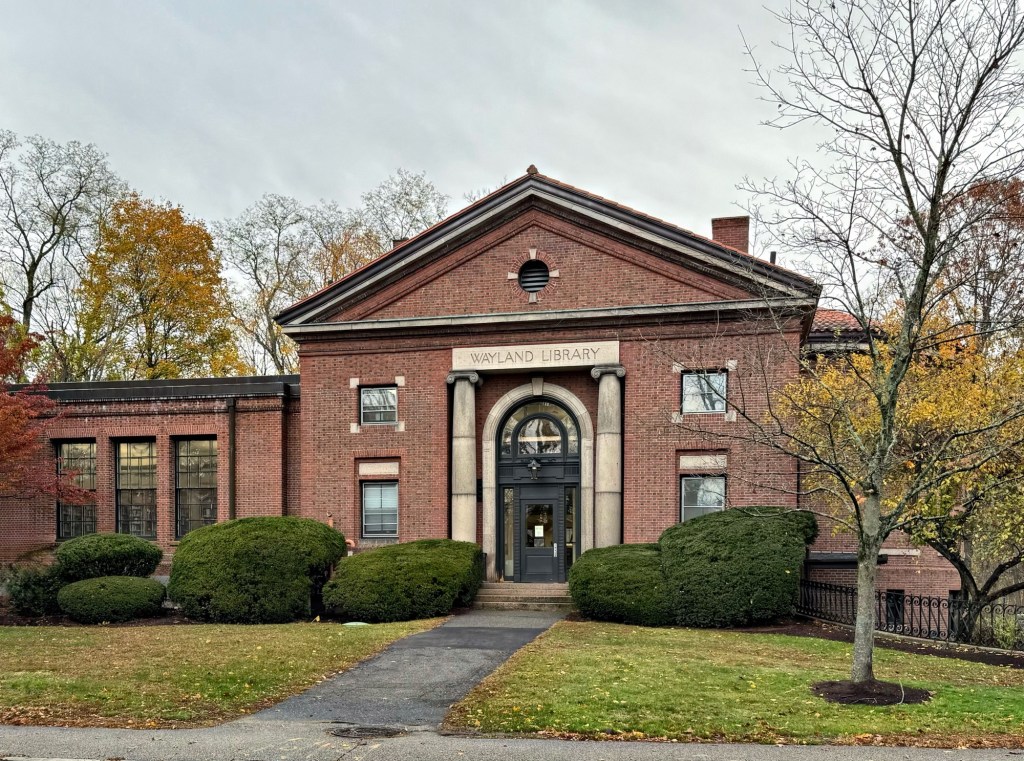
Wayland Public Library // 1900

The Wayland Public Library is not only significant architecturally, but also historically as it was founded in 1848, with some claiming that it is the second free public library established in the United States. The first physical space for the Wayland Public Library was established in 1850 using a small room in the Town House. The Town House was outgrown and replaced in the 1870s by a large, Victorian Town Hall (razed in 1957) with designated space in the building for the expanded town library. As Wayland became an affluent Boston suburb in the late 19th century, wealthy resident, Warren Gould Roby (1834-1897), who lived just north of the town hall, donated land and $25,000 to the town for the purpose of constructing a library
that would be as fireproof as possible. Designed by architect, Samuel Mead of the firm, Cabot, Everett & Mead, the handsome building is said to have been inspired by Mead’s travels to Italy where he gained an interest in Roman architecture and Renaissance art. The influence is seen on the exterior with the Romanesque Revival style and on the interior with an ornate frieze around the rotunda. The building was expanded in 1988 by Tappe Associates and remains one of the great early 20th century libraries in New England.
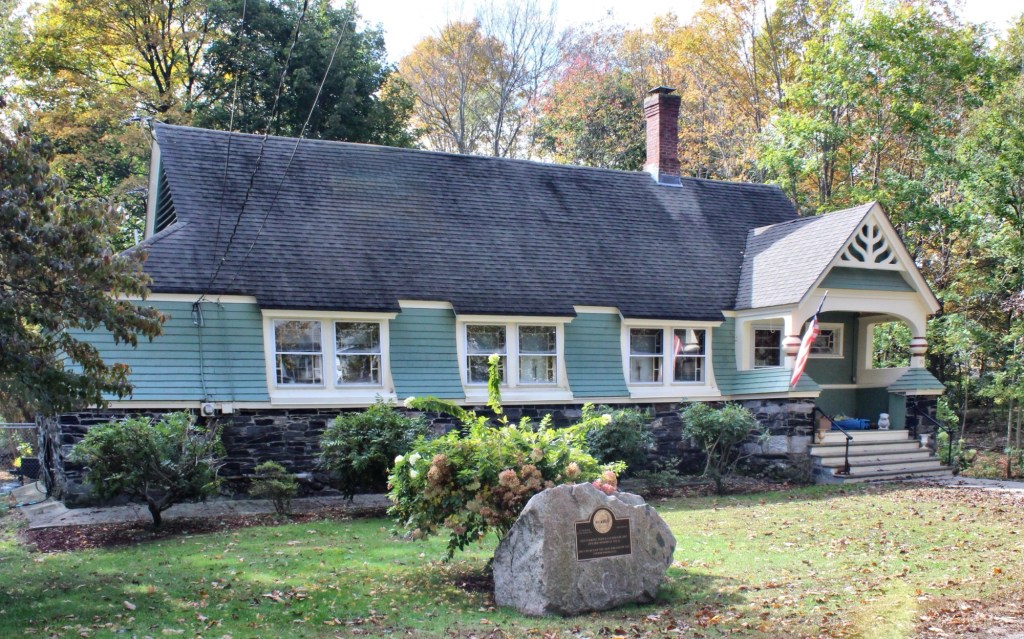
Swedenborgian Church of Lancaster // 1881

Built in 1881, the Swedenborgian Church of the New Jerusalem in Lancaster, Massachusetts, is a handsome Victorian-era chapel that has been well-preserved for nearly 150 years. The Queen Anne/Shingle style church was designed by architect Francis Ward Chandler of the firm, Cabot & Chandler, for the local Swedenborgians in Lancaster, some of which likely spent summers in Lancaster from Boston. The membership of the church dwindled in the early 20th century, and the congregation sold the church to a local women’s social group, the Current Topics Club in 1923. The women’s club met in the old church and maintained the building for nearly a century until the building sold to private owners in about 2007, who converted it to a residence, preserving the unique architecture we still see today.

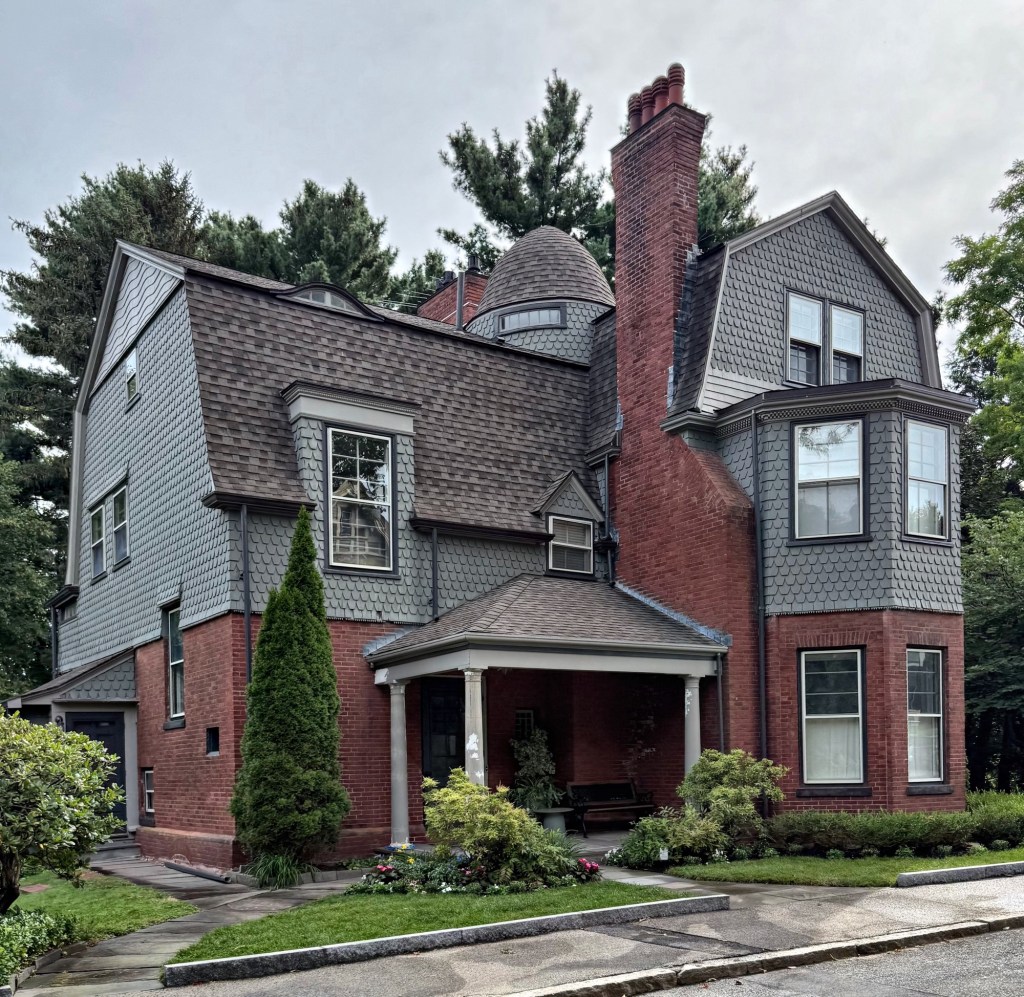
Charles Storrow Rental House // c.1884

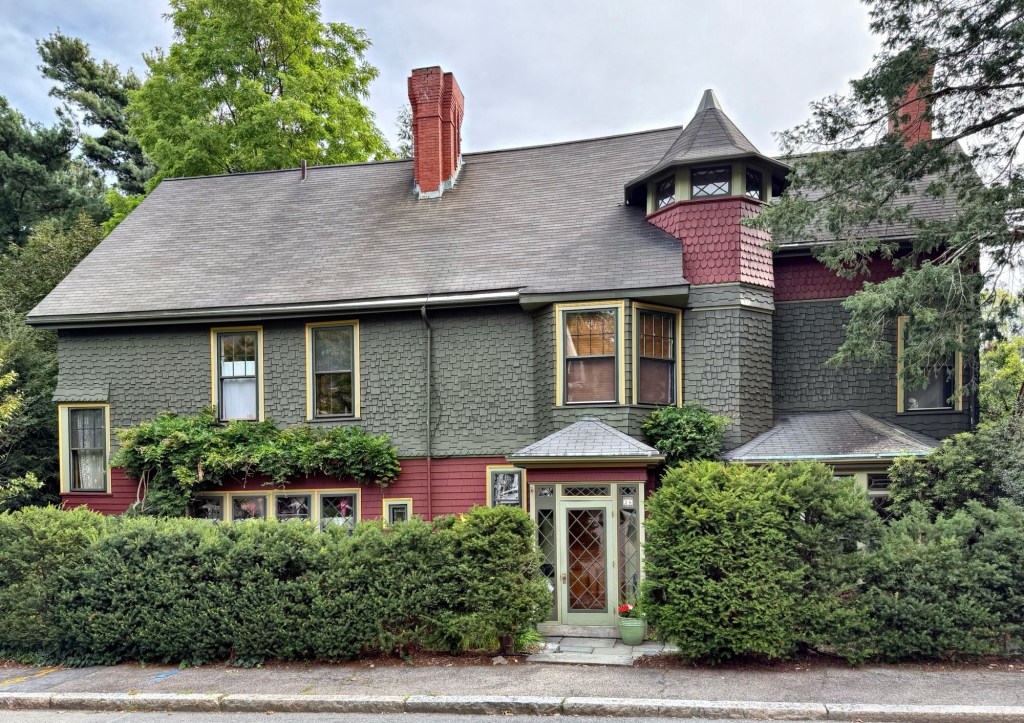
This charming and quirky Queen Anne style house on Edgehill Road in Brookline was built as a rental property on the estate of Charles Storrow (1841-1927), a wealthy businessman who lived in his home next door (see last post). Like his own home, the residence was designed by Edward Clarke Cabot, his wife, Martha’s father, who utilized varied materials, forms, and roof shapes to create a unique composition unlike anything else in the neighborhood. The bulbous central tower and eyebrow and wall dormers also add intrigue to the design.

Charles Storrow House // 1884

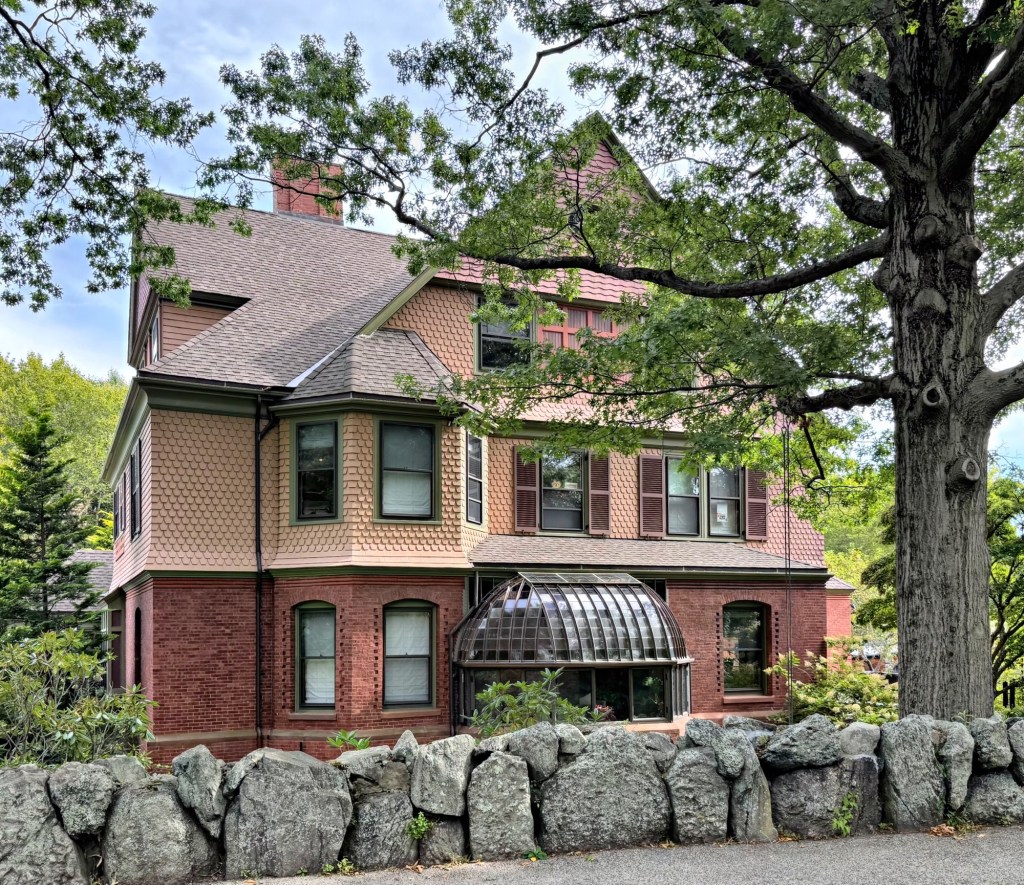
Facade

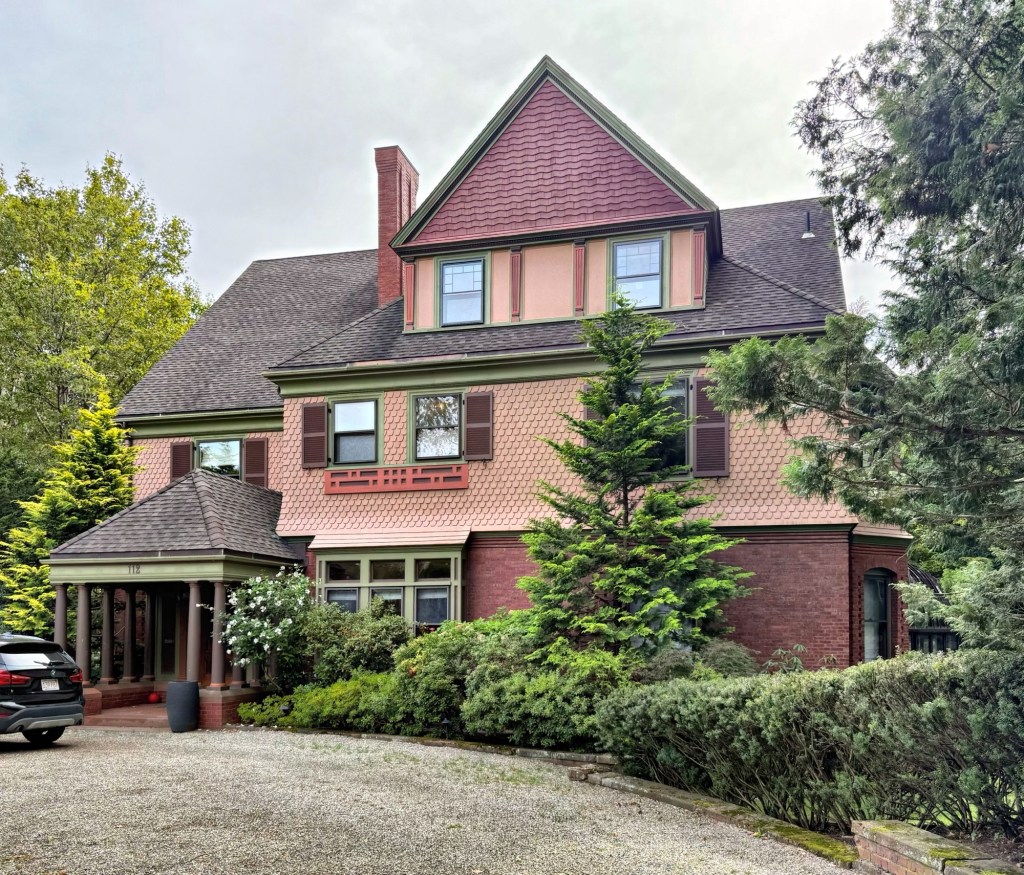
This shingle and brick Queen Anne style house at 112 High Street in Brookline, Massachusetts, was built in 1884 for Charles Storrow and his wife, Martha Cabot Storrow from plans by architect, Edward C. Cabot, Martha’s father. The lot here is said to have been gifted to Charles from his father, Charles Storer Storrow, a prominent civil engineer and industrialist, who is known for designing and building the dam and textile mill complex in Lawrence, Massachusetts. Besides the Victorian main house, the property included a historic stable and a detached house on an adjacent lot, which appears to have been rented by Mr. and Mrs. Storrow. The property was designed by Frederick Law Olmsted’s firm, with rustic rock walls, natural topography, and large, mature plantings. The Storrow House originally had stained glass windows designed by John LaFarge, which were sold in the 1970s. 

Side elevation.

Samuel Cabot Jr. House // c.1886

This altered Queen Anne/Shingle style residence on Edgehill Road in Brookline, Massachusetts, was built around 1886 as a suburban retreat for Samuel Cabot Jr. (1850-1906) and his wife, Helen (Nichols) Cabot. Samuel Cabot, a member of the affluent and well-connected Cabot family of Boston, was a chemist who worked alongside his uncle, Godfrey Lowell Cabot, to produce household disinfectant, sheep dipwood preservatives, and shingle stain using coal tar that was a by-product of the gas works in Boston. Their companies would split, with Samuel’s part of the company continuing as Samuel Cabot Incorporated, and Godfrey’s became Cabot Corporation. To showcase his company’s amazing wood stains, Samuel Cabot had this house built in Brookline, from plans by his uncle, Edward Clarke Cabot, of the firm Cabot & Chandler. In the 20th century, the house was somewhat streamlined with some dormers removed and the main entry relocated to the present location.

Boston Cooperative Building Company Tenements – Regina Pizzeria // 1886

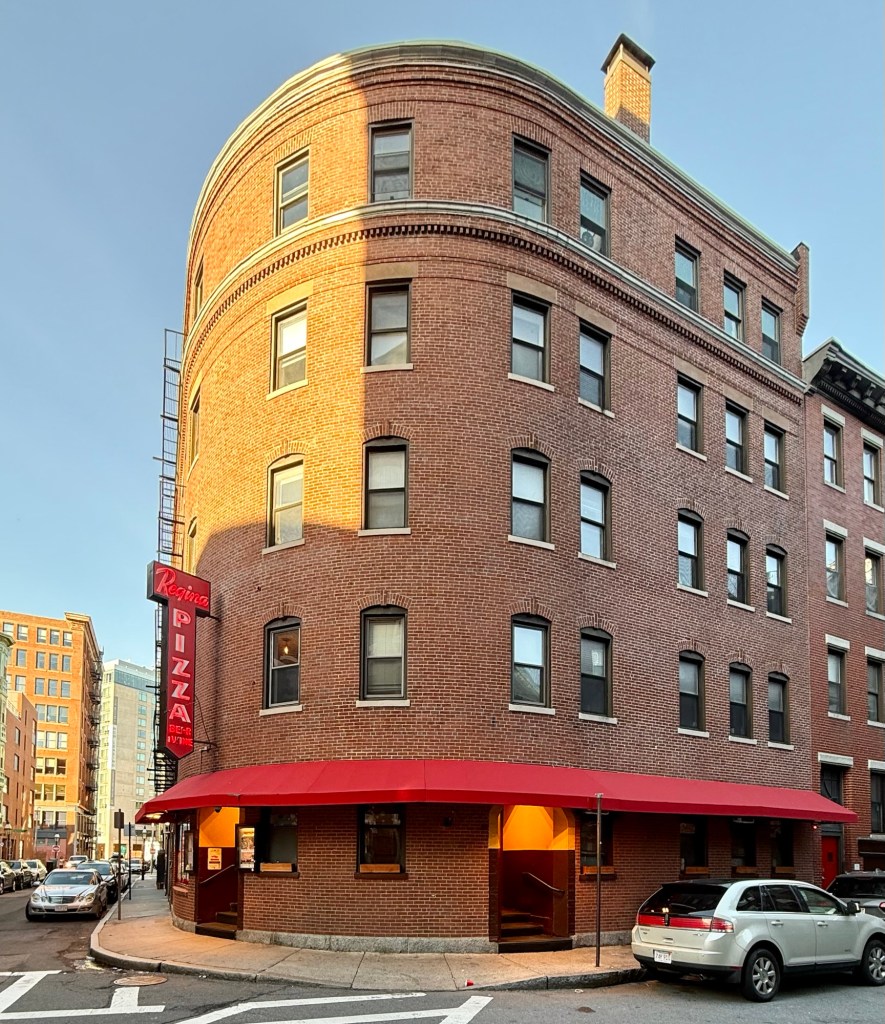
What is your favorite pizzeria in the Boston area? For many, it is likely to be Regina Pizzeria, but specifically this location in Boston’s North End. The building was originally constructed in 1886 for the Boston Cooperative Building Company, a charitable organization which built and rented tenement housing for low-income residents in the city. Many recently arrived immigrants would have lived in the building and paid a nominal rent, giving them the opportunity to work and grow their savings to move into better, more permanent housing. The Association was incorporated in 1871 and its original stockholders represented the financial elite of Boston. As a result of their financial backing, the association was able to hire the white-shoe architectural firm of Cabot & Chandler to design this tenement block in 1886. While not ornate, the building fits within the late 19th century vernacular of brick tenements of the North End. The building is now best known as the home to Regina Pizza, which was founded in 1926 by Luigi D’Auria, who was born in Campania, Italy, who purchased the building around that time. Regina Pizza (translated to “Queen Pizza” in Italian), was sold to the Polcari family in 1956, who have operated the restaurant since. The pizzeria with its prominent blade sign is one of the best landmarks in the North End.

“Morningside” // 1872

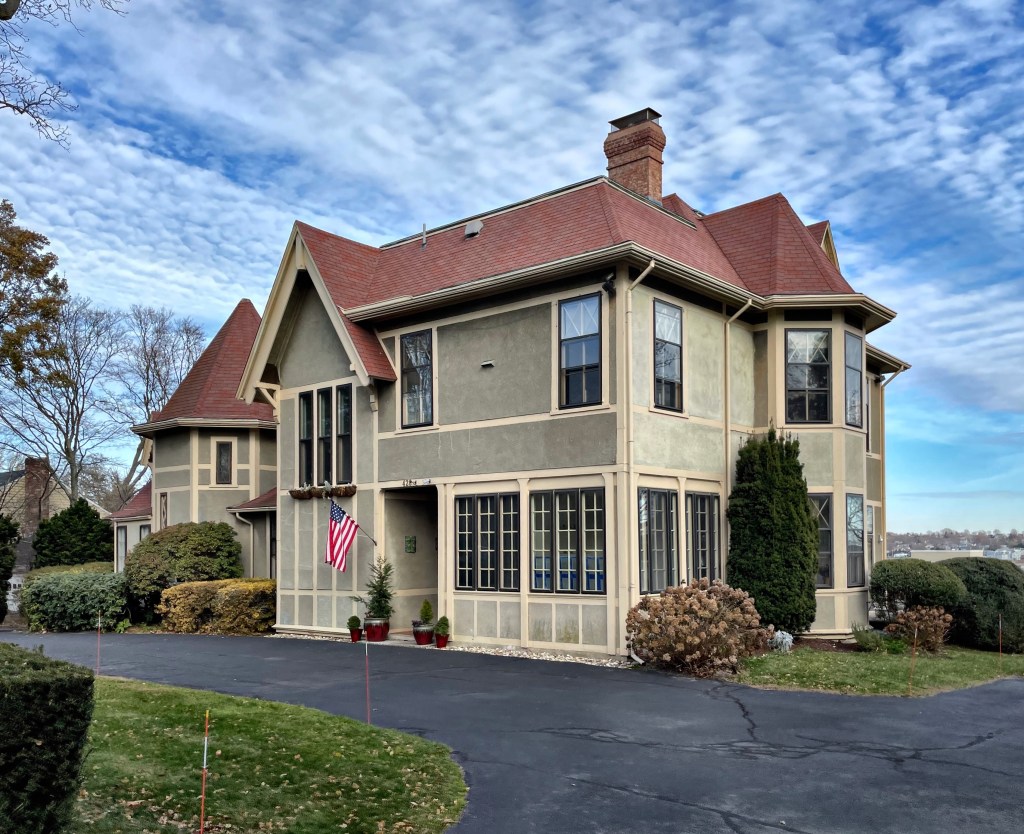
While many of the summer cottages in Newport retain much of their architectural and historical integrity, it is not always the case. This cottage, named “Morningside” barely resembles its original 1873 design. The summer home was built for William Barton Rogers (1804-1882), a scientist, educator, and best-known as founder of the Massachusetts Institute of Technology. He sought a place of rest and leisure, away from the stresses of Boston and running a new college, so he hired the Boston firm of Cabot & Chandler to design a Stick style cottage for him to spend the summer months at. In his diary for October 11, 1872, Mr. Rogers wrote, “Removed [from Cliff House Cottage] to our new home on Gibbs Avenue, at 4.30 o’clock. I have decided to name the place ‘Morningside.'” The house was his respite from stresses and he loved to spend time here with his family. President Rogers died after collapsing during a speech at MIT’s 1882 commencement exercises. His last words were “bituminous coal.” After the property sold out of the Rogers estate, the house was remodeled with stucco siding and much of the original Stick detailing was removed or covered. Morningside is now divided into condominiums.

Morningside c.1880s