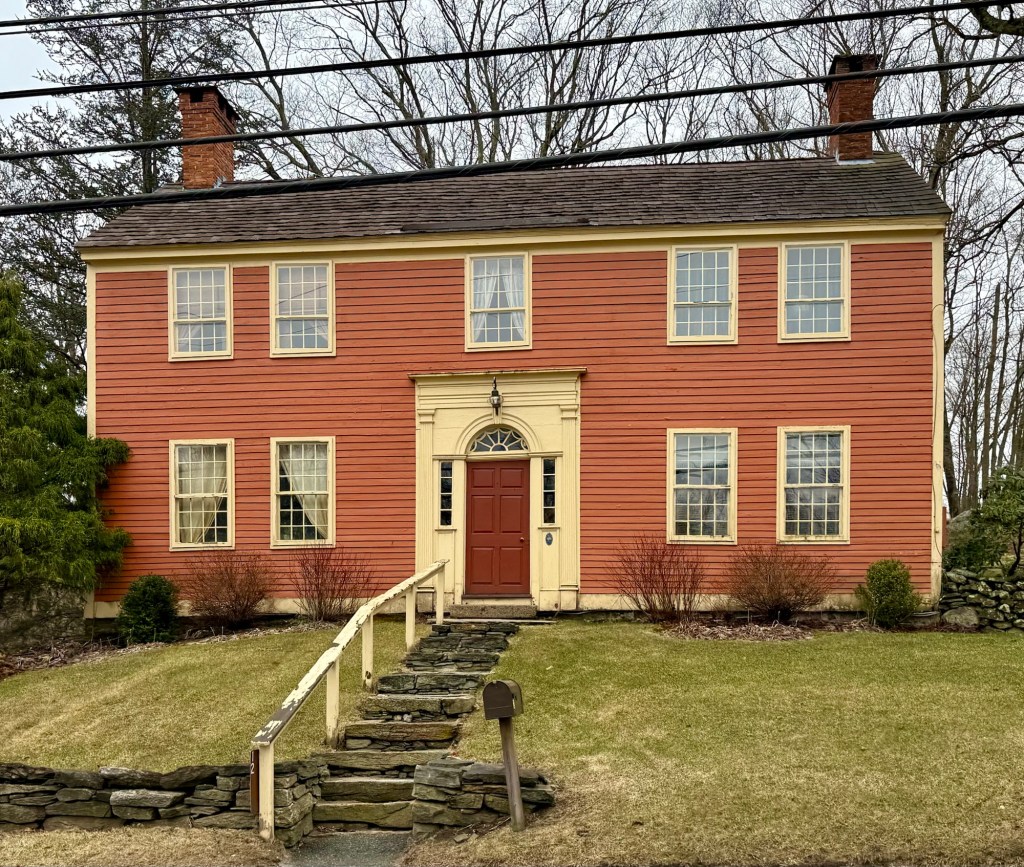
Turnpike House // c.1810

This house in Canterbury, Connecticut, is known as the Turnpike House and dates to the early 19th century. A great example of a Federal style residence, the symmetrical, five-bay home exhibits pair chimneys, multi-light double-hung windows, and an elaborate center entry with sidelights and fanlight transom. The house was built along the Windham Turnpike (now Connecticut Route 14), which was an early toll road established in 1795. Behind the main block of the house is a squat gambrel-roofed ell, that is believed to be made from an older house that previously stood on this site, perhaps dating as early as 1745. According to tradition, this early house, which was also at one time supposedly used as a jail, was the home of Rev. Dr. James Coggswell when he ran a school for boys in Canterbury. One of his pupils at that school was Benedict Arnold, the infamous turncoat.
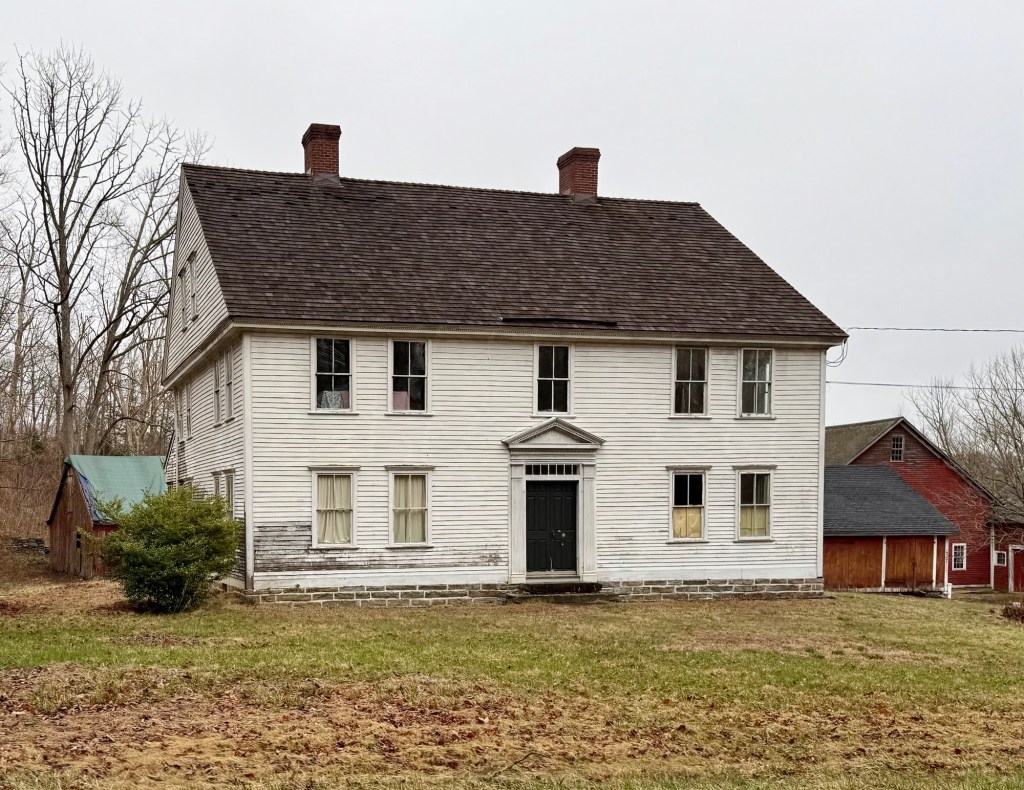
Asa Bacon Farmhouse // 1783

Located in northern Canterbury, Connecticut, this rural farmhouse was built following the American Revolution, showcasing the emergence of the Federal style from the Colonial Georgian type farmhouses before. The house dates to 1783 and was built by Captain Asa Bacon (1735-1819), a wealthy farmer and captain in the Revolutionary War. The home was also occupied by his son, Asa Bacon Jr. (1771-1857) a Yale educated lawyer who practiced law in town before moving to Litchfield. Asa Jr. was a turnpike promoter, advocating for turnpikes through the formerly sleepy agricultural town, opening it up to trade and commerce. The early Federal-period home features a five-bay facade and central entry with triangular pediment and fluted pilasters. The house appears much like it would have when originally built besides the Victorian-era two-over-two window sashes installed in the late 19th century. The farm even retains a few 19th century barns, likely built when the windows were replaced by later owners.