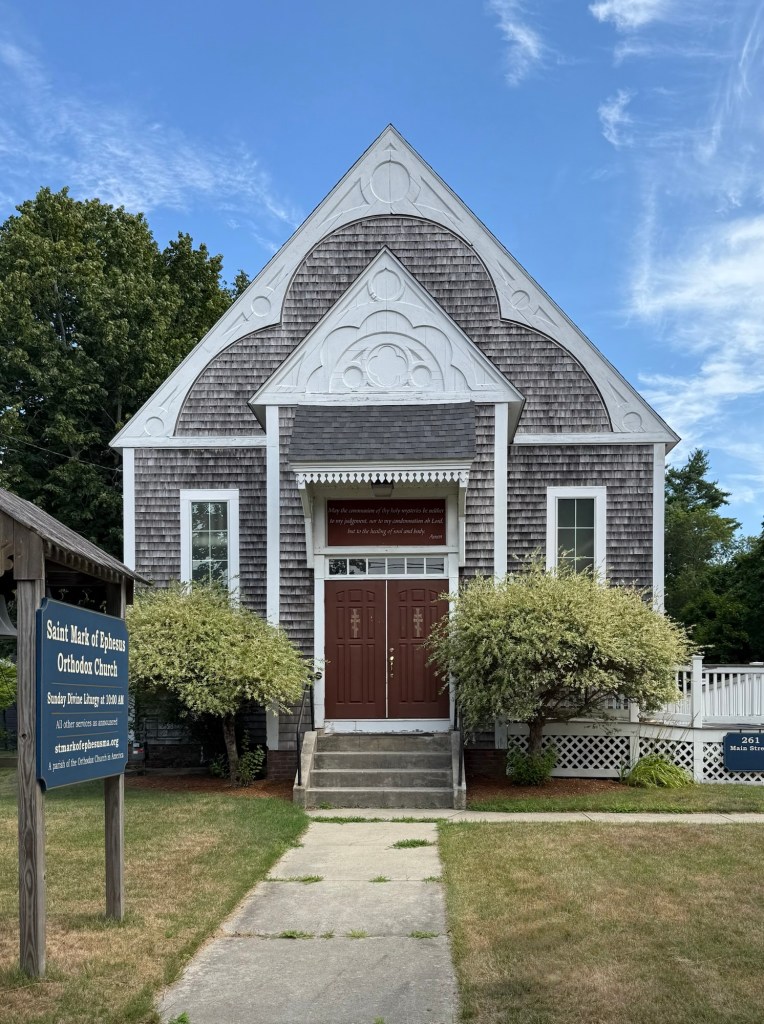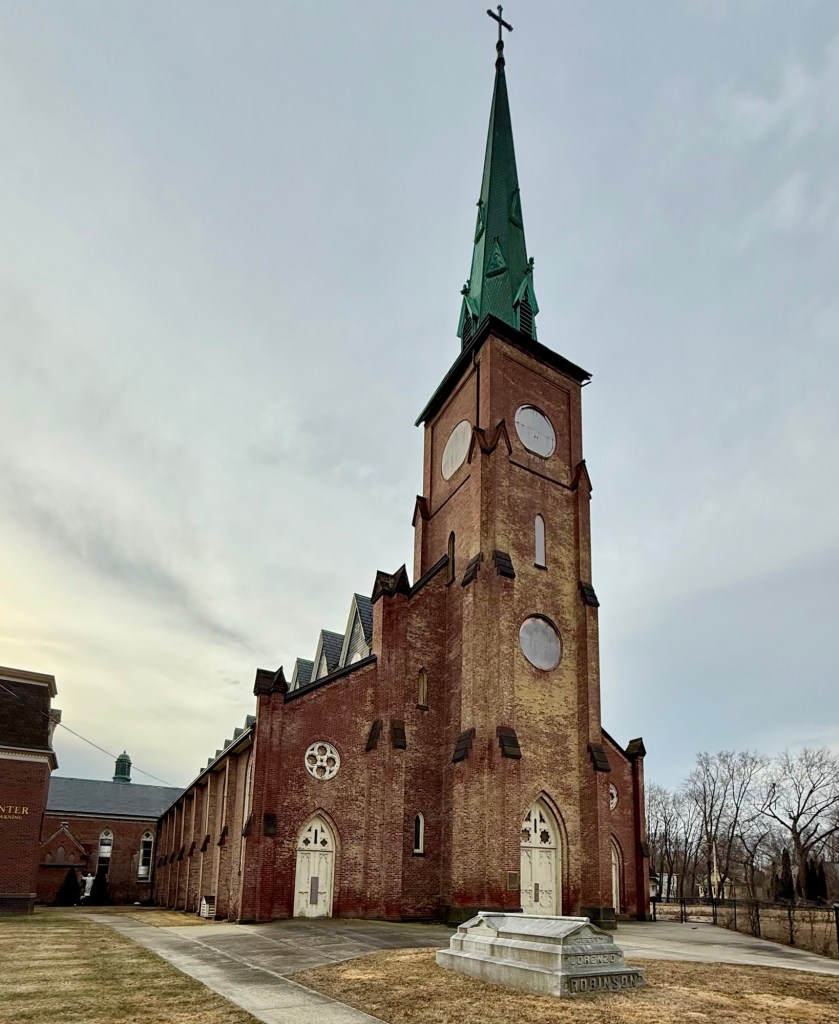
St. Mark’s Orthodox Church // 1882

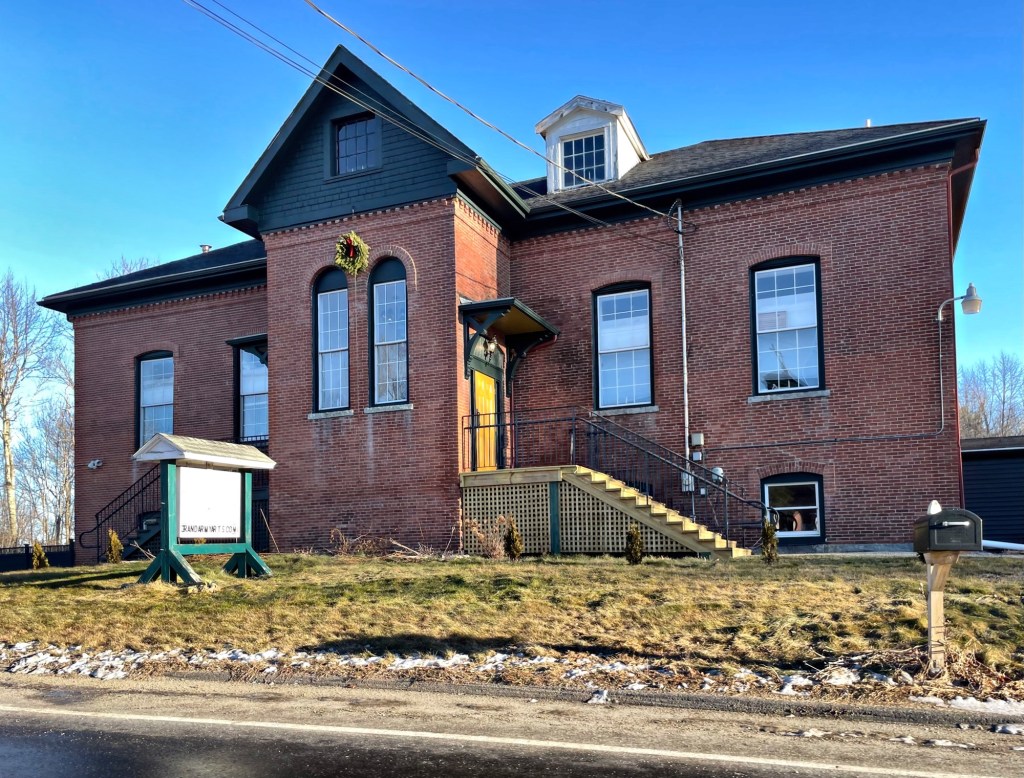
Built in 1882 as a Catholic mission church, the St. Mark’s Orthodox Church on Main Street in Kingston, Massachusetts, stands as a lovely example of a Victorian Gothic ecclesiastical building in a great state of preservation. In the waning decades of the 19th century, the Irish and Catholic population of Kingston grew, which led members to petition the Diocese to erect a mission church closer to their homes, rather than attend St. Peter’s in Plymouth. Originally called St. Joseph’s Church, the building served the local Catholic population until after the new, brick St. Joseph’s. Church was built further down Main Street in the 1930s. The local St. Mark Of Ephesus Orthodox Church congregation purchased the chapel in 1995 and restored the building, removing faux-brick shingling and reshingled the exterior.

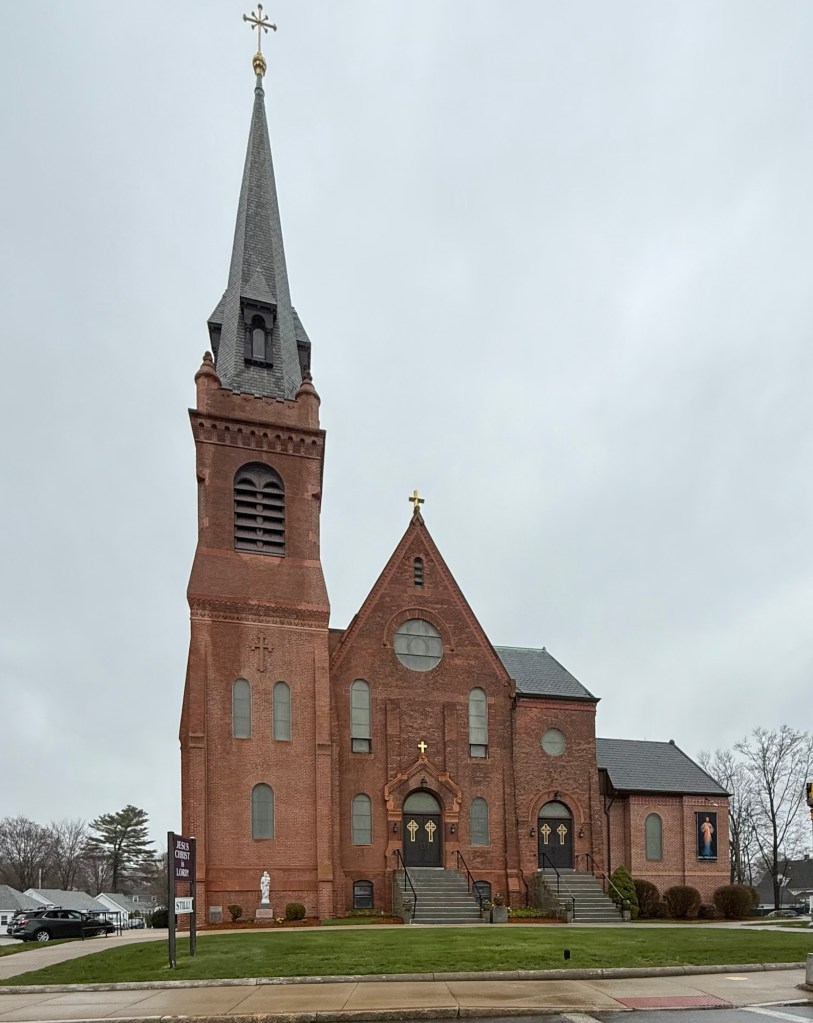
Holy Family Parish Church // 1882

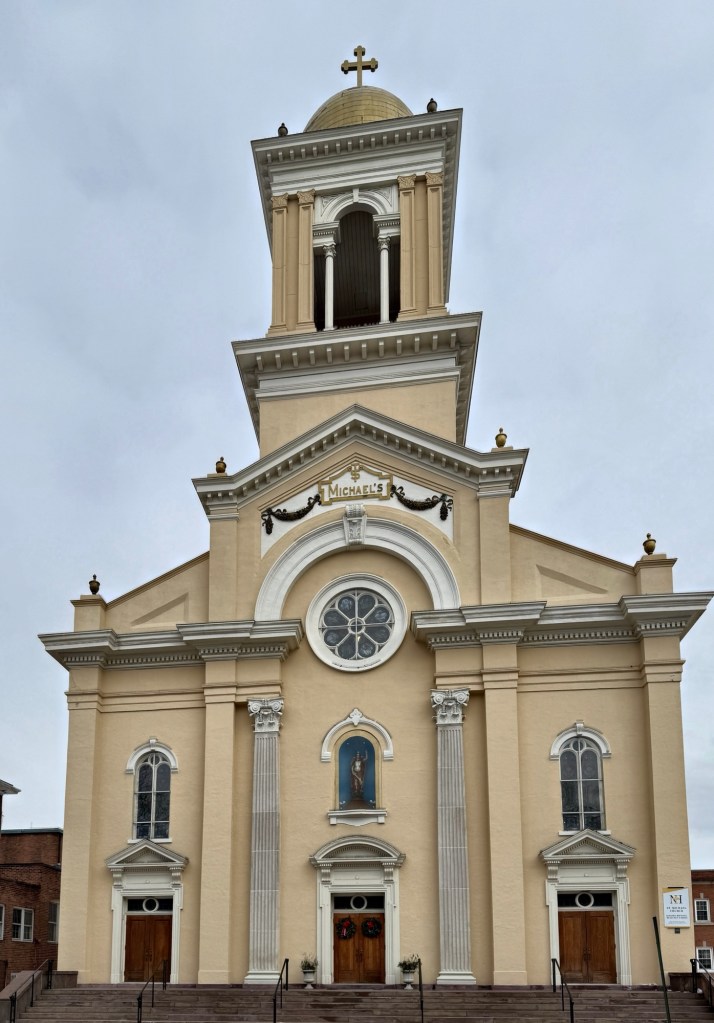
In 1872, due to industrialization and increased numbers of immigrants settling in the area for work, it was decided that a new Catholic parish should be established in East Abington. Two years later, the village of East Abington incorporated as Rockland. It would be a decade later, in 1882, until the Holy Family Parish would be established, beginning planning of a true house of worship for the growing number of Catholics here. When the Holy Family Church was constructed in 1882, only a quarter of the Rockland’s approximately 4000 residents were Catholic at that time. Most of the original congregation consisted of Irish immigrants who worked in the town’s boot and shoe manufacturing industry. As the industry continued to flourish in the 1890s and 1900s, new shoe factories were built, bringing more workers to Rockland, including: Canadians, Italians, and British to the area. The town’s Catholic community grew as a result. The Victorian Gothic style Catholic church was built in 1882, with no known architect at this time. A complex of other buildings, including a school, rectory, and community center.

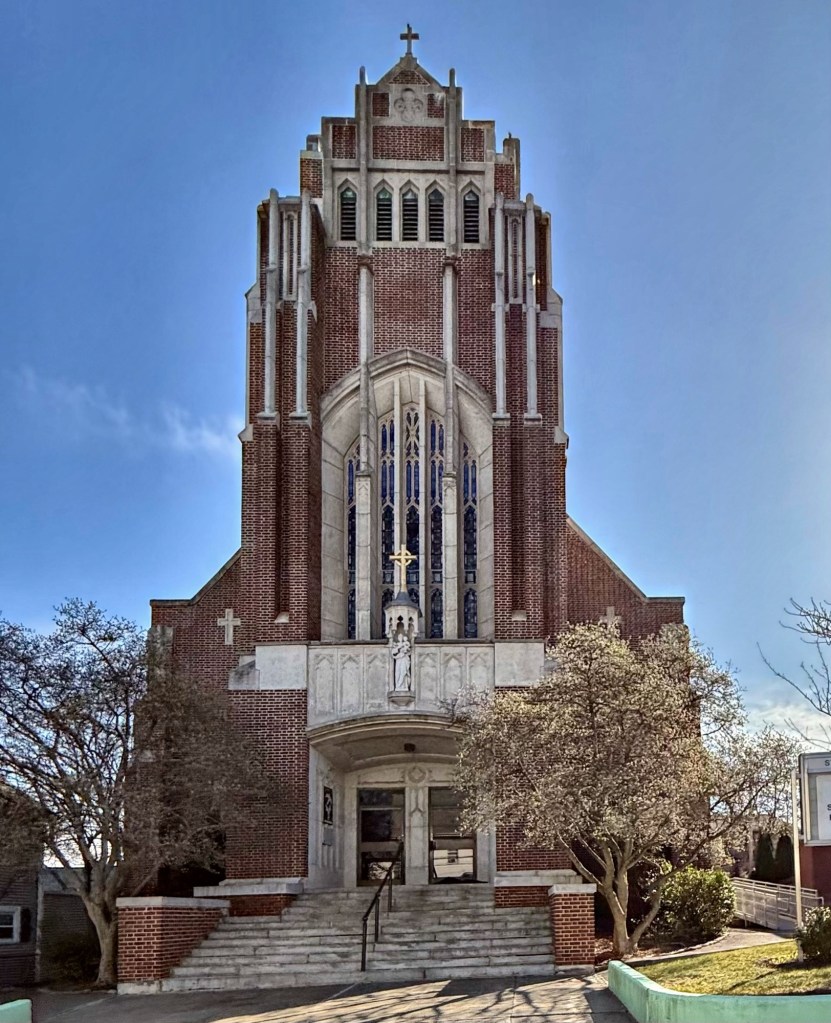
St. Joseph’s Catholic Church // 1915

As the city of Central Falls, Rhode Island, continued to see population growth spurred by the industrial development, immigrant groups began to seek to establish their own community centers and houses of worship. The local Polish population was a major immigrant group that organized and became one of the Polish Catholic Churches in New England. Founded in 1905, the St. Joseph Parish waited years until it had the funding to erect this church, which was designed in 1915 by Providence architect John F. O’Malley. The brick and stone church is Neo-Gothic in style with ornate masonry and detailing. 

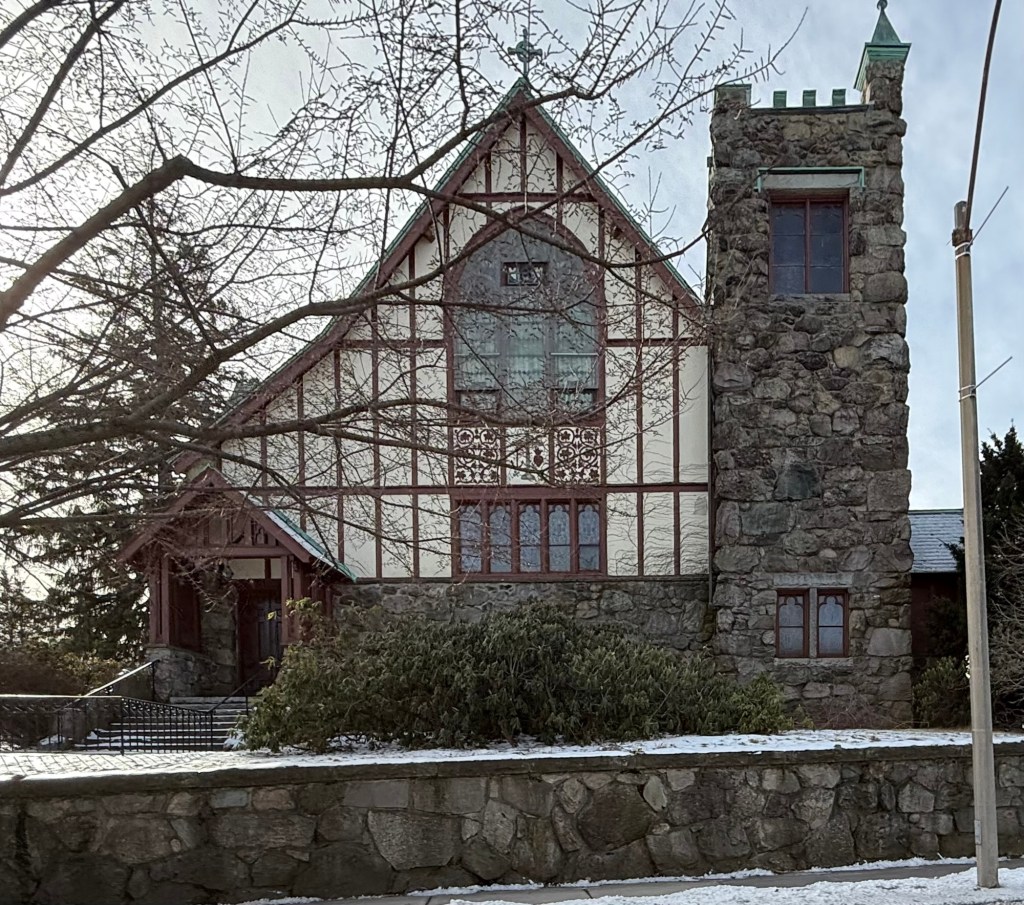
Saint Lawrence Catholic Church // 1896

The parish known today as Infant Jesus-St. Lawrence Church was established in 1898, two years after its original chapel building – shown here – was erected to serve as a mission church of St. Mary of the Assumption in Brookline Village. The St. Lawrence Church was built in 1896 on Boylston Street in the Chestnut Hill/South Brookline area of the town, built to serve a more local, well-off population in the area. The church (and the adjacent rectory) was designed by Franz Joseph Untersee, a Swiss-American architect, and Brookline resident, who designed many Roman Catholic churches throughout the eastern part of United States. The Neo-Gothic church building is built of wood and stone with stucco and applied half timbering. Besides the large stained glass window and applied ornament, the church is notable for its square, irregularly-laid granite tower with crenelation. The church remains active in the community and very-well preserved inside and out.

Church of the Holy Name of Jesus, Chicopee // 1857

With crop failure a common occurrence in 1830s Ireland, immigration from Irish to New England surged with workers and families looking for a better life. Labor opportunities were abundant in the newly established mill town of Chicopee, with the Irish flocking here to dig canals, build dams and mills and later work in those same buildings. Their wives and daughters would work as cooks and maids, but later as operatives in those same mills. As many Irish were Catholic, it became apparent that a Catholic congregation should be established, St. Matthew’s was first organized in Chicopee in 1838. An earlier wood-frame church was built and used for a number of years until a large site on South Street was purchased by the Diocese for a new campus. Irish-born ecclesiastical architect Patrick Keely designed the church building which was constructed between 1857-1859 in the Gothic Revival style. The church was dedicated the “Holy Name of Jesus” church and exhibited sandstone-topped buttresses, rows of pointed dormers running down the clerestory on the sides, and a prominent central steeple. In 1910, the present copper spire replaced the original steeple which was damaged and burned in a lightning strike. The complex grew throughout the 19th and 20th centuries, with a rectory, schools, convent and monastery built on the site. Sadly, due to dwindling membership and fiscal considerations, many of these buildings were demolished in the past decades. The church appears now to be closed and is still owned by the Archdiocese of Springfield. I hope something can be done to preserve this landmark structure and the remaining buildings on the site.

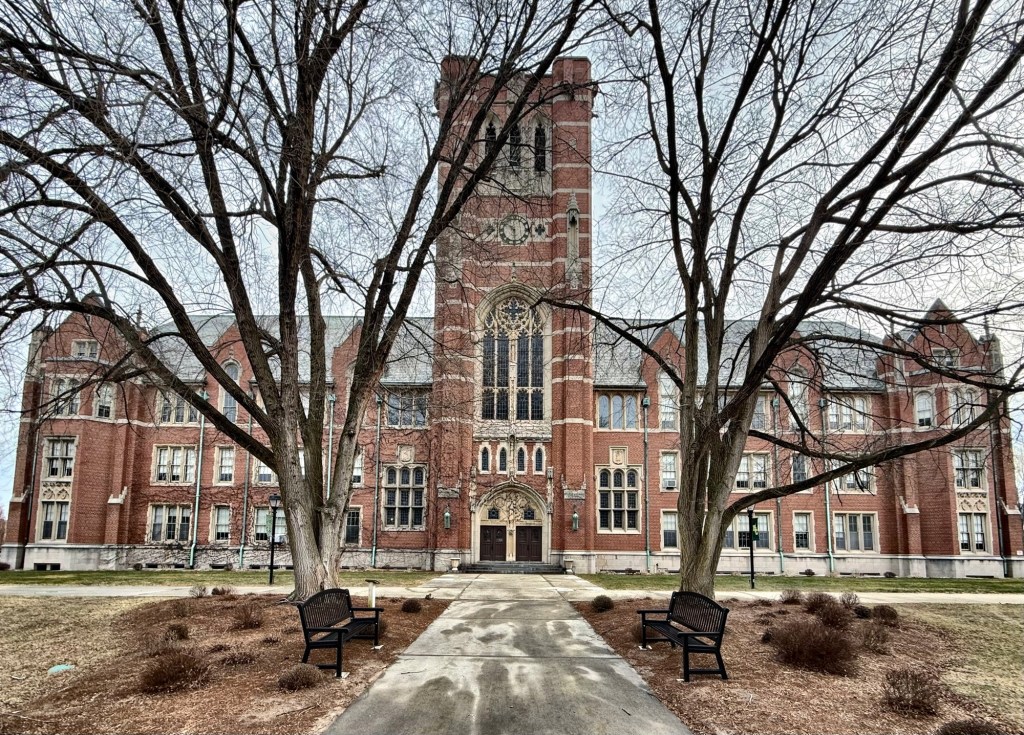
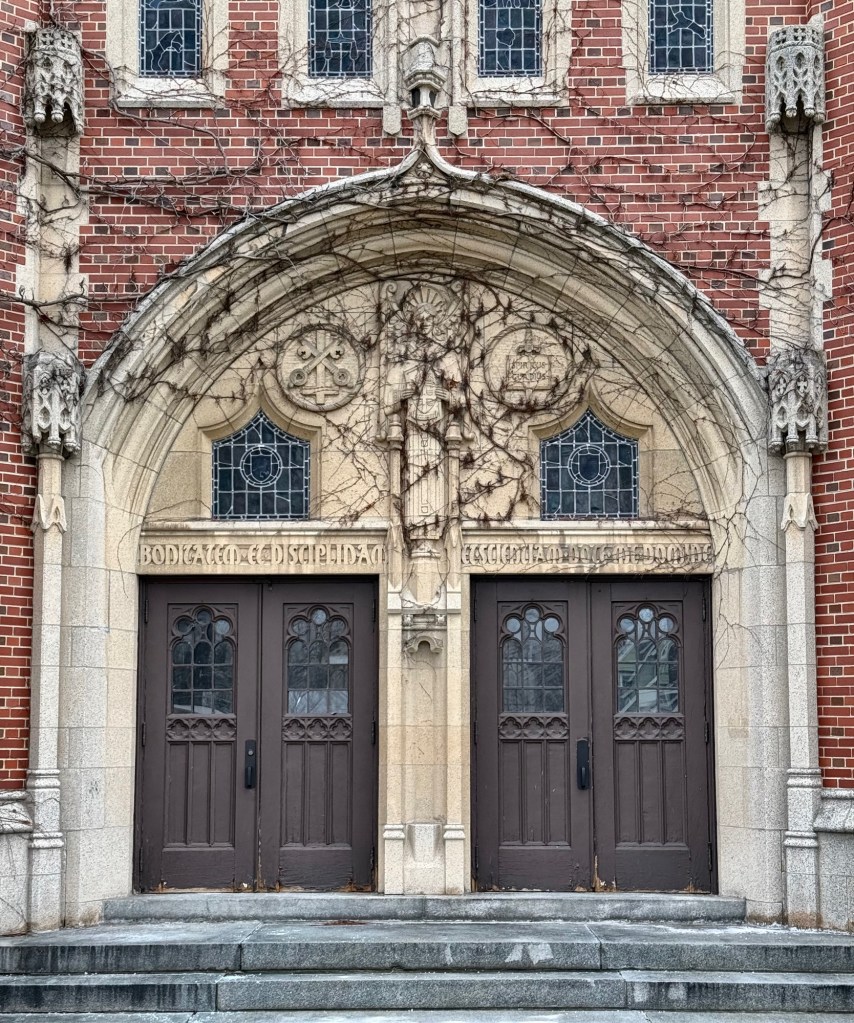
Administration Building – Elms College // 1932

Elms College in Chicopee, Massachusetts began as the Academy of Our Lady of the Elms, a Catholic boarding school for girls established in Pittsfield by the Sisters of Saint Joseph in 1897. The academy was relocated to Springfield Street in Chicopee through the efforts of Bishop Thomas D. Beaven in 1899. The Academy provided elementary and secondary education with a Normal School component that prepared young women for careers in teaching. In 1924, Bishop O’Leary announced the intention to expand the school into higher education, creating a women’s college. The college charter was approved in 1928 and the Academy became the College of Our Lady of the Elms. Planning and construction of the Administration Building (later renamed Berchmans Hall in 1983) began immediately after the incorporation of the College in 1928. Designed by John W. Donahue, the official architect of the Diocese of Springfield at the time, Berchmans Hall is a landmark example of the Collegiate Gothic/Neo-Gothic style that proliferated higher education and ecclesiastical buildings in the early decades of the 20th century. Completed in 1932, the new building included offices, modern classrooms and laboratories. The back section contained a gymnasium in the basement and an auditorium on the main floor. The building remains the main building on the Elms College campus and serves as an important visual anchor to the school.

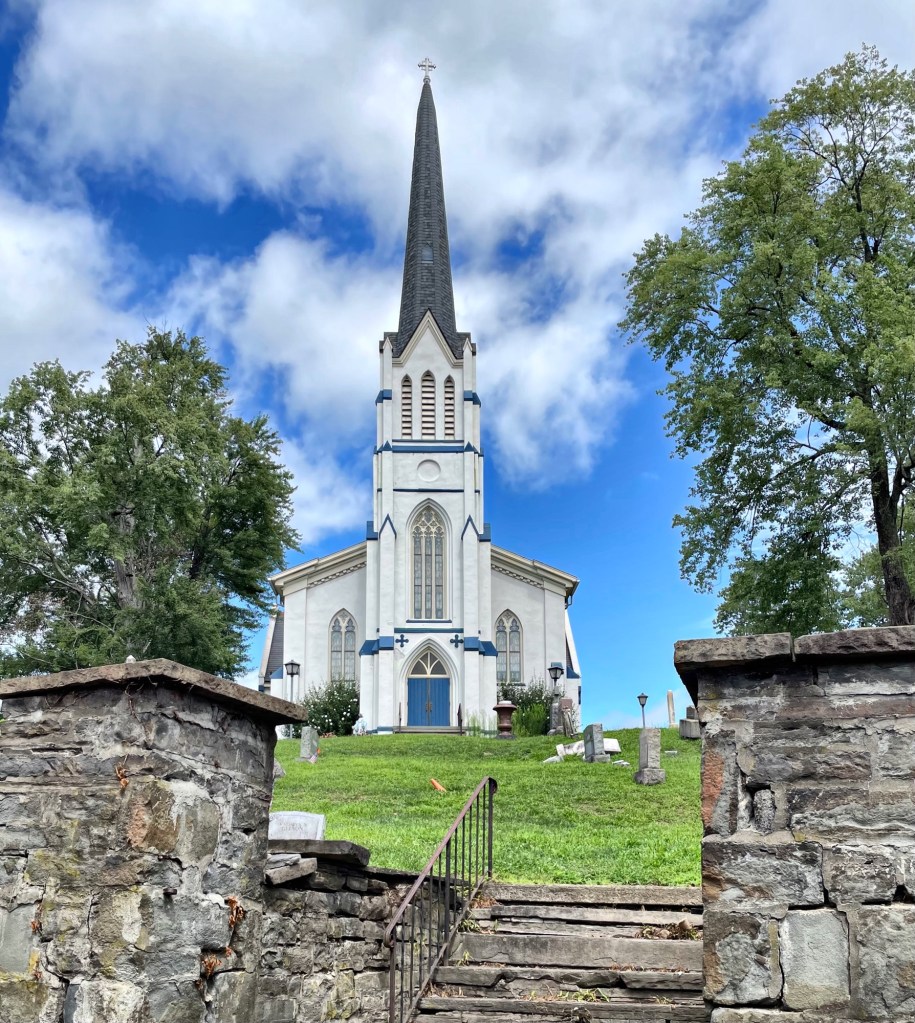
St. Mary’s of the Snow Catholic Church // 1833

In 1830 Rev. Philip O’Reilly was sent by Bishop John Dubois to establish missions and build churches along the Hudson River wherever there were sufficient resident Catholics. O’Reilly visited the village of Saugerties, in Ulster County in 1832 and began holding services in private homes. The area was home to many Irish residents working in industry, a large number of which were Catholics, and as a result, the village here became the location of the first Catholic church in the county. Father O’Reilly founded St. Mary’s in 1833 creating the first parish of the Hudson, spanning New York City to Albany, with the cornerstone of the new church laid that same year; though, the church would be dedicated a decade later. The church cemetery grew from the first graves around the church in 1833 to fill much of the church property now occupied setting the Gothic edifice in a sea of gravestones. The church grew and eventually the steeple was added in the 1860s. It is also said that the church basement was used as a stop on the Underground Railroad. The church (like many in the United States) has struggled to maintain its large campus, which originally contained the church, a school, and convent, but the church remains in good condition, shining like a beacon on a hill on the Hudson.

St. Philip the Apostle Church // 1937

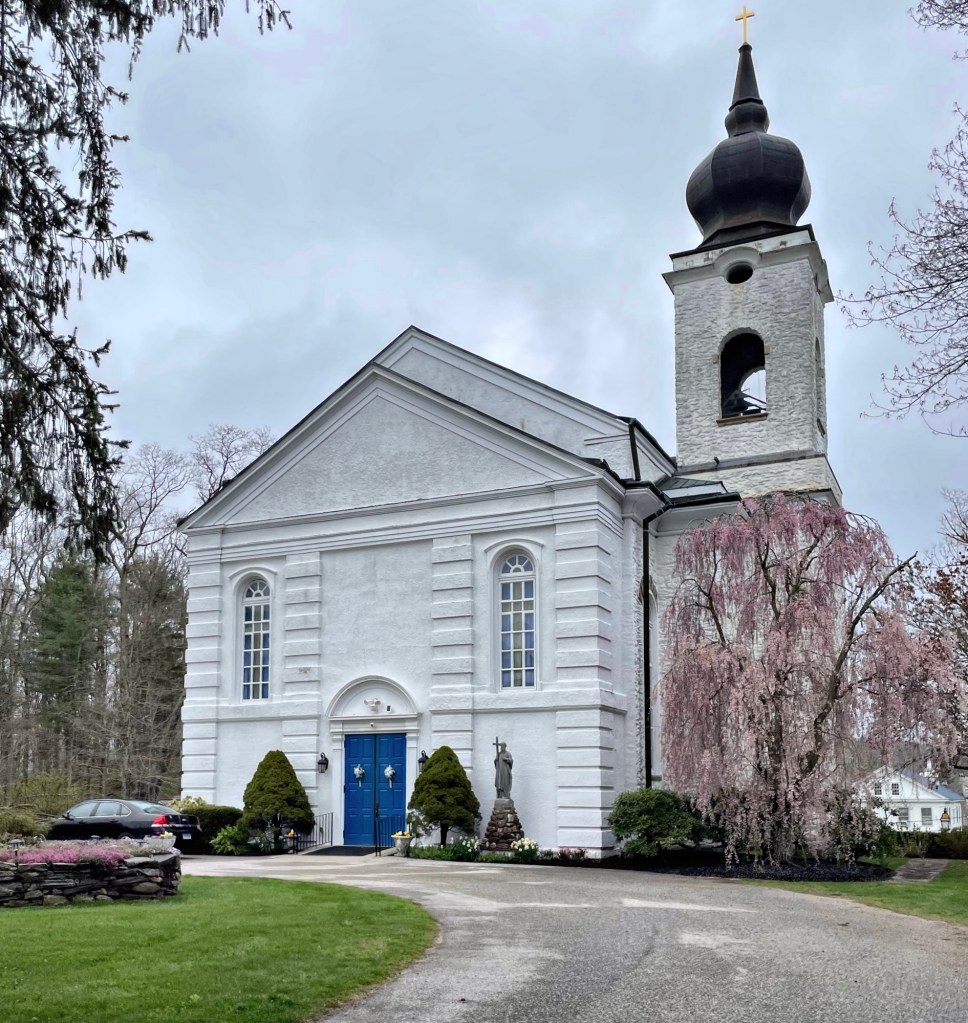
In 1921, the Catholic Diocese of Hartford purchased a Federal style farmhouse with 135-acres of land in Ashford, Connecticut, with the intention of establishing a new parish in the area. The Diocese assigned Father William J. Dunn, a Connecticut native and son of Irish Immigrants, to this daunting task. Since they had no church building at the time, Father Dunn partitioned off a section of his own home to serve as a chapel for about 100 worshipers, until the purpose-built St. Philip the Apostle Church was constructed in the 1930s. Father Dunn convinced summer resident Paul Chalfin to design the new building. Chalfin was not an architect, but he was an architectural designer whose best known building is the Villa Vizcaya in Miami, Florida. Chalfin was openly gay, and his hiring by the Catholic Church to design one of its churches in the 1930s is noteworthy. There were certainly several Irish immigrants and people of Irish descent in the congregation, but many parishioners came from small villages in Slovakia. The dome is a typical feature of churches in those villages and Chalfin included it in his design as a tribute to them. Due to material and construction costs during the Great Depression, members of the church largely built the church themselves with rocks acquired from stone walls and farms nearby. The church was completed in 1937.

St. Denis Catholic Church // 1838

Believe it or not, this church in rural Whitefield, Maine is the second oldest Catholic Church in New England! As Irish and French Canadian families settled in this part of Maine in the early 19th century, Catholic churches were needed to provide worship space for those families. The church community of St. Denis began in 1818 when Father Dennis Patrick Ryan, an Irish immigrant serving at St. Patrick Church in Newcastle (the oldest Catholic Church in New England), moved to Whitefield to serve the influx of Irish Catholics and soon founded the church. Fr. Ryan oversaw the construction on a wood-frame structure built on this site. As more Catholic families settled here, a more permanent building was needed, and between 1833 and 1838, the main portion of the present brick church building was constructed around that original church. The tower was added in 1861, and the stained glass windows also date from later in the 19th century following the growth and prosperity of the church and its members. The St. Denis Parish House was constructed across the street in 1871 and is a lovely Romanesque style building.

St. Anthony of Padua Catholic Church // 1956

Believe it or not, the city of North Adams, Massachusetts has long been home to a large Italian population. The first waves of Italians first arrived to this part of the Berkshires in the mid-late 19th century, many of which were hired to build the Hoosac tunnel, which when it was finished, was the second longest tunnel in the world. It took almost 25 years to build! Some Italians were experienced stone carvers and others worked in the cotton mills and other factories in the area. As the Italian population grew, Roman Catholic churches were required for these new first- and second-generation families in the mill town. The first St. Anthony of Padua Roman Catholic Church was erected in North Adams in 1906. Four years later, the 1910 census noted that roughly 16% of North Adams’ population was of Italian descent. After the first church burned down around 1950, money was raised to build the present church which is located across the street from Mass MoCA. The church was designed by architect Anthony DePace (1892–1977), an American architect who designed numerous Roman Catholic churches throughout the Northeastern United States area during the mid to late 20th century. Architecturally, the building features late-Romanesque and Art Moderne details. Eventually, the decline in the number of Catholics in North Adams in recent decades led to the consolidation of parishes in 2009. St. Anthony’s is the sole remaining Catholic church in North Adams and the church and parish are now known as St. Elizabeth of Hungary, possibly after a merging of multiple parishes.