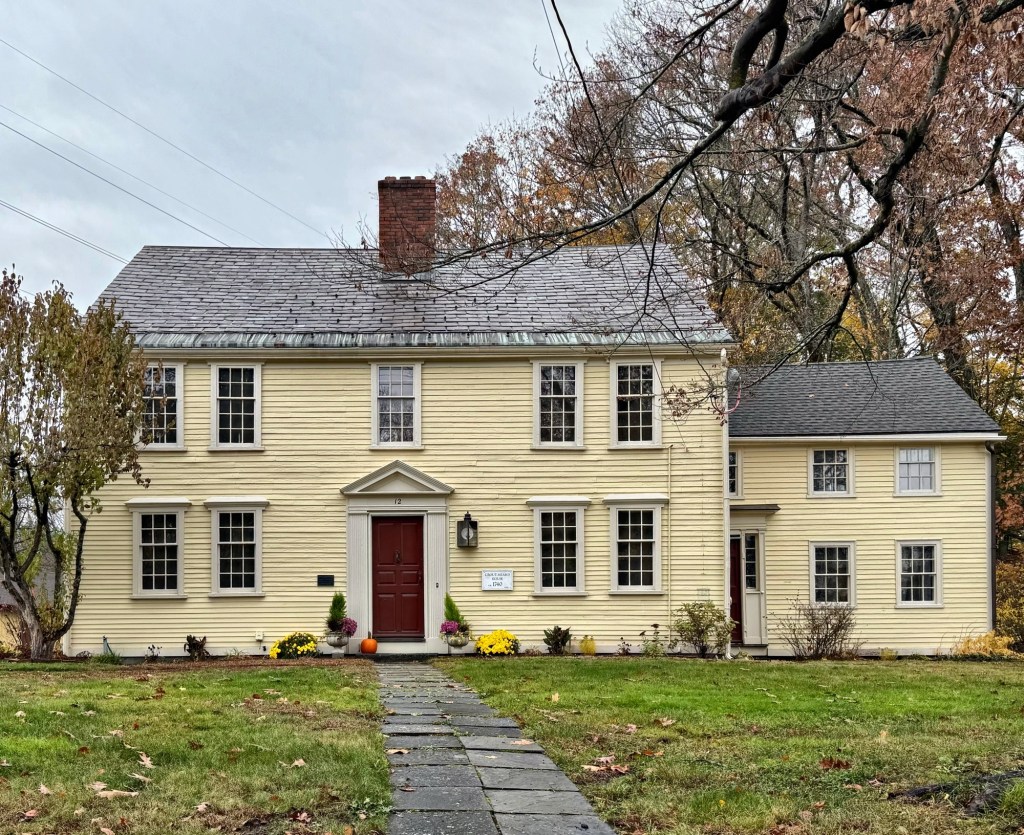
Grout-Heard House // c.1743

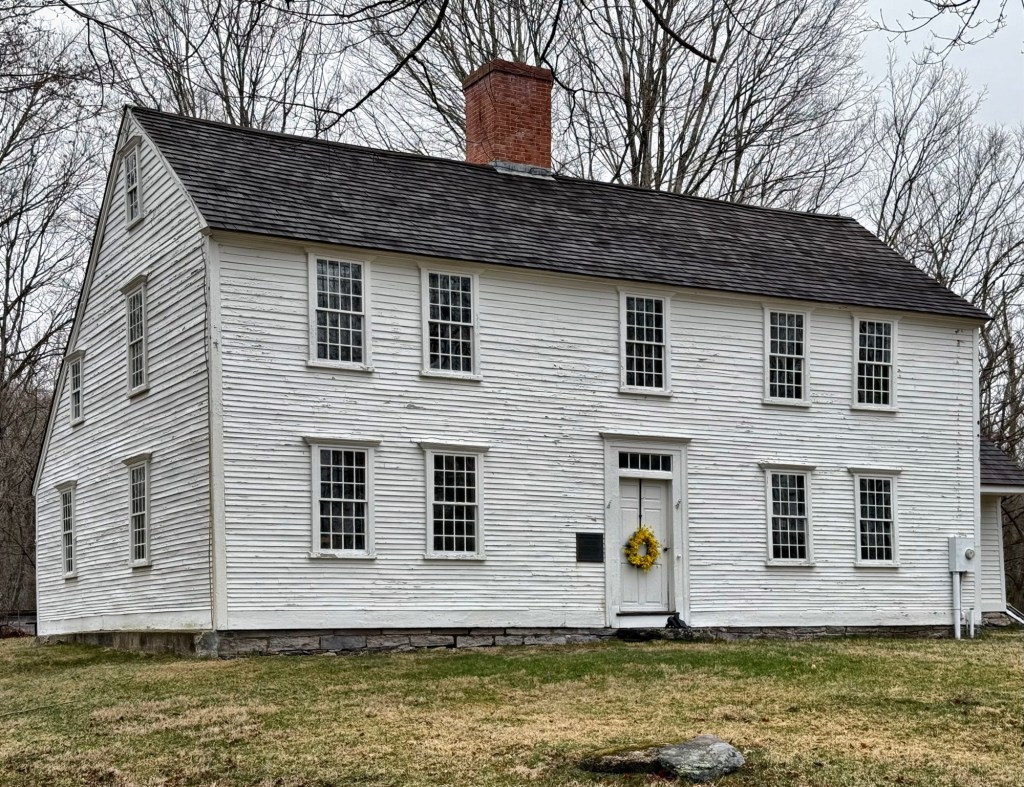
The Grout-Heard House on Cochituate Road in Wayland, Massachusetts, is one of the oldest extant residences in the community and architecturally significant as it shows the evolution of architectural tastes throughout the centuries. The house was built around 1743 for Jonathan Grout (1701-1748), a grandson of an original settler in the area, by the time of his marriage to Hannah Heard in 1743. Early records suggest that the house was originally just one bay deep and two-stories tall with a central entry. The property was sold in 1744 to Richard Heard, Jonathan’s brother in-law. In 1787, Silas Grout (1755-1820), a blacksmith, purchased the house and likely added rooms on the rear of the house. In 1822, Silas’ descendants added the side ell and the residence became a double-house in the mid-19th century. The house was moved from the site to make room for the 1870s Town Hall, and the rounded two-story side bay was added. After the Town Hall was razed in the 1950s, the Grout-Heard house was moved back to its original site in 1962. Since that date the Grout-Heard House has been the offices, research center, artifact repository and house museum of the Wayland Historical Society, who added a two-story Modern addition at the rear.
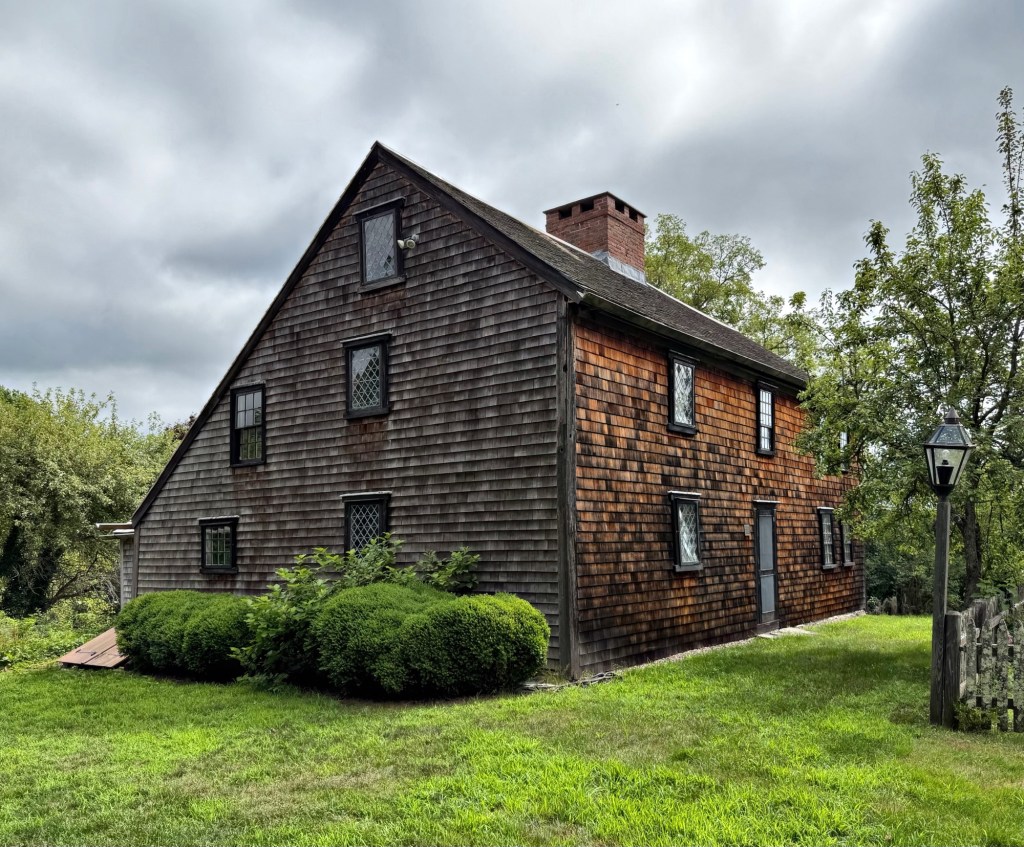
Major John Bradford Homestead // 1674

The Major John Bradford Homestead (also known as the Bradford House) is a stellar and well-preserved example of a First Period house in Kingston, Massachusetts. The house was reportedly built by Major William Bradford (1624-1704), the son of Governor William Bradford  who arrived to Plymouth via the Mayflower in 1620 and served as Governor of the Plymouth Colony between 1621 and 1657, purportedly built the west (left) half of the house in 1674 for his eldest son John Bradford and his bride, Mercy Warren. John Bradford (1653-1736) served as selectman, a deputy from Plymouth, and as a representative in the Boston General Court, who in 1717, led in the establishment of Kingston as a new town by donating land for the meeting house, school house, burial ground, training green, and minister’s house. In around 1715, John Bradford expanded this house which was not sufficient to house his wife and seven children. After centuries, the house began to show its age, and in 1921, coinciding with the tercentenary of the Pilgrims arriving to Plymouth, the Bradford House was thoroughly documented and restored by Frank Chouteau Brown and George Francis Dow. Since 1921, the property (including a historic barn moved here from a nearby site) has been owned and preserved by the Jones River Village Historical Society, who operate the property as house museum.

Edward Waldo House // c.1715

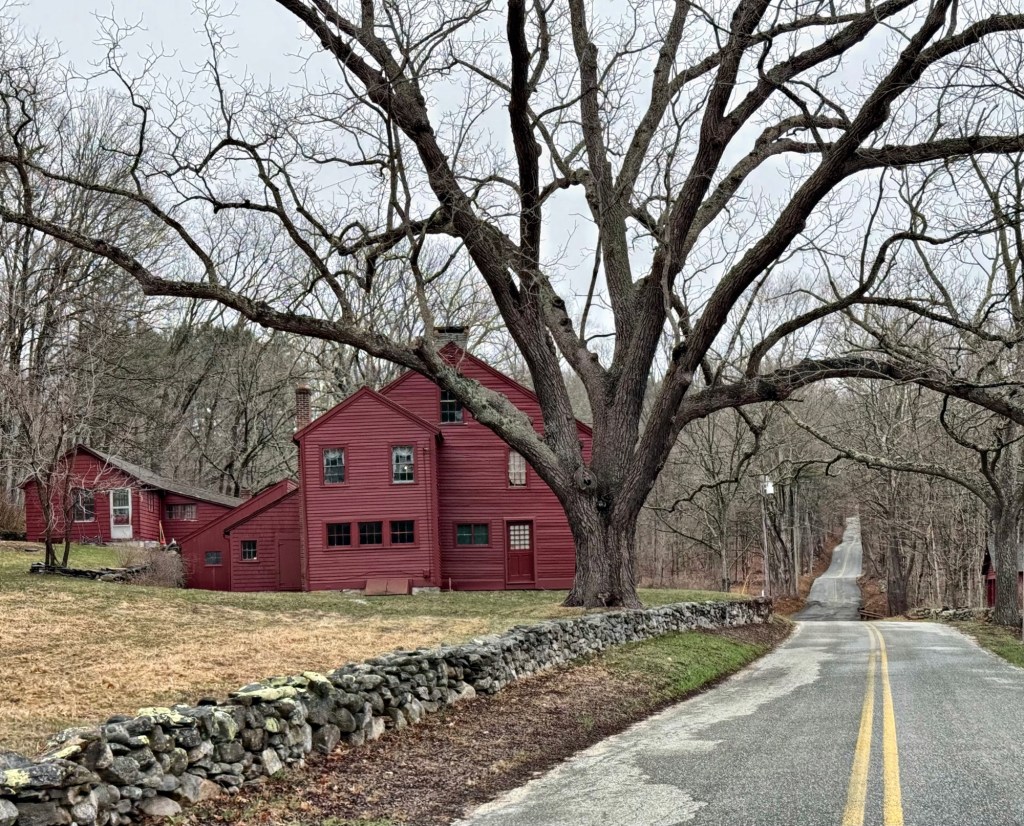
The Edward Waldo House in Scotland, Connecticut, is a vernacular Georgian house with saltbox roof and wings which from its erection about 1715 until 1971 was owned by members of the Waldo family. Edward Waldo (1684-1767) purchased land here along the Shetucket River in 1702 and by 1715, erected this house. The saltbox house which Edward Waldo built was one of the first houses in the town of Scotland and would remain in successive generations of the family for centuries. The house was the birthplace of Samuel Lovett Waldo (1783-1861), a portraitist who was a founder of the National Academy of Design as well as Daniel Waldo, chaplain of Congress, 1856-1858, and was one of seven Revolutionary War veterans who, having survived into the age of photography, were featured in the 1864 book The Last Men of the Revolution. The last Waldo owner, Miss Ruth Waldo died in1975. She insured the preservation of her family homestead by bequeathing the house, its contents, and about 15 acres of land to the Antiquarian & Landmarks Society of Connecticut Inc. and the surrounding acreage to the Connecticut Forest and Park Association, creating an enduring legacy for centuries to come. The house, set amongst a quiet country road, is evocative of early days in Scotland, Connecticut, and is one of the finest-preserved Colonial homes in this part of the state. 

Huntington Homestead // c.1715

The Huntington Homestead in Scotland, Connecticut, was the birthplace and boyhood home of Samuel Huntington (1731–1796), a Founding Father, a signer of the Declaration of Independence and a distinguished statesman during the Revolutionary War and early Republic. The remarkably well-preserved site includes an eighteenth century house on its original foundation surrounded by acres of farmland and is now protected as a museum. The house was built sometime between the transfer of land in 1715 from Deacon Joseph Huntington to his son Nathaniel, and Nathaniel’s marriage in 1723 to Mehetabel Thurston. As originally constructed, the house consisted of a two-story structure with an end chimney on the west end and one large room on each floor. By the time of Nathanielís death in 1767, the house had been doubled in size with the addition of two rooms west of the chimney, giving the house its current five-bay form. The Georgian style Colonial-era home features a symmetrical facade, twelve-over-twelve windows, and a saltbox roof and is one of the finest Colonial-era homes in this part of the state.

Wellman-Fisher-Richardson House // c.1745

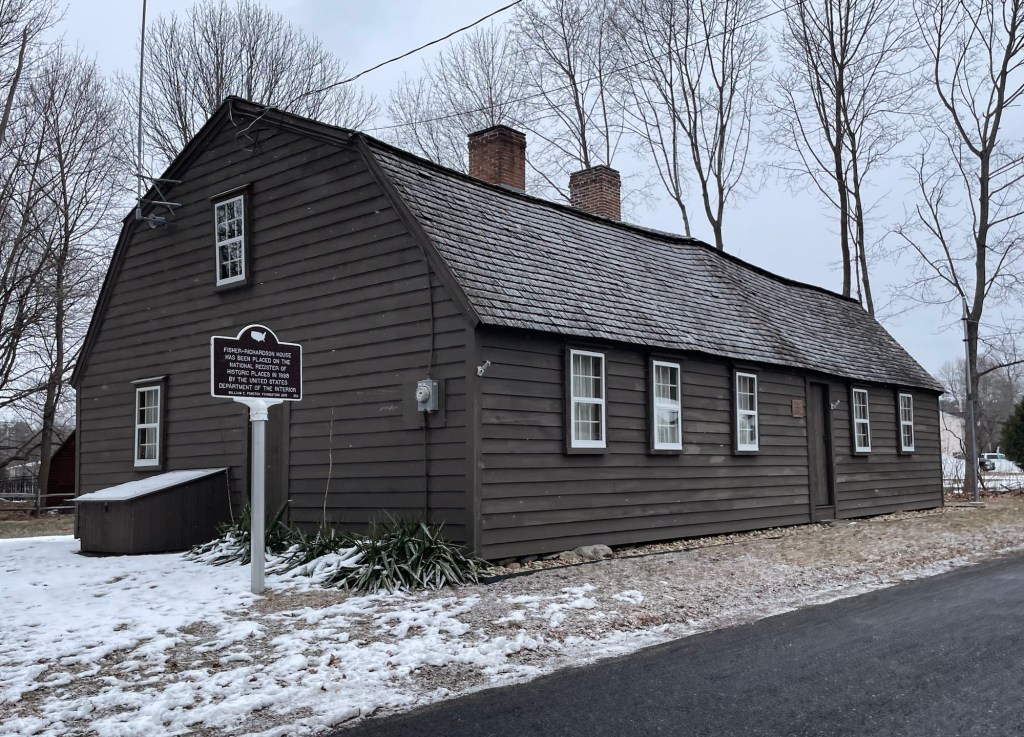
The Fisher-Richardson House in Mansfield, Massachusetts is considered to be one of the oldest buildings in the suburban town. The home dates to sometime between 1743 and 1751 and was built for its original owner Ebenezer Wellman (1720-1776). The property was eventually owned by Lemuel Fisher, who in about 1800, doubled the size of the house adding its western half. When Lemuel died in 1820, the property was inherited by his youngest son, Daniel, a farmer and blacksmith who also built a gristmill nearby. The home was later inherited by Daniel’s daughter, Evelina and her husband, Captain Ira Richardson. By 1930, the gambrel-roofed Georgian house was in disrepair, and the owner at the time contacted SPNEA (now Historic New England) who drafted an agreement to acquire and restore the house. However, as local interest in the property increased, the owner deeded the property to the town, and the town took on the costs of restoration. The property is now managed by the Mansfield Historical Society.

Keeler Tavern // 1713

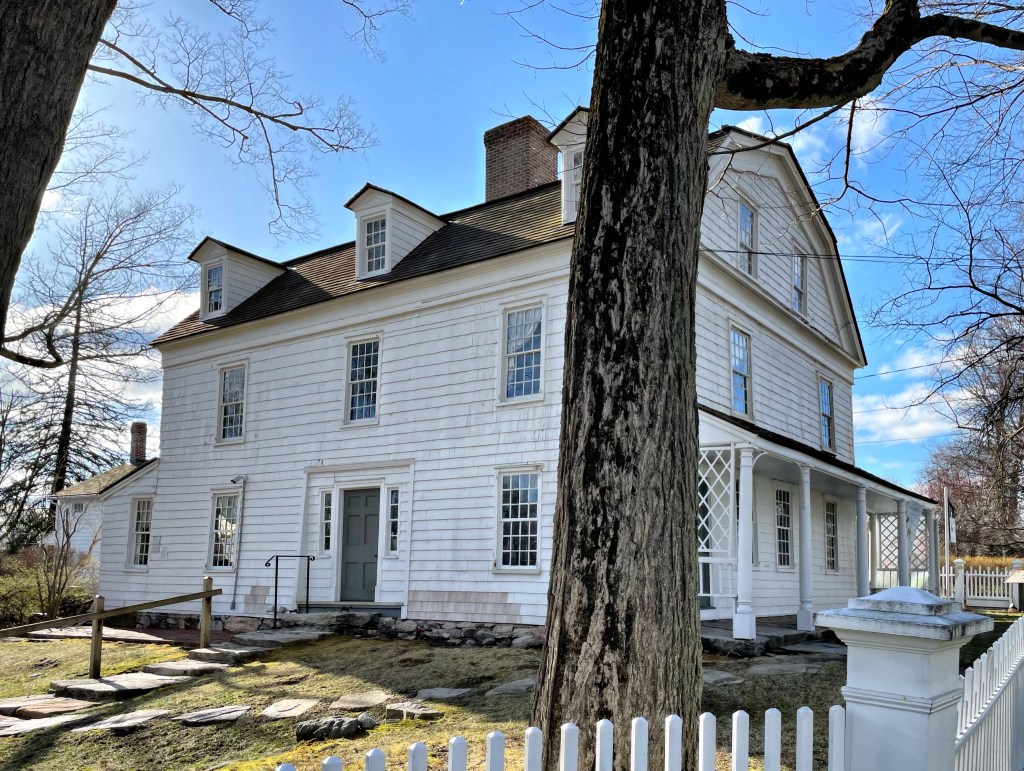
Around the year 1713, Benjamin Hoyt built a home for himself and his family on Lot 2 of the laid out building lots along Main Street of Ridgefield CT. The building was originally a one room dwelling with a stone fireplace and no basement and was located next to the David Hoyt mansion (aka The Fountain Inn). After several years, he expanded the property by building around and above the structure, to give it the gambrel roof and size we see today. More than 50 years later, in 1769, the property was purchased by Hoyt’s son-in-law, Timothy Keeler. Timothy Keeler and his wife converted the building into an inn in 1772, just prior to the beginning of the American Revolutionary War. Keeler sided with the American revolutionaries and was active in the local militia. After the Battle of Ridgefield, British forces fired on the Keeler Tavern, because Keeler was an enemy. One of the cannons used to pummel the tavern is still lodged in a corner post of the house to this day. After later owners in the Keeler Family, the property was purchased by world-renowned architect Cass Gilbert, who turned it into his family’s summer home in 1907. In doing so, he made various improvements and additions to the building, in particular he designed a Garden House and added a sunken around the year 1910. Gilbert would also design a fountain as a gift to the town, which sits almost opposite his family’s summer residence. The property was purchased in the 1960s and has since been a historical museum.