Joseph Royall House // c.1770

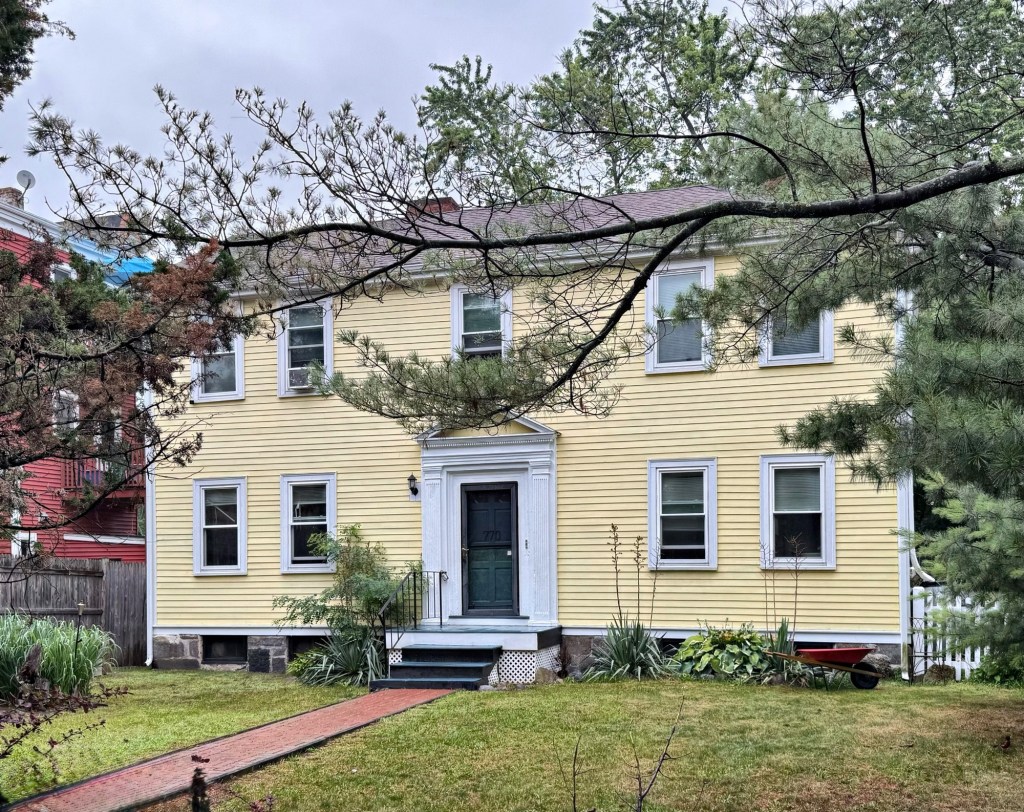
This is one of the oldest buildings in Boston! The Joseph Royall House is located at 770 Washington Street in the Ashmont section of Dorchester, set back from the street and passed by thousands who likely do not know its history and significance. The house dates to around 1770 and was built by Joseph Royall, of the infamous Royall Family of Cambridge, Medford, and Antigua, who made much of their money through sugar plantations in the Caribbean and enslaved Africans. Joseph was a nephew of Isaac Royal Jr., the patriarch of the family who resided at what is now the Royall House and Slave Quarters in Medford. Upon the outbreak of the American Revolution, the Tory Royalls were forced to flee for protection, Joseph would move to England. Isaac’s daughter (and Joseph’s cousin), Penelope Royall Vassall had her Cambridge home confiscated as a Tory property during the Revolution, causing her to flee to Antigua. When she returned to Boston after the war she was a widow and lived in poverty. Her cousin, Joseph, would sell her this Dorchester estate in 1782 nearly for free, allowing her to sell the property for money to survive in Boston. The house would remain here for another two-and-a-quarter centuries, as Ashmont grew around it. One-story stores were built in the front yard, completely obscuring the Georgian residence until later owners, Bob and Vicki Rugo, restored the house and demolished the stores in front, preserving this house for centuries to come. While the house is one of the oldest in Boston, it is not a landmark or listed on the National Register of Historic Places.
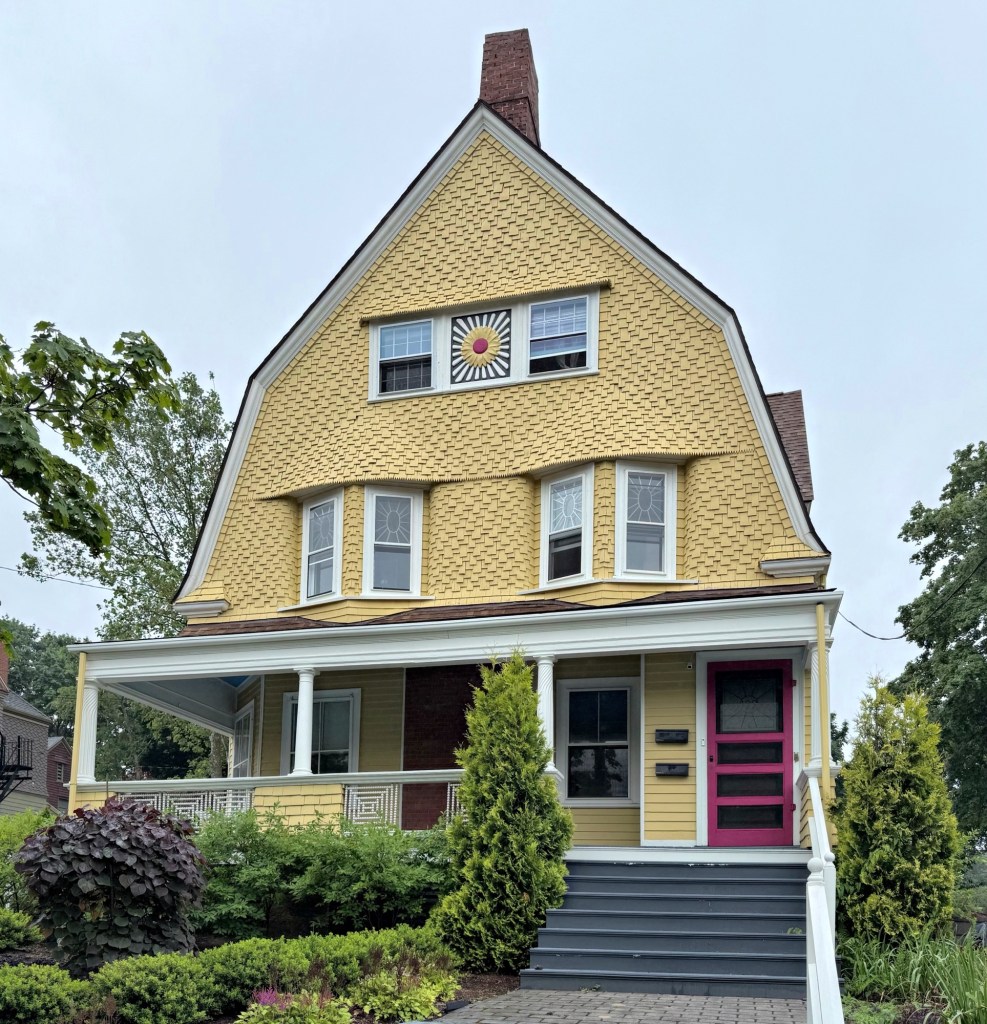
Lynch House // 1889

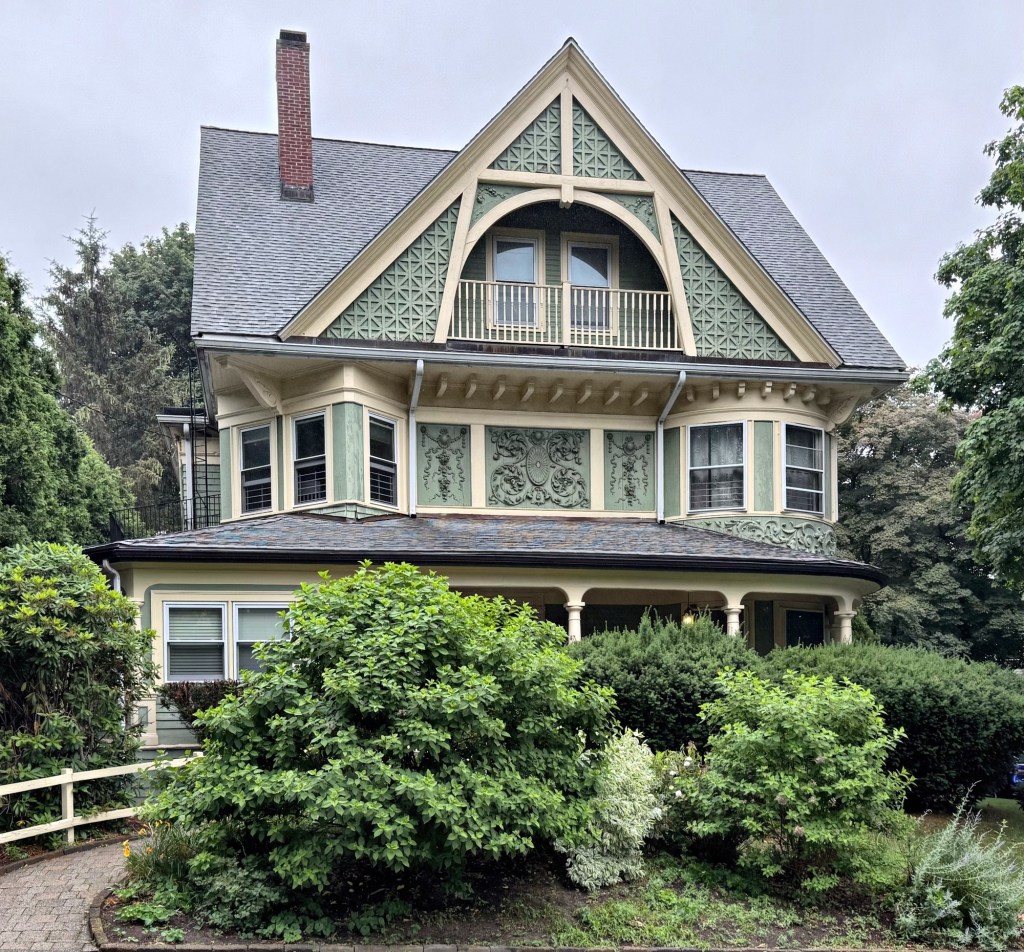
One of the most unique and enchanting houses in the Ashmont Hill neighborhood of Dorchester is the Lynch House (aka the Sunflower House) at 102 Ocean Street, a landmark example of the Queen Anne architectural style. This residence was designed in 1889 by architect Samuel J. Brown, who worked in the firm of Cummings and Sears before opening his own office in Boston, where he specialized in residential designs. The first owners were Edward C. Lynch, a stair builder, and his wife, Petronella P. Lynch, who was born in Sweden and emigrated to the United States. Architecturally, the Lynch House features a prominent gambrel roof that swells out over the second-floor inset windows, clapboard and shingle siding, sawtooth shingled details over the windows, and the sunflower motif in a panel at the third floor.

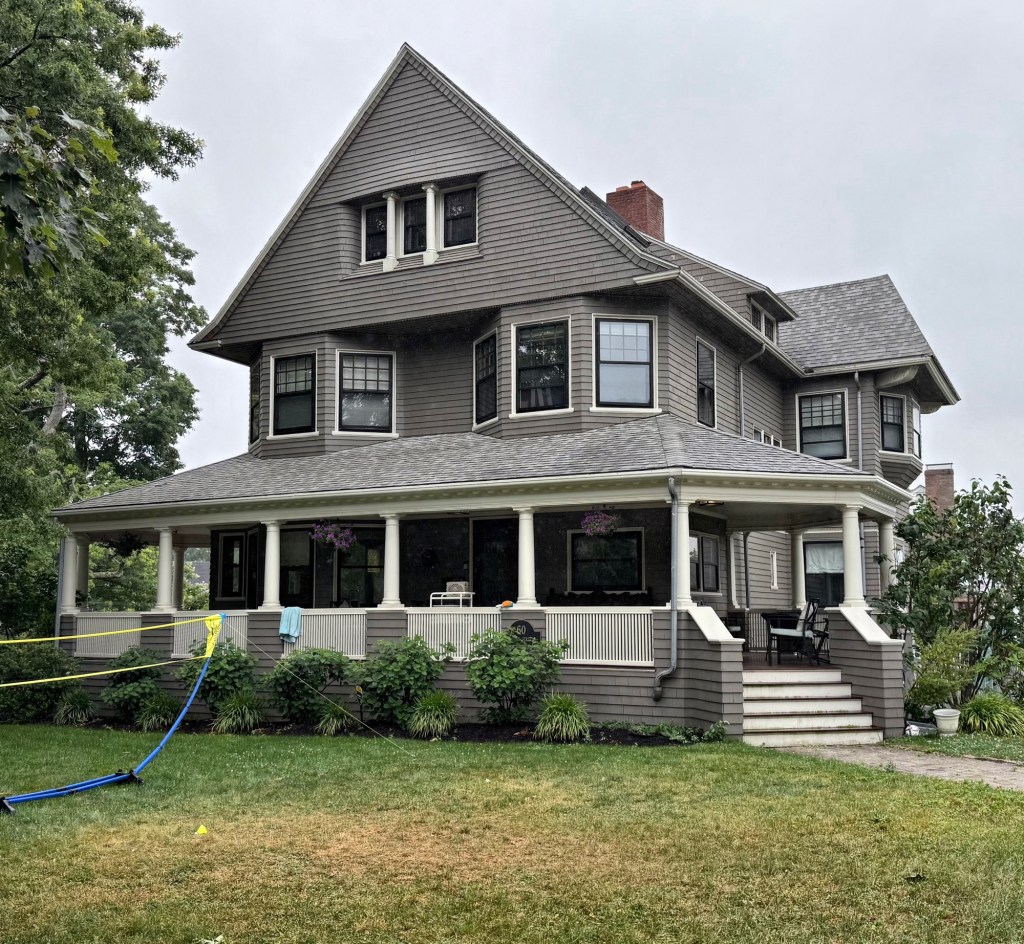
George A. Eastman House and Stable // 1889

Built between 1889-1891, the house and stable at 60 Ocean Street in the Ashmont Hill neighborhood of Dorchester was commissioned by George A. Eastman, a Harvard graduate and insurance executive. George Augustine Eastman married Anna C. Winsor in 1870, and the family would remain in this house for nearly 100 years. George Eastman worked as an insurance executive at the Boston office of the Liverpool & London & Globe Insurance Company of England for over 50 years, and built his home next-door to his brother’s at 42 Ocean Street. It is believed that the Eastman House and Stable were designed by local architect Edwin J. Lewis, who designed about a dozen other residences in the surrounding area at the same time. The old stable has been converted to residential use, a great way to adaptively reuse these old, well-built structures.

Clark-Cottle House // 1890

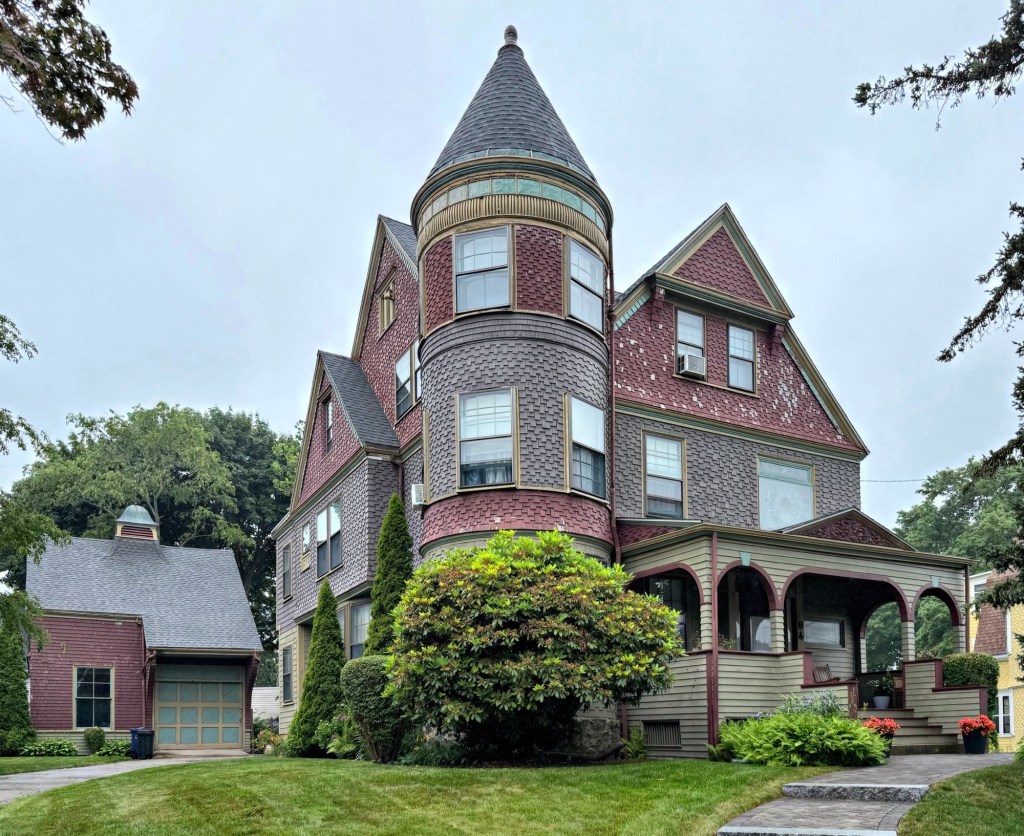
One of the most sumptuous Victorian-era homes in Dorchester can be found at 94 Ocean Street, this is the Clark-Cottie House. The residence (and rear stable) was built in 1890 from plans by famed architect Arthur H. Vinal, who designed many other Shingle style and Queen Anne homes in the surrounding neighborhood. The first owners of the mansion were Evelyn and Edward Clark, who after a few years, sold the property to Edgar Cottle, president of the Curtis & Pope Lumber Company. The three-story Queen Anne style mansion features a rounded corner tower, varied shingle siding, shingled porch, and the intact, charming stable at the rear.

Hotel Mellen // 1894

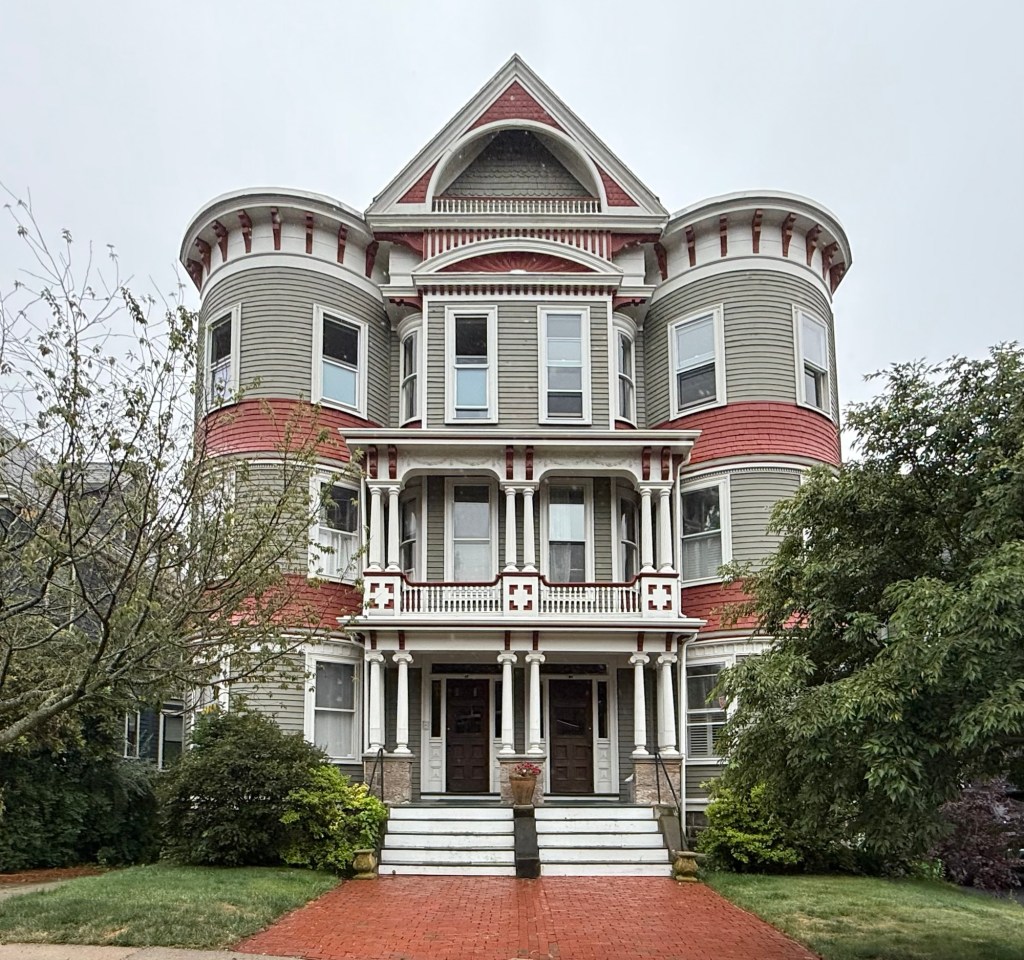
While Ashmont Hill in Dorchester is known for large, single-family Victorian houses, there are a number of grand apartment houses and three-deckers dispersed throughout the area, showing the evolution of housing in desirable neighborhoods in the late 19th and early 20th centuries. This is the Hotel Mellen, located at 18-20 Mellen Street, a multi-family building that architecturally blends in with its surroundings, not like many uninspiring boxes being built all over the region today. The property was developed by Louis Pfingst, a German streetcar designer and mechanic who was also active in the local Dorchester Gentlemen’s Driving Club. The building was designed by local architect Alexander B. Pinkham, who specialized in multi-family housing designs around Boston. The rounded bays, recessed porch in the gable, varied siding, and applied ornament, make the building stand out, while fitting well within its context of surrounding homes.

Reed-Fitzgerald House // 1891

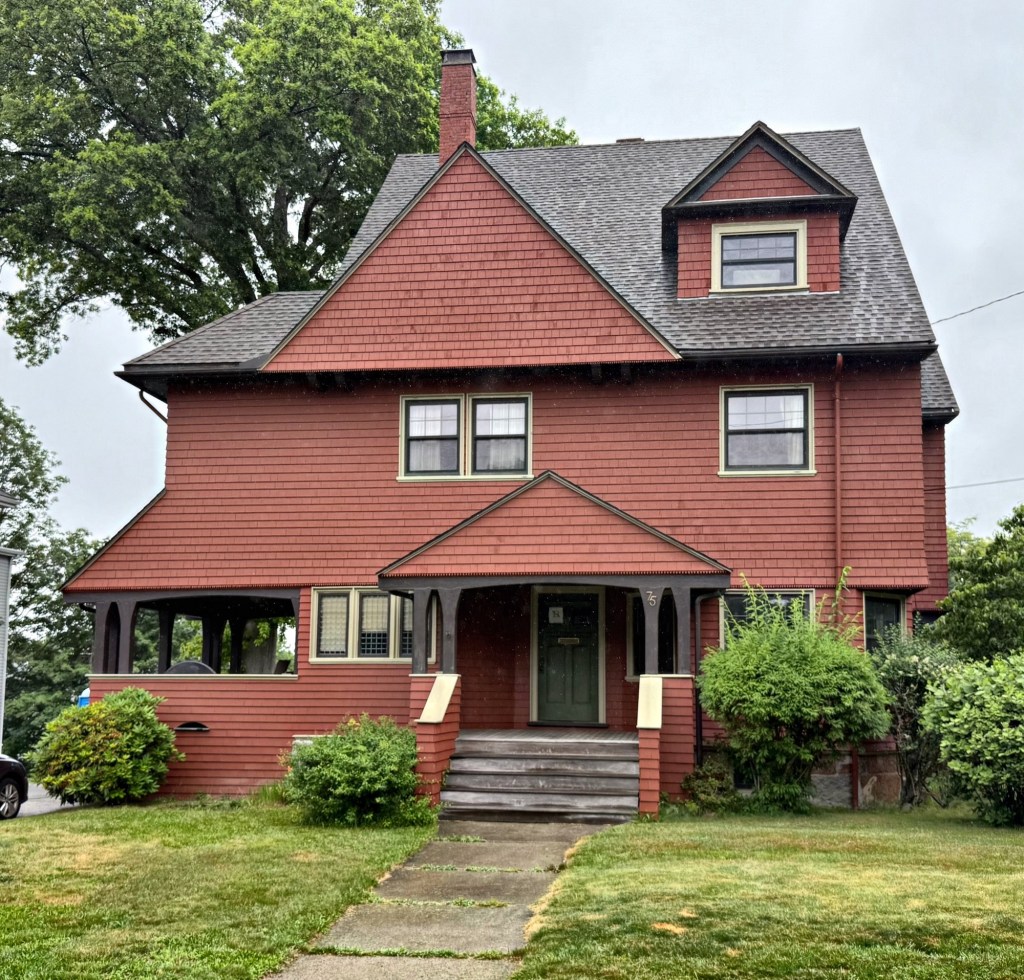
The Reed-Fitzgerald House at 75 Ocean Street in Ashmont Hill, Dorchester, stands out as a simple, yet beautiful example of the Shingle style of architecture for residential purposes. The house here was built in 1891 from plans by Edwin J. Lewis, Jr., a Boston-born architect who worked at the office of Peabody and Stearns before he opened his own firm in 1887, specializing in suburban houses and churches. The first owner of this residence was George Reed, a Boston insurance executive. Years later, the house was owned by Henry Fitzgerald, possibly Henry S. Fitzgerald, the brother of John “Honey Fitz” Fitzgerald (1863-1950), the Mayor of Boston who resided in a since demolished house in the neighborhood. Mayor John Fitzgerald was the father of Rose Fitzgerald and maternal grandfather of her sons President John F. Kennedy, Attorney General Robert F. Kennedy, and Senator Ted Kennedy. Recently, the owners of the Reed-Fitzgerald House have restored the exterior, and stained the shingles the lovely rust color.

Higgins-Little House // 1890

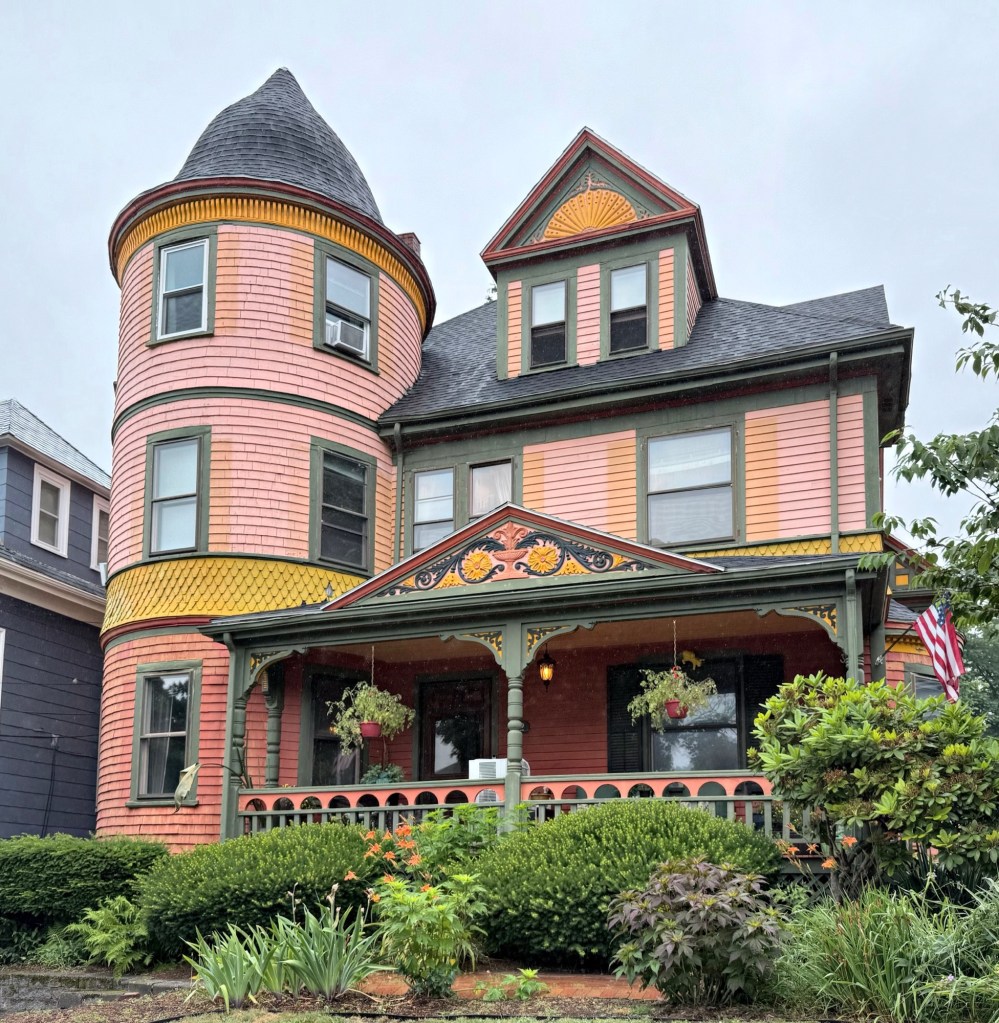
This “painted lady” on Roslin Street is one of the many fine Queen Anne Victorian houses in the Ashmont Hill neighborhood in Dorchester, Massachusetts. The residence was built in 1890 for original owner, Lewis H. Higgins, a master mariner who was born in Wellfleet before moving to Boston. Higgins seemingly resided here with his family for a short time until the house was sold in 1893 to Samuel and Grace Little. The house is perched on a hill and features a prominent rounded corner tower. The original porch with turned posts and gable detailing stand out with the intricate paint scheme used to highlight all of the amazingly preserved ornamentation. While paint schemes like these are not historic, they do bring joy to owners and passersby, and help viewers appreciate the care that these stewards take in maintaining their old homes.

Mary E. C. Bates House // c.1894

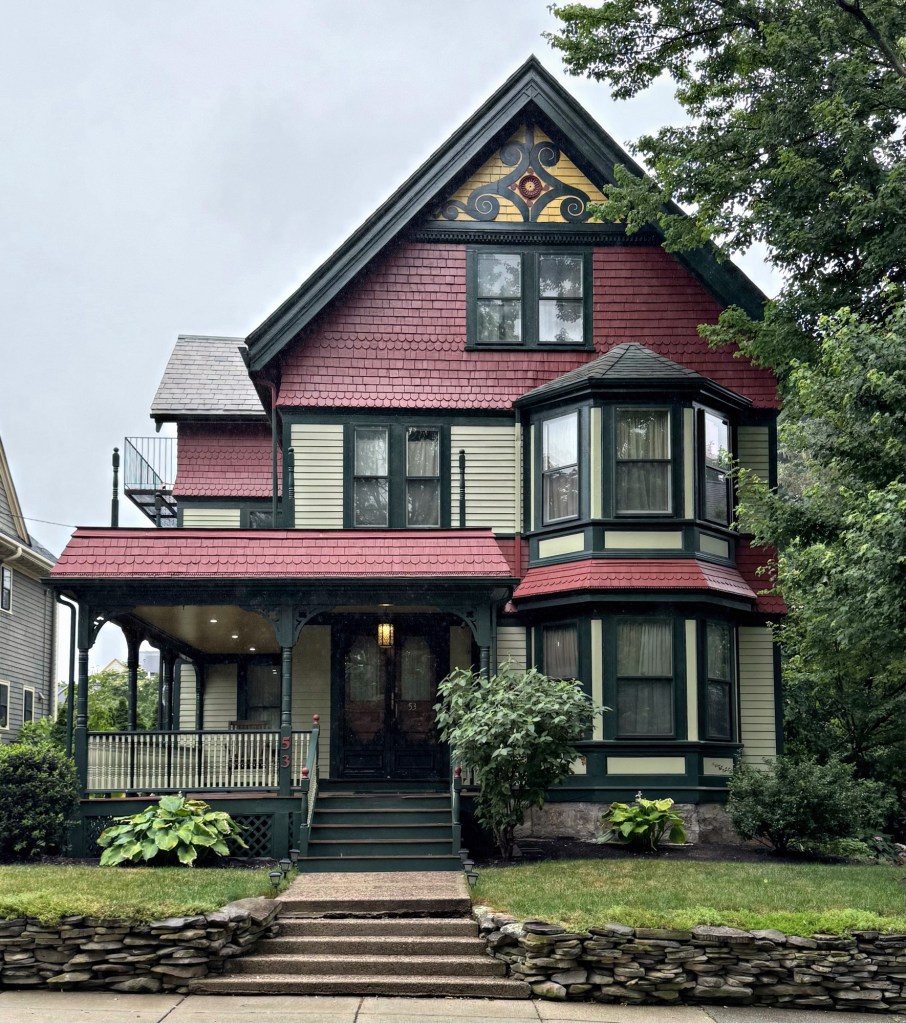
One of the many spectacular Queen Anne style houses in the Ashmont Hill neighborhood of Dorchester (Boston) is this c.1894 residence at 53 Ocean Street. The house was built for Mary Elizabeth (Cushing) Bates and her husband, Henry L. Bates. Henry worked as a bookkeeper and the couple was able to afford a house lot in the fashionable Ashmont area of Dorchester, and had this home built. In the early 20th century, the couple purchased a then-vacant lot next-door at 57 Ocean Street, and had the current house there built, renting it out for years for supplemental income. Hallmarks of the Queen Anne style seen in the Bates house include: varied siding types, large porch supported by turned posts, asymmetry, projecting bay window, and applied ornament seen here in the gable.

George and Emma James House // 1894

Built in 1894 for George and Emma James, the house at 47 Ocean Street in the Ashmont area of Dorchester, stands as one of the finest high-style examples of a Queen Anne single-family residence in Boston. George James was born in Vermont and worked as a farmer before moving to Boston, where he found work as a shoe manufacturer, opening offices and manufacturing facilities in the Leather District. The house was clearly designed by a skilled architect, and historians note that the residence was the design of architect S. Edwin Tobey, a skilled proponent of the Queen Anne style, seen here with its incredible detailing and unique form. The high-relief carvings in the gable and panels stand out, along with the recessed porch, and historic stable at the rear.

Sidney A. Kimber House // c.1894

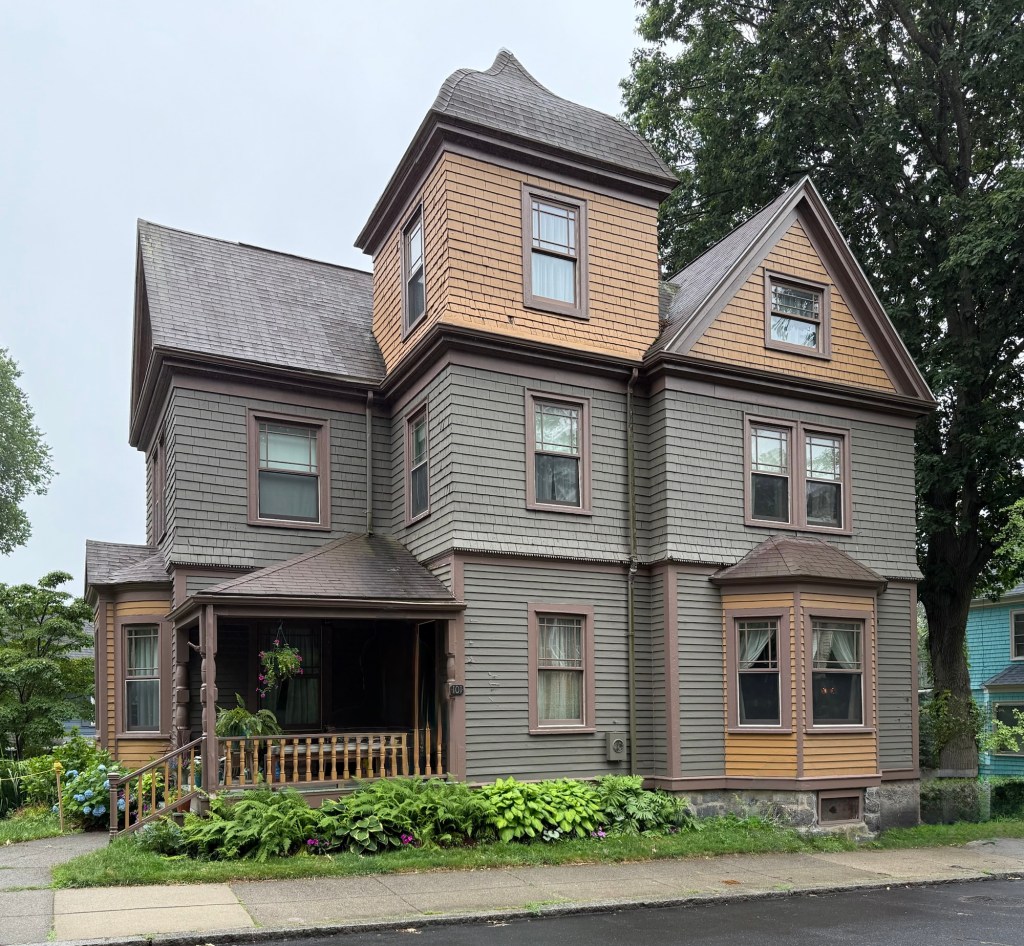
Built by 1894, this fabulous Queen Anne victorian house can be found on Ashmont Street in Dorchester, and it has a period-appropriate color scheme. The residence here was built for Sidney Arthur Kimber (1866-1956) a London-born printing expert, who for years worked at the University Press in Cambridge. Mr. Kimber was an expert on printing and wrote many books on the subject; he even built a working model of the first printing press brought over from England to Cambridge in 1638. The Kimbers lived here for just a few years before moving, and the house was sold a few times until the first long-term owner, Helena T. Shortell. The house is lovingly preserved and features a unique entry tower capped by an ogee roof.