St. John the Evangelist Church // 1885

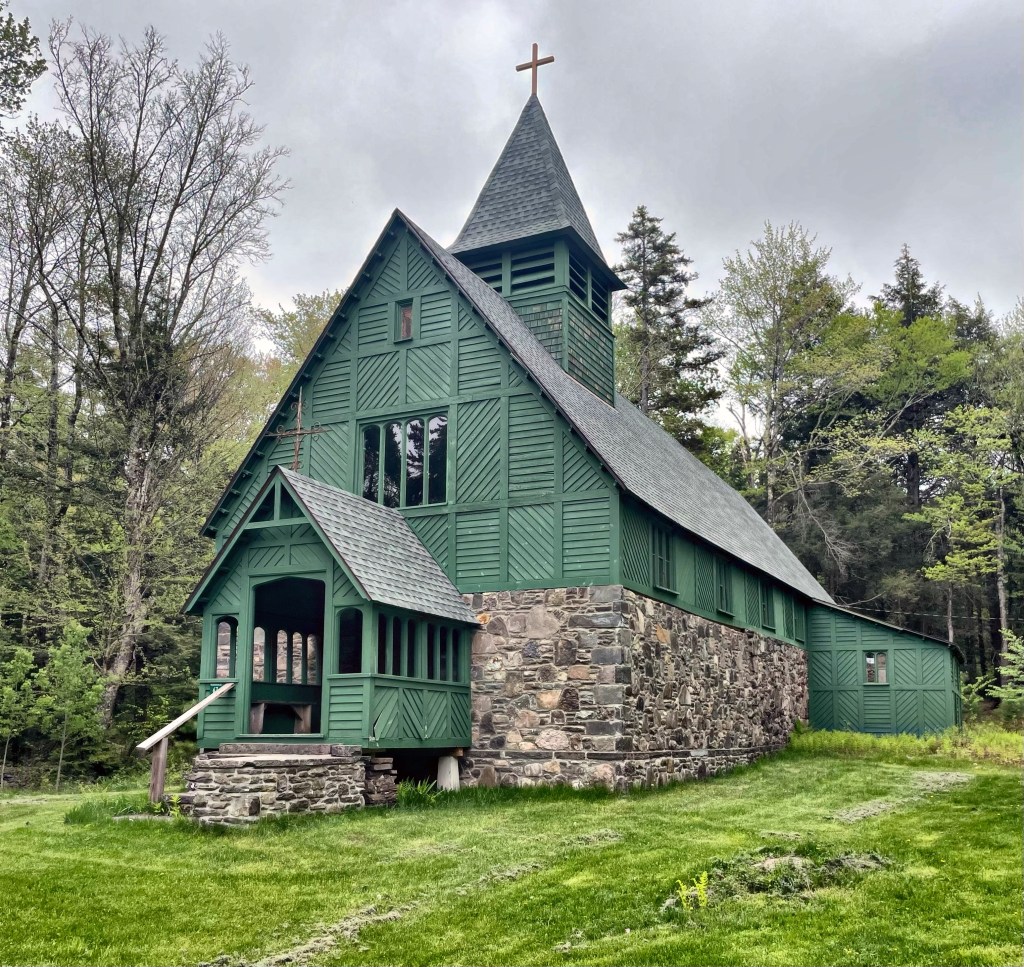
One of the most bucolic and beautiful buildings I have ever seen is this church in the Catskills, just outside of Elka Park, NY. Wow I wish New England could claim this one! The St. John the Evangelist Chapel was developed as part of a smaller enclave of summer cottages for rusticators from the Philadelphia-area, which was largely established by Mr. Alexander Hemsley (1834-1904) a chemist from Philadelphia who would later die from anaccidental chemical explosion at his factory. In 1883, Hemsley sold cottage lots to friends and family to erect summer houses in the Catskills and in 1884, decided to develop a lot for an Episcopal summer chapel. In that same year, Hemsley hired his future son-in-law, William Halsey Wood, to design the chapel. The Stick-style Victorian chapel blends the rustic use of natural materials found on the property with an elegant siting and attention to detail, not typically found in rural chapels. The native stone and stylized half-timbering really stood out to me. The church is used still in the summer with regular services on Sundays in July and August.

Deacon Robert Palmer House // 1884

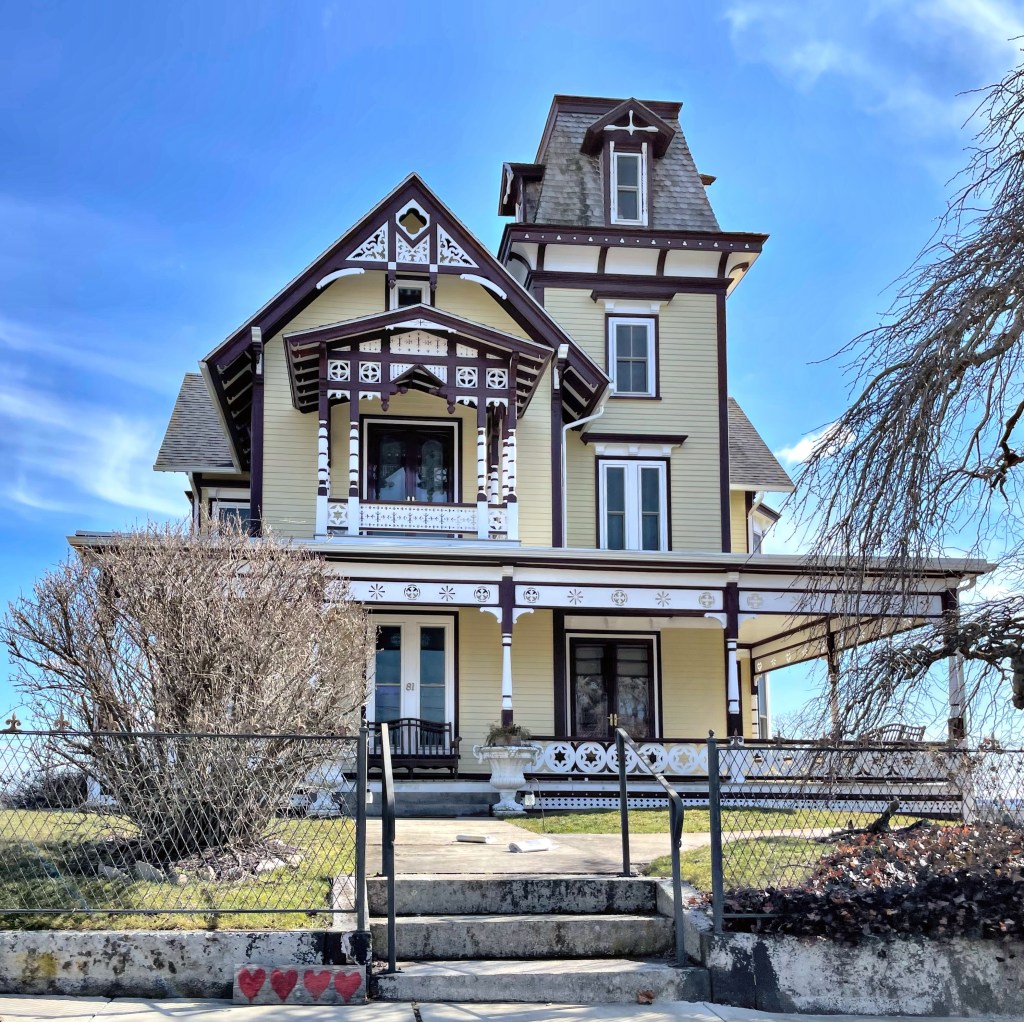
Perched on the highest hill in the coastal village of Noank, Connecticut, you will find this absolutely enchanting gingerbread Victorian mansion. The house was built in 1884 for Deacon Robert Palmer (1825-1913), a wealthy man who wasn’t only deacon of the village’s Baptist church, he was the owner of a flourishing shipyard, and it was his shipyard workers who built him, with loving care, a house he could be proud of! Robert ran the shipyard in town first with his brother, and then with his son. During the late nineteenth and early twentieth centuries the shipyard was the largest facility for building and repair of wooden vessels in southern New England, employing over 300 men. The yard specialized in building railroad car floats, schooner barges, and dump scows as well as fishing smacks. Robert Palmer and Son went out of business in 1914 with the passing of the Robert. The Stick style mansion with mansard roofed tower remained in the Palmer family until the early 2000s when it sold and was restored to her former glory. The residence features exposed rafters, a pagoda-like second story balcony, a frieze with geometric cut-outs, and a wrap-around porch which provides sweeping views of the ocean. I can only imagine how beautiful this old Victorian is on the inside!

Dimock Center – Cary Cottage // 1872

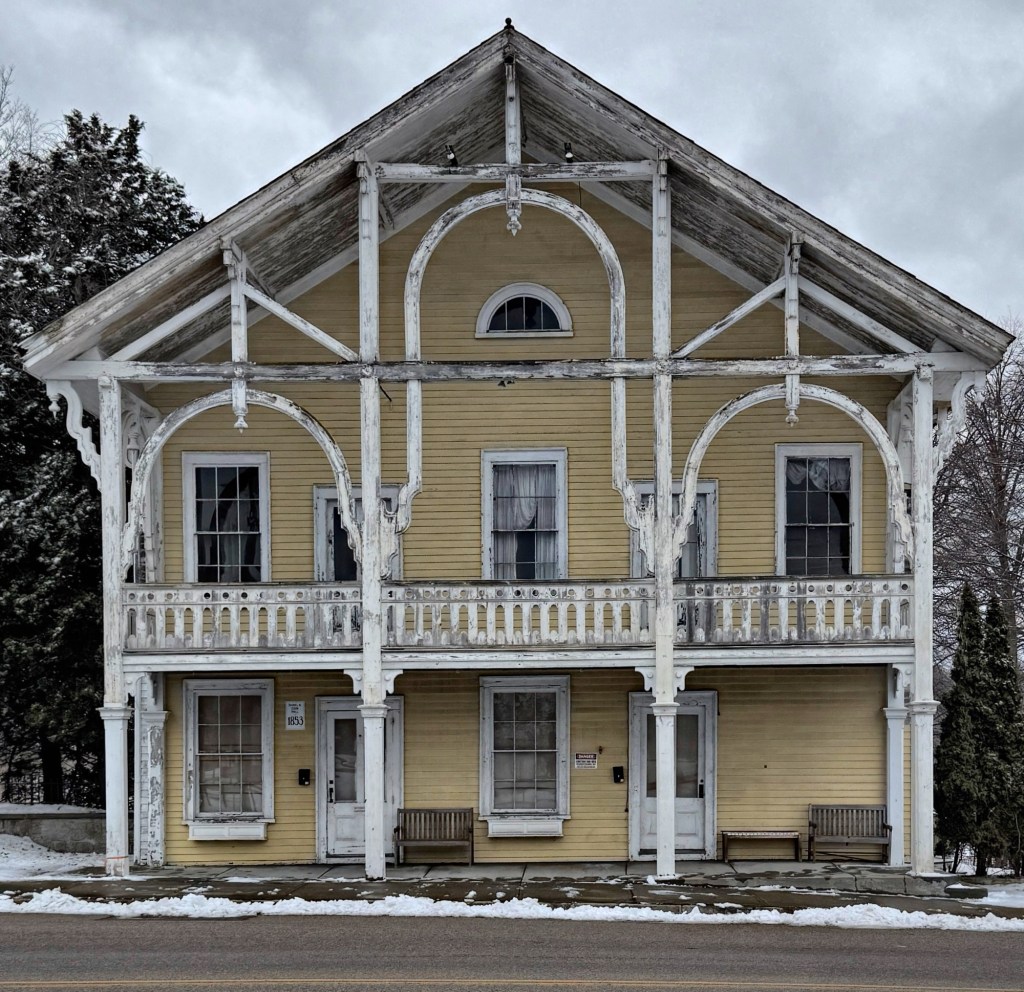
The New England Hospital for Women and Children (known today as the Dimock Community Health Center), is comprised of eight major buildings on a nine acre site located on a small hill in the Roxbury neighborhood of Boston, close to the border with Jamaica Plain. The complex is significant for its role in the history of women in medicine as both a teaching and a practicing hospital, as well as for its architecture. The facility was incorporated as the New England Hospital for Women and Children in 1863, almost five years before Roxbury was annexed to Boston. The Hospital was founded by Dr. Marie E. Zakrzewska together with Lucy Goddard and Edna Dow Cheney in order to provide women with medical care by competent physicians of their own sex and to educate women in the study and practice of medicine. As such, it was one of the first hospitals of its kind in America. The oldest building in the complex is the Cary Cottage, pictured here. The charming building was constructed in 1872 by the architecture firm of Cummings & Sears. The Cary Cottage served as the hospital’s original maternity cottage, and is also important as an almost intact example of Stick Style architecture. The building was intentionally detached from the general surgical facilities to minimize the dangers of infection during childbirth.

David Whiting House // c.1875

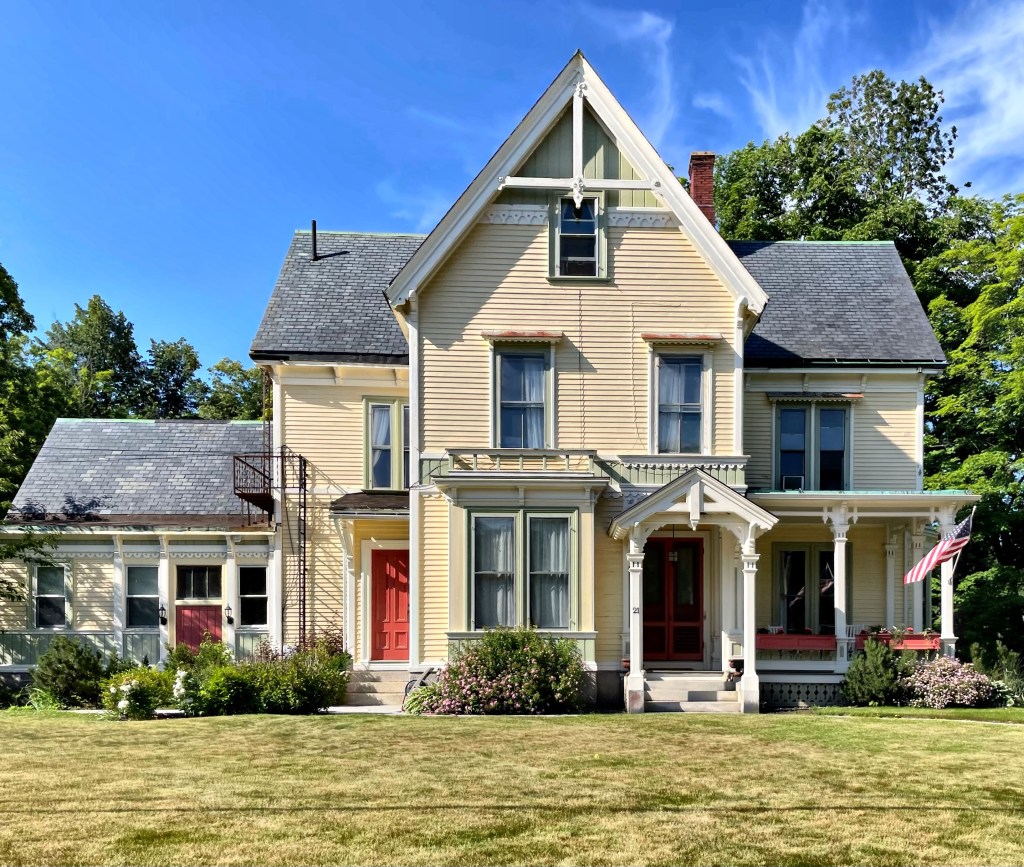
David Whiting (1810-1892) was one of the most prominent men in Wilton, NH in the 19th century. He was involved in local business and politics, eventually using his prominent land at a convergence on Main Street to erect the Whiting House, a large hotel. The building burned down in 1874, along with his other buildings nearby. He donated some of the land to the town, who built the present Town Hall, and he built a new home on another part of the site. This house was likely built for David Whiting as his own residence, shortly after the fire. The house was designed in the fashionable Stick style and represents the best in Victorian-era architecture.