High Ridge Manor // 1893

Edward Payson Dutton (1831–1923) was a prominent American book publisher who founded the E. P. Dutton bookselling company in 1852 in Boston, Massachusetts. The business sold fiction and non-fiction, and within a short time expanded into the selling of children’s literature. In 1864, he opened a branch office to sell books in New York City and in 1869 moved his company’s headquarters there and entered the book publishing business. The company did very well, allowing Edward and his wife, Julia the means to build this large summer “cottage” in Ridgefield, Connecticut to escape the rustle and bustle of New York City. The couple purchased the lot in 1893 and appear to have built it soon after. High Ridge Manor is a stunning example of the Queen Anne and Shingle styles of architecture with its asymmetrical plan, continuous shingle siding with rubblestone foundation and chimney, gambrel roof, and towers.
Overlook Mansion // 1882

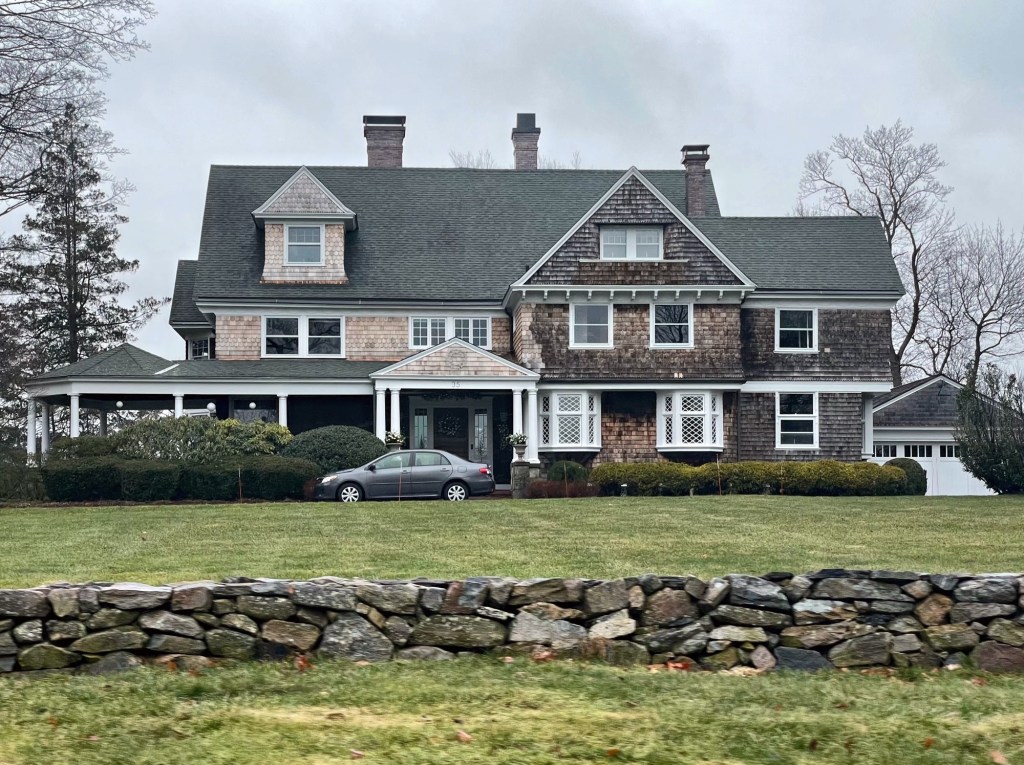
Raised in an intellectual home of his widowed father, William Allen Jenner (1844-1915) graduated from Middlebury College as the youngest in his class with highest honors. He would go on to graduate from Columbia Law School and be admitted to the New York Bar in 1867, becoming a partner in a prestigious New York City law firm. Outside of practicing law, William Jenner studied and authored textbooks on the Latin language and was an avid horticulturalist. His landscape architecture passion was fulfilled when he purchased a large house lot on High Ridge Road in Ridgefield Connecticut, and built this home in 1882, named “Overlook”, where he and his family would spend their summers outside of the city. Mr. Jenner and his wife, Josephine Curtis Jenner, raised three daughters between New York and Ridgefield. One of their daughters, Anna, would marry Sterling Foote, a New York City cotton broker. The Foote’s would inherit Overlook and spend their summers here until their death. The Queen Anne/Shingle style mansion showcases the shift of Ridgefield from sleepy farming town to summer destination for wealthy New York residents, a trend which continues to this day.

David Bradley House // c.1803

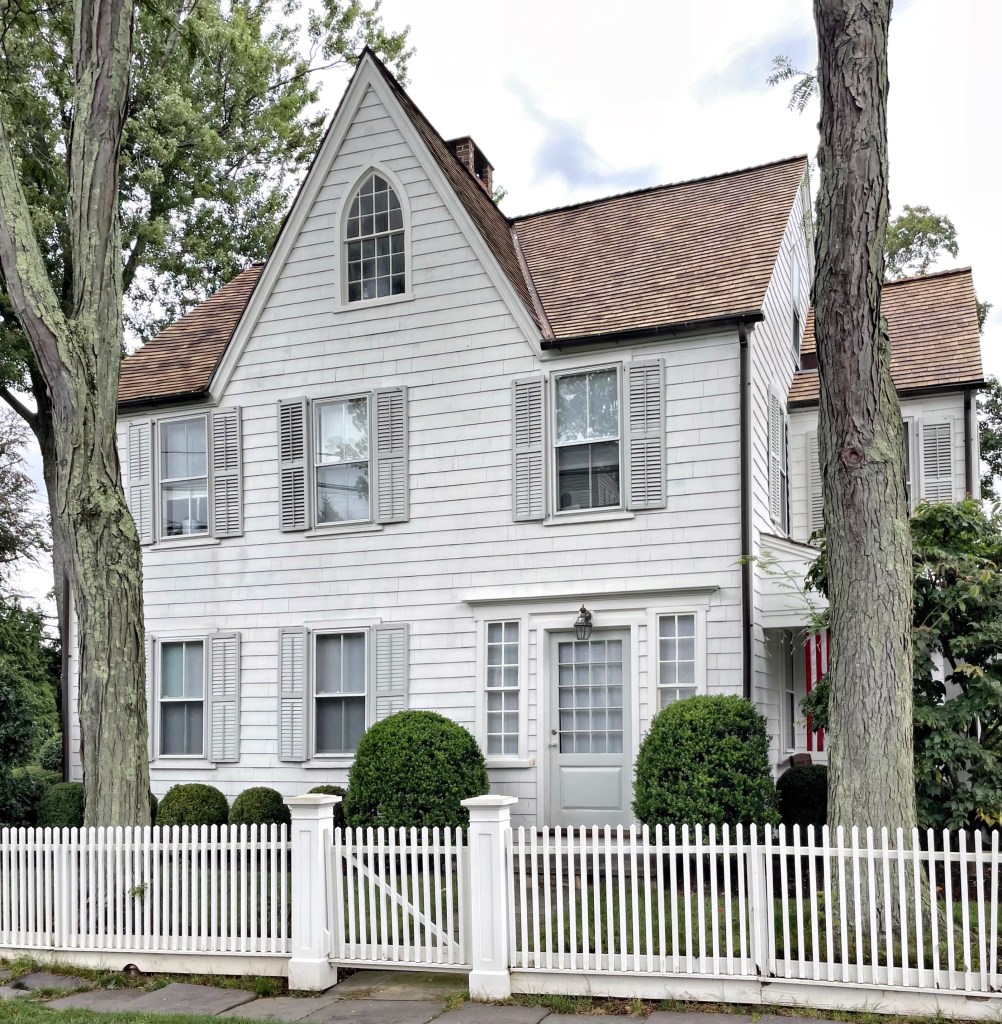
According to a dated board in the attic, this house was built c.1803! The David Bradley House on Old South Road in Southport, Connecticut is a great example of a traditionally designed house that does not need all the bells and whistles to stand out! The house was owned for a number of years by David Bradley, who worked as the village’s postmaster. It was David who likely added the Gothic Revival gable with lancet window and a (since removed) front porch.

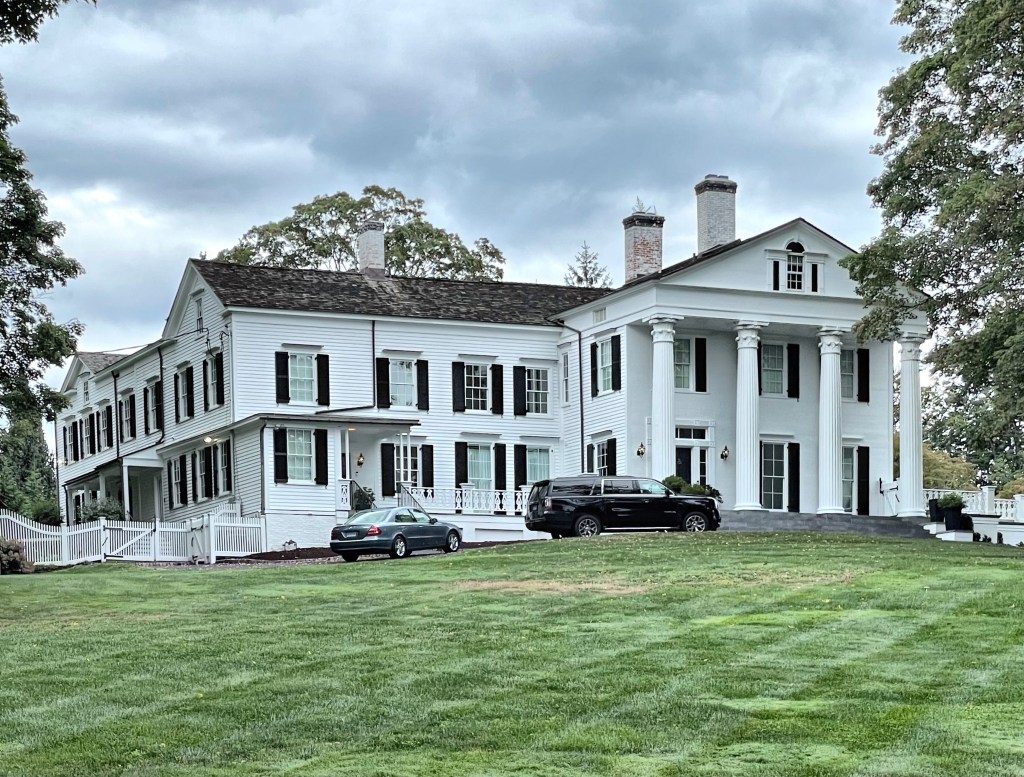
William W. Wakeman Mansion // c.1833

William Webb Wakeman was born in Southport, Connecticut on June 19, 1799, the son of Jesup Wakeman, an eminent citizen of the community. As a young man, William worked with his father in his commercial and trade enterprises. He acquired his own vessel early in his career, and gradually accumulated a line of trade vessels, sailing to New York, Savannah, Georgia and Galveston, Texas. By mid-century he was involved in the East Indian and China trade under the firm name of Wakeman, Dimon & Co. He built and owned a line of steamships during the late 50s, and was commissioned by the Federal government during the Civil War to transport troops and equipment. His massive Greek Revival mansion was built around 1833 on one of the largest house lots in the village, perched high on a hill overlooking the harbor. The three-bayed facade is framed by a two-story portico. Supported by four fluted columns, the capitals and entablature are similar to the “composed” order of Minard Lafever and the “composite” order of Asher Benjamin, popularized in the 1830s and 40s in their pattern books for architects and builders. After William died in 1869, it was likely his widow, Mary Catherine (who lived to be 99 years old, outliving all of her six children) who enlarged the home with massive two-story ells.

Hastings House // c.1941

Many neighborhoods in New England held on to historical revival styles even when the International style and Mid-Century Modern homes began to proliferate all across the region. Some owners (even today) prefer traditionally designed houses to blend into their surroundings and historical context. This charming gingerbread Tudor Revival style house in Fairfield is one of them! The Hastings House was built in 1941 and designed by the powerhouse design couple of Cameron Clark (architect) and Agnes Clark (landscape architect) who designed and renovated properties all over Fairfield. The house is notable for its use of stucco with half-timbering, steeply pitched roofline, red tile roof, and more Colonial-inspired door treatments.

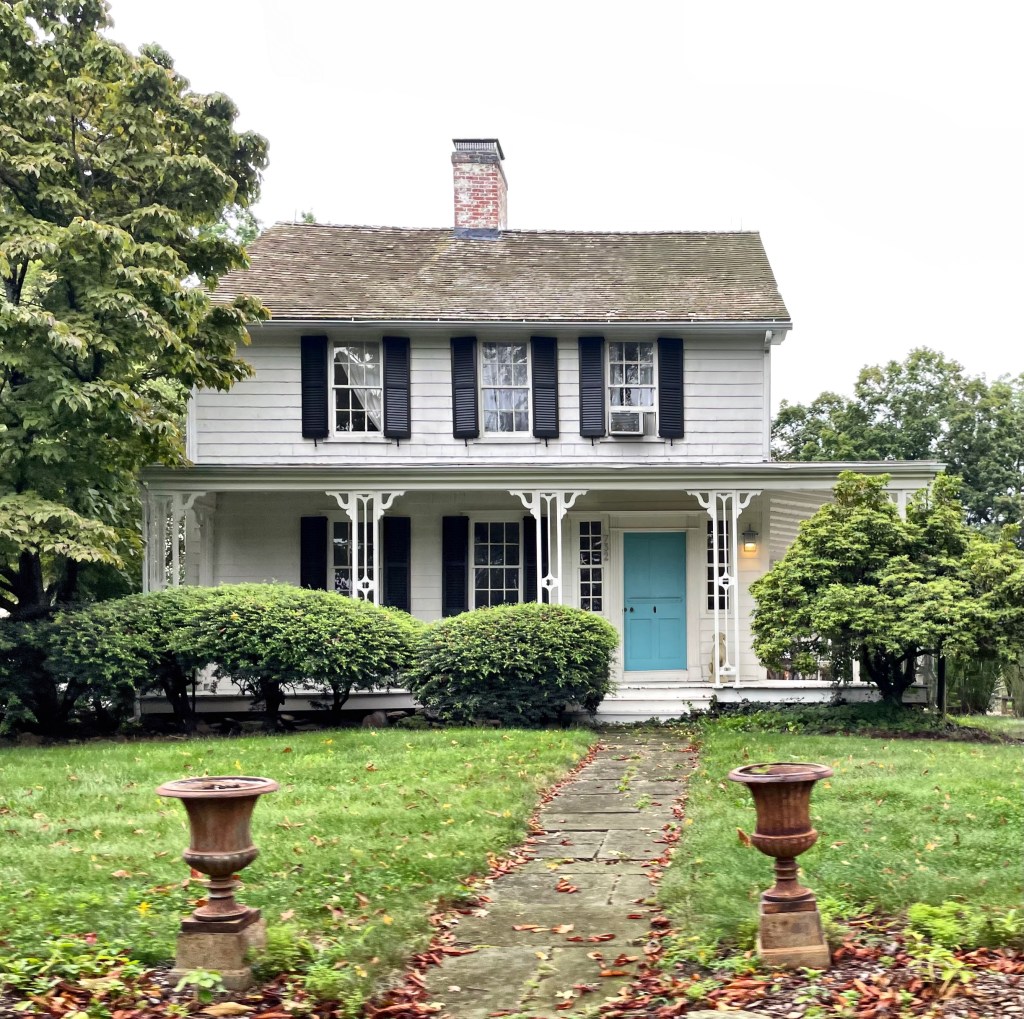
Bradley-Wakeman House // c.1815

While the Greenfield Hill section of Fairfield, Connecticut has some of the grandest houses (old and new) in the state, there are some more average size homes that just ooze charm and curb appeal. This example on Hillside Road, dates to the 1810s and was seemingly built by Alban Bradley (1767-1832) on land inherited by him from his late father, Seth Bradley. The family farmed on the land from this Federal period farmhouse until it sold out of the family by Alban’s only son, Burritt in 1825. Burritt sold the farm to Zalmon Wakeman who farmed on the many acres of valuable land there. Sometime before his death before the Civil War, the house was “modernized” with Italianate-style porch, which is supported by delicate cut trelliswork. This is a great illustration as to how modest renovations which apply up-to-date decorative details can be done to historic properties without compromising the original structure or its architectural integrity.

Peter Parley Schoolhouse // 1756

The Peter Parley Schoolhouse (also known as the West Lane Schoolhouse) in Ridgefield, CT, is an excellent example of a well-preserved one-room school building in Fairfield County. The little red schoolhouse was originally built in 1756 and either replaced or enlarged in the early 1800s. As Ridgefield in the early days was primarily an agricultural community, many children split their time either helping family on the farm or in school, with work almost always coming before education. The school is named for its most famous student, Samuel Griswold Goodrich. Goodrich went by the alias Peter Parley and was born in Ridgefield, attending the school between 1799-1803. He was a prolific writer, with over 170 books to his credit, and is believed by many to have written the first American textbooks. Samuel wrote about his experiences as a student there, giving locals and historians a look into early life in the town. In the early 1900s, the town consolidated schools and this building was closed. The town seemed to simply close the building and it saw some neglect over time until the Ridgefield Historical Society assumed a lease of the property, recently restoring it.

Bailey-Keeler House // c.1860

Lewis H. Bailey (1818-1899) was a local banker, merchant, and hotel proprietor in Ridgefield, Connecticut. He had this stunning Italianate Villa home built on Main Street before the American Civil War. Bailey was savvy in realizing the upcoming development boom in town as wealthy New Yorkers began to arrive in town to build summer houses to escape the cramped city living and polluted air, and he began to sell off land and develop streets in the village. To house some shorter-term summer residents, Bailey constructed and operated the old Bailey Inn on a lot adjacent to his own home. The inn was torn down in the 1920s as the town’s dynamic as a summer town began to change with more more year-round residency. The Italianate Villa is a lasting legacy of Bailey and his impact on the town. The home with its square tower and detached carriage house are in a great state of preservation and significantly contribute to the character of Main Street.

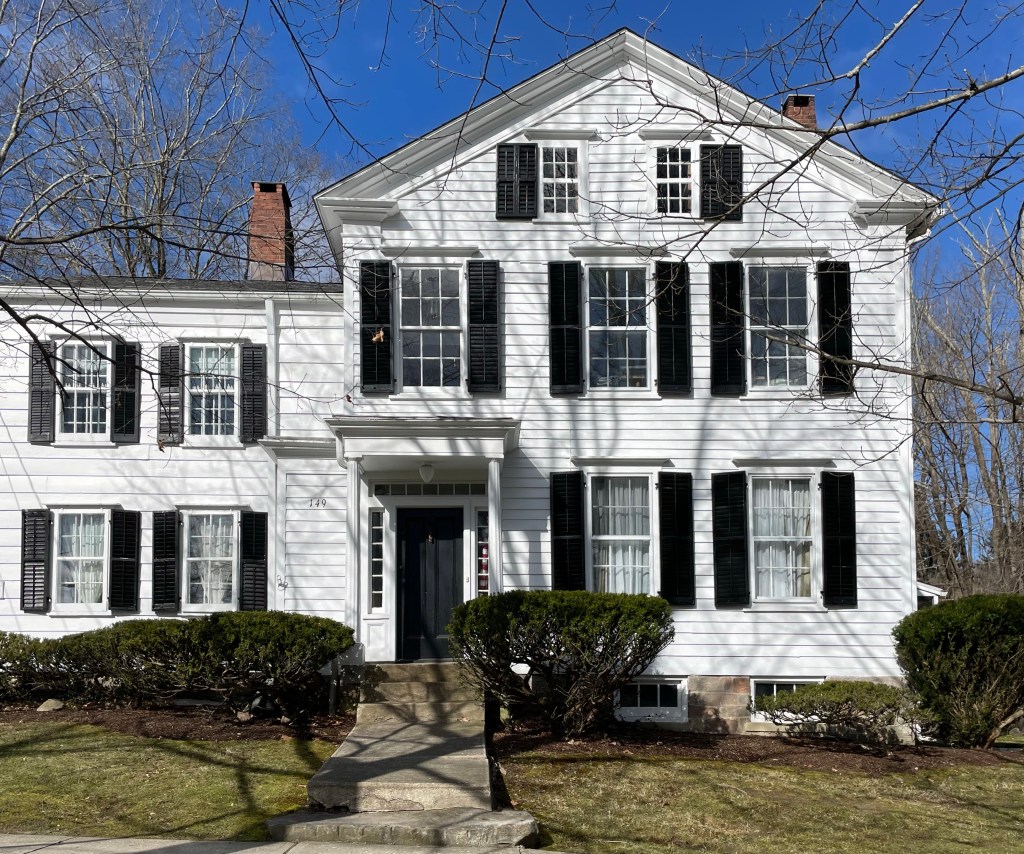
Seymour House // 1760

While this house appears to have been built in the mid-1800s as a Greek Revival home, it was actually built nearly a century earlier as one of the oldest extant properties on Main Street in Ridgefield, CT! Located on proprietors lot #20, the original building lots laid out for the new town of Ridgefield, this house appears to have been constructed in 1760 for Matthew Seymour (Seamore) and consisted of what is now the ell of the home (left side). Seymour operated one of the trade posts in town that engaged in trade with a nearby native Ramapo Tribe. The home was likely re-oriented and added onto with a more formal Greek Revival wing with its gable roof facing the street before the Civil War, a configuration it retains to this day.

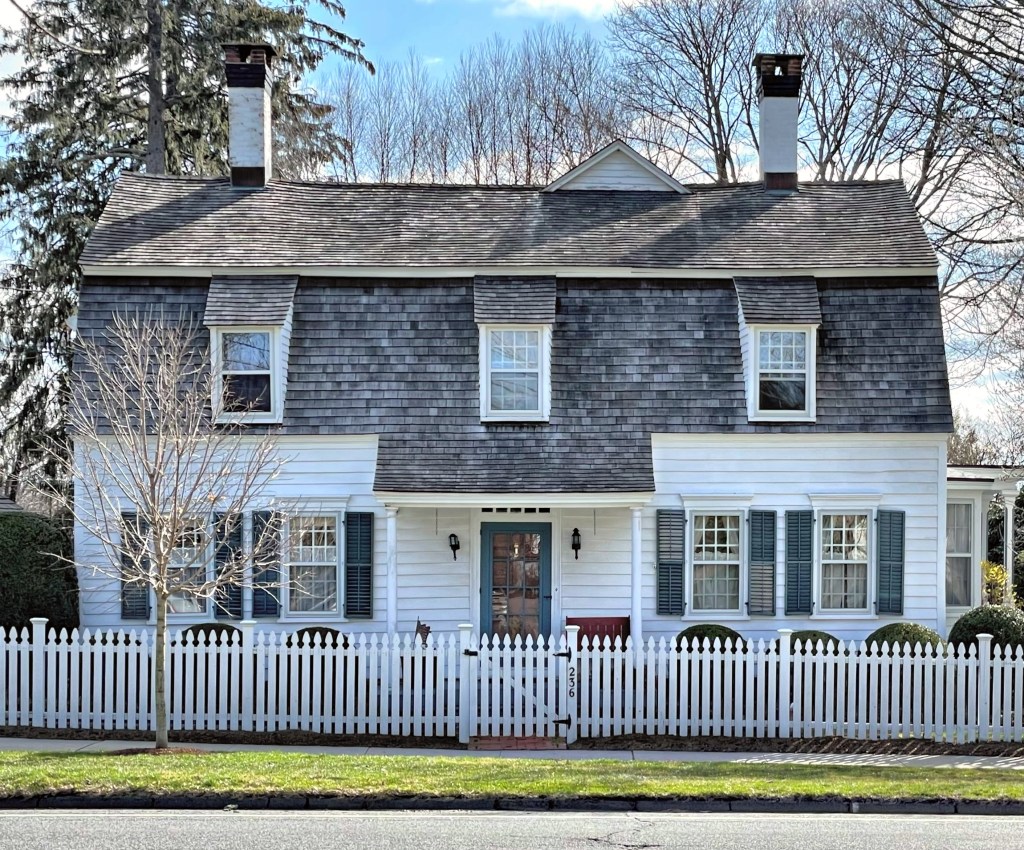
Rev. Thomas Hawley House // 1713


This old Georgian house was built in 1713 on the Proprietors Lot 5, on Ridgefield’s Main Street. Constructed for the first minister of Ridgefield, the home was originally occupied by 25-year-old Reverend Thomas Hawley (1689-1738) not long after his graduation from Harvard in 1709. In addition to being minister of the newly formed Congregational Church, Hawley (also spelled Hauley) also served as school teacher and town clerk. The house employs Dutch Colonial detailing from the gambrel roof to the extended portico over the front door, common in the Dutch colonies in the Hudson River Valley in New York.