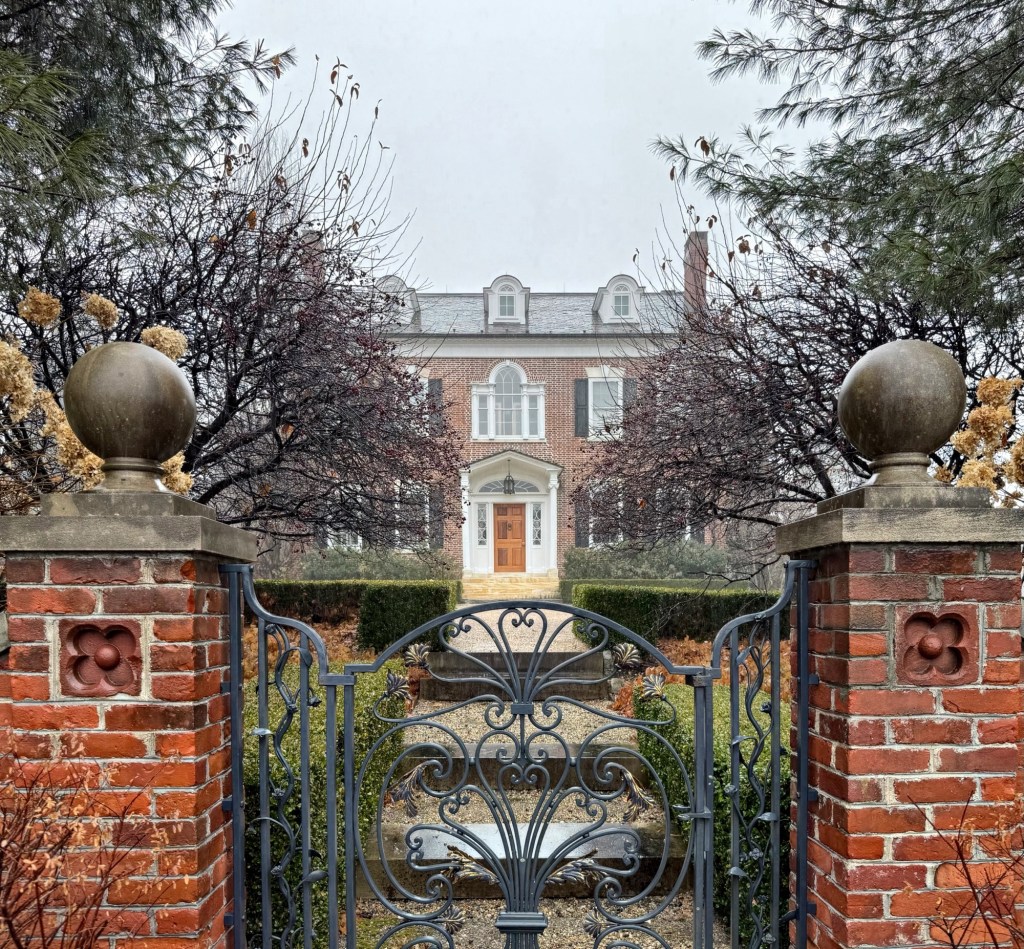
Birdsey Hall // c.1804

Built circa 1804 in the form of an English country estate house, Birdsey Hall stands as the finest property in the town of Goshen, Connecticut. The residence was built for Birdsey Norton (1763-1812), a wealthy cheese merchant who was said to have been inspired to build a country estate after travelling the American south on business. The high-style Federal/Adamesque mansion features expansive grounds bounded by brick walls and Victorian gardens. The property was later owned by Fred Favorite and Robert Devoe, friends of Liberace, who operated an antique store. Birdsey Hall remains one of the finest Federal estates in Connecticut.

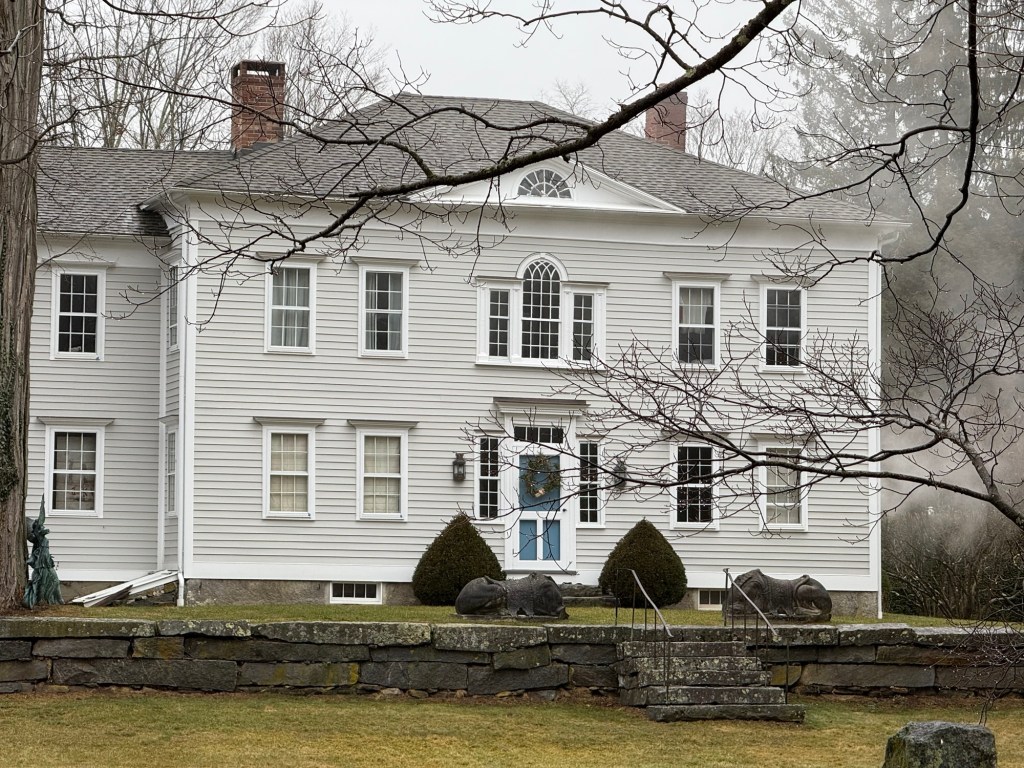
Thompson-Sperry House // 1803

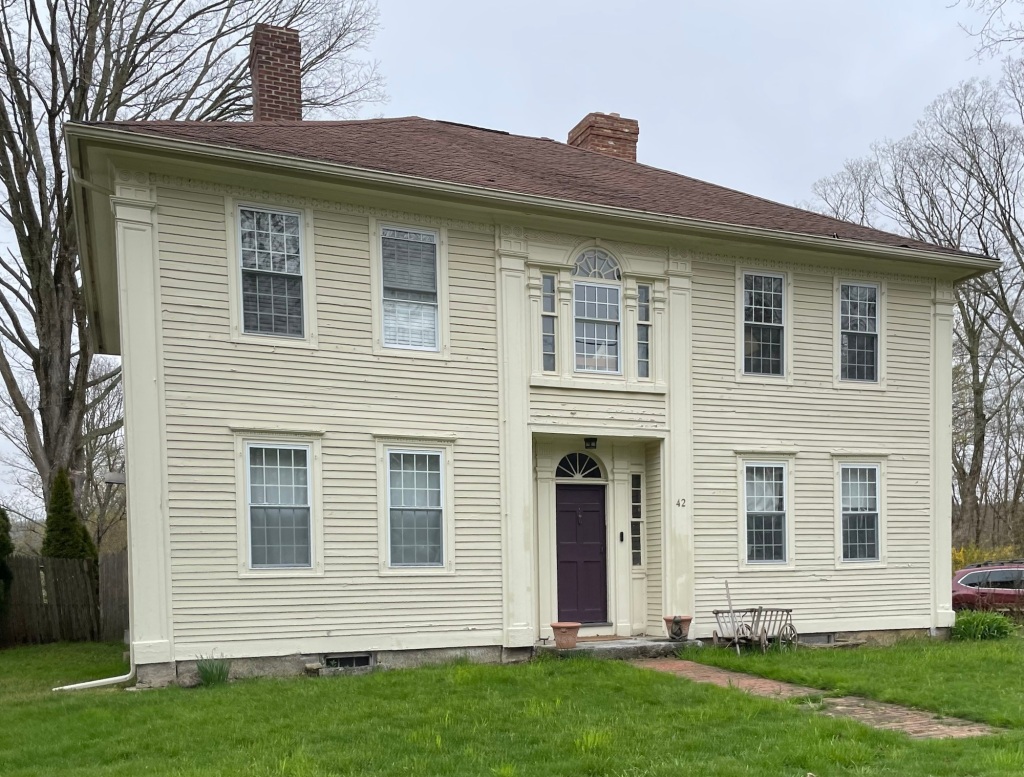
In 1803, General David Thompson (1766-1827) and his wife, Sybil (Norton) Thompson, moved into this recently completed Federal style residence on North Street, the main road through Goshen Village, Connecticut. David Thompson was a merchant and partner in the firm Wadhams & Thompson, occupying a store nearby the Congregational Church. Business partners David Thompson and David Wadhams built near-identical houses across the street from each other, though the Wadhams house has since been gut renovated and lost much of its original fabric. The Thompson House stands out for its Palladian second-story window, glazed with interlacing arcs. The property was owned at the end of the 19th century by Albert Sperry, a Civil War veteran.

Fowler House // 1809

Photo courtesy of Wikimedia commons.

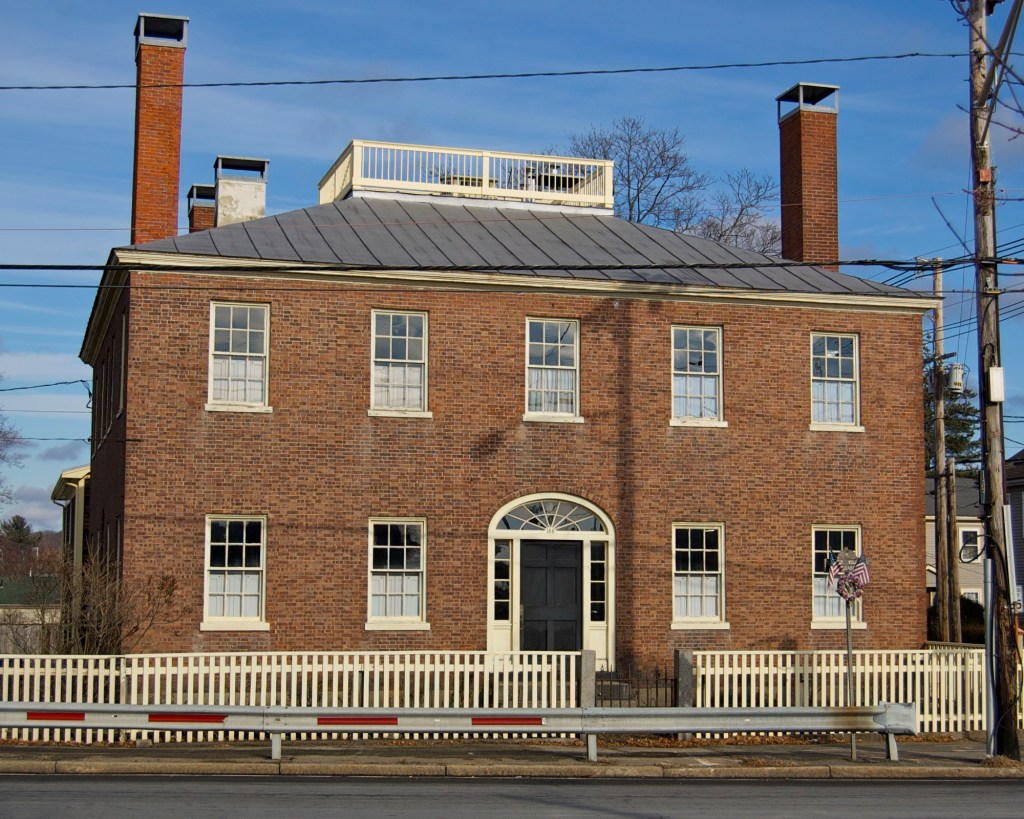
The Fowler House is located in the Danversport section of Danvers, Massachusetts, and is one of the town’s few brick Federal period homes. The residence was built in 1809 by builders Levi Preston and Stephen Whipple for Samuel Fowler Jr., an early Danvers industrialist and landowner in this part of town. The property was passed down through generations of the Fowler family and ultimately acquired by the Society for the Preservation of New England Antiquities (SPNEA, now known as Historic New England) as their second property acquisition in 1912. Uniquely, Historic New England granted life occupancy of the house to the two unwed Fowler sisters, who had resided here, even as it was converted into a museum. When bought by SPNEA, some members were concerned that the Fowler house was not grand or architecturally interesting enough to warrant its acquisition, Samuel Appleton, the founder, stated, “As might be expected, the Fowler home reflects the simple tastes of its owner. As seen from the square the house is as severely simple as it could be. It depends for its effect on its very simplicity and admirable proportions. The principal features of the house may be said to be simplicity, good taste, solid construction, splendid preservation, and homogeneity.” The property was eventually sold by Historic New England to a private owner, but a preservation easement by the Society ensures its preservation for the future. The Fowler House was recently listed for sale, and the property retains many historical features, including original ca. 1810 wallpaper in the main two-story entry hall and a large hearth in the main kitchen, its original floors, plaster, woodwork and other features.

Gould-Goodnough-Lyman House // 1816

The largest house in the smallest town (in Middlesex County) of Ashby, Massachusetts, is this towering, three-story Federal period home on South Road. Local history states that the home was originally a two-story Federal style home with shallow hipped roof. The Goodnough’s “modernized” the home by the 1870s, adding a mansard roof and built a stable on the property. Lastly, the third major owner, Jesse P. Lyman, and his wife, Mary Chapman Lyman, had the home “modernized” again, in 1898, but in the Colonial Revival style, harkening back to the house’s original Colonial-inspired roots. Fitchburg-based architect Henry M. Francis converted the old mansard roof to a full third-floor, updated the carriage house, and added side wings to flank the main block of the house (similar to his design at the old Lyman School in town). The house recently sold for over $600,000 in 2020, which may be the best steal ever! This house is a stunner!

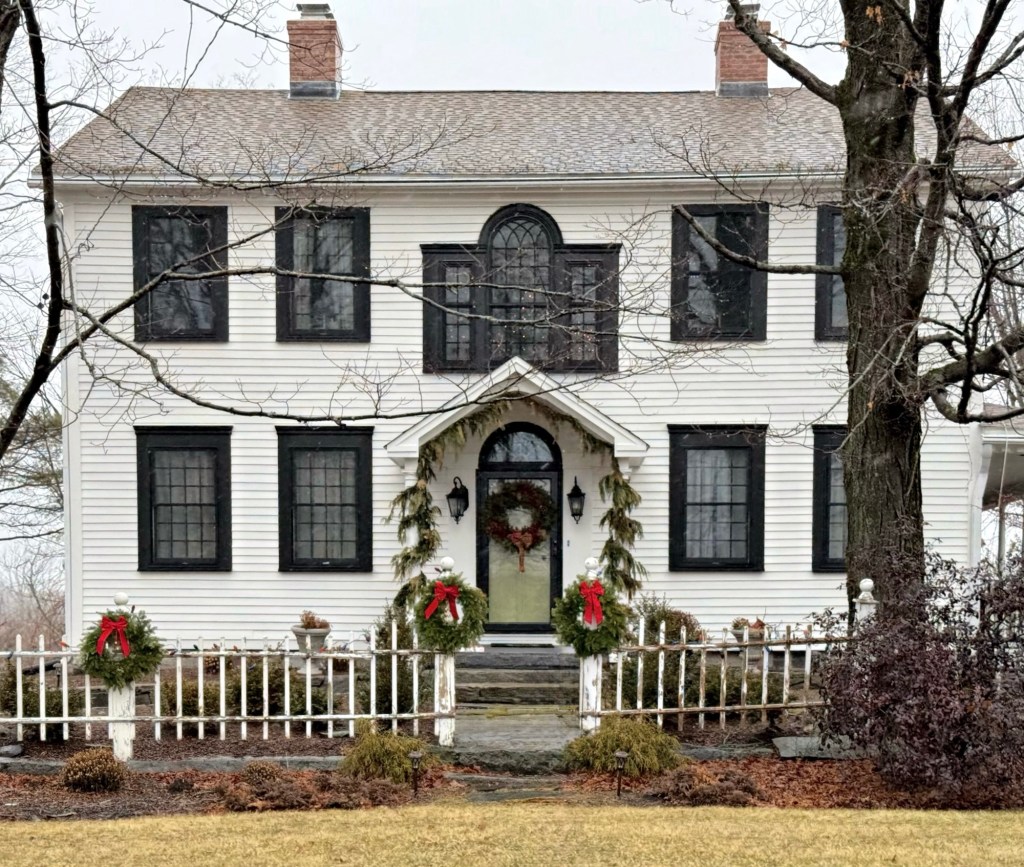
Gurley Tavern // 1822

Chaplin, Connecticut was incorporated in 1822 and in that same year, this stately Federal style residence was built and operated as a tavern by Chauncey and Julia Gurley. The house in the late 19th century was used as a private school and residence and was later owned by Ruth E. Snow Bowden (1895-1983) known lovingly as “The Quilt Lady”. Ruth was one of the foremost quilt-makers in Connecticut and her Chaplin home, as a result, became known as The Quilt Shop. By the late 1900s, the tavern was converted to an inn, but closed years later from few bookings. The new owners have restored and maintained this charming old tavern back to its original appearance.

Goodell-Bill House // 1828

One of the finest houses in the small town of Chaplin, Connecticut is this Federal manse, located right on the edge of the town center. The brick residence was built in 1828 by Isaac Goodell (1770-1856) who raised his family in the stately home. After Goodell’s death, the property was inherited by his daughter, Mary and her husband, Lester Bill. The house stands out for its painted brick walls, symmetrical facade with fanlight and sidelights at the entry, and the large Palladian window on the second floor.

Sumner-Carpenter House // 1806

I don’t think any state does the Federal style as well as Connecticut (Massachusetts is a close second)! This is the Sumner-Carpenter House, a high-style example of a Federal residence that is located on the backroads of the small town of Eastford, Connecticut. The house was built in 1806 for John Newman Sumner (1775-1831) who resided here until just before his death. The elaborate Federal period house was sold out of the family. After trading hands a half-dozen times, the property was purchased by David and Harriet Carpenter in 1881. The property remained in the Carpenter family for generations, and remained as such after Orlo Carpenter (1865-1938) was killed in the collapse of a barn during the hurricane of 1938. Architecturally, the house has all of the hallmarks of the Federal style, with the symmetrical main facade five bays wide, with a center entrance flanked by wide sidelights, and topped by a fanlight transom and corniced entablature. The window above the entrance is in the Palladian style, with a rounded center window flanked by narrower sashes. The house is very well preserved and was listed on the National Register of Historic Places for its architectural quality and preservation.

Michael Richmond House // c.1814

When the town of Ashford laid out a road across the land of Abner Richmond, he saw it as an opportunity to gift the newly organized plot across the road to his eldest son, Michael and his new wife, Polly as a wedding gift. Michael Richmond (1786-1881) built this Federal style house across the street from his father (see last post), likely employing the same builder, who employed similar design elements for both homes. In early life Michael learned saddle-making and afterward engaged in the manufacture of cloth, also axes. He was also engaged in staging and turnpike building, and in the mercantile business, until he retired at 60 years of age. He was a man of all trades! The house is now home to BOTL Farm, a pasture-based, sustainability-focused livestock farm that raises pigs, lambs, goats, and chickens ethically. Gotta love seeing farming coming back to Connecticut’s “Quiet Corner”!

Abner Richmond House // c.1803

This high-style Federal house sits across from the former Westford Baptist Church in Ashford, Connecticut. The house was built around 1803 for Abner Richmond (1761-1834) and his wife Eunice, who purchased 92-acres of land here one year earlier. Abner descended from John Richmond (1594-1664), one of the original white settlers of Taunton, Massachusetts in 1637. About ten years after he built his farmhouse, the town of Ashford paid the Richmond’s money for hardship caused by laying out a road right in front of the homestead. This 1812 occurrence possibly allowed the couple to invest further into the property, where they converted some of the rooms into a tavern, which was later accessible by the new Boston and Hartford Turnpike. The turnpike began in East Hartford and made its way through Ashford before winding its way to Boston. The house was documented as having 19th century stenciling on the walls, which survived underneath wallpaper (go figure). The new owners have clearly given the Richmond House some love and care, down to the perfect paint color.

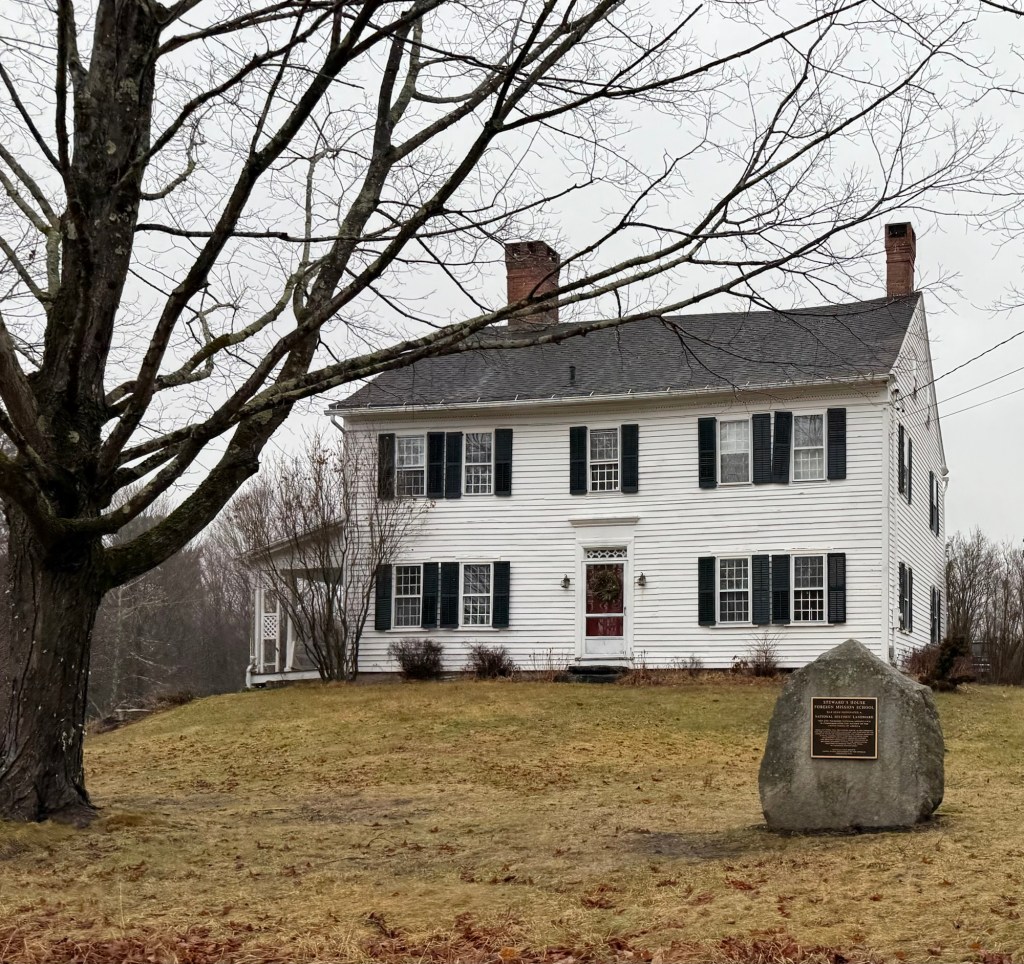
Samuel Read Hall House // 1831

Samuel Read Hall (1795–1877) was an American educator, who in 1823, started the first normal school, or school for training of teachers and educators, in the United States. He helped found the American Institute of Instruction in 1829, the oldest educational association in the U.S. He served as pastor in Brownington and Granby, Vermont from v 1846 to 1875 and would also become the principal and teacher at the Orleans County Grammar School in Brownington. He lived in this Federal style house in the village until his death. The Hall House is now a part of the Old Stone House Museum and Historic Village. Fun Fact: Samuel Read Hall is said to have been the earliest person to introduce the blackboard to the American classroom!