Asa Waters Mansion // 1829

In 1824, prosperous gunsmith Asa Waters II set out to build the stateliest residence in the country. It took two full years to amass the necessary materials for what is now known as the Asa Waters Mansion and Mr. Waters spared no expense. Asa Waters II (1769-1841) was born in Millbury in 1813 to Asa Sr. and Sarah Waters. Asa earned the art of gunsmithing from his father, and in 1808 the junior Asa and his brother Elijah opened the Waters & Co. Armory along the banks of the Blackstone River, in what is now Millbury Center. Following the untimely death of his brother in 1814, Asa Waters carried on the business solo and secured lucrative arms contracts with the United States government. His invention of a lathe to turn gun barrels into the first seamless barrels revolutionized the manufacture of guns throughout the world, and provided his company a stockpile of cash. As a result, he hired Boston-based architect Asher Benjamin, to design a country house suitable of his stature. The mansion features two prominent facades with the primary distinguished by a colonnade of fluted two-story columns with composite capitals. The mansion remained in the Waters Family until 1929, when it was sold to the Roman Catholic Diocese of Worcester, as a rectory of a local church. In 1977 the Town of Millbury acquired the Asa Waters Mansion, and with little funding to maintain the property; in 1994, the Asa Waters Mansion had fallen into quite a bit of disrepair. The town proposed to demolish the mansion for a parking lot, but a group of locals worked together as the Asa Waters Task Force and petitioned to save the house: funds were raised, tradesmen in the community donated materials and labor. Saving the architectural landmark for generations to come.

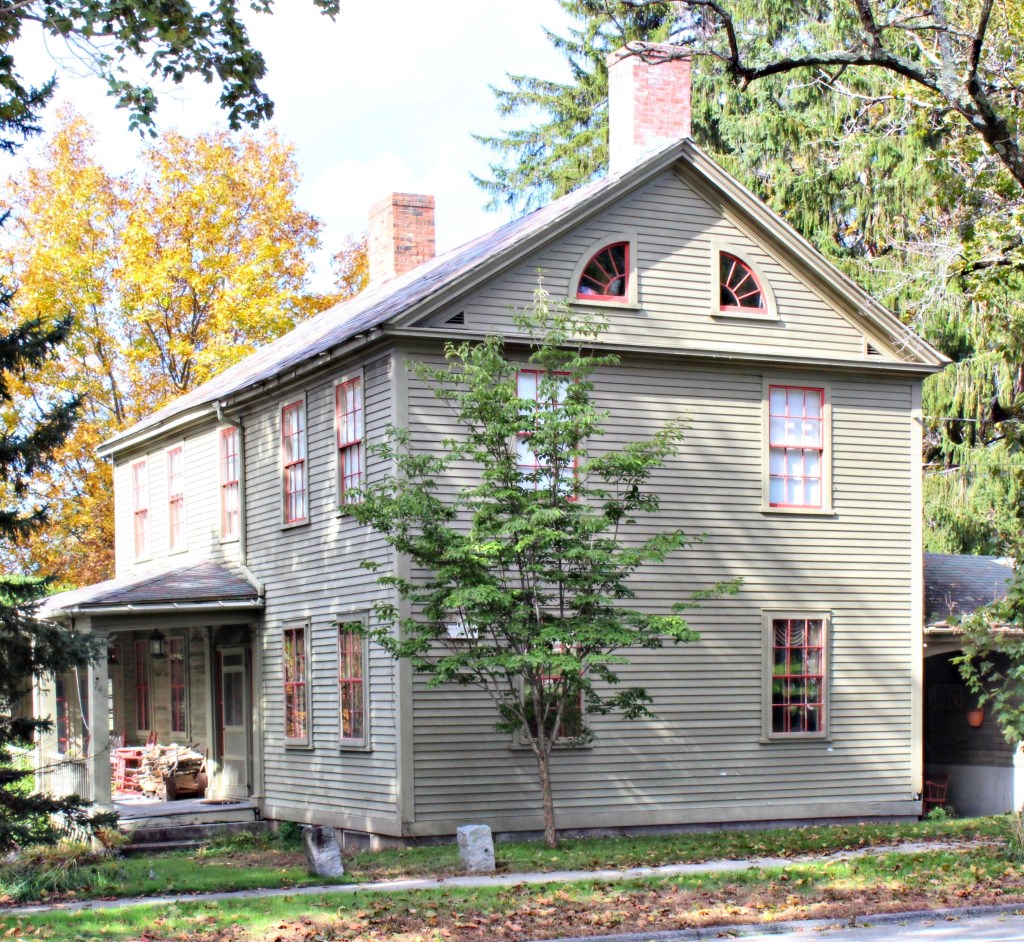
Hall-Balcom House // 1810

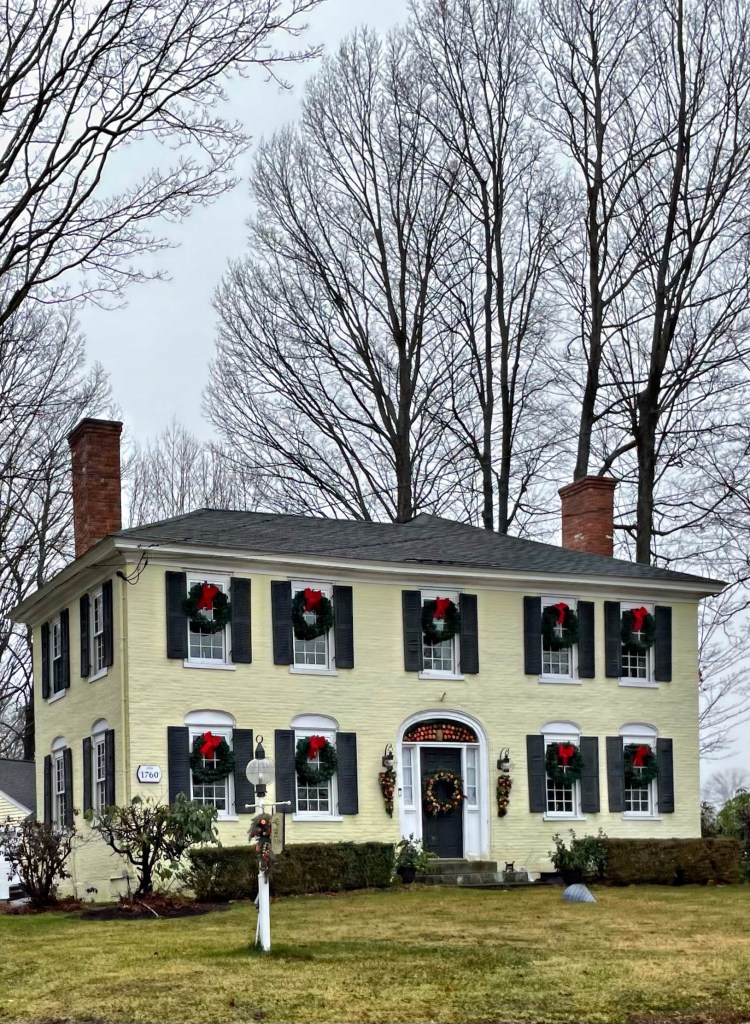
This historic house in West Millbury, Massachusetts, began in the end of the 18th century as a one-and-a-half-story wood-frame farmhouse. By 1810, the home was rotated 90 degrees and a more substantial, two-story brick house was constructed facing the street. The Federal style home was owned by Thaddeus Hall (1779-1855), and after his death, it was owned by his son, Orson Eddy Hall, who possibly rented the property for income while he resided in New Orleans and ran the iconic St. Charles Hotel there. The property was later acquired by Willard Balcom and remained in the family. Oh what I wouldn’t do to see the paint come off this old brick house!!

Alexander Jack Jr. House // 1811

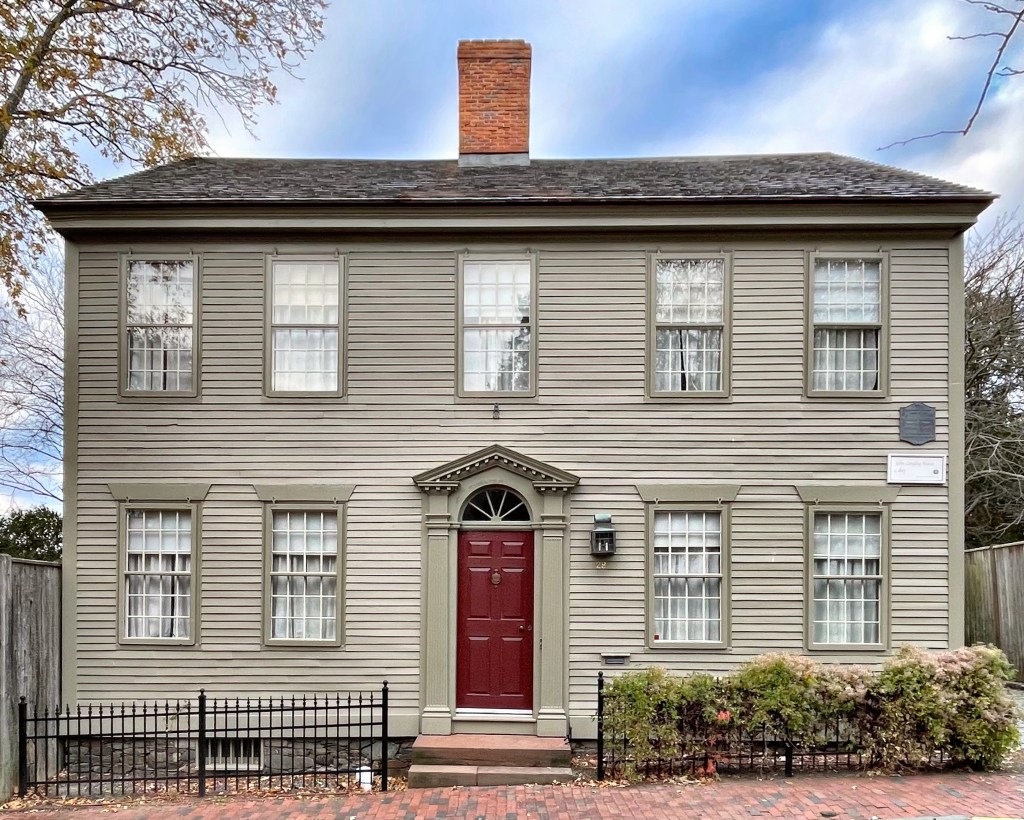
Newport in 1774 had approximately 153 free Black residents residing in 46 households comprising of thirty-percent of Newport’s population at this time. One of these free Black families was the Jack family who resided around Levin Street (Memorial Boulevard today). The Jack Family appears to have been from Antigua and may have had ties to the Redwood Family (the namesake of the Redwood Library), who owned a plantation on the island and resided in Newport. Alexander Jack, Jr. was a free African American whose trade was a cordwainer or shoemaker. He bought his land in 1811 and is thought to have begun construction almost immediately. Jack heirs remained on this property until 1881. The Newport Restoration Foundation purchased the house in 1969, moved it that same year to Mill Street to save it from urban renewal and the widening of Levin Street as Memorial Blvd.

Langley House // 1807

Smack-dab in the middle of Newport, Rhode Island’s dense network of downtown streets, you’ll find Queen Anne Square, a rare bit of open space in a web of alleys and ways. Did you know that this park is only 50 years old? It’s true! In the late 1960s and early 1970s, Newport (and many cities all over New England) were grappling with suburbanization and dwindling tax revenue with people and businesses moving out. Their solution was “urban renewal”, which entailed the razing of buildings and sometimes, neighborhoods which were deemed “blight”. Historic buildings and communities were destroyed with modern planning (high capacity roads and high-rises connected by open space) to take its place. In Newport, this saw the form of America’s Cup Avenue and Memorial Boulevard, which cut through the city to allow for more cars and less-congested side-streets. Years later, planners realized that Newport was without a traditional town common like many New England towns, so they cleared buildings in front of Trinity Church to provide that traditional feeling. At the time, preservationists were trying to save significant buildings, with the Langley House being one of them. This house was set for the wrecking-ball, from Memorial Boulevard’s construction but moved and restored by Newport Restoration in the last hour to the south side of Church Street. Seven years later when Queen Anne Square was built, this house was moved to the north side, saving it once again. This house is a survivor!

William Bottomore House // c.1750

This well-kept Federal home in Newport was apparently built pre-Revolution, but it was likely significantly altered in the early 1800s for its namesake, William “Billy” Bottomore. “Billy” was born in Bologna, Italy, and moved to Salem, MA, where he possibly met Michele Felice Cornè, a prolific painter and who is credited in making tomatoes mainstream… seriously. In early 19th century New England tomatoes were thought to be deadly poison. Cornè was accustomed to eating tomatoes in his native land of Italy and would regularly eat them without ill effect and, thus, allayed the fears of the residents of his adopted country. Cornè became friends with Bottomore and they both moved to Newport. Bottomore likely modernized this house with help from his friend and ran a confectionery store in the home.

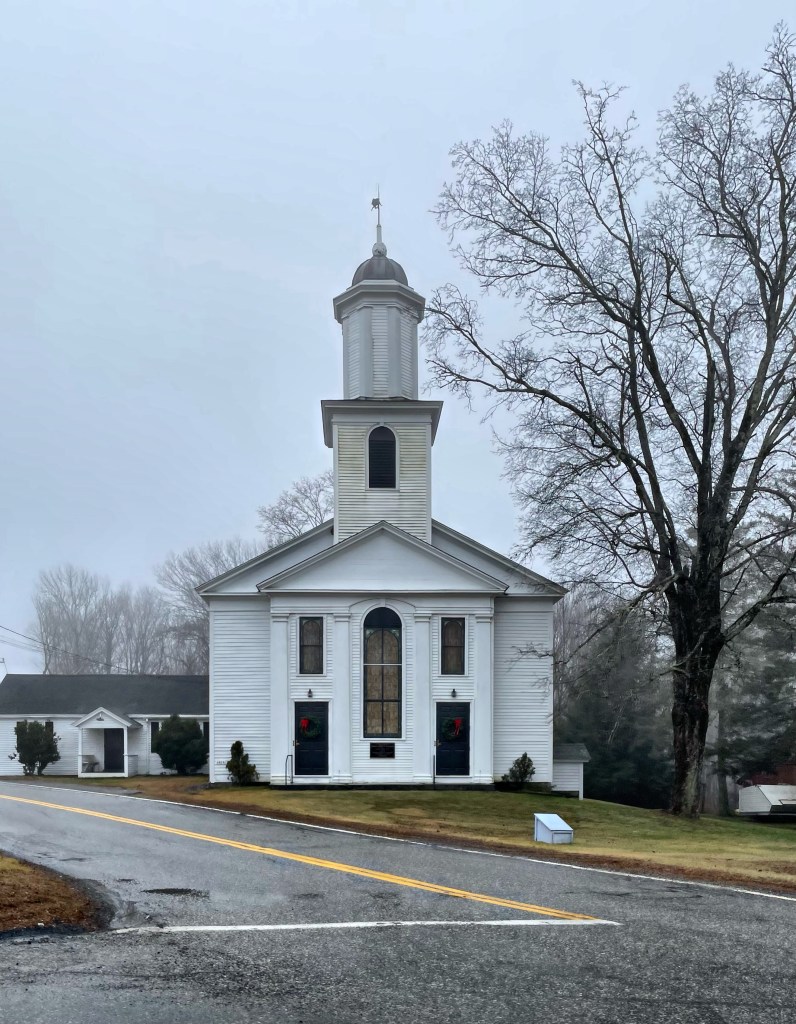
Canton First Congregational Church // 1814

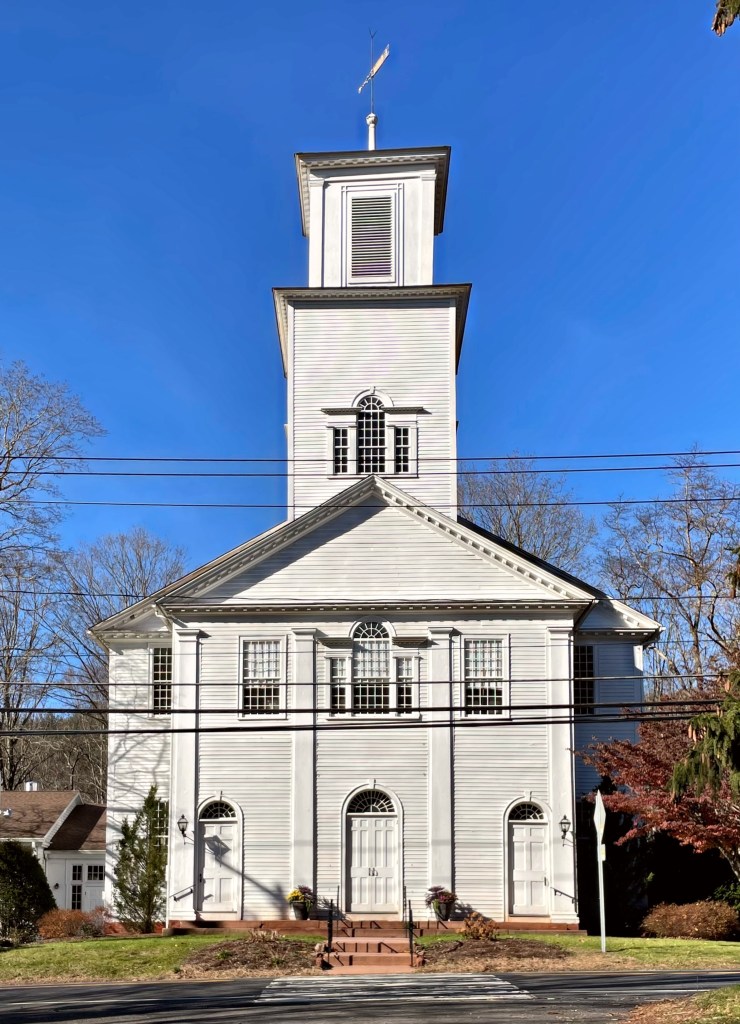
In 1750, a new parish church was established as The First Ecclesiastical Society of West Simsbury, with parishioners meeting in members’ homes. Then, Canton Connecticut was still a part of Simsbury. In 1763, the Parish constructed a meetinghouse with the building also used for town meetings and other public gatherings. In 1806, Canton separated from Simsbury and the congregation soon after decided that the nearly 50 year old primitive building needed replacement. A new building was proposed and materials were harvested. Stories report that the first tree felled for lumber for the new church killed a parishioner. The beautiful Federal style church edifice features Palladian windows, a hallmark of the style. The congregation is active to this day.

Old Brick Tavern // 1804

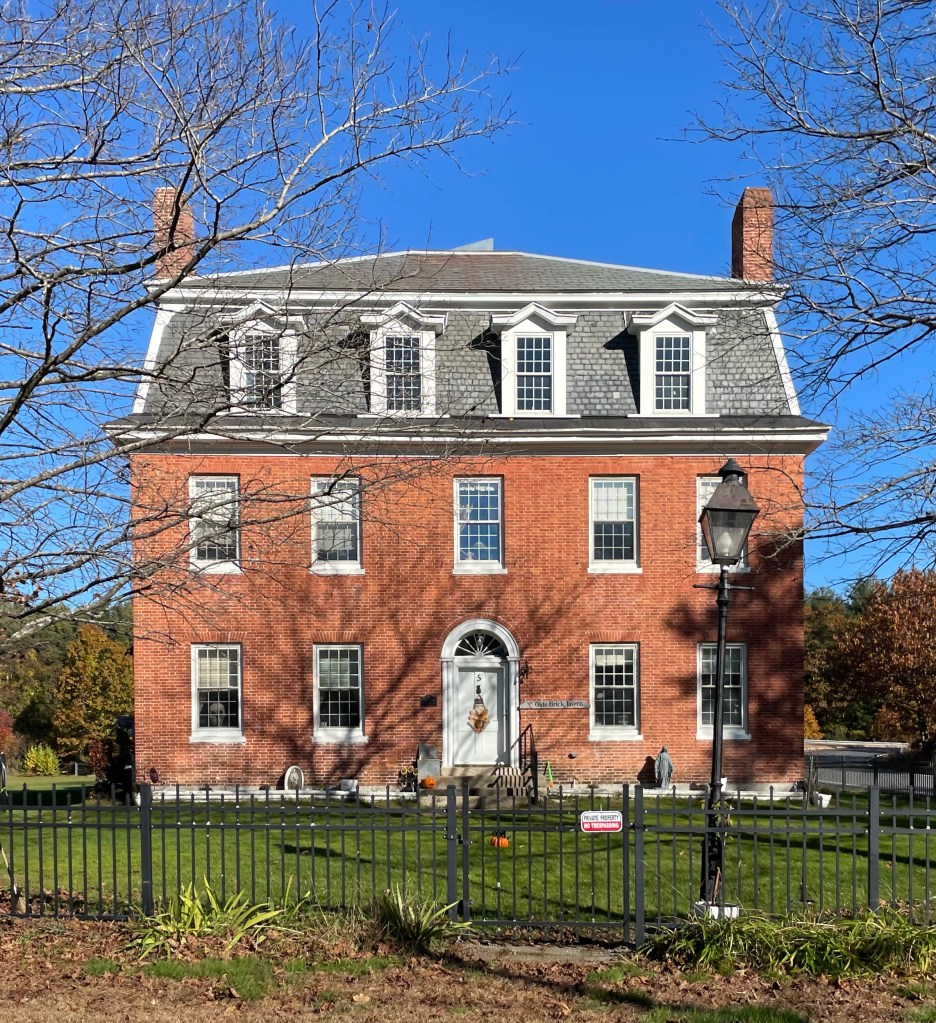
The Brick Tavern was an important stopping point on the old Union Turnpike, and the original two-story brick structure was completed about the time of the turnpike construction by Paul Willard, who with his heirs, operated the inn for 25 years. In the first years of the 1800s, the Union Turnpike Company planned and built a road providing a link for travel from Boston to Albany. Realizing the possibility for an inn along the first leg of the route, Willard financed this substantial brick building for travellers to stop, eat and spend the night. The tollroad was later made free, and less people stayed at the inn. After subsequent ownership, the building started to suffer from deferred maintenance and it was sold to a local Quaker group. The Quakers modernized the building by constructing the mansard roof and updating the interior. They never occupied it, but rented it to tenants for income. After, it was a hospital, boarding house, and in WWII, as a barracks of sorts for soldiers training nearby at a military base. The building is now a house!

Newhall-Lane House // 1809

The Newhall-Lane House (could be the home of many wives) was built in 1809 by Pliny Newhall, a bricklayer. He purchased the land here at a prominent crossroads in Lancaster in 1808 from his employer who owned a brickyard across the street. At a previous home in town, Newhall’s wife Patty died giving birth to their son, at just 23 years old. Their son also died during childbirth. He remarried and had a full family to grow into the couple’s new house. They relocated to Lincoln and the home was sold to Captain Anthony Lane, who was the son of Deacon Jonas Lane, an important figure in Lancaster town history. Jonas had four wives, outliving three of them. Captain Lane himself, was married twice while living in this house; he had no children from either marriage. Although he was a talented craftsman and cabinetmaker, Captain Lane listed his occupation as farmer. The house is significant architecturally, as a fine example of Federal style architecture in Lancaster . Its sophisticated design is reflected in the graceful entrance. One of the unique features of the house is the pedimented gable of the facade which in combination with the narrow plan of the house, creates a delightful massing in this distinctive combination of Greek Revival and Federal styles.

Carter House and Publishing Company Building // 1820

Here is a two-for-one post! These two absolutely gorgeous Federal style buildings on Main Street in Lancaster were built in 1820 for George Carter and his brothers who ran a publishing company in the sleepy town. The Carter family was very active in the Swedenborgianism, a very small church in the general realm of Christianity, and they helped create a small enclave of worshippers in town. The brick, Carter and Andrews Publishing Company building (on the other side of a dead end street from this house) was built at the same time as the Carter home. The company was extremely popular in publishing children’s books, textbooks, and maps. One of my favorite publications the company made was “Peter Piper’s Practical Principles of Plain and Perfect Pronunciation”, now say that three times fast!

Safford House // 1799

Located in Lancaster, Massachusetts, the Thomas Safford House has stood for over 220 years, but is slowly decaying. Built in 1799 for Thomas Safford, a baker, the house is an excellent example of a Federal-style homestead that appears much like it did when built (besides the neglect). After two subsequent owners, the property was purchased in 1890 by Pauline Revere Thayer, a direct descendant of Founding Father, Paul Revere. Pauline added a large wrap-around porch and balcony to the house, which served as a vacation home for working girls from Boston. She appropriately named the house “Goodrest” where the girls could enjoy their summers, without working in poor conditions. After she died in 1934, the property was acquired by the Commonwealth of Massachusetts as the residence for the head of the Lancaster Industrial School for Girls. The Lancaster Industrial School for Girls was a reform school and the country’s first state reform school for girls, opening in 1856. This school paved the way of social reform, moving away from child imprisonment for “delinquents” towards a correctional paradigm. This was in part achieved because of the observed benefits of environmental change in children, as well as the importance of education. The bucolic, open-air setting was believed to be beneficial for childhood development, compared to a prison setting common before-hand. In 1935, the Safford House was restored to the original appearance, and the porches removed. The State of Massachusetts owns this house and the rest of the severely deteriorating buildings on the campus. It is a shame to see such significant buildings intentionally left to rot.