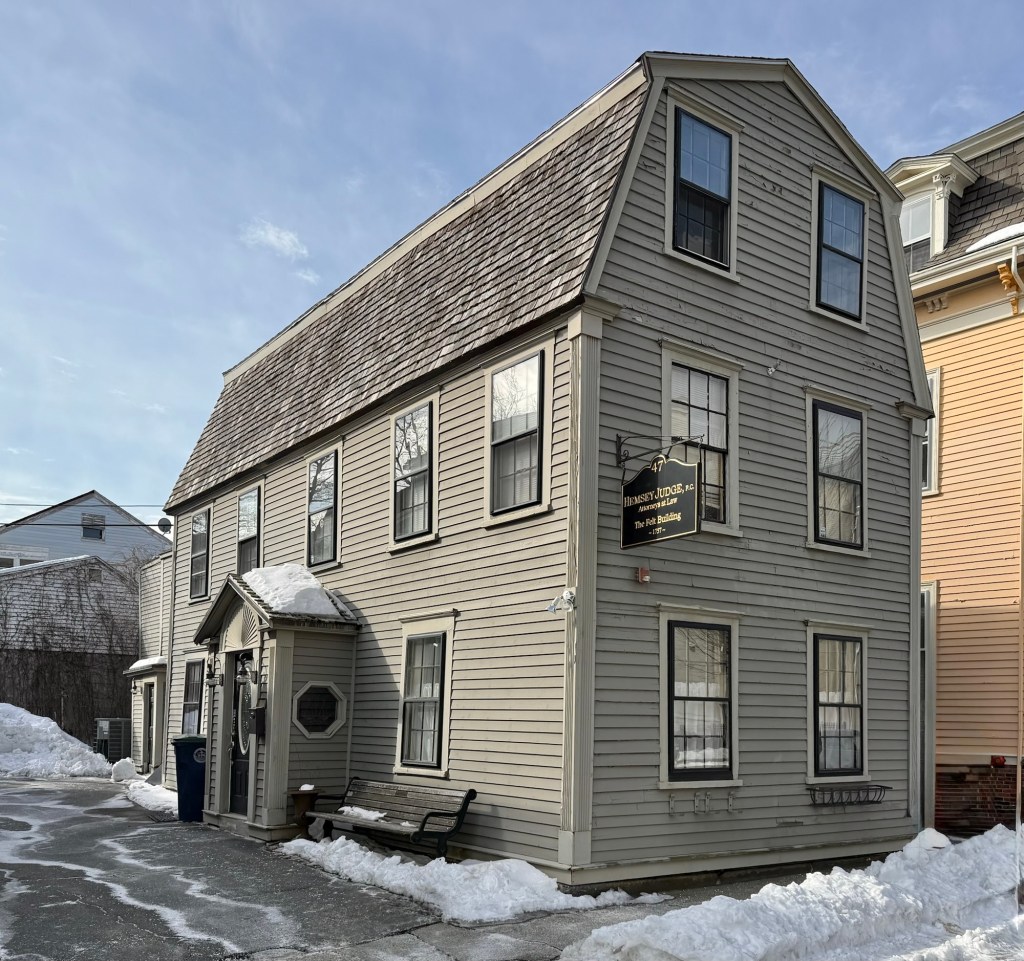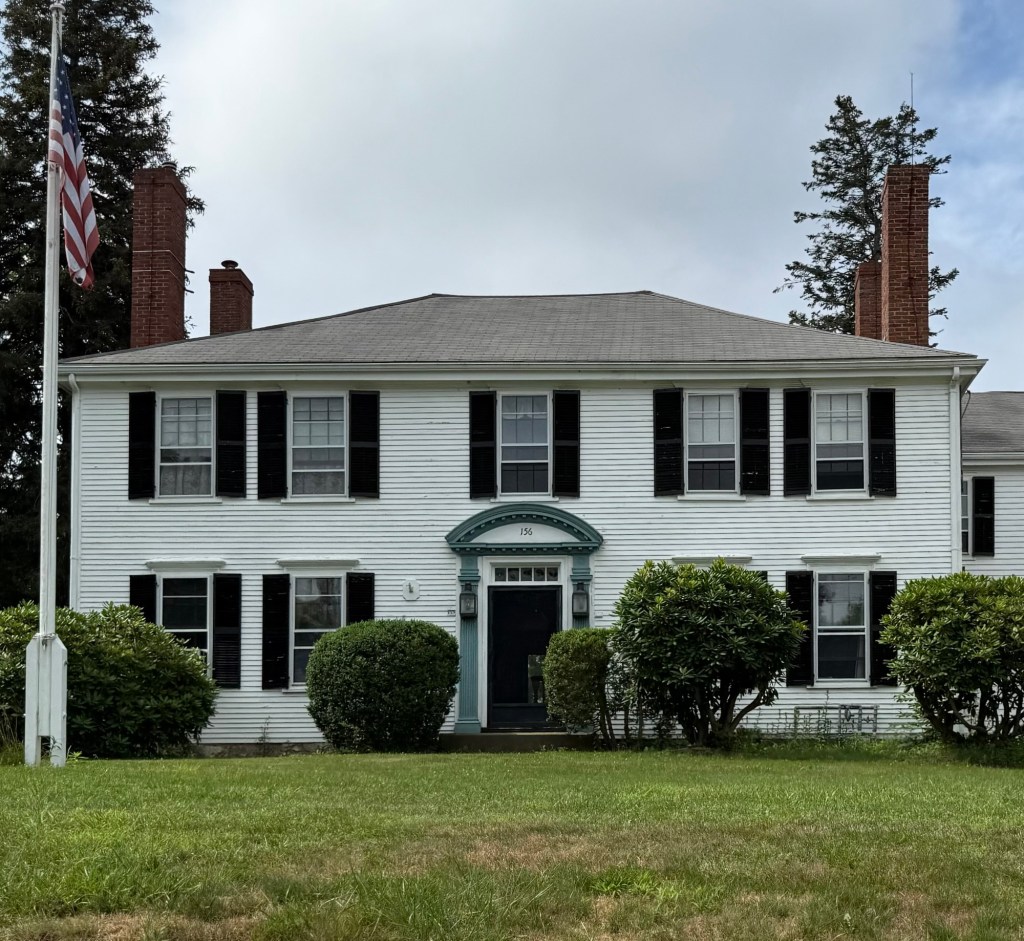
Captain John Felt House // 1757

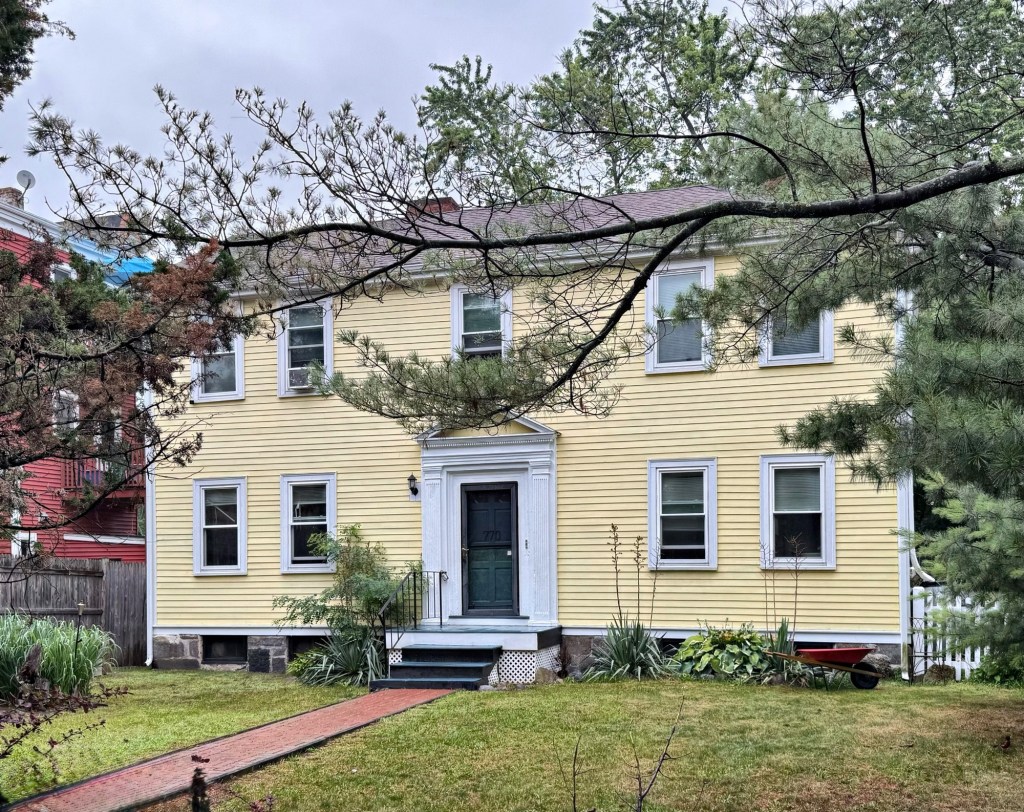
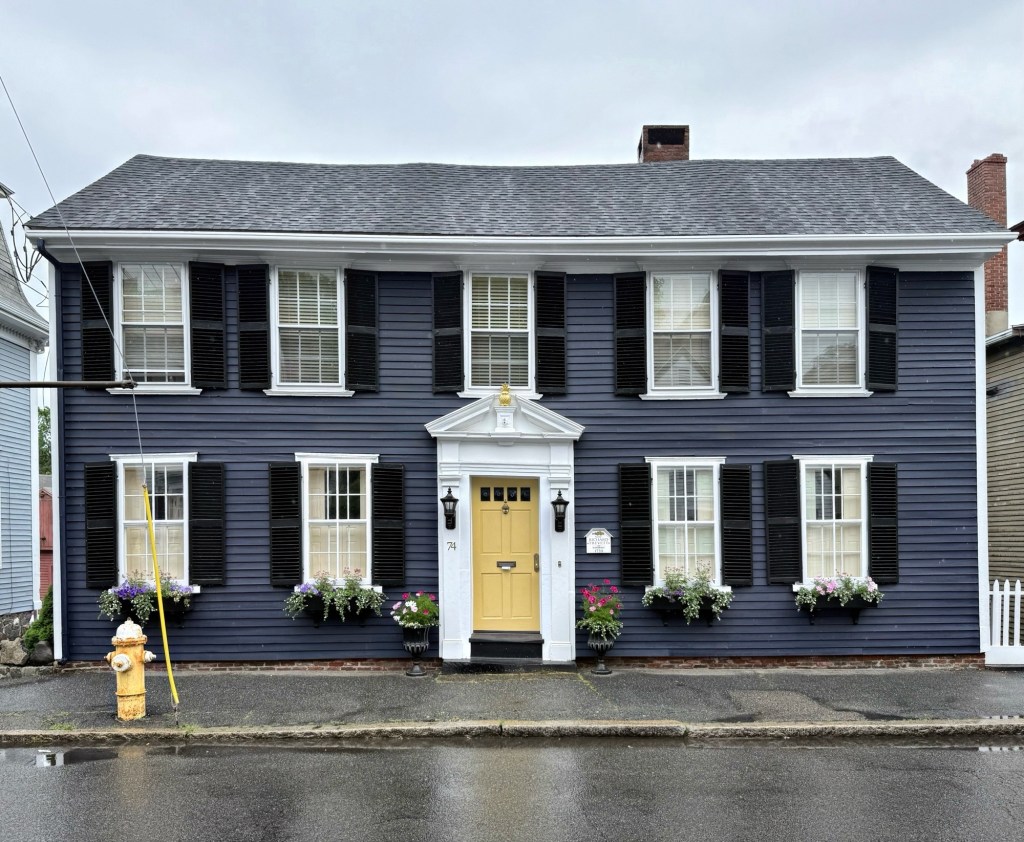
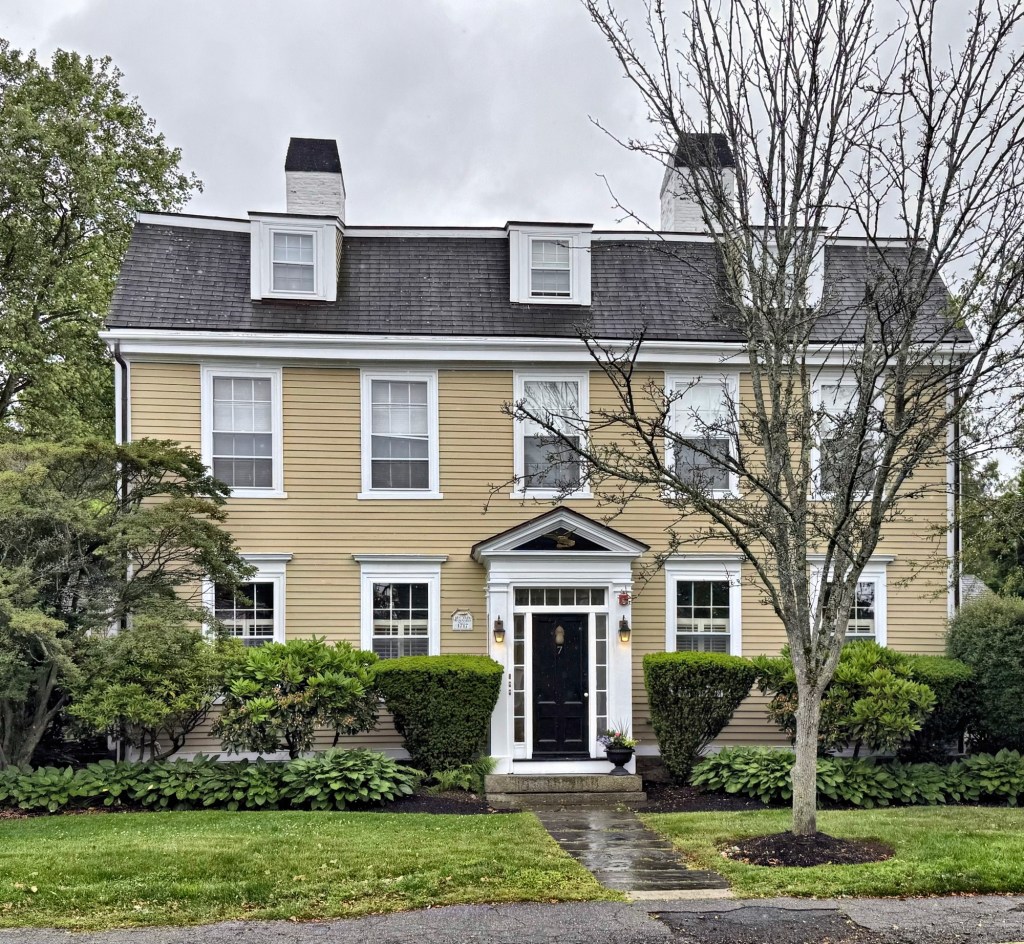
The Captain John Felt House on Federal Street in Salem, Massachusetts, is a surviving Georgian residence with ties to the American Revolution. In May 1757, John Felt purchased a lot on present-day Federal Street from Benjamin Lynde for 52 pounds, and began building his family home here. John Felt, a Salem native, worked as a “shoreman,” but was primarily an owner of vessels involved in the coasting trade, also owning a large warehouse to store the goods from the West Indies brought in by his ships. Felt’s title of “Captain” came from his involvement in the Essex county militia. Captain Felt was a key figure in Leslie’s Retreat, also called the Salem Gunpowder Raid, which took place on February 26, 1775, in Salem. British Colonel Alexander Leslie led a raid to seize suspected cannons from a makeshift Colonial armory in Salem. Instead of finding artillery, Leslie encountered an inflamed citizenry and militia members ready to stop his search. These colonists flooded Salem’s streets, preventing Leslie’s passage and forcing him to negotiate. Ultimately, the Salemites convinced the British Regulars to stand down and return to Boston. No shots were fired, and no one was seriously injured—but tensions were high and a skirmish was evident until Captain Felt stated, “If you do fire, you will all be dead men.” Had a soldier or a colonist gone rogue and fired their weapon, the American Revolution might have begun in Salem, and not Concord just weeks later. After the Revolution, Captain Felt sold his house and moved to present-day Danvers. After centuries of successive ownership by merchants, today, the Felt House is used (at least in part) as professional law offices.

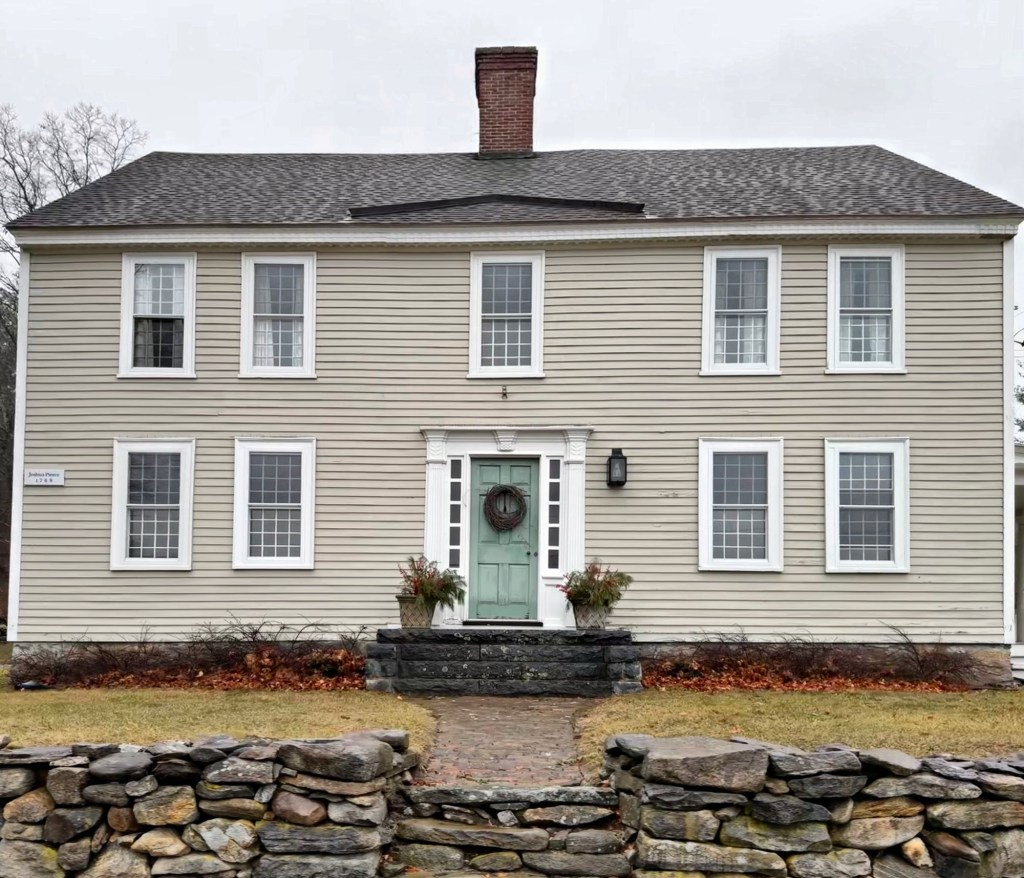
Pierce Homestead // c.1750

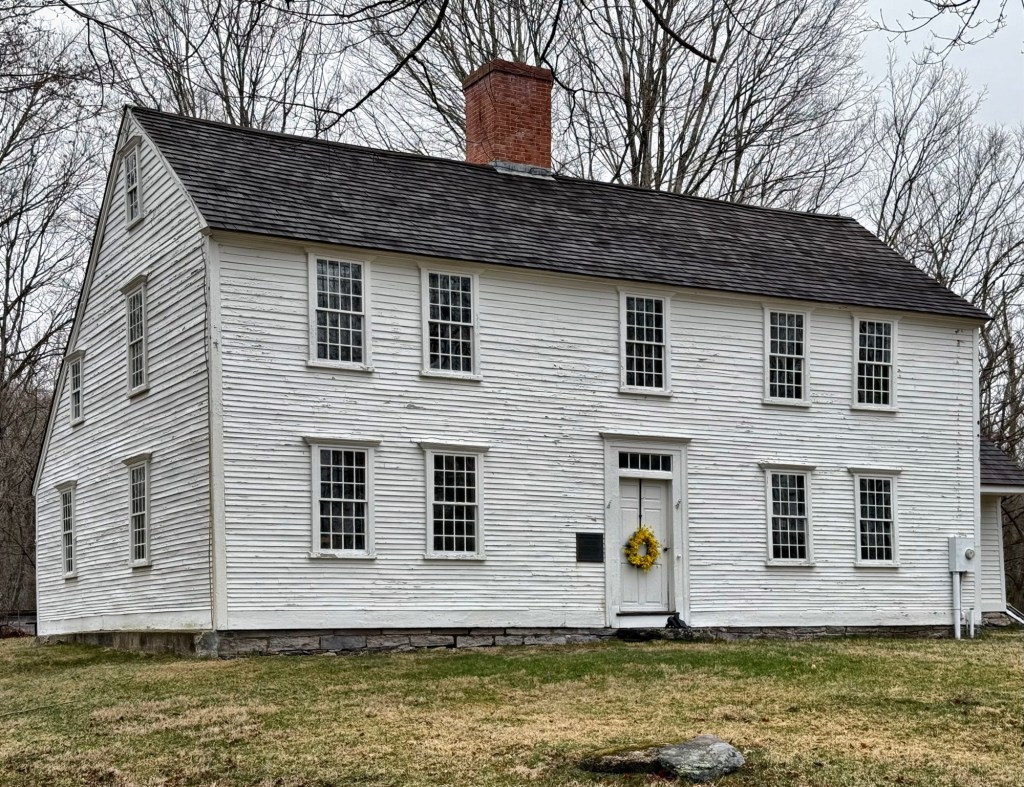
Built before the American Revolution, this large Georgian residence is one of the oldest extant houses in the charming town of Cornwall, Connecticut. Located on Popple Swamp Road just outside the central village, the Pierce Homestead dates to circa 1750 (the sign dates the house to 1768, but information from the town history mentions a house there earlier) and is a stellar example of a simple, two-story Georgian house with five-bay facade and 12-over-12 sash windows. This property was purchased by Joshua Pierce in 1748 and included over 300-acres of farmland, the farmhouse was likely built within a matter of years. The house was likely expanded and modernized by his son, Seth Pierce, who inherited the property in the 1790s. The farm remained in the Pierce Family for generations and was lovingly restored in the 20th century. It is a great example of a well-preserved 18th century farmhouse in Litchfield County, Connecticut.

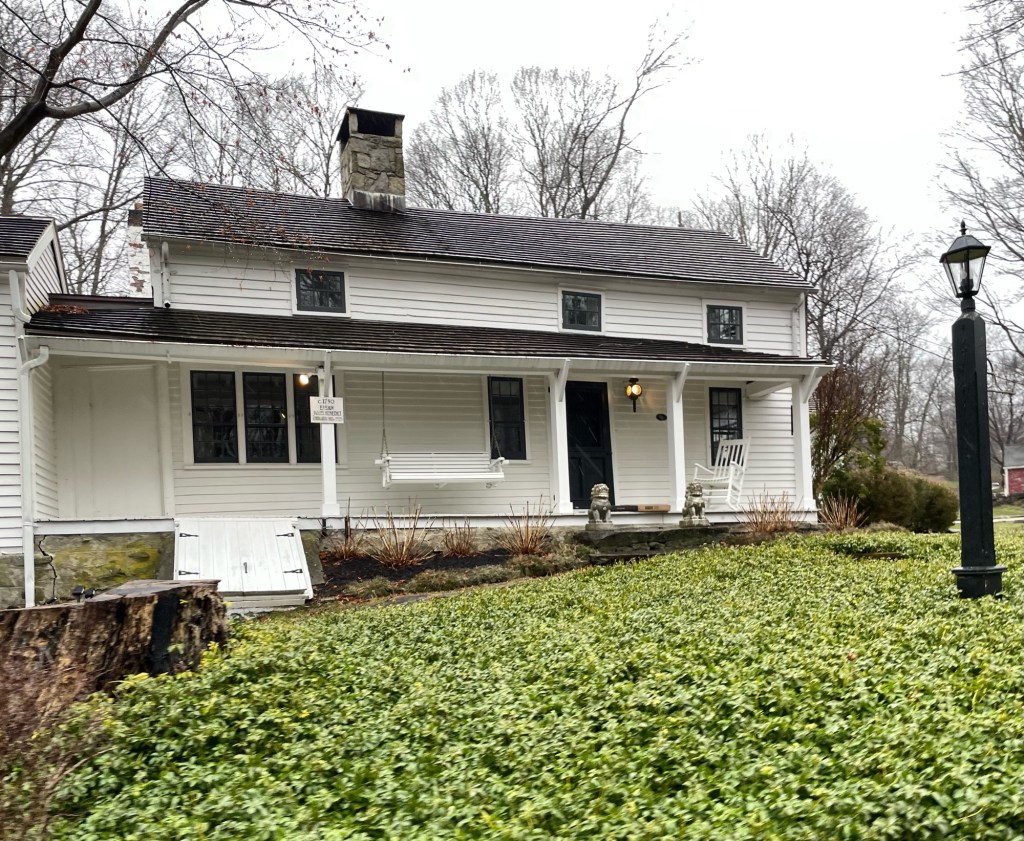
Benedict House // c.1740

The Benedict House in Ridgefield, Connecticut is a stunning Colonial-era cottage that was once the home of a cobbler, who had his shop on the property. The Benedict family, headed by James Benedict, Sr., were original proprietor settlers of Ridgefield. This house and shop have been attributed to James’ son James Benedict (1685-1762), who owned the land and was a shoemaker and deacon of the Congregational Church. Ensign Benedict was also a fence viewer, a term new to me. Fence viewers had power to make and enforce rulings regarding escaped or trespassing livestock, the location of fences, and, above all, maintenance of fences. With fences so crucial to keeping livestock where it belonged, loose boards and rotting posts were big concerns. The fence viewer could even compel a property owner to pay for needed maintenance or repair conducted by a neighbor if he or she failed to keep up their fence properly. The property left Benedict family ownership in 1848, and it was later extensively restored by renowned architect Cass Gilbert, who bought the property in 1920. Cass Gilbert also restored a few other Colonial-era houses in town. It was later the home of Robert and Mildred Wohlforth, both writers of note and six-decade residents of Ridgefield.

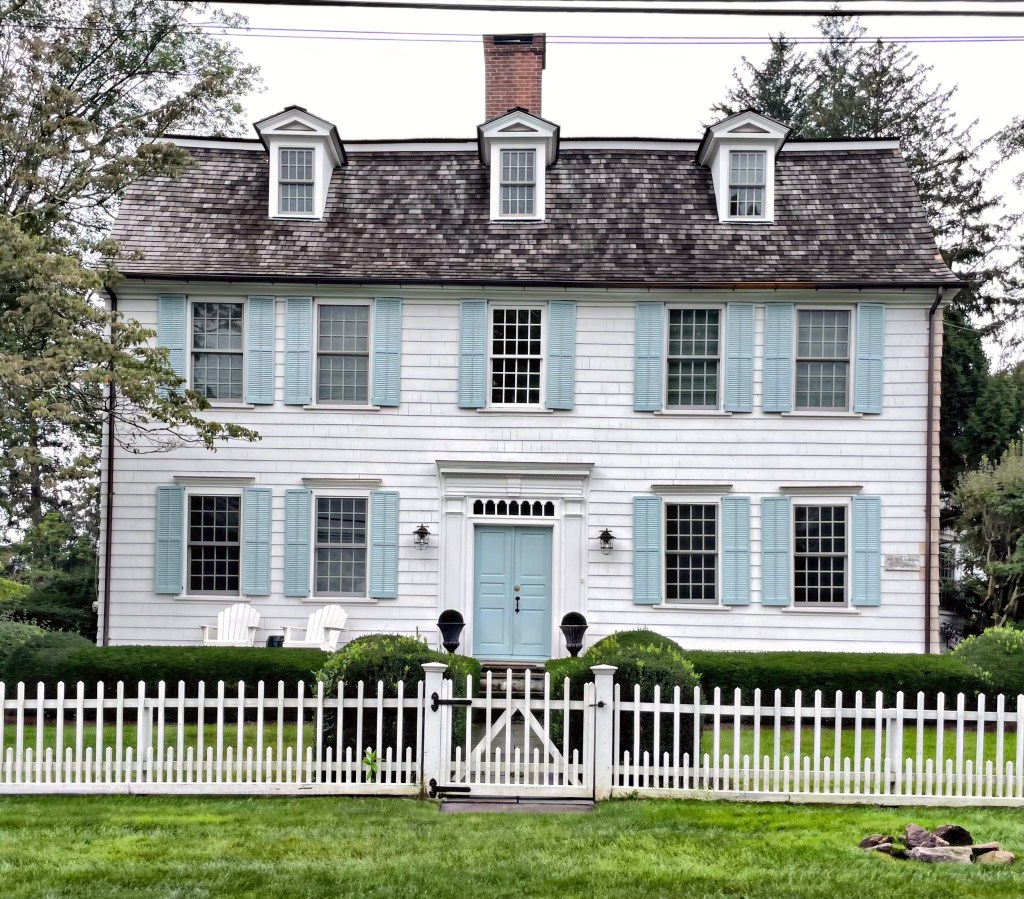
Benjamin Stiles House // 1787

Built for Revolutionary War veteran and local lawyer Benjamin Stiles, this stunning Georgian mansion is unique for its use of brick in construction, a material not too common for some of Southbury’s earliest homes. Local tradition holds that a French engineer in General Rochambeau’s army provided assistance in designing the building, using the metric system, likely on the march from Newport to Yorktown. Benjamin’s father was one of the original settlers who migrated from present-day Stratford to the un-developed Southbury. The hip-on-hip roof with pedimented dormers is really a stunner, and unique for the town!

Pomeroy-Belden House // c.1758

This stunning gambrel-roofed Georgian manse is located on Bronson Road in Fairfield’s Greenfield Hill neighborhood, a well-preserved in the northern part of town with large historic homes on large lots. The Pomeroy-Belden House was built in about 1760 for Seth Pomeroy (1733-1770), the son of Seth Pomeroy Sr. (1706-1777) a gunsmith and soldier from Northampton, Massachusetts, who served in King George’s War, the French and Indian War, and the Revolutionary War (at nearly seventy years old). Seth Jr. graduated from Yale in 1753, and would accept the call as the minister of the Greenfield Hill Congregational Church from 1757 until his death in 1770. He had this stately house built for his family during his time as minister. After his death, the house was purchased by Captain David Hubbell who used it as a store until it was purchased by Reverend William Belden, who served as pastor of the Greenfield Hill Congregational Church from 1812-1821. The Georgian mansion features a central double-door entry with traditional door surround, later shingle siding and a gambrel, wood shingle roof punctuated by three small dormers.

Reverend Whitwell House // c.1756

Another of the stunning gambrel-roofed Georgian homes in Marblehead is this beauty located on High Street in the village. This house was built around 1756 but is best known for its resident from 1766-1779, as the home of the Reverend William Whitwell (1737-1781), who was the fourth minister of the Old North Church, located just a stone’s throw away. Although this Georgian dwelling looks like a single-family house from the outside, it is actually divided into two houses with separate owners, likely since its construction. Later dormers crowd the roof, but its still a pretty amazing Pre-Revolution home in one of the most charming towns in New England!

Wibird-Oracle House // 1702

One of the oldest extant houses in Portsmouth (and New England for that matter) is this gambrel-roofed Georgian house on Marcy Street. The home was originally constructed in 1702 by Richard Wibird, who arrived to Portsmouth in the late-1600s and married Elizabeth Due (Dew) in 1701. Mrs. Due owned a market in town, and that helped propel Richard to be a prosperous merchant. Like many very wealthy residents in New England at the time, he enslaved three Africans and had five properties all over town. The house was moved two times, it was originally built behind the North Meetinghouse on Market Square. It was moved from that location c.1800 to Haymarket Square where Prescott Park is now, and again in 1937 to its present location on Marcy Street. The Portsmouth Oracle, an early newspaper, was printed and edited from this building when it was altered for commercial spaces at the ground floor. The Prescott sisters who developed Prescott Park had the foresight to move this building to the opposite corner and the home was later restored, giving us a glimpse at early 18th century merchant housing.

Livermore-Porter House // 1735

Matthew Livermore (1703-1776), a native of Watertown, Massachusetts and a 1722 Harvard graduate, came to Portsmouth in 1726 to teach grammar school while studying law, and in 1731 became the first college-educated lawyer to practice in New Hampshire. He would build this Georgian mansion in Portsmouth in 1735. Later, the property was owned by Samuel Coues, a leader of the shipbuilding industry in Portsmouth during the 19th century, and leader of the American Peace Party in the 1840s. Fitz John Porter was born in the house in 1822. General Porter would become one of the Union’s most talented leaders at the beginning of the Civil War. After the U. S. Army dismissed him for disobeying what would be a suicidal order during the Second Battle of Bull Run, he spent the rest of his life fighting the charges. The army cleared his name in 1879.After this, the home was occupied by General Fitz John Porter, a United States Army general who served in the Mexican–American War and the American Civil War. The building was moved in 1900 when Haven Park was created by the City of Portsmouth, and it had already been moved in the 19th century to front the newly laid out Livermore Street. The Livermore-Porter House was eventually converted into condominiums in 1983, and it showcases how condo conversions aren’t a bad thing! More people can live in this house now, win-win!

Pelatiah Fitch House // 1754

One of the oldest extant homes in the charming fishing village of Noank, CT, is the 1754 Pelatiah Fitch House which has survived nearly 300 years on the waterfront site. The home was built for a Pelatiah Fitch (1722-1803) upon the time when he relocated to Noank to work as a doctor. Dr. Pelatiah Fitch came from a long line of distinguished ancestors, and was born in Norwich, CT. After practicing medicine twenty-eight years in Noank, he removed to Vermont, later moving a to Salem, NY about 1780 where he lived out his final days. This Georgian seaside cottage was built by Dr. Fitch and his new wife Elizabeth when they were in their mid-twenties. After the Fitch Family moved out, the cottage was expanded a few times, notably with the addition of the oversized dormer at the roof.

Nathaniel Backus House // c.1702

Welcome to Franklin, Connecticut, which frankly (pun intended) I had never heard of before driving through it not long ago! The town is located in New London County and was originally a part of Norwich, Connecticut and was called West Farms village. The town incorporated in 1786, creating its own town at that time, and the citizens decided to name their new town after Benjamin Franklin. I wonder if there are more place names in the United States after Benjamin Franklin or George Washington…

This is one of the oldest houses in the sleepy town of Franklin, and it was built around 1702 by Nathaniel Backus, about the same time he was married to his wife, Elizabeth. The Georgian Cape house features a large gambrel roof and a small gabled dormer. The house is representative of many of the earliest homes which once existed in this landscape in the early 18th century. The home appears to have been vacant for some time, and in 2022, was auctioned off. Its future is unclear at this time sadly.