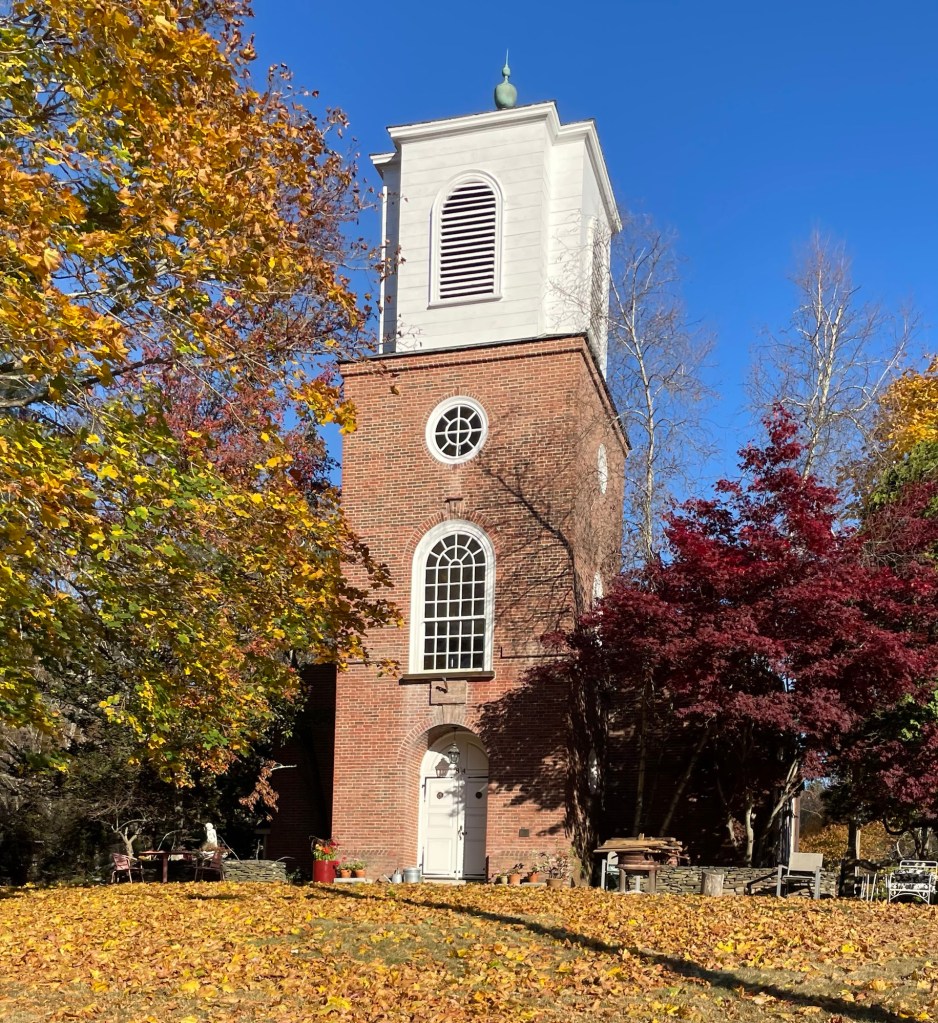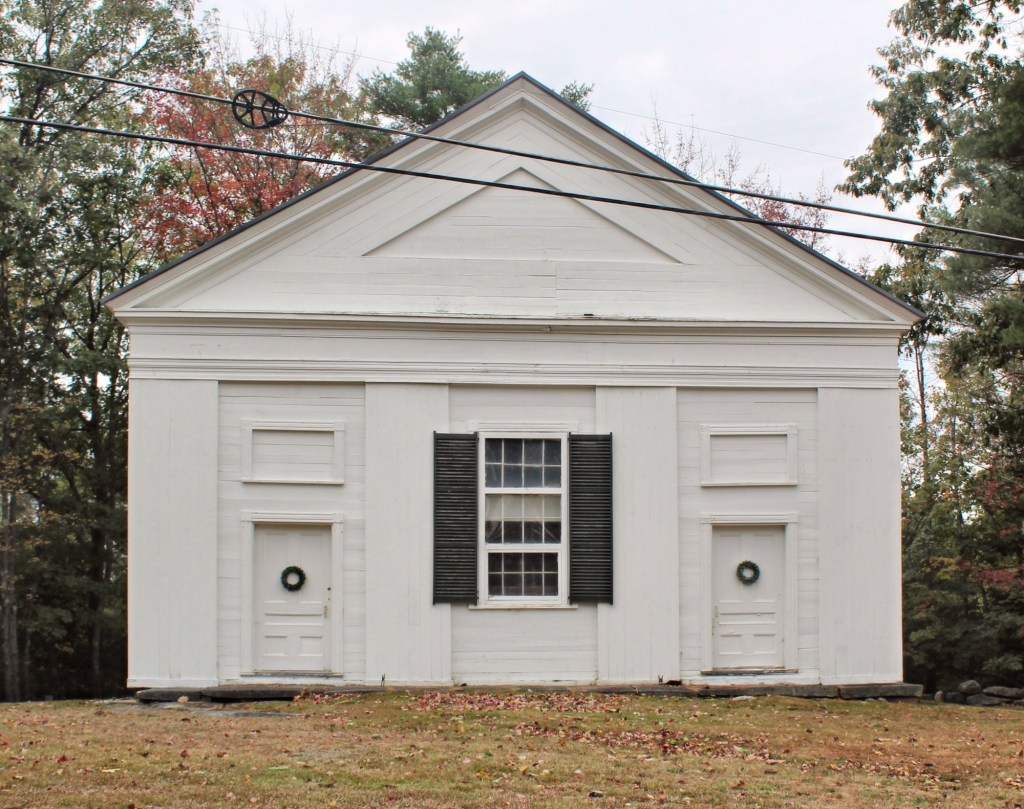
Ashby Congregational Church // 1835

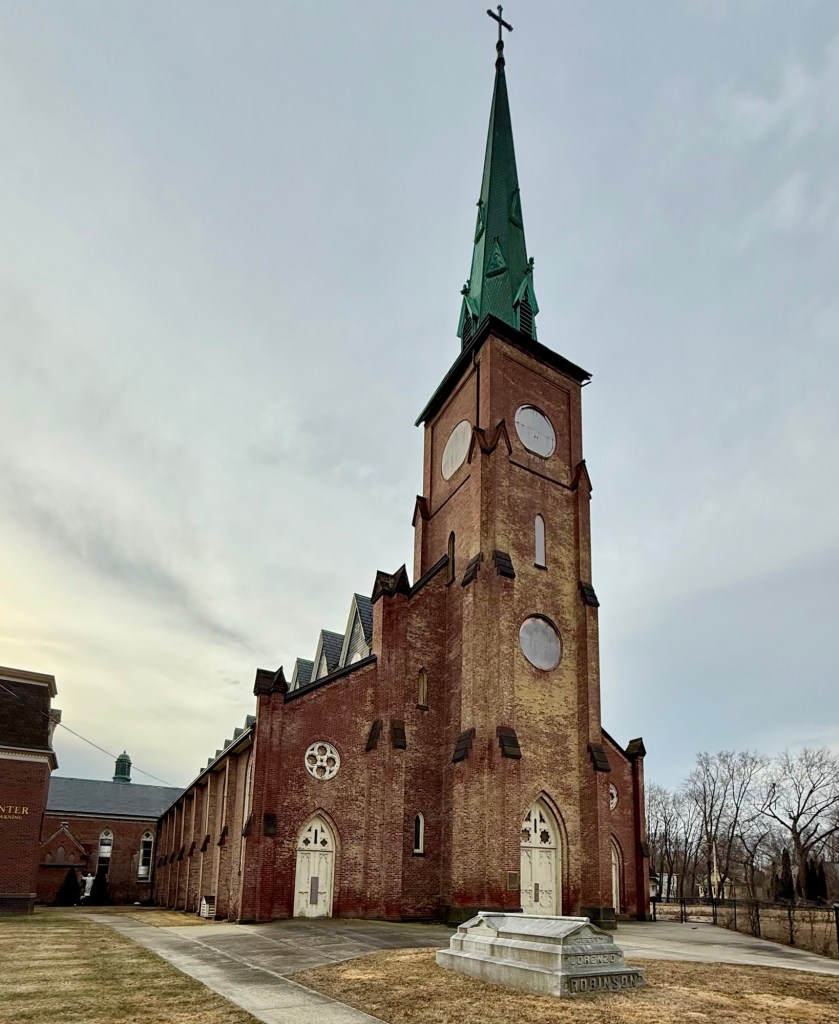
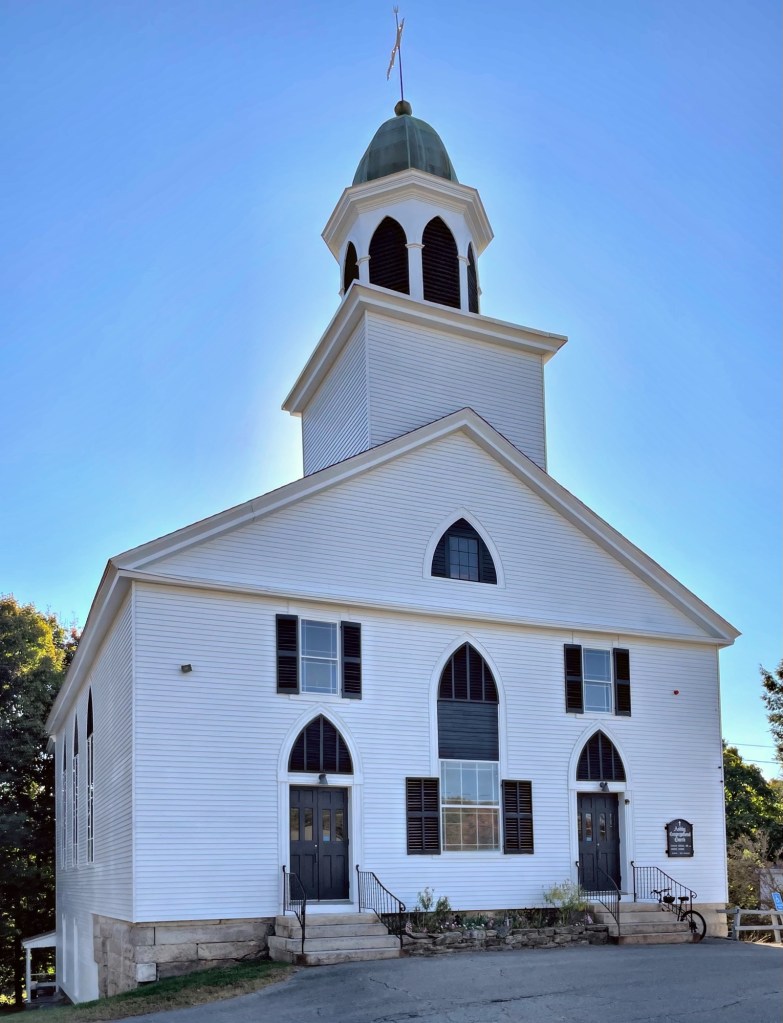
Combining Greek and Gothic revival styles, the 1835 Ashby Congregational Church in Ashby, Massachusetts, is a significant building showcasing the transitional tastes of ecclesiastical architecture in 1830s New England. The church had its beginnings in 1818, when a group of church members disillusioned to the current teachings separated from the town’s Unitarian roots and the accompanying meeting house, the First Parish Church. In 1820 a church for the Congregationalists was built on the opposite end of the town common. In 1835 it was sold and this, the current church building was constructed on a new site facing the Common. The original 1820 church building became the Ashby Academy and is now a Grange Hall. The design of the Ashby Congregational Church shows the leaning towards Gothic detailing wit its prominent pointed arch detailing, yet retains some traditional Greek Revival features like the two-story pediment and pilasters at the belfry.

First Parish Church of Ashby // 1809

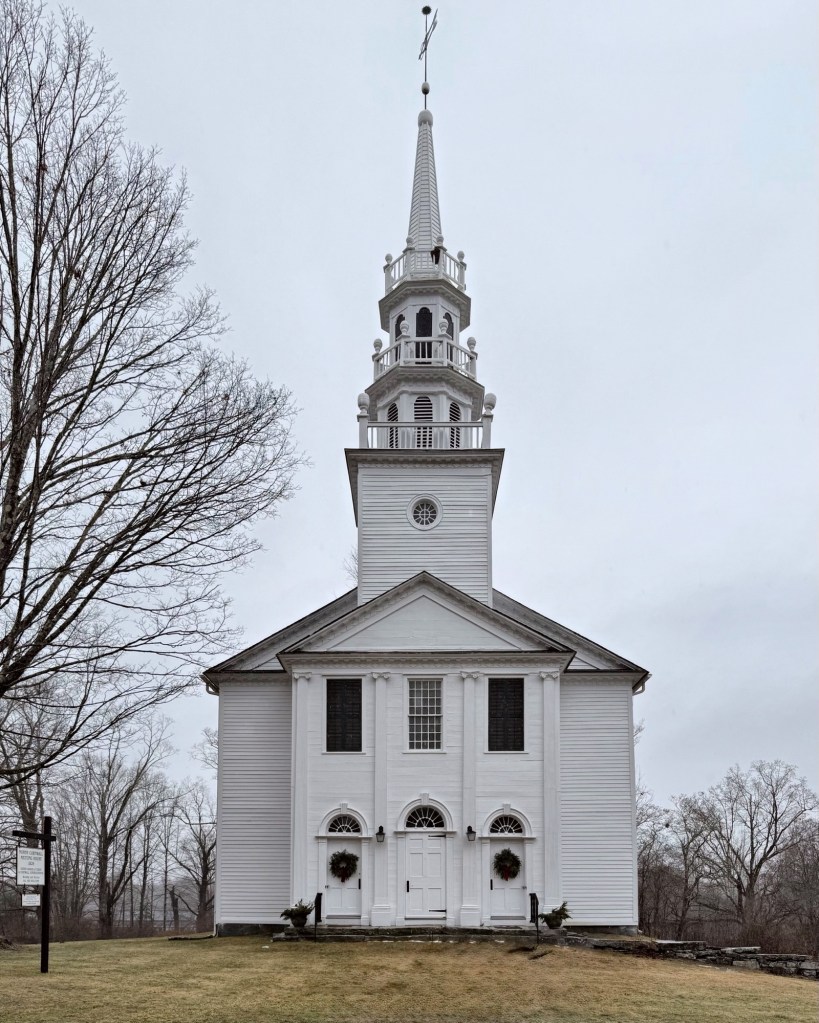
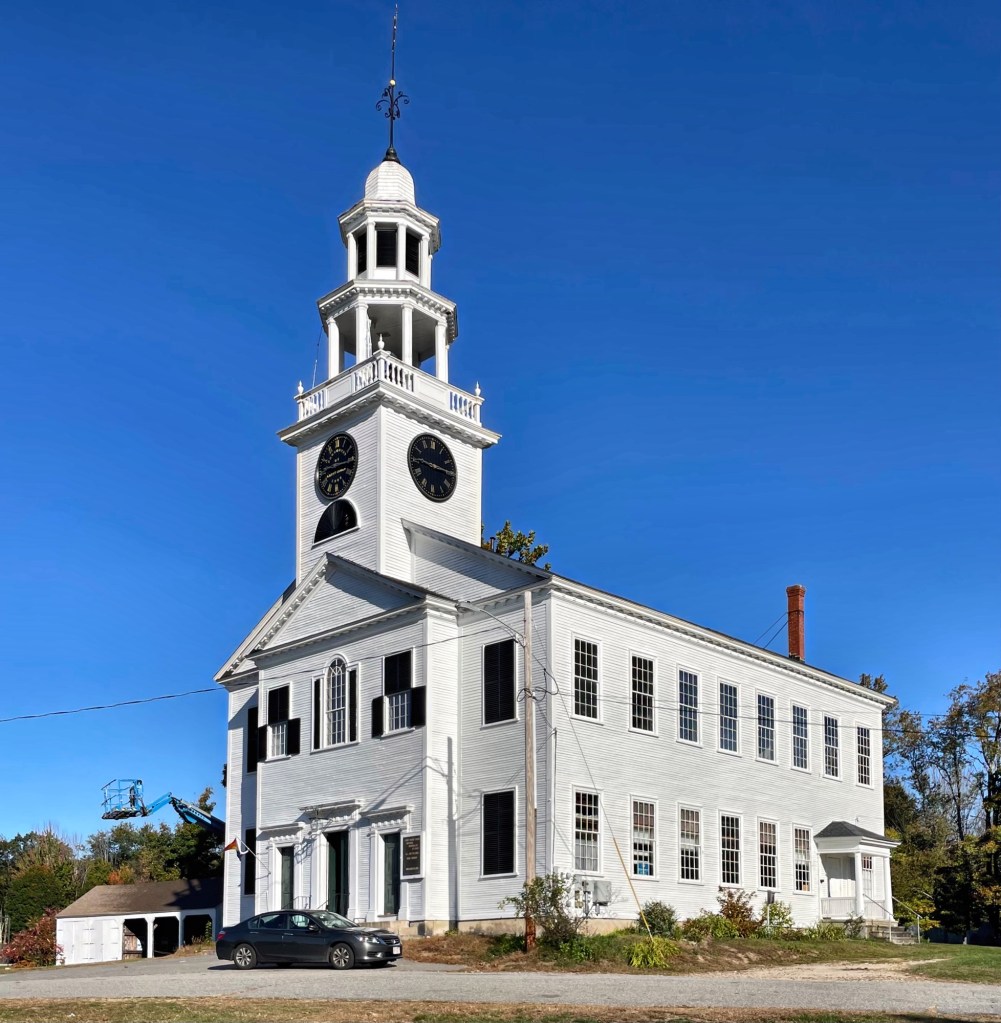
Welcome to Ashby, Massachusetts; a rural and historic town that was first settled in 1676 but due to the continued threat of native hostilities, permanent European settlement in the town did not occur until about 1750. The town incorporated in 1767 and was reputedly named for the abundance and quality of white ash trees found in the area by early settlers. Today, the town has just over 3,000 residents. At the center of the town village, the First Parish Church of Ashby stands as a significant Federal-period meetinghouse, and an integral piece of the town’s history. The present building was constructed in 1809, replacing an earlier structure from 1771. Carpenters for the building were Joseph Kendall and Darius Wellington of Ashby, who utilized plans from Asher Benjamin’s American architectural pattern book of 1797. Facing the town common, the church is a two-story gable front building with a three-stage tower including an octagonal open belfry rising from the pedimented front pavilion.

St. Mary’s Roman Catholic Church // 1870

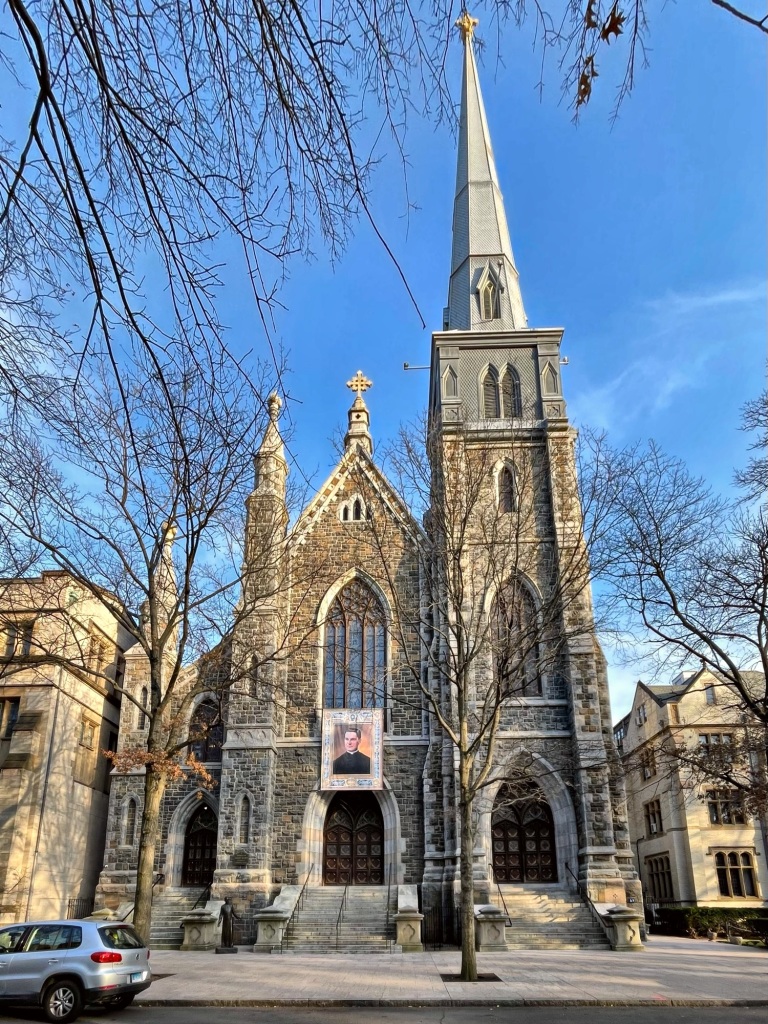
The second oldest Roman Catholic parish in Connecticut can be found in New Haven, at the St. Mary’s Roman Catholic Church. The parish was originally established in 1832, largely by Irish immigrants who settled in the area for work. The current St. Mary’s church building, located on Hillhouse Avenue near Yale University, was designed in 1870 by ecclesiastical architect James Murphy, and it was dedicated in 1874. The construction of a Catholic church on Hillhouse Avenue was strongly opposed by the Protestant elite who lived in the area, but the congregation prevailed. The Victorian Gothic style church is constructed of local blue stone and granite and while plans by Murphy originally included a corner spire for the building, it was not built until 1982 when the building was restored courtesy of the Knights of Columbus. The Knights of Columbus fraternal organization was actually founded in 1882 in New Haven by Father Michael J. McGivney, who originally held meetings in the basement of this church.

St. John the Evangelist Church // 1885

One of the most bucolic and beautiful buildings I have ever seen is this church in the Catskills, just outside of Elka Park, NY. Wow I wish New England could claim this one! The St. John the Evangelist Chapel was developed as part of a smaller enclave of summer cottages for rusticators from the Philadelphia-area, which was largely established by Mr. Alexander Hemsley (1834-1904) a chemist from Philadelphia who would later die from anaccidental chemical explosion at his factory. In 1883, Hemsley sold cottage lots to friends and family to erect summer houses in the Catskills and in 1884, decided to develop a lot for an Episcopal summer chapel. In that same year, Hemsley hired his future son-in-law, William Halsey Wood, to design the chapel. The Stick-style Victorian chapel blends the rustic use of natural materials found on the property with an elegant siting and attention to detail, not typically found in rural chapels. The native stone and stylized half-timbering really stood out to me. The church is used still in the summer with regular services on Sundays in July and August.

St. Francis de Sales Church, Elka Park // 1912

Down the street from the Old Platte Clove Post Office in Elka Park, New York, I stumbled across this large, shingled church with few houses nearby. I had to investigate! In 1888 parish lines for the Catholic church were redrawn in the area necessitating a new church near the summer colony of Elka Park. By 1891, a small, shed-like church was built here. By 1911, the small house of worship had outgrown its usefulness and it was considered a blight compared to the high-style homes nearby. A local summer resident, Francis H. Lewis funded $5,000 of the $6,500 cost of the building, and local carpenter Arthur Showers, was commissioned to erect the building. Father Keefe had conveyed to the builder some remembrances he had of a small church in France, and wished for it to be designed that way. Using local building traditions, the church was constructed of local lumber with shingled siding. The building and adjacent cemetery remain active to this day.

Rockbound Chapel // 1900

Wrapping up our “tour” of Brooklin, Maine, I wanted to conclude with a feature on Rockbound Chapel, one of the village churches in the small coastal town. The chapel (like the Beth Eden Chapel) was constructed at the turn of the 20th century as a village church which saw increased use when the town’s population surged (relatively) in the summer months. The vernacular church building has pedimented lintels over the windows and door, and a steeple covered in decorative shingles which flare toward the base. There is something just so enchanting about these small rural chapels!

Sargentville Chapel // 1889

The Sargentville Chapel in Sedgwick, Maine was built in 1889 to provide a more convenient site for services, meetings and other community activities for residents of the Sargentville Village in town, a distance from Sedgwick’s main village. A building committee was established with the goal to erect a new chapel, and A.J. Long, a lumber manufacturer and builder submitted the lowest bid of $1,100 to “put up the building, finish the outside, and put on one coat of paint”. The offer was accepted and the first meeting in the chapel took place in January. 1890. The small chapel has been an active community space for members of the Sargentville section of Sedgwick since the late 19th century and the group continues to maintain the Victorian Gothic building extremely well to this day.

First Church of Christ Scientist, Providence // 1906

One of the most stunning and monumental buildings in Providence is this building, a church which pretty closely resembles the Rhode Island State House! Christian Scientists in Providence began to hold informal services in 1889 and received a charter from the state legislature in 1895. Construction started on this church, the First Church of Christ, Scientist in 1906 from plans by local architect Howard Hoppin who roughly modeled the building after the congregation’s Mother Church in Boston. The Classical Revival building is capped by a copper hemispherical dome supported by a colonnade of Corinthian columns. The main block of the structure at the street is fairly modest, possibly due to the residential character of its surroundings.

Congdon Street Baptist Church // 1875

The Congdon Street Baptist Church on College Hill is extremely significant as part of the rich history of Providence. Its origins began in 1819, when Moses Brown, an abolitionist, industrialist and member of the Brown Family (who profited on the institution of slavery) gave land to “the people of color” of Providence for a schoolhouse and meeting house. The original building stood slightly north of the present structure and it was built in 1821. The structure provided the first schoolhouse for Black children in Providence. In 1869 the building was torn down, without the approval or knowledge of the congregation by white neighbors because “its proximity displeased them”… Eventually the congregation arranged an exchange of lots with one of the church’s neighbors and architects Hartshorn & Wilcox were commissioned to design the new church building. Hartshorn was the successor of Thomas A. Tefft and this church echoes many of his designs in the Italianate style. The new building was completed in 1875 at the cost of $16,000. It was renamed the Congdon Street Baptist Church. The church has since 1875 served as an important landmark and gathering place for many Providence’s Black residents past and present.

Versailles United Methodist Church // 1876

After the Civil War, the Village of Versailles’ Congregational Church was seeing less attendance and its deathknell was a fire which destroyed the building in 1870. That next year, a vote was taken by members of the Congregational Church as to a preference for their denomination. A majority voted for Methodist Episcopal and asked the New England Conference to appoint a Pastor for the new church. Funds were gathered and this church was opened in 1876, in the Italianate and Victorian Gothic styles. The building sits upon a raised brick foundation with small windows on the facade. In 1887, the Versailles church was linked with Baltic and Greenville (Norwich) the following year.