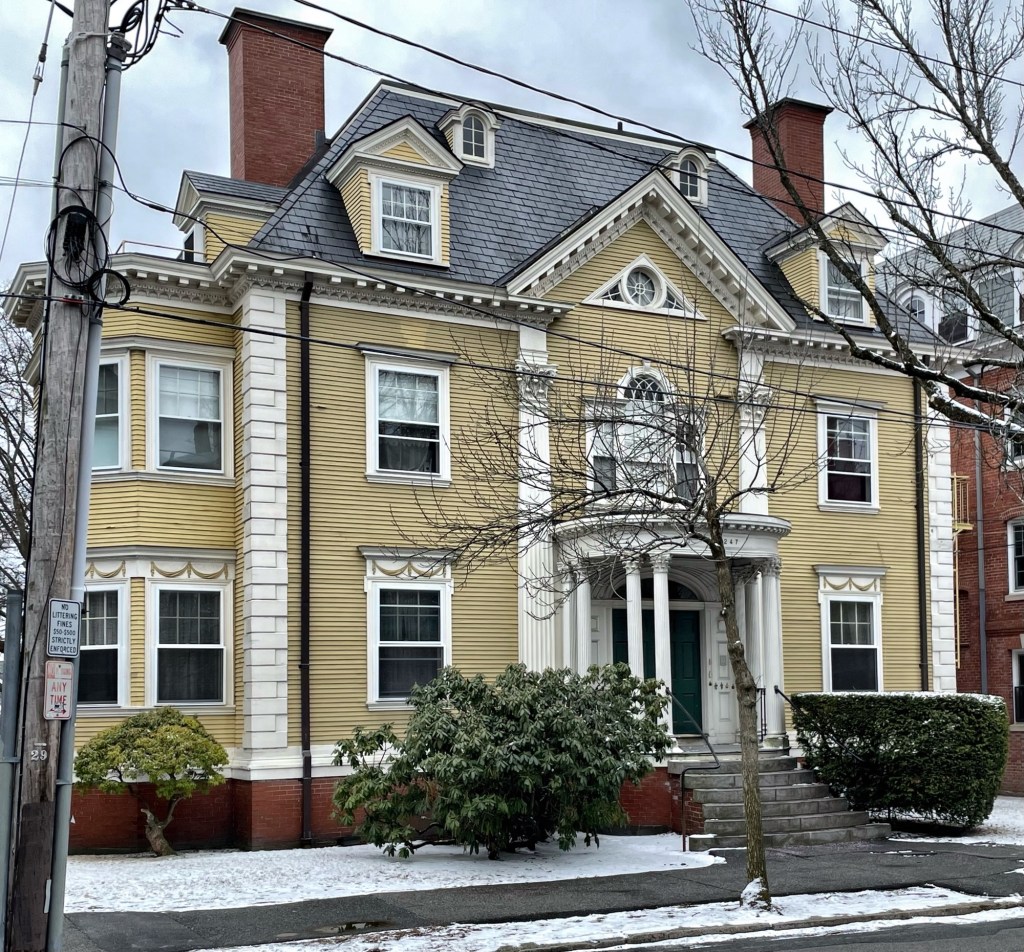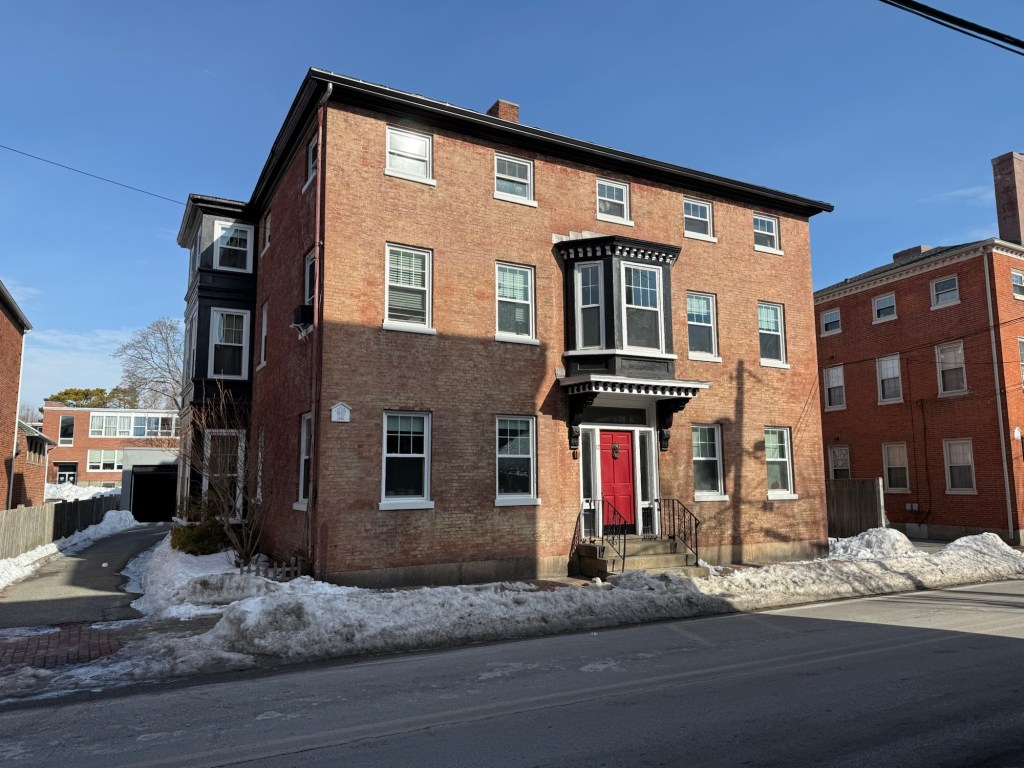
Moody-Hall House // 1830

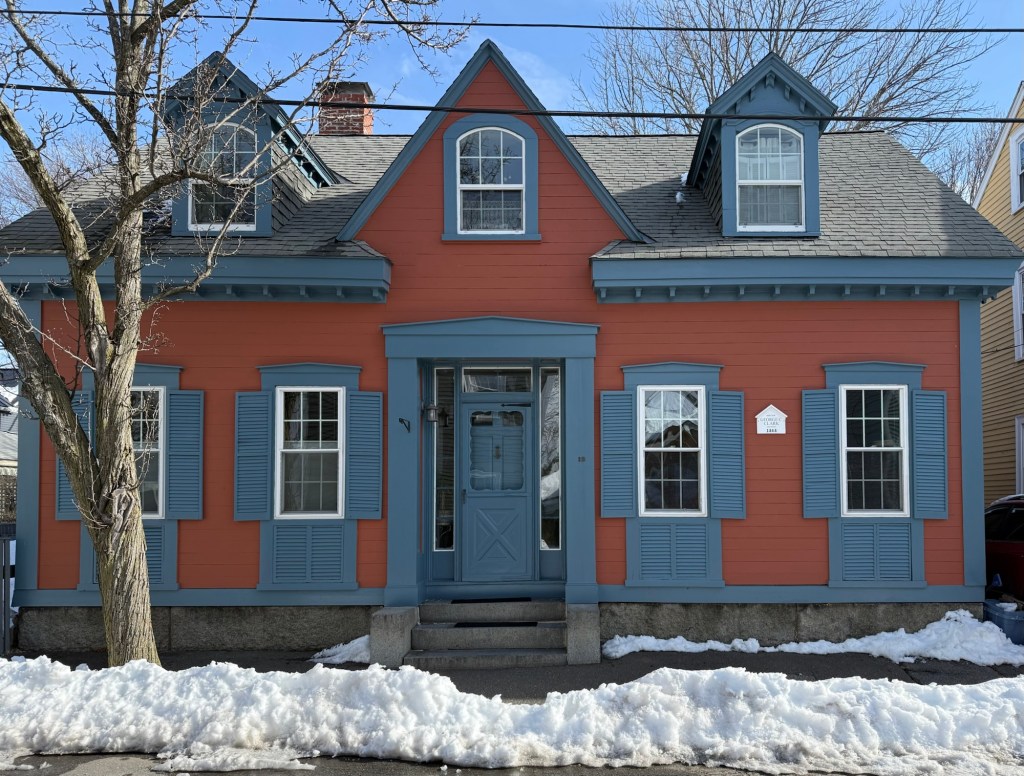
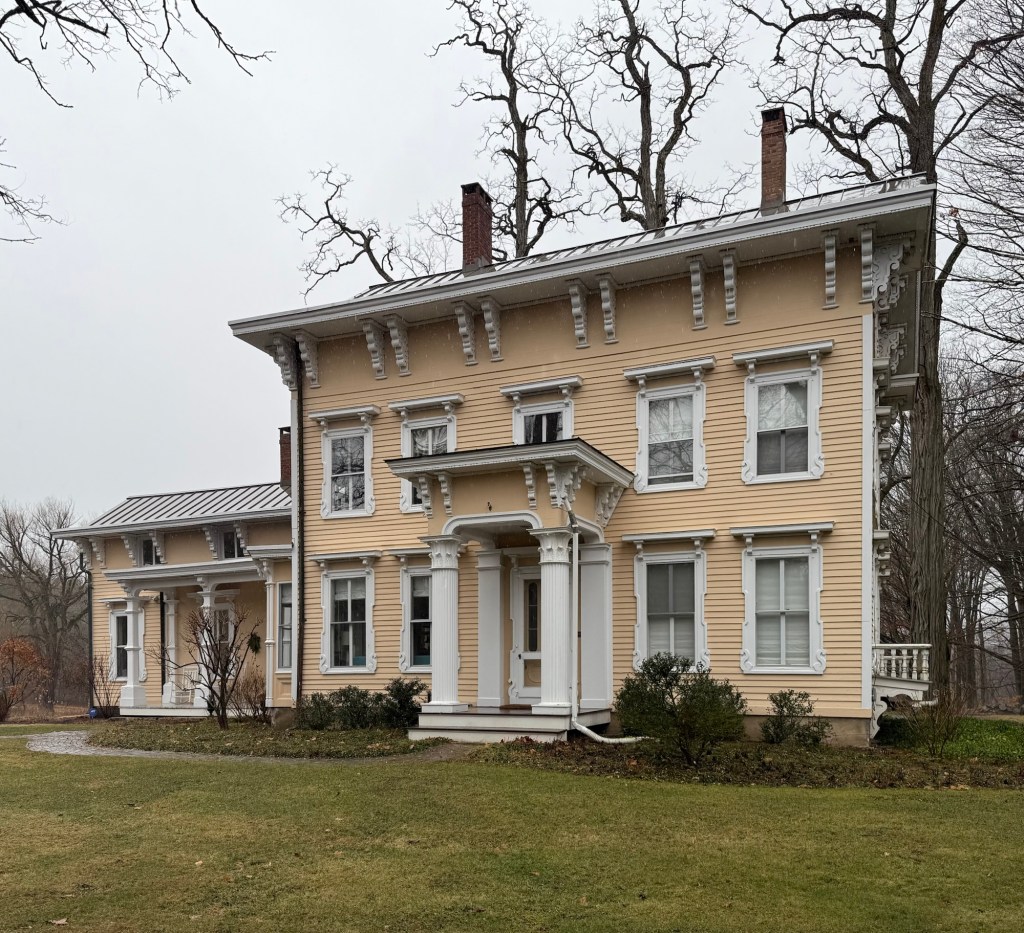
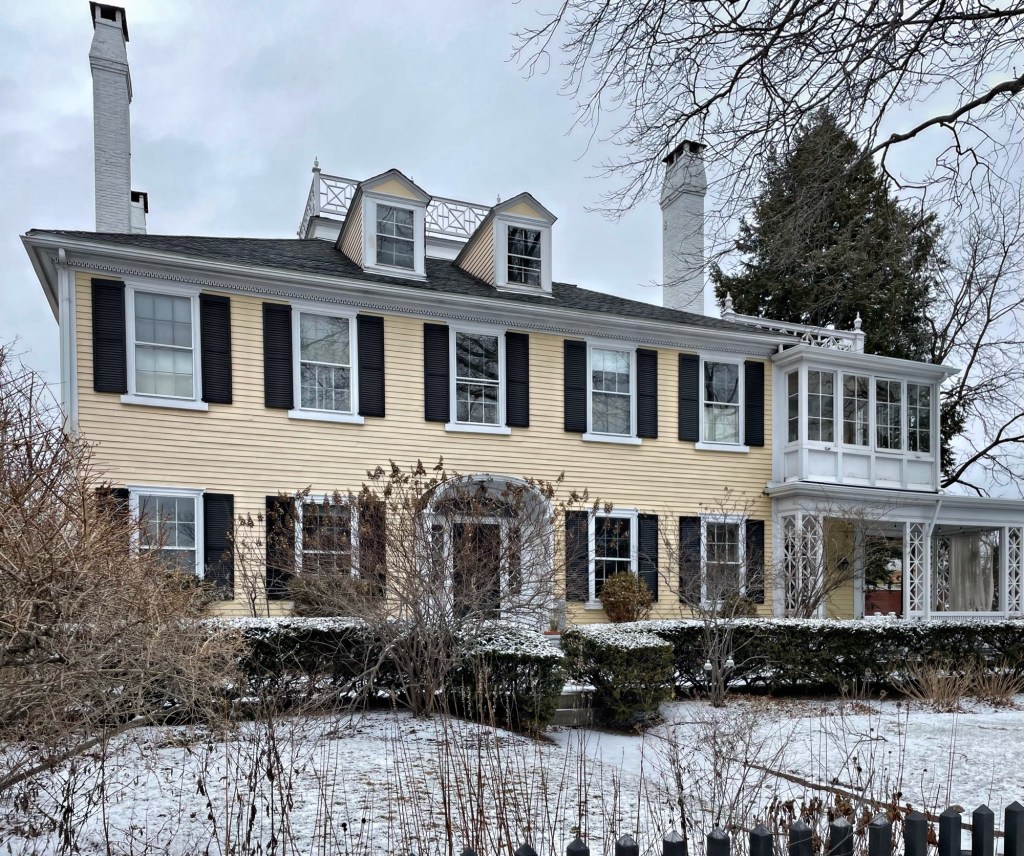
Transitional Federal/Greek Revival style houses are among my favorite. You can see the emergence of Classical architecture blending with American architecture with features of both styles, which work well together. This example can be found on Elm Street in Georgetown, Massachusetts. The dwelling appears to have been built for Dr. George Moody, one of four physicians in Georgetown in 1840, who began his practice in town in 1830. In his first years there, he oversaw patients during Typhus and Dysentery outbreaks and was credited with having determined that a high sulphur content in the local water supply accounted for the increased cases. Dr. Moody died in 1866, and his widow continued to live in the house until her death in 1880, after which it was sold to Mrs. Charlotte Sawyer Hall, the widow of local shoemaker Seth Hall.

Rev. Samuel Foxcroft House // 1765

Built in 1765 for Rev. Samuel Foxcroft (1734-1807), this grand two and a half story house was the first major frame dwelling in New Gloucester, Maine. Its large scale and such fine mid-18th century architectural features as the triangular doorway pediment  and quoins at the corners make this a house befitting  the community’s first minister. Born in Boston in 1735, Foxcroft was the son of the Rev. Thomas Foxcroft, pastor of the First Church of Boston from 1717 to 1769. The younger Foxcroft graduated from Harvard in 1754 and answered the call of the New Gloucester Congregationalists ten years later, a brand new town in the wilderness of Maine. He was ordained in the blockhouse, a defensive structure from attacking native peoples, in January of 1765 and continued his ministry in the town until 1793, having the first purpose-built meetinghouse completed in 1773. The last years of his life were spent in poor health and he died at his home in 1807 at the age of 72.

Whitman-Fessenden-Coombs House // c.1800

This important Federal-period house sits in the middle of New Gloucester village in Maine, and dates to the early 19th century with mid-19th century alterations. The original owner was Obediah Whitman, who sold the house soon after to General Samuel Fessenden (1784-1869) lived here while practicing law in New Gloucester. He was an avid abolitionist who served as a congressman and in 1828, he declined the presidency of Dartmouth College. The General’s son, William Pitt Fessenden, resided there from ages three to fourteen. William later became a U.S. Senator and Lincoln’s Secretary of the Treasury. The third notable owner was artist, Delbert Dana “D.D.” Coombs, who used the second floor for his studio for some years. The update from the mid-19th century of the modest bracketed eaves and two-over-one windows showcases how later owners can update a home without diminishing the original design.

Nathaniel C. Allen House // 1793

The Nathaniel C. Allen House is a two-story Federal style residence located in New Gloucester, Maine. The house was built in 1793 by Shubael Marsh, a local builder (and father of Shubael Jr. (1797–1867), who moved to Texas with Stephen F. Austin) and sold to Nathaniel Coit Allen, an early settler in New Gloucester, who served as a General during the American Revolution. The property was purchased by Col. James Madison Thompson, then owner of the Glen House, an early White Mountains hotel in New Hampshire, who renovated the home by replacing the central chimney with two narrow ones and raised the ceilings and introduced Victorian interior woodwork. A subsequent owner added large Colonial Revival porches on the front and side entrances along with a new entry. The house showcases the changing tastes from Federal style to Victorian back to traditional tastes.

Morrill House // c.1830

This stunning brick Federal style home sits in the center of Gray Village in Maine. The house dates to the early 19th century and was long-owned by members of the Morrill Family, seemingly first by William C. Morrill and remaining in the family for generations. The residence is a high-style example of the Federal style with recessed elliptical entrance with fanlight transom and sidelights with a Victorian-era front door. The house was likely built by a local mason or housewright who employed the designs of a Federal style plan book for the architectural detailing at the entry.

Samuel Perley House // c.1784

Built around 1784 for Reverend Samuel Perley, this Federal style home is one of the finest in the town of Gray, Maine. Samuel Perley (1742-1830) was educated at Harvard College and while there, met and befriended John Adams, who would later become the second President of the United States. The two maintained a lifelong friendship. Perley came to Gray in 1784 as a pastor of Gray’s first church. He likely had this house built at the time or purchased an existing house and updated it and the house is said to have Moses Eaton stencilling inside. At one point, Rev. Perley and his wife lived on one side of the house while his son Isaac, his wife, and their twelve children lived on the other.

Wellington-Sears House // c.1810

One of the many Federal period houses in Ashby Center is this lovely c.1810 residence on Main Street. The house is known as the Wellington House, and was possibly built by Darius Wellington, a carpenter who assisted with building the town’s First Parish Church in 1809. The house exhibited a symmetrical facade with stunning fanlight transom over the main entrance and eight-over-twelve sash windows. In the latter half of the 19th century, the property was owned by Cyrus Sears, a prominent sea captain, who sought a life inland with his family. He would serve in the Civil War, but had the half-decade house “modernized” with new bay windows and an entry porch. He would later move to Baltimore and serve as a port captain and consul to Cuba. In the past few years, the owners have restored the home to its original Federal design, re-emphasizing the stunning fanlight transom and sidelight details.

Sunnyside // 1886

Photo from recent real estate listing

During the height of the Shingle and Queen Anne styles’ popularity, architect Stanford White of McKim, Mead & White completed plans for one of the earliest Colonial Revival style residences, “Sunnyside” in Newport, Rhode Island. The residence was built in 1886 for “Commodore” William Edgar (1810-1887) and his wife, Eliza Lucille Rhinelander (1832-1916). William was a co-founder of the New York Yacht Club in 1844 and heir to a New York fortune. Eliza was an aunt of Edith Wharton and a grand-daughter of William Rhinelander, co-founder of the Rhinelander Sugar Refinery. The property remained in the Edgar Family as Lucille Rhinelander Edgar (1858-1948), an unmarried daughter of the couple, would live here year-round with servants. The house is built of buff-Roman-brick with a large central block flanked by L-plan wings under a hipped roof punctuated by massive chimneys. Of special note on the facade are the rounded bays, entry portico with Palladian window above, and side porch.

Dr. Ralph Fogg House // 1893

Built in 1893, this house in Norwood, Massachusetts, was built for Dr. Ralph Fogg, a leading dentist in the Boston area with offices in Boston, Norwood, and Quincy. Dr. Fogg was dissatisfied with nitrous oxide gas as an anesthetic, as it failed to protect the patient against pain; and, in trying to find some harmless compound to accomplish the desired results, he produced the “Boston Vegetable Vapor,” an anesthetic to compete with nitrous oxide in markets. In 1885, the Boston Vegetable Anesthetic Company was formed for the purpose of placing the vapor in the market, and it was used by leading dentists across the country. With his dental practice growth and success of his new invention, Dr. Fogg and his new wife, Anna Saville, hired architect, Herbert Mosely, to design a stately home for their family. The Queen Anne/Shingle style house features a sophisticated use of stone, clapboard and wood shingle materials. It’s main facade is dominated by a broad gambrel gable with the main entrance set within a rusticated stone arch which is edged with large voussoir blocks.

Sewall-Scripture House // 1832

Levi Sewall (1805-1880), a native of Maine, built this stunning granite Federal style house in Rockport, Massachusetts in 1832 in preparation for his marriage to Mary Ann Robards. The granite blocks used to build the house were hauled by oxen from Sewall’s own quarry in Pigeon Cove, which is said to have produced stone of excellent quality. Sewall was one of the towns earliest entrepreneurs in the granite business and did quite well, supplying the building material to many of the region’s buildings in the mid 19th century. The property was inherited by Levi and Mary’s son-in-law, Frank Scripture, who took over the family business. Levi Sewall’s descendants occupied the Sewall-Scripture House until 1957, and ever since, it has been home to the Sandy Bay Historical Society and Museum.