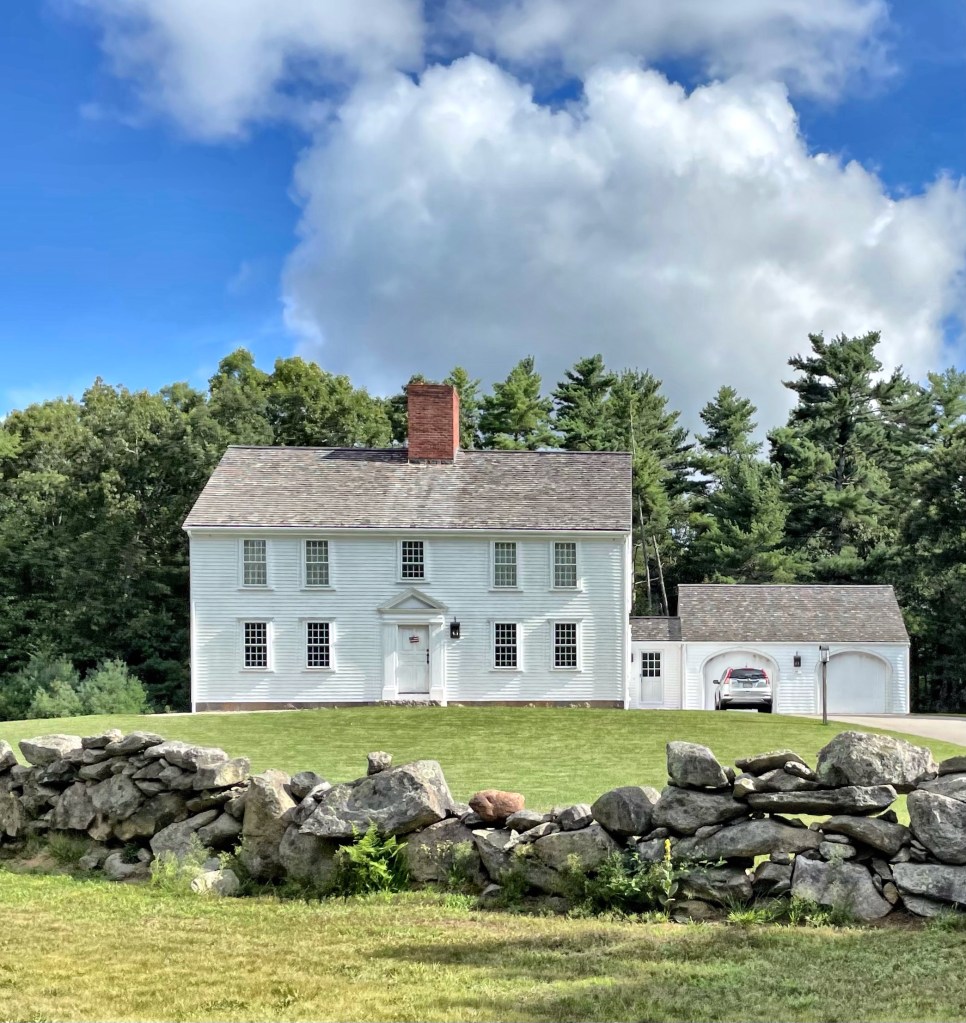
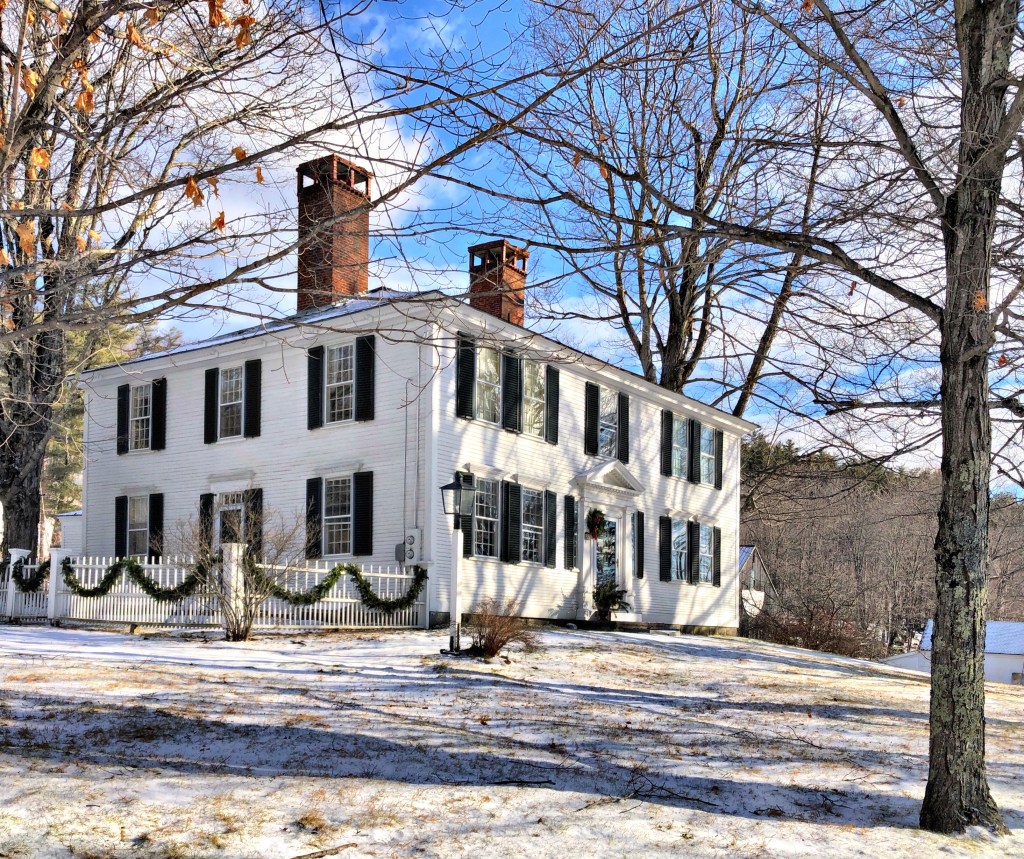
My favorite Georgian style house in Rochester, MA is the Delano-Clapp House set far off the street, behind a stone wall. The house was built in 1735 for Jonathan Delano, a weaver. Jonathan’s son, Jonathan, Jr., sold the house and land to Ebenezer Clapp, in 1755. The property remained in the Clapp Family for nearly 250 years, when it sold out of the family in 1990. This house is testament to the fact that you can find great architecture in every corner of New England!
This Greek Revival home with a one-story full-length porch was built in 1839 for Peter Wanton Snow, one of the unluckiest men in Providence. Born the son of a leading China trader and the son of a granddaughter of a former governor of Rhode Island, Peter W. Snow (1788-1843) was born into privilege and like many of such stature, could enter the family business with ease and make a lot of money. Peter first sailed for Canton (Guangzhou, China) with his father in 1803. Doubtless because of his father’s position and trading connections, young Snow became the partner of Edward Carrington who, within fewer than a dozen years, was to become one of the richest and best merchants dealing in Chinese goods in Rhode Island, if not in the entire country. Carrington wanted to retire and have Peter Snow take over his agency in China, but Peter did not seem to like it there and always wanted to go back home to the United States. He got the chance for a few years beginning in 1814, but upon returning home, he learned that his only son, Charles, had died a year earlier at the age of five years, and to compound his personal tragedy, Snow lost two baby daughters in the next three years. By 1816, he returned to China but never seemed to be able to get out of debt, while trying to provide for his last two remaining children. Tragedy struck again when his last living daughter died, while he was in China. Peter’s business partner and friend R. B. Forbes before letting Peter know the bad news wrote this.
While in debt, he somehow had this home built in Providence, likely from assistance from family and colleagues. The land here was purchased by Peter’s wife Jeanette, and the home was likely built soon after. Peter died in 1843, virtually penniless.
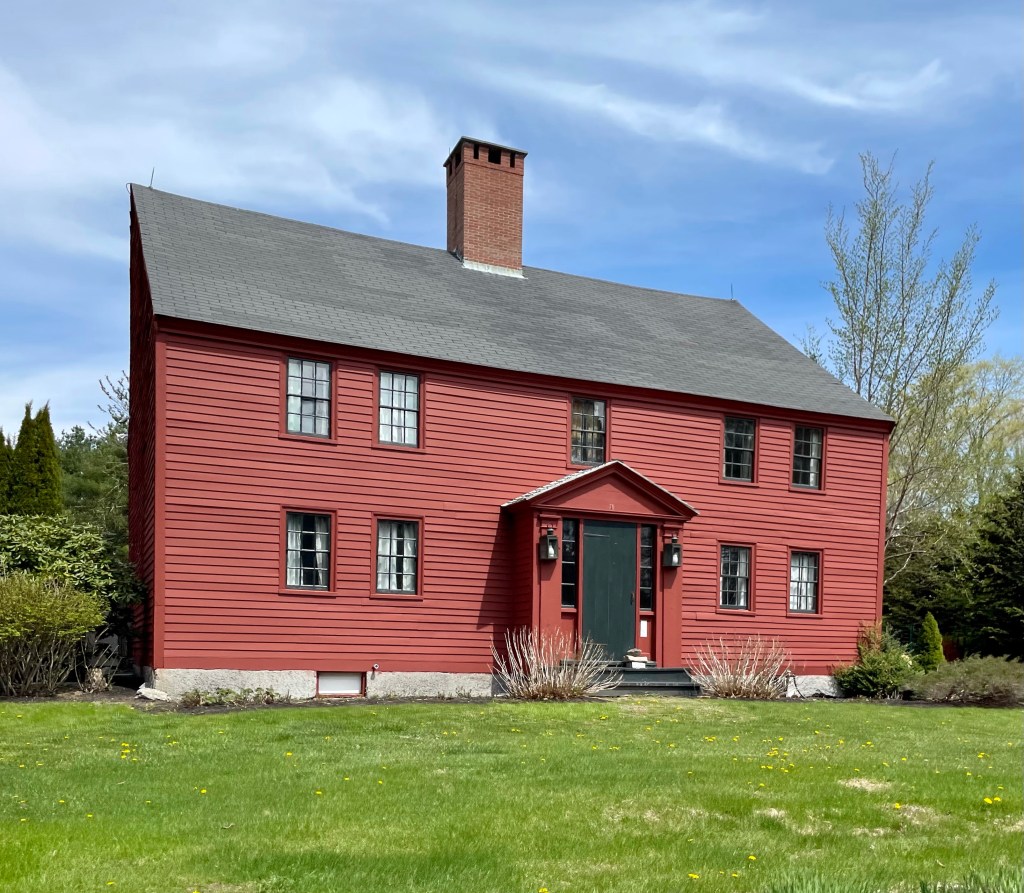
John Locke (1627-1696) settled in New Hampshire about 1640, arriving from London. He was a farmer and carpenter, and reportedly built the first church in New Hampshire. He was also a Captain in the local militia, who was constantly at odds with the people who’s land they were usurping. While working the fields at his homestead in Rye, he was killed by a native person, likely as a retaliatory attach. The attacker was soon after shot by his son, who was helping his father at the time. This Georgian home was built by John’s grandson Elijah in 1739 on family land; the date is found incised on one of the original roof beams inside.
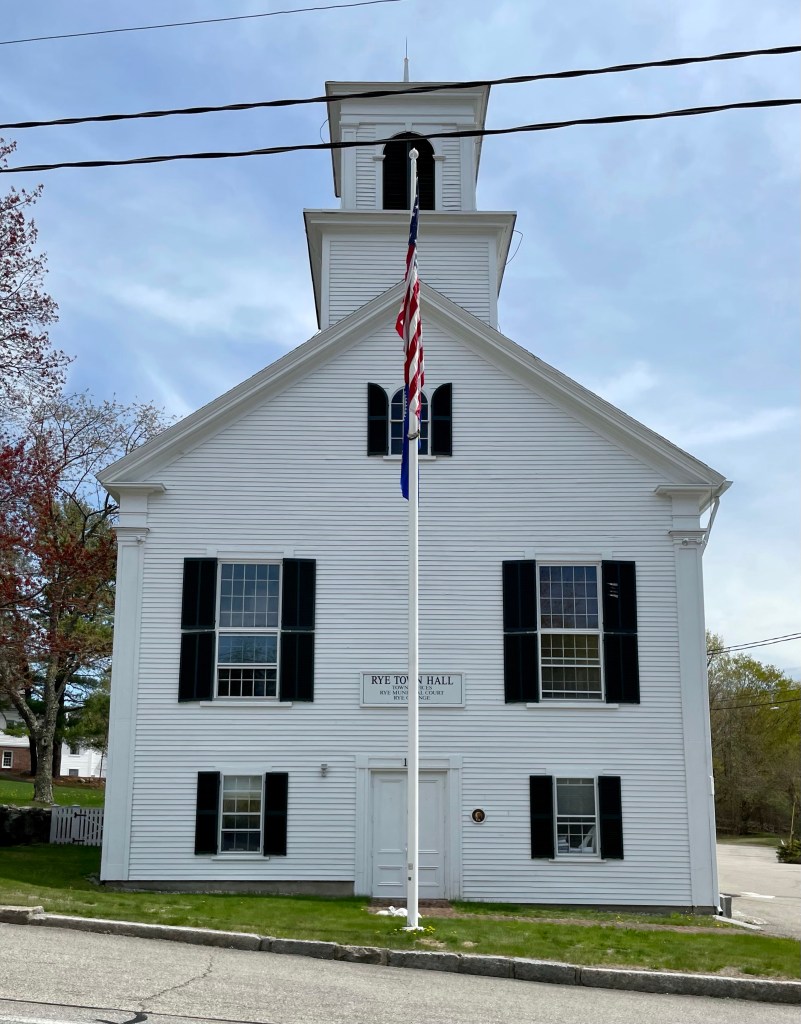
Rye, New Hampshire sits on the short coast of the state, between the busy towns of Portsmouth and Hampton, and provides a respite from the swarms of tourists and beach-goers alike. Modern-day Rye was the first settlement in New Hampshire by Europeans, and was originally named Pannaway Plantation, established in 1623 at Odiorne’s Point (more on that later). The settlement was eventually abandoned for Strawbery Banke, which became Portsmouth, the historic port town we know today. The town was later a village of New Castle, and was known as Sandy Beach Village, before it was called “Rye”, for Rye in Sussex, England, and incorporated as its own town in 1785. The town met in a Meeting House until it purchased an old 1839 Methodist church in town. In 1873, the building was purchased by the town of Rye for $1000, with an additional $2658 spent on renovations, which added a new ground floor to increase the height from 1.5 stories to 2.5 stories, added 10 feet in depth to the building, and the two-stage tower and belfry. The Greek Revival building has long been a landmark in town, hosting dances, concerts, whist parties, singing schools, oyster parties and immunization clinics, beyond the typical governmental functions. There were calls to demolish the building for a modern town hall, which saw resistance (thankfully) and now the town has agreed on a land-swap with a bank, demolishing an old house to take over the bank building, turning it into some town offices.
In 1794, four men from Acton, Abel Conant, Dr. Abraham Skinner, John Robbins and Horace Tuttle, jointly purchased a $5.00 ticket in a lottery run by Harvard College to raise funds for the construction of Stoughton Hall in Harvard Yard. This house, built for Dr. Abraham Skinner, is one of the four, and is the most grand of the four. Dr. Skinner was the third physician to practice in Acton and the first to arrive from out of town. He came to Acton in 1781 from Woodstock, Connecticut, and continued in practice until his death in 1810. The Federal style home is nearly square with five bays on all sides, with the facade and rear being slightly less crowded. The main entry includes a pediment with dentils, 4-pane side lights and a 4-panel, wooden door with elongated, rectangular, top panels. A similar entry, without sidelights, centers the south elevation. Time to buy some lottery tickets!
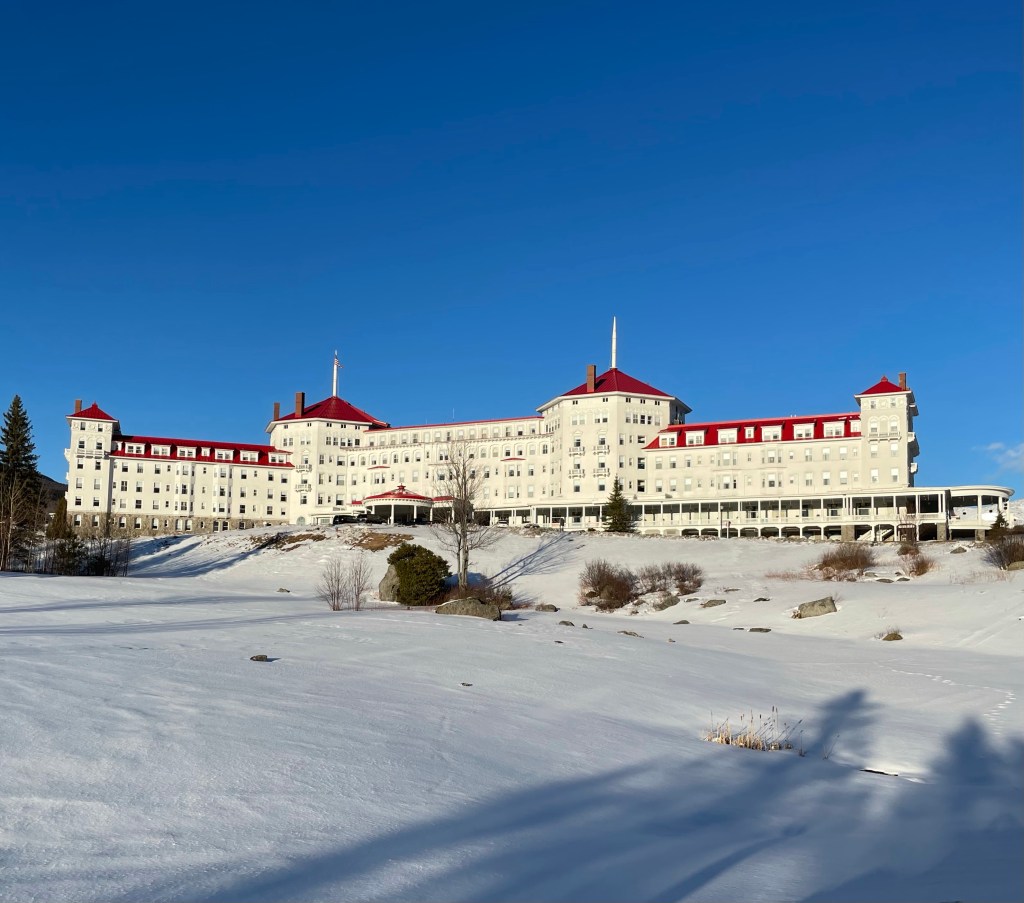
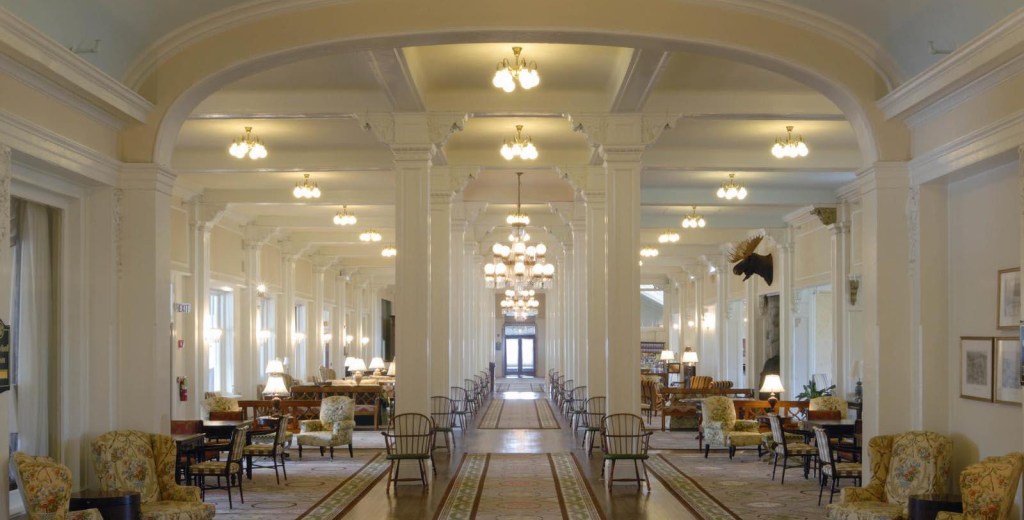
The Omni Mount Washington (originally the Mount Washington Hotel), surrounded by the great White Mountains of New Hampshire, was completed in 1902, at the end of the Gilded Age and the grand hotel era of America. The grand hotel was financed by Joseph Stickney, a native of New Hampshire, who made a fortune before the age of 30 investing in the coal business in Pennsylvania. In 1881, Stickney purchased the Mount Pleasant Hotel, a nearby summer resort and enlarged it, and acquiring a taste for hospitality development in the White Mountains (it was later demolished in the 1930s). He hired architect Charles Alling Gifford to design a new, larger resort across the street which in total, cost him over $50,000,000 in today’s dollars! Ironically, Joseph Stickney, had famously told the press on the opening day: “Look at me, for I am the poor fool who built all this,” as the economy was starting to turn right as the hotel opened. He died one year later in 1903. Nevertheless, up to fifty trains a day unloaded the families of the country’s wealthiest people, mostly from New York City, who stayed here for Summers at a time, leaving behind “the yellow fever and cholera in the cities” for fresh air and open space. The hotel’s design incorporated some of the most cutting-edge innovations of its age, including a steel-frame superstructure, an electrical power plant, and a sophisticated internal heating system. Roughly 250 Italian artisans were brought in to provide artistic touches to the structure by working on its exterior granite and stucco masonry including the two massive octagonal towers, and installing Tiffany stained glass windows.
After Joseph Stickney’s death in 1903, Carolyn his widow, became extremely rich (the couple never had children). Carolyn spent her summers at the hotel for the next decade, a nearby chapel honoring her late husband. The hotel did well in the subsequent decades until the advent of income tax, Prohibition, and the Great Depression, which harmed many large resorts’ profits. In 1936, Mrs. Stickney’s nephew, Foster Reynolds, inherited the hotel, but it closed in 1942 because of World War II. A Boston syndicate bought the extensive property for about $450,000 In 1944. The Bretton Woods monetary conference took place that year, establishing the World Bank and the International Monetary Fund. After subsequent owners, in 2015, the hotel and the Bretton Woods Mountain Resort were purchased by Omni Hotels & Resorts, who have been advocates to the history and preservation of the building and surrounding area, also overseeing the hotel’s inclusion to the illustrious Historic Hotels of America list.
There is so much more I could write about the Omni Mount Washington Resort, from the incredible interior spaces, to Carolyn’s marriage to a French prince, to the supposedly haunted sites… So much history to uncover, so little time!
Located just south of Portland Head Light, on the rocky ocean shore of Cape Elizabeth, is the settlement called Delano Park, a group of summer cottages, many of which were designed by iconic Maine architect John Calvin Stevens. Arguably the most significant and interesting is this Shingle style cottage, completed in 1886 for Charles A. Brown of Portland as a summer home. The cottage, sits atop a fieldstone foundation that are the very color of the ledges out of which the building grows. The walls above the are of shingle, “untouched by paint, but toned a silvery gray by the weather” as Stevens noted in his writings. Stevens was a master in siting his designs perfectly into the existing landscaping, and by covering all of the home with shingles, Stevens created an unembellished, uniform surface, which celebrates the honesty of its form. The home originally had a wood shingle roof, finished with a green stain. The home remains extremely well preserved by the owners and showcases the Shingle style of architecture brilliantly.
The Cape Cottage Casino and Theater was one of several amusement parks developed in the late 1890s by Portland’s electric railways in order to increase business on their trolley lines. Residents of Portland would be able to take a surface trolley to the outskirts of the city in record time, and soak up the sun at luxurious summer communities. The Cape Cottage Casino and Theater was designed by iconic Maine architect John Calvin Stevens, completed in 1899. The casino represents the best in Neo-Classical design, with a full-height, projecting classical pediment supported by bold ionic columns. A wide entablature is accentuated with dentils and modillions; and at the entry, the main front door has a fanlight and is flanked by two small windows, creating a Palladian motif. In 1922, due to the demise in the trolley ridership, partly caused by the rise in personal automobile, the casino was sold off and the Cape Cottage Park Company then hired E.C. Jordan & Company, civil engineers, to subdivide the land and retained John Calvin Stevens and his son as consulting architects. Roughly 50 house lots were platted, resulted that were arranged around the former casino, which was extensively downsized and remodeled as a private residence. While the side wings were removed, the building does retain much of its architectural integrity, while its sheer size has been severely diminished.
Located adjacent to the Washington Town Green, the Faxon House exemplifies the Georgian architectural style seen in small towns all over the region. The home was built in the early 1790s by a member of the Faxon family. By the early 19th century, the home was owned by Azariah Faxon a storekeeper and the schoolmaster at the District #1 School, which at that time was located between the Town Hall and the Congregational Church in the center of town before being replaced with a larger structure. In 1793, an eight-year-old Sylvanus Thayer moved up to Washington from his family home in Braintree, Massachusetts, to live with his uncle, attending school where he was a teacher. While there, impressionable Sylvanus met Benjamin Pierce, father of future President Franklin Pierce. Both General Pierce and Sylvanus’ Uncle Azaria, who had fought in the Revolutionary War, fed Sylvanus’ growing fascination with military matters, including the dazzling campaigns of Napoleon Bonaparte. Sylvanus later attended nearby Dartmouth College, and went on to become “the Father of West Point” as an early superintendent of the United States Military Academy at West Point and an early advocate of engineering education in the United States.
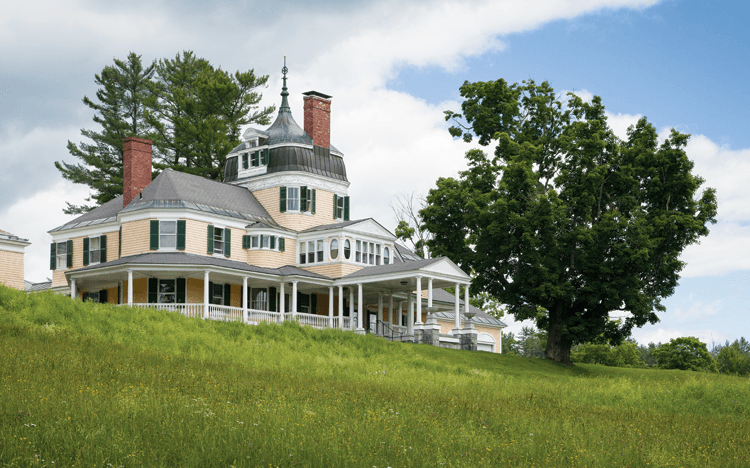
Austin Corbin (1827-1896) was a 19th century railroad man known for consolidating what we know today as the Long Island Railroad. He was born in Newport, New Hampshire and eventually graduated from Harvard Law School in 1849. He eventually moved to New York, and founded the Corbin Banking Company, which he leveraged into a successful banking firm, which funded his diversifying into resorts and railroads. In 1873, while following doctors advice of ocean air for his ill son on Coney Island, Corbin recognized the area as an untapped natural location for a summer resort, and proceeded to purchase 500 acres, opening a large hotel and a new railway system to deliver New Yorkers to the resort in 1878. He is infamous for strong-arming the Montaukett tribe on Long Island out of nearly 10,000 acres they occupied around Montauk. The tribe is still seeking compensation for this tactic. In 1880, he built this summer estate in his hometown of Newport, NH as a castle for his greed, also acquiring over 100 acres for the estate. He soon after bought out over 25,000 acres of land for an ultra-private members-only hunting club. Corbin died on the estate in 1896 and the property was eventually purchased by William Ruger. The home was vacant for decades following WWII until Ruger, who co-founded Sturm, Ruger & Co. purchased the estate, likely utilizing the hunting reserve next door. The property and another owned by the Ruger Family were sold separately at auction in 2019.




 Buildings of New England