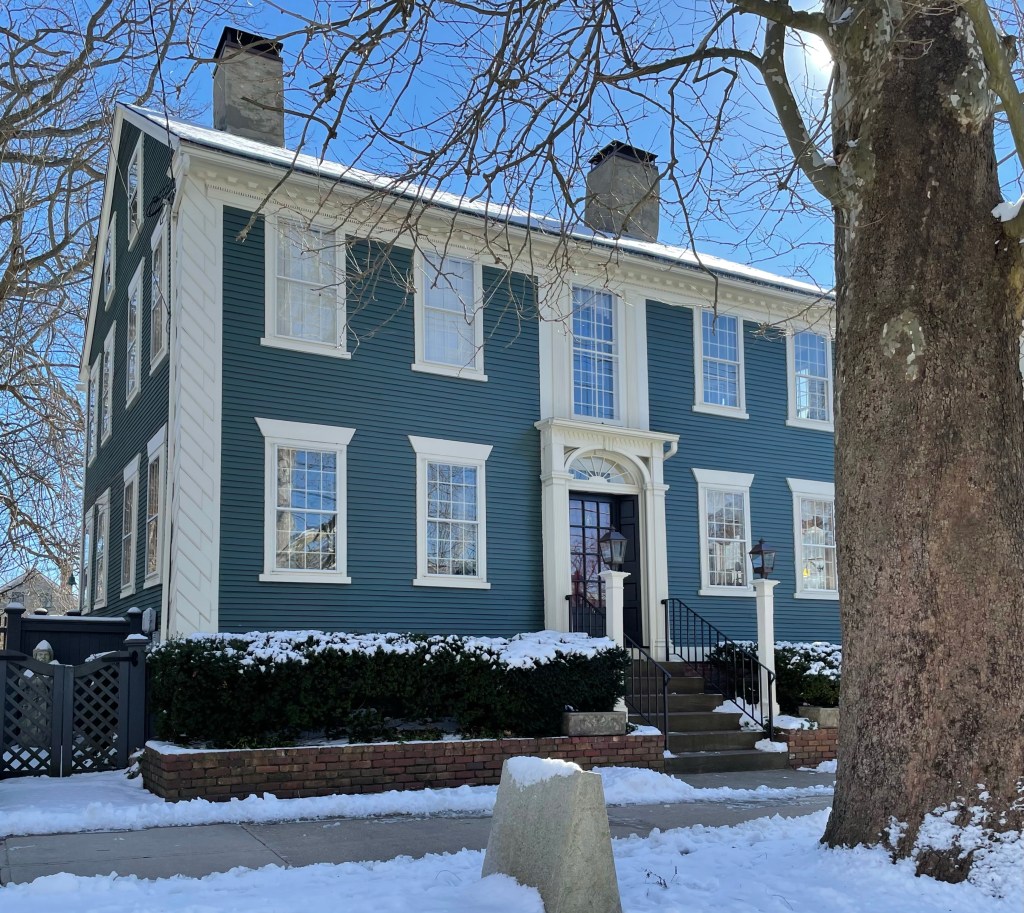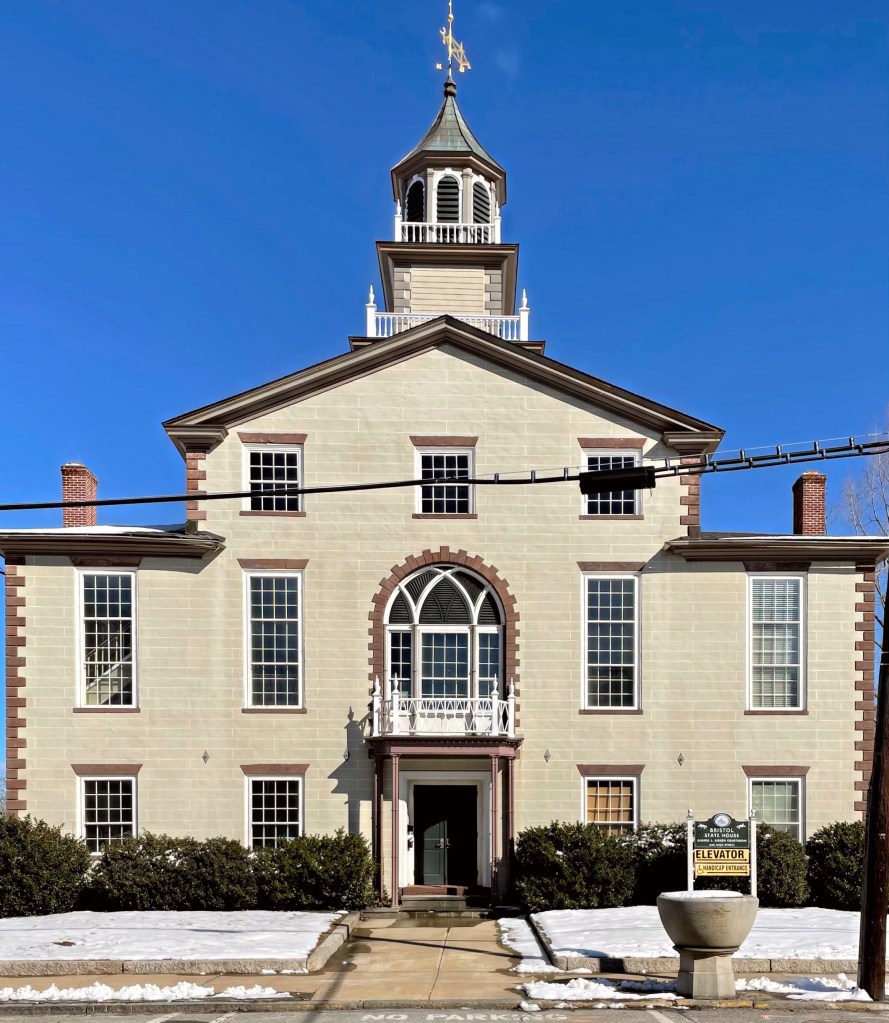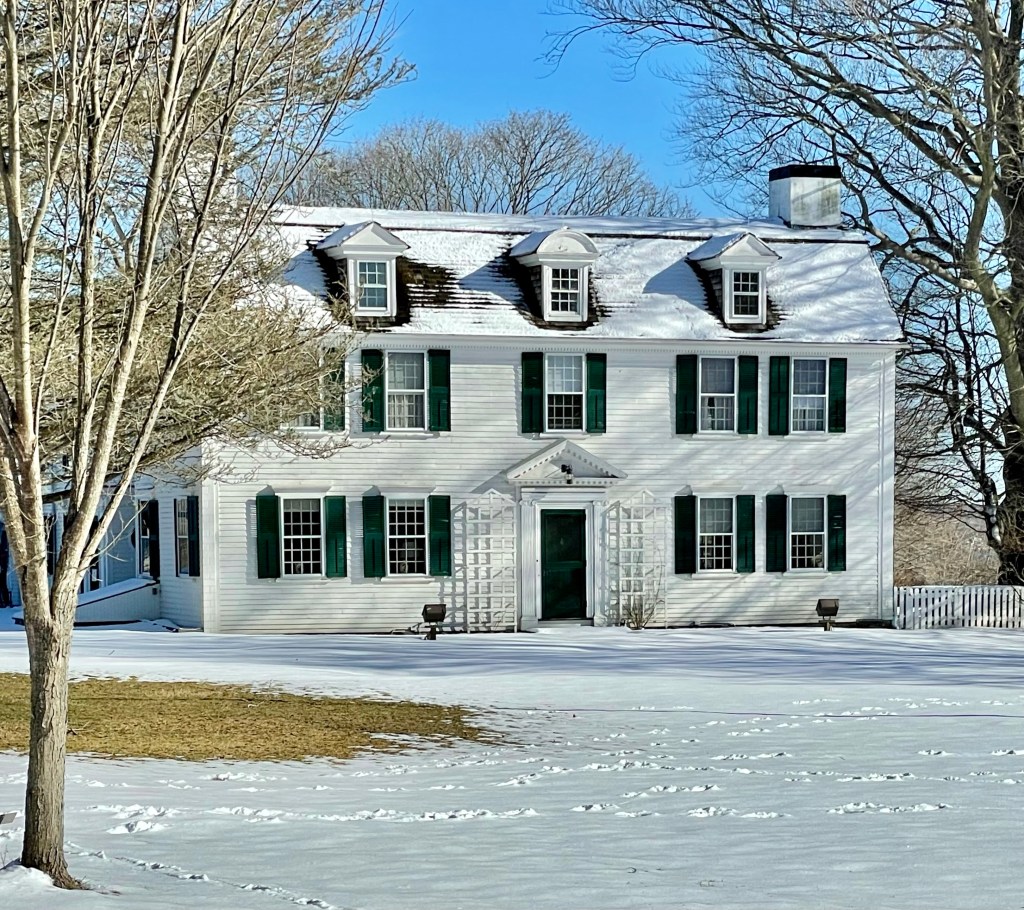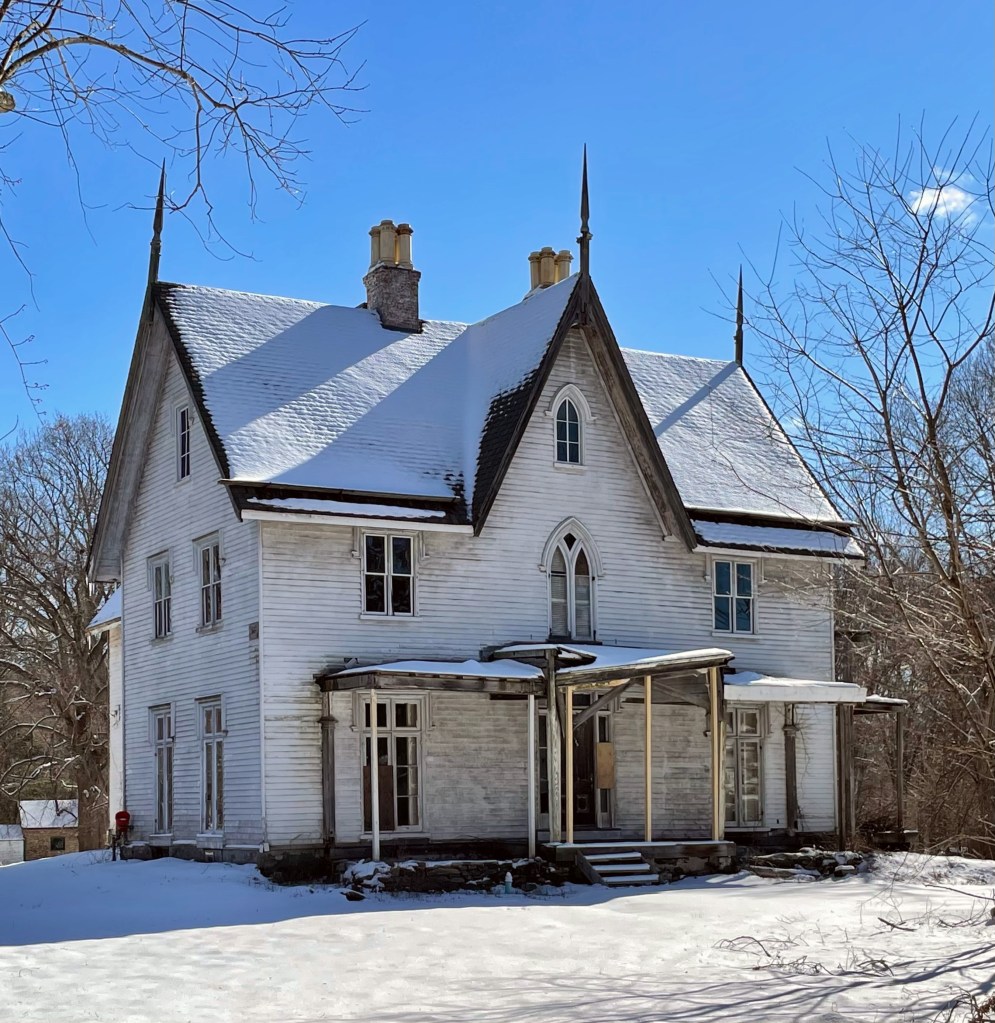
Alexander Jack Jr. House // 1811

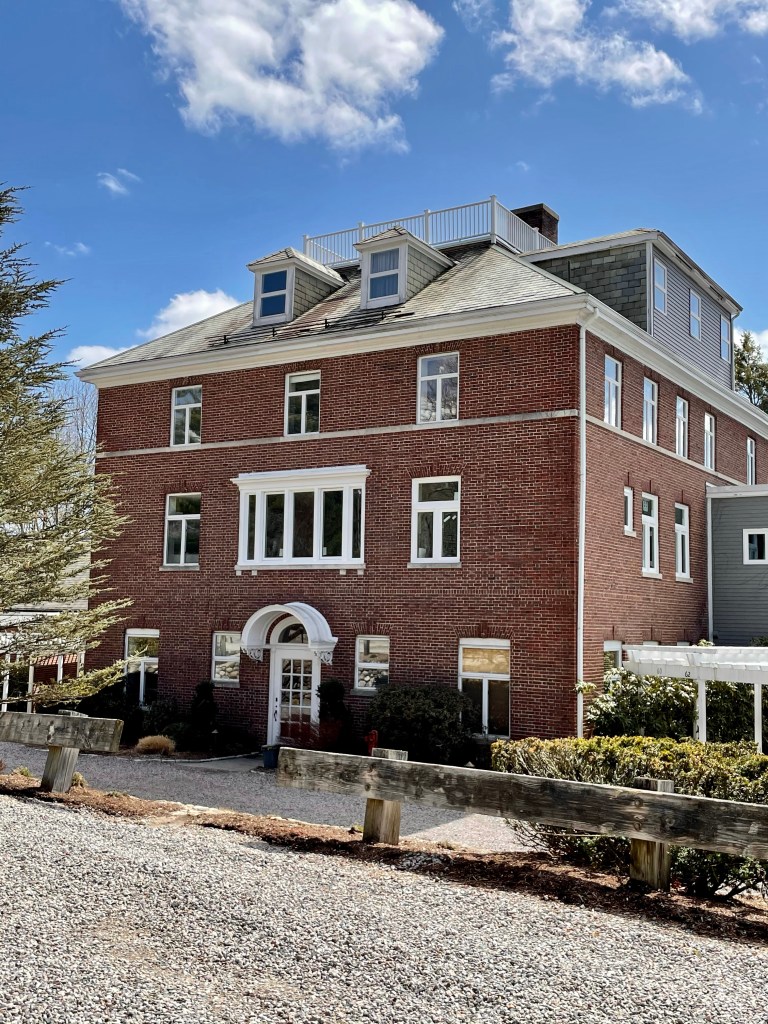
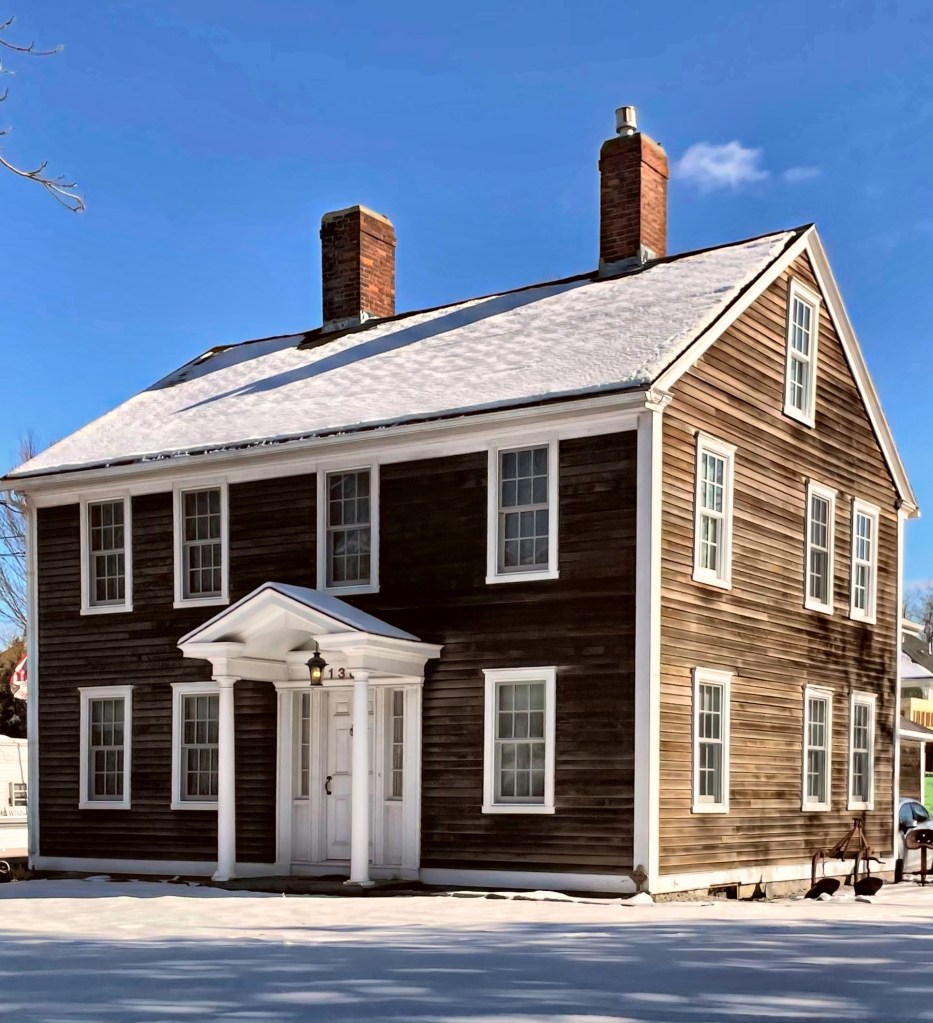
Newport in 1774 had approximately 153 free Black residents residing in 46 households comprising of thirty-percent of Newport’s population at this time. One of these free Black families was the Jack family who resided around Levin Street (Memorial Boulevard today). The Jack Family appears to have been from Antigua and may have had ties to the Redwood Family (the namesake of the Redwood Library), who owned a plantation on the island and resided in Newport. Alexander Jack, Jr. was a free African American whose trade was a cordwainer or shoemaker. He bought his land in 1811 and is thought to have begun construction almost immediately. Jack heirs remained on this property until 1881. The Newport Restoration Foundation purchased the house in 1969, moved it that same year to Mill Street to save it from urban renewal and the widening of Levin Street as Memorial Blvd.

Cotton House // c.1720

One of the oldest houses in Newport, the Charles Cotton House stands on Church Street, and has a similar story to its neighbor, the Langley House (featured previously). The home was built around 1720 and is named for Dr. Charles Cotton who owned it in the early nineteenth century. Cotton was born in Plymouth, MA, and was a direct-descendant of ministers John and Josiah and worked as a surgeon aboard the USS Constitution during the War of 1812. From Newport Restoration Foundation: “The original structure was probably a small, single-chimney house of one-and-a-half or perhaps two stories. The house as seen today was obviously enlarged in the Georgian style in the mid-eighteenth century and received further improvements in the early nineteenth century.” The likelihood of the building’s incremental growth is evident from the two chimneys are not of the same size above the roofline, nor are they in line with each other. Had the house been built new in the later Georgian style, elements on the exterior probably would have been more symmetrical and balanced. This building, like the Langley House was moved by Newport Restoration in the 1970s to save it from the wrecking-ball. In its original place, a parking lot.

William Bottomore House // c.1750

This well-kept Federal home in Newport was apparently built pre-Revolution, but it was likely significantly altered in the early 1800s for its namesake, William “Billy” Bottomore. “Billy” was born in Bologna, Italy, and moved to Salem, MA, where he possibly met Michele Felice Cornè, a prolific painter and who is credited in making tomatoes mainstream… seriously. In early 19th century New England tomatoes were thought to be deadly poison. Cornè was accustomed to eating tomatoes in his native land of Italy and would regularly eat them without ill effect and, thus, allayed the fears of the residents of his adopted country. Cornè became friends with Bottomore and they both moved to Newport. Bottomore likely modernized this house with help from his friend and ran a confectionery store in the home.

Peckham Houses // c.1855

On a little stretch of Kay Street in Newport, you can find four strikingly similar Italianate style houses, all neighbors. Upon further research, it turns out they were designed by the same man, Job Peckham. Job Almy Peckham (1807-1885) was a descendant of one of nearby Middletown’s “founding” families. He ran a lumberyard and began working as a housewright, building homes. He was a believer of the philosophy “if it ain’t broke, don’t fix it”, so he built many of his houses in a sort of cookie-cutter way, but each showcasing slight design changes. One of the most impressive features of these homes is the massive overhanging eaves with scrolled brackets. Peckham’s own house (bottom right) is included in the bunch. What do you think of these homes?

Touro Synagogue // 1763

While Newport is arguably best-known for the Newport mansions from the Gilded Age, there are soooo many amazing buildings from the Colonial era, including some of the most significant and historic in the United States. Touro Synagogue in Newport is the oldest synagogue building still standing in the United States, the only surviving synagogue building in the U.S. dating to the colonial era, and the oldest surviving Jewish synagogue building in North America (for reference, second-oldest extant synagogue in North America was built in 1833, seventy years later)! Its history begins in the 17th century when the small but growing colony of Newport received its first Jewish residents possibly as early as 1658. The earliest known Jewish settlers arrived from Barbados, where they participated in the triangular trade along with Dutch and English settlements. By 1758, the Jewish population had grown sufficiently that there was a need for a house of worship. The Congregation now known as Congregation Jeshuat Israel (Salvation of Israel) engaged Newport resident Peter Harrison to design the synagogue. Harrison, a British American merchant and sea captain, who was self-tutored in architecture, studying mostly from books and drawings. By the time he designed Touro Synagogue, he had already completed iconic buildings including Newport’s Redwood Library and King’s Chapel in Boston. Construction began on the “Jews Synagogue” in 1759, which was completed years later in 1763. The building is one of the most significant buildings in America, and is open to tours where you can see the immaculately restored interiors.

Langwater // 1859

The country estate of Frederick Lothrop Ames (1835-1893), “Langwater” sits in North Easton amongst a collection of some of America’s greatest architectural treasures, all thanks to the Ames Family. The Ames family was a wealthy family which had lived in Easton for many generations. Frederick’s grandfather Oliver Ames Sr. founded the Ames Shovel Works in Easton, Massachusetts. The Shovel Works earned the family a huge fortune, during a time when aggressive canal and railroad expansion was built by the hands of thousands of men using shovels. Frederick’s father Oliver Jr. was president of the Union Pacific Railroad during the building of the transcontinental railroad. Frederick’s cousin Oliver Ames was governor of Massachusetts 1887–1890. Frederick himself was Vice President of the Old Colony Railroad and director of the Union Pacific railroad. At the time of his death, Ames was reported to be the wealthiest person in Massachusetts. With this immense wealth, Frederick built a castle where he would spend most of the year, overseeing his various businesses, in his hometown of Easton, Massachusetts. The mansion was designed by architect George Snell and built around 1860, with a couple additions and updates until Frederick’s death. A few years before his death, Frederick hired famed architect Henry Hobson Richardson, who he already worked with in designing the Oakes Ames Memorial Hall(Easton’s Town Hall), to design a gate house leading to Langwater (more on that later).

Canton Town Hall // 1902

Collinsville, Connecticut grew in importance and population significantly in the 19th century. The traditional, rural town center of Canton remained pastoral with dairy farms on large agricultural lots. With the population centered around Collinsville, it was decided to erect a new town hall building in Collinsville, which is actually at the far edge of town, but the village where most residents lived. In 1902, this two-story, brick building was constructed just off Main Street. The building is unique for the Colonial Revival design, but with Gothic style lancet windows at the second floor. In the second half of the 20th century, the Town of Canton purchased the larger, three-story brick building adjacent to this building and expanded for additional town offices.

Case-Crowley House // 1840

Built in 1840 for Titus Case, this old house looks very different than it would have been when first constructed. The house was originally Greek Revival in style, probably with a gabled roof, common of the region and style. Case died in 1845, and the home was later purchased by Jeremiah Crowley who ran the Canton Creamery nearby. After the Civil War, he “modernized” the house in the then fashionable Italianate style, with a low-sloped roof with overhanging eaves, large brackets, a cupola, and a wrap-around porch.

Adams House // c.1770

This old Georgian house in rural Canton, Connecticut was built before the Revolutionary War for David Adams (1742-1834). After David’s death, the home was willed to his family, and soon after became a local post office for the village, facilitated by the fact Oliver Adams became postmaster for the area. The family built an attached structure as a post office, but it was removed in the early 20th century. The post office was run out of the home by members of the family until the 1930s. Later owners restored the house and discovered that the home originally had a gambrel roof, which matched the office addition.

Canton Center Schoolhouse // 1872

Canton, Connecticut, the only town in the state named after a city in China! The land which we now know as Canton had long been inhabited, specifically by the Wappingers, a group in the larger Algonquin speaking tribes. Canton was incorporated out of Simsbury in 1806, and named after the City of Canton in China (now known as Guangzhou), though I am not sure why. The town quickly developed two main villages. Collinsville sits on the Farmington River and its power was harvested for industry; while the center village grew differently as an agricultural village of farms. At the center of town sat a green for civic and town functions and gatherings. The town constructed a school here as far back as 1759, when the rural village was still a part of Simsbury. This is the fourth building on the green and it was built in 1872, and can be classified as Italianate in style. The building was occupied as a school until 1949, and it was used for other city uses until 1971, when the building was rented to the Canton Artist’s Guild and the building was renamed Gallery on the Green. The building remains community-focused and holds exhibits of local artists! Much of the rest of Canton Center lost all of its bucolic charm when the main road became commercialized, prioritizing speeding cars over a walkable village.