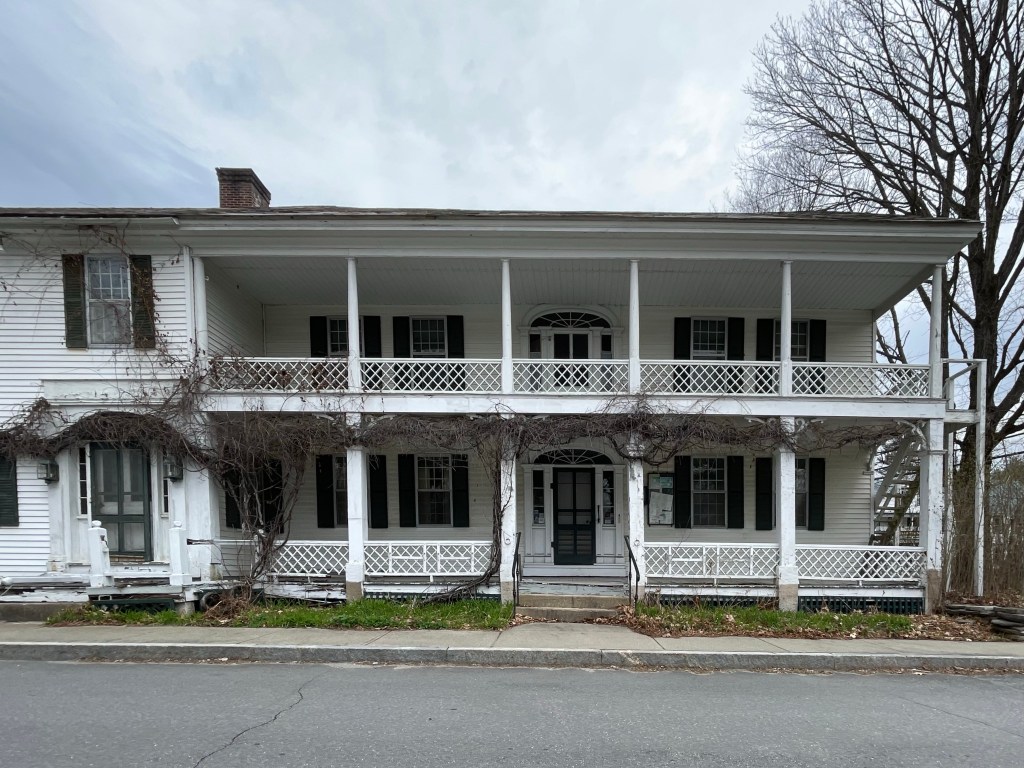
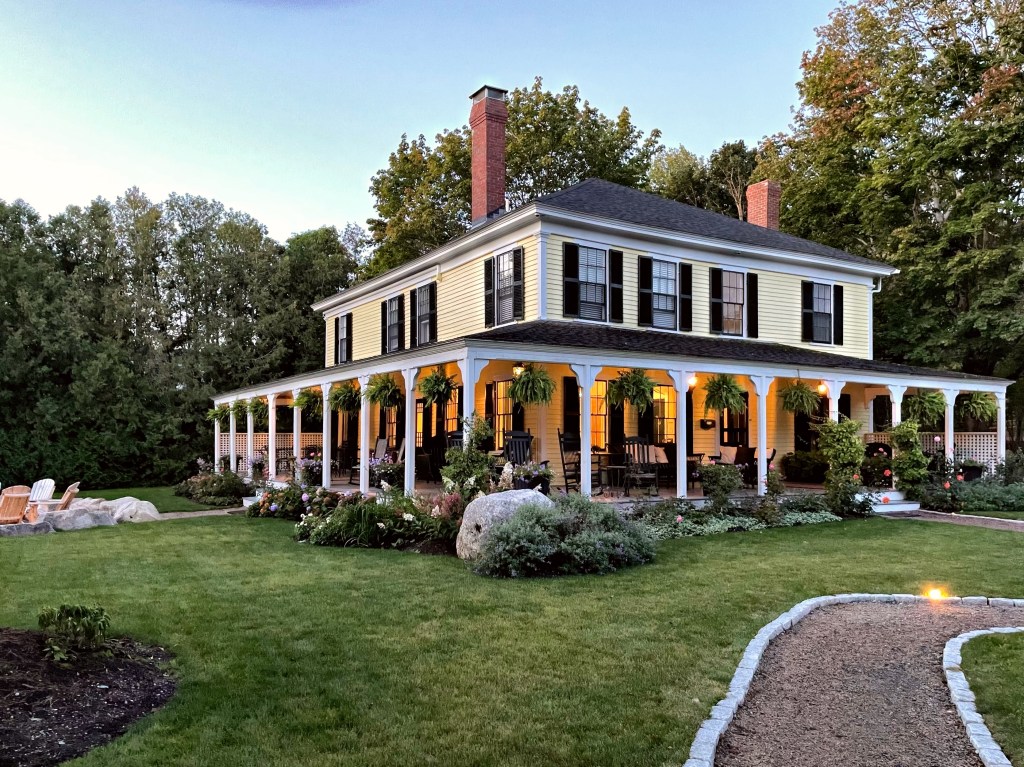
Originally constructed in 1787 on Newfane Hill, the main block of this historic inn was moved in 1825 for owner Anthony Jones, to its present site overlooking the Common in Newfane, Vermont. The Federal style building was oriented towards the main street, with its length extending along the town common. The inn was a busy stop for lawyers and judges who worked at the courthouse across the street. Porches were added likely in the early 20th century. After a period of neglect, the inn was restored by decorator Christoph Stumpe Castou, and later sold. The inn was run for 42 years in the second half of the 20th century by Eric and Gundela Weindl, a couple who were both from Germany, yet met at Stratton Mountain in Vermont in 1963, marrying in 1968. They operated the inn until 2011.
Located on a hillside in rural Dummerston, Vermont, you will find Naulakha, one of the most significant properties in the region. Naulakha (pronounced now-LAH-kuh) was built in 1893 for Rudyard Kipling an english journalist and author born in British India, an upbringing which inspired much of his professional work. In 1892, Kipling married Caroline Balestier, who was born into a prominent New England family. The couple honeymooned in Vermont near Carrie’s family home. The couple would settle in Vermont in a cottage which was soon outgrown, leading the couple to buy 10 acres of land from Carrie’s brother Beatty Balestier and built their own house. The new Shingle-style home they had built was named Naulakha after a book written by Rudyard and Caroline’s late-brother Wolcott. Kipling wanted a home that merged the distinctive qualities of the Indian bungalow with those of the American Shingle Style and he worked closely with his architect, Henry Rutgers Marshall of New York City, a Balestier family friend to achieve this.
The rectangular mass of the home parallels the contours the hill upon which its sited, and sits atop a raised fieldstone basement salvaged from stone walls on the property. From the home, Kipling wrote some of his most influential work, including the Jungle Books (1894, 1895), Captains Courageous (1896,The Seven Seas (1896), and The Day’s Work (1898). Sadly, the Kipling’s moved out of Naulakha after just a few years, largely from familial disputes with Caroline’s brother, Beatty. The family removed to England where they settled, though Rudyard always mentioned how much he missed his secluded life in Vermont. The property was then purchased by the Holbrook family, who made slight modifications to the property, but all maintaining the original design and feeling. In 1992, the British-based Landmark Trust acquired Naulakha as its first American building, later creating the Landmark Trust USA to maintain the property and more. The Landmark Trust USA rents out Naulakha and the adjacent carriage house for short-term rentals to provide revenue for maintaining these properties.
For more on my stay at the absolutely stunning Kipling Carriage House, check out my later blog post here.
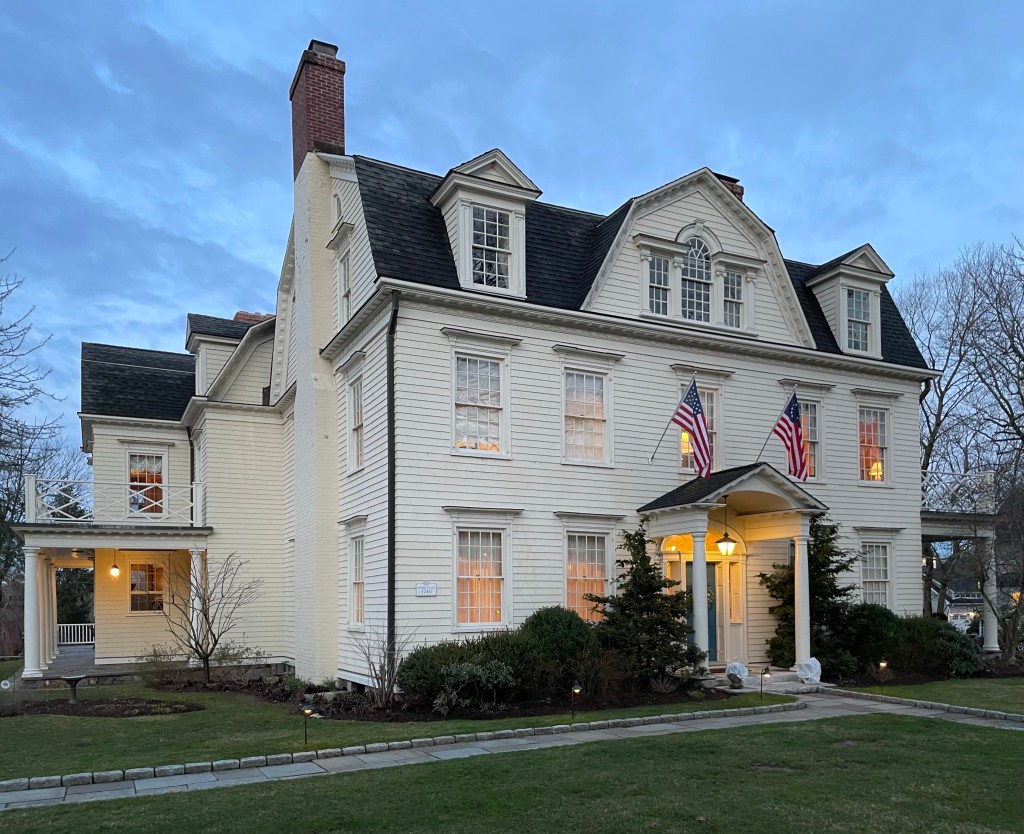
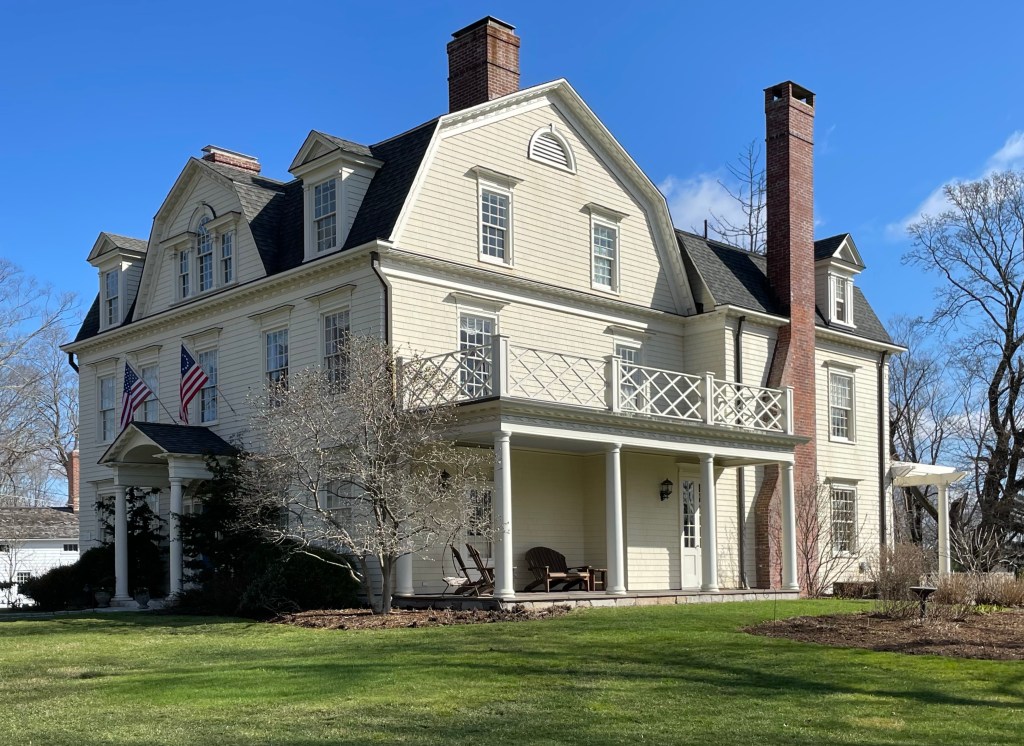
Located on Main Street in idyllic Ridgefield, in Fairfield County, Connecticut, The Fountain Inn provides one of the most welcoming and historical bed and breakfast experiences in New England! The Fountain Inn was built in 1740 as a “city home in the country” for David Hoyt, who showed off his wealth and stature in the young town by having such a high-style home built at the time. Decades later during the Revolutionary War, David Hoyt’s house became a part of the Battle of Ridgefield. After defeating the Colonial militia elsewhere on Main Street, British Gen. William Tryon‘s troops turned their attention to nearby Keeler Tavern, the local militia’s headquarters, which just happened to be neighbors with the mansion owned by David Hoyt, a known Loyalist. General Tryon’s troops practiced their artillery-firing skills on the building pummeling it with cannonballs, sending a message to the head of the local militia. David Hoyt formally demanded a cease-fire, as he was concerned about wayward cannonballs damaging his home. By 1790, with Ridgefield’s British influence diminishing by the day, David Hoyt finally left his Connecticut home and sailed back to England. The home was expanded and modernized over the next two hundred years until the present owners purchased the property and underwent a massive restoration of the Colonial house inside and out as their family residence. In the past year, the inn opened as the Fountain Inn so-named after a Cass Gilbert-designed fountain across the street.
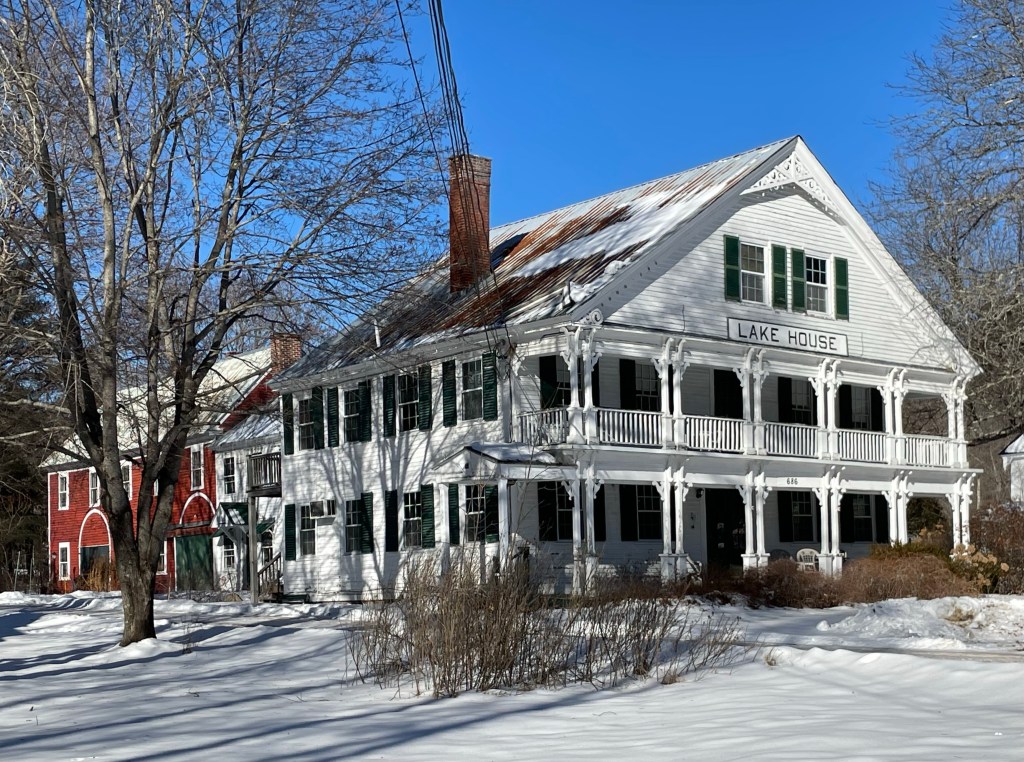
Eli Longley (1762-1839) came to Waterford, Maine by way of Bolton, Mass., in 1789 and erected a log cabin in town. As the first settler to build in this part of town, he owned a substantial piece of property, which was frequently travelled through as the area was being developed. Seeing a need for lodging, he built a one-story tavern in the location of this building, which was added onto and modified as demand and the area’s population grew. Longley would also subdivide some of his land for house lots along the new town common, selling to new settlers as they arrived. Longley sold the tavern in 1817, which was acquired later in 1847 by Dr. Calvin Farrar. Taking advantage of a nearby mineral spring, Dr. Farrar opened a successful hydropathic spa, which used natural waters to cure patients of their ailments. The spa was taken over by Dr. William P. Shattuck, who expanded the site as the “Maine Hygienic Institute”, a hospital exclusively for lady patients employing eclectic treatment. This business and the tourism it generated helped shift the town from a sleepy village to a tourist destination by the late 19th century, where city-dwellers would flock to view the natural scenery and breathe in the clean air. In the 1860s-70s, Shattuck “modernized” the Lake House Hotel with the two-story Victorian-era porch and sawn decorative trim.
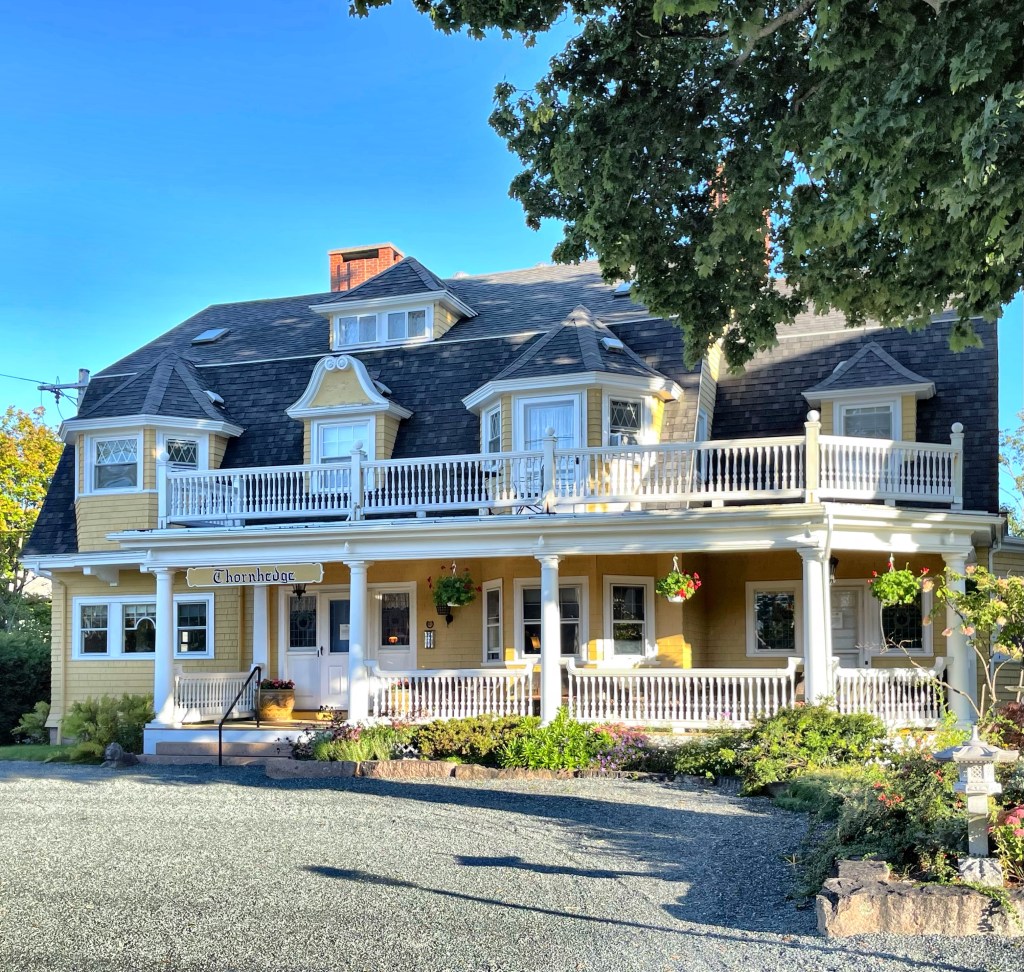
Located next door to “The Poplars” (last post), another summer cottage Thornhedge, stands out for its architectural splendor and great state of preservation. Similar to “The Poplars”, the home was built in 1900 for Lewis A. Roberts, a retired book publisher from Boston. Roberts ran the publishing house with his brothers, and they published work by authors including Emily Dickinson, Fyodor Dostoyevsky and George Sand, the first American edition of Treasure Island by Robert Louis Stevenson, and had their greatest commercial success with Little Women by Louisa May Alcott. The business was purchased by Little and Brown Publishing in 1898. Lewis Roberts died in 1901, only a year after completing Thornhedge, and the house came under the care of his son, Lewis Niles Roberts. Mr. Roberts kept the house as a summer residence until 1920, then sold it to the family of William F. Frick, a prominent judge from Baltimore. The home became an inn by the 1970s. Thornhedge is a Queen Anne style cottage which was originally organized with the first and second floor serving as the living quarters and the top and bottom floors for the servants. The laundry, servants dining hall, and kitchen were out of sight in the finished basement, with a dumb-waiter to bring hot food to the butler’s pantry. The third floor was the servants’ living quarters.
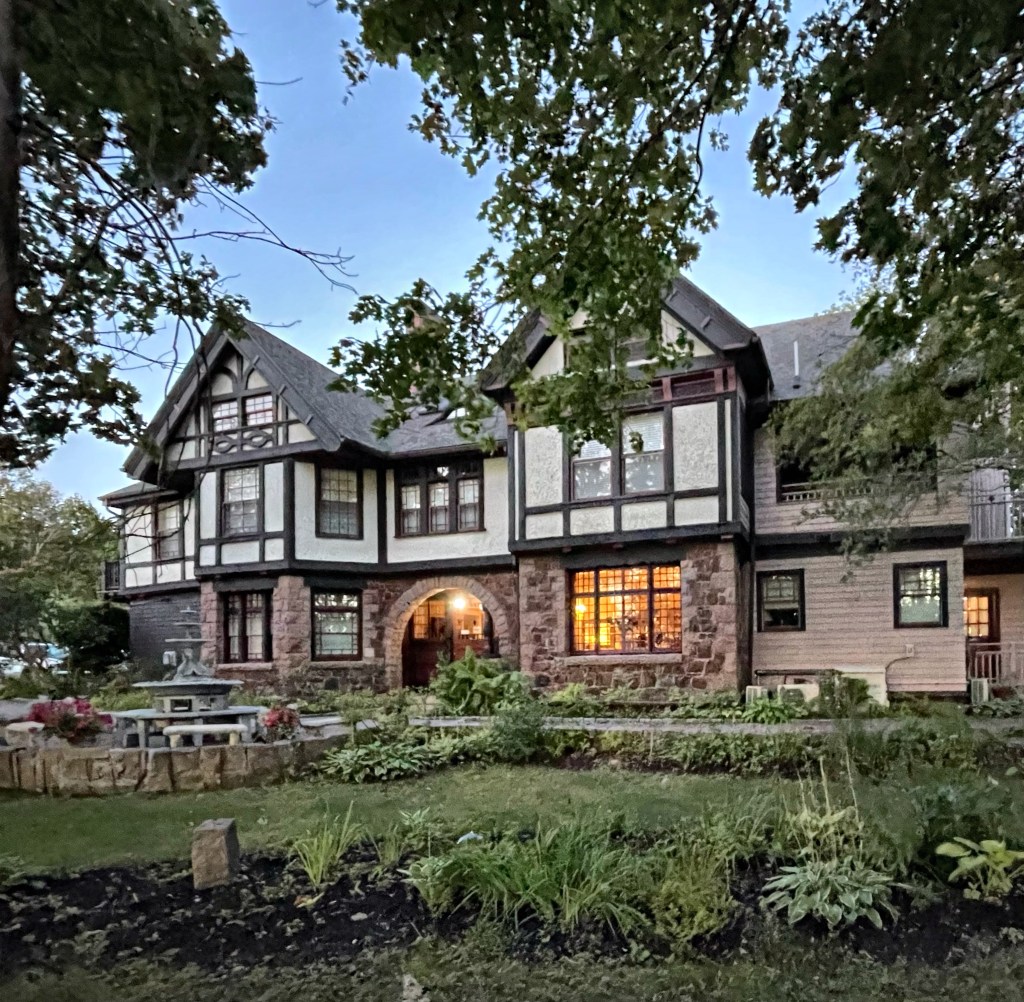
One of the earlier summer cottages in Bar Harbor is Ullikana, a Queen Anne style cottage, verging on Tudor Revival style. The cottage was built in 1885 for Alpheus Hardy (1815-1887) a trader in Boston. Hardy gained his wealth in shipping. He got his start by buying a small and fast ship that could make the voyage to the Mediterranean and back so quickly that he and his other investors captured much of the fruit importing business. His company would grow to have over 15 ships going as far as China. Hardy hired the Boston architectural firm of Cummings & Sears to design a new summer cottage in Bar Harbor, Maine, an ever-growing rival to Newport. He could only enjoy the cottage for two years, when in 1887, while cutting coupons, he dropped the scissors, the sharp points piercing his leg. Blood poisoning followed and death resulted. The summer cottage was owned by his family as a rental cottage for a number of years until it was purchased by the Maine Central Railroad, and rented to the recently widowed Princess Miguel de Bragança of Portugal, the former Anita Rhinelander Stewart. The cottage is now an inn.
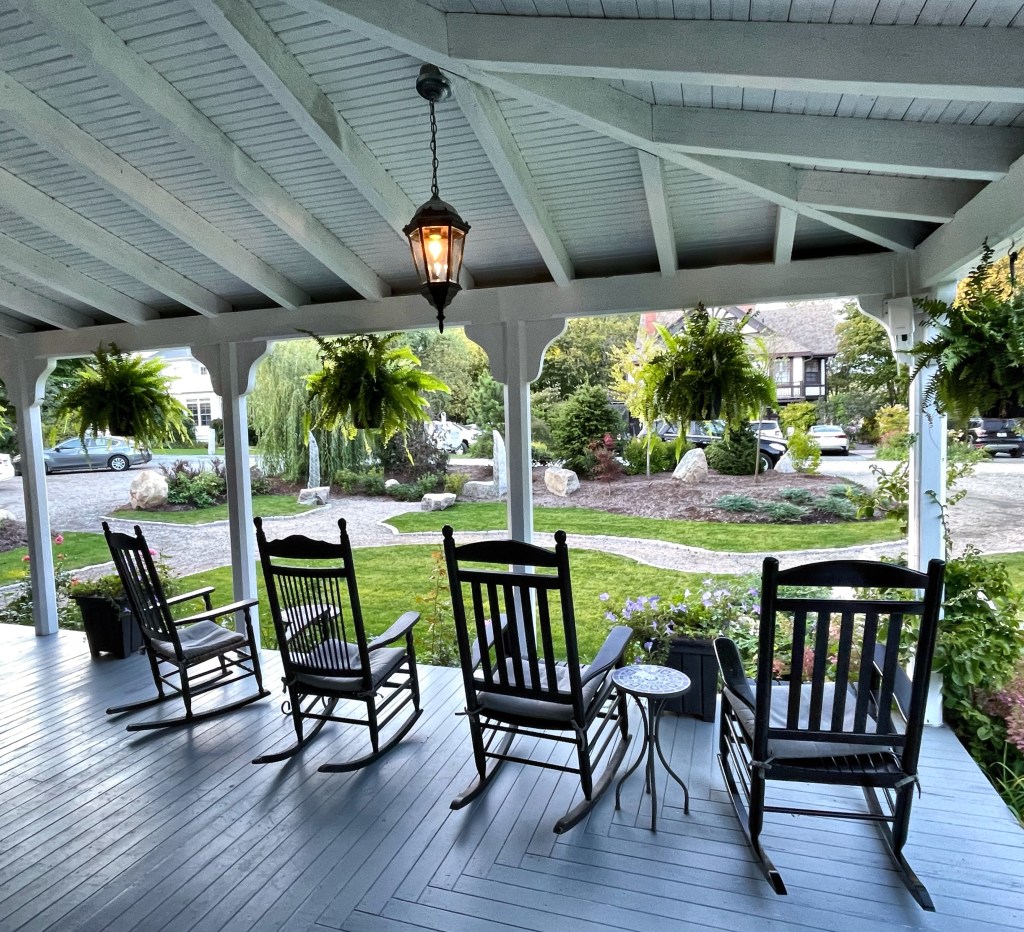
The Yellow House in Bar Harbor is one of the most stunning summer cottages in town, and luckily for us, is an inn! The cottage sits on a sleepy road just off Main Street, just steps from the rugged Mount Desert Island coastline on one side and busy restaurants, shopping, and bars on the other side. The cottage appears to have been built in the late 19th century from deed research and was acquired by socialite Ms. Sarah Parker Torrey Linzee, of Boston by 1886. Sarah married Thomas Linzee, a treasurer of a mill in Lowell, in 1855 and engaged in upper-class society together in Boston until his death in 1863. His wealth went to Sarah, who within a year of his death, purchased a rowhouse in Boston’s newly established Back Bay neighborhood. Her sister, Susan and her husband John Revere (the grandson of the American Patriot Paul Revere), had a matching home built nextdoor in Boston. Like any good socialite, Sarah Linzee desired a summer cottage in desirable Bar Harbor, Maine, to escape the woes of city life for clean air and large parties. Sarah and her sister Susan purchased this cottage, painting it yellow, and the name “Yellow House” stuck. The home was purchased by Leonard Opdyke and remained in the family for generations. By the second half of the 20th century, it became an inn, a use it remains as to this day. The old cottage features the finest wrap-around porch I have seen, large rooms, and original detailing inside and out. For anyone thinking about visiting Acadia National Park, I HIGHLY recommend checking in here to get the true Bar Harbor vibe!
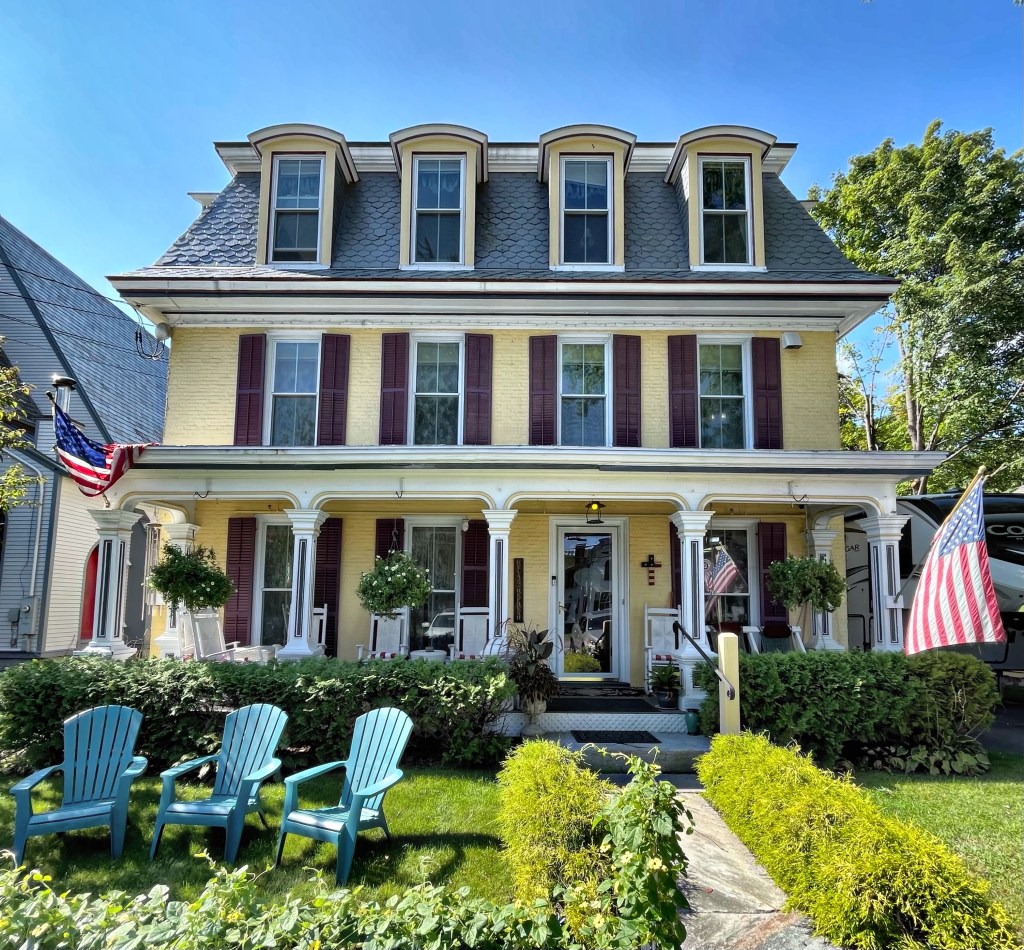
Located right on Main Street in the beautiful village of Chester, Vermont, this historic inn has been a landmark in town since it was built in the mid 19th century. The house was constructed around 1850 for Dr. Abram Lowell (1794-1876), the village doctor. Dr. Lowell conducted his medical practice in a small building next to the main house and resided in the home, which originally had a side-gable roof. Tributes printed in regional newspapers at the time of his death called him an eminent physician, accomplished gardener, “eccentric in his ideas,” and “the wealthiest man in town.” After his death, the home was inherited by his daughter and her husband, George Hilton. They immediately “modernized” the home, adding the mansard roof, which provided an extra full story of living space. The home was converted to a bed & breakfast in 1998, and has been one of the most intact, Victorian era inns in the state since! It is known as Inn Victoria, so named after Queen Victoria and the Victorian period of architecture in the United States.
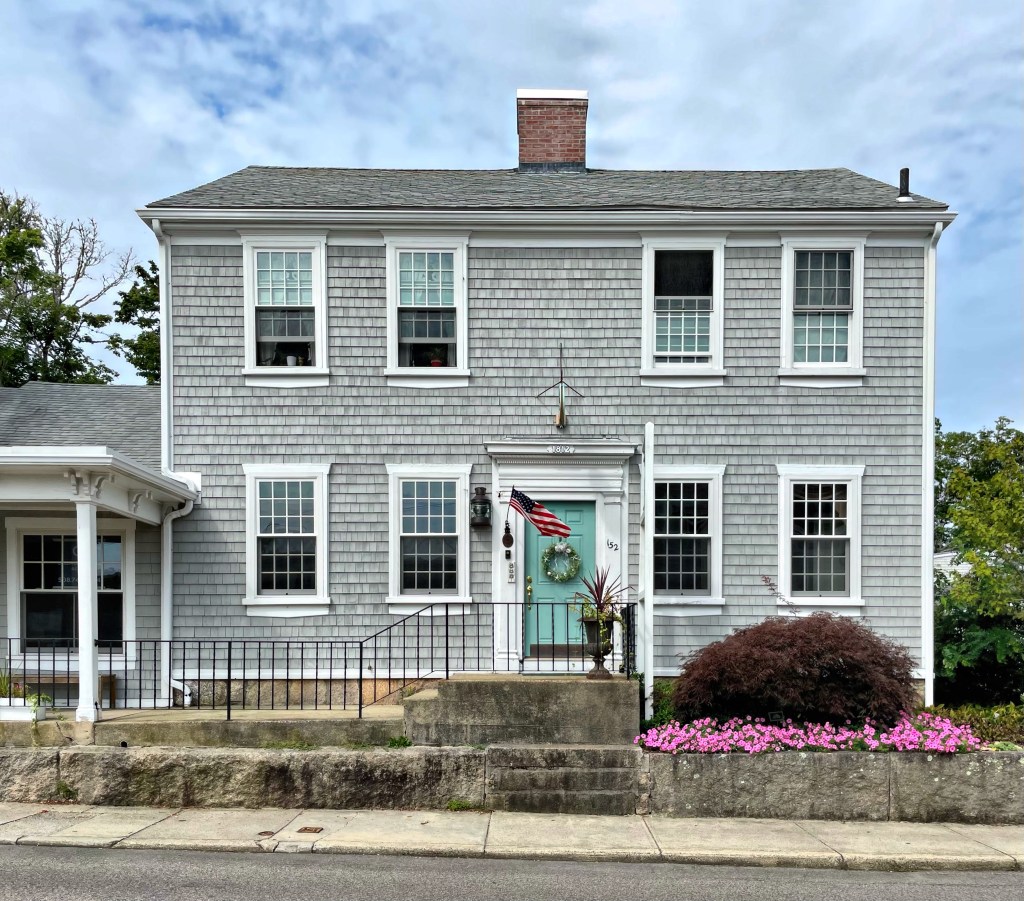
Before the days of cars and even trains ruled, people in New England would get around by horseback or stagecoach (horse-drawn carriages) from town to town. Due to the long travel times to get everywhere, many New Englanders built taverns, which served as inns and bars for the weary traveller on their journey. In 1812, a recently married Caleb Handy built this house to serve as a residence and source of income, as a tavern for travellers on the Plymouth-New Bedford stagecoach route. He married Sophia Dexter in 1811, who died just two years later at the age of 22. Two years after the death of his first wife, he married Sophia’s sister, Mary, who just turned 18 (he was 33). The tavern had a ballroom for local dances and a room for serving drinks, based principally on West Indian rum, that was shipped in from sugar plantations, owned by many wealthy white families in New England (many of whom exploited the slavery abroad). The Tavern was later owned by Benjamin Handy, who continued to operate it as a Tavern until the railroad made the stagecoach route obsolete in the middle of the 19th century. It then became a family home. The house was sold to the Sippican Women’s Club in 1923, who renovated and restored much of the building, and held luncheons and events inside. They maintain the building to this day.
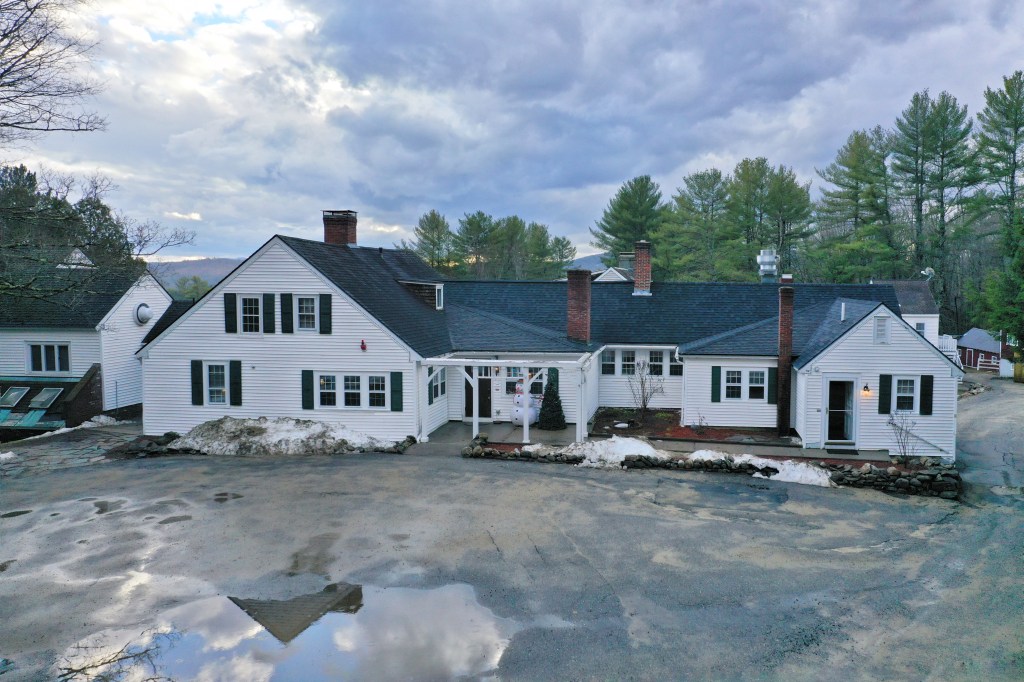
At the base of Ragged Mountain, on a winding dirt road lined by towering pine trees, I came across the New Hampshire Mountain Inn. The original Cape block of the house was built in the late 18th century and operated as a farm for a family in the rural town of Wilmot, New Hampshire. By the mid-19th century, the construction of the Northern Railroad through New Hampshire, created a housing demand for railroad workers who spent long days laying rail lines, thus the beginning of this farm becoming a short-term boarding house began. The railroad line was officially abandoned by the 1990s, and later converted to a linear park with biking, walking, and snowmobile trails in various sections. After the railroad’s construction, the farm saw visitors beginning in the 1930s, drawn to the area due to the skiing opportunities in the area. Subsequent owners added onto the farmhouse numerous times, to accommodate growing flocks of skiers every season. The house features telescoping additions, similar to many historic farms in New England, but on three sides, which expanded the once small farmhouse to a modern inn. The siting of the property on a hill overlooks the distant mountains with fresh country air blowing across the sloping fields.




 Buildings of New England