Henry Tuttle House // 1873

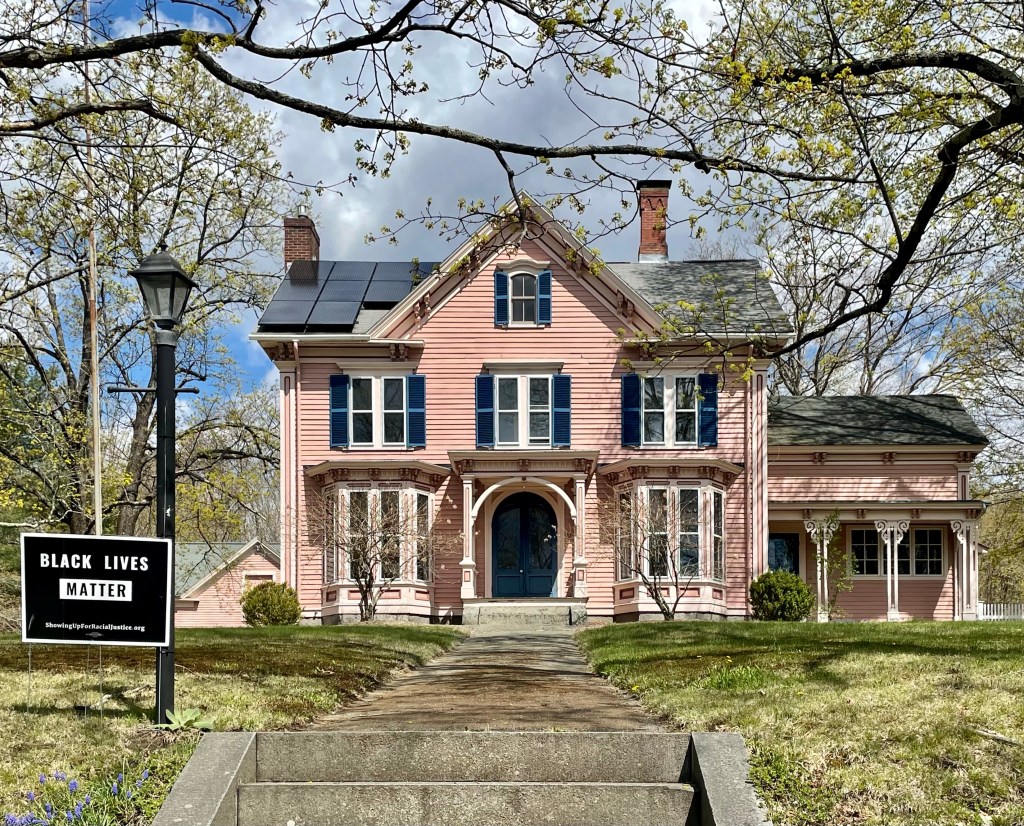
This large Italianate house in Acton was built in 1873 for Henry Waldo Tuttle (1847-1916), who ran a grocery store business in town with his father, James Tuttle. The business did quite well as Henry built this massive home around his 26th birthday, likely around the time of his marriage. The exuberant Italianate home features a wide central gable and a projecting central entrance porch accessed by double entrance doors. The home has a detached stable to the left of the home too!

Acton Town Hall // 1863

Acton, Massachusetts, was once part of Concord, the first inland colonial town established in the Massachusetts Bay Colony in 1635. 100 years later in 1735, land that we know today as Acton, separated from Concord to become their own town. Acton’s second Meetinghouse was located here in Acton Center, which was selected for its location more accessible to all houses and farms in the town. The Second Meetinghouse was built in 1806, and burned to the ground in 1862. Immediately after, a town committee was formed to construct a new town hall. Opening in 1863, Acton’s Town Hall stands as a stunning Italianate building with tripartite arched windows, corner quoins, a two-stage cupola with clock, and a bold (and historically appropriate) paint scheme. Acton’s Town Hall remains as one of the finest extant in the state.

George Lee House // c.1865

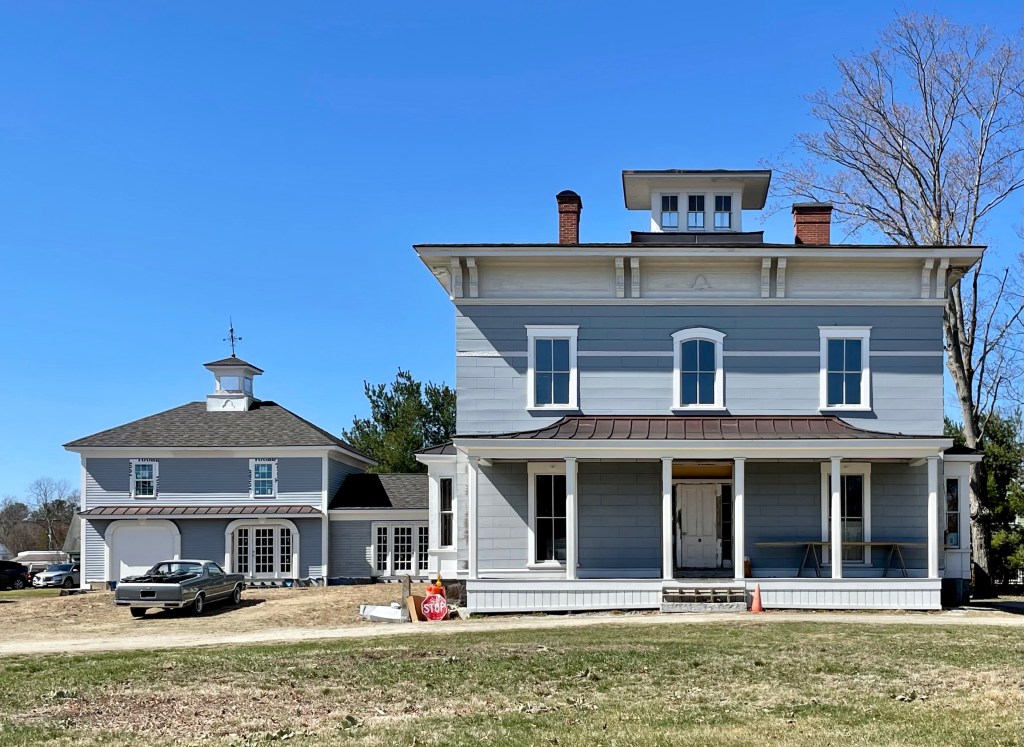
This Italianate mansion was built in the 1860s for George E. Lee, a tanner. Lee lived in this home for a few decades until his death, before which, we had a stable or carriage house built to house his horses and carriage. There is a belvedere at the roof which could have been used by George or his wife to oversee the tannery business just blocks away! The home was willed to his son William after his father’s death, who sold off land across the street for new development. Interestingly, land behind the house was sold off in the early 2000s for townhouse development, possibly to provide funding to restore the home, currently undergoing renovations. The street that the townhomes sit on… Preservation Lane.

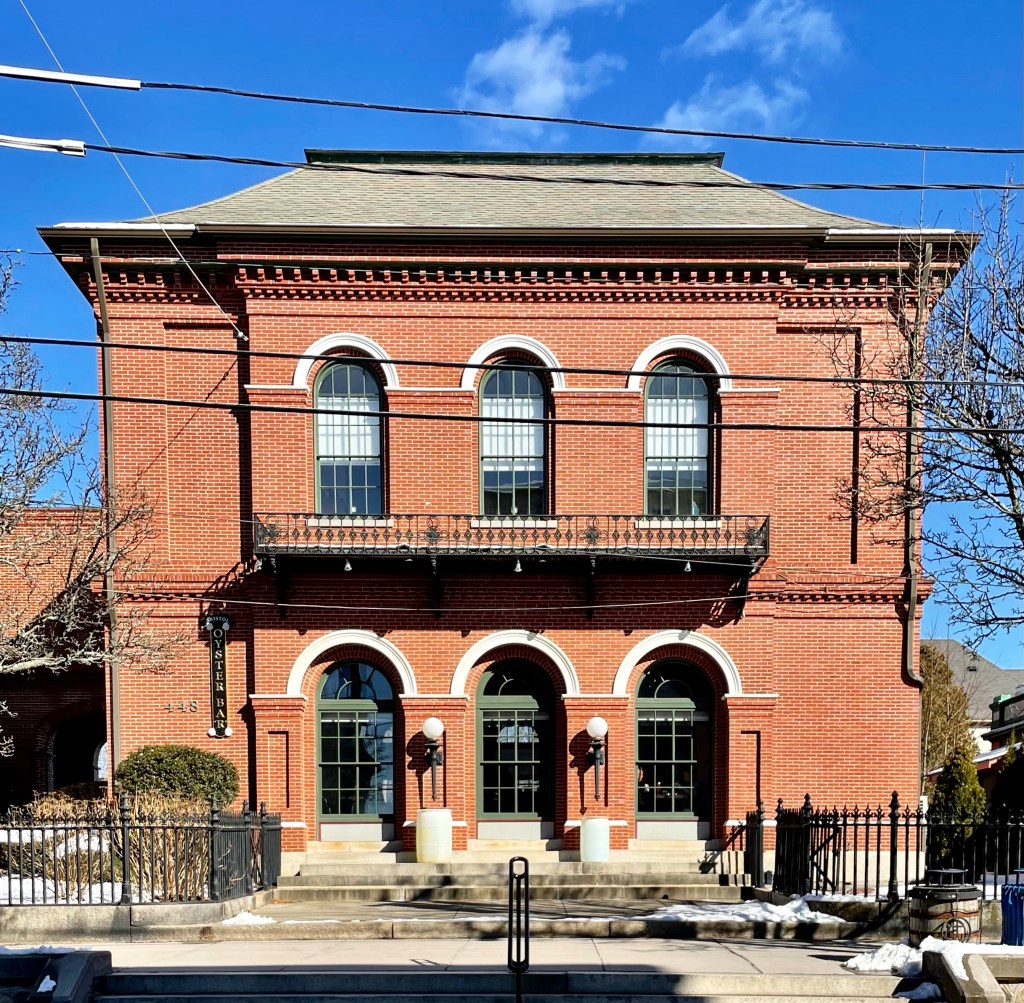
Bristol Customs House and Post Office // 1858

Completed in 1858 from designs by architect Ammi B. Young, the Bristol Customs House and Post Office is a two-story rectangular Italianate style building, that stands out as an uncommon building of the style in town. Ammi B. Young was the first Supervising Architect of the U.S. Treasury Department. As federal architect, he was responsible for designing many custom houses, post offices, courthouses and hospitals across the United States. He was a master of the Greek Revival style so it is interesting to see how he diverged from his trusted style in a town so populated by homes and buildings in the style. The design is more subdued compared to other Customs Houses he designed around the time, likely a response to the declining economy in town from whaling and shipping. The building was occupied as a customs house and post office until 1962, when it was abandoned. The adjacent YMCA purchased the building soon after, connecting it via a small addition and occupying it as additional programming space until 1990. The building was restored and is now home to the Bristol Oyster Bar.

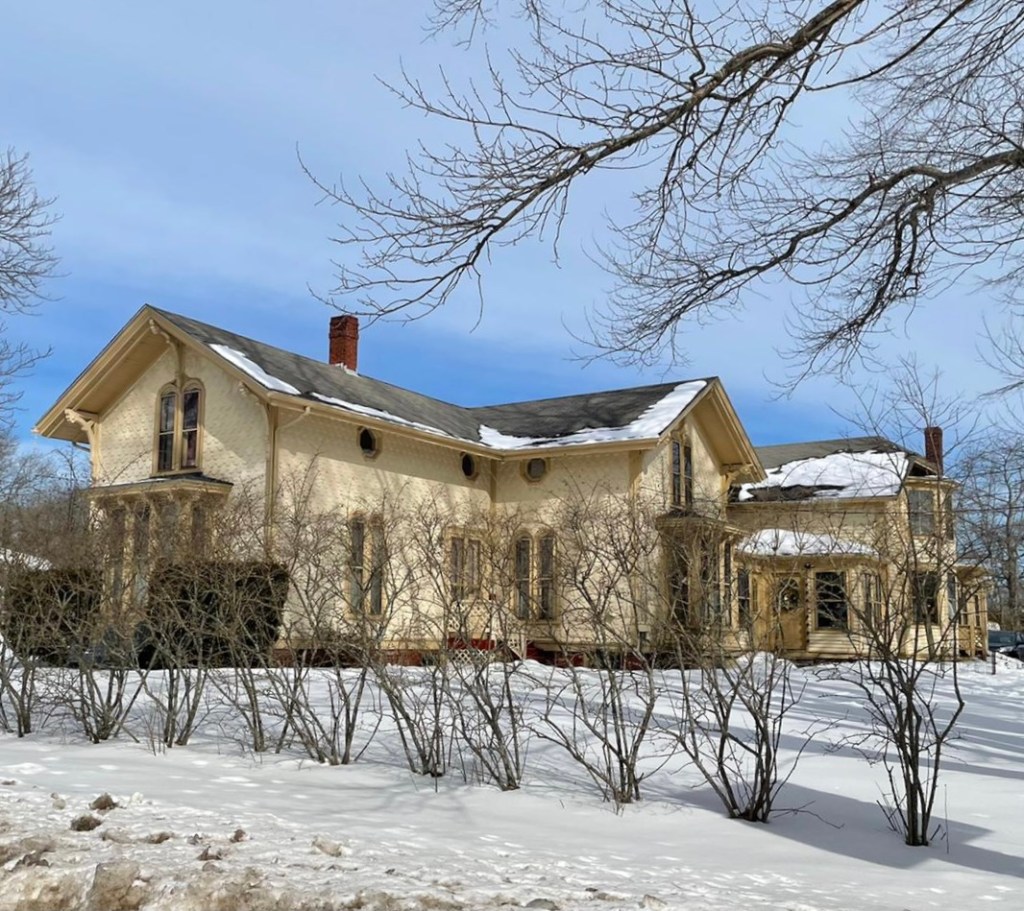
312 Ocean House Road // c.1870

This charming home in Cape Elizabeth, Maine looks to have been built after the American Civil War, as an interesting Italianate cottage. The home is clad with scalloped shingle siding which works well with the paired round headed windows facing the street. The deep overhanging eaves are supported by brackets. Running under the eaves on the sides are octagonal windows, a very unique detail. The home is located at the center of town, away from the summer cottages which sprouted up along the rocky coastline in town starting around this time. It was converted into condominium units sometime in the late 20th century.

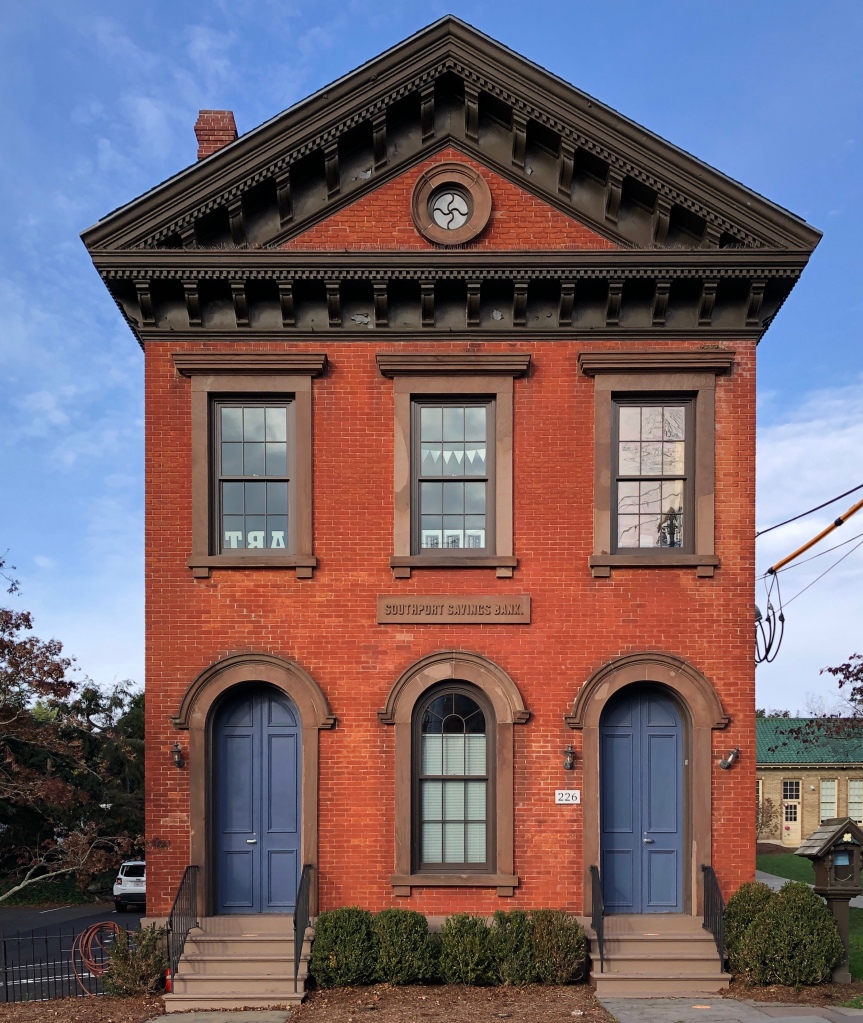
Southport Savings Bank // 1865

The Southport Savings Bank obtained a charter from the Connecticut General Assembly in May 1854, and was organized on September 25 of that year. Original incorporators included Paschal Sheffield, Austin Perry, Wakeman B. Meeker, Charles Perry, Prancis D. Perry, E.D. Sherwood, John Meeker, Frederick Marquand, and Andrew Bulkley. A new building, located at the foot of Main Street, was constructed to be accessible to shipowners, shop keepers, the farmer patronage, and commercial traders. This bank building was occupied in 1865, eventually merging with Bridgeport People’s Savings Bank on July 1, 1955, becoming the Southport Branch of the People’s Savings Bank – Bridgeport. It ceased to be a bank in the 2010s and is now occupied by the Southport School.

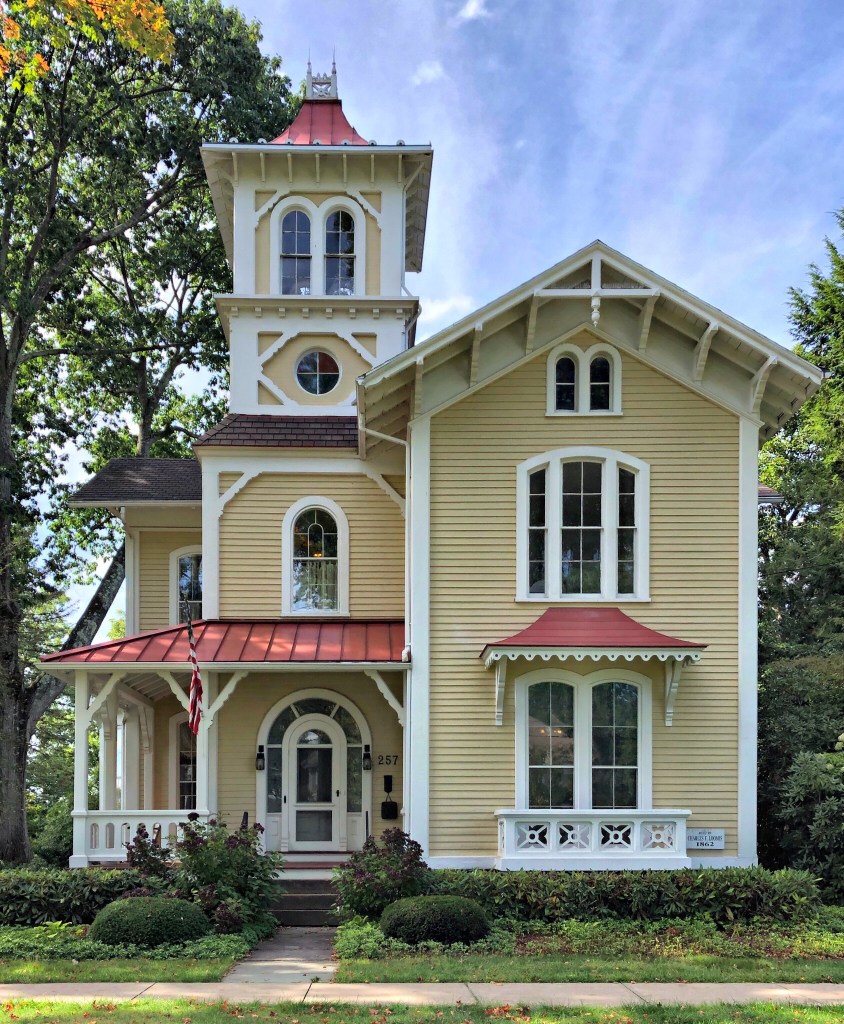
Charles Loomis House // 1862

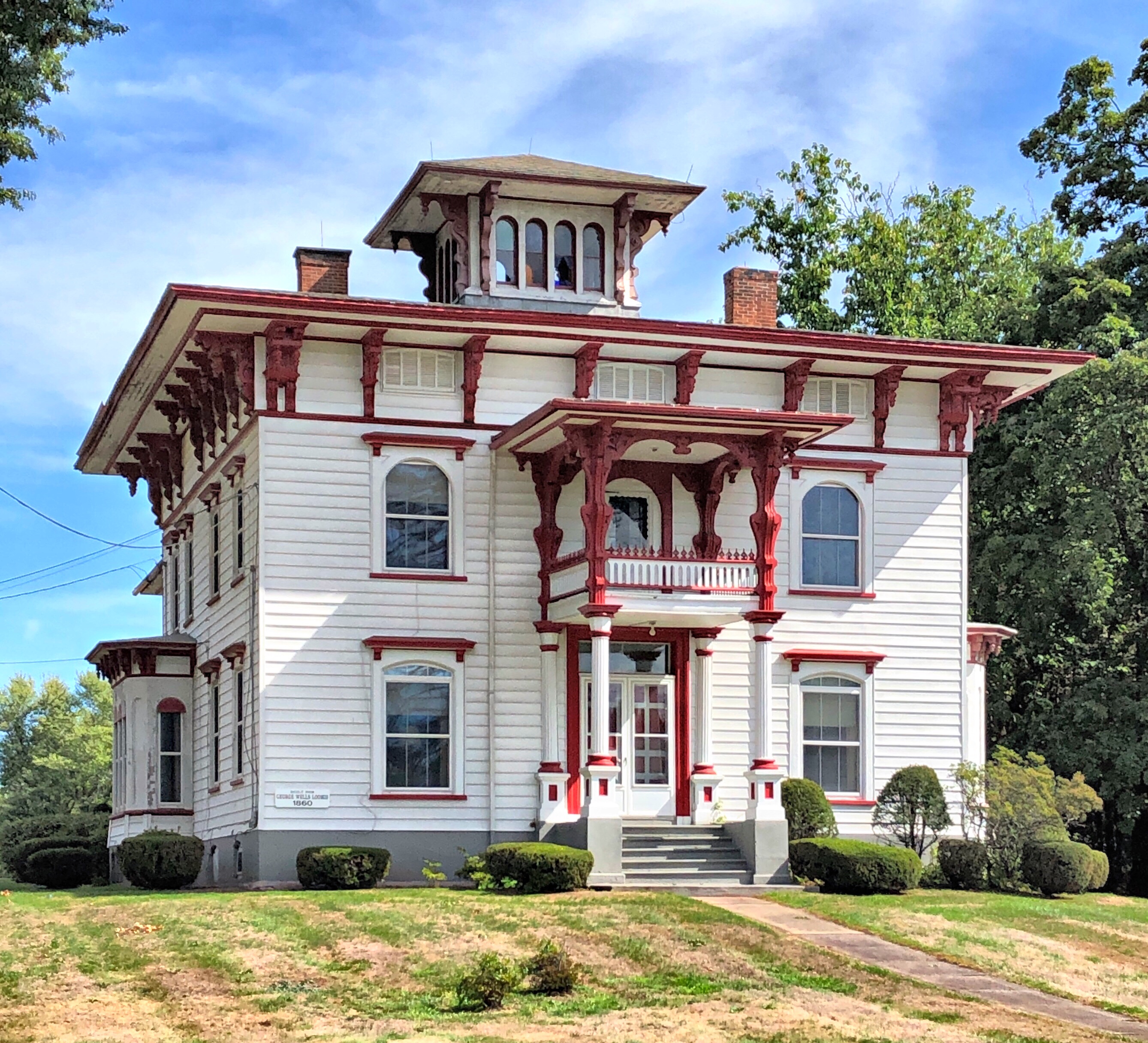
This home was built for Charles Loomis of the Loomis Family, who made their fortune in the tobacco farming and rolling industry in Suffield, Connecticut. Charles F. Loomis used his tobacco money to have this asymmetrical Italianate Villa constructed in 1862. The home features a prominent three-story tower capped with iron cresting, broad overhanging eaves with brackets and some stickwork, and a gorgeous door with arched transom and sidelights. There are almost too many architectural details to list. What is your favorite?

Bryon Loomis House // c.1850

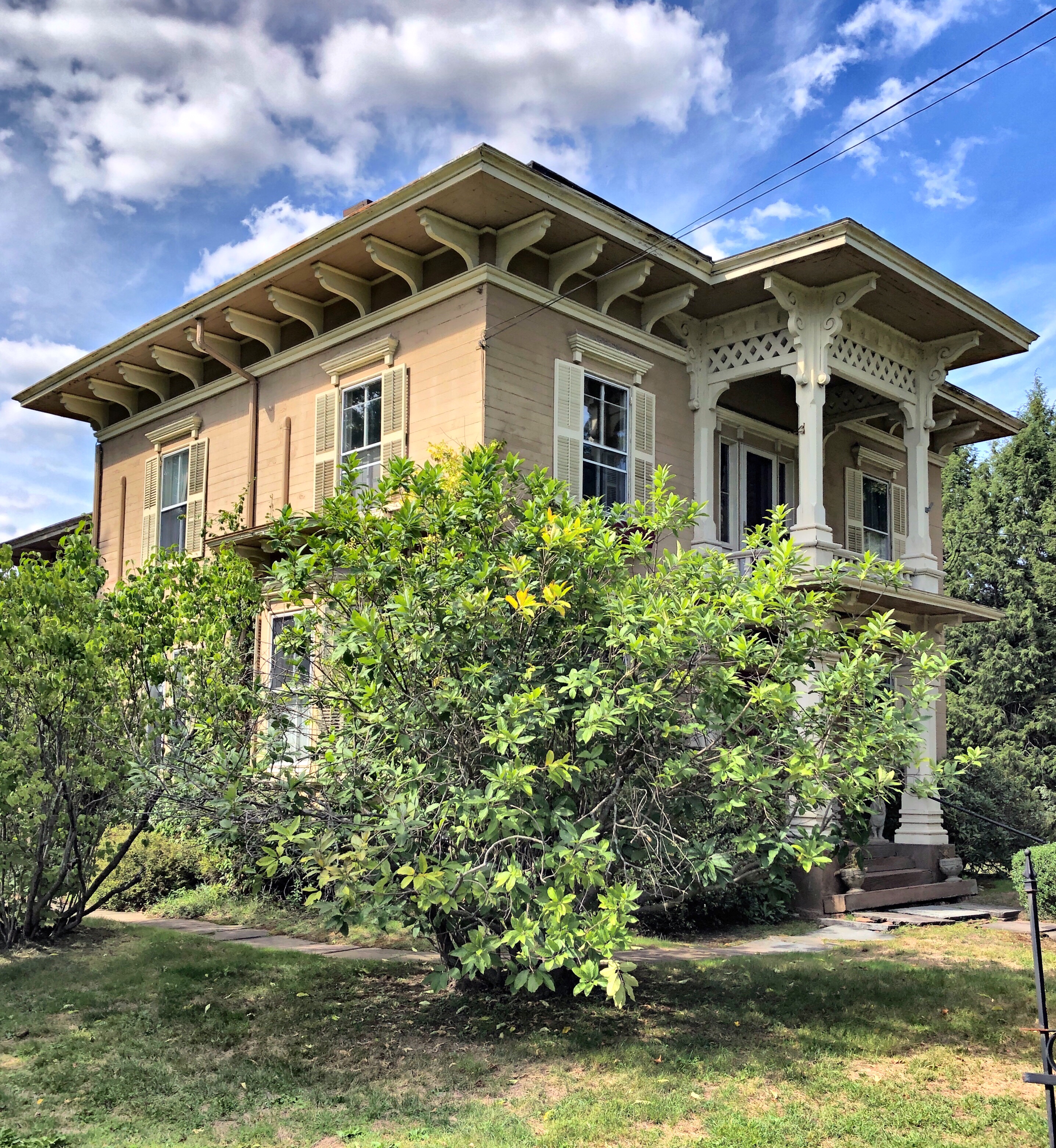
This Italianate mansion was built around 1850 for Byron Loomis (1831-1896) possibly as a gift from his father Neland. Neland Loomis was the brother of John Loomis, and was part of the wealthy tobacco farming family who later packaged, rolled, and shipped tobacco from Suffield all over the country. The home is a large Italianate mansion is in the symmetrical form and covered with flush board siding. The low sloped roof with broad overhanging eaves is topped with a large belvedere. The home is somewhat difficult to photograph due to large bushes in front.

Dr. Aretus Rising House // 1854

Dr. Aretus Rising was born in Suffield, CT in 1801, part of one of the oldest families in town who settled here. His father was a farmer of modest means who could not afford the ability to let his eight children attend school routinely as he needed help on the family farm. He eventually moved to Western MA where he graduated the Berkshire Medical School in 1826, soon after opening a practice in Florida, NY before moving back to Massachusetts. He operated a doctors office in Suffield starting in 1845, running it until 1871, stopping due to poor health and failing sight. He lived most of his later years in this modest Italianate home. The house features broad overhanging eaves and a porch supported by stunning lattice columns.

George Loomis House // 1860

This large Italianate mansion on Main Street in Suffield was built in 1860 by John Wells Loomis for his son, George. George ran a cigar shop in a separate building on the lot, selling rolled cigars that his family harvested and rolled. The mansion features a belvedere atop the low sloped hip roof with broad overhanging eaves. John Loomis’ home is a couple lots away.