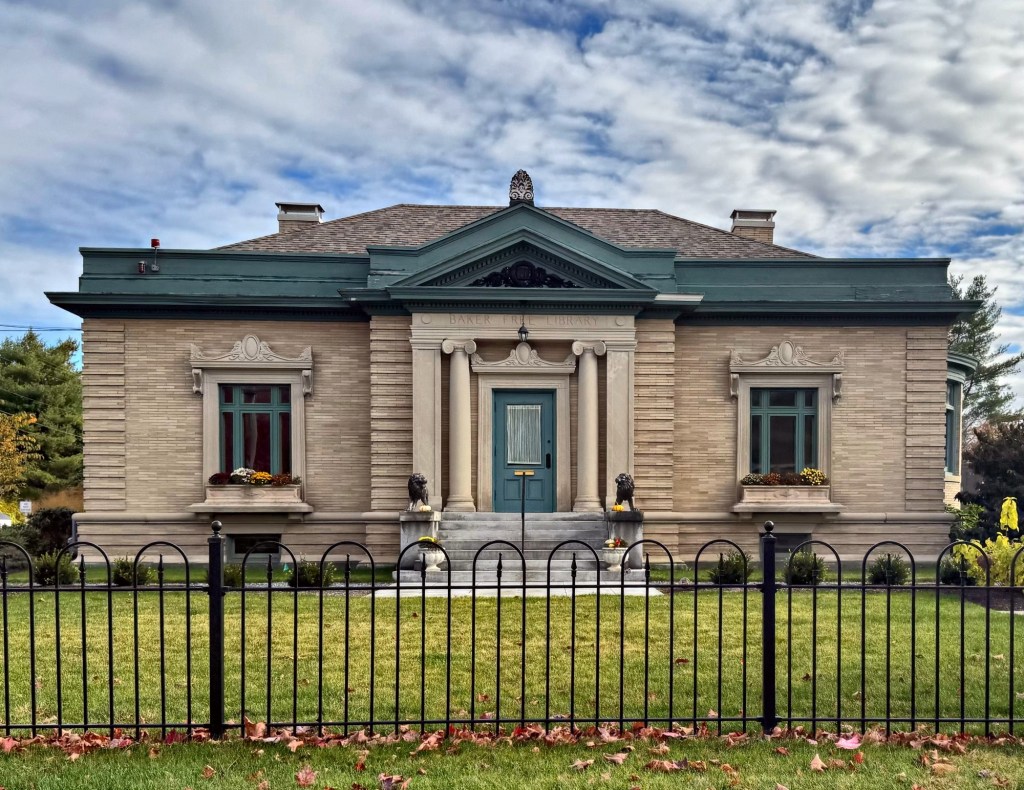
In 1912, Congressman Henry M. Baker, cousin of Mary Baker Eddy, the founder of the Church of Christ, Scientist, left in his will, $10,000 and the land next to his family home to the Town of Bow for the creation of a public library for his hometown. Architect, William McLean formerly of the firm, McLean and Wright, who specialized in library designs of the early 20th century, was selected to furnish plans for Bow’s new library, which employs a sort of Classical Revival/Beaux Arts design, similar to many Carnegie libraries of the time. As the town grew, the library has been expanded.
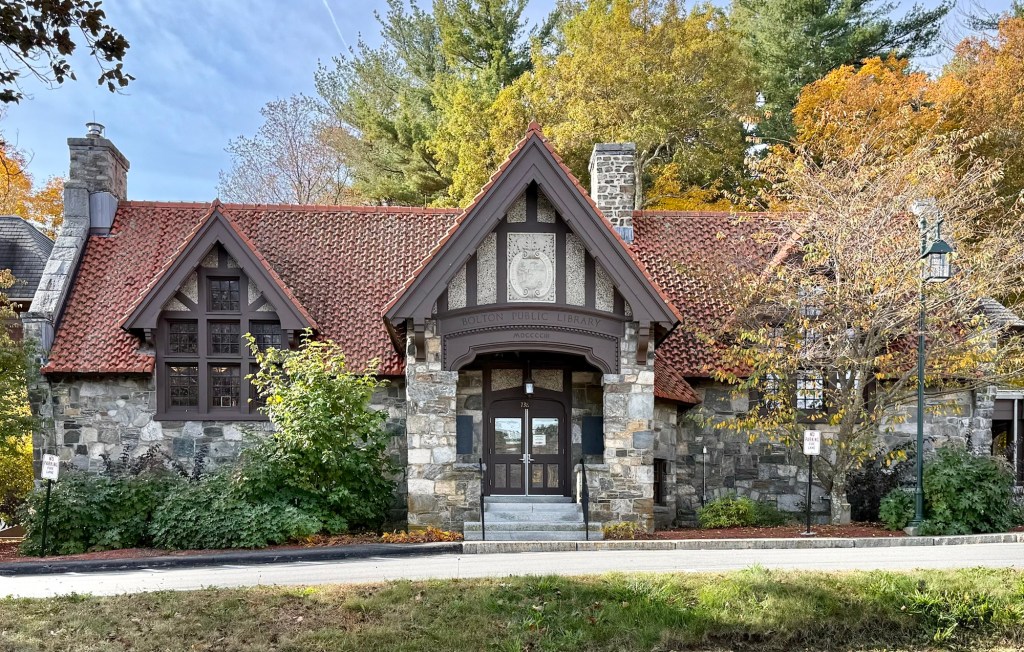
The Bolton Public Library was established in 1859, when the town’s library collection was housed on a few shelves in the Selectmen’s room at the Town Hall. In the following decades it became clear to the community that a purpose-built library building should be constructed in town to house the growing collections there. At the time when wealthy benefactors donated funds for public libraries in towns and cities across New England, sisters Emma and Anna Whitney gifted their hometown of Bolton, $10,000 to build a dedicated library building in memory of their father, Captain Joseph Whitney in 1901. Completed in 1903, the Bolton Public Library was designed by the architectural firm Stone, Carpenter & Willson and built of local Bolton fieldstone in the Tudor Revival style. Of particular architectural merit is the red tile roof and three gabled bays with carved stucco and woodwork within half-timbered frames. The library was added onto in 2010 from plans by Lerner Ladds & Bartels Architects, who replicated key materials and forms so the new wing feels coherent with the original yet clearly differentiated.
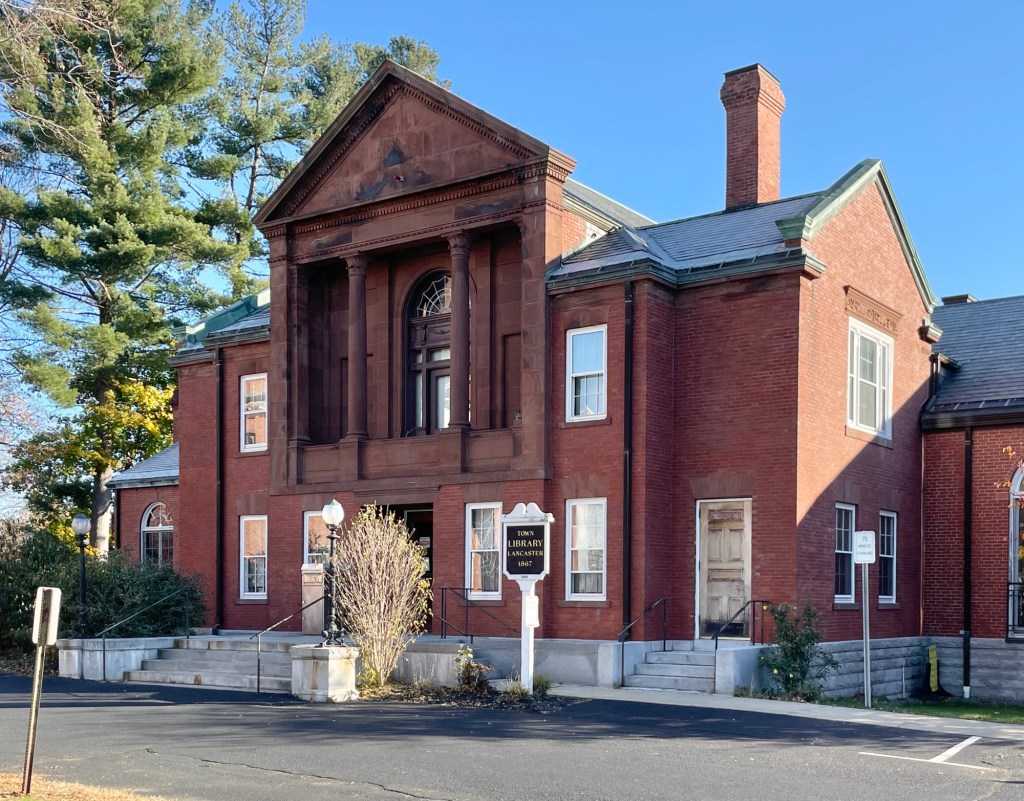
One of the four stately brick buildings framing the Lancaster Town Common in Lancaster, Massachusetts, is this brick and brownstone building, the historic town library. The story of the town’s first purpose-built library building began in 1866, when wealthy resident, Nathaniel Thayer offered $5,000 to the town for the erection of a new library in his hometown. Quickly, a committee of residents, led by Mr. Thayer, worked to acquire land from the First Church of Christ in Lancaster and hire architects Ryder & Harris of Boston to furnish plans for the new building, which was set to be a library and Memorial Hall dedicated to the 39 Lancaster men who died fighting in the Civil War. Nathaniel Thayer ultimately donated two-thirds of the final cost of the building, believed to be nearly $30,000, in addition to his already established $5,000 for books. The building was updated later with the addition of a children’s room in 1929, a gift of Mrs. Bayard Thayer in memory of her son, another Nathaniel Thayer. The Classical/Renaissance Revival style building stands out for its unique central brownstone pedimented bay with engaged columns and balcony over the main entrance.
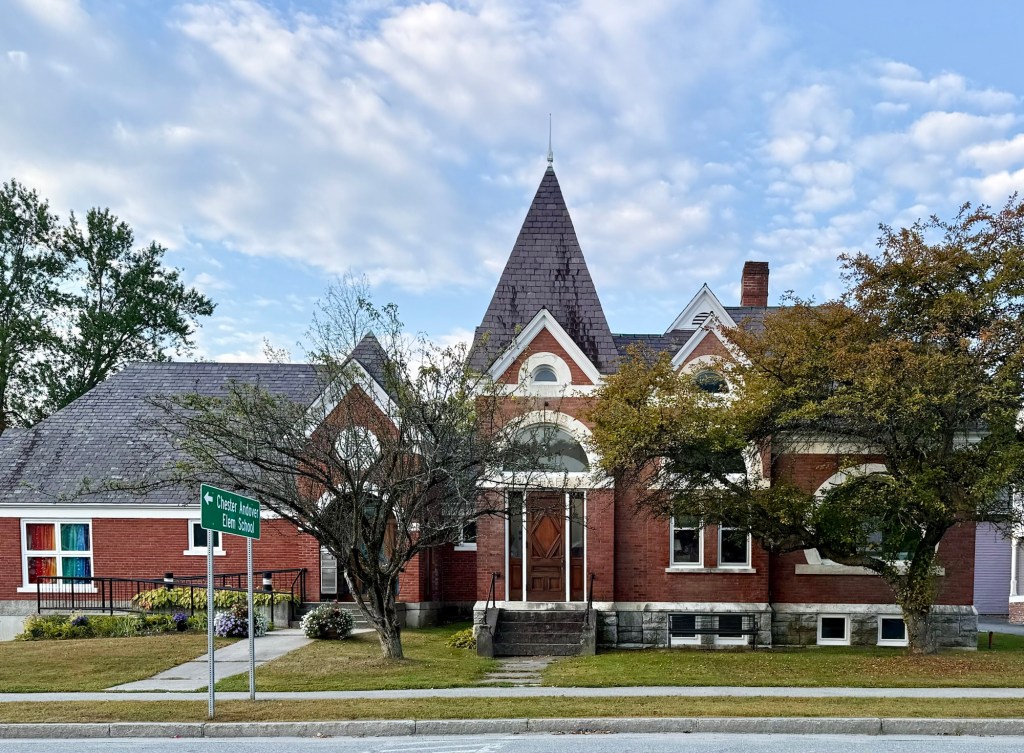
The Whiting Library in Chester, Vermont, was designed by architect George H. Guernsey, and is said to be the only building in the village designed by a regionally significant architect. For the design, Guernsey created an eclectic library blending Romanesque and Queen Anne influences that strikingly enhance the library’s relatively modest physical stature. The building was named to honor Chester physician, Laurin G. Whiting and his wife, Abigail, who donated funds for the land and building. The polychromatic brick and granite building features unique gables, corner tower, and arched openings, which were carried over to a lesser scale into an addition a few decades ago.
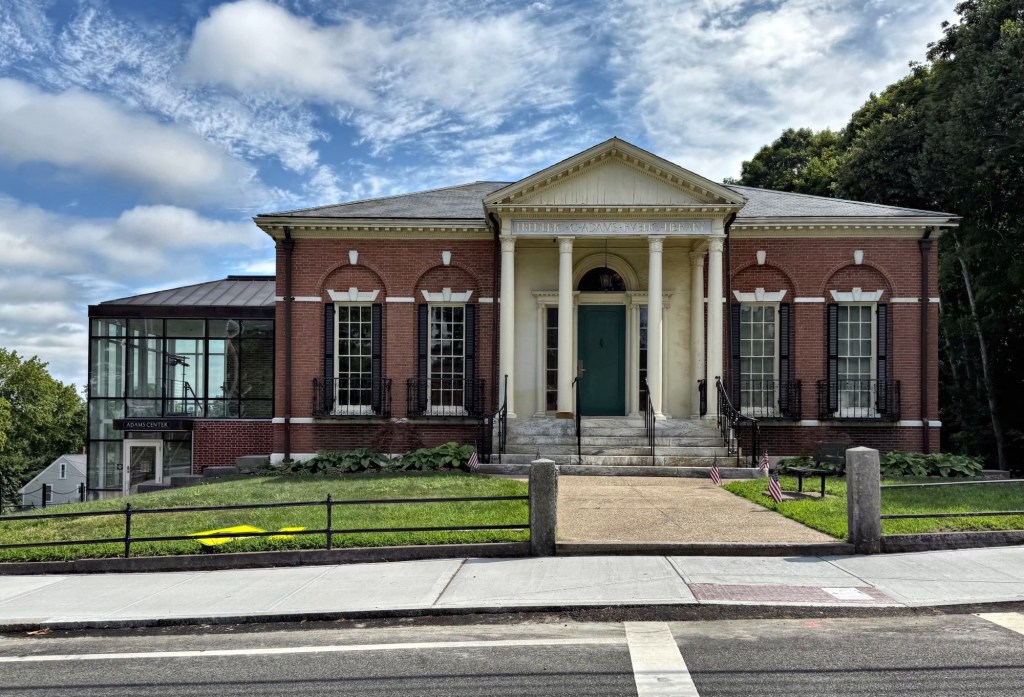
Built in 1898 in the heart of Kingston’s village center, the Frederic C. Adams Library was designed by renowned architect Joseph Everett Chandler and is one of the finest Colonial Revival style libraries in New England. Chandler, famed for his dedication to historic forms, created a one-and-a-half-story masonry gem, complete with a gabled roof, dentilled cornice, and a grand four-column Corinthian portico at the entry. The building’s story began with a bequest from Frederic C. Adams, a Kingston native whose $5,000 gift in 1874 helped break ground on a dedicated library. Its elegant Colonial Revival look recessed panel windows, stone keystones, and symbolic half-round arches, echoes America’s early architectural traditions with a refined late‑19th‑century flourish. The library was eventually outgrown, and relocated across the street, to a contemporary building. After an award‑winning restoration, the building reopened in 2012 as the Adams Center, now housing Kingston’s Local History Collections in a climate‑controlled room and hosting community events upstairs. The Contemporary addition, paired with the restoration work all by Spencer Preservation Group, blends old with new in a pleasing way.
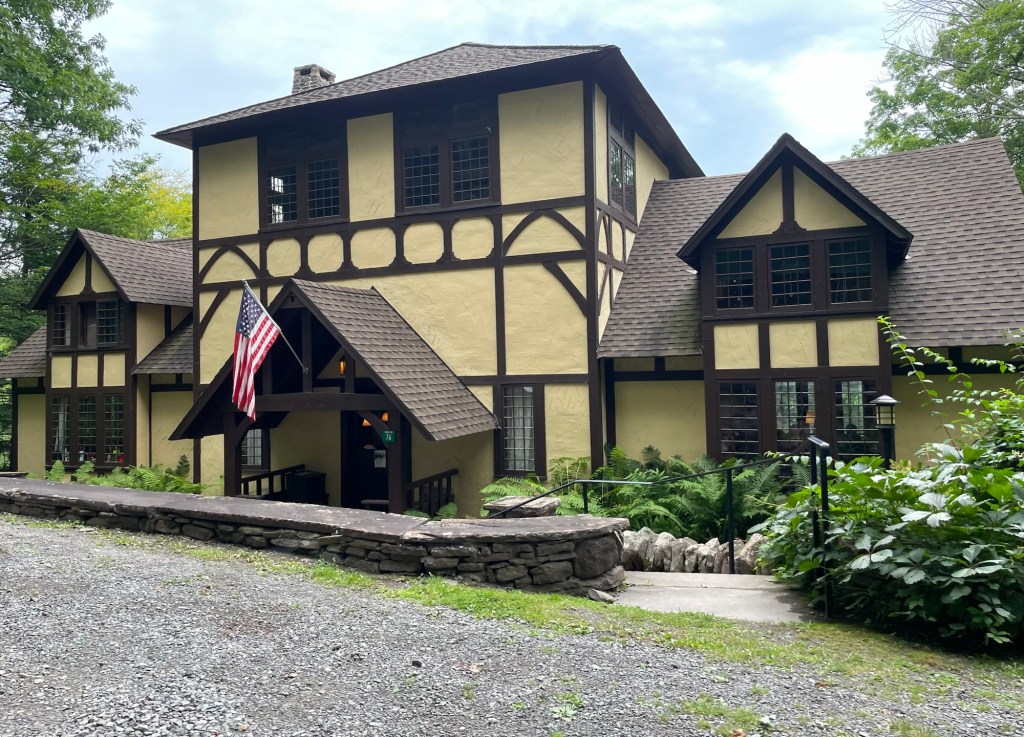
Built in 1906, the Library at the Onteora Park summer colony in Hunter, New York, is one of the many architectural treasures in the development. Designed by George A. Reid, the Canadian artist, architect, and summer resident of Onteora Park, the Tudor-style Arts and Crafts building was constructed in 1906 and opened to a collection of over 1,500 books and a full-time librarian during the summer season. Built of wood-frame construction with stucco exterior finish and adorned by half-timbering, the building has been lovingly maintained and preserved by members of the community for over 120 years.
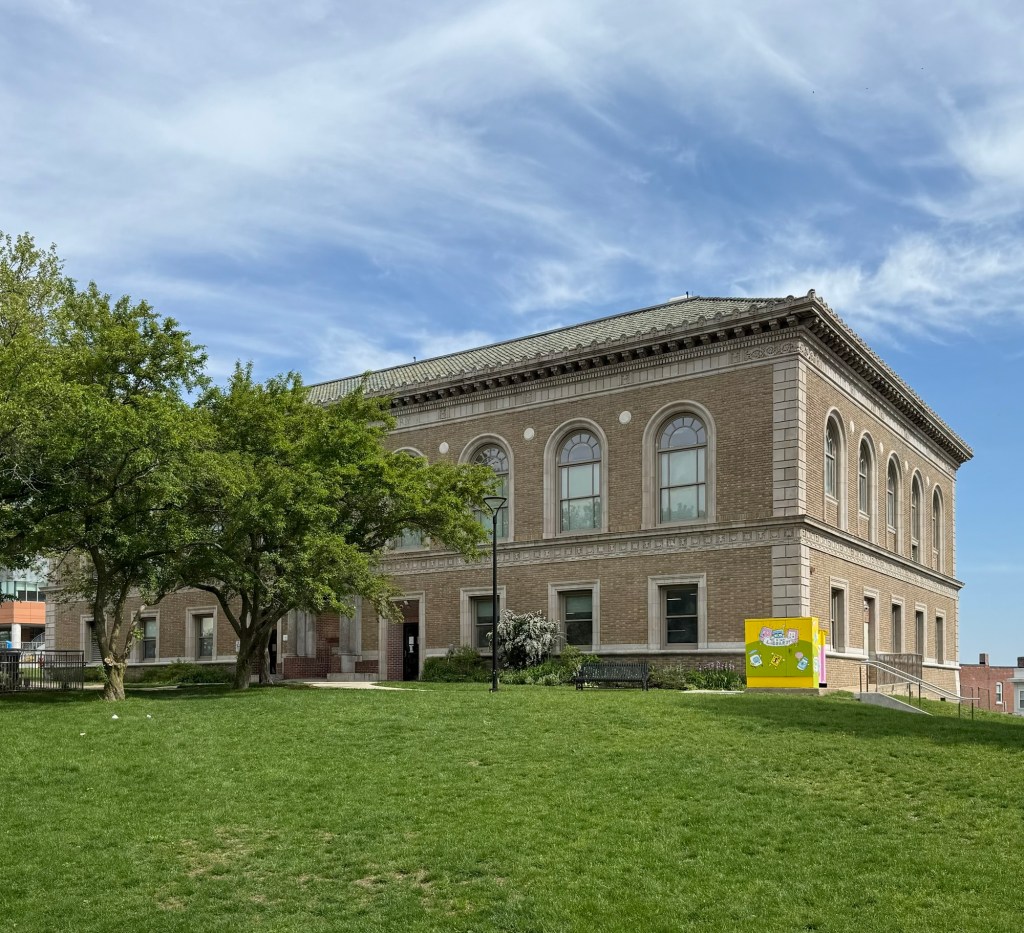
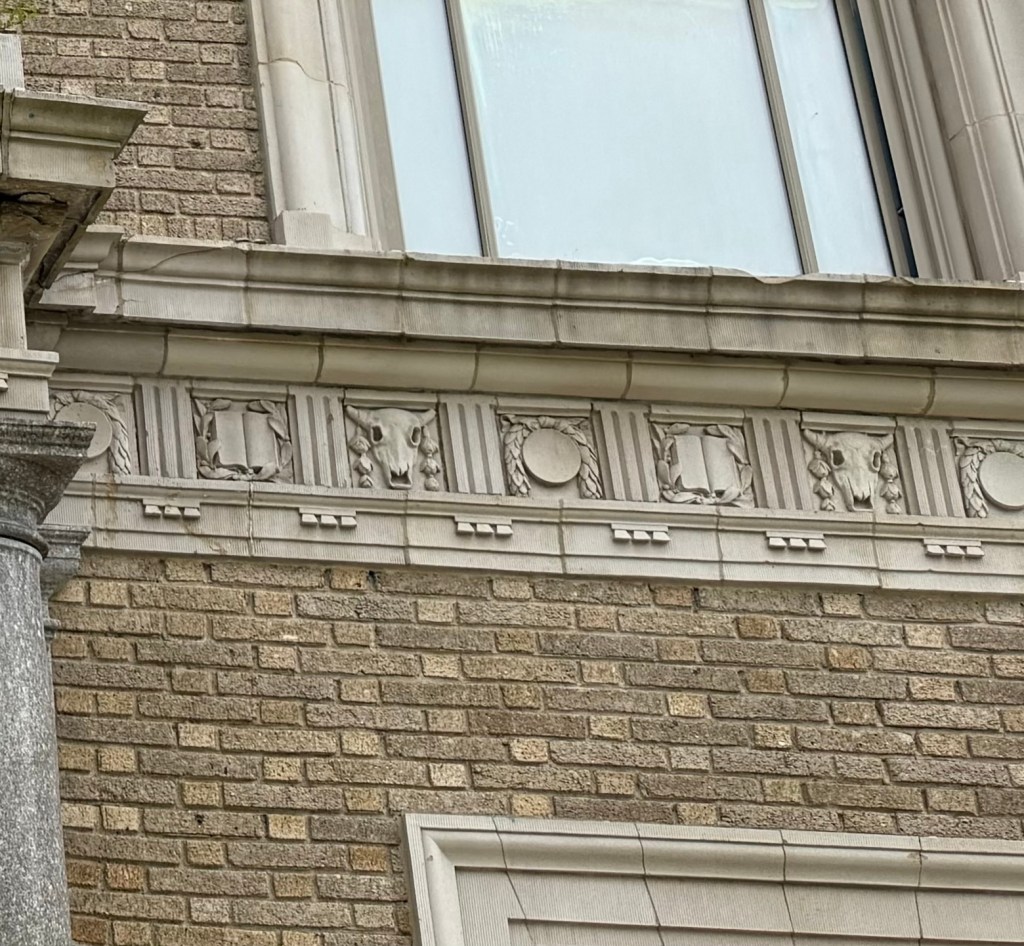
The Central Library of Somerville, Massachusetts, is a landmark example of the Renaissance Revival architectural style for civic purposes and showcases the prosperity and growth of the city in the early 20th century. The building was the second library constructed on Central Hill, with the city’s first library built on west side of Central Hill, near City Hill, and was designed by local architect George F. Loring in the Romanesque style. By the early 20th century, the old library was becoming outgrown and planning began for a new, larger library. A site at the eastern edge of Central Hill Park was selected, and following a $123,000 gift from the Andrew Carnegie foundation for funding a new library, the new library became a reality. Architect Edward L. Tilton, was hired to furnish designs for the building. Tilton was likely selected as his experience with modern libraries was a highlight in his works. The two-story Italian Renaissance Revival style building is built of blonde brick with limestone and terra cotta trim. The building is capped by a shallow hipped roof of green tiles. A character-defining feature of the building is the large, second-story round arched windows along with the string course between floors, decorated by alternating wreath, book, and animal skull medallions.
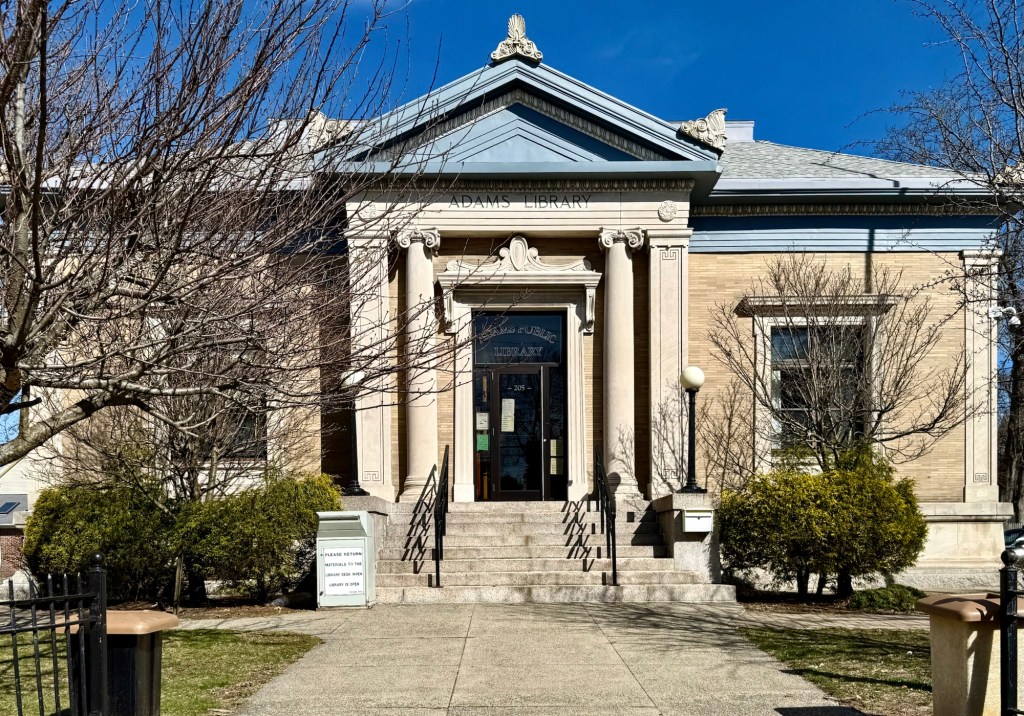
When Stephen L. Adams, a public-spirited citizen and a member of the school committee in Central Falls, Rhode Island, passed away in 1900, he left a bequest to provide for the erection and maintenance of a library building for his community. It would take years until a site in the center of town was acquired and contracts were written for designing and building the city’s first purpose-built library. Architect, William H. McLean of the firm McLean & Wright were hired to furnish plans, which is supposed to have been modified from a number of prototypes for small-town libraries supplied to set standards by the Carnegie Corporation in conjunction with its endowment of such facilities in cities and towns throughout the United States. While this is not a Carnegie Library, it does mimic many design elements found in similar libraries by the corporation. The Adams Library in Central Falls is Classical Revival in style and built of light brick with limestone trim with a symmetrical facade dominated by a columned, pedimented portico.
Located just north of and in stark contrast to the ornate Neo-Gothic 1932 Administration Building of Elms College, the school’s main library building showcases how much architecture styles changed in just 40 years. The college’s library was long in the main Administration building, but was outgrown in the latter half of the 20th century. The two-story steel and cast-concrete library building was built in 1973 with exterior details in red brick and concrete, a nod to the historic materials of the older campus buildings. Unapologetically Modern, and somewhat Brutalist, the building has complex geometry of sunken voids and solid sections, broken up by a horizontal band of windows with concrete fins to mitigate sunlight. The building was designed by Boston architects, Carroll & Greenfield, and recently celebrated its 50th anniversary.
Tucked to the side of the towering City Hall building on Market Square in Chicopee, Massachusetts, this long-vacant former public library is undergoing a major renovation to convert the building to a business incubator and community hub. The library was built in 1911 and was designed by the Springfield architectural firm of Kirkham & Parlett and is a great example of a Classical Revival style civic building with its strict symmetry, Ionic columned and pedimented entrance, and corner quoins. The original town library was organized as early as 1846 under the name “Cabot Institute” a subscription-based library. In 1853, the Cabot Institute donated its collection of nine hundred books to form a public library. The town voted that year to support a public library from tax dollars, making the Chicopee Public Library the first library funded by public funds in Western Massachusetts. The library was located in the City Hall building when it was completed in 1871, and was later moved out of the building to make space for the Board of Aldermen offices. In 1907, Mrs. Sarah Cooley Spaulding bequeathed $20,000 in her will towards a new library building as a memorial to her late husband, Justin Spaulding, and in May 1913, the Chicopee Library opened its first building built solely for the purpose of being a library. The library was expanded in the latter half of the 20th century and ultimately outgrew its space, with the City building a new library in 2004 on Front Street. This library closed at that time and had sat vacant until plans were unveiled to re-imagine this significant building as a community hub. I love to see old buildings repurposed rather than demolished!


 Buildings of New England