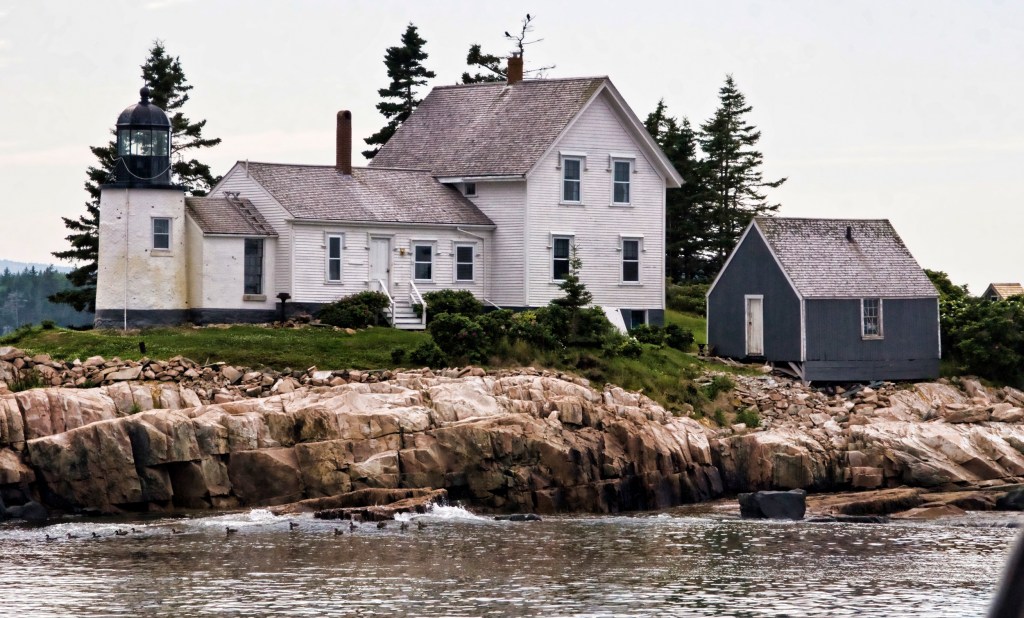
Winter Harbor Lighthouse // 1856

Built in 1857, Winter Harbor Light is one of Maine’s enchanting historic lighthouses dotting the rugged coastline. The lighthouse was built by the United States government to aid navigation for the local fishing fleet, an important piece of the local economy there. The light tower, built in 1856, is a round brick structure topped by an original octagonal lantern house with an iron walkway and railing around it. A brick single-story workroom projects from the tower. The keeper’s house is a two-story wood-frame structure, which was built in 1876 (along with the ell) to replace the original keeper’s house. The light was decommissioned in 1934 and sold into private hands, but in its seventy-six years of service, nine keepers and their families lived on the island. It remains a visual landmark on its small island in Mt. Desert Narrows on the drive along the Schoodic Peninsula in Acadia National Park (Winter Harbor side). What are your favorite lighthouses in Maine?

Hammond Hall // 1903

Winter Harbor, Maine, may just be my new favorite place in the state! The town is located just east of Mount Desert Island, south of Gouldsboro (of which it was a village within the town). In 1895, after the Grindstone Neck summer colony was developed, the town’s increased finances and outlook led them to incorporate as a separate town. And what does any new town need? A town hall! Construction of the hall was proposed in 1902 by Edward J. Hammond, owner of a local lumber business who made his fortune shipping and selling the Maine lumber in Boston. Hammond donated the building materials and building lot after a fire swept through Winter Harbor village. The town offices moved out of the building in 1958, and the main hall continued to be used as a school gymnasium until 1987. The town then sold the building to the Winter Harbor Historical Society. Lack of funding by the turn of the present century resulted in the building’s decline, and it was slated for demolition in 2002. It was rescued by Schoodic Arts For All, a cultural organization that brings a variety of events to the space, which now holds a long-term lease on the property. The building looks great today!

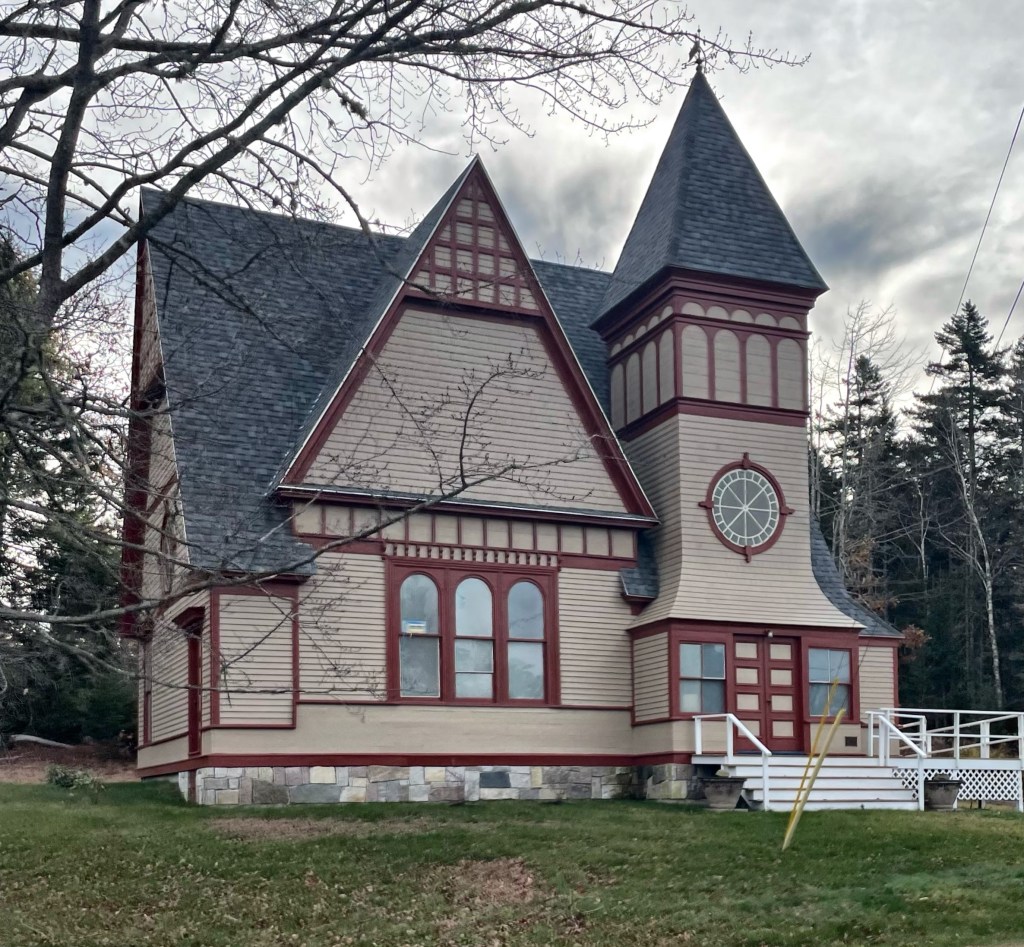
West Gouldsboro Union Church // 1888

In 1888, the West Gouldsboro Union Church Society had enough funds to build this Queen Anne style church, built completely from member donations. By November 1888, the exterior was completed, but so much money was spent on the detailing on the exterior, no funds were available for the exterior painting and interior spaces. In 1891, the new church was finally dedicated. The West Gouldsboro Union Church is a stunning example of a church in the Queen Anne style with varied siding forms, asymmetrical plan, and square tower capped by a pyramidal roof. My favorite part about this building is its historically appropriate paint colors. For a long time, the church was fully painted a bright white, but now its details really shine!

Gouldsboro Townhouse // 1884

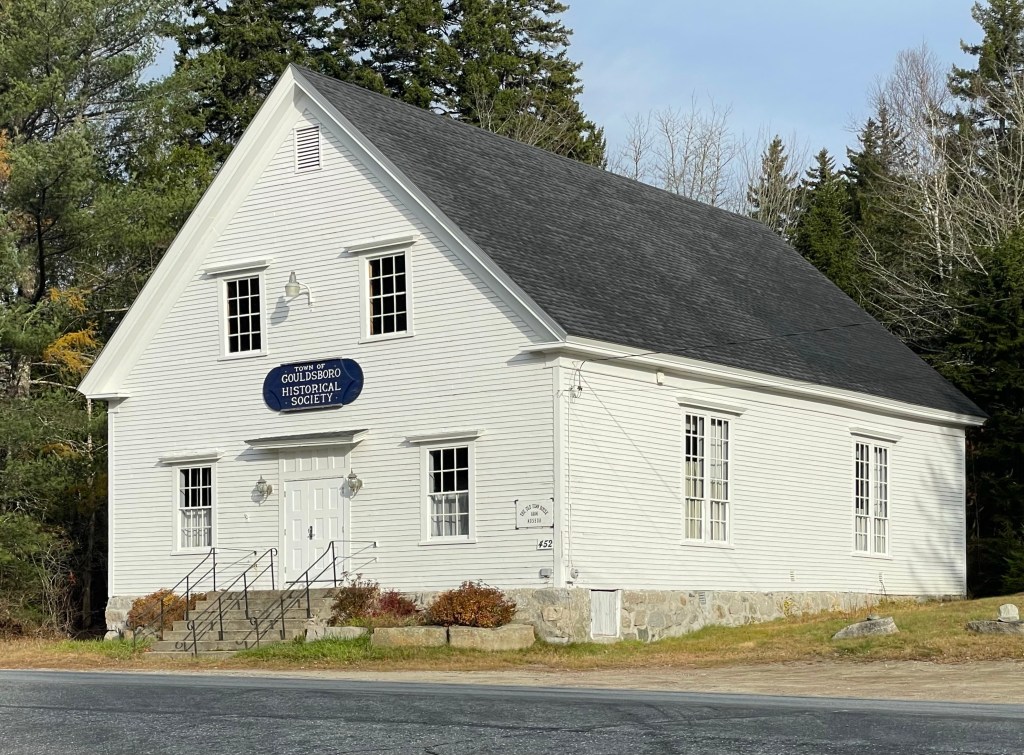
Welcome to Gouldsboro, Maine! The town is a charming community made up of many small fishing villages and neighborhoods dotting the rugged Maine coastline. Land in what was then part of Massachusetts, was given to Colonel Nathan Jones, Francis Shaw and Robert Gould in 1764 by the General Court of the Commonwealth of Massachusetts. Francis Shaw and Robert Gould were both merchants from Boston. Francis Shaw had worked hard to develop Gouldsboro, and reportedly died broke because of it, and his son Robert Gould Shaw returned to his parents’ native Boston. Development in the area was slow and never really took-off due to the distance from Boston, but fishing, mills, and villages were built and remain to this day. Now, much of the area is home to summer residents flocking to the area from urban areas. This building was Gouldsboro’s second townhouse. It was constructed in 1884, soon after the first townhouse burned a year prior. The structure was used for town meetings and elections until 1983. It is now owned by the Gouldsboro Historical Society. It is a late, vernacular example of a Greek Revival townhouse.

East Blue Hill Post Office // c.1884

Before the days of USPS trucks delivering mail to your door, mail was delivered to local post offices for pick-up daily. Due to this, many villages had their own post offices to service local communities better due to ease of access by residents. A post office first arrived in East Blue Hill Village, Maine in 1873, likely due to the distance traveled to the central village for mail. By 1884, George Long built this vernacular structure as the village post office, which belonged to members of the Long family, who also served as postmasters, until 1997. The post office is distinct in the state as the only known example of a purpose-built post office facility that is not owned by the United States Postal Service, and that was not built or adapted to its standards. The building sold out of the Long family in 1997, when it was purchased by the East Blue Hill Village Improvement Association, who have preserved it ever-since!

Jonathan Fisher House // 1796

Jonathan Fisher (1768-1847) was born in New Braintree, Massachusetts, and educated at Harvard College Divinity School. In the record of Plantation No. 5, (now Blue Hill), the selectmen voted to invite the Rev. Mr. Fisher to preach for four months in the summer of 1795. After his four month stint, the committee approached him, asking if he would stay and make the town his home, he accepted. He first built a primitive house which was outgrown by the time he had three children growing up in it! He had the current home built in 1814, attaching the original home as a rear ell (addition). Reverend Fisher died in 1847. His wife Dolly, died in 1853. At the end of the nineteenth century, Jonathan Fisher’s grandchildren decided to renovate the house. In 1896, they tore down the original house of 1796 and replaced it with a two-story addition to their grandfather’s 1814, giving it the current configuration. When the Fisher grandchildren who had been living there left Blue Hill, a number of local citizens concerned for the future of the building made arrangements that eventually led to the transfer of ownership of the house to a local non-profit foundation, the Jonathan Fisher Memorial, and made it possible for the house to be opened to the public. The Fisher House is open for tours in the summer.

Holt House – Blue Hill Historical Society // 1815

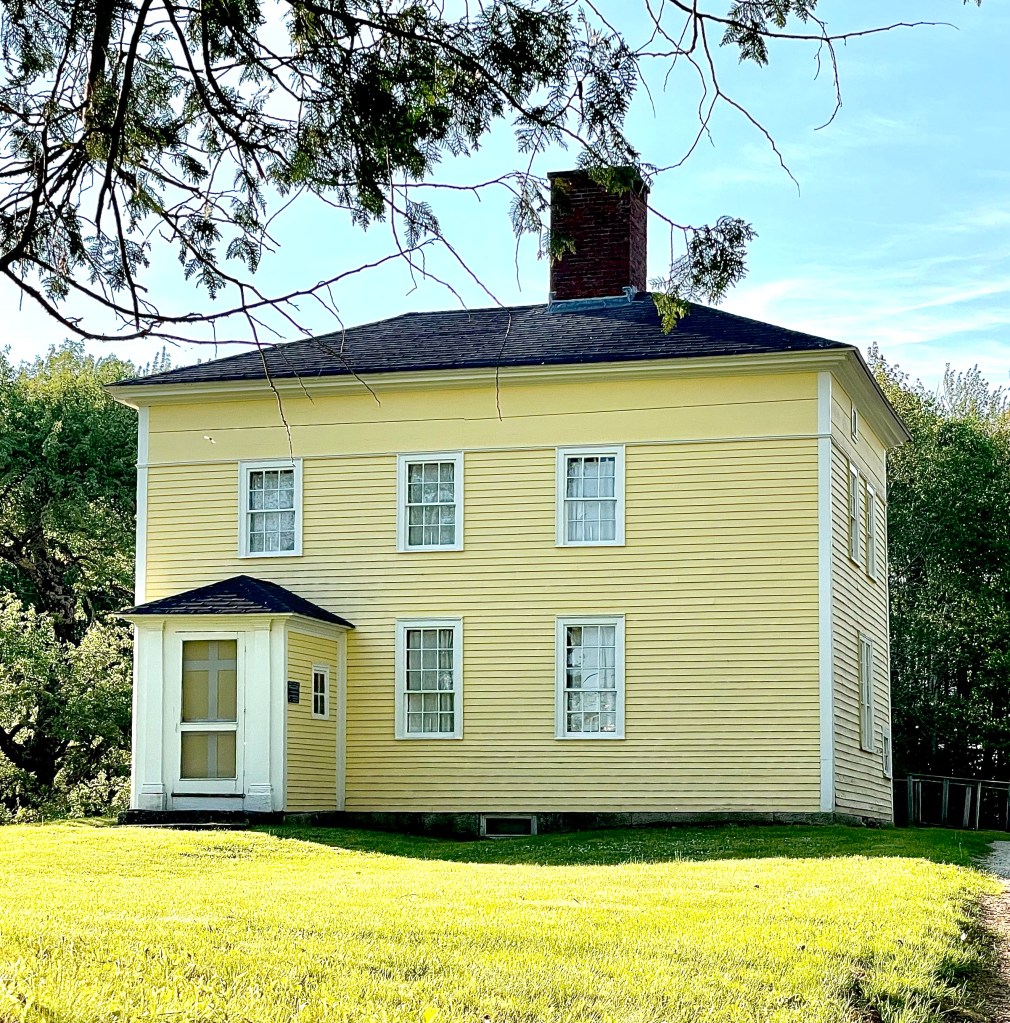
The Holt House in Blue Hill, Maine, was built in 1815 by Jeremiah Thorndike Holt, grandson of Nicholas Holt who brought Blue Hill’s fifth family from Andover, Massachusetts in 1765. Jeremiah was one of the first to locate at the head of the bay, in what is now the center of Blue Hill village. He was an influential businessman who kept a store at what became known as the Pendleton House, engaged in shipping, and became the town’s second postmaster. After Jeremiah died in 1832, his widow turned the house into the town’s only inn and tavern. In 1851 their son, Thomas Jefferson Napoleon Bonaparte Holt (what a name!) and his family occupied the house. It stayed in the family for over a hundred years until the Blue Hill Historical Society bought the Holt House and made it their headquarters in 1970. The Holt House remains as a well-preserved Federal style home in this part of Maine.

Thomas Lord House // 1847

This 1847 Greek Revival home sits in Blue Hill Village, Maine and it was built by and for local architect and builder Thomas Lord (1805–1880), who is credited with bringing the classical motifs seen in Greek architecture to Blue Hill. Mr. Lord had little formal education, spending much of his youth grinding bark at Ellsworth, sailing and working on his uncle’s farm. When he was 22, he apprenticed himself to a carpenter and began working for George Stevens in the shipbuilding yards of Blue Hill. From 1828 to 1880, Thomas Lord worked on 83 vessels, 84 dwellings, 12 school buildings, 14 meeting houses, 10 stern moldings and figureheads, 250 coffins and many barns and sheds. Lord is especially known in the area for his churches, including remodeling the First Baptist Church of Blue Hill in 1856. Just before building the house, Thomas married Matilda Carlton (1811-1898) and the couple had three children while living in the home. When Thomas died in 1880, Thomas Lord’s elder son, Roscoe Granville Lord took up residence here, where the 1900 census lists him as a painter. The home remains extremely well preserved and is one of the finer homes in the village of Blue Hill.

Pendleton House // 1826

Large commercial blocks like this can really transport you back a century or more! The Pendleton House in Blue Hill, Maine was built in 1826 by Jonah and Jeremiah Holt. The brothers were born in Beverly, Massachusetts and their family settled in Blue Hill, likely to work in the shipbuilding industry. Originally called the Brick Block, the building was a storefront for the Holts. In the 1870s, the building had fallen into disrepair, and was seized from its owner, Frederick Holt (Jeremiah’s son), by the Blue Hill Academy, from whom Nathan Pendleton purchased the building. As an 1877 issue of The Ellsworth American stated: “Blue Hill needs a hotel. There have never been so many strangers and visitors. Five hundred men are working in the quarries.” From the massive demand for lodging in town, tied to industry, Pendleton opened the building as a hotel in 1878, possibly adding the mansard roof at that time. The building became known as the Pendleton House for a number of years and was purchased by John M. Snow in 1888, who added porches to the building. Sadly, the porches were removed in the 20th century, but the old Pendleton House remains a fixture in Blue Hill and is home to small businesses with housing above.

George Stevens House // 1814

George Stevens (1775-1852) was born in Andover, Massachusetts and settled in Blue Hill, Maine. He became a ship owner and merchant, making a name (and wealth) for himself in town and he showed an interest in education for the growing village. He erected this home in 1814 for his family, which seemingly employed Asher Benjamin’s house plans in the Federal style, popular builder’s guidebooks at the time. With his eyes towards education, George Stevens sat on the board of trustees for the Blue Hill Academy which flourished under the guardianship of the local Congregational Church and trustee president Rev. Jonathan Fisher. He chafed under Congregationalist dominance and wished for a non-denominational local academy. In 1832, he offered to give a thousand dollars and a piece of land to the Blue Hill Academy. His offer included this provision, “The institution shall be put on a liberal scale that all denominations shall have equal rights and privileges.” The Academy trustees said, “no.” As a result, George Stevens provided in his will that after his death and that of his wife this homestead, 150-acres of land, and a large portion of his personal property should be used to establish an academy, an “alternative” academy. In 1891 the Maine State Legislature incorporated George Stevens Academy, leading the “Old Academy” to cooperate with the
new institution, merging their boards and finally becoming a non-denominational academy. The school continues as a highly respected academic institution and retains the name of its founder, George Stevens.

Blue Hill Academy Building // 1833

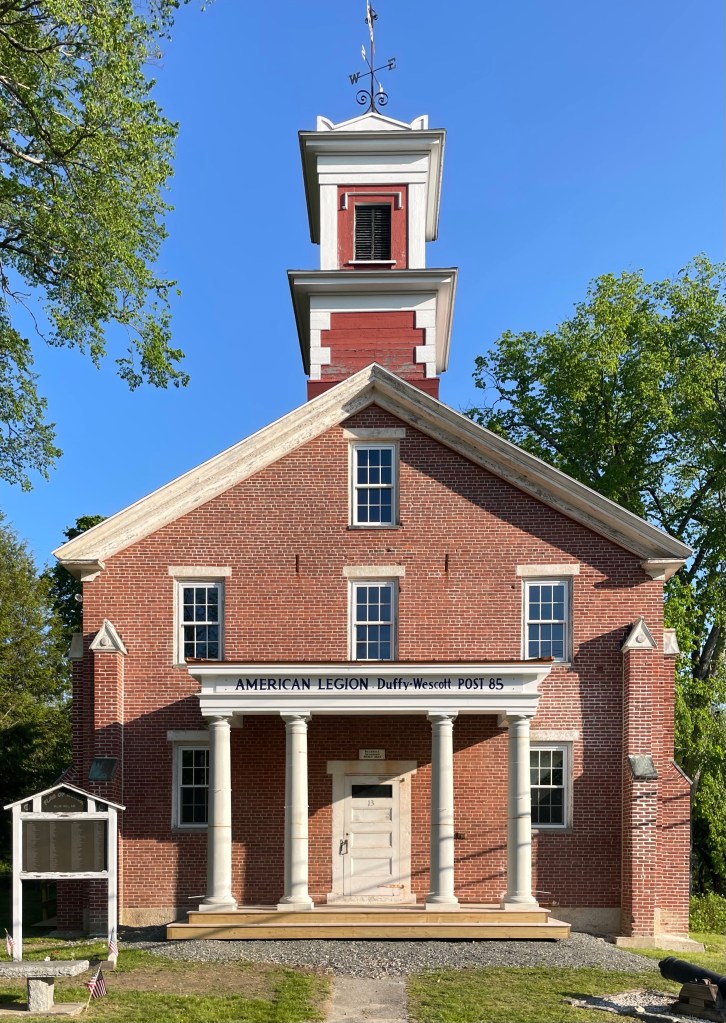
This gorgeous brick building sits in Blue Hill, Maine and is an excellent example of a Greek Revival style institutional building found on the coast of that great state. The structure was built in 1833 and originally housed the Blue Hill Academy, a school which provided courses in Greek, Latin and (due to the town’s maritime economy), navigation. The original building was constructed decades earlier when the school was founded, but was quickly outgrown. When the George Steven Academy opened its doors a couple blocks away in 1898, the two institutions were merged. The American Legion eventually purchased this building, renting it to the Blue Hill Grammar School. Renovations in 1909 were designed by Blue Hill native, George A. Clough which likely included the portico and elaborate belfry. After years of deferred maintenance on the building by dwindling membership of the local American Legion post, the building’s future was uncertain. Thankfully, the Duffy-Wescott Post 85 stood up and funded preservation and planning for the building and make emergency repairs.

Judah Chase House // c.1840

In the early 19th century, the town of Blue Hill, Maine, thrived as a shipbuilding and maritime trade center in New England. One of the town’s sea captains, Judah Chase, had this Greek Revival home built for his new family in about 1840. Just before this, Captain Chase had a brig built in town in 1834, he named it the Thomas M. Lyons. As owner and captain, Judah was hired to haul a shipment from Havre, France to the United States. On the route, gales battered the ship of the coast of the Isle of Jersey, and the ship capsized, the crew survived, but this event may have delayed the building of his home in Blue Hill!

Blue Hill Town Hall // 1895

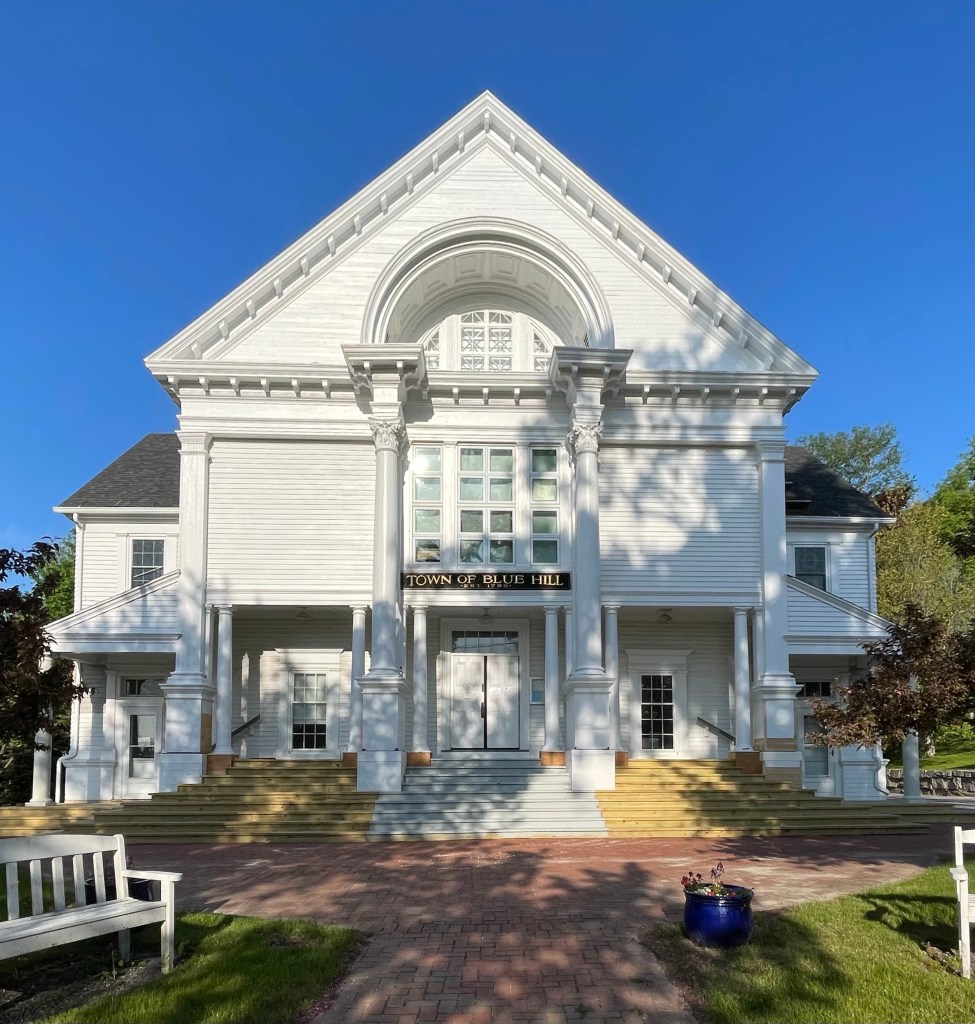
Blue Hill is a charming coastal town in Hancock County, Maine that retains so much of the charm that has been lost in many other coastal New England villages. Originally settled by the Penobscot Tribe, the town as we know it was incorporated in 1789 under the name “Blue Hill”, named after the summit overlooking the region. The town thrived early as a lumber and wood shingle exporter, later shifting to shipbuilding. The town was also noted for the quality of its granite, some of which was used to build the Brooklyn Bridge, New York Stock Exchange Building, and the U.S. Custom House at Norfolk, Virginia. In 1876, local quarries employed 300 workers. The town’s wealthy summer residents likely sought a new Town Hall for Blue Hill, as in the 1890s funding was acquired to erect a new building. It came as no surprise that George Albert Clough, an architect born in Blue Hill would furnish the plans for the new town hall. George was the son of Asa Clough an early settler and shipbuilder in town. He moved to Boston to work as an architect and later became the City of Boston’s first “City Architect” designing municipal buildings. For the Blue Hill Town Hall, he designed it in the Colonial Revival style, which remains well-preserved to this day.

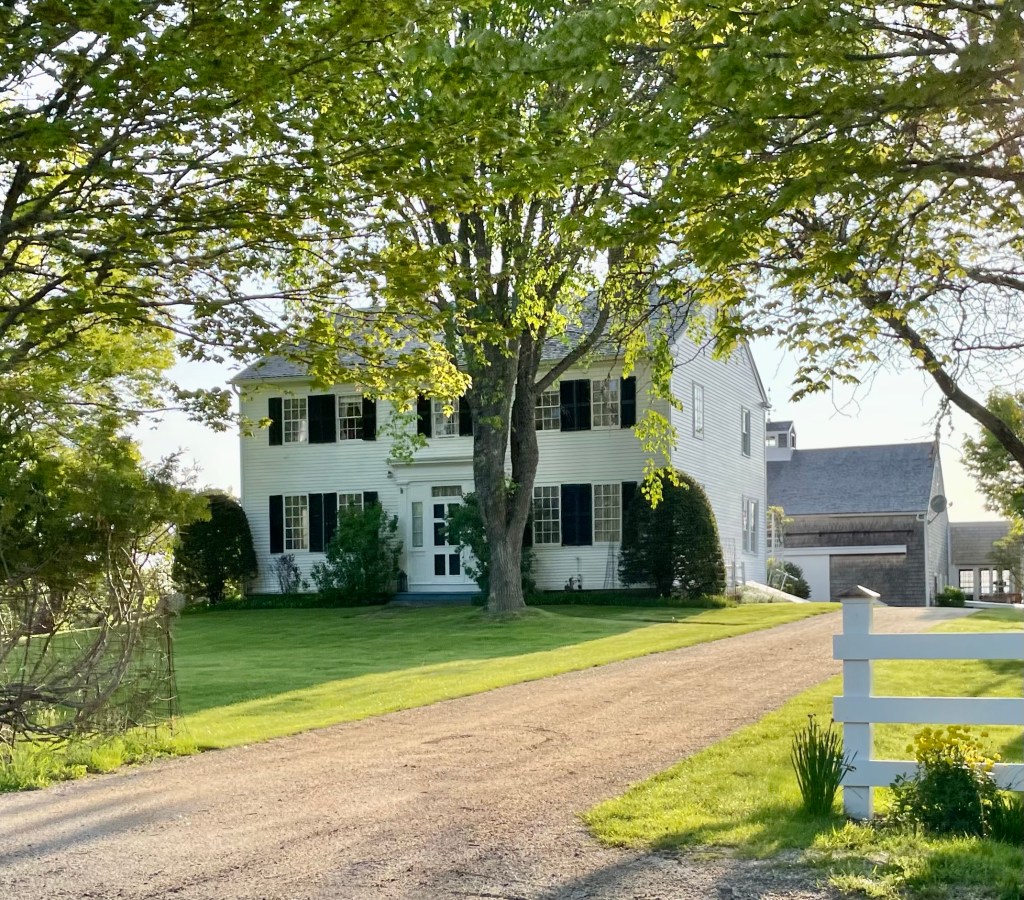
E. B. White House // 1795

The coast of Maine has long been a refuge for those looking for an easier way of life and access to natural splendor. One of the more well-known residents of Maine was author E.B. White, who lived on this farm in Maine for 48 years. The estate sits on 44-acres and was built in 1795 for William Holden by Captain Richard Allen, a local housewright. The property was purchased by E. B. White in 1933 as a summer residence, but it became a full-time home where he and his wife, New Yorker editor Katharine Angell, raised sheep, geese, chickens, pigs, even spiders all with a historic barn and tire swing. Sound familiar? It is from this house that he wrote the iconic children’s book, Charlotte’s Web (and Stuart Little) among others. White was a private person, and despite his internationally famous books, he did not advertise the location of his home while he was alive. In 1977, he convinced an interviewer to report that “he lives in ‘a New England coastal town’, somewhere between Nova Scotia and Cuba“. Katharine died in 1977, and E. B. in 1985. The property was inherited by their son, who summered there for years. The most recent owners, Robert and Mary Gallant of South Carolina, who have summered there for the past 30 years and preserved the house immaculately, selling it a few years ago.

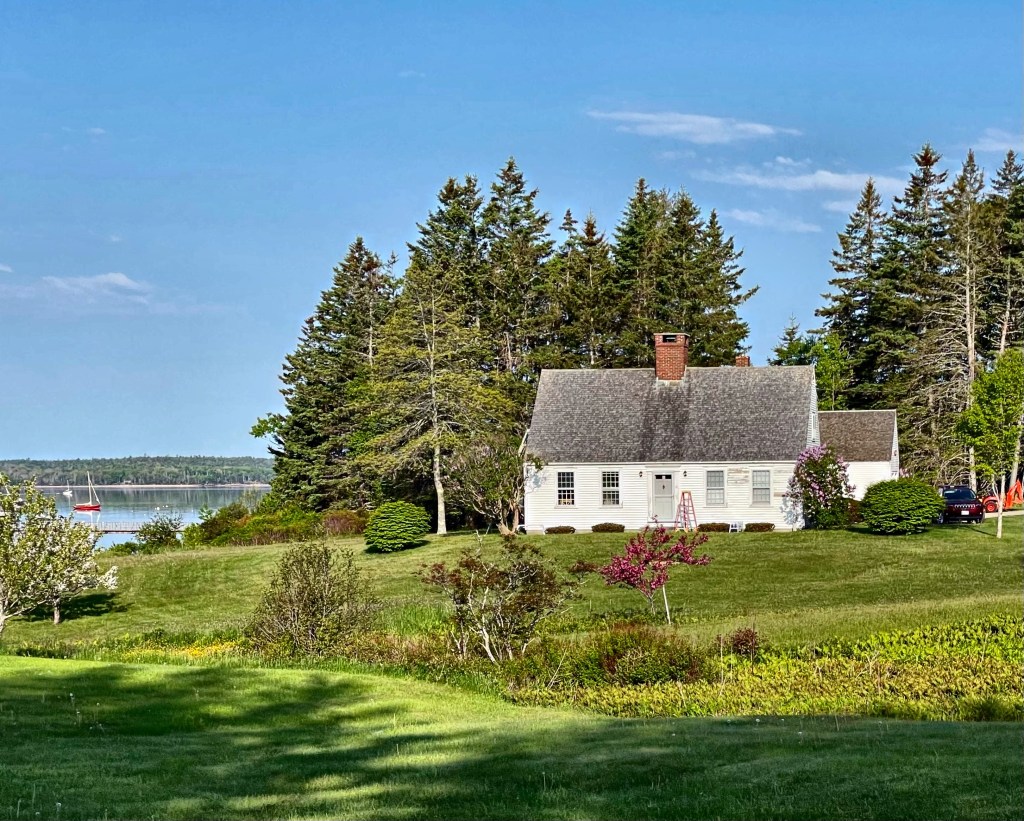
Whereaway // c.1840

In a town of 850 residents (2,800 in the summertime), Brooklin, Maine was an absolute treat to explore. The winding roads terminate at abrupt ends where the rocky Maine coast begins and hand-made wooden ships are docked in protected harbors. I stumbled upon this absolutely charming Greek Revival style Cape house with just steps to the ocean. The siting beyond a sweeping field and adjacent to the calm harbor presents the perfect example of what makes Maine so special. The house is a short term rental and named “Whereaway”. If only I was rich, but I can dream right??