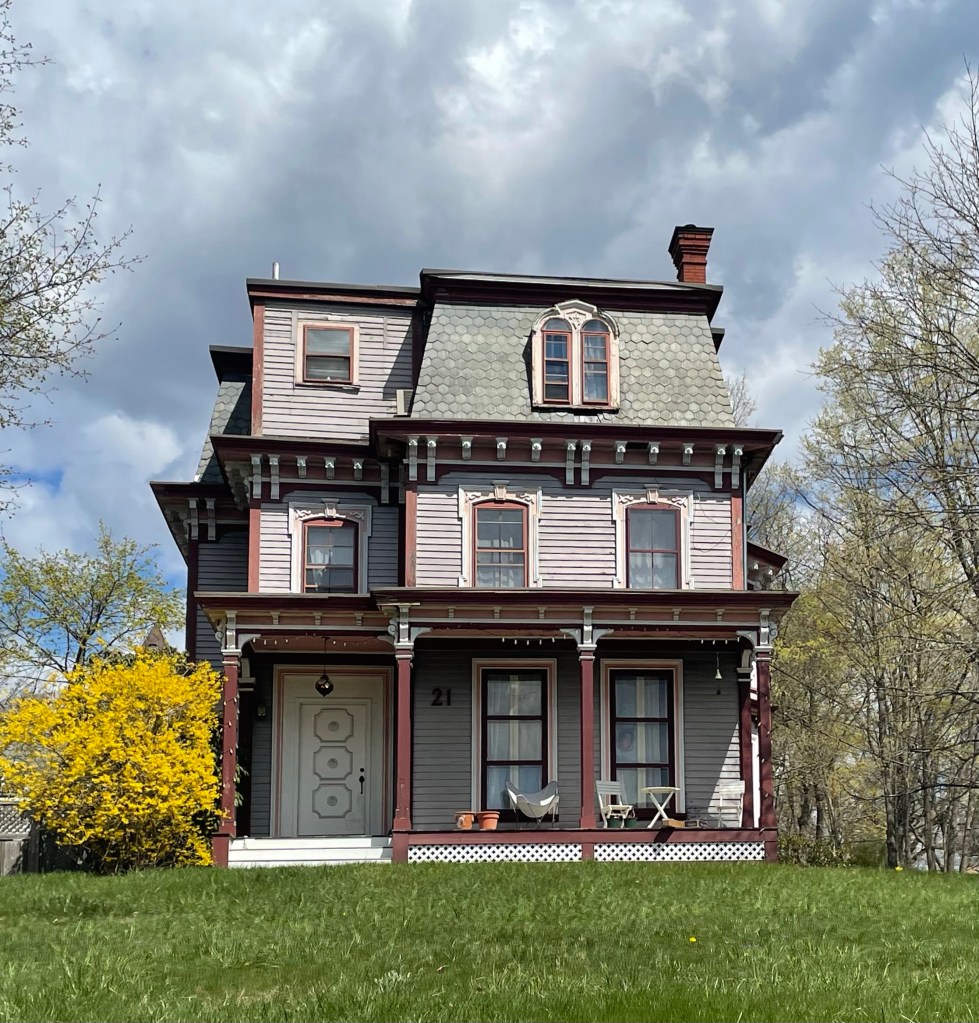
Captain Nathaniel Stone House // 1872

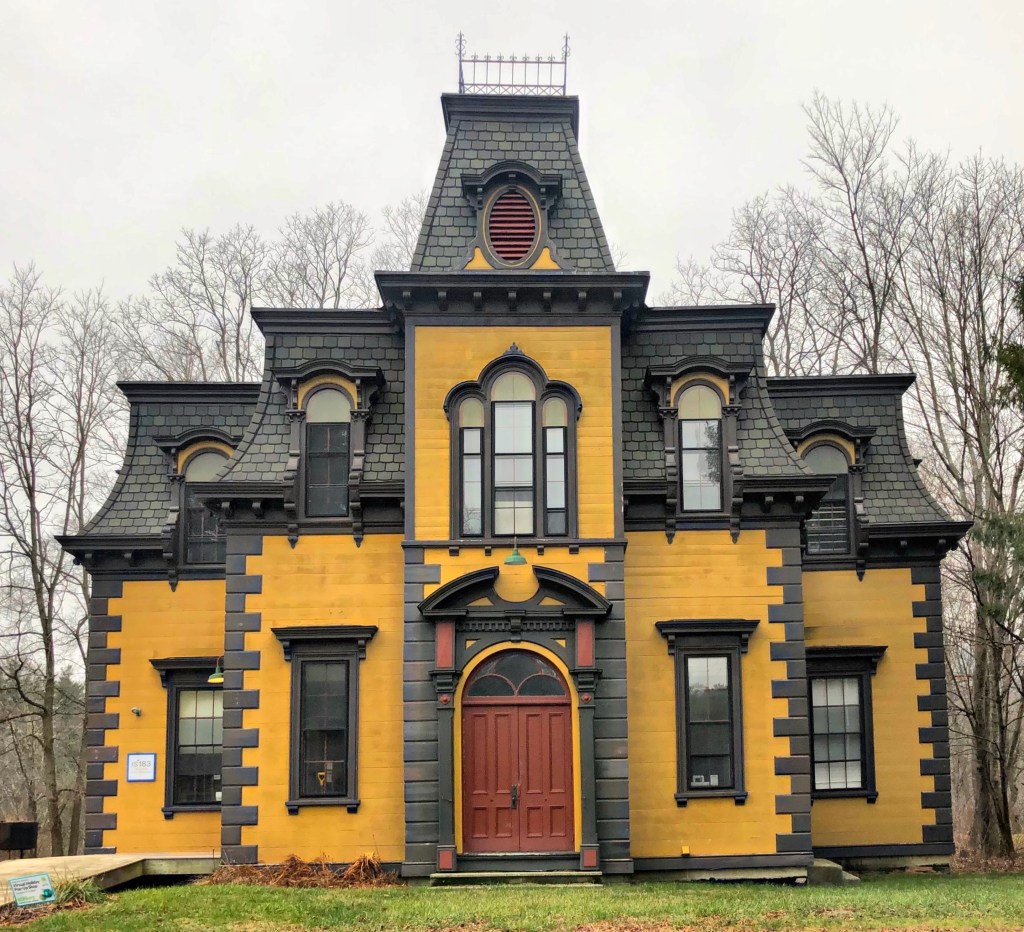
The Captain Nathaniel Stone House in Farmingdale, Maine was constructed in 1872 on a small plot of land overlooking the Kennebec River. The charming home was constructed by Nathaniel Stone (1797-1884), a retired ship chandler,(a dealer in supplies or equipment for ships) who moved back to his hometown after making his fortune in Boston. He lived here with his wife, Martha, and his adopted son, Uriah, in this fashionable Second Empire style. Nathaniel died in 1884, outliving his wife by two years. The property was willed to his adopted son Uriah, who quickly sold the home on account of him seeing ghosts inside, he refused to live there because of it. The home was acquired by William Ring, a businessman who owned real estate in nearby Gardiner, Maine. Between 1886 and 1912 he and his family resided at the former Stone House, but by the turn of the Twentieth-century he grew increasingly in debt, and on several occasions he borrowed against his property to meet his obligations. Before the home went up for auction in 1912, a massive fire broke out in the home, destroying all the interior woodwork, and William perished inside. Although significantly damaged, it was largely rebuilt to its original appearance by its eventual buyer and has been an architectural landmark on the Kennebec River ever since. Now that I think of it, maybe Uriah Stone could see the future and saw William Ring as a ghost!

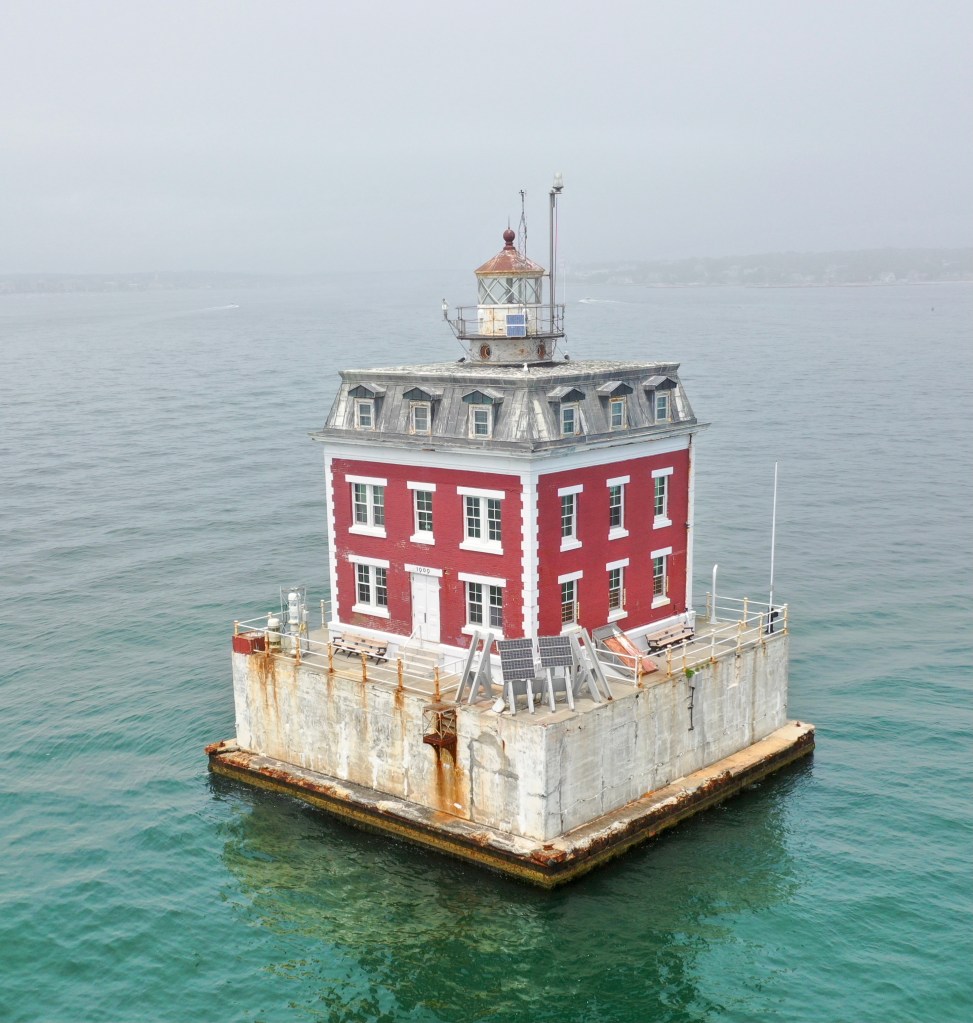
New London Ledge Lighthouse // 1909

Set way off the coast of Connecticut at the eastern end of Long Island Sound, sits this stunning lighthouse which appears more as a Second Empire style home than a lighthouse! By the early 1900s, New London, with its protected harbor at the mouth of the Thames River, had made the transition from whaling center to industrial city. New London Ledge Light was built because New London Harbor Light wasn’t sufficient to direct vessels around the dangerous ledges at the entrance to the harbor. The New London Ledge Lighthouse was completed in 1909, built by the Hamilton R. Douglas Company of New London and is an architectural antique as its Second Empire style is about 50 years past the time the style was popular in American architecture. The lighthouse reportedly owes its distinctive French Second Empire style to the influence of the wealthy home owners on the local coast, who wanted a structure in keeping with the elegance of their own homes. Sadly, many of the large homes near the shore in the area were destroyed in the Great Hurricane of September 21, 1938. Coast Guard crews lived at the light until it was fully automated in 1987. The lighthouse today is owned and operated as a museum by the New London Maritime Society.

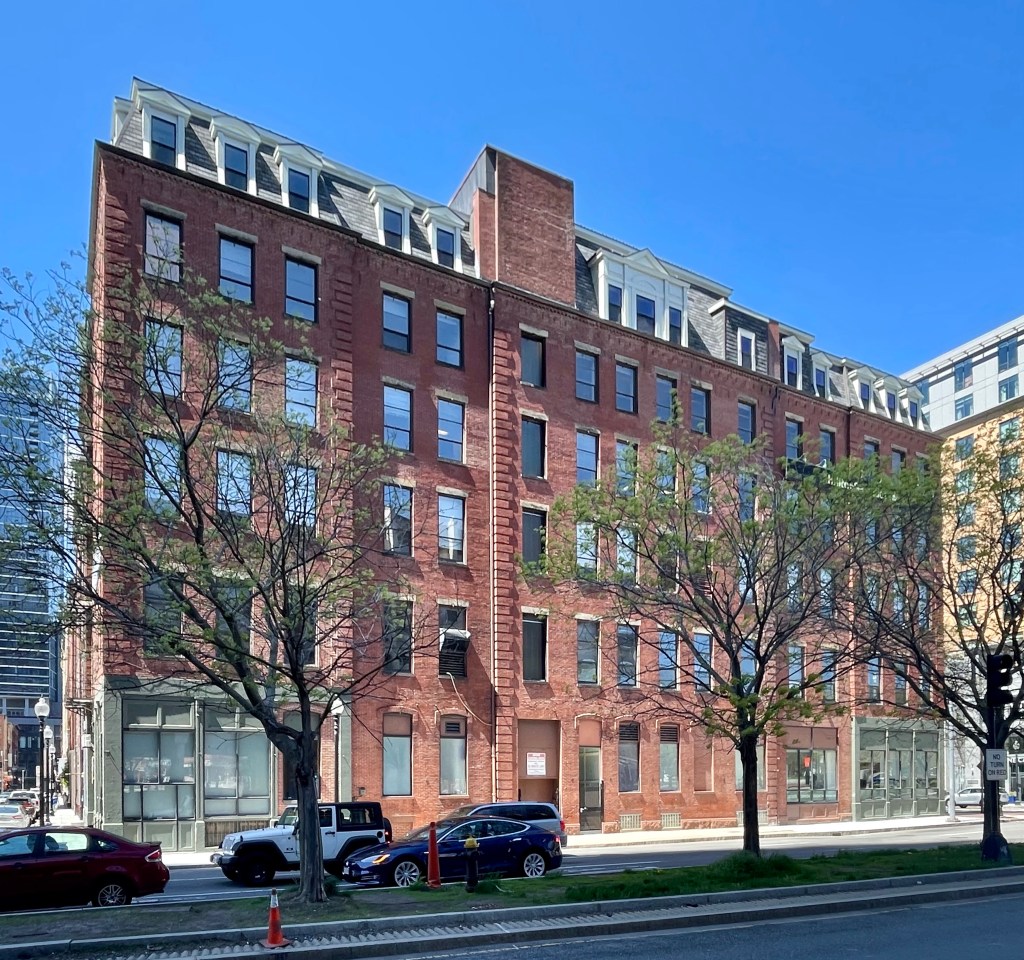
Paine’s Furniture Factory // 1871

Founded in 1835, Paine’s Furniture Company was at one time the largest furniture manufacturer and dealer in New England and had a nationwide business. The company was founded by Leonard Baker Shearer, who was joined in business in 1845 by John S. Paine, his son-in-law. Upon the death of Shearer in 1864, the name of the firm was changed to Paine’s Furniture Company. The company occupied a couple wooden and metal buildings on this site in the Bulfinch Triangle until a fire destroyed the complex. The growing firm took this opportunity to hire one of the most successful architect Gridley J. F. Bryant who worked with a colleague, Louis P. Rogers, to design the fire-proof building. The Second Empire style building with mansard roof was split into three sections with the rear two rented out to other companies, while Paine’s occupied the south-facing (main) facade. When Paine’s moved to their new building in the Back Bay, they sold this building and later alterations severely diminished the original design of the building. The current hodgepodge of alterations creates a mess of what was once an undeniable architectural landmark.

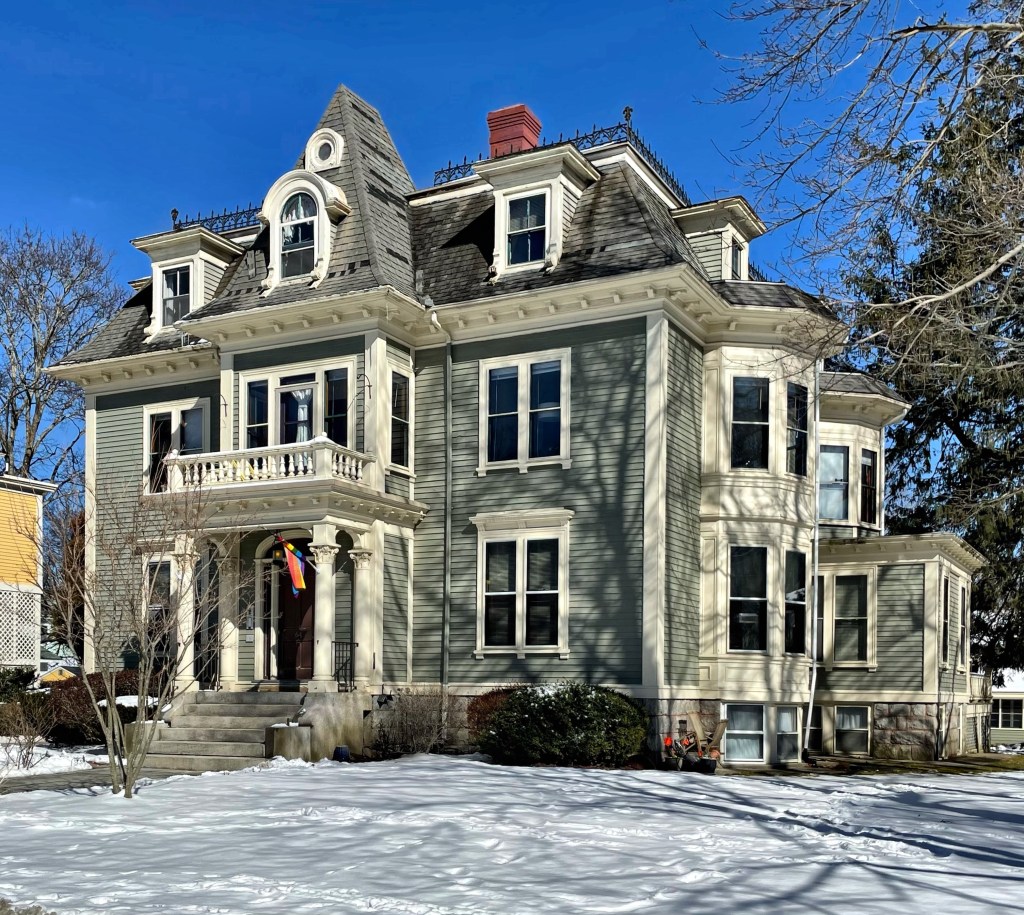
Jones & Wetherbee Houses // 1873

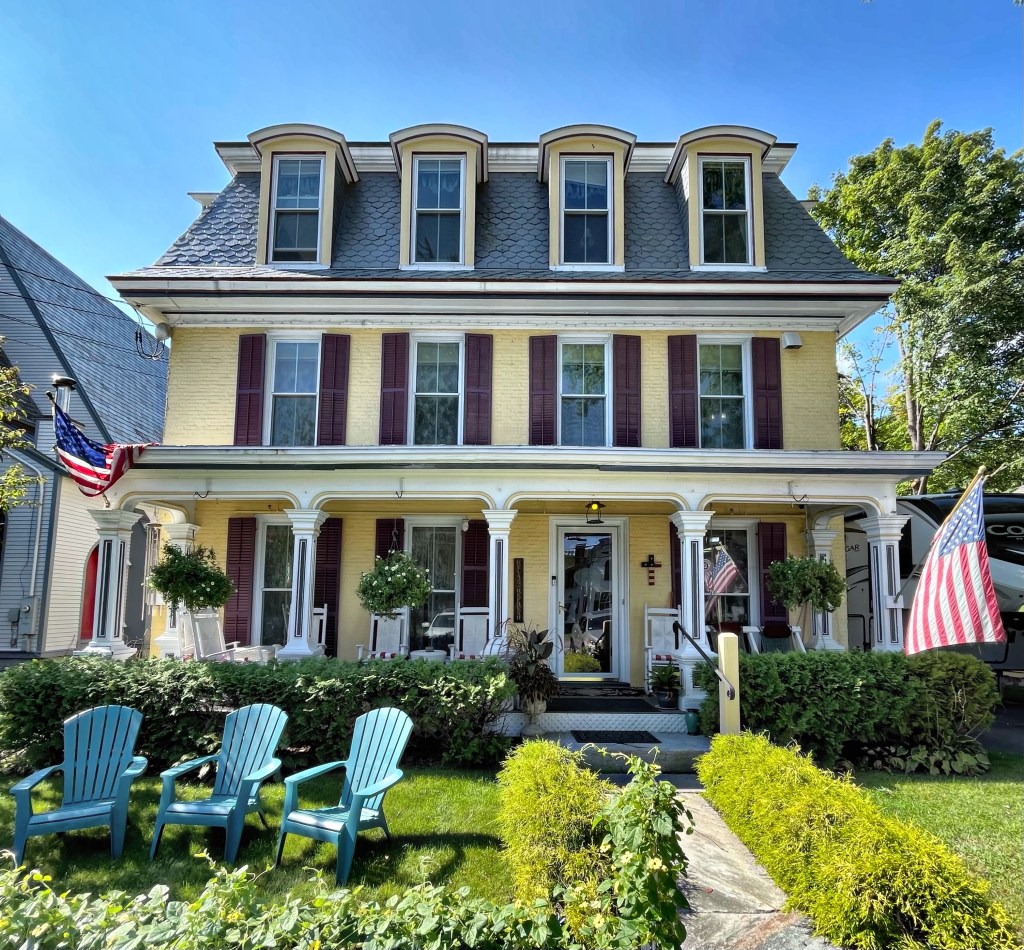
In 1873 Elnathan Jones, Jr.(1829-1904) purchased house plans from a friend in Groton, adapted the plans, and built these two houses, in Acton. One home for himself, and one for his business partner Jonathan Wetherbee (1832 1926). Also near these two houses is the Tuttle House (featured last), in a different style. All three of these men were family by marriage, and ran businesses in the village of South Acton. The Jones and Wetherbee houses were built as sister houses, identical; but over the years, the Jones House has seen some unsympathetic alterations which diminish its architectural significance. The Wetherbee House (yellow) retains its original detailing and corner, towered mansard roof.

John Brown Herreshoff House // c.1870

John Brown Herreshoff, a fully-blind ship-builder, and later Founder and President of the Herreshoff Manufacturing Company in Bristol, built this house at the head of Burnside Street, overlooking his boat works (no pun intended). The home sits next to the stunning Codman Place mansion, featured previously, and takes architectural cues from its neighbor. The home is reported to have been built by J.B. Herreshoff, who despite being completely blind, developed his other senses to a high degree to overcome the handicap of sightlessness, and became renowned for his design skills in his ships. The home has a mansard roof with a central projecting entrance bay, capped with a steeply pitched roof, and a barrel-vaulted dormer and ocular window inset. While the house is now condo units, it retains its architectural integrity at the exterior.

Citizen’s Hall // 1870

Citizens Hall, which was built in 1870 in a small village within Stockbridge, MA, is a small-scale version of the civic buildings constructed in the Second Empire in American towns and cities following the Civil War. The building is the architectural epicenter of Curtisville (now sometimes referred to as Interlaken), a small community within the Town of Stockbridge, which grew up around twelve mills. The mills are gone but several significant structures remain, also retaining their rural character. Citizens Hall was designed by Charles T. Rathbun, and inside, the two rooms on the first floor housed the public school and the second floor was the community assembly hall. The building was threatened with deferred maintenance in the mid-20th century and its future was uncertain until 1975 when a local group worked with the State Historic Preservation Office and acquired a grant to make needed repairs on the building. Today, the structure is maintained and houses the Art School of Berkshire (now known as Interlaken School of Art). Look at that historically appropriate paint scheme!

Mary Pomeroy House // 1868

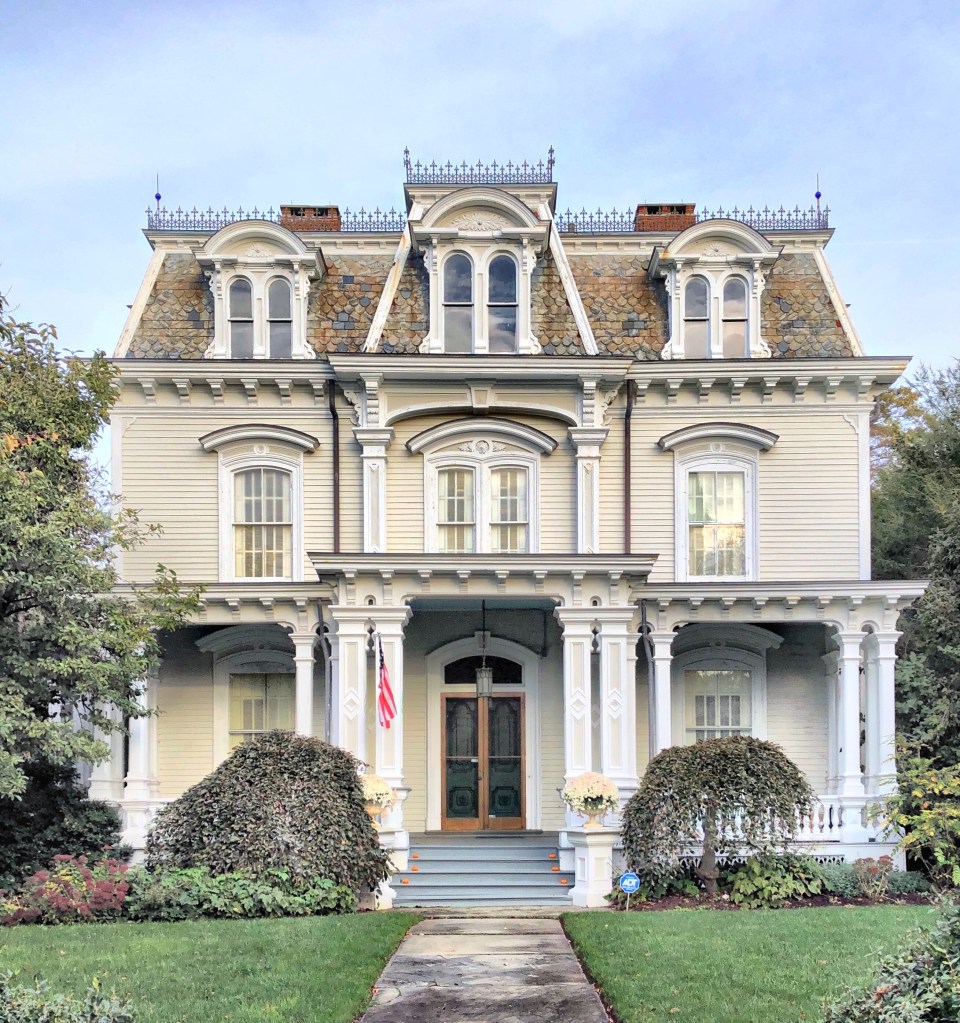
Mrs. Mary Pomeroy, the widow of one of Southport’s industrious and wealthy shipping merchants, Benjamin Pomeroy, built this large residence for herself and her daughters, soon after her husband’s death. Mr. Pomeroy was a merchant who also served as a Senator. In 1866 with ailing health, he took a doctor on a private ship to try various remedies in the West Indies, to no avail, he died at 48 years old. Ms. Pomeroy appears to have taken the money her and her husband had saved and built a large mansion to cement her position in town as the most eligible bachelorette in town. While she never remarried, she sure showed the town what good taste looks like! The facade of the Pomeroy house is symmetrical with a projecting three-story central pavilion, all surmounted by a mansard roof with cresting. Rounded dormers with twin round-headed windows pierce the roof’s multicolored slate surface, making this Second Empire house one of the nicest in a town full of historic homes!

Henry P. Kent House // 1871

Located on South Main Street in Suffield, Connecticut, this stunning Second Empire mansion showcases the tobacco wealth seen in the town in the mid-to-late 19th century. In 1810, a Cuban man who seemingly drifted into town, was hired by a local farmer to grow tobacco and roll cigars for sale. Decades later, dozens of farmers in Suffield erected tobacco barns and cultivated tobacco to be rolled in cigars and sold. One of the first to box the cigars as a pack for shipping and sale was Henry Phelps Kent (1803-1887). Kent’s business did very well and he eventually hired local architect John C. Mead to design a mansion to display his success in business. The large Second Empire mansion features flush-board siding, full length porch, and a projecting mansarded tower with convex roof. The home was later owned by Samuel R. Spencer, a politician who served as a Lieutenant Governor of Connecticut, the first as a blind man. The home is now operated as a bed & breakfast “Spencer on Main”.

Blackinton Mansion // 1865

This mansion in North Adams, MA was built in 1865 for Sanford Blackinton. Blackinton was said to be the first millionaire in North Adams, and his mansion was the most elaborate home ever built in the city. His mill produced woolen goods during the Civil War including cloth for the Union forces. After the Civil War, many factory owners no longer lived amongst their workers, as they formerly had done, but instead built luxurious mansions in other neighborhoods, away from their factories. These large residences were designed in extravagant modern styles to impress the public and reflect the stature of their owners. European materials were even imported to grace these homes, such as the Italian marble fireplaces in the Blackinton Mansion.

Sanford Blackinton built his mansion in the hopes that it would become the ancestral home for his descendants. However, after the death of his widow (their four children died by the 1870s), the mansion was put up for sale in 1896, and was bought by North Adams’s first mayor, A.C. Houghton.
He in turn donated the mansion, along with $10,000 for renovations, to the city, to be used as a public library and as a meeting place for the local historical society. He requested that the building be known as the Andrew Jackson Houghton Memorial after his late brother. The home, designed by architect Marcus Fayette Cummings, is a high-style Second Empire mansion with a prominent tower, constructed of red brick with brownstone trim.

Captain Edward Penniman House // 1868

The Edward Penniman House is the finest example of Second Empire style in Eastham, and is one of the finest examples of this architectural style on Cape Cod. The grand home was designed and occupied in 1868 for Edward Penniman (1831-1913), one of the most successful whaling captains in New England.

Born in 1831 in Eastham, Edward Penniman set sail for the first time at age 11. The voyage was to the dangerous and unpredictable waters of the Grand Banks, a rich fishing ground off the coast of Canada’s Newfoundland. Nantucket had a flourishing whaling industry as early as the late 1600s, but it was New Bedford with its deep water harbor and railway system that would become New England’s whaling capital. In 1852 at the age of 21, Penniman would journey to New Bedford and sign on to his first whaling expedition. Later when Penniman became a captain he would select New Bedford as his home port setting sail seven times to hunt whales.

With whale over-harvested in the Atlantic along the shores of New England, whalers were forced to go further and further from home to hunt. Whaling expeditions often spanned three or four years, and it was not uncommon for wives and families of ship captains to go along on the trip. Penniman’s wife, Betsy Augusta Penniman, called “Gustie” by her husband, went on three such voyages often assisting with navigation and other shipboard matters. In addition, each of the three Penniman children accompanied their parents on various journeys with eldest son Eugene eventually becoming a whaling captain himself.

After the Captain’s death in 1913, Mrs. Penniman and their daughter, Betsey, continued to live in the home. Mrs. Penniman’s died in 1921. Betsey Penniman, who never married, stayed around and raised her niece, Irma. Upon Betsey’s death in 1957, the home was left to Irma Penniman Broun. Irma and her husband sold the house with twelve acres to the National Park Service in 1963 when the Cape Cod National Seashore was formed.