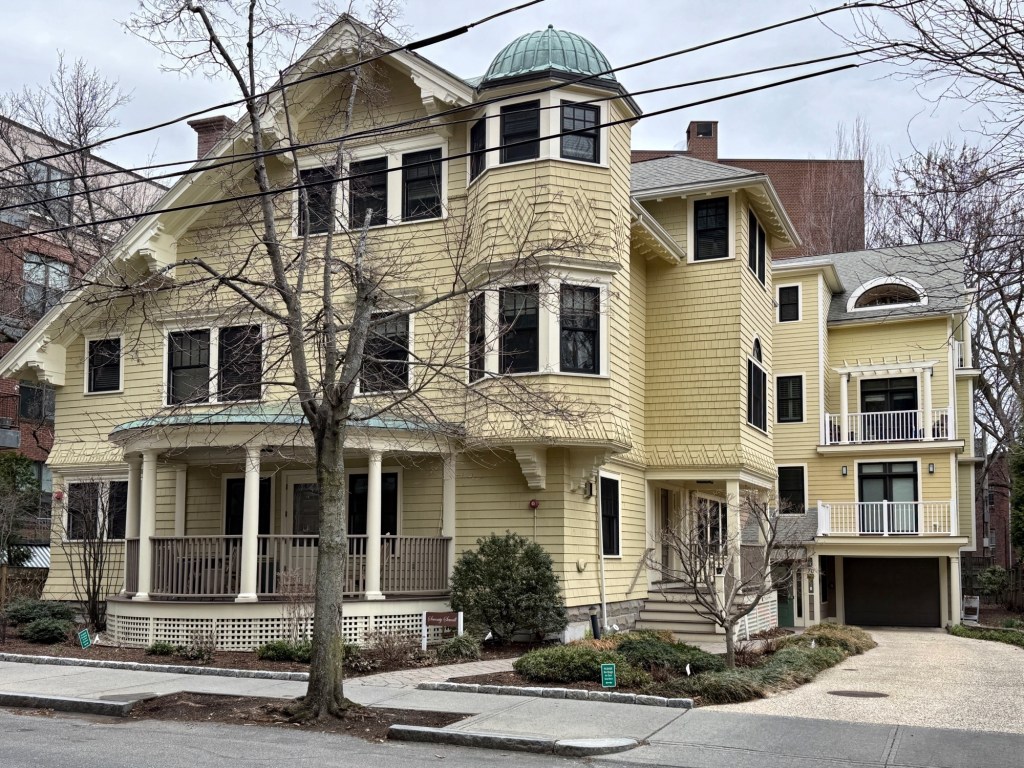
Charles P. Flagg House // 1899

Located on Sewall Avenue in Brookline, Massachusetts, the Charles P. Flagg House exemplifies upper-class single-family housing built in the late 19th century that has been added onto and converted into multi-family housing to serve a growing city. Charles Partridge Flagg (1851-1911) was a real estate developer and head of the D. F. Flagg & Co., a wholesale liquor company his father started in Boston. He purchased the former Dexter property, subdivided the estate, and hired architect Julius A. Schweinfurth to design a home for his family. “Jule” Schweinfurth was long-associated with the firm of Peabody & Stearns of Boston, which in the late 19th century, was one of the premier architectural offices in the United States, but when he was not offered a partnership offer by his bosses, he established a new firm under his name. For the Flagg House, Schweinfurth blended the Shingle, Queen Anne, and Arts and Crafts architectural styles with a unique asymmetrical roofline, wide overhanging eaves with cross brackets and exposed rafter tails, consistent shingle siding, and a two-story polygonal oriel with domed roof at the corner. The Flagg House was moved forward on the lot to facilitate a rear addition and completely renovated in 2011, transforming it into a seven-unit condominium building with garage and elevator. This example of “gentle density” is exactly what communities should allow for, to preserve the character at the streetscape but provide additional housing.
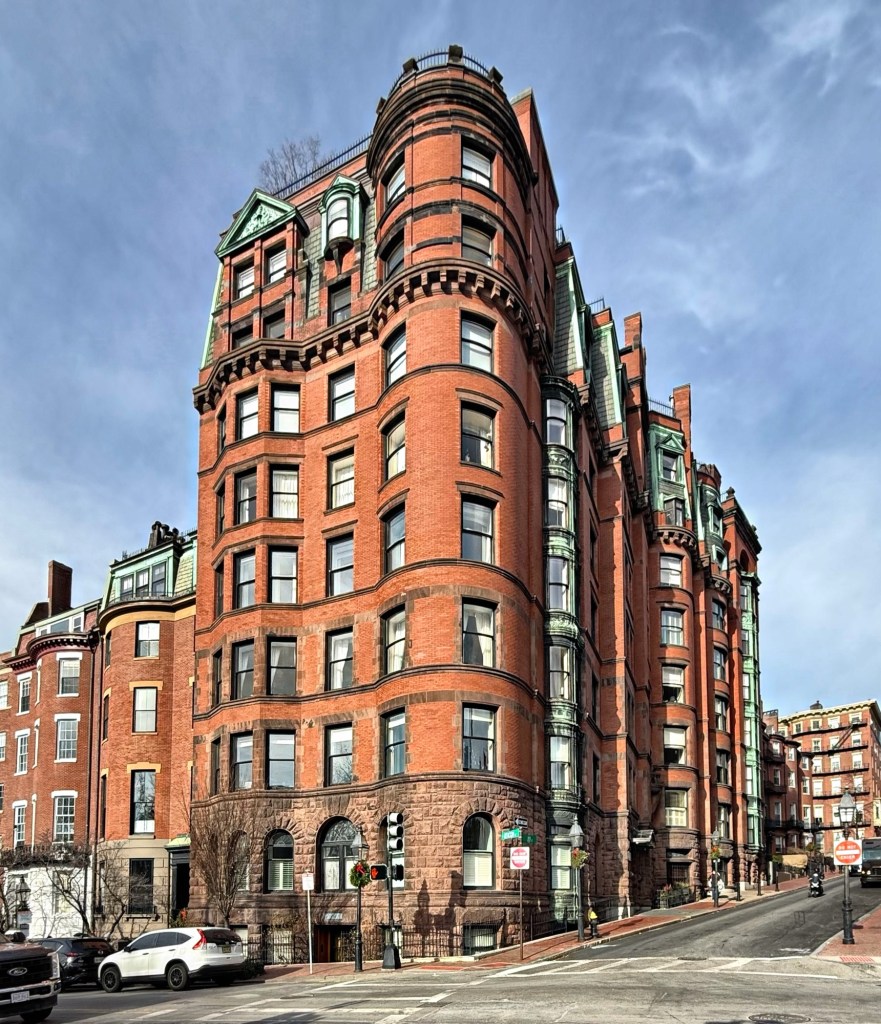
Tudor Apartments // 1887

Frederic Tudor (1783-1864) was a businessman and merchant known as Boston’s “Ice King” having founded the Tudor Ice Company and becoming a pioneer of the international ice trade in the early 19th century. Frederic Tudor lived in a house at the corner of Beacon and Joy streets in Beacon Hill, Boston, and after his death, the property was inherited by his widow, Euphemia Fenno and their children. By 1885, the old Tudor House was demolished and replaced by The Tudor Apartments, which was built between 1885 and 1887 to house twelve upper-class families who sought smaller living space as opposed to the typical townhouses in Beacon Hill. Designed by architect, Samuel J. F. Thayer, the nine-story Queen Anne/Romanesque Revival building features a brownstone base with brick walls above, combining the traditional Boston bowfront with late 19th century flair at the upper floors with the partial mansard roof punctuated with dormers and oriel windows. Thayer designed the Joy Street elevation with cascading bays to provide interiors with views of the Boston Common and ample natural light.


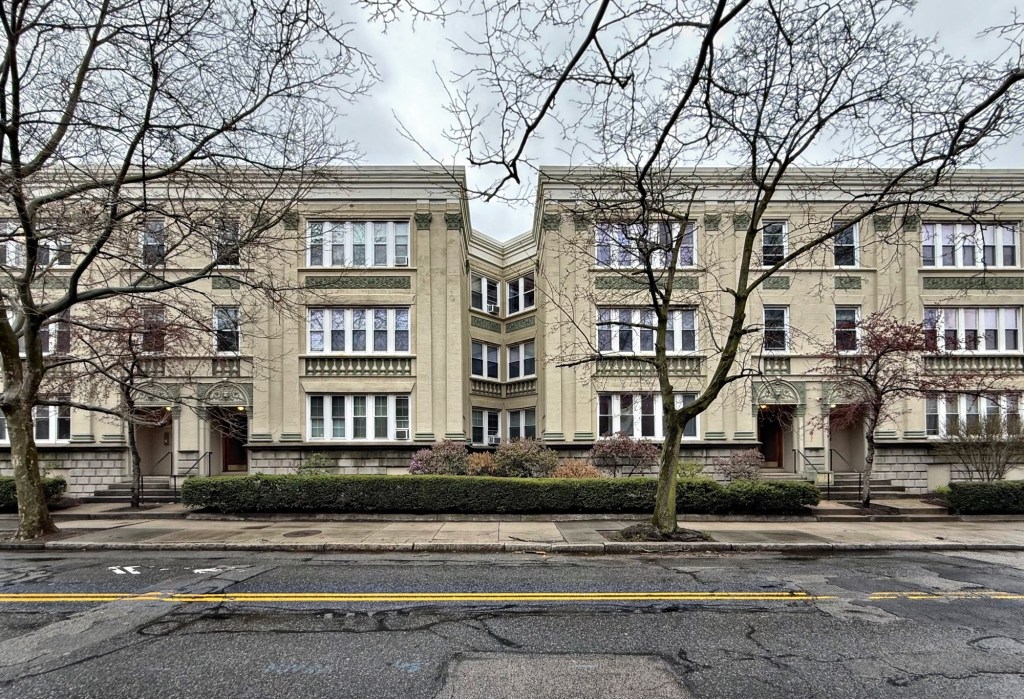
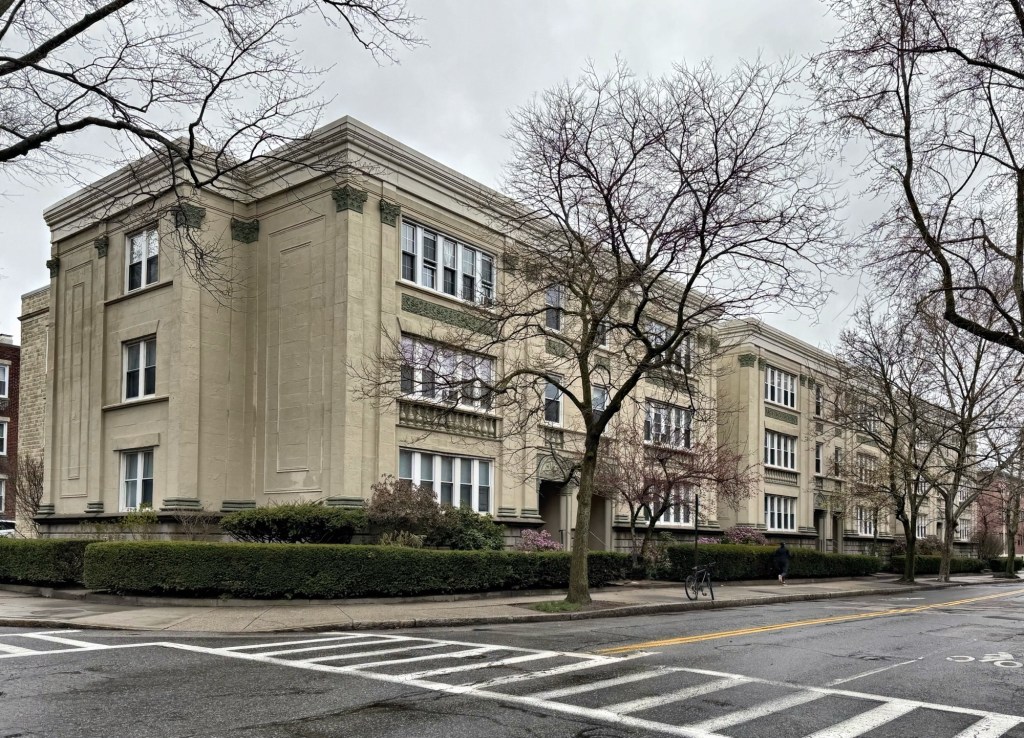
New England Fireproof Construction Co. Apartments // 1917

One of the most unique and architecturally pleasing buildings in Brookline has to be these apartments on Egmont and St. Paul streets that break the mold of traditional brick or wood-frame apartment houses. Built in 1917 by the New England Fireproof Construction Company as an example of how cheaper cement material can be used effectively and beautifully to design and construct high-quality housing. The company hired architect G. Bertram Washburn to design the buildings which utilize concrete block and cast concrete details with the facades embellished with pilasters capped with Corinthian capitals, engaged balusters, and modillioned and corniced entrances decorated with a lion’s head over each doorway. Additionally, a special touch is the recessed wells in the facade which not only break up the massing of the building, but provide additional light and air into the apartments inside.