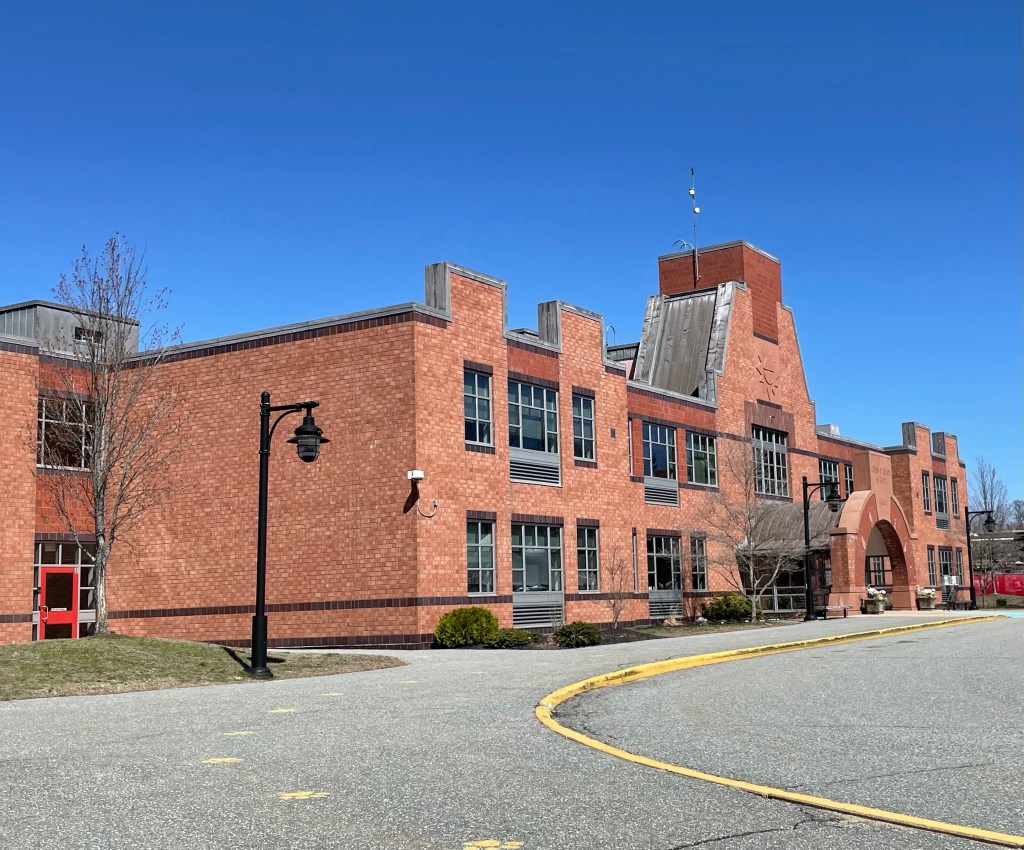
Lancaster Central School // 1904

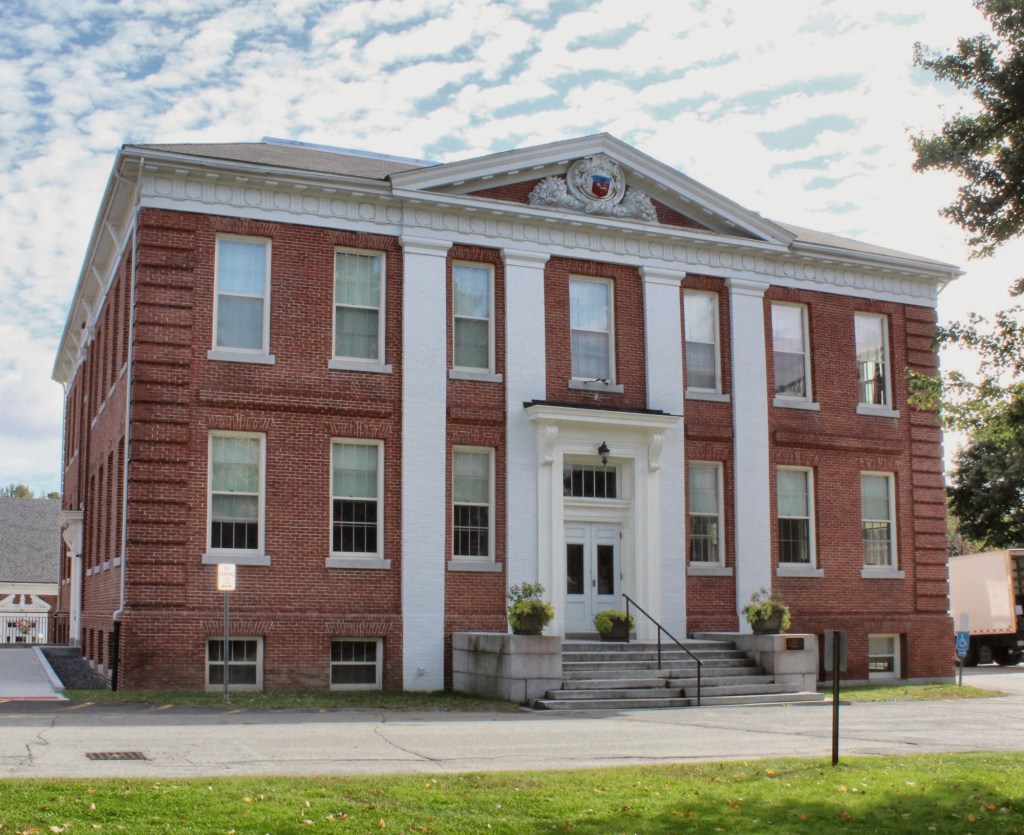
Located across the Town Common from the iconic Bulfinch Church in Lancaster, Massachusetts, this handsome 1904 Colonial/Classical Revival style school building was designed in response to its neighbors and Colonial context of the town of Lancaster. At a Town Meeting in 1903, a local building committee determined that “Bulfinch Colonial” would be the best style for the architecture for a new high school that would be built in the town center, with Herbert Dudley Hale, selected as the architect for the planned two-story brick building. The Center School had been used continuously as a public school until 2001, when it outlived its utility as school facility in town, which was vacated for years until grant funding and a restoration of the building, now known as the Prescott Building, for Town Offices, including the Lancaster Historical Commission. The facade is dominated by its seven-bay symmetrical façade featuring brick
corner quoins, double-door entrance, and two-story white-painted brick pilasters framing the entrance and “supporting” the pediment that contains the town crest in high-relief.
Essex County Registry of Deeds // 1909

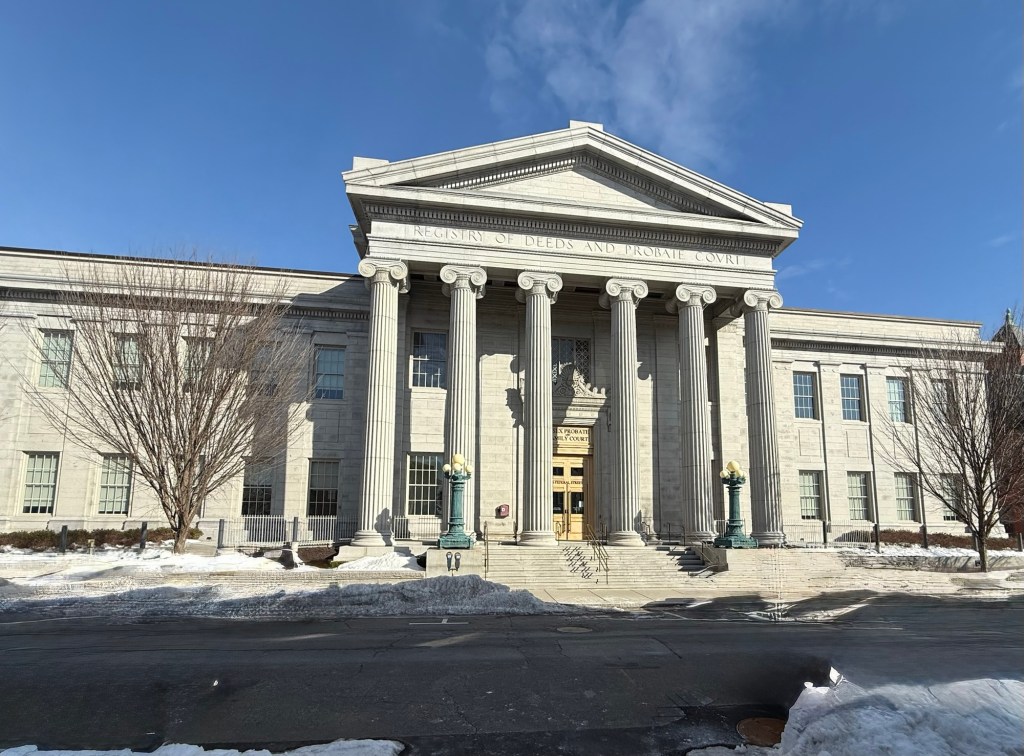
The Essex County Registry of Deeds and Probate Courthouse on Federal Street in Salem, Massachusetts, was built in 1909 from plans by Boston architect, Clarence Blackall. The Neo-Classical courthouse adds to the rich tapestry of Civic buildings there, showcasing the ever-evolving tastes in architecture as the buildings become more contemporary as you move westward down the street. The two-story granite and cast-stone faced brick masonry building is cross-shaped in plan, consisting of a three-bay wide gable-end entrance with Ionic porch of six fluted columns supporting a dentilled entablature and pediment. The central bay within the entry porch contains a large double-door entrance with elaborate architrave and a scrolling pediment incorporating Classical motifs and a Greek god bust. The building underwent a massive restoration in 2017, and was renamed the Thaddeus Buczko Building after retired First Justice Thaddeus M. Buczko.

Hills Library – Andover Newton Theological School // 1895

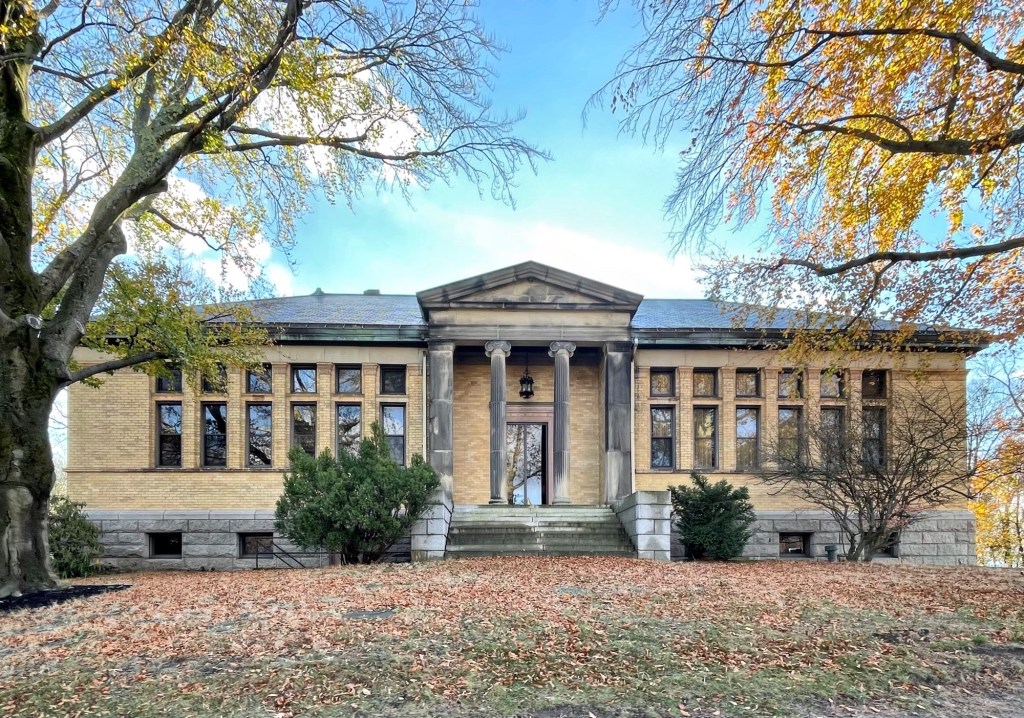
The Hills Library is a formal building standing at the summit of Institution Hill, so-named as the home of the Newton Theological Institution (and most recently as the Andover Newton Theological School). The library was constructed in 1895 from plans by architects Henry H. Kendall and Edward F. Stevens of the firm, Kendall & Stevens. Designed in 1894 in the Neo-Classical style, the library has a stately portico in the Ionic order with a pediment above. The building is constructed of yellow brick with stone and terracotta trimmings with banks of vertical windows. The library would be added onto at the rear, with the main entrance later closed for an accessible entrance in a rear addition. The building is now known as the Hanns Sachs Memorial Library for the current owners and stewards, the Boston Psychoanalytic Society & Institute (BPSI).

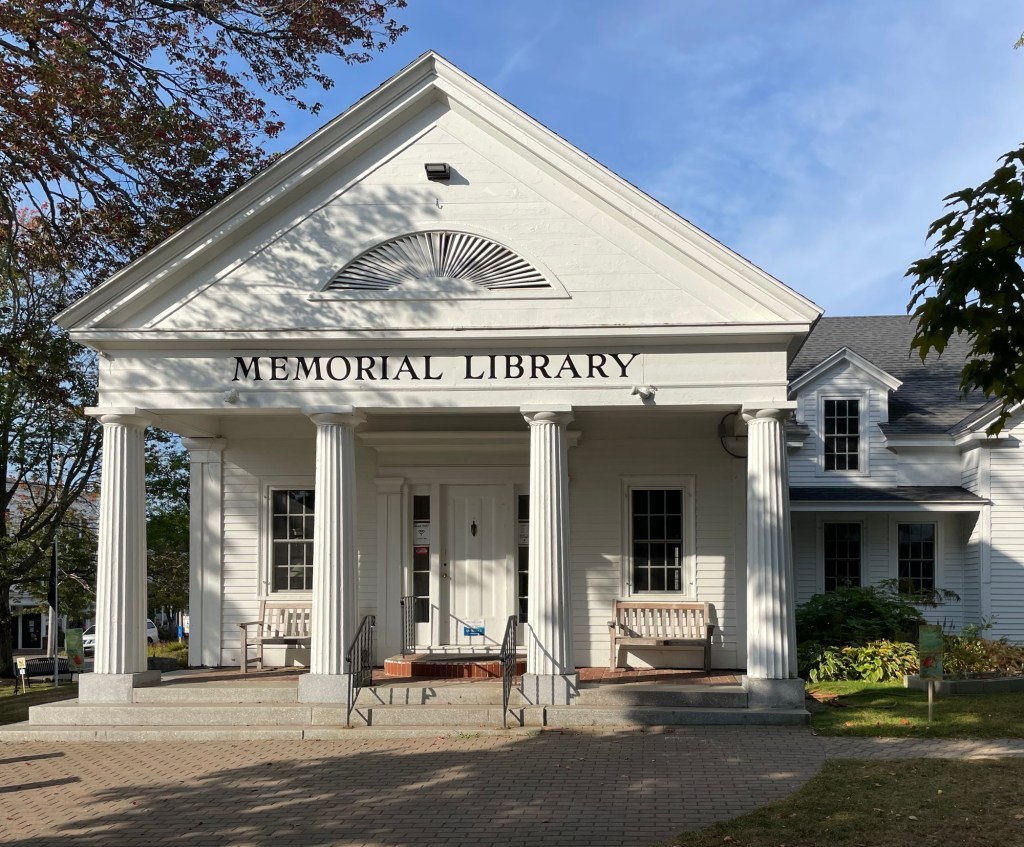
Boothbay Harbor Memorial Library // 1923

In 1906, the citizens of Boothbay Harbor voted to establish a free public library for all to enjoy. In 1923, the need for more library space, along with a desire for a World War I Memorial, led to the approval of a bond for the purchase of a 1842 Greek Revival style house on Oak Street. The building was remodelled for use as a library by the Boston architect William Stanley Parker, and was enlarged in 1966 to a design by Parker’s son, Stanley Jr. The temple-front, Neo-Classical entry was added at this time and harkens back to the original classical style Greek Revival home, while clearly showing a grander scale seen in the 20th century.

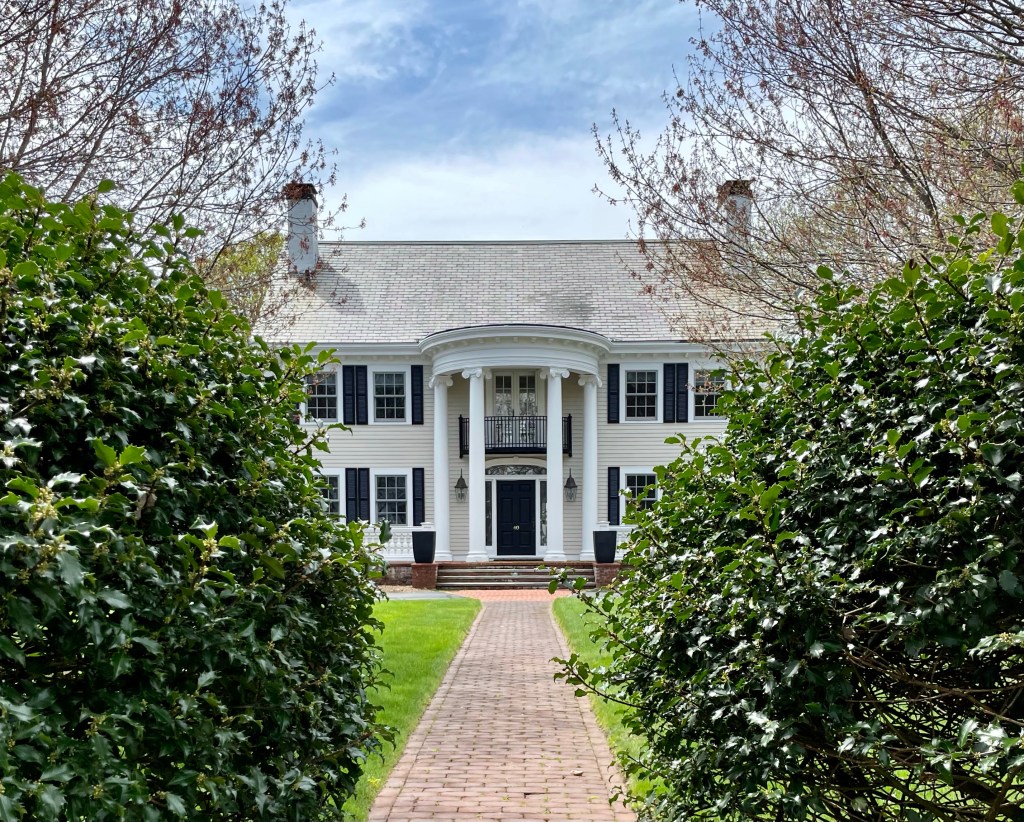
Maynard Estate // 1901

One of the largest summer estates in Ridgefield is this Neoclassical residence on Peaceable Street, which was built in 1901 for Effingham Maynard and his wife Helen. Maynard was a partner in Clark & Maynard, a New York publishing house. Local lore states that the Maynard Family hired New York architect Stanford White, to design this property, but no definitive proof could be located to substantiate that rumor. The Olmsted Brothers landscape architecture firm designed the grounds which were elaborate with gardens and outbuildings. The two unmarried Maynard daughters, Mary and Helen spent their summers here every year until their deaths in the 1950s.

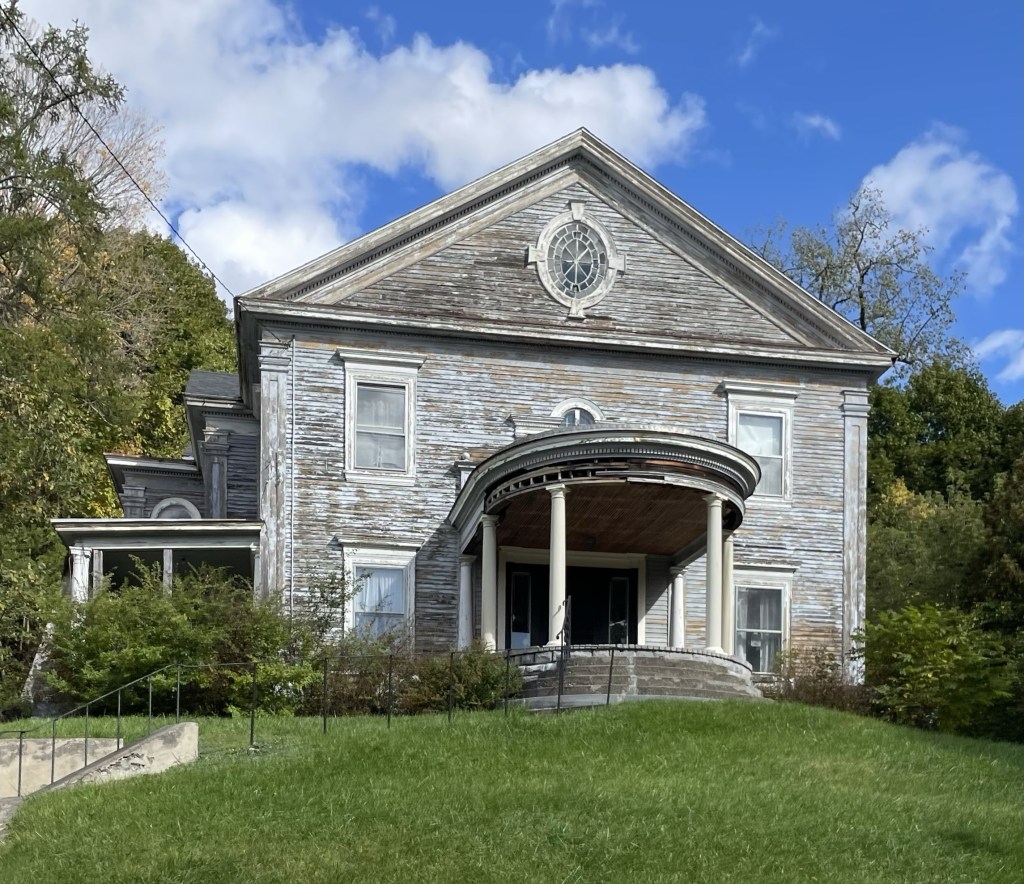
Ashe House // 1898

North Adams, like many formerly industrial towns and cities in New England has some amazing old Victorian and Colonial Revival houses built before the factories closed. Luckily for us, this town still has many unaltered residences, with some needing more love than others. This is the Ashe House, built in 1897-8 for Patrick J. Ashe and wife Katherine O’Brien. Classical details from many different styles make this house unique. An oval window dominates the traditional Greek facade which includes a pediment and side pilasters. A palladian window sits over the elliptical porch which is supported by columns. This one has so much potential!!

“Beachmound” Mansion // 1897

Beachmound, a unique summer residence in Newport, was built in 1897 by architect Henry Ives Cobb for Benjamin Thaw Sr., (1859-1933) a Pittsburgh banker and philanthropist. The mansion is Neo-Classical in style, taking cues from Classical architecture, specifically Greek Revival, with the monumental columns, pediments, and pilasters. Benjamin Thaw was the half-brother of Harry Kendall Thaw (known for the 1906 murder of architect Stanford White). The murder took over the press as one of the more salacious scandals of the gilded era. Harry Thaw’s wife, the actress/model Evelyn Nesbit was said to have been raped by Stanford White while 16 year old (White was 47). She later married Harry K. Thaw. Thaw shot and killed White, the internationally famous architect, in front of hundreds of witnesses in a theater during a performance in New York. Following two trials, he was acquitted based on the insanity defense, a stint in an asylum from which he escaped, and eventual court-ordered freedom, Thaw was a celebrity. A comical piece of the story is that when Thaw later visited “Mar-a-Lago”, the Post Mansion in Palm Beach, Florida (now best known as Donald Trump’s home), he gasped, “My God, I shot the wrong architect!” Beachmound remains as a stunning, refined summer estate in Newport, and is comprised of condo units.

Susan Lord House // 1913

This home was built in 1913 and is a high-style Neo-Classical example of a “beach cottage”. The home is located in the fashionable Rye Beach colony in New Hampshire, which developed in the mid 19th century through the first half of the 20th century as an exclusive enclave for vacationing elite. The home was purchased by Susan Bailey Lord just years after its completion as a summer retreat from her home in Malden, MA, just outside Boston. She purchased the home just years after the death of her husband, who was thirty years her senior. It’s safe to say that Susan let loose up on the beach and had a “hot girl summer”.

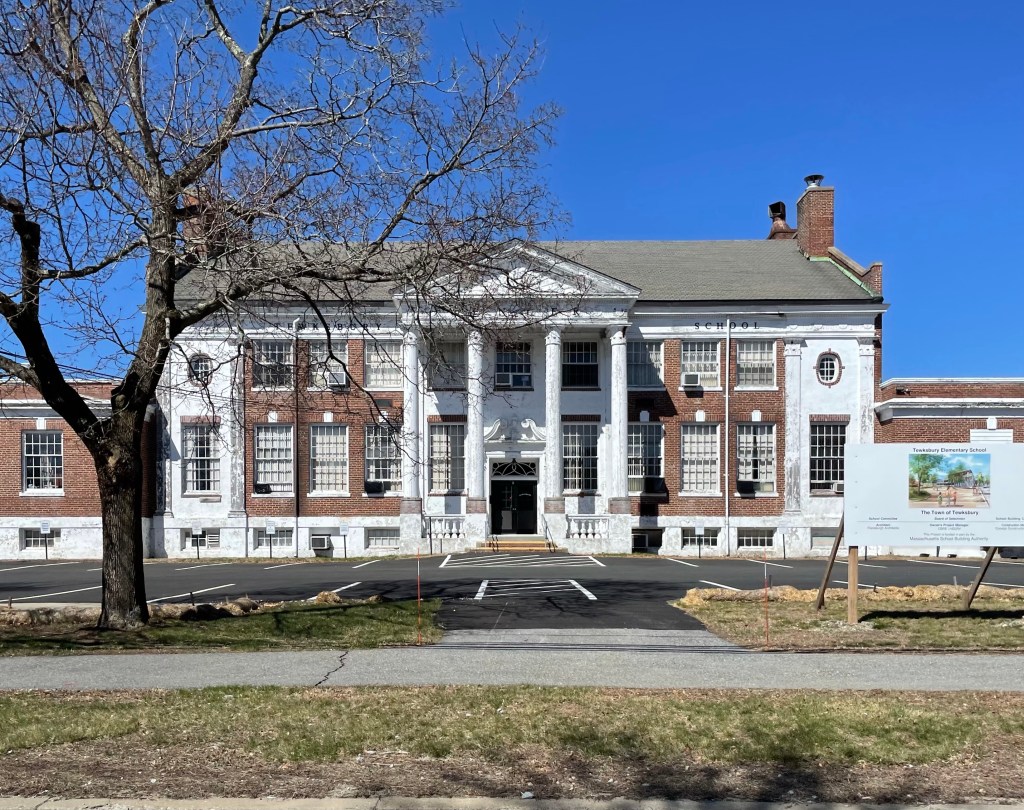
Tewksbury Center School // 1934-2021

Built in 1934 as the fourth high school for the town of Tewksbury, this Neo-Classical school building has seen better days. The Center School was designed by Miller and Beal architects of Portland, Maine, and likely funded with assistance of New Deal program funding during the Great Depression. The next year, Tewksbury Stadium was dedicated in 1938, which was a Works Progress Administration (WPA) project. The Tewksbury Center School retains many of the details that characterize its Neo-Classical Style including: the front gable entry portico supported by two-story Corinthian columns and pilasters, the wide frieze band with the band of dentil molding, the decoratively clad end bays framed by Corinthian pilasters, the broken pediment of the door surround, and keystones in the brick lintels. The town needed to expand at the end of the 20th century, and hired Architectural Resources Cambridge to design the John F. Ryan Elementary School, located behind this building. The Ryan Elemetary School is a pleasing design which is Post-Modern in style. The Center School has been used as offices for the School Department and was recently proposed to be demolished for surface parking, and a new school constructed elsewhere on the site. This seems very wasteful, and epitomizes the lack of regard for environmental or historical conservation in many cities and towns.

Gilbert A. Davis Memorial Library // 1899

Reading Vermont’s public library building was built in 1899, by local resident Gilbert A. Davis (1835-1919). The building’s funds were furnished by Mr. Davis in his life, likely inspired by Andrew Carnegie’s fund which had libraries built in towns all over the United States. Gilbert Davis worked as a lawyer in Woodstock before moving back to Reading, Vermont to run his own practice. The library he funded is Neo-Classical in design in the form of a Greek Cross with intersecting gable roofs and with a monumental portico in the Ionic Order on the front facade. The charming library building is well-preseved and an excellent example of Vermonts beautiful small-town libraries.