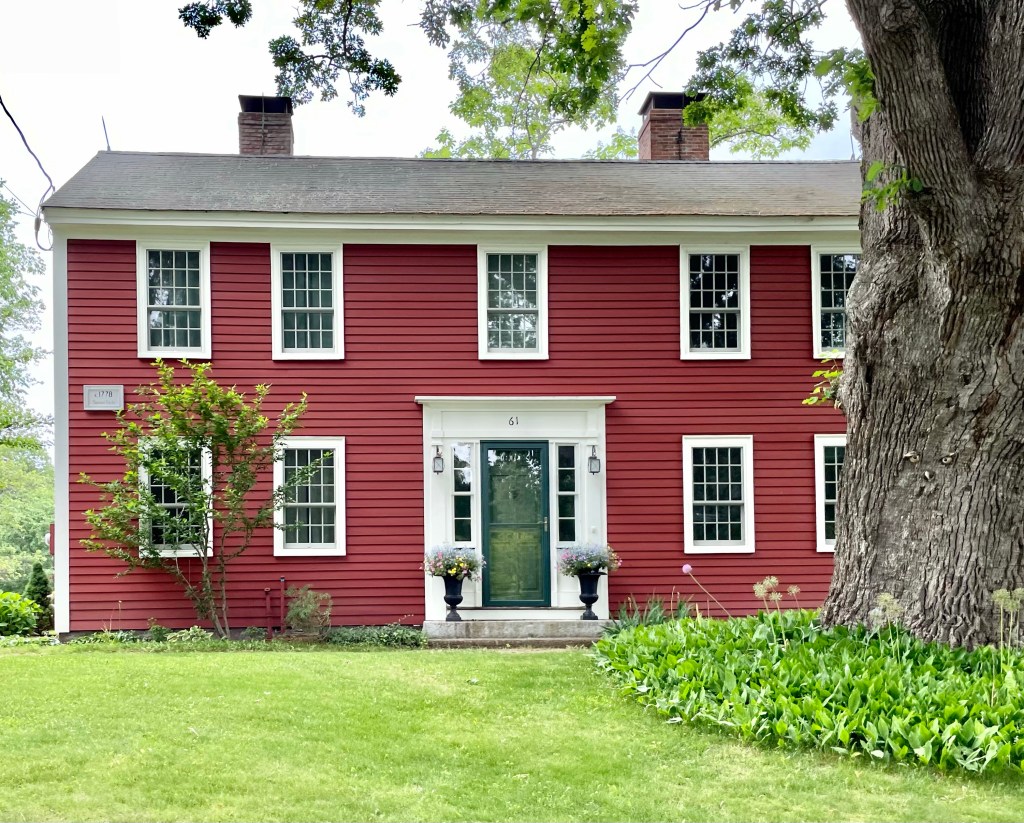
Tracing the history of old New England homes can be difficult and finding the history of this house is no different! The rural property here in Boxborough, MA, was owned in 1731 by Moses Foster, a teacher according to a deed of that year. A home was built here, but it appears it was a one-story house, which is verified as the 1798 tax lists report two single-story houses on the property. It is likely that a subsequent owner modified one of the homes and added a second story to fit a growing family here, probably in the early 19th century. To add more layers to this, the historical commission’s research lists the house date as c.1731, the sign on the house reads c.1778, and my estimation is c.1810. Who said historic preservation and house research is easy?!
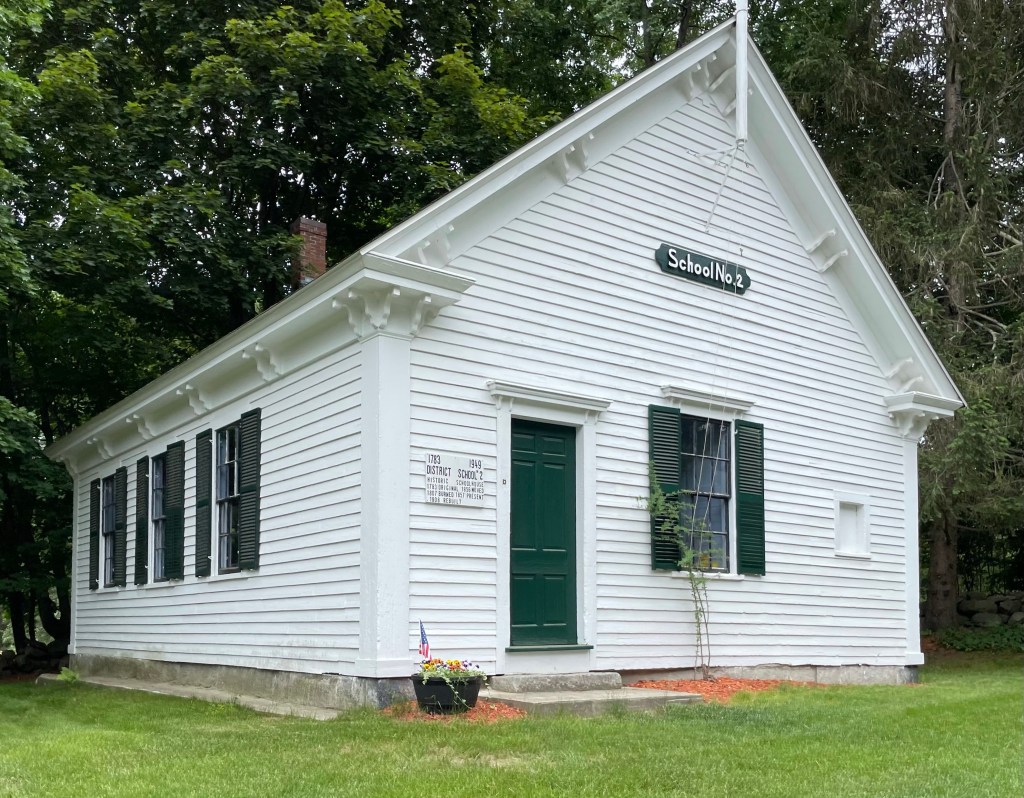
Before most small New England towns had single school buildings for elementary, middle and high school, small one-room schoolhouses like this dotted the landscape, especially in rural towns. Having smaller schools spread out allowed for a greater number of students to attend school without traveling by horseback long distances, and more local school buildings was a great solution. This c.1857 school building was in use until 1949, and it didn’t even have heat, running water, or electricity until the 1930s, making smart design a necessity to get the most out of the building. Large windows would provide natural light to flood the classroom and the steep gable roof would ensure snow to slide off the roof. Sadly, many towns have lost these buildings, but some have been restored or even repurposed as homes!
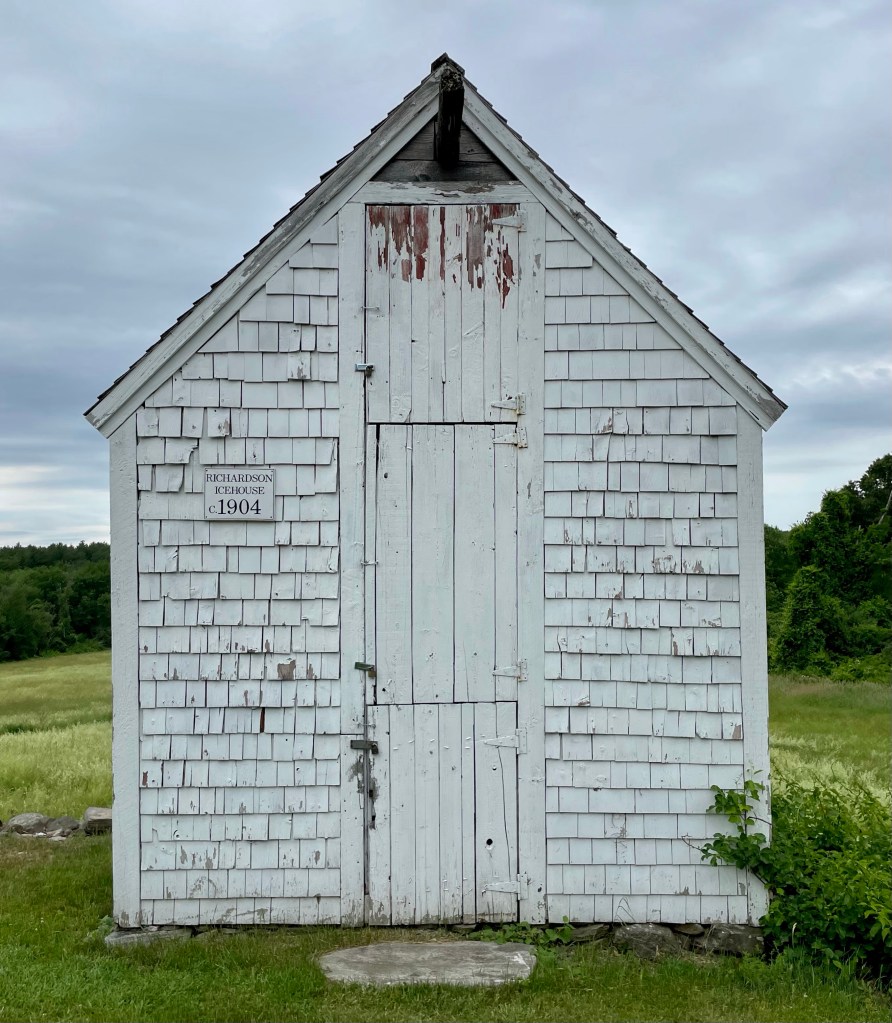
In 1775, Silas Wetherbee gave three acres of land in present day Boxborough, MA, to be used as a meetinghouse and burial ground site for the new town that he and 17 other outlying farmers of Stow, Harvard, and Littleton hoped to establish. That year, having formed a new religious society, they acquired the old meetinghouse in the nearby town of Harvard, dismantled it, and began to reconstruct it on land donated by Wetherbee. In 1783, the Town of Boxborough was officially incorporated, with the meetinghouse at its approximate center. That next year, Silas sold his son Levi, “60 acres of land, half of a building referred to as the “old house,” and half of a barn, all located just east of the townhouse. The farm was run by Levi until his death in 1829, when it came into the possession of his son, John Wetherbee (1800-1858). In 1908, the property was sold out of the family when it was purchased by Burpee Clark Steele, who owned it for the next seventeen years. Steele had immigrated from Nova Scotia to Boxborough in 1886, and he quickly became known for his expansive apple orchards. In 1925, Burpee Steele conveyed the farm to his son, Burpee Franklin Steele. Under his ownership, the old barn blew down in the Great Hurricane of 1938, and he constructed a new barn years later. Also a later addition, the Richardson Ice House was moved to the site by the local historical society in the 1990s. The farm today is protected by the town, but the buildings could use some better maintenance. Hopefully the town funds their preservation so they do not decay.
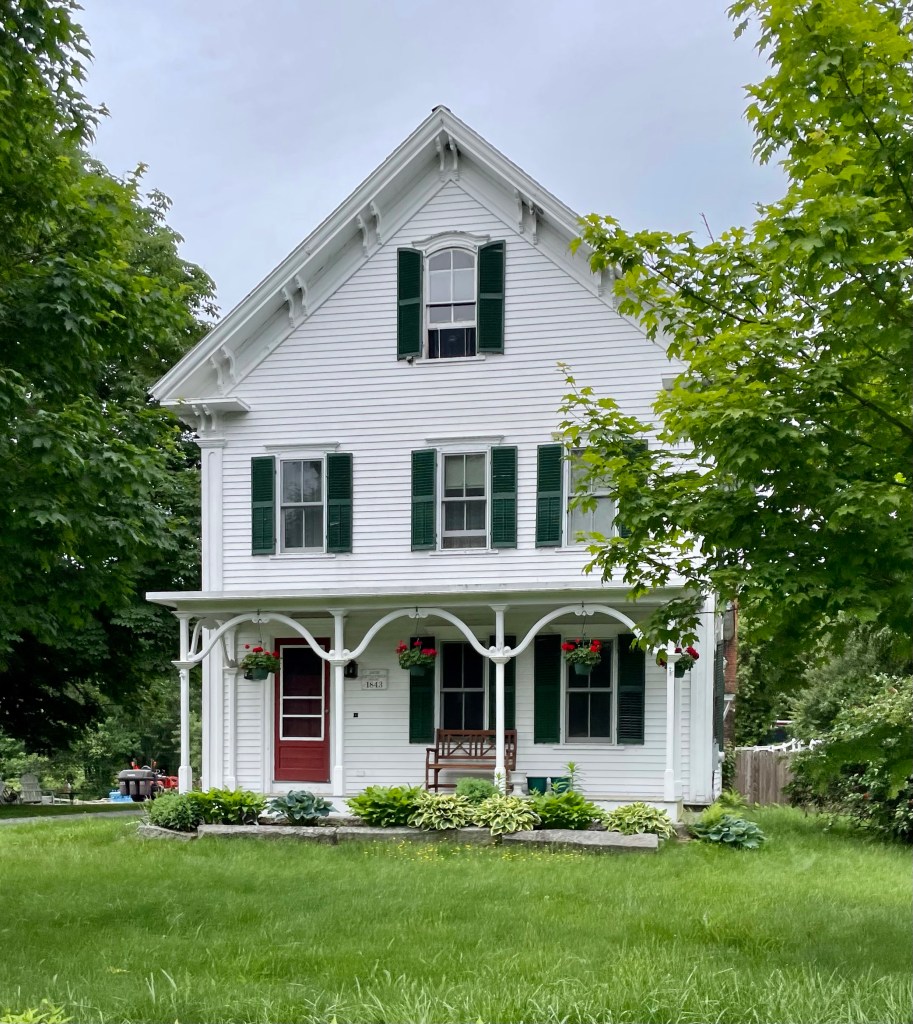
One thing I really love about small towns in New England is the prevalence of amazing old homes on the winding back roads. Located in Boxborough, MA, the Jacob Littlefield Farmhouse showcases the agricultural character and charm seen in the town. The farmhouse and outbuildings were built by Jacob Littlefield, who likely hired a housewright from town as the home is a near match to a home built on a nearby street. Mr. Littlefield was a farmer from Wells, Maine with seven children and a wife named Anna. After his death, his wife Anna owned the farm, until her death in 1896. Their son Albert ran the farm from about 1896-1922, after which time Jacob’s grandson Earl was the owner. Earl was taxed in 1928 for ownership of two horses, 17 cows, a bull, the house, barn and shed, tool house, ice house, root house, hen house, garage, and a second house on 101 acres. He resided here until 1929 when it was sold out of the family. Since then, subsequent owners have restored the home and the various outbuildings to maintain the architectural and historic integrity of the property. We need more stewards of old homes like this!
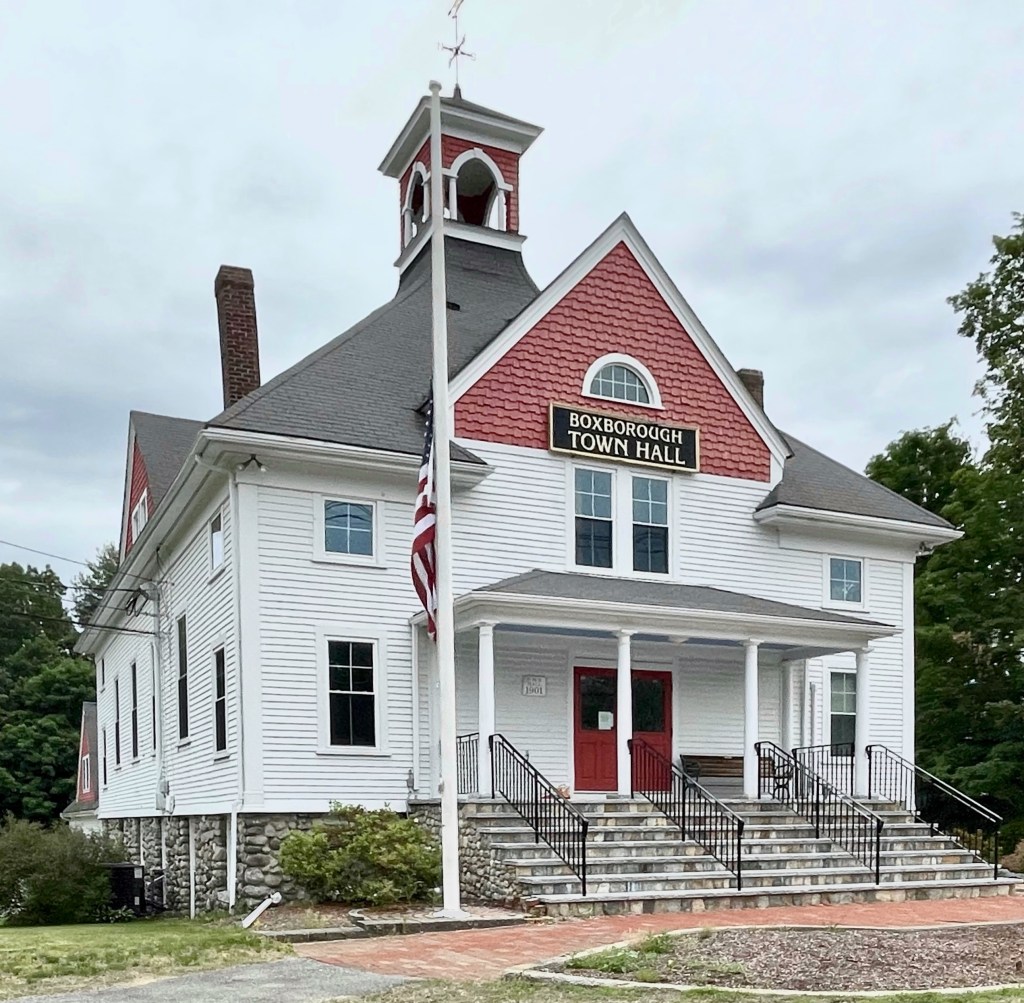
The area which became the town of Boxborough, Massachusetts, was first inhabited by the Native Americans of the Nipmuc and Pennacook tribes. Land in Boxborough was not settled by colonists until the beginning of the eighteenth century by farmers looking for fertile land to establish farms, who branched out from nearby Acton. Boxborough was formed from Harvard, Littleton, and Stow in 1783 and was incorporated as its own town. With the exception of small local industries including gristmills, sawmills, and cooperages as well as some minor boot and shoemaking, comb-making, and a lime quarry and kiln, Boxborough’s economy remained almost entirely agricultural through the 19th century. The town grew steadily and a Town Hall building was funded by the turn of the 20th century. This Queen Anne/Colonial Revival Town Hall building was constructed in 1901, atop the foundation which was constructed of locally gathered cobblestone by local volunteer farmers. Today, the town retains much of its agricultural heritage, but it is definitely under threat by subdivisions and Neo-Colonial mansions further contributing to Bostons suburban sprawl.
Boston has many examples of adaptive reuse, likely none as frequent as converted horse stables and carriage houses from the 19th century. These one-story stables with a mansard roof on Stanhope Street in the Back Bay were constructed by 1868. The street once held other stable buildings, but those lots were either redeveloped or closed for the extension of Clarendon Street. The stables were used to store the horses and carriages of wealthy Back Bay residents including Jacob Pfaff, Dexter Follett, and Barney Corey. When automobiles replaced horses as a primary way of getting around, these buildings were converted to garages. As the land value raised here, they were adapted to commercial use eventually as restaurants. The building at the far left (now Red Lantern) was originally occupied by Gundlach’s Hofbrau German Restaurant, followed by the Red Coach Grill. A large fire occurred at the restaurant in 1955, likely destroying any historic fabric inside. The Stanhope Stables are threatened for redevelopment as the high-value land facilitates a higher and better use (presently proposed as a hotel). While the preservationist in me wants to see these stables remain intact, my stance is that the brick facades should be reconfigured into a new development in a lobby or restaurant.
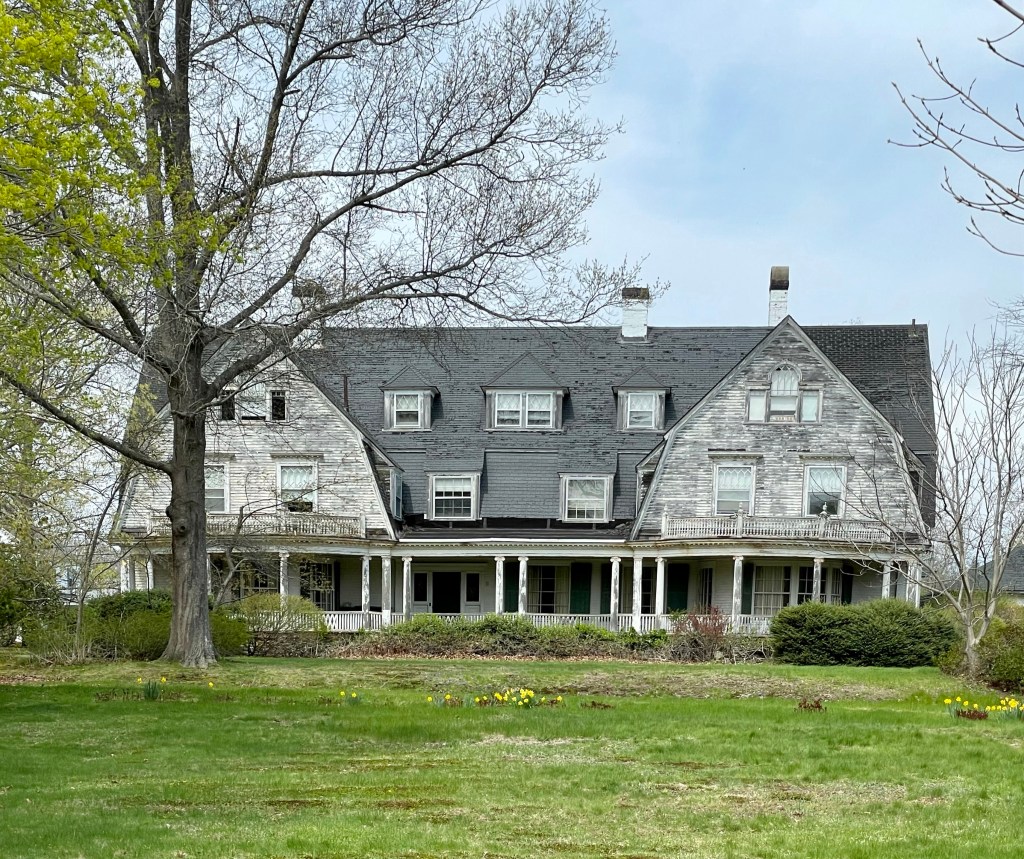
This massive summer “cottage” in Rye Beach, NH, was built around 1895 for St. Louis businessman George L. Allen. The massive Colonial Revival home features a gambrel roof with a series of gabled, hipped and shed dormers to break it up. A circular driveway would have allowed visitors for Great Gatsby-esque parties to get dropped off by their driver and enter right into the home’s large stair-hall. The most stunning facade is the rear, which faces a lawn with views out to the Atlantic Ocean. A full-length porch on the first floor sits recessed under the floor above to provide shelter from the harsh summer sun. Sadly, the mansion has seen better days and appears to be a shadow of its former self. Luckily, almost all of the historic windows remain and the home can definitely be saved. Fingers and toes are crossed to see this beauty preserved.
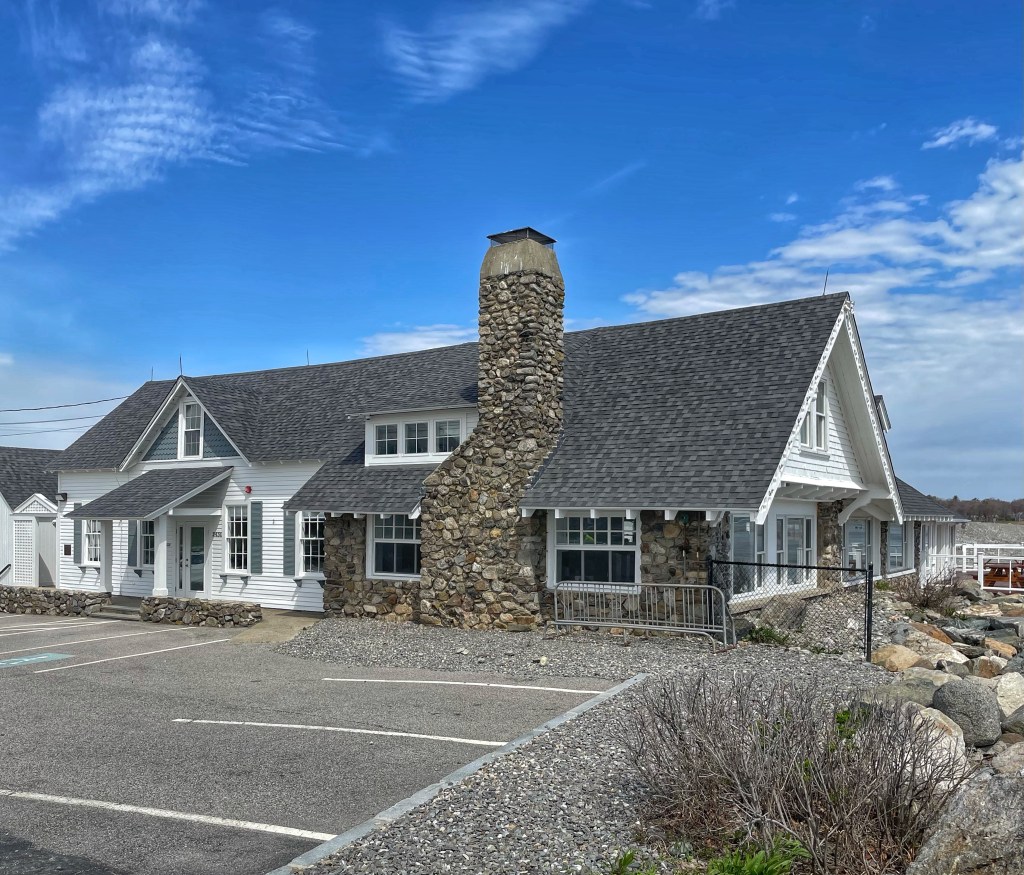
The Rye Beach Club is located right on Rye Beach, one of New Hampshire’s most upscale seaside communities, one whose history as a fashionable summer resort dates back to the 1840s. The Beach Club was established in 1925 in the decade after the First World War as the nation was experiencing a social transformation fueled by the postwar boom of the “Roaring Twenties”. As automobile ownership rates increased by the 1920s, the average motorist was no longer dependent upon schedules and the fixed routes of streetcars, railroads and steamboats. As one early historian of American recreation noted tongue-in-cheek, “The wealthy could make the fashionable tour in 1825, the well-to-do built up summer resorts of the 1890s, but every Tom, Dick and Harry toured the country in the 1930s.” As a result, many wealthy communities created private, exclusive recreation and social clubs where they would not be forced to mingle with the “average” American. Rye Beach residents formed the Rye Beach Club in 1925, which comprises of a rubblestone building with various wood-frame additions.
This house was built and first occupied by George G. Lougee, owner and proprietor of the Sea View House Hotel (demolished) across the street. Before building his own hotel, Lougee was a clerk at the Atlantic House, another summer resort. Lougee eventually worked his way up and ended up managing that hotel. Lougee’s success managing the Atlantic and later, the Farragut, enabled him to pursue his own enterprise and build his Sea View Hotel. When Lougee sold the Sea View hotel, he also sold this house with it. His former Stick style home was then converted to additional rooms at the hotel until it closed in the 20th century.
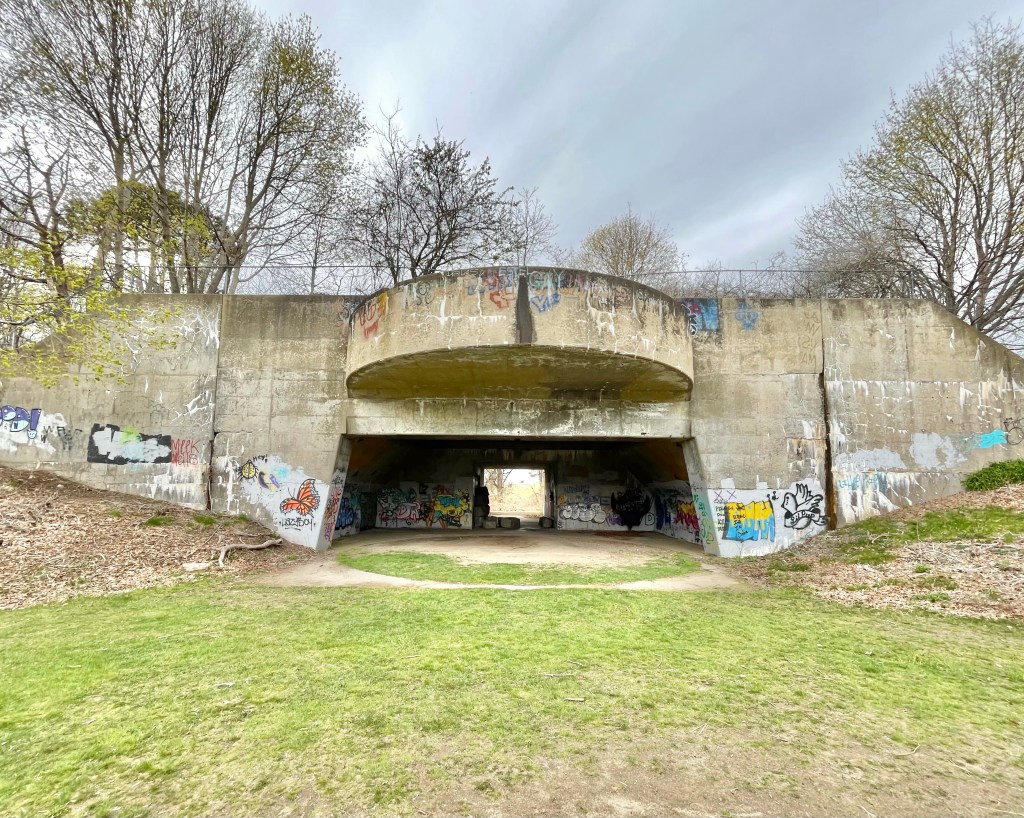
Odiorne Point in Rye New Hampshire was owned by the Odiorne Family from at least 1800, when the family built a farmhouse on the land. The peninsula juts out into the Atlantic Ocean, just south of Portsmouth, and it was seen as a strategic position by the United States Government, to protect the Portsmouth Naval Shipyard. With the advent of World War II, the United States Government deemed it necessary to improve the fortifications commanding the approaches to the Portsmouth Navy Yard, so the Government acquired this property and named it Fort Dearborn. Giant 16” coast defense guns and other equipment were installed to protect the coast from the impending German advance into North America. The Government acquisition on Odiorne’s Point included Mr. Odiorne’s home and 24 other properties, with many fine old homes on the coast demolished to make way for military facilities, but the Odiorne house was converted to a barracks. When The Nazi forces were beat in Europe, the fort was deactivated and all the guns were removed. In the Cold War period, the U.S. Air Force took formal possession of 45.3 acres at Odiorne’s Point in 1955, which it had been using since 1949 as the Rye Air Force Station. By 1961, the defensive use of the site was not as important, and the site was sold to the State of New Hampshire as a State Park. Today, you can explore the park and the decaying concrete batteries up close, which is a favorite excursion of mine.




 Buildings of New England
