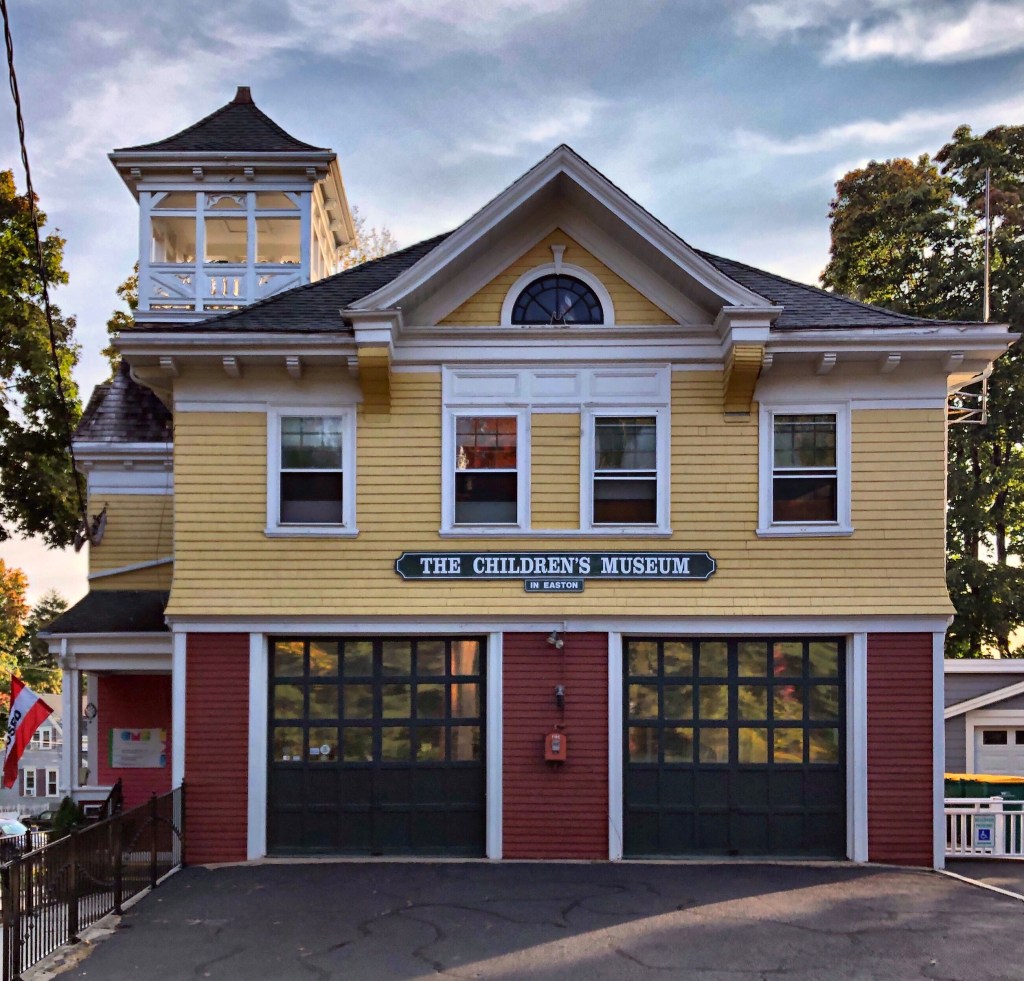
In the early 20th century, the village of North Easton, Massachusetts saw large growth, in large part by the Ames Family. The town had previously had a volunteer fire station, but due to the development, a permanent fire department was needed. In 1904, Mary S. Ames (later Mrs. Louis Frothingham) donated land for the purposes of building a fire station; across from the Ames Shovel Works. The fire station, completed in 1905, remained active until 1968, when the town’s modern firehouse that could accommodate larger fire apparatus was constructed. In 1991, the former fire station became the home of the Children’s Museum in Easton, which it remains to this day.
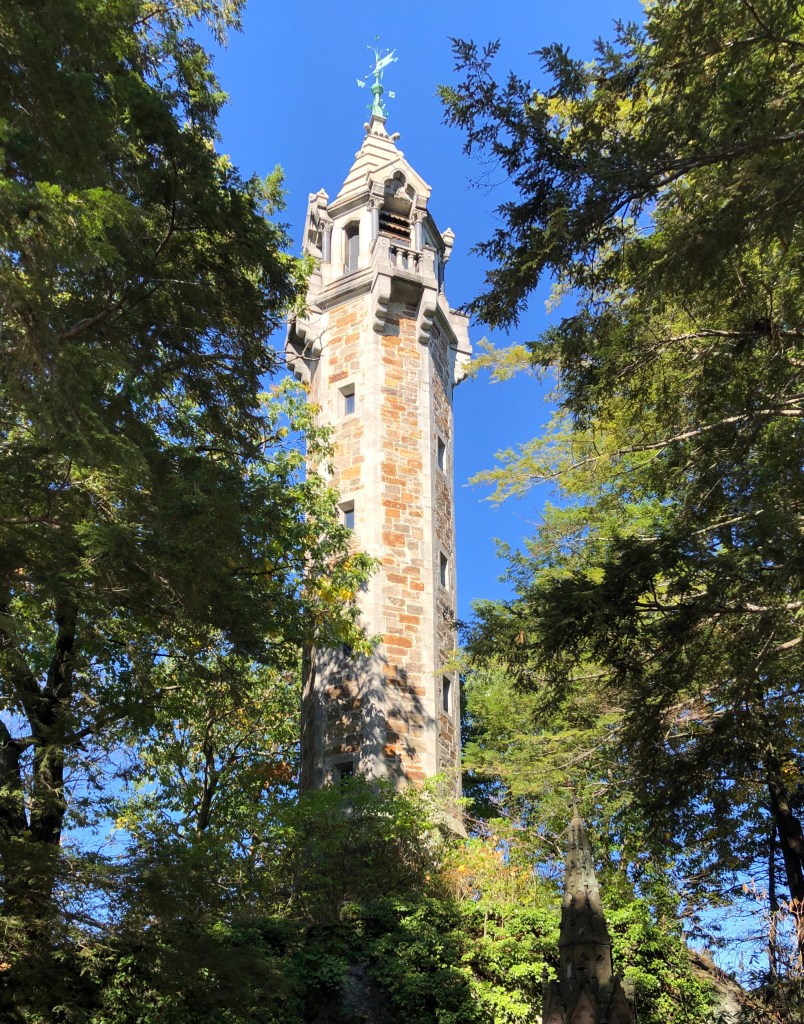
The bell tower at Forest Hills Cemetery is an octagonal Gothic revival structure located on Snowflake Hill just past the entrance gate and administration building and was completed in 1876. The 100-foot tower is constructed of Roxbury puddingstone and trimmed with granite. The roof is clad with granite tiles and topped with an ornate copper weathervane. Originally its swinging bell tolled, but it has since been replaced with an electronic carillon. The bell tower rises dramatically from massive outcrop of Roxbury puddingstone known as Snowflake Hill which is offset by smooth lawns and Victorian planting beds. While the large trees surrounding partly obscure the tower, it truly is a stunning building.
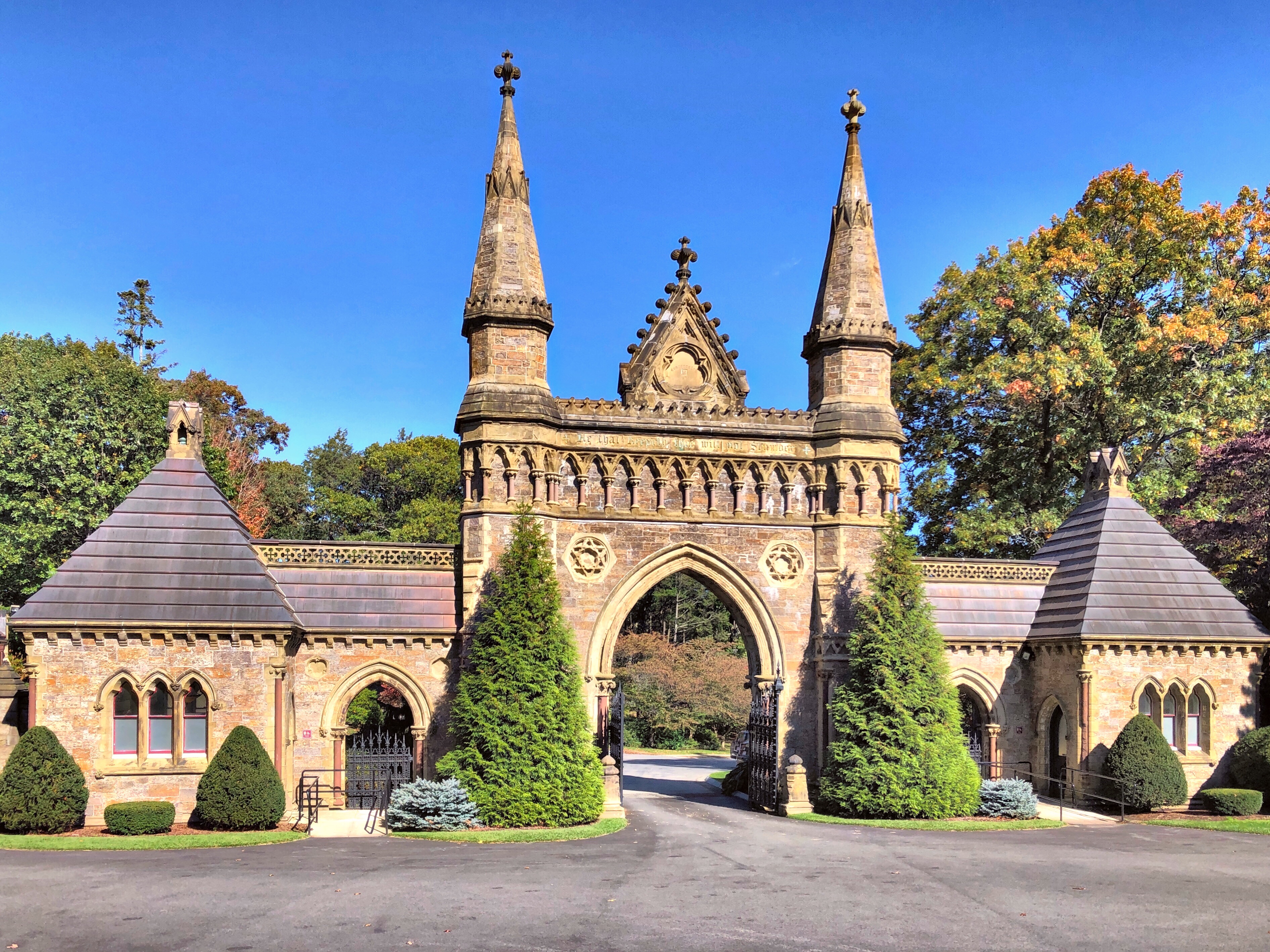
Forest Hills Cemetery was founded in 1848 by Henry A. S. Dearborn, then mayor of Roxbury. He designed this magnificent cemetery to offer the citizens of his community a place to bury and remember friends and family in a tranquil and lovely setting. Forest Hills embodies the ideals of the rural cemetery movement, which begun at nearby Mount Auburn Cemetery, in Cambridge in 1831, which was co-founded by Dearborn. Many rural cemeteries have elaborate entrance gates, possibly serving as a dramatic transition from the secular world to the spiritual realm of the cemetery, and perhaps as a metaphor for the journey from life to death. This entrance gate was built in 1865, replacing an earlier Egyptian Revival gate constructed in 1848. Designed by Charles Panter, the gate is constructed of local Roxbury puddingstone, with three arched openings with ornate iron gates surmounted by decorative scrolled ironwork. The central gateway is framed by two conical spires and a central stone pediment, all topped with stone crosses.
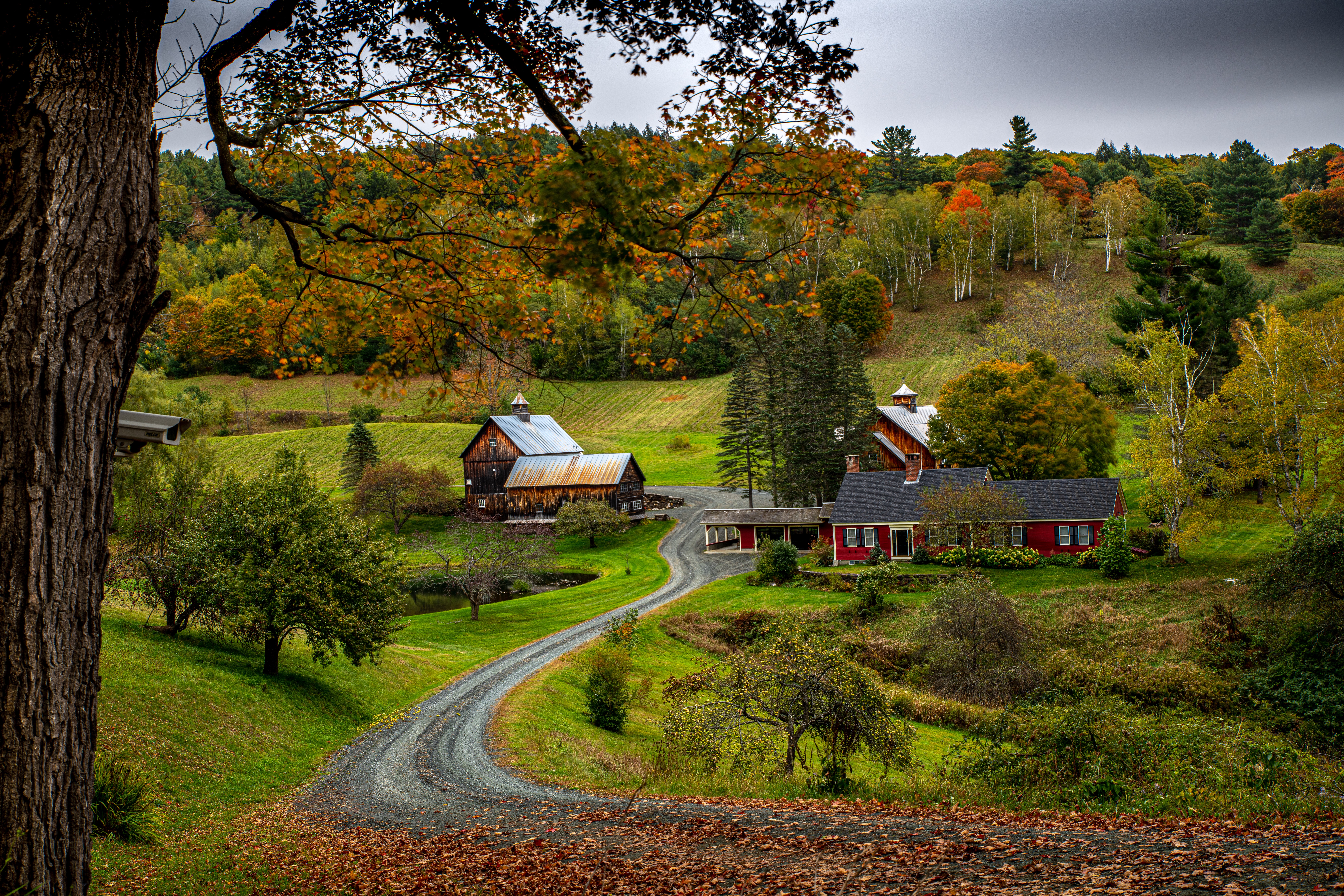
Without question, this property is the most photographed site in the tiny town of Pomfret, Vermont, if not the state. The property dates to the late 18th century when John and Samuel Doten moved to the newly settled town of Pomfret Vermont, overlooking the growing town of Woodstock in the valley below. The two brothers acquired vast farmland on the hills of Pomfret and each built farmhouses adjacent to eachother, with Samuel getting elevated land and John developing the land sunken off what is now known as Cloudland Road into this stunning property. Sleepy Hollow Farm remained in the Doten family for centuries until the 1950s, when the owners sold the property to move to Woodstock and work for Laurance Rockefeller, the famous philanthropist and conservationist, who later donated his Summer home in Woodstock to the National Park Service. The property sold numerous times in the late 20th century, and is presently owned by Aerosmith guitarist Joe Perry and his wife, Billie. They are clearly great stewards to the property’s rich history and various outbuildings, and must not care too much to have swarms of photographers at the end of their driveway year-round!
Located in North Pomfret, Vermont, the North Pomfret Congregational Church is one of many white clapboard church buildings constructed in the mid 19th century. Built in 1847 by the Church of Christian Brothers and the Congregationalists, the church was used by the two religious societies as a joint meeting house, each society holding services in the church on alternating Sundays. The Greek Revival style church features a prominent tiered, boxed bell tower with louvered lancet openings and a slender octagonal spire.
This little brick building may appear like a schoolhouse, but it was actually built to house the 1761 Town Charter for Pomfret, Vermont. The building is believed to have been built in honor of Hosea Doten (1809-1886), who was an engineer, school teacher, and land surveyor in Windsor County Vermont, with his former students constructing the building. It was built nearby the Town Hall and Clerk’s Office and features a fire-proof walk-in vault inside.
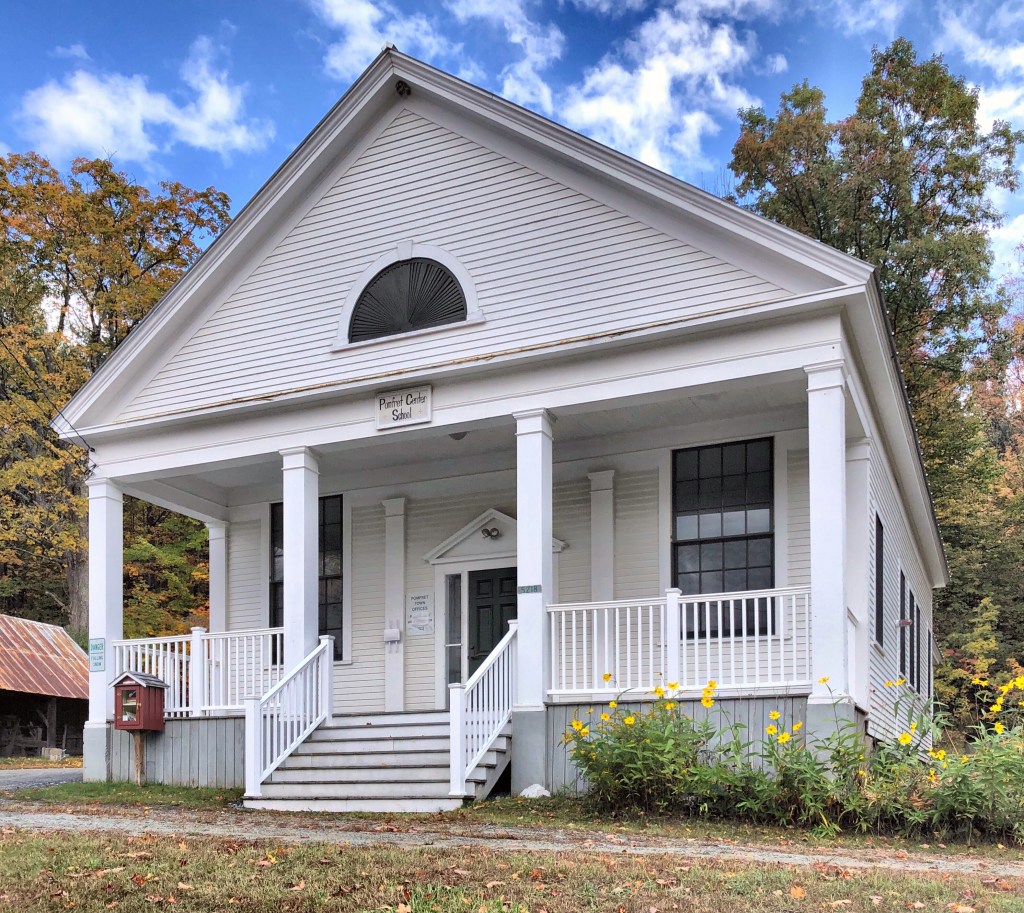
Located across the street from the Congregationalist Church (now Town Hall) in Pomfret Center, the Methodists in Pomfret Vermont built this church building just a couple years after their neighbor was completed. Replicating the Greek Revival style seen across the street, the building showcases a templed form with projecting portico, as an excellent vernacular example of the style. Similar to its neighbor, this church was sold to the Town of Pomfret in the 1880s, modernized in the early 20th century, and converted to a district schoolhouse.
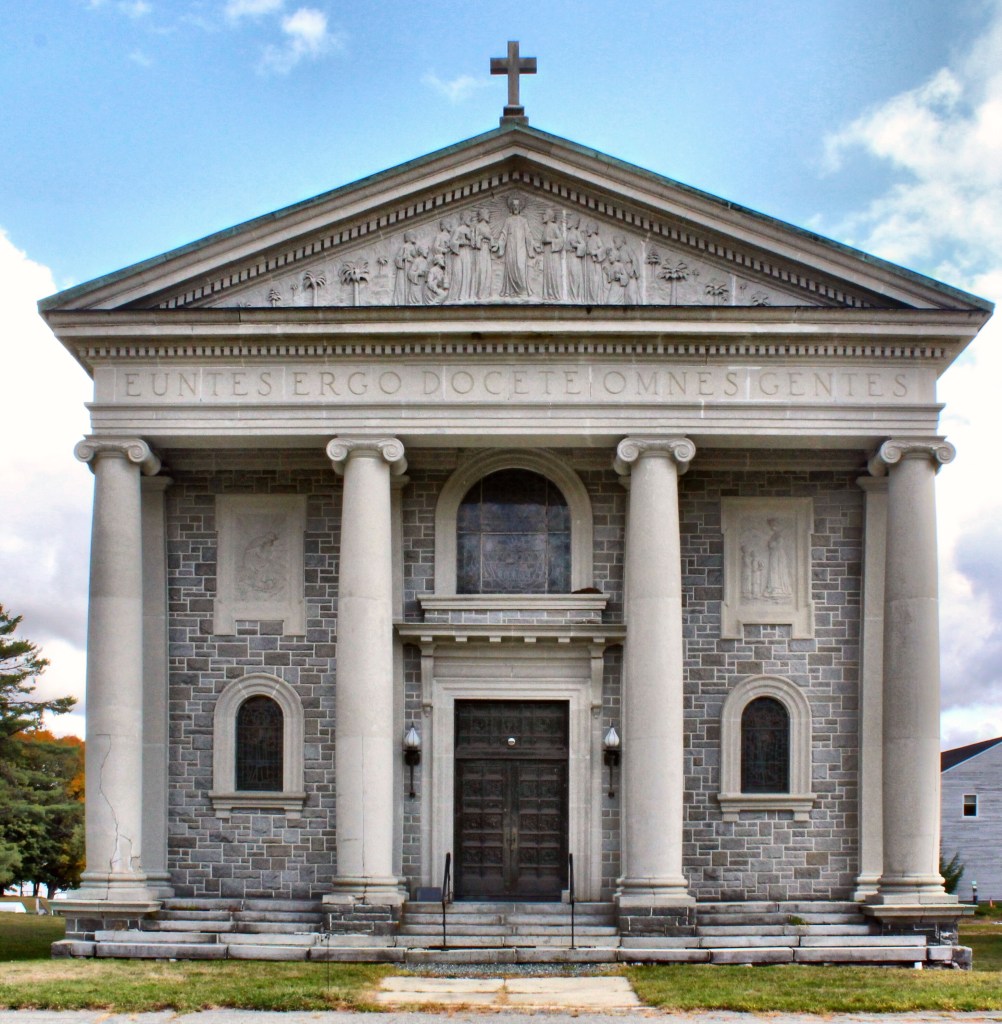
Located in the Enfield Shaker Village in Enfield, New Hampshire, this stunning chapel building clearly depicts the significance of religion and faith in the Shaker Community. The church structure however, was built after the Shakers sold the property! In 1923, after 130 years of farming, manufacturing, and productive existence, declining membership forced the Shakers to close their community and put it up for sale. In 1927, the Shakers sold the site to the Missionaries of Our Lady of La Salette, an order of Catholic priests, ensuring the continued tradition of spiritual, communal life on the site. The La Salettes also continued the very active agricultural use of the site as well as establishing a seminary and high school here.
The Mary Keane Chapel dates from the post-Shaker era at the Church Family site. Designed by Donat R. Baribault of Springfield, Massachusetts, the chapel was built for the Brothers of the La Salette Order with funds donated by their benefactress, Mary Keane. Ms. Keane, who had inherited a fortune from her uncle, pledged that fortune to assist the La Salette’s in the establishment of a French language seminary in Enfield. Her wealth helped purchase the former Shaker community, renovate the building for La Salette’s use, and build the Mary Keane Chapel.
The property was purchased again in 1985 and has operated as the Enfield Shaker Museum starting in 1986. The museum offers educational exhibits and programs designed to invite active participation in learning about the extraordinary people who once lived and worked here.
This 1819 building was originally located next to the first dwelling house on the present location of the Great Stone Dwelling in Enfield Shaker Village. The Shakers moved this structure to its current location in 1834 to make room for their new stone dwelling house. The building was primarily used as a school building for the Shaker children, but was soon converted to a tailor’s shop after the boy’s and girl’s schools were joined into one room. In Shaker communities throughout the United States, it was customary for Shaker tailors to create the clothing for the men of the community. A brother’s standard uniform consisted of a great coat, dress coat, waistcoat, and trousers.
The Enfield, New Hampshire Library and Memorial Building, also known as Whitney Hall, is a transitional Queen Anne/Shingle Style building built in 1900-1901. Local citizens donated funds for construction of the building to house the public library, as well as a selectmen’s office and rooms for fraternal organizations (notably the Grand Army of the Republic). The second floor, known as Whitney Hall, served as a public hall and theater. Mill operator George Whitney donated $1,000 for its construction and also built the village’s first electric plant, making Enfield one of the first towns in the state to have electricity for its homes and streetlights. During World War II, the top of the tower was enclosed to spot for enemy aircraft, remaining enclosed to this day. In 1976 the building underwent major renovation and now also contains the Enfield town offices.




 Buildings of New England