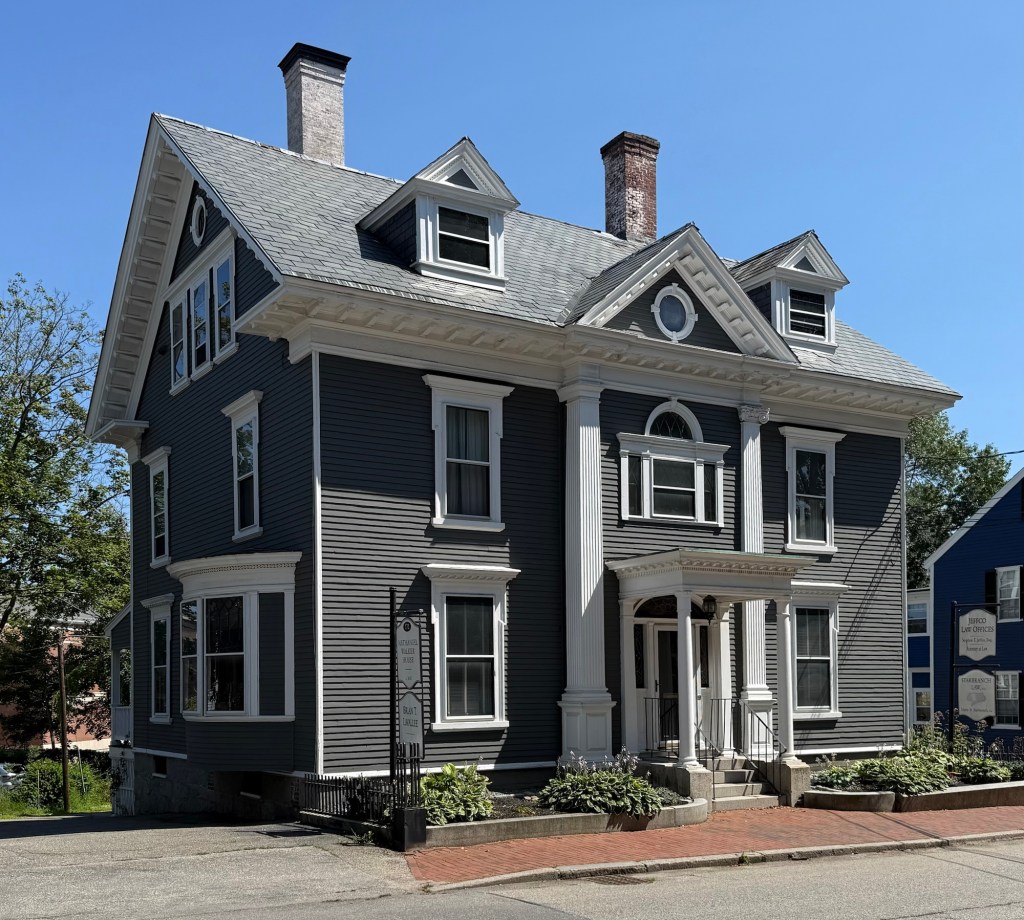
Walker House // c.1857

The Walker House at 171 Middle Street in Portsmouth is a wood-frame Italianate-style residence that was greatly modernized at the turn of the 20th century into the Colonial Revival style, showcasing how differing styles can actually blend together fairly harmoniously. The house was built around 1857 for Nathaniel Kennard Walker (1807-1880), a ship owner who operated a hat shop in town. After his death in 1880, Nathaniel’s youngest son, Arthur Willard Walker (1855-1906), inherited the home, and some time after his marriage in 1886, modernized the family home in the then fashionable Colonial Revival style, popular in many New England towns as a callback to historical designs. Original details of the Italianate style that remain include: the overhanging bracketed eaves, wide cornice, centered gable at the roof, and the window trim. Colonial Revival additions to the Walker House include: the entrance with leaded glass fanlight transom and sidelights, entry portico, two-story fluted pilasters at the facade, and Palladian window at the second floor stairhall.
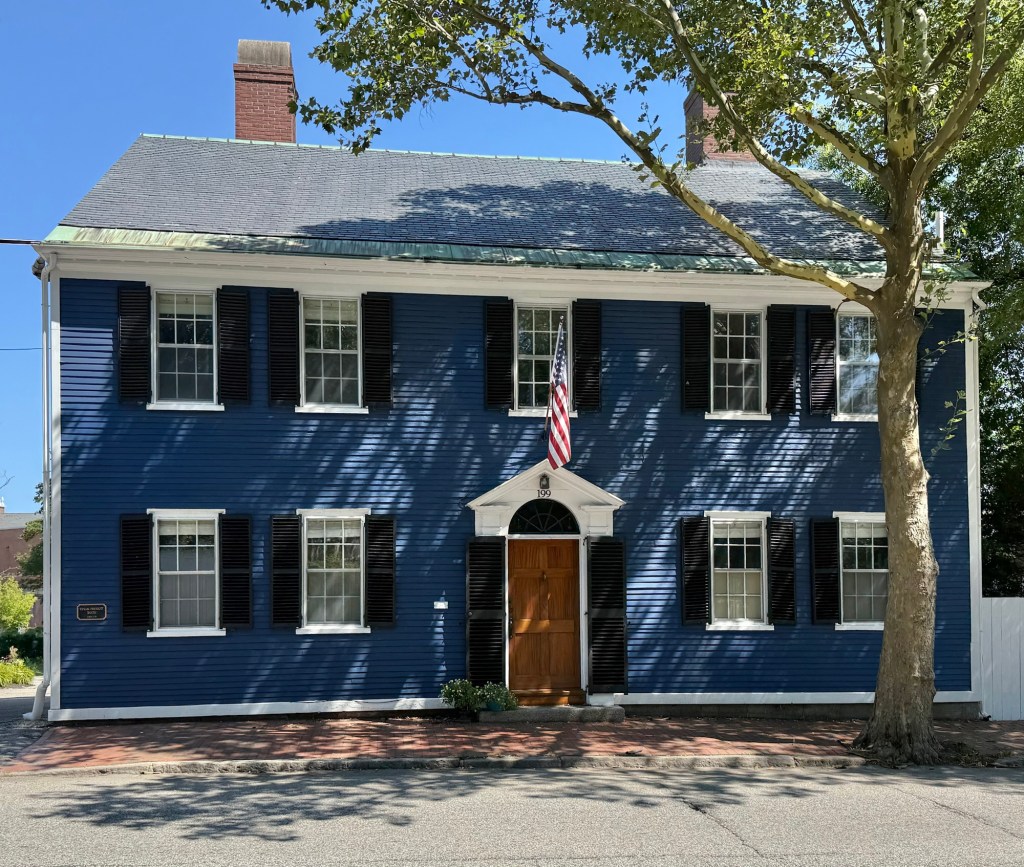
Stanwood-Upham-Prescott House // c.1790

Federal period houses like the Stanwood-Upham House at 199 Middle Street in Portsmouth, do not need the frills and detailing of later Victorian styles, in this case, less can definitely be more! This residence was built around 1790 for William Stanwood (1746-1827), a wig-maker, merchant and Revolutionary War veteran. After his death, the property was acquired by Timothy Upham (1783–1855), who himself was a veteran in the War of 1812, who at the Siege of Fort Erie, led the regiment to rescue General James Miller. After the war, he was appointed as Collector of Customs at Portsmouth, and engaged in politics before moving to Charlestown, living there until his death in 1855. The residence was later-owned by sisters, Mary Elizabeth and Josephine Fitts Prescott, who purchased the property from inheritance of their late-brother, merchant, Charles William Prescott. The residence has a five-bay symmetrical facade with center entrance with pediment and fanlight transom, slate roof, and twin chimneys.

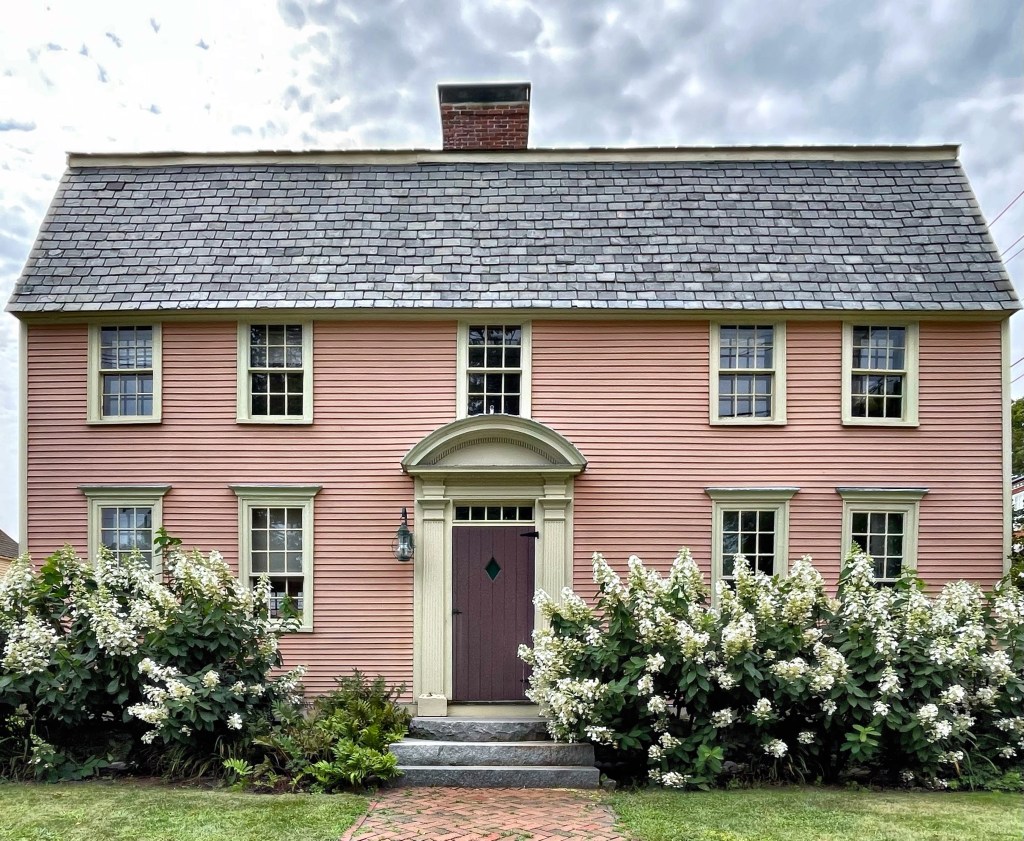
Shillaber House // c.1768

The Shillaber House on Washington Street in Portsmouth, is one of the most photogenic residences in the charming port city. The Georgian-style residence was likely built in the late-1760s, after Joseph Shillaber (1725-1791), a potter, purchased land here in 1766. The residence is of a typical form for 1760s Portsmouth, with a gambrel roof with pedimented dormers and a slightly off-center entry with Georgian style pilasters and pediment. In the later half of the 19th century, the house was “Victorianized” with a bracketed door hood and bay windows at the facade, but the house would be restored by later owners to a version close to its original conditions. The exposed clapboard siding adds to the home’s unique charm.

Benjamin Holmes Jr. House // c.1795

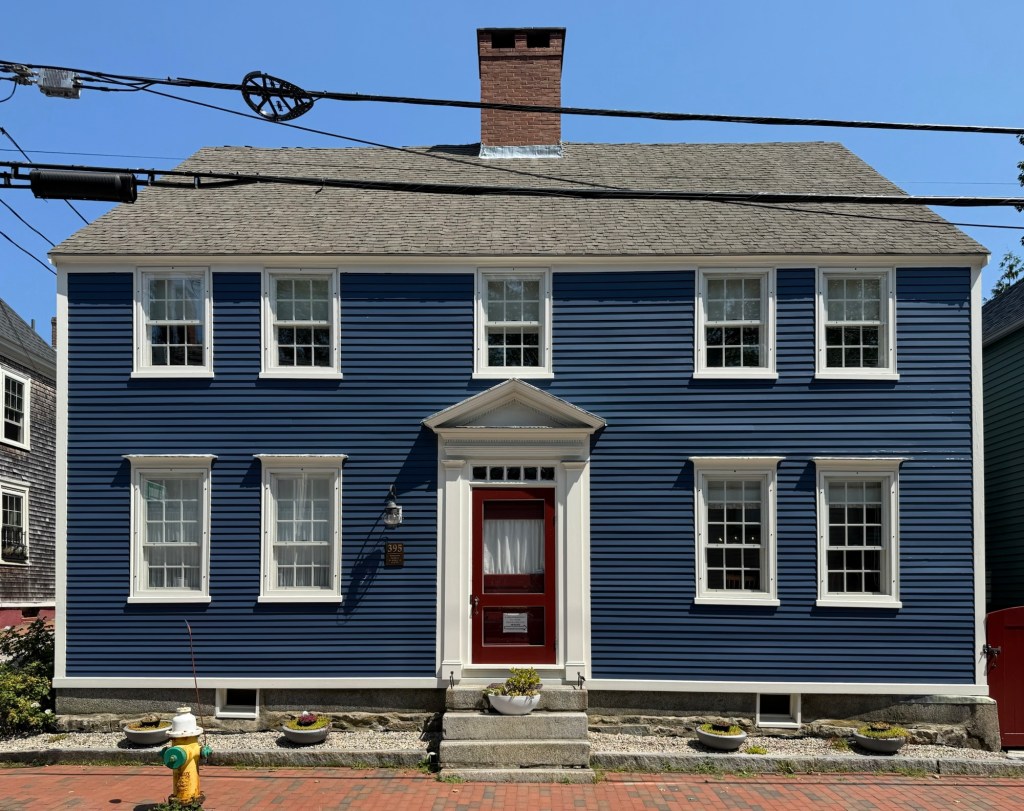
The Benjamin Holmes Jr. House at 395 Pleasant Street in Portsmouth, is a two-story, five-bay, residence with symmetrical facade with a central pedimented entry. In 1795, Benjamin Holmes (1768-1837) married Esther Lewis, and the couple moved into this residence. The late-Georgian house follows the typical form and finishes of many other coastal New England residences of the late 18th century and is in a great state of preservation.

Capt. Charles Blunt House // c.1795

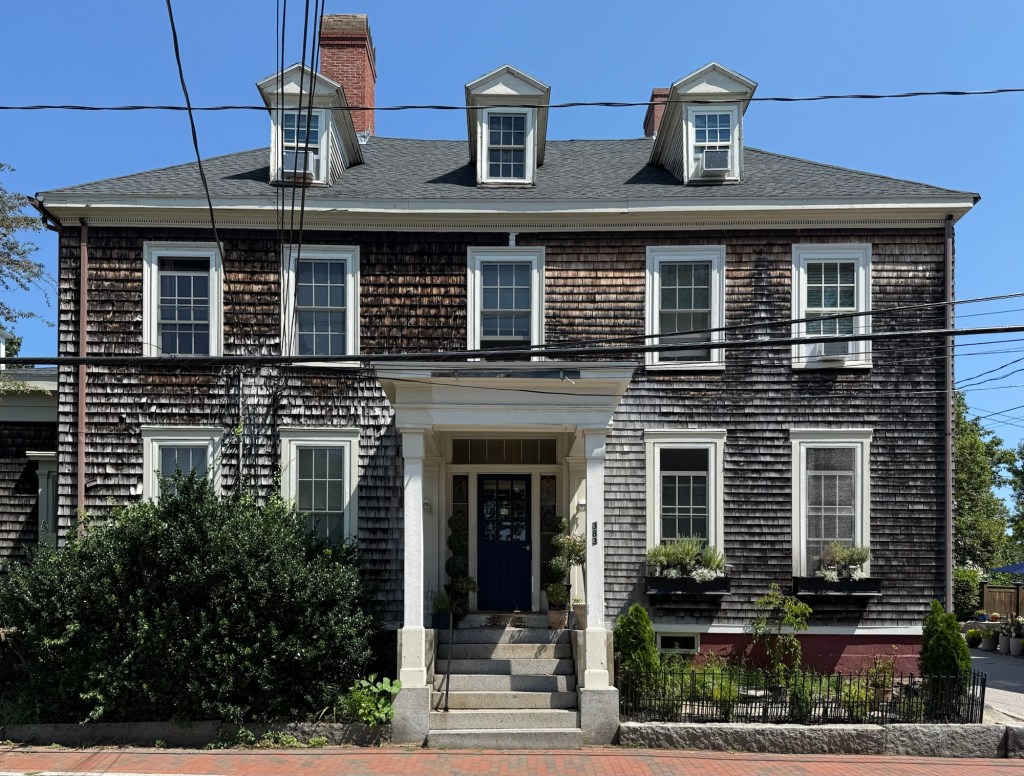
Master mariner Charles E. Blunt Sr. (1768-1823) built this large Federal period home on Pleasant Street in Portsmouth, New Hampshire near the turn of the 19th century for his bride, Abigail Laighton, and their new family. Charles Blunt was a wealthy sea captain who would be out at sea for months at a time, trading in the west indies. On a voyage near Havana Cuba in March, 1823, his vessel was boarded in the night by two piratical boats, with six men each, and Captain Charles Blunt was brutally murdered and thrown overboard. The ship’s cook was stabbed, and fed to the hogs on the brig, with the remainder of the crew maltreated and the goods plundered. The Captain Blunt House follows a symmetrical, five-bay, center entrance form, with cedar shake shingles, three pedimented dormers and large portico over the door.

Joshua Wentworth House // 1770

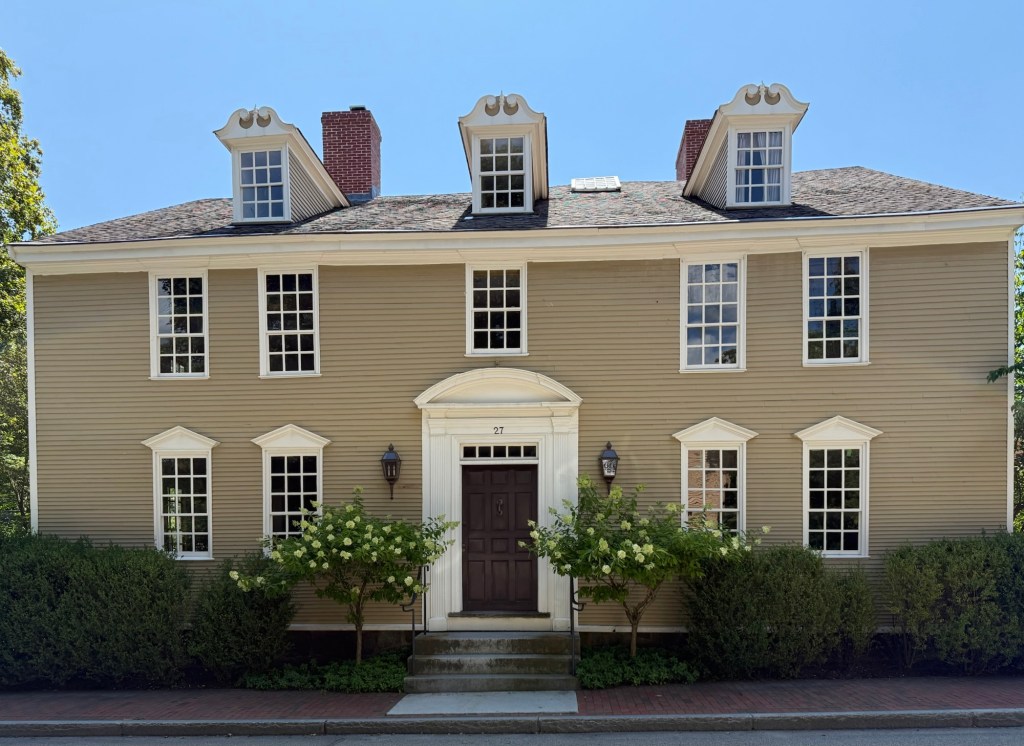
The Joshua Wentworth House at 27 Hancock Street in Portsmouth, New Hampshire, is a high-style Georgian residence built before the American Revolution, and was almost demolished in the name of “urban renewal.” The house has a side-gable roof with three broken-pediment dormers and a wood paneled door with segmental entablature, pilasters, and a five-light transom. Joshua Wentworth (1742–1809) the namesake of the house, was a grandson of John Wentworth (1671–1730), who had served as an early Lieutenant Governor for the Province of New Hampshire, and was himself, a merchant and State legislator. The house was originally located in the North End of Portsmouth, but in the 1970s, urban renewal and local politicians sought to raze portions of the town to “revitalize” the port town. If only they knew that Portsmouth would be the largest tourist draw in the state just for people to see historic, walkable neighborhoods! Businessman Harry Winebaum acquired the house and sought to preserve it. The solution: move the house by barge to the south side of town near Strawberry Banke. Luckily for us, the house was moved in 1973 and was restored. It is a private residence.

Tredick House // c.1802

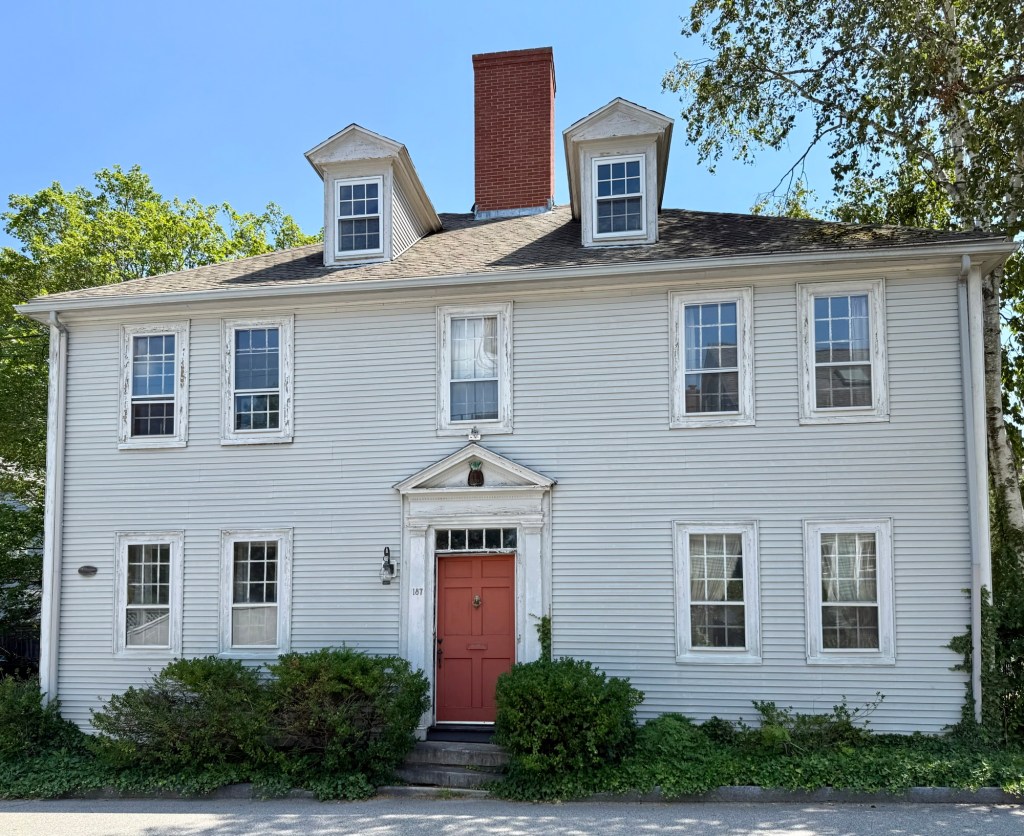
The Tredick House is located at 187 Marcy Street in Portsmouth, New Hampshire and was built in 1802 for Captain Jonathan Martin Tredick (1777-1803) and his new wife, Martha Marshall on land gifted to them by Jonathan’s father, William Tredick. In a tragic shift of fortune, Captain Jonathan Tredick never got to live in his new house as he died at sea, with accounts differing, either from fever or being swept overboard. At the time, Jonathan and Martha had two children, 2 year-old Catherine Marshall Tredick (1801-1822) and newborn Jonathan Marshall Tredick (1802-1875). Martha, a sudden widow at the age of 26 with two children, was aided by her family and that of her late husband, and operated a store nearby to supplement her income until her death at home in 1872, she was 96 and never remarried. The late Georgian style house features a hipped roof with central chimney, pedimented dormers and a pedimented entry and 9-over-six sash windows on the house.

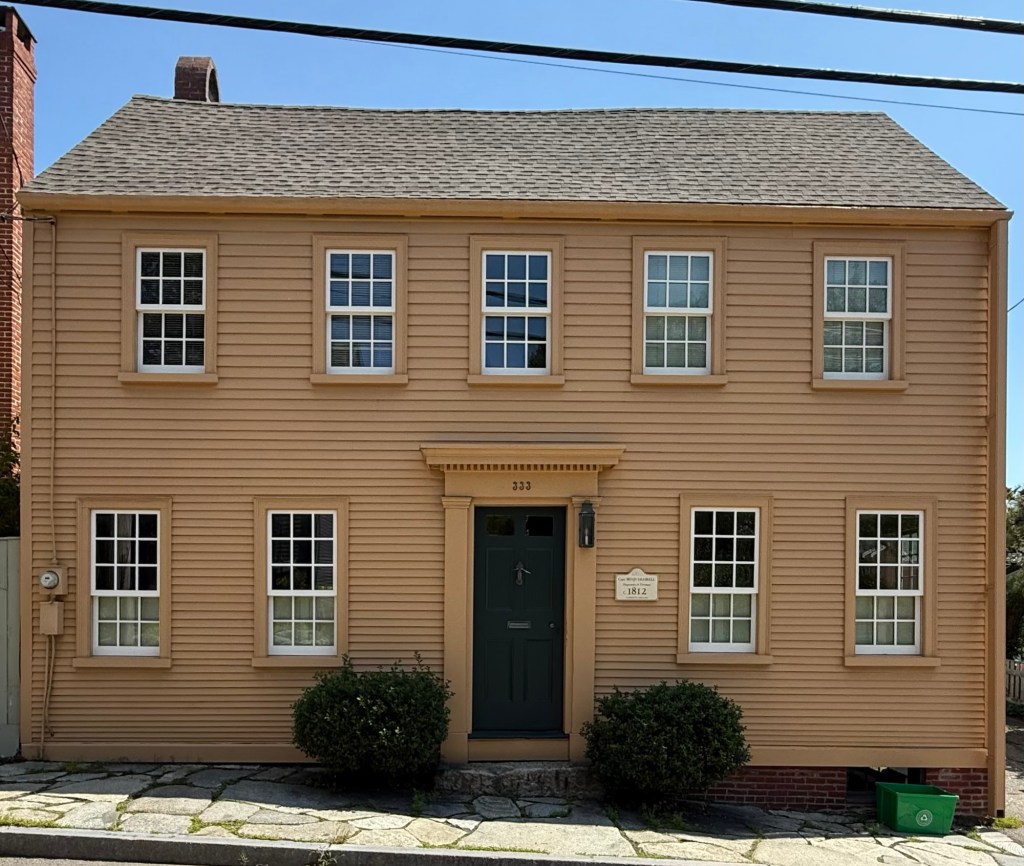
Captain Benjamin Damrell House // c.1812

The people and buildings of Portsmouth, New Hampshire, have always been closely tied to the sea. Many old houses and commercial buildings here were built for merchants, ship builders, sea captains, and fishermen, who made their living from the charming port town. This historic house at 333 Marcy Street in the Downtown area of Portsmouth, was built around 1812 for Benjamin Damrell (1781-1821) a sea captain, privateer during the War of 1812, and member of the Portsmouth Marine Society and Alert Fire Society of Portsmouth, a volunteer fire fighting group. Captain Damrell died in 1821 while at sea and his property was inherited by his widow, Lucy, who appears to have remained here for some time, raising their daughter.

Aldrich House // c.1790

An unknown builder erected this Portsmouth house during the 1790s. Thomas D. Bailey lived here in 1836 when his grandson, Thomas Bailey Aldrich, was born up the street in the Laighton House (featured previously). Thomas Bailey Aldrich (1836-1907) became a revered American poet and author. Although he grew up in New Orleans and New York City, some of his fondest childhood memories were of the years 1849 to 1852 when he lived with his grandfather in this house. Later, from 1877 to 1883, the Society for the Benefit of Orphan and Destitute Children ran their Children’s Home in this building. Thomas Bailey Aldrich died on March 19, 1907. A few months later, on August 1, 1907, the Thomas Bailey Aldrich Memorial Association purchased this building, restored it to the time period when Aldrich was a boy here, and opened it as a memorial museum. The Aldrich House was acquired by Strawbery Banke museum in 1979, and it remains a historic house museum.

Wibird-Oracle House // 1702

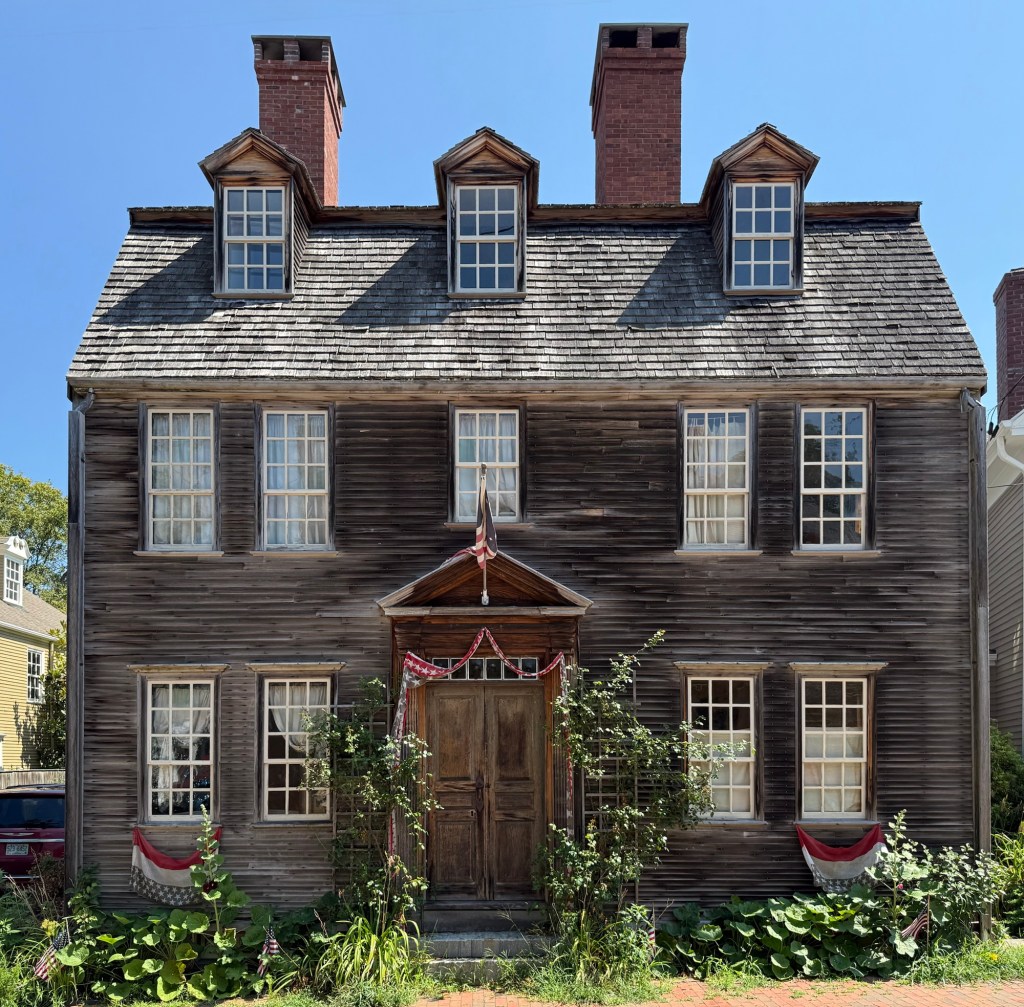
One of the oldest extant houses in Portsmouth (and New England for that matter) is this gambrel-roofed Georgian house on Marcy Street. The home was originally constructed in 1702 by Richard Wibird, who arrived to Portsmouth in the late-1600s and married Elizabeth Due (Dew) in 1701. Mrs. Due owned a market in town, and that helped propel Richard to be a prosperous merchant. Like many very wealthy residents in New England at the time, he enslaved three Africans and had five properties all over town. The house was moved two times, it was originally built behind the North Meetinghouse on Market Square. It was moved from that location c.1800 to Haymarket Square where Prescott Park is now, and again in 1937 to its present location on Marcy Street. The Portsmouth Oracle, an early newspaper, was printed and edited from this building when it was altered for commercial spaces at the ground floor. The Prescott sisters who developed Prescott Park had the foresight to move this building to the opposite corner and the home was later restored, giving us a glimpse at early 18th century merchant housing.