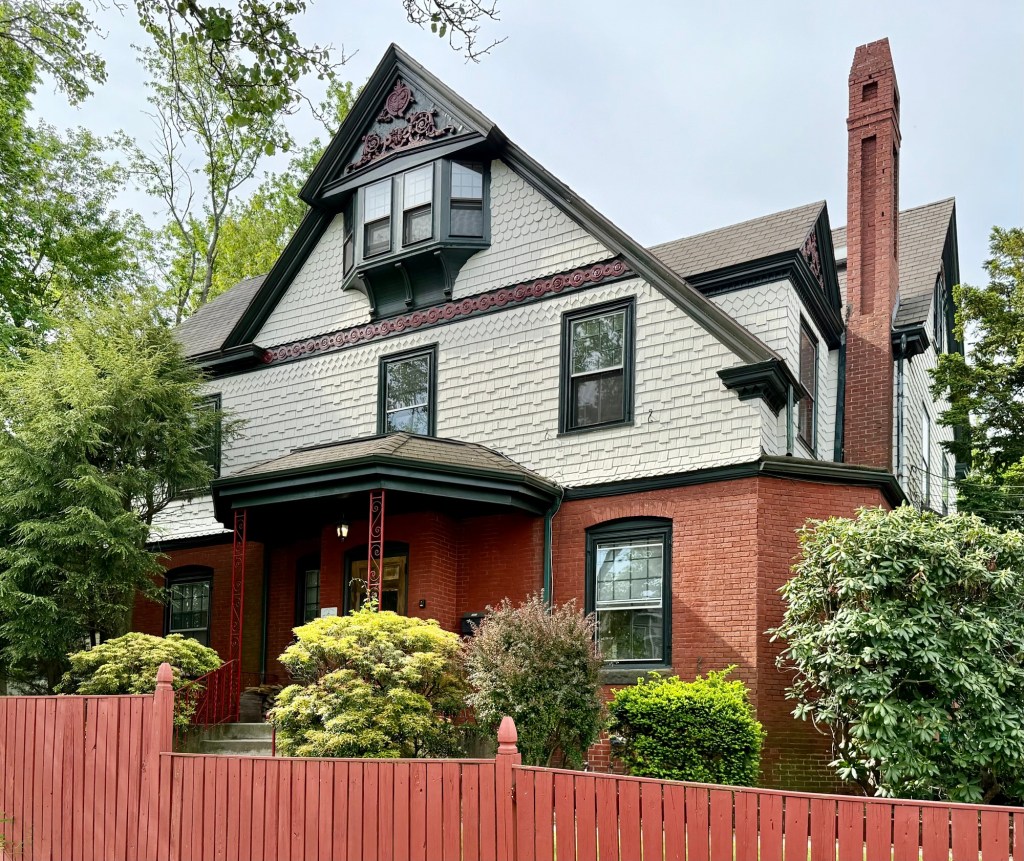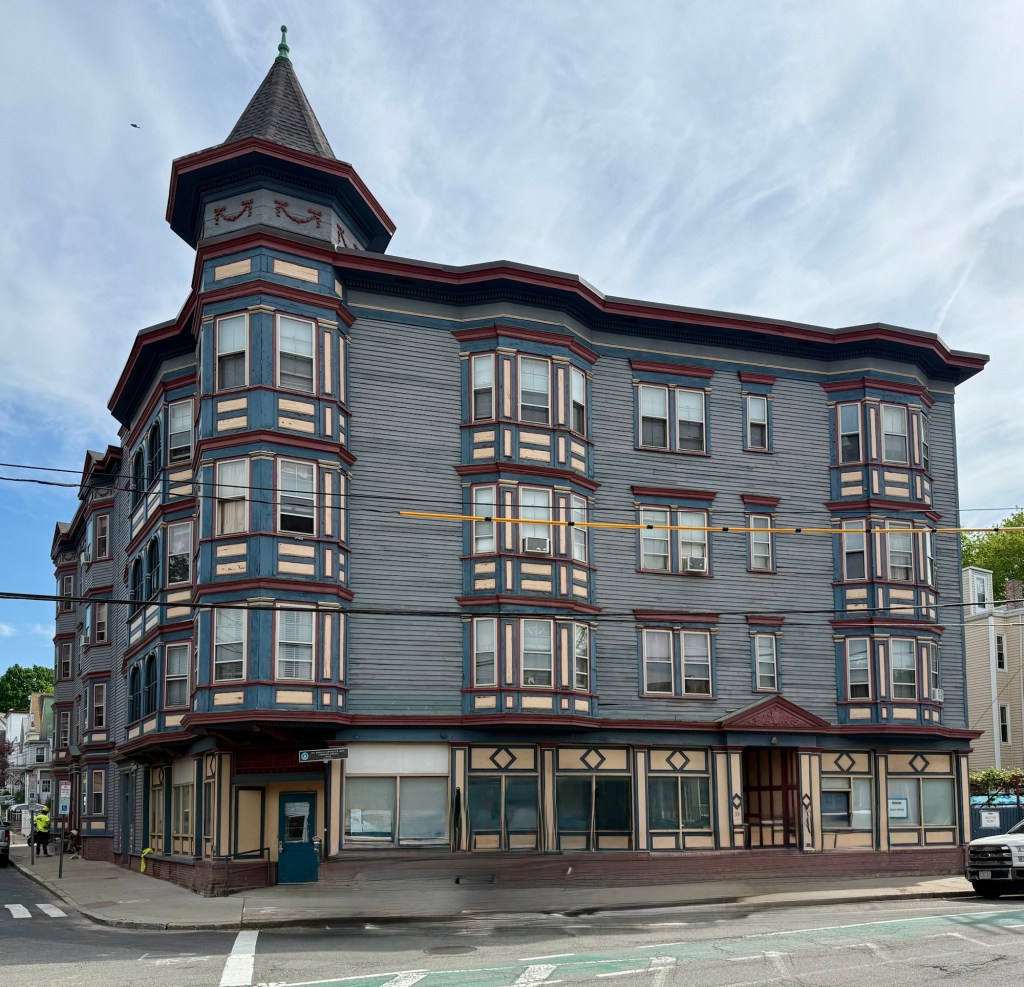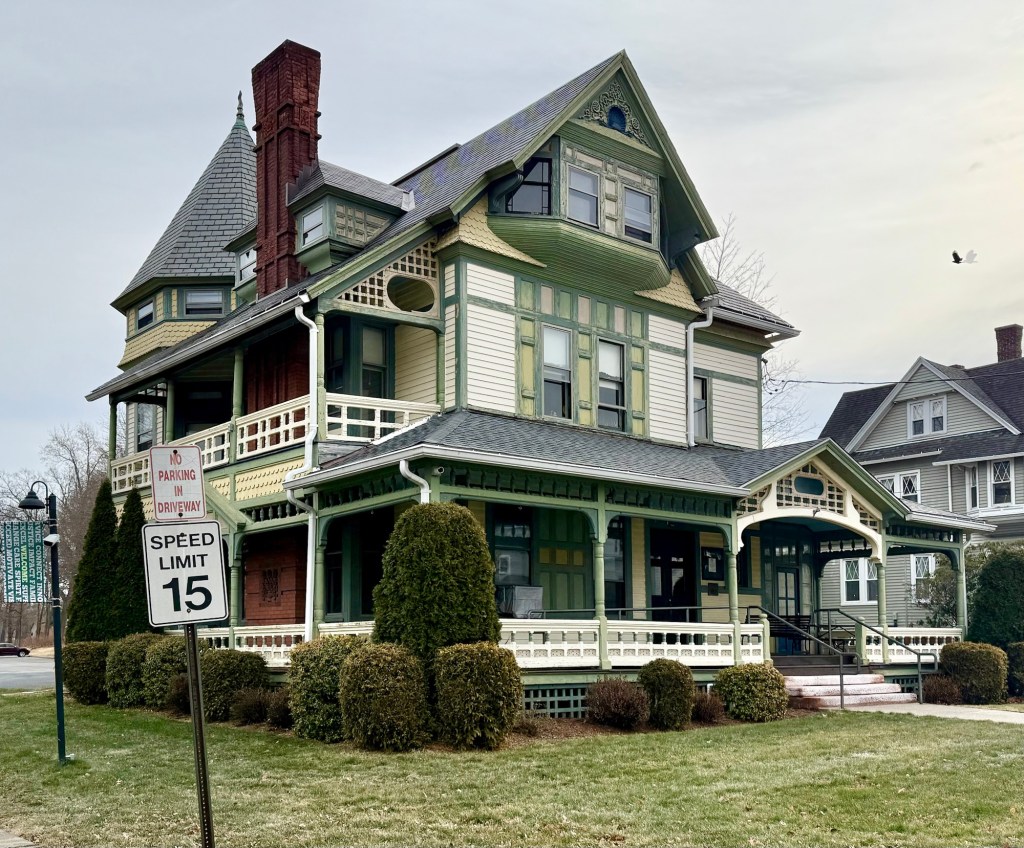
Richmond Block // 1892

The Richmond Block on Bow Street in Union Square, Somerville, is a historic and architecturally significant mixed use building. Constructed in 1892 as one of the substantial wood-frame buildings in the western section of Union Square, the Richmond was designed by architect Aaron Gould for Mr. Charles Drouet, who developed the Drouet Block, a historic flatiron building just years later. Designed in the Queen Anne style, this building is noteworthy for its corner tower, octagonal oriel bay windows, sleeping porches on the side facade, and polychromatic color scheme to highlight the many architectural details on the block.

Barnes-Luce House // c.1890

This lovely Queen Anne style home can be found on Highland Avenue in Somerville, Massachusetts. Built around 1890, the residence was built for Walter Saunders Barnes (1838-1931), a manufacturer with a paper box business in Boston. The property was sold in 1903 to Robert Luce (1862-1946), a prominent businessman and politician who founded the Luce’s Press Clipping Bureau before he was elected a member of the Massachusetts House of Representatives in 1899 and 1901–1908. He was elected the 42nd lieutenant governor of Massachusetts in 1912. After serving as Lt. Governor, Luce would spend the next decades in the House of Representatives. His Somerville house is a well-preserved example of the Queen Anne style and includes a steeply pitched hipped roof with gable and dormers, asymmetrical plan, porch with braced supports, and a half-round window in the gable.

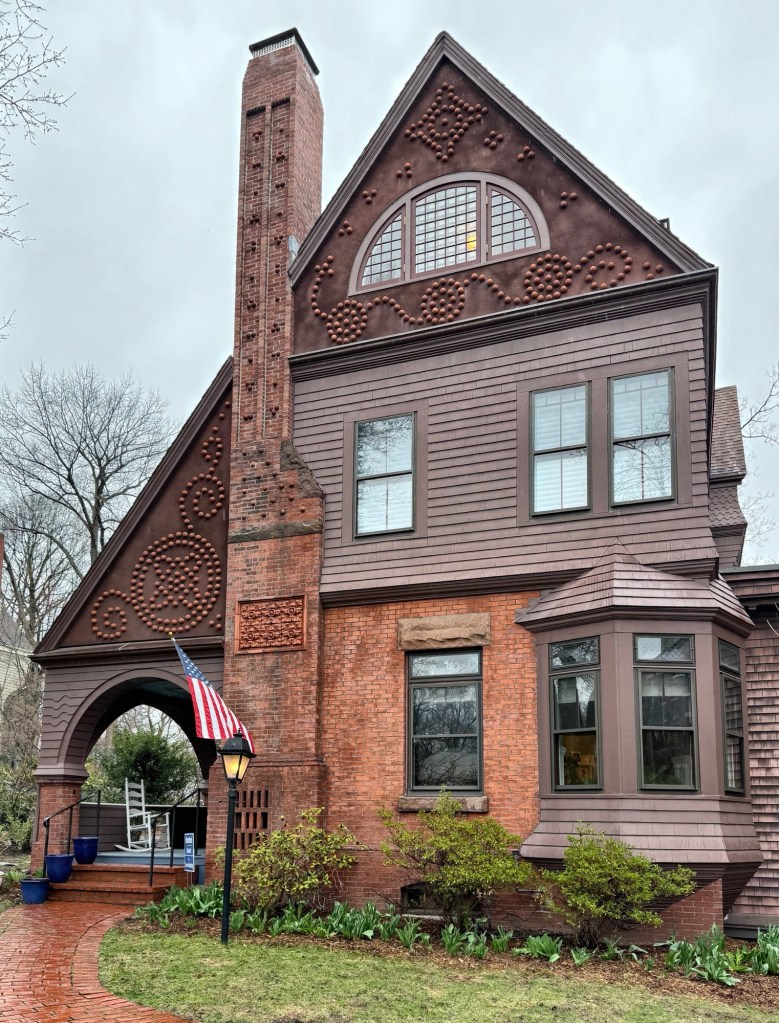
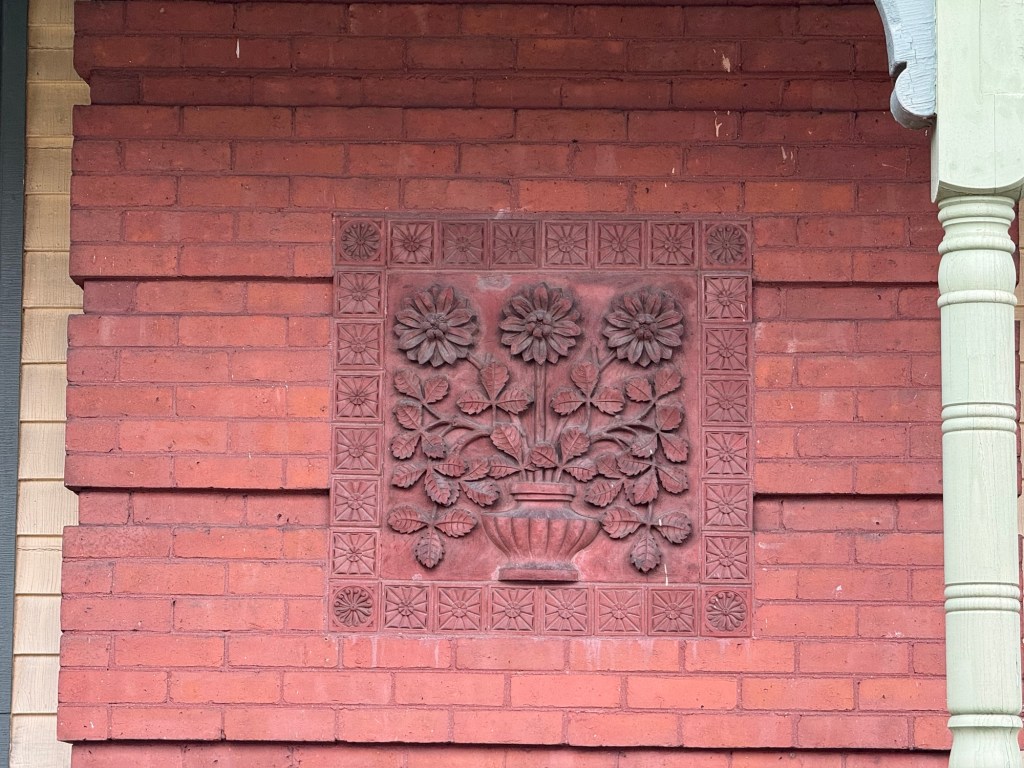
John Wales House // c.1885

In the mid-1880s, John Wales, a wealthy hardware dealer with offices in Downtown Boston, purchased house lots in the Cottage Farm area of Brookline from Amos A. Lawrence, and set out develop the site with two stately Victorian homes. This lovely home was first occupied by John’s son, George Wales and his wife, Mabel, the year of their marriage in 1885. While the architect is unclear, it is probable that the design can be attributed to architect William Whitney Lewis, who was hired by John Wales the year prior to design a stable near his home in an adjacent neighborhood. The house was rented by Wales and subsequent owners for years. The elaborate Queen Anne style house exhibits an asymmetrical plan with recessed entrance set within an arched opening, shinged and brick walls with a prominent chimney at the facade containing a decorative terra cotta panel, and the most unique stucco gables containing what appear to be terracotta balls in geometric forms. This house is a perfect example of what is so special about the Queen Anne style!

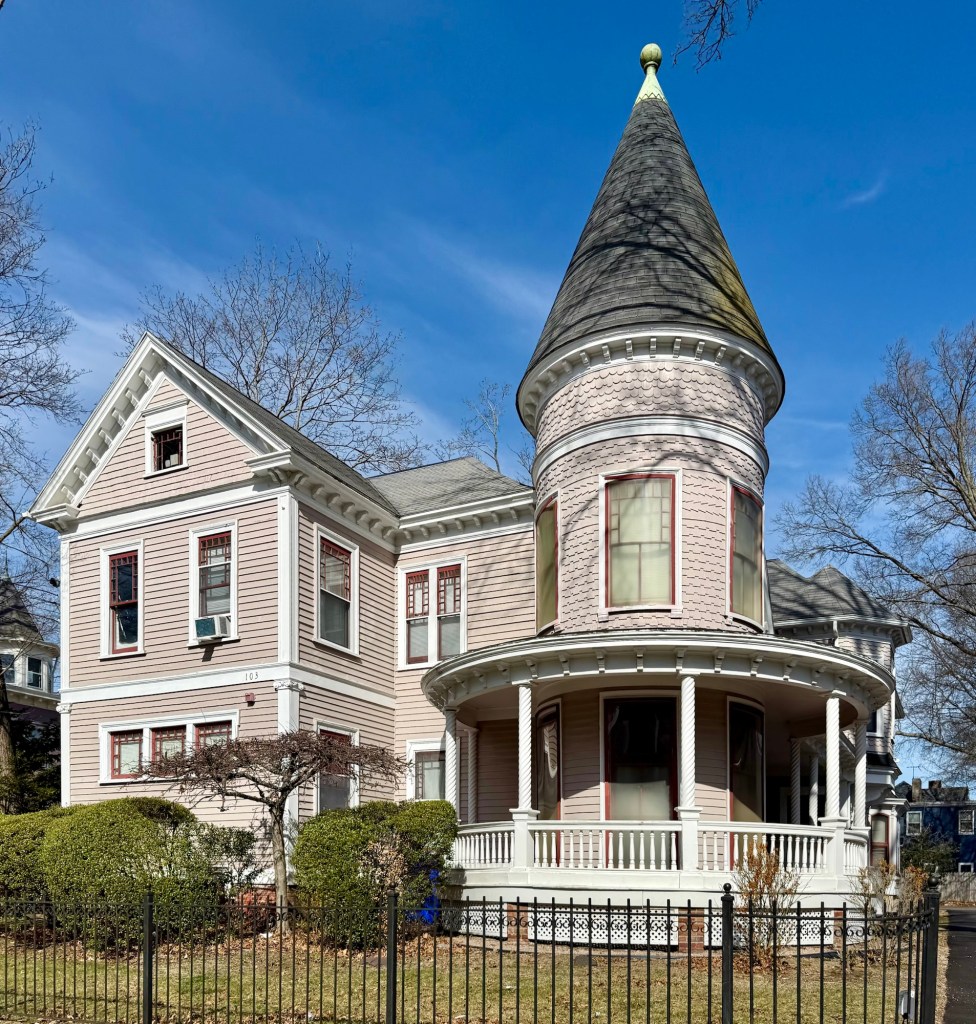
George M. Thornton House // c.1870

One of the finest homes in Central Falls, Rhode Island, is this eclectic Victorian residence on Clay Street. The home was seemingly built around 1870 and modified by the end of the 19th century by later owner, George Mumford Thornton (1850-1916). Mr. Thornton was an industrialist who was elected as one of the first aldermen when Central Falls incorporated in 1895. The well-preserved house features varied siding, a rounded corner tower with spiral-columned porch and conical roof, and original multi-light sash windows. What a spectacular home.

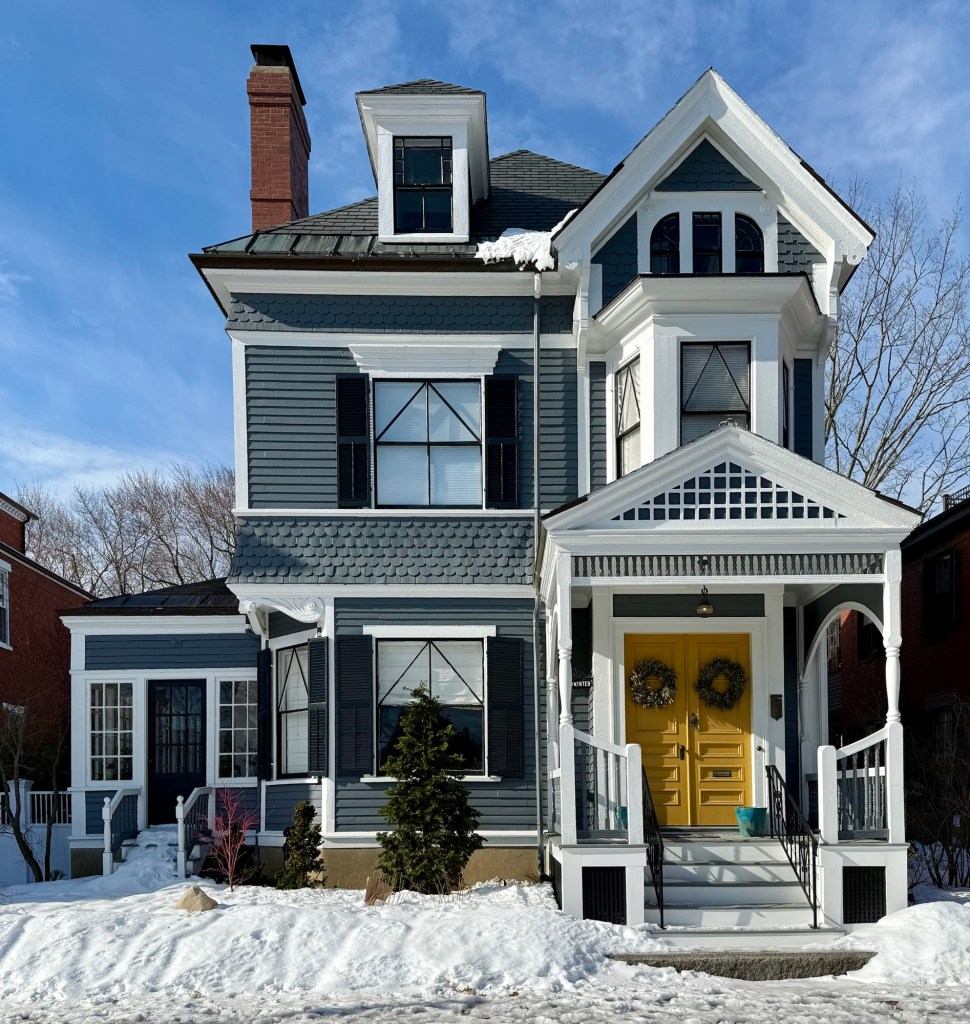
Odell House // 1887

Built in 1887 for Charles Odell and his wife, Alice, this Queen Anne house on Winter Street in Salem, Massachusetts, stands out as a high-style example of Victorian architecture on the street notable for early-mid 19th century architecture. The house lot was purchased by the Jewett Family who lived in the brick house next door and long used the lot as a garden. Charles and Alice Odell married in 1888, so this Victorian home was built for the newlywed couple to raise their family. Charles A. Odell (1863-1931) worked at his father’s insurance and real estate business, later assuming ownership of business upon death of his father and was a district agent for New England Mutual Life Insurance Company. Sheathed in a combination of wood clapboards and shingles in a variety of patterns, the house has a steeply hipped, slate roof punctuated by cross gables and hipped dormers. The predominant window sash style consists of a distinctive sash in which the upper displays a triangle with central muntin over a conventional two-light lower sash. The property has been lovingly preserved for well over a century and is a landmark example of a Queen Anne style house in Salem.

Justin and Sarah Spaulding House // 1886

Justin Spaulding and his wife, Sarah (Cooley) Spaulding erected this house on Springfield Street in Chicopee, Massachusetts, in 1886, and would later be known for their philanthropic gifts to their home city. Justin Spaulding (1838-1906) was a wealthy grocer who amassed a small fortune operating stores in the industrial Lower Pioneer Valley. The Spaulding House is one of the finest Queen Anne style buildings in Chicopee, and is notable for its asymmetrical form, tower, ornate gable detailing, porches with original balustrade, and the chimney with inlaid terracotta tiles. Justin Spaulding died in 1906, and Sarah C. Spaulding (1840-1907) would pass away a year later. They had no children. In her will, Sarah bequeathed funds for the first purpose-built library in Chicopee and money for a memorial chapel in a local cemetery. The Spaulding House was acquired by the Academy of Our Lady of the Elms (now Elms College), moved to its present location in 1920, and was converted to the Office of Admissions for the College. Besides the need for a new coat of paint, the house is lovingly preserved!

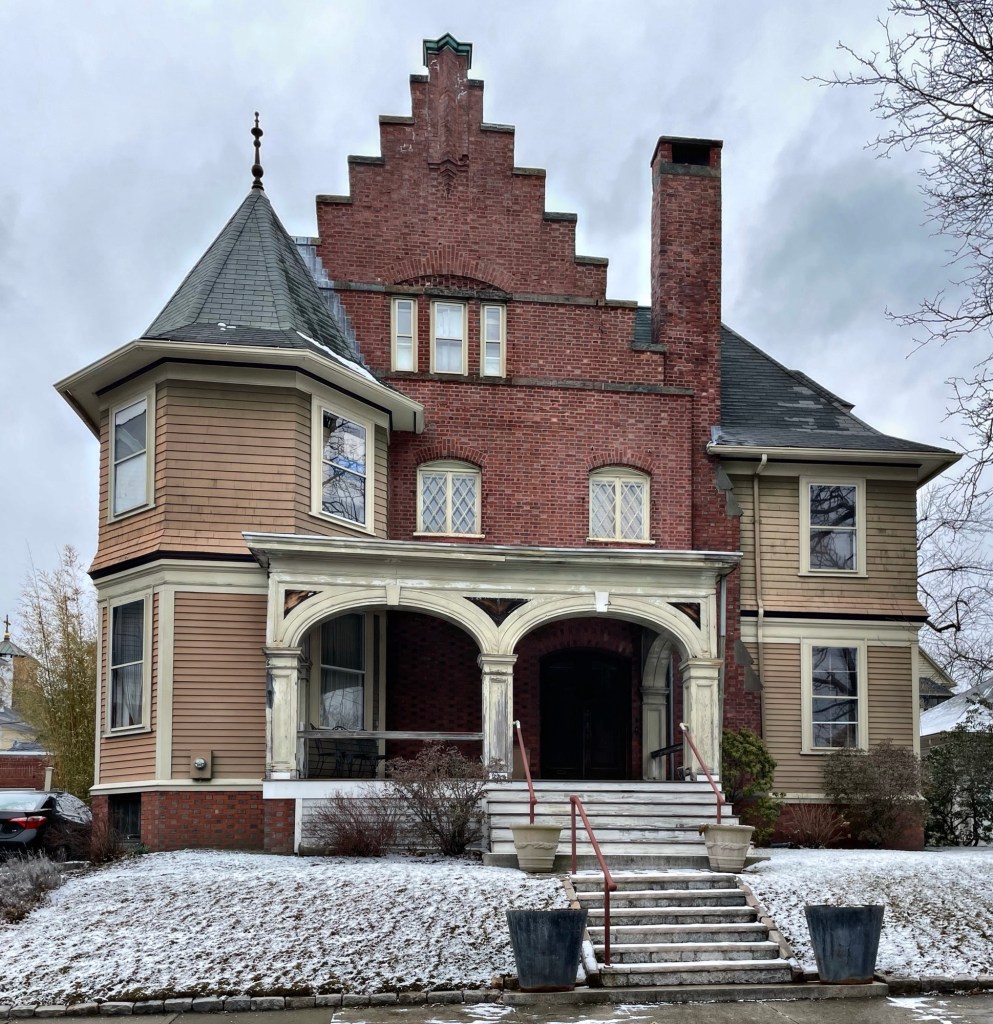
Thurston-Gladding House // 1886

One of the finest Victorian-era houses in the College Hill/East Side area of Providence is this stately residence at 30 Stimson Avenue, known as the Thurston-Gladding House. The house was built for newlyweds, John Russell Gladding and Ellen (Thurston), on land given to the couple by Ellen’s father, attorney and judge, Benjamin Thurston. John Gladding was originally from Connecticut and the couple split their time between their Providence home and a country retreat in Thompson, Connecticut. Architects Thomas J. Gould and Frank W. Angell (Gould & Angell) furnished the plans for the home, which features a ground floor faced with textured brick and walls adorned by continuous wood shingle siding above. A rounded tower, projecting bays and dormers, and a elongated front porch break up the massing into a pleasing composition.

Ellen and Charles Baker House // 1898

The versatility of the Queen Anne style of architecture is unmatched! This stunning example is located at 67 Stimson Avenue in Providence, Rhode Island, and was built in 1898 for Charles H. Baker and his wife, Ellen. Mr. Baker was a superintendent at the Gorham Manufacturing Company, one of the largest manufacturers of sterling and silverplate tableware in America. Sadly, Charles Baker would not get to enjoy the house for long as he died within a year of the house being finished. Ellen and the couple’s daughter, Maude, would reside here for years later. The Providence architectural firm of Gould and Angell designed the house with a large brick Flemish gable breaking the shingled mass of the house in a really abrupt, yet pleasing way.

Eveherdee Cottage // c.1889

This Queen Anne style “cottage” is located on Gibbs Avenue, one of the lesser-visited streets for house-stalking in Newport, Rhode Island, but wow is she something! The summer cottage here was built by 1890 for Ogden Hoffman Burrows, a merchant who went into business with his father and brother in San Francisco, shipping goods from East Asia to America. He purchased two adjacent lots here on Gibbs Avenue in 1884 and 1889, having this house built as a summer residence, where he could mingle with other wealthy neighbors. The Queen Anne style house was reportedly designed by local architect, John Dixon Johnston, who incorporated all the hallmarks of the style: varied siding types and materials, turned post porte-cochere, applied ornament, and complex, asymmetrical form. Burrows would sell this house by the turn of the 20th century. Later owners, Herbert E. Stride and Daisy Thompson Stride, who would reside here with Daisy’s mother, Eve. The Stride’s named the home “Eveherdee” an amalgamation of their individual names: Eve (Eveline), Her (Herbert), and Dee (Daisy). The home was most recently owned by television producer, Vin Di Bona, who restored the house to its grandeur we see today.

“Park Gate” Cottage // 1879

“Park Gate” Cottage sits on Bellevue Avenue near Touro Park in Newport, Rhode Island and is one of many summer “cottages” for wealthy summer residents. The home replaced the Atlantic House, a large summer hotel formerly on the site. The wood-frame dwelling was designed by Newport architect George Champlin Mason for Seth Bunker Stitt of Philadelphia and constructed in 1879. Mason’s design for “Park Gate” includes many features typical of the Queen Anne style including the asymmetrical facades, wrap-around front porch, tower, and even the small details like dentils, spindle work and balustrades. The house was later purchased by Newport Lodge #104 of the Benevolent and Protective Order of the Elks in 1920, who own the building to this day.