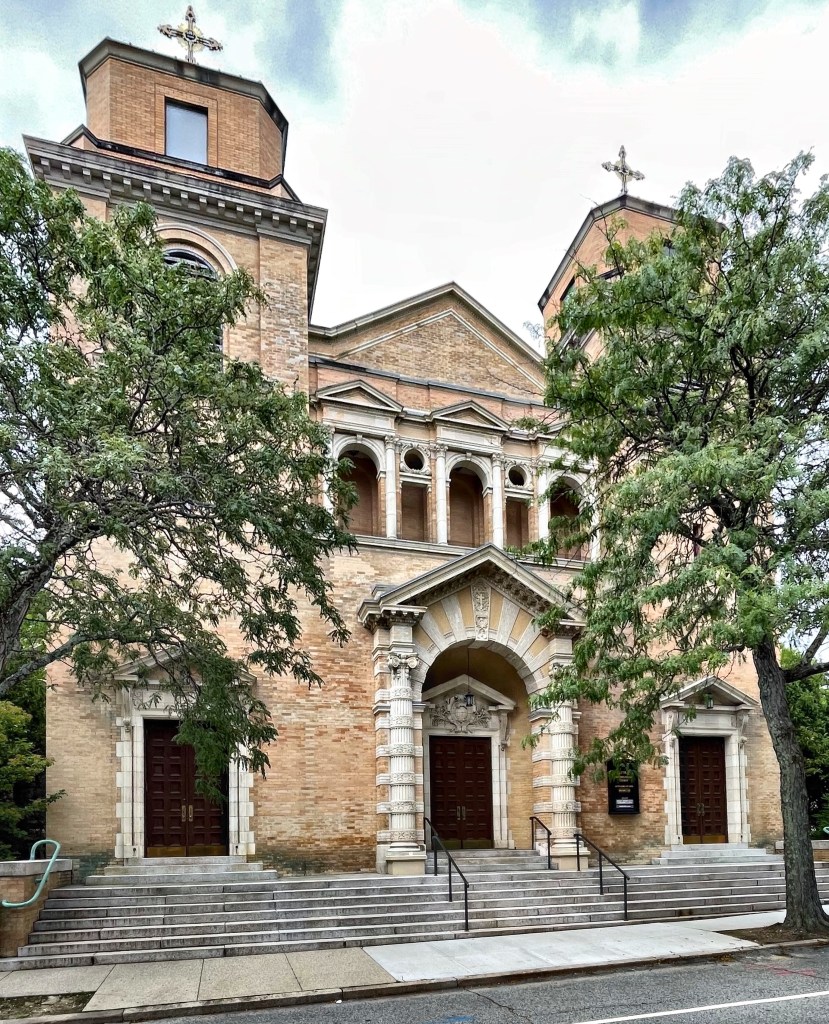
One of the best examples of Renaissance Revival architecture in Rhode Island is the Central Congregational Church of Providence. Constructed between 1891-1893, this building was the new home to a growing congregation, which outgrew its original Thomas Tefft-designed building on Benefit Street (which has since been occupied by RISD). Famed architect Thomas Hastings of the firm Carrère and Hastings of New York City, was hired to furnish plans, and worked closely with Reverend Edward C. Moore to make sure the building was fitting of the site. The church is cross-gabled in form and is constructed of yellow brick with terracotta trimmings, evocative of Spanish and Italian Renaissance styles. The facade has a detailed central pavilion which is flanked by two towers. These towers were originally surmounted by elaborate belfries, but these were damaged by a hurricane in the mid 20th century and replaced by the present brick caps. The dome and vaulting is of tiles by Rafael Guastavino, it is the first dome that he constructed in the U.S., making this building even more significant.
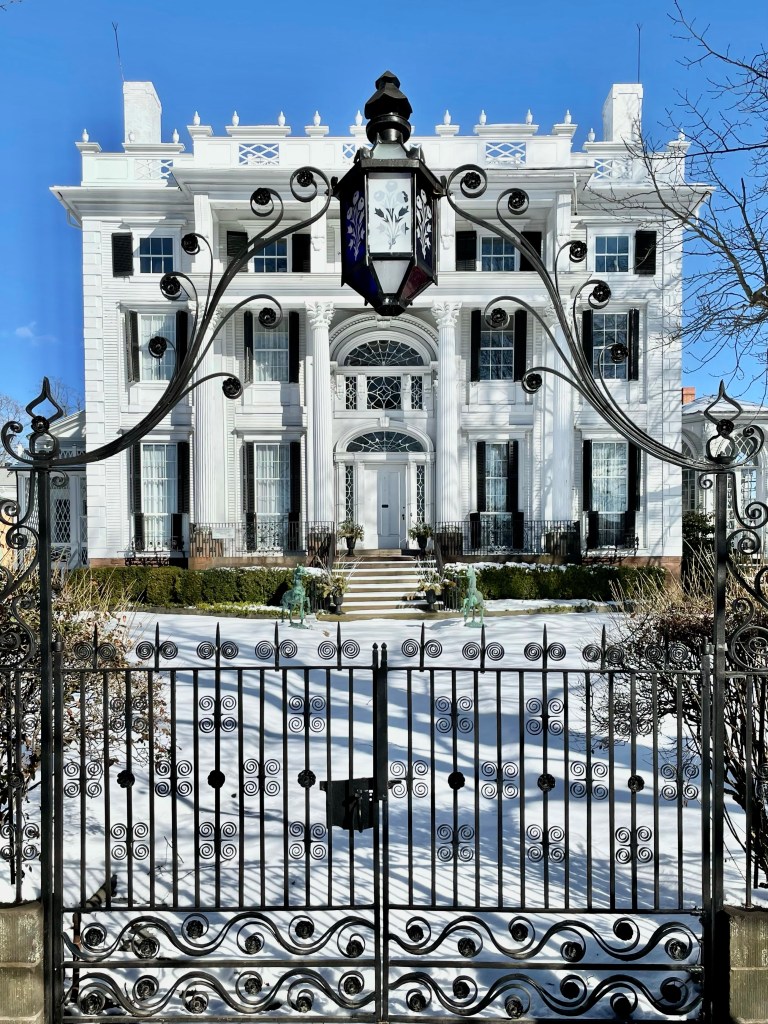
For the last post in this series on Bristol, Rhode Island, I am leaving you with a house that is architecturally stunning, but holds a dark history. Linden Place was built in 1810 by slave trader, merchant, privateer and ship owner George DeWolf and was designed by architect, Russell Warren. The DeWolfs of Bristol, who became the biggest slave-trading family in U.S. history, transported well over 11,000 Africans to the Americas between 1769 and 1820. The U.S. banned the slave trade in 1808, but the DeWolfs continued dealing in the slave trade until the 1840s by going through Cuba, where they had numerous plantations. They also got help from a DeWolf brother-in-law, who served as a customs inspector in Bristol — thus ensuring family slave ships continued to come and go. In 1825, George DeWolf suffered major financial hits and he and his family fled to his plantation in Cuba, where they’d be beyond reach of his creditors. Stories explain that with the possibility of legitimate payment out of the question, the townspeople sought compensation for George’s debts where they could, and they broke down the front door of Linden Place, and took everything, even peeling the silk wallpaper off the walls.
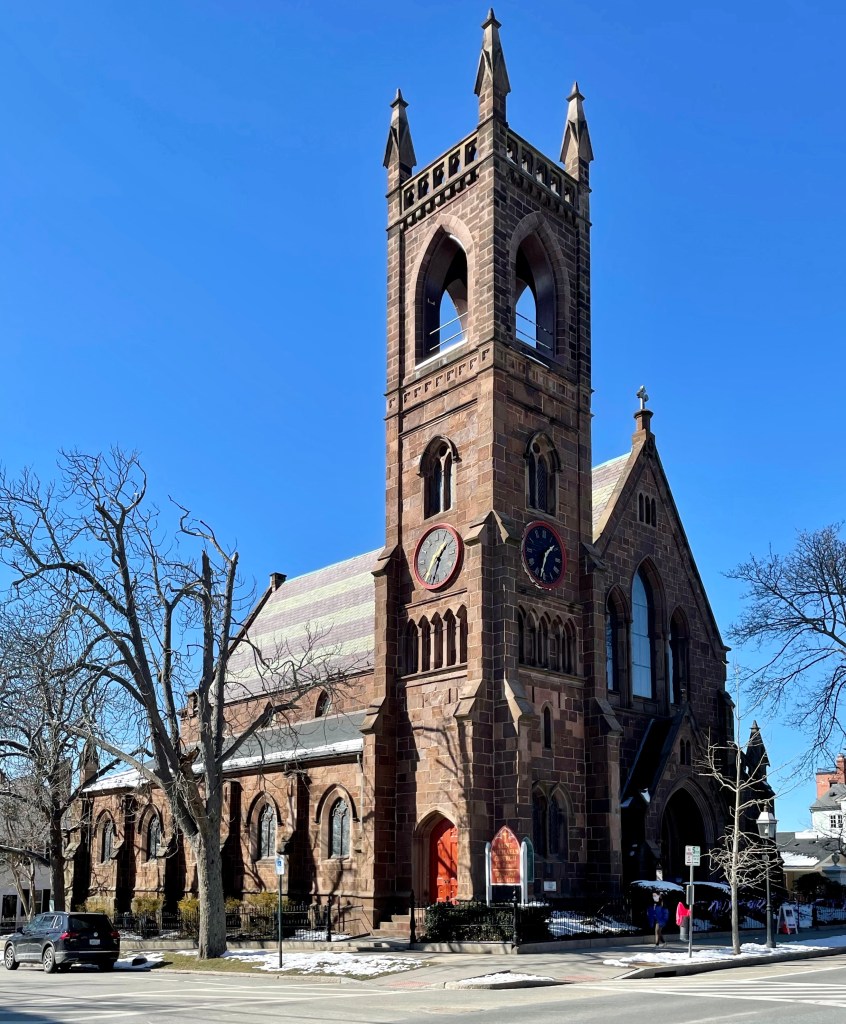
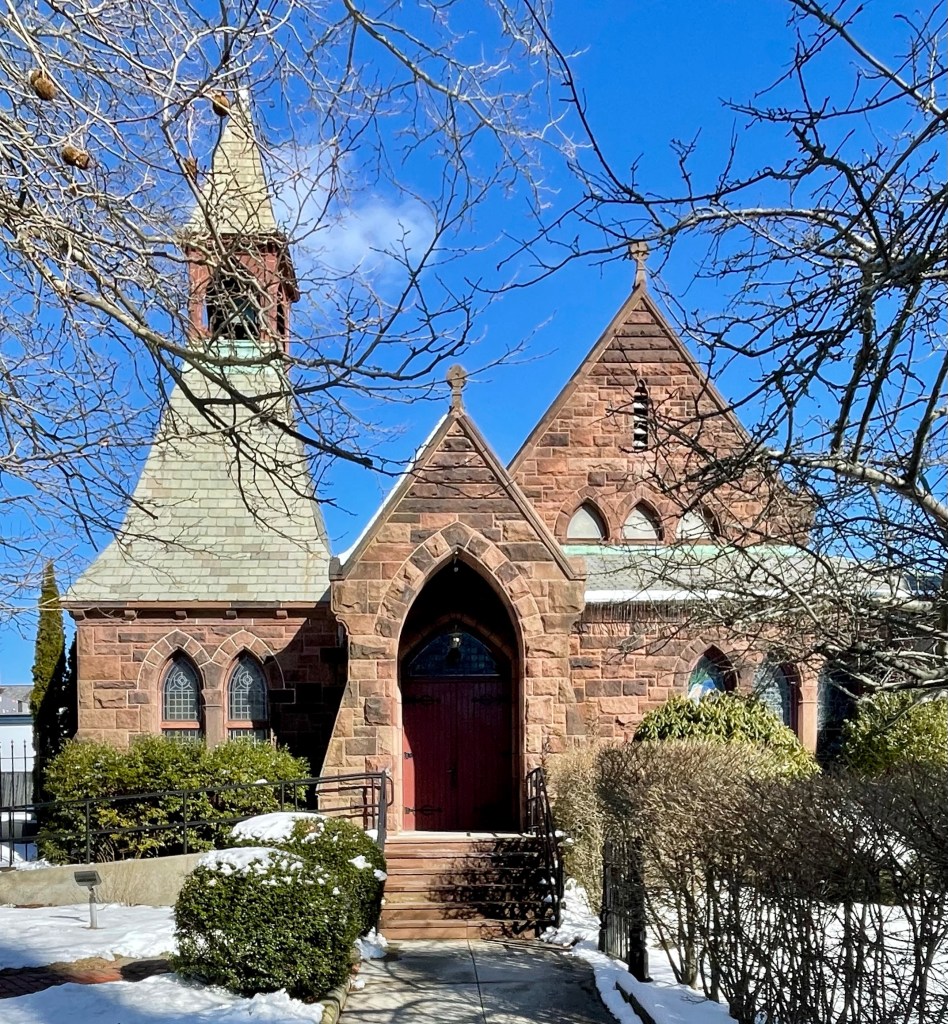
While I love the quintessential white, wood-frame New England churches that proliferate the region, the stone, Gothic churches always make me stop in my tracks; and this example in Bristol is no exception! St. Michael’s parish was founded in 1718 as one of the Rhode Island’s four colonial churches, funded and overseen from London. The first church, built in 1720, was ironically later burned during a British raid in 1778. It was replaced in 1785 by a plain wooden meetinghouse with funds from local residents and partitioners. In 1833, it was replaced by a wood-frame Gothic church which burned in 1858. Undeterred, the church hired New York City architects Alexander Saeltzer and Lawrence B. Valk, who designed the present brownstone Gothic Revival church. Just over a decade later, the church hired Worcester architect Stephen C. Earle, to design a chapel and parish house, across the street. The chapel building follows the Gothic Revival style, but with more Victorian flair, and is also constructed of brownstone to compliment the church. Together, the two structures transport you to the English countryside with their design and presence on the main street in town. What do you think of them?
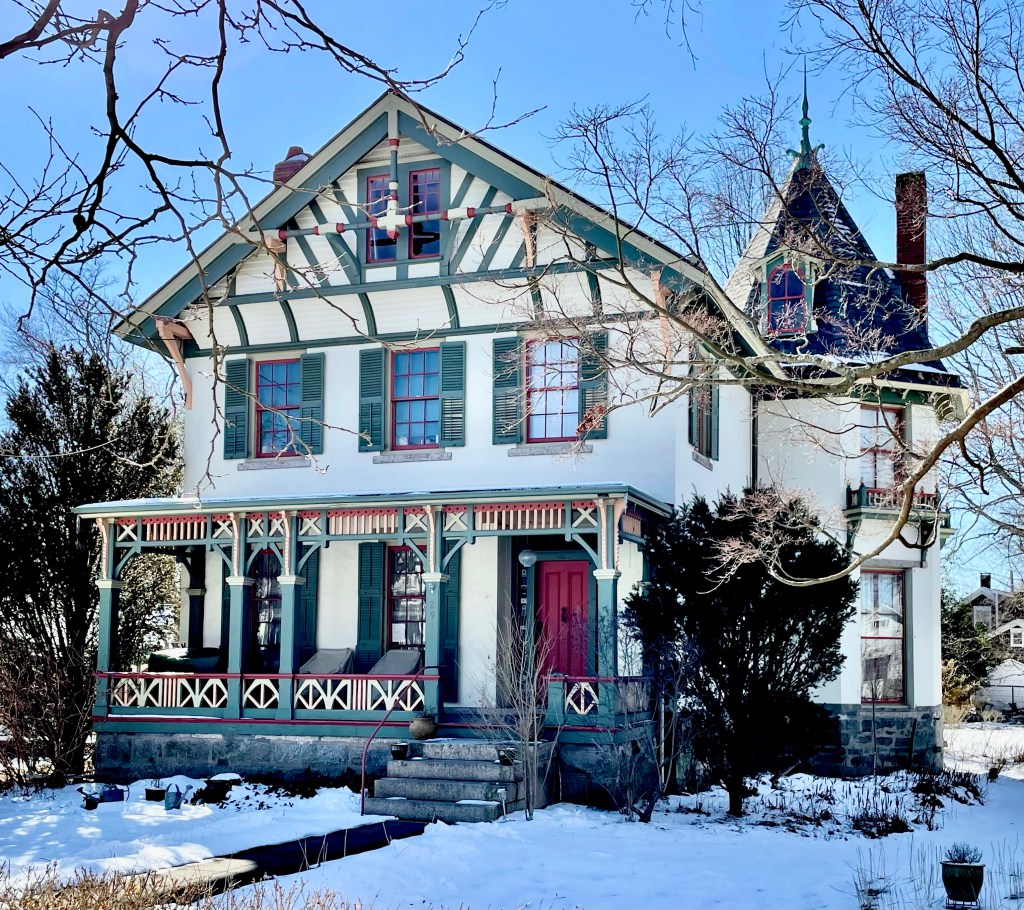
This incredibly unique and flawless home in Bristol was apparently built by the infamous James DeWolf. Historic records state that the slave trader built the home for his son William Henry, but that is unlikely as he was the owner of the family mansion, Linden Place at that time. Therefore it is likely that another of James’ sons William Bradford DeWolf was gifted the home, roughly at the time of his marriage in 1835. The home was a 2 1/2-story Greek Revival home. By the 1880s, the property was sold to Dr. Ramon Guiteras, a urologist, who had the house stuccoed, fashionable Stick style trim applied across the facade, a full-width bracketed porch, and two-story octagonal tower on the side. The home is now owned by the neighboring church who restored it in the 1970s and maintain it beautifully to this day.
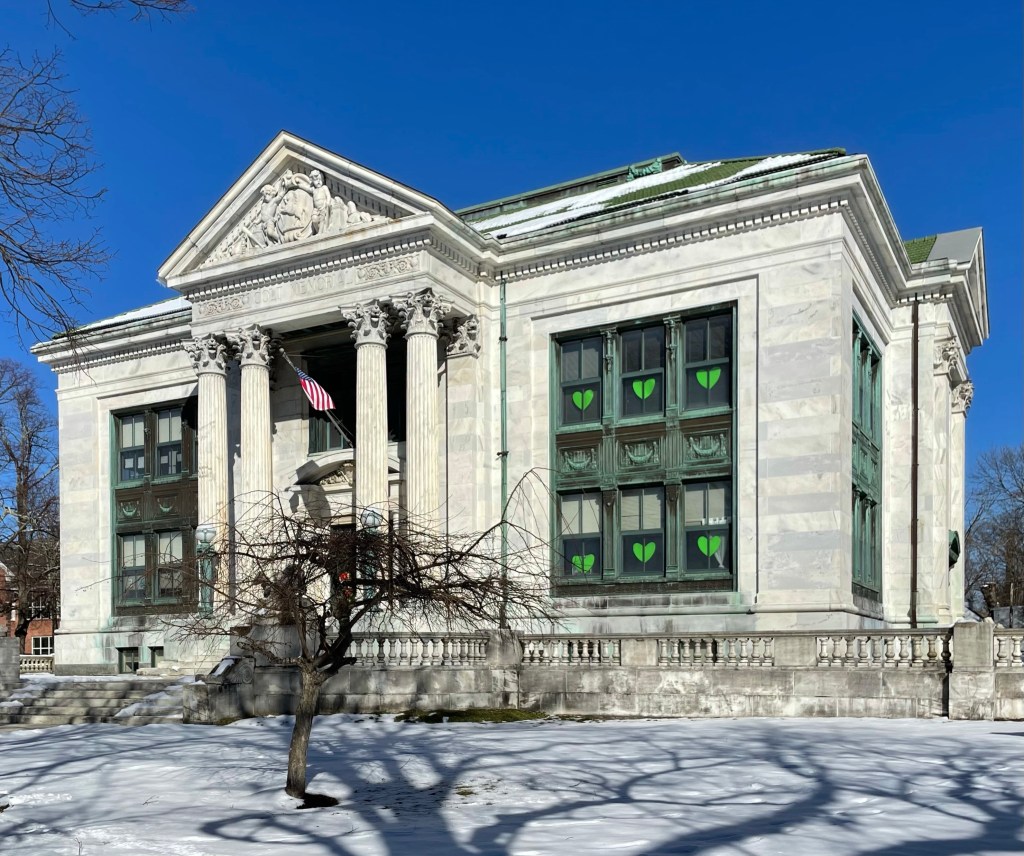
Similar to Burnside Memorial Hall nearby, this school building in Bristol was also constructed as a memorial, in the form of an architectural statement-piece. The school building was gifted to the town of Bristol by Samuel P. Colt, who resided in a mansion nearby, Linden Place, and also owned a massive country estate in town, where his prized cows were cultivated. The school building was funded as a gift in memory of his mother Theodora DeWolf Colt and showcases his everlasting love for her. Designed by Cooper & Bailey of Boston, this monumental, 2-story, hip-roof Renaissance Revival structure was built of white marble with 2-story, cast-bronze window bays. The symmetrical facade has a central Corinthian portico with fluted columns and a pediment containing cherubs around the Colt family crest. The school was used as the town high school until the 1960s when it was outgrown, the building has since been used as an elementary school, the nicest one I have ever seen!
Architect Russell Warren (1783-1860), who I have featured on here numerous times, built this 2-story, 5-bay, hip-roof Federal house in Bristol, Rhode Island. This residence as interpreted by Warren as an example of the Federal style with stylistic features most notably being the angulated quoins (at the corners of the house). The house was designed for William Van Doom, a Bristol tailor of modest means. In 1814, Warren, a young and aspiring architect, saw the significant wealth in Bristol and decided to buy this home he designed. Siting himself in the vicinity of the extremely wealthy DeWolf family, he gained recognition and success by designing three expensive and elaborately crafted houses for them at this time, only Linden Place remaining. Warren lived in this house from 1814 until 1823.
Land that Mount Hope Farm sits upon in Bristol, Rhode Island was formerly council lands of the Wampanoag Indians, where King Philip’s War of 1675 may be said to have begun and ended. For those of you who do not know about the war, it was an armed conflict running 1675–1678 between indigenous peoples of New England and New England colonists and their indigenous allies. Massasoit, leader of the Wampanoag, had maintained a long-standing alliance with the colonists. Metacom (c. 1638–1676) was his younger son, and he became “sachem” (elected chief) in 1662 after Massasoit’s death. Metacom, however, forwent his father’s alliance between the Wampanoags and the colonists and they fought back. Metacom’s forces could not beat the growing numbers of the colonists, and he was eventually killed near Mount Hope, in Bristol. After his death, his wife and nine-year-old son were captured and sold as slaves in Bermuda. Philip’s head was mounted on a pike at the entrance to Plymouth, Massachusetts, where it remained for more than two decades. His body was cut into quarters and hung in trees. This story, shows how American history is built upon death and suffering and has often been whitewashed to portray early settlers treating native peoples with respect and as equals, which was rarely the case.
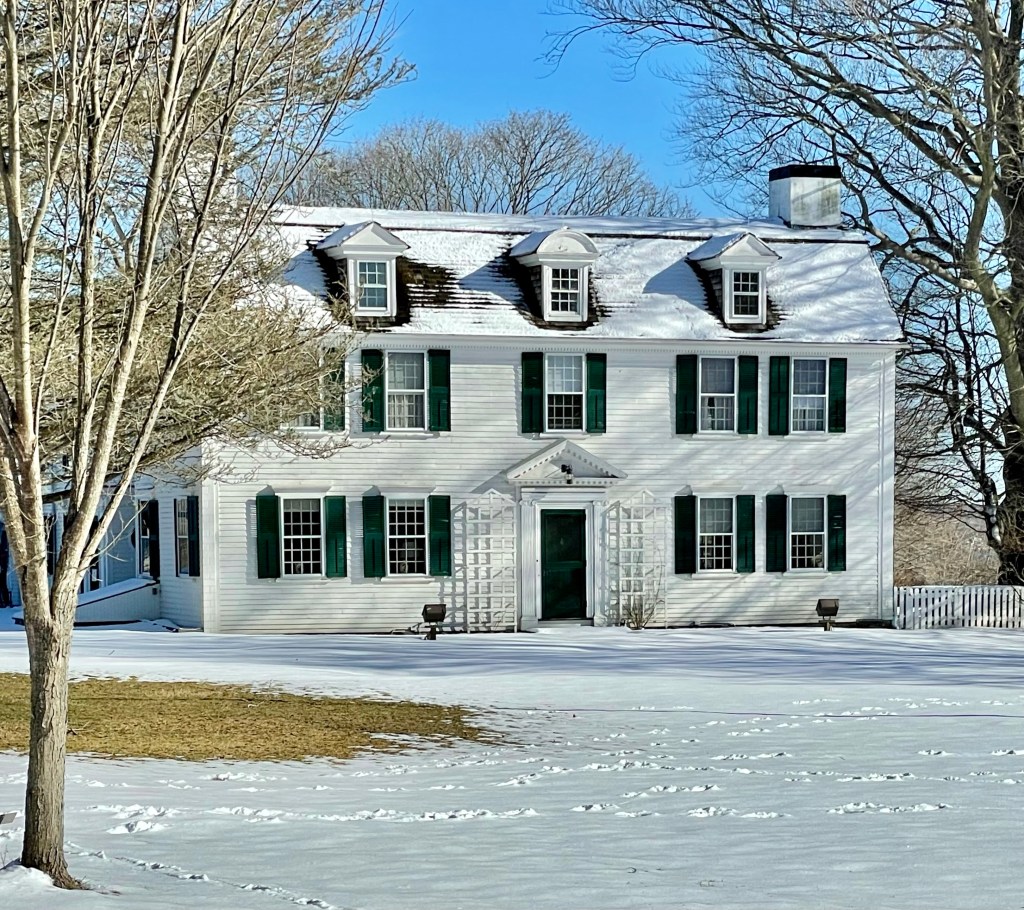
Mount Hope Farm as we know in colonial times, was originally 550 acres in size, owned in 1680 by Nathaniel Byfield. In 1744, the estate was acquired by Isaac Royall. Royall began construction of the house soon after. Isaac Royall Jr. was the son of Isaac Royall Sr. (1677–1739) a slave owner, slave trader, and Antiguan plantation owner who had a home and slave quarters (both extant) in Medford, MA. After his father’s death, Royall Jr. inherited his immense wealth, built upon the backs of others, and built this Georgian farmhouse. It is unknown to me if he ever resided there or had slaves maintain the property, but the home was rented for some time. In 1776, Mount Hope Farm was confiscated by the state, after Royall, a loyalist to England, fled to Nova Scotia. The property was added onto in the 19th and 20th centuries and now sits on 127-acres of land, and is run as a park, inn, and event space.
In 1859, 18 year old John Brown Herreshoff (1841-1915) of Bristol, accepted his first commission to design and build a yacht. The fact that he was blind, having completely lost his sight at 15, didn’t seem to slow him down. He became known as the “blind boat builder.” In his early years, John Herreshoff had acquired such a keen knowledge and “feel” of boats that his blindness was no obstacle. The handwork however, was done by his brother, Nathanael Greene Herreshoff, later known as “the Wizard of Bristol.” His skill in shipbuilding became well-known; so in 1863, John took on space in an old rifleworks, hired a crew of shipwrights and established what would become the Herreshoff Manufacturing Company. From 1864 to 1869, the boatworks built forty-three steam yachts, including Seven Brothers, the first steam-powered fishing boat in America. In 1876, Lightning, the first United States Navy torpedo boat, was completed. Construction of larger craft soon followed, including the 94-footStiletto, considered the fastest boat in the world, and was later purchased by the Navy, and was its first torpedo boat capable of launching self-propelled torpedoes. J.B. Herreshoff died in 1915 and the company continued under his brother Nathanael, until it was taken over by a syndicate of New York and Boston yachtsmen. Business stagnated after WWI and the business closed after WWII. Today, Burnside Street in Bristol showcases the lasting legacy of the Herreshoff Manufacturing Company and their impact. Also, the Herreshoff Marine Museum sits at the end of the street, continuing that legacy.
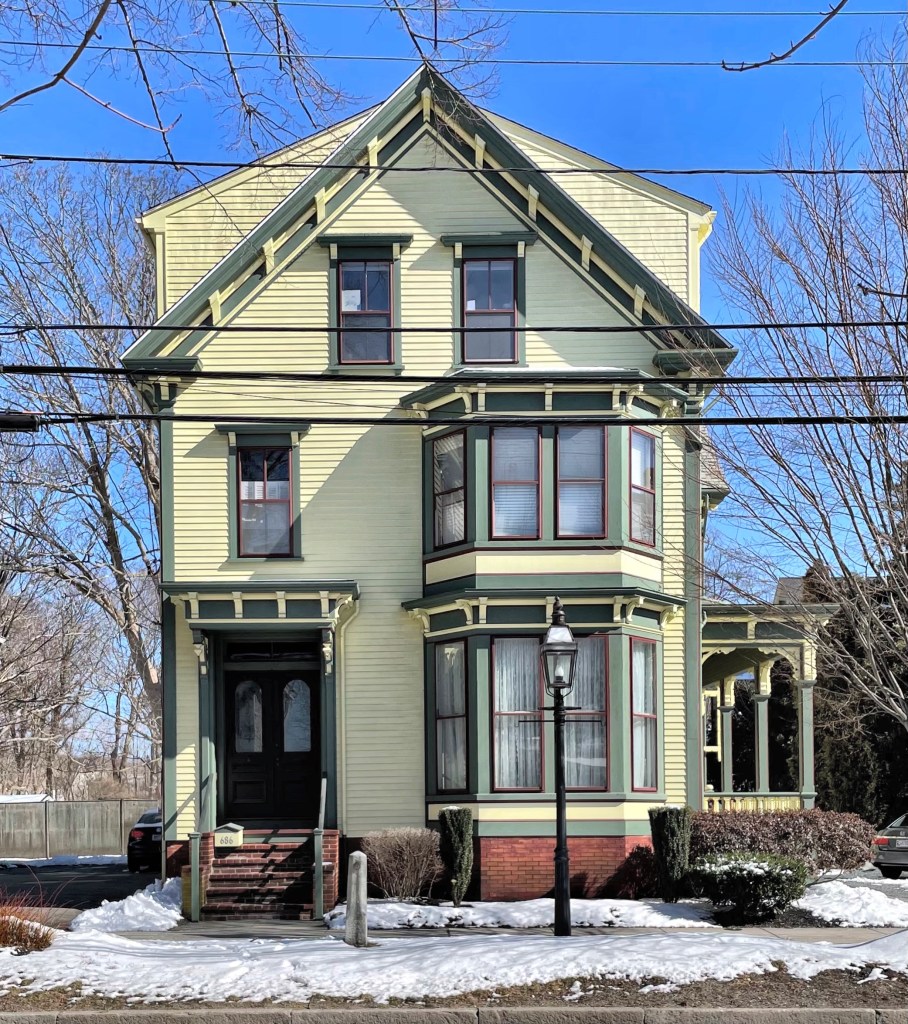
Bristol, Rhode Island is dominated by Federal and Greek Revival homes, but there are some absolutely gorgeous gems built after (I can’t wait to show you a sampling). This Bracketed/Italianate home is a well-preserved example of the style with a side-hall entry, two-story bay window, and hoods over windows and the main entry with brackets. The home was built for Charles Greene, a very active citizen of Bristol. Greene (1822-1899) purchased the Bristol Phoenix in 1862 and remained its editor and publisher for thirty-one years. Active in public and civic affairs, he was first president of the Rhode Island Press Association, clerk of the Supreme and common Pleas Courts of Bristol County from 1865 to 1868, a member of the General Assembly in 1873 and 1874, Sheriff of Bristol County from 1875 to 1877, and a town council member from 1879 to 1881.
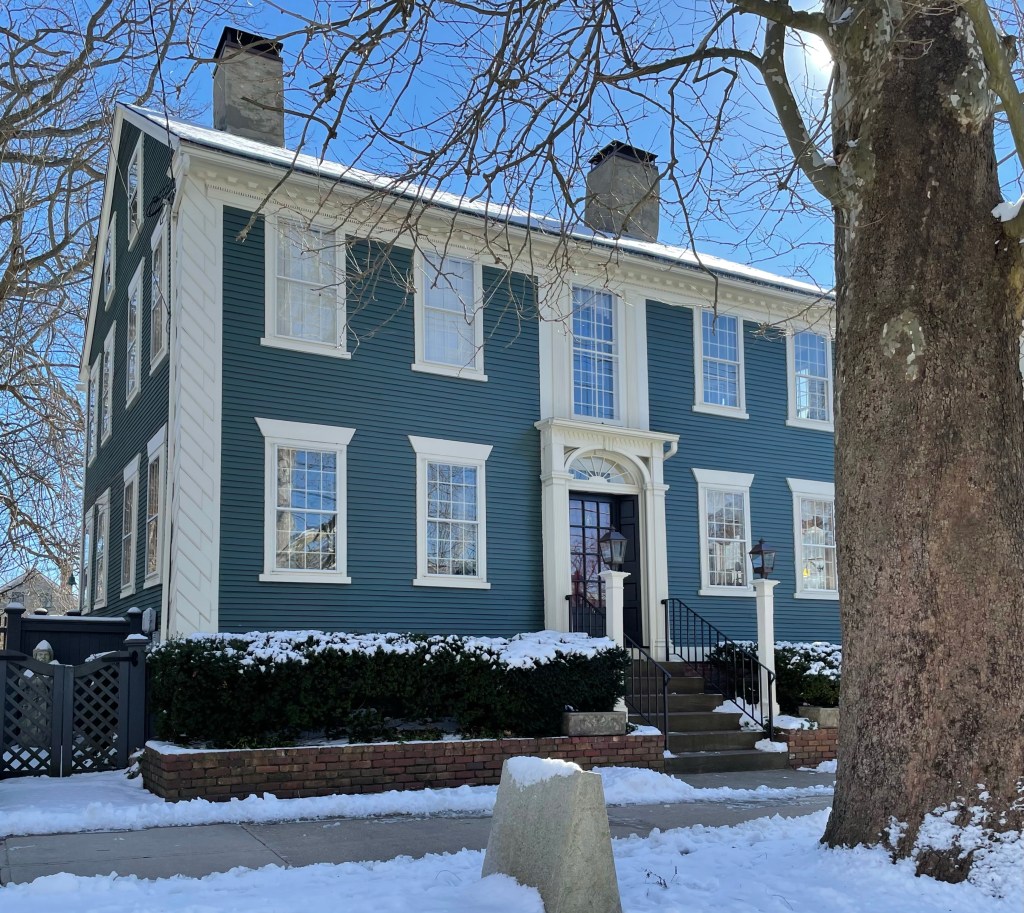
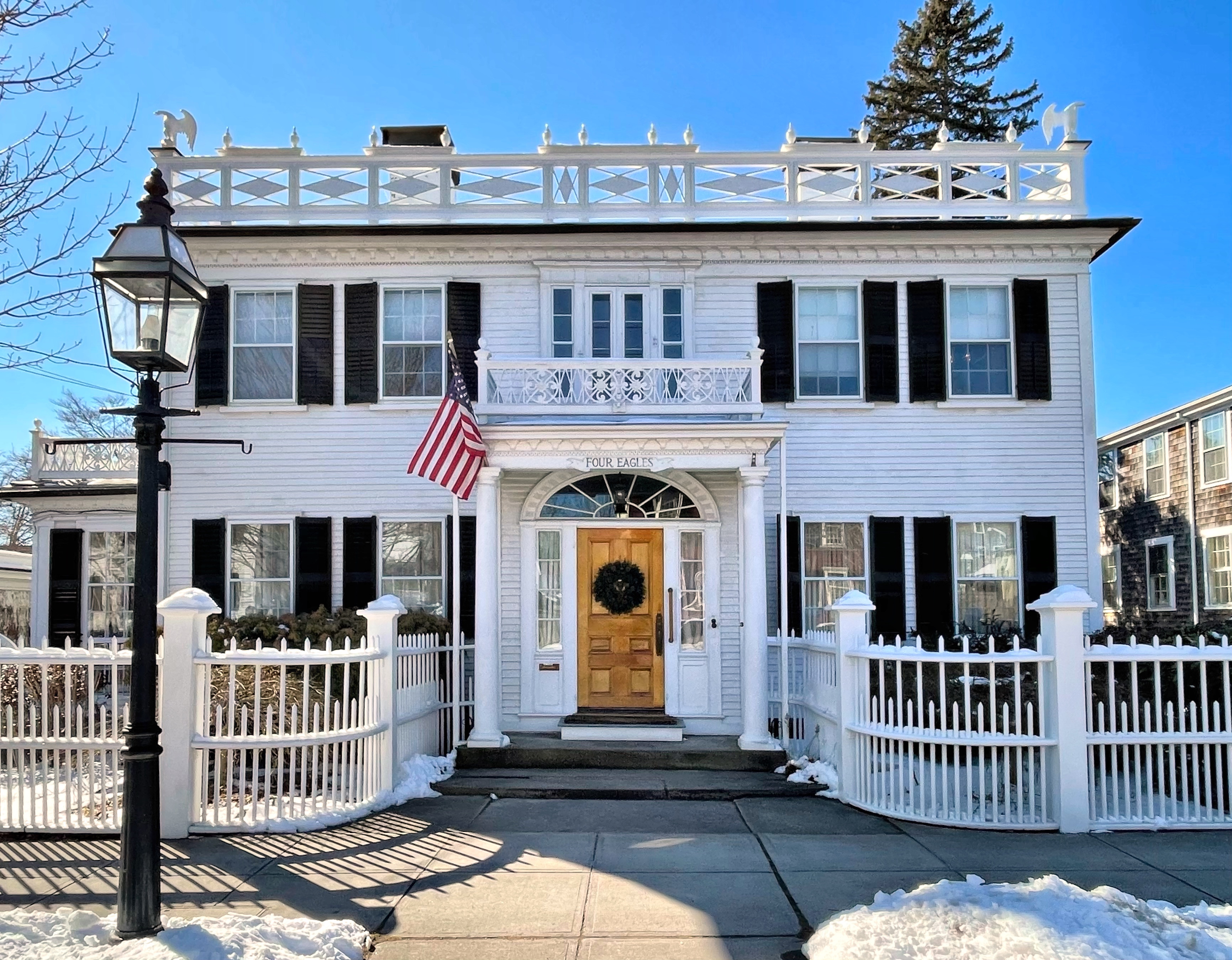
In 1807, a young John Howe (1783-1864), a descendent of the DeWolf family, married Louisa Smith, and built this family home soon after. He hired local esteemed architect Russell Warren (who was the same age as Howe at the time) to design the home, which is a simply designed, hipped roof home with an elliptical fanlight and sidelights at the central entrance. It is embellished with superb architectural woodwork with an ornate roof balustrade. Howe and his family lived in the home until 1822, when it passed to ship captain, Benjamin Churchill, who appears to have been involved with the transport of slaves to the Americas. According to local legend, Churchill gave the house its name by having the sailors of his ship, the Yankee, carve four American eagles, which he placed at the corners of the Chippendale balustrade that crowned his roof. Churchill’s tenure in the home was brief, and in 1825 the house passed to Byron Diman, a powerful merchant with interests in whaling, banking, and the local cotton mills who served as governor of Rhode Island in 1846–1847. The home has been restored numerous times and is well maintained.
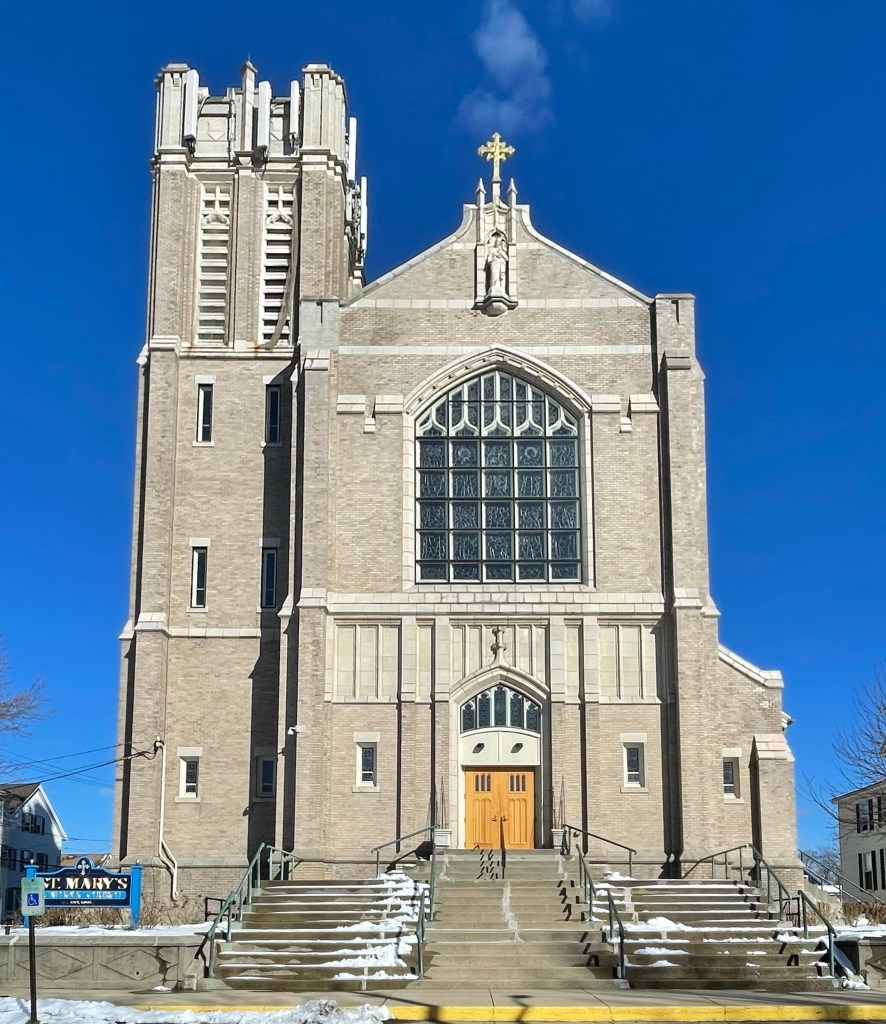
This 2-story Neo-Gothic Revival church constructed of buff brick and limestone, is dominated by an off-center, 4-level tower and showcases how even smaller towns in New England have some of the finest 20th century churches. In 1849 St. Mary’s parish, in nearby Warren, Rhode Island, was founded to serve residents there as well as Irish and French Canadian immigrants in Bristol, which began arriving en masse. Just years later, in 1855, the first St. Mary’s Church in Bristol, was constructed as a plain wooden structure, and operated as a mission of the Warren church. In 1874 the Bristol church became an independent parish and saw large increases to membership with more Irish families settling here. Over the next decades, the space became more cramped and a building campaign was started to get a new place of worship. The present St. Mary’s Catholic Church was built in 1911, from plans by the Providence-based architectural firm of Murphy, Hindle & Wright, who together (and separately) designed many ecclesiastical buildings, in Rhode Island and Massachusetts. The interior is even more stunning than the exterior detailing, and remains very well-preserved.
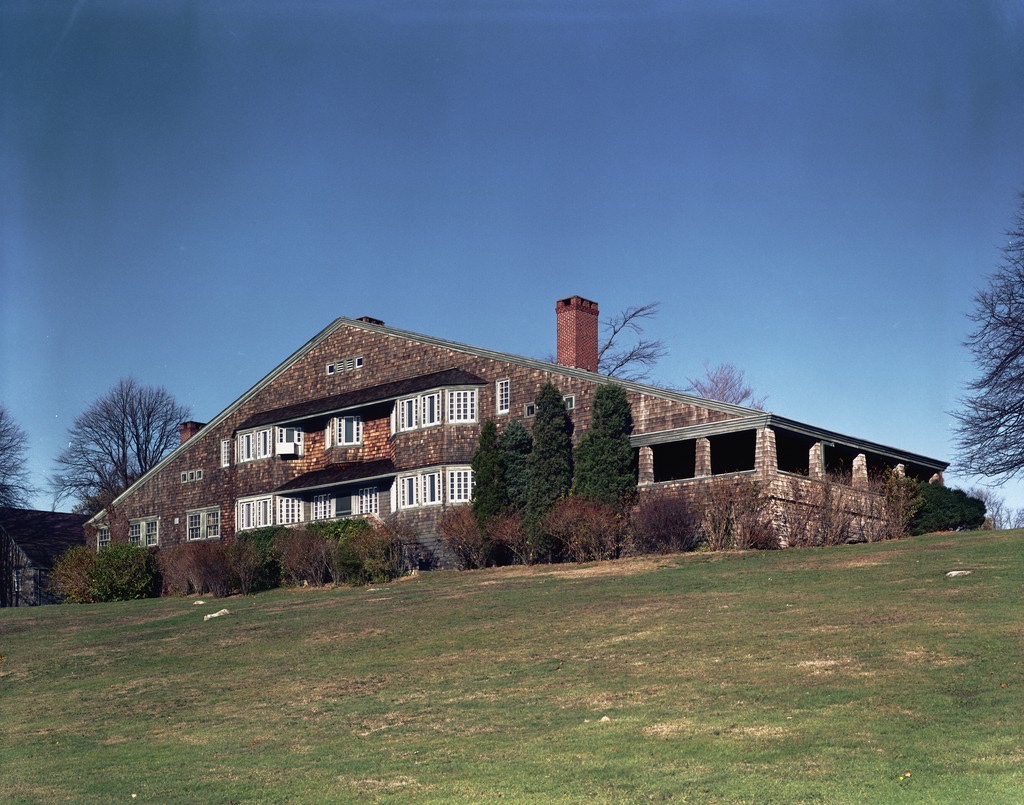
One of the many significant losses to American architecture is the demolition of the Low House, a perfect encapsulation of the Shingle style of architecture by one of the most prolific designers in American history. The William G. Low House was constructed at the southern tip of Bristol, Rhode Island by esteemed architect Charles Follen McKim (my personal favorite) of the firm McKim, Mead & White. The Shingle style, which took off in the Northeast United States, primarily in seaside communities in the late 20th century, the homes of the style often had a strong horizontal emphasis. The style contrasts the other Victorian-era styles, de-emphasizing applied decoration and detailing in favor of complex shapes wrapped in cedar shingles. The Low House, formerly located on Low Lane, stood out for its 140-foot long gable which appeared to protrude right from the hilly outlook. The home was demolished in 1962, but was documented by the Historic American Buildings Survey program, which documented the home inside and out before it was a pile of rubble. Architectural historian Leland Roth later wrote, “Although little known in its own time, the Low House has come to represent the high mark of the Shingle Style”.
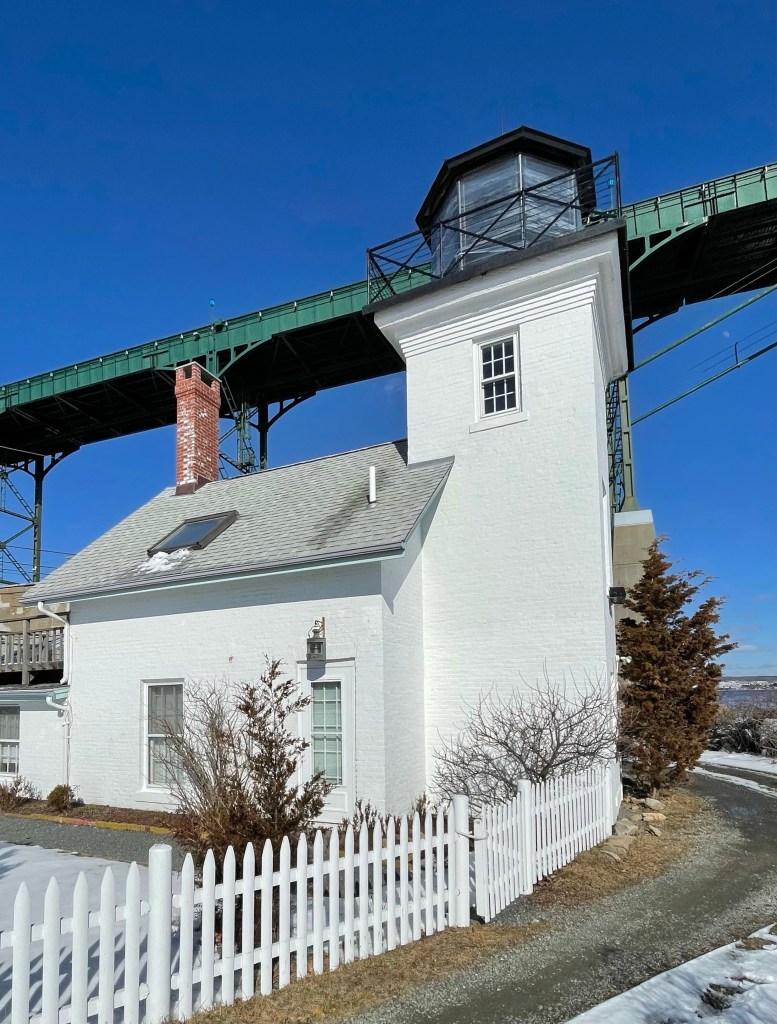
The Bristol Ferry Lighthouse, located on the southernmost tip of Bristol, Rhode Island, is possibly the most difficult building I have tried to photograph since starting this account. The lighthouse got its start in 1846, when the Bay State Steamboat Company, established a small lighted beacon at this location. The Fall River Line consisted of a railroad journey between Boston and Fall River, Massachusetts, where passengers would then board steamboats for the journey through Narragansett Bay and Long Island Sound to a dock in Manhattan. For many years, it was the preferred route to take for travel between the Boston and New York. The early beacon was unreliable, and Congress appropriated $1,500 in 1854, for a combined lighthouse and lightkeeper dwelling. The light served this chokepoint well, until the construction of the Mount Hope Bridge between Bristol and Portsmouth in 1928-1929. Spanning over a mile long, the bridge was built practically over the lighthouse and rendered it irrelevant as an aid to navigation. The lantern was removed from the tower in 1928. An automatic navigational light on a nearby skeletal tower remained in operation until 1934. Around that time, the lighthouse was sold off as excess and went into private ownership, and for a while, provided housing for a couple students at nearby Roger Williams University. The building was restored and now appears to be a private home.
Seth Paull (1840-1906), a lumber merchant whose warehouse and business were located at the foot of State Street downtown, began construction of this house in 1879. It is evident that he sought to showcase his lumber’s quality in his own home, as a testament to his business. This elaborate 2-1/2-story, hip-roofed, Second Empire house has a three-bay facade with a projecting central pavilion capped by an ogee gable roof. A two-story tower on the right corner, topped by conical roof with a copper finial, has elaborate brackets, diamond panels in wood, and a saw-tooth frieze. The home is well-preserved and sits on a large lot, set back from the street behind a row of trees. The lot was once larger, but was subdivided for housing to the north. The former Paull barn was repurposed as a separate home.
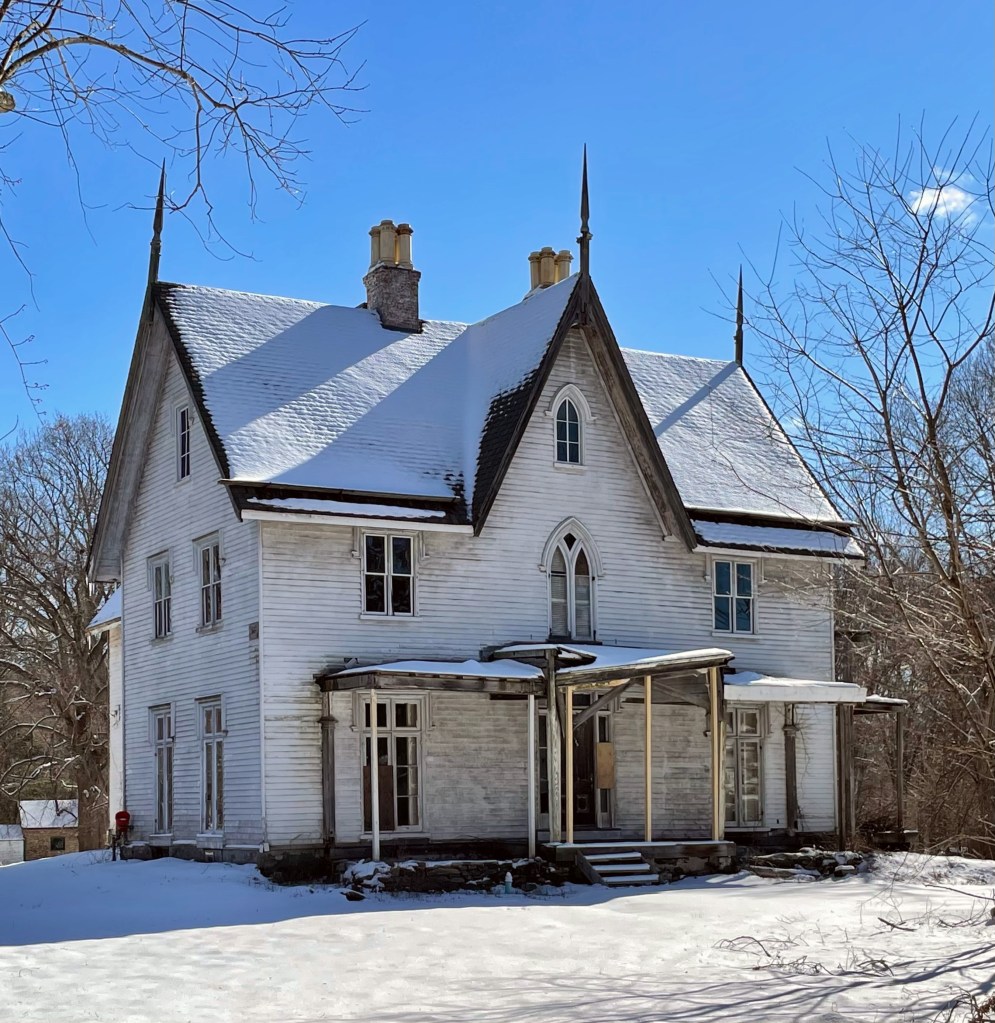
“Longfield”, aka the Abby DeWolf House was built in 1848 and is one of the finest homes in Bristol, Rhode Island. The home was completed from designs by Providence architect Russell Warren, who also designed other mansions in town (I’ll post those later on in this series), the Westminster Arcade in Providence, and “Hey Bonnie Hall” a since demolished Federal style home I featured a couple days ago. Longfield’s name derives from the 60-acre meadow, part of the 300-acre Henry DeWolf farm, given to Abby DeWolf when she married Charles Dana Gibson at just 21 years of age. The DeWolf Family paid for the home as a gift to Abby. The DeWolf Family is infamous for being highly active in the slave trade, and was believed to have transported over 11,000 enslaved people from Africa to the Americas before congress abolished the African Slave Trade in 1808, which “prohibited the importation of slaves into any port or place within the jurisdiction of the United States…from any foreign kingdom, place, or country.” This policy did little as many owners of slaves just kept children born into slavery and also opened plantations in the Caribbean and South America. After Abby died in 1901, the home went to her granddaughter who maintained the home. By the 1970s, the home was sold out of the family and began a period of decades of deterioration to its current state. The interior is effectively gutted, but some original woodwork and fireplaces remain. Recent calls for a townhouse development with ample parking was proposed and approved by the town a couple years ago, but would greatly diminish its siting and architectural integrity. Nothing has happened on the site, but here’s to an appropriate restoration!