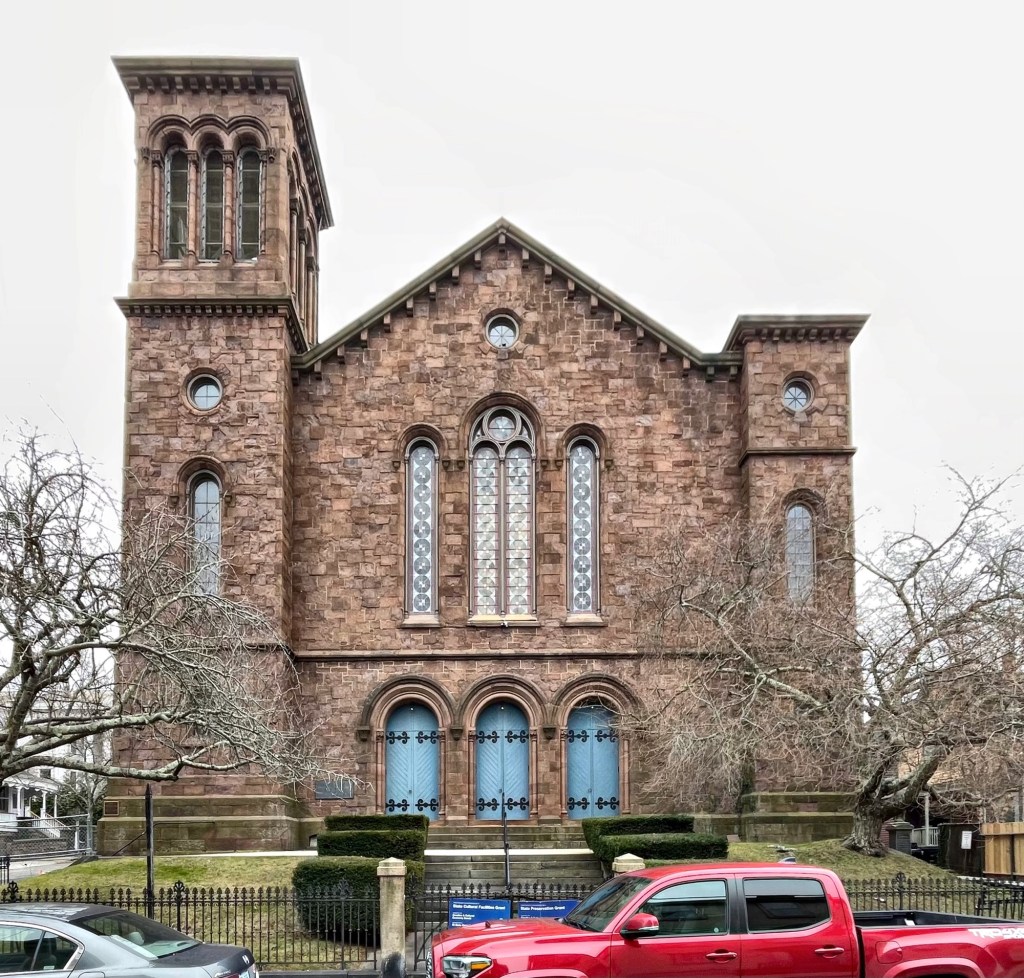
Yale University – Chittenden Hall // 1889

As Yale’s 1842 Old Library was outgrown by larger class sizes and a growing college library collection, overseers began planning for a new library annex which could support the programming. Architect J. Cleaveland Cady was commissioned to design the Chittenden Memorial Library, this underappreciated structure, which is today hemmed into a cramped space in the yard between a later addition (Linsly Hall) and McClennan Hall. The Chittenden Memorial Library was a gift to the college by U.S. Representative Simeon Baldwin Chittenden in memory of his only daughter, Mary Chittenden Lusk (1840-1871) nearly two decades following her untimely death. The handsome Richardsonian Romanesque style library building also retains its original stained glass window titled, “Education” by Louis Tiffany which today is in the building’s former reading room, now a large classroom. When the library moved to a new building in the 1930s, Chittenden Memorial Library became Chittenden Hall and is classroom space.

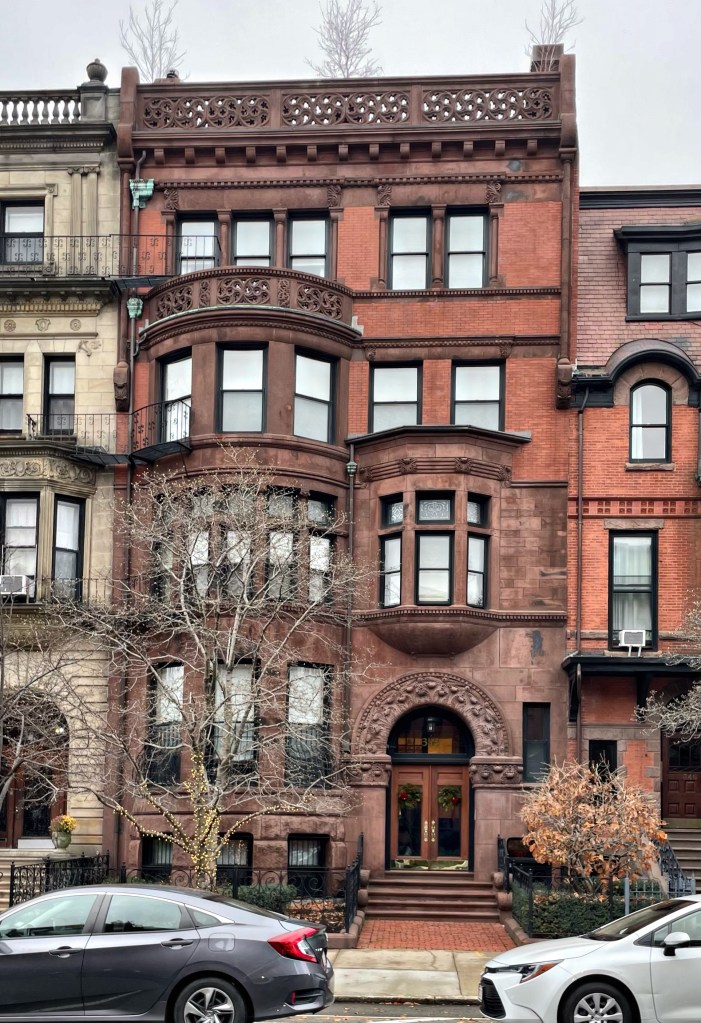
Converse Townhouse // 1886

One of the best townhouses on Beacon Street in the Back Bay neighborhood of Boston is this absolute stunner! Built in 1886-7 from plans by architects Allen and Kenway and constructed by Norcross Brothers, builders, this was the Boston home of Elisha Slade Converse and his wife, Mary Diana (Edmands) Converse. Also residing in the newly built home was their son-in-law and daughter, Costello Coolidge Converse and Mary Ida (Converse) Converse, who were first cousins… Elisha Slade Converse was founder and treasurer of the Boston Rubber Shoe Company, president of the Rubber Manufacturers Mutual Insurance Company, and president of the First National Bank of Malden. He was Malden’s first mayor and had represented it in the Massachusetts legislature in the early 1880s. Costello Converse was treasurer of the Boston Cold Storage and Freezing Company and later assumed his father-in-law’s interests in the Boston Rubber Shoe Company. The families shared their Boston residence when not at their Malden or summer homes on the North Shore until their deaths. The house was later converted to a boarding house and is now five condominium units. The Richardsonian Romanesque style townhouse has an ornate pierced stone parapet at the roof and rounded bay and detailed carved stone arch at the entrance. So much detail!

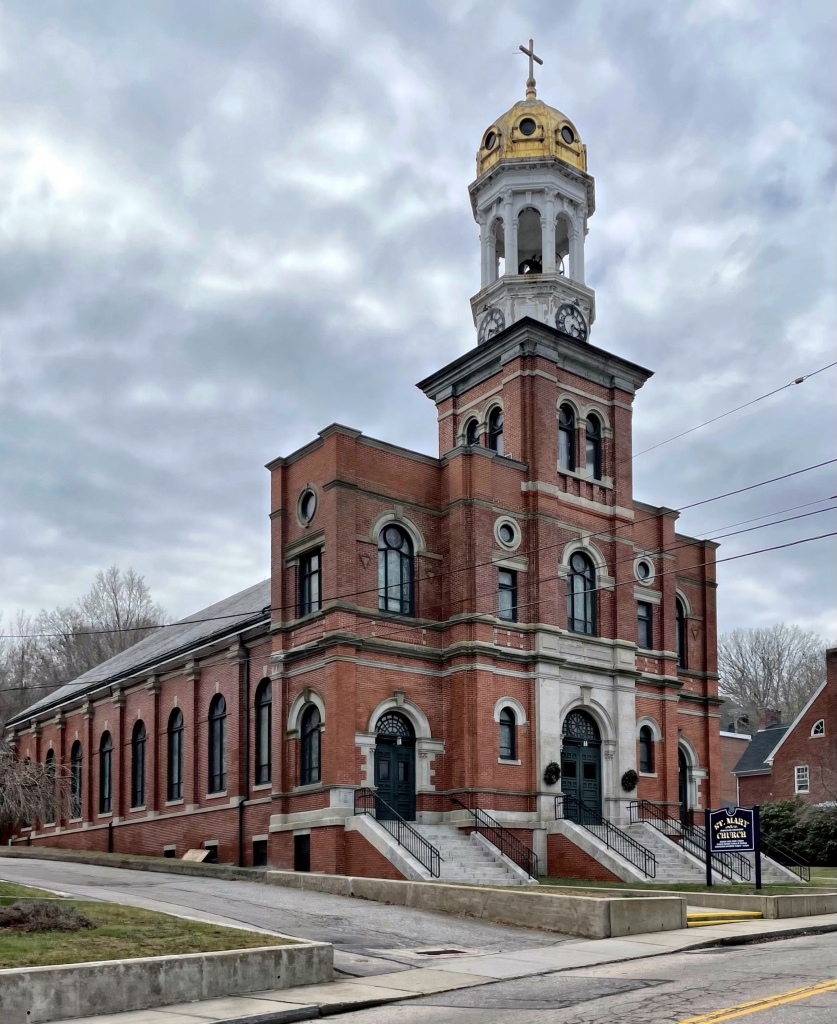
St. Mary of the Immaculate Conception Church // 1911

One of the grandest and high-style buildings in Sprague’s Baltic Village is the St. Mary of the Immaculate Conception Church. As Irish, French- Canadians and Poles settled in the village of Baltic, they formed a substantial Catholic community. This congregation was founded by 1860 and a modest church building was erected at that time. As the town’s Catholic population grew, the Archdiocese decided to fund a new church building. This Romanesque Revival style building was constructed in 1911 and it must have made a big statement when it was completed. The building is one of the most unique church designs that I have seen in Connecticut.

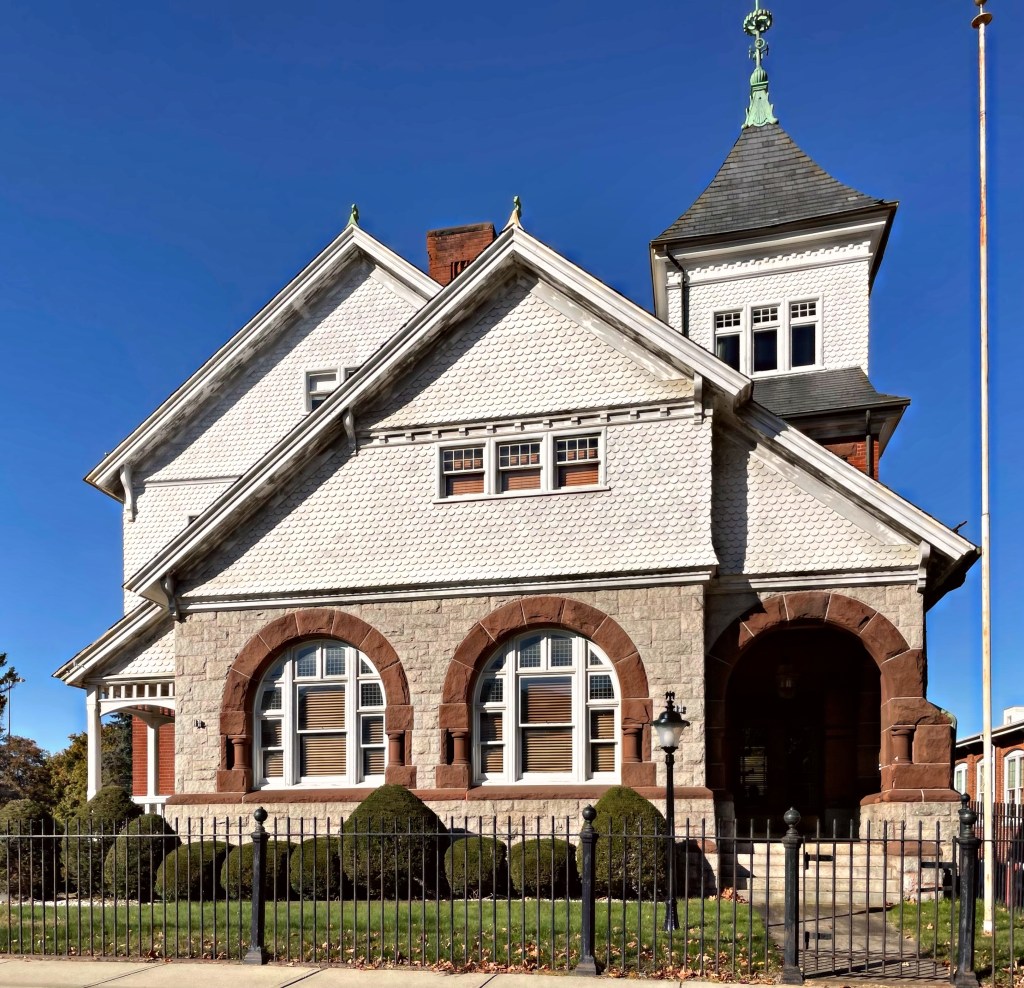
George H. Gilbert Company Offices // 1885

South of the Ware River in Ware’s Industrial Village, you will find this absolutely charming former manufacturing office on the side of the road. The building was constructed in 1885 for the George H. Gilbert Co., a textile manufacturer, as the company offices. The building’s architect could not be readily located, but the building appears to have been the work of a skilled designer. When the Gilbert Company relocated north to a new industrial village of Gilbertville, the Joseph T. Wood Shoe Company moved in. The building now appears to be owned by the present occupant of the mill building nextdoor, American Athletic Shoe Company. The former Gilbert Co. Office is one of the more high-style buildings in the town of Ware and exhibits the best in Queen Anne and Romanesque Revival architecture.

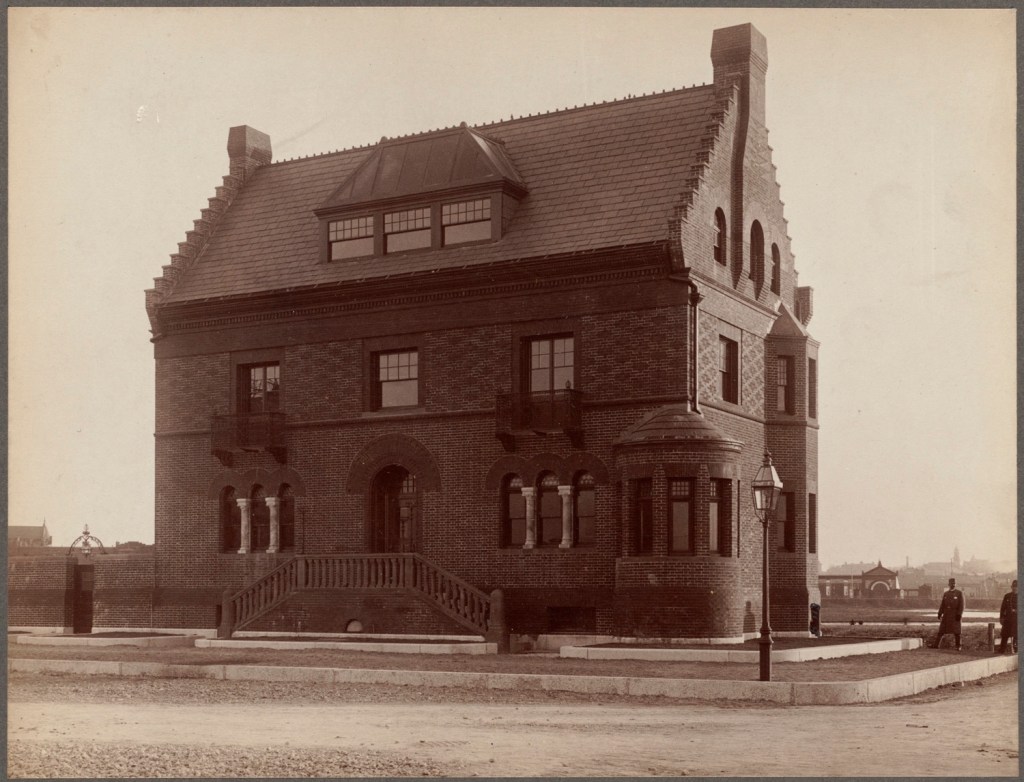
Kate and Charles Page House // 1888-2001

C.1888 photo courtesy of BPL collections

In 1888, Kate and Charles Page purchased a house lot in the sparsely developed Fenway section of Boston. The corner lot at Westland and Parker (renamed Hemenway) provided views to natural scenery and access to many Boston amenities. The couple worked with architect Herbert Langford Warren, who had previously apprenticed under the great H. H. Richardson. Warren took many of the common motifs seen in Richardson’s own style, but he was also a fan of the Arts and Crafts Movement, with its love of fine handicraft. You can see that in the elaborate diaper-patterned brick and in the stepped gables. The gables were a revival of a motif from old Flemish, Dutch, and Scottish architecture, sometimes called corbie-step gables, because corbies (crows) liked to stand on the steps. The interior was just as stunning, with massive brick arches, fanciful woodwork, and a prominent stairhall at the entrance. The couple was likely inspired to hire Warren by their son, Walter Gilman Page, a young artist who maintained a studio space in the home for some time. The home was sold out of the family by 1912. In 1917, the whole house was lifted up one story and a strip of retail stores was inserted beneath it. The original arched entryway then became a second-floor window. It was replaced with a taller building by 2003. Interestingly, upon the opening, the Commissioner of the Boston Parks and Recreation Department and long-time Boston Preservation Alliance Executive Director stated that the 1888 house “looked like a missing front tooth” and was happy to see it demolished.

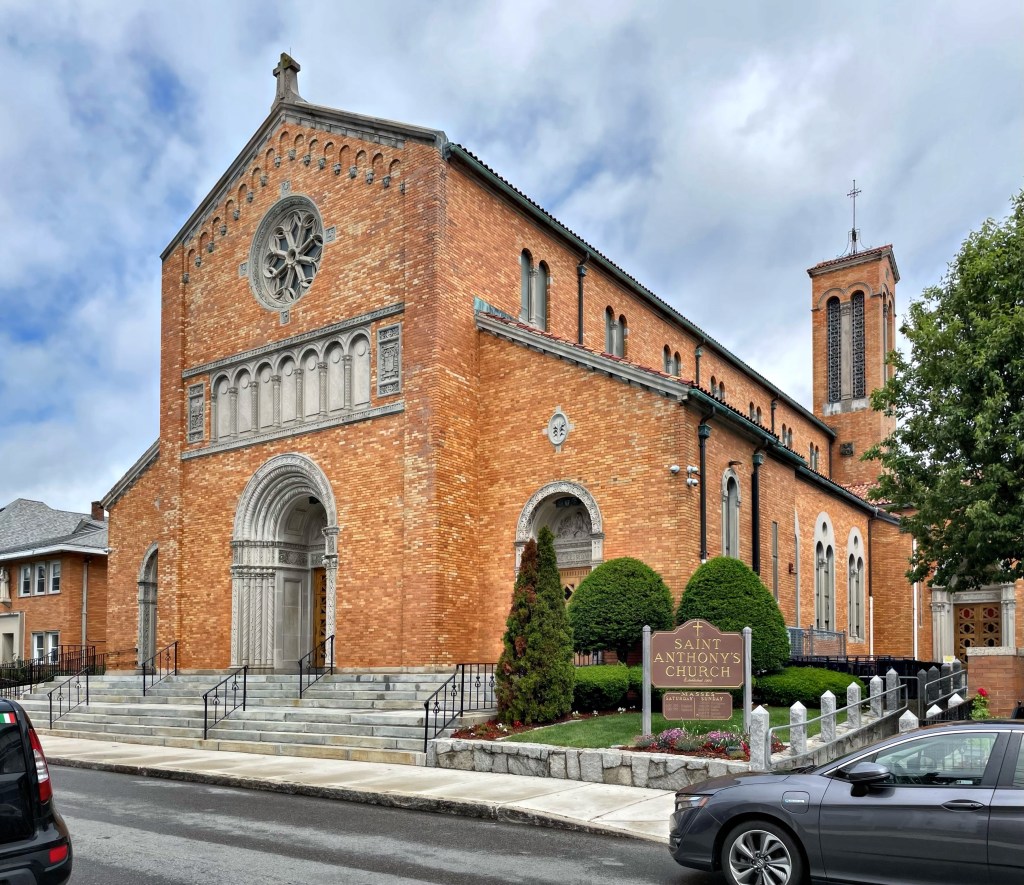
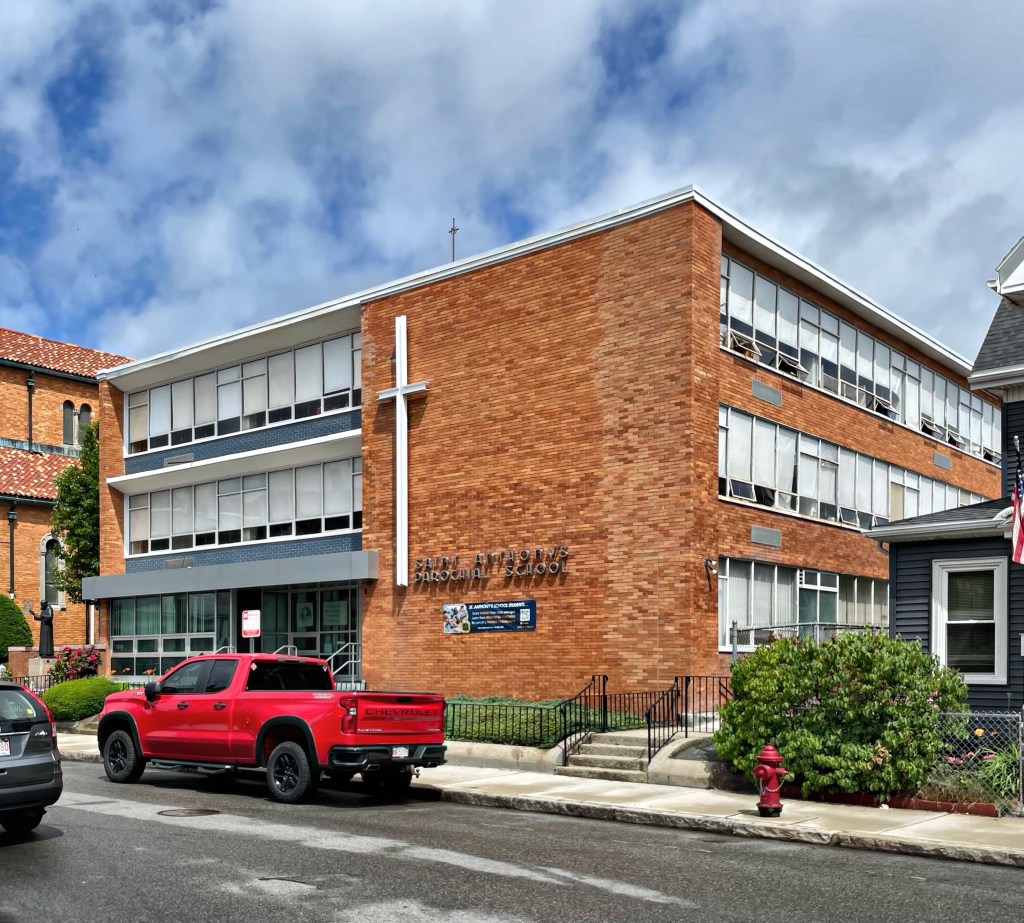
St. Anthony’s Church Campus // 1951

In the 1920s Italian-speaking residents in Everett, Massachusetts appealed to Archbishop of Boston, William O’Connell for an Italian parish. Everett had seen a large influx of Italian immigrants who settled in town and the surrounding communities for work. The Archdiocese saw the demand, and rented the former Broadway Theater to be used as a church for the short term. In 1951, land was acquired a few blocks away for a new church, school and rectory. The church was designed to resemble historic Romanesque-style churches seen in Italy, with the school and renovated rectory following the Modern tradition. The brick and limestone church appears to have been built more in the historical tradition, with hand-carved stone trim and a beautiful rose window. It’s amazing that this church was built in the 1950s!

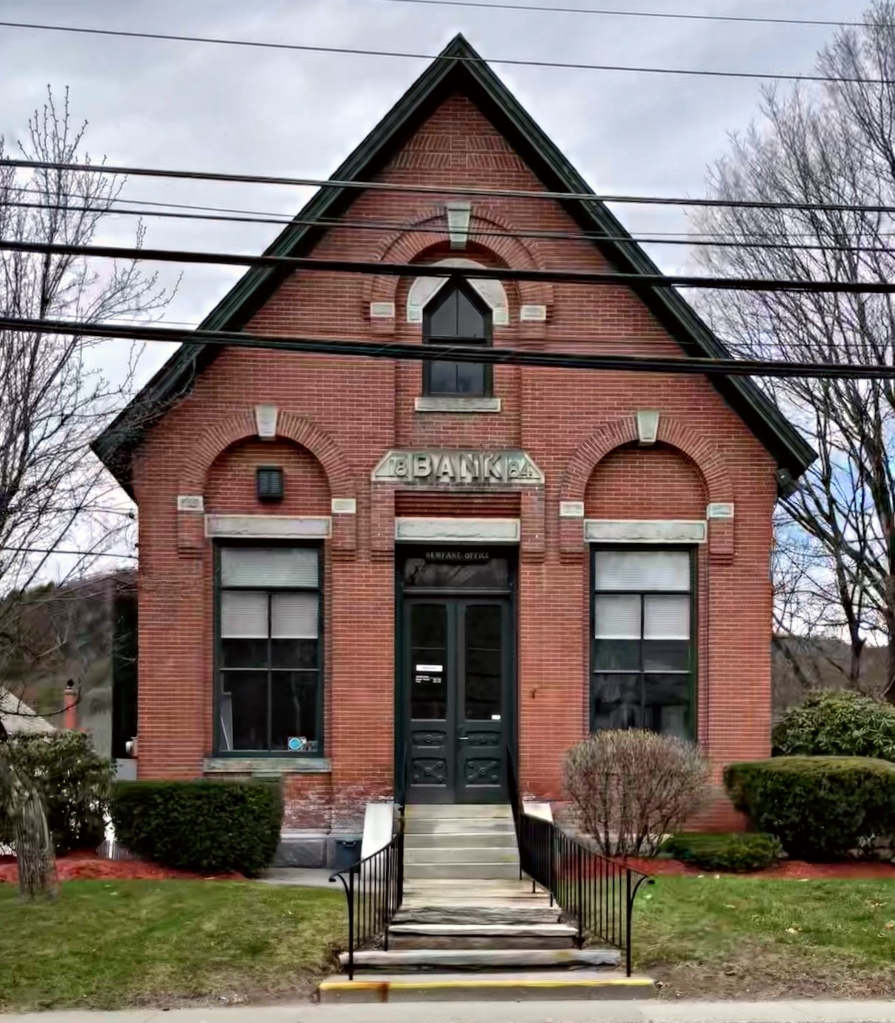
Vermont National Bank // 1884

One of the few brick buildings in Newfane’s Village Center is this charming old bank, right on Main Street. The building was constructed in 1884 as the Vermont National Bank and is a vernacular example of the Romanesque Revival architectural style with the arched openings and brickwork. Vermont architect George A. Hines designed the modest building, which was built for $6,650. The bricks for the building were brought into town by ox cart. Those for the front facade cost 5 cents apiece; those for the sidewalls 3 cents; and those for the back wall 2 cents, showing how the best materials go on the highly visible facades.

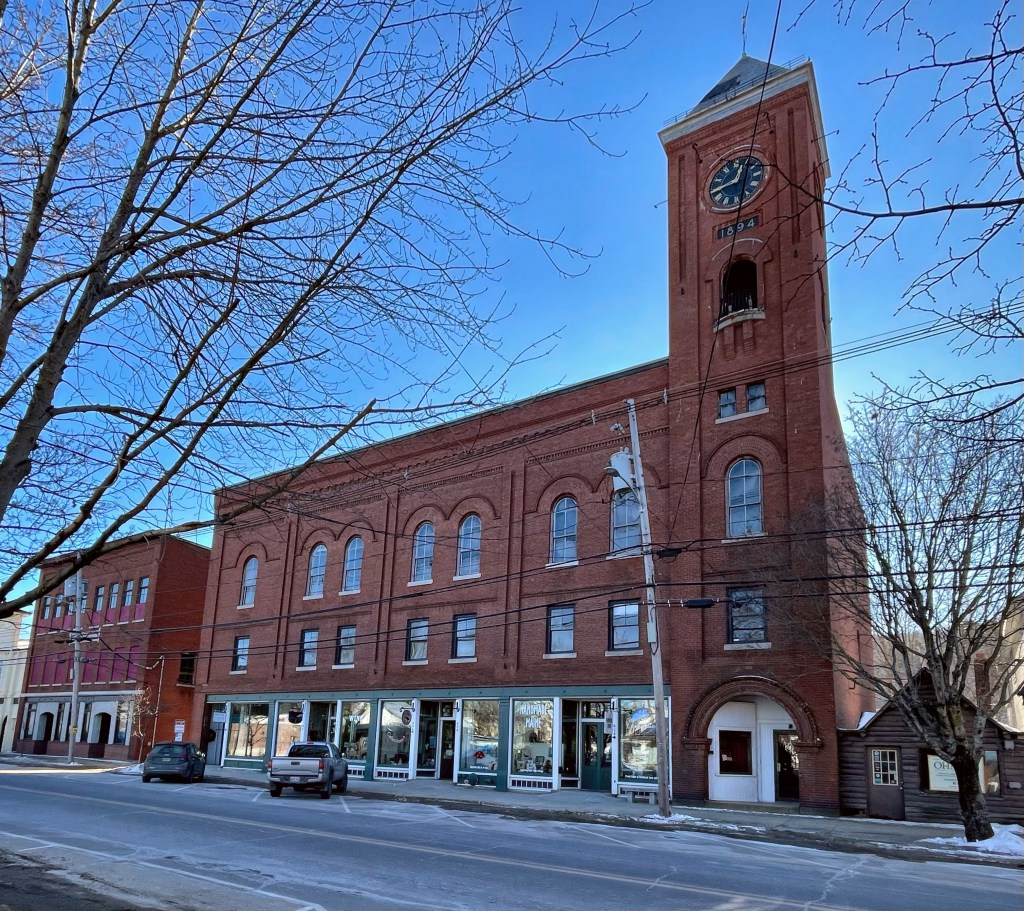
Norway Opera House // 1894

The most substantial building on Norway’s Main Street is this hefty brick commercial block with its prominent corner clock tower. The structure was designed by Maine architect Edwin E. Lewis and built in 1894 as the Opera House with stores along the ground floor. The building was constructed immediately after a large fire destroyed much of the downtown village area of Norway, and was built in such a way to show the strength and resolve of the town, leading the way for a larger re-building effort by the local business community. The Romanesque Revival building features lovely arched windows and brick detailing. The building has seen better days, but a local group has been working tirelessly to restore this beauty to her former glory! The group is presently soliciting donations to restore the roof and rear wall, to keep the building standing for future generations.

Cunningham Block // 1896

The Cunningham Block in Millbury was constructed by, and named for Winthrop P. Cunningham (1820-1895), and his son and business partner, Russell Clark Cunningham (1845-1907). Winthrop Cunningham had come to Millbury in about 1837 and worked for Waters, Flagg & Harrington prominent gun manufacturers in town. His foundry work there brought him into a partnership with Matthias Felton in the Millbury Foundry Company. The Cunningham Block is sited on a prominent corner lot and built into the slope of the hill which drops down toward the river. I am especially fond of the curved corner facade and repetition of the paired round-arched windows on the second floor.

Collinsville Savings Bank // 1892

Historically, banks would construct architecturally grand buildings with ornate interiors to showcase their wealth and stability. The aim for these institutions would be to express longevity and security for those looking for a place to store their wealth. The Collinsville Savings Bank grew out of the Collinsville Company and was incorporated to provide a bank for the ever-growing community in the village, from executives to recent immigrants. The bank was incorporated in 1853, and later relocated into the company’s office building. By the end of the 19th century, company offices expanded into other spaces in the building, and the bank was forced to build this new Romanesque Revival style building on Main Street. The rusticated blocks in the brick facades add a lot of depth and detail to the building, and those ARCHES!