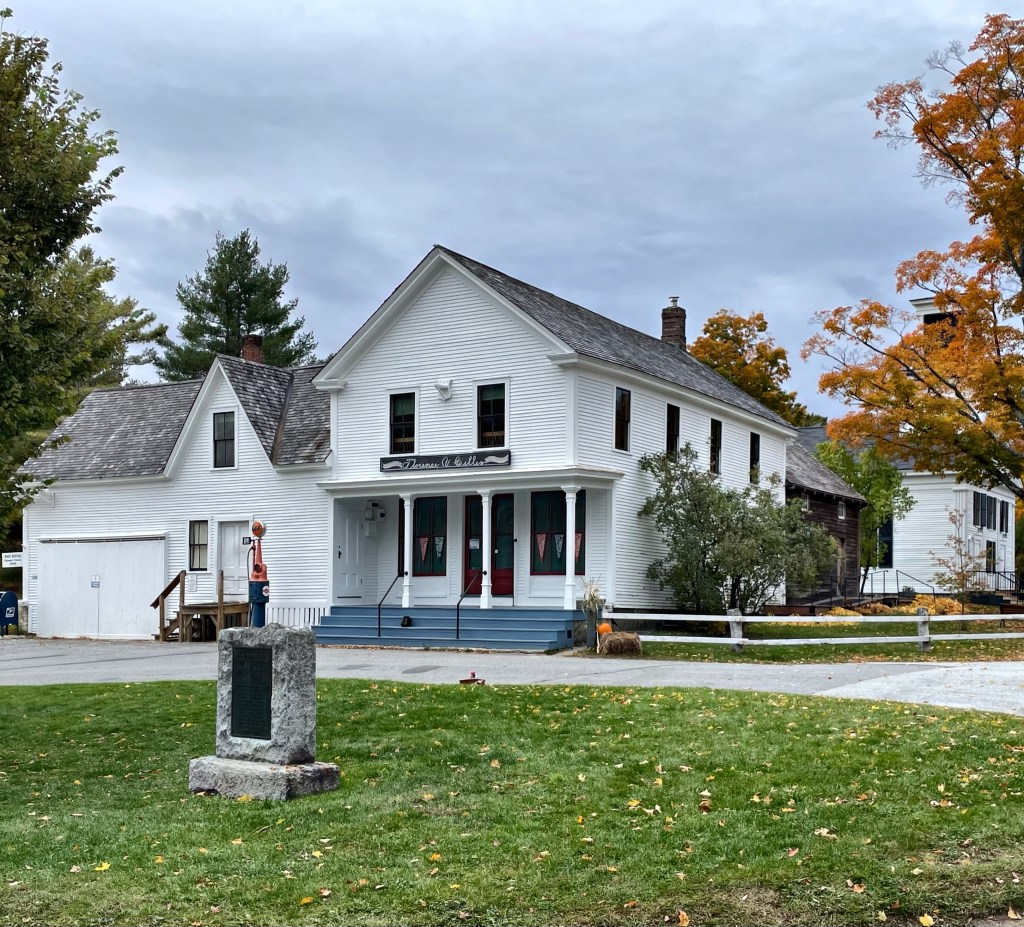
Built in 1834 by Cyrus Eaton, a businessman who emigrated to Orleans County from Canada, this cape house blends Federal and Greek Revival styles under a charming roof. Mr. Eaton was a trustee of the Orleans County Grammar School in Brownington, Vermont and helped African American Alexander Lucius Twilight build the Old Stone House. Two of Eaton’s sons and one daughter enrolled at the school, located just nextdoor from their home. In 1971, the property was purchased from a private owner, and has since been part of the Old Stone House Museum and Historic Village’s gorgeous campus.
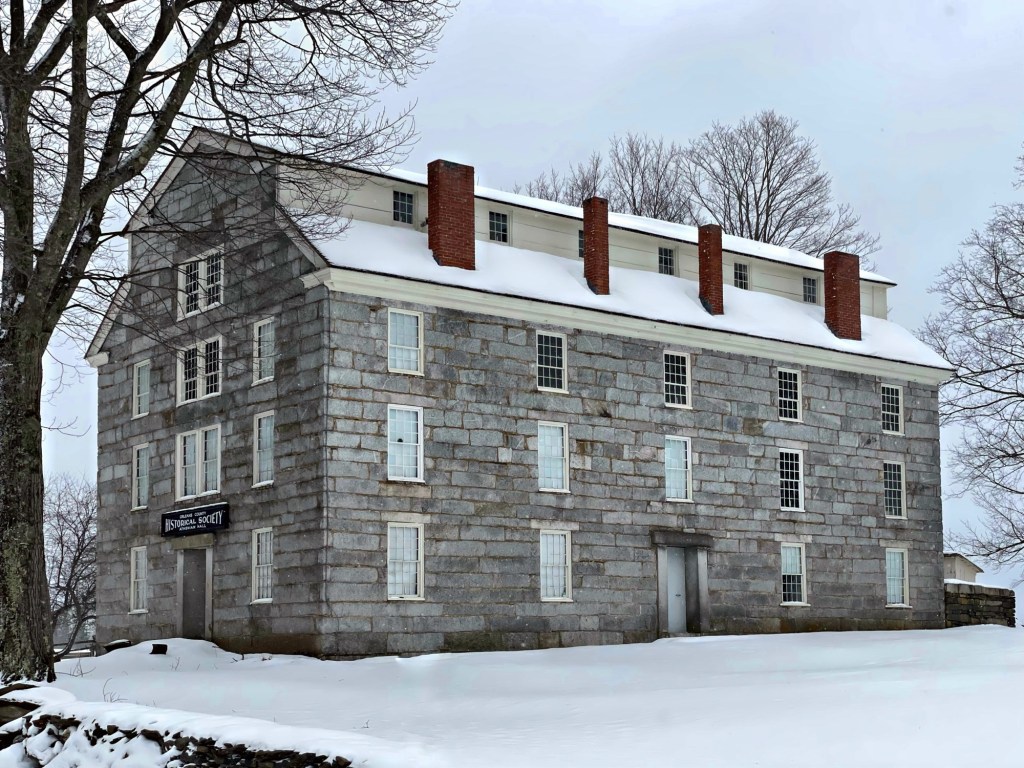
Across from the Alexander Twilight House (last post) in Brownington, Vermont this massive stone structure which is possibly the first granite public building constructed in the state. Alexander Twilight (1795-1857) is reputed to be the first African American in the United States to graduate from college, where he was likely inspired by the large granite dormitories there (a private institution). Twilight served as headmaster of the Orleans County Grammar School, which due to its rural location, required many students to travel long distances for their education. As a result, they boarded with families in town, including with Twilight. Athenian Hall was built to accommodate the larger number of students attending the Grammar School. The building closed in 1859, two years after the death of Alexander. The building sat vacant for much of the late 19th and early 20th centuries until 1918, when the Stone House was put up for auction. A representative of the railroad in the state of Vermont bid on the structure with the hopes of using the granite stones for bridge abutments. Luckily for us, The Orleans County Historical Society outbid the railroad and won the auction. The building was opened as a museum in 1925 and is today part of the Old Stone House Museum and Historic Village.
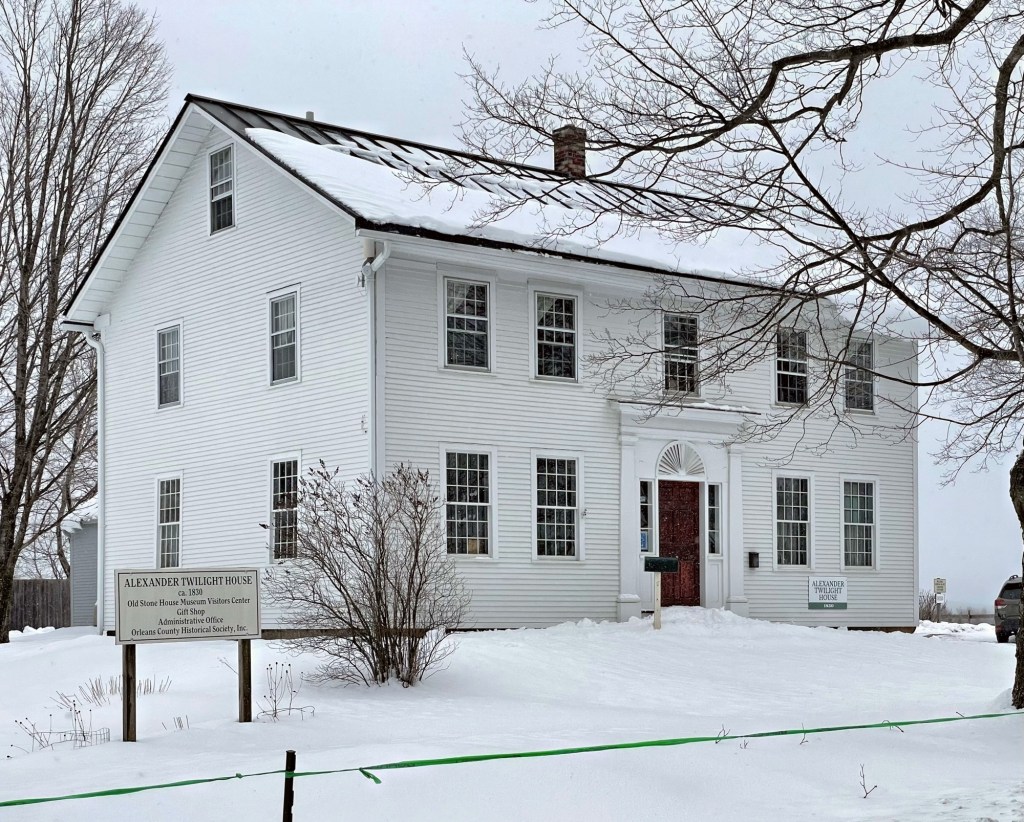
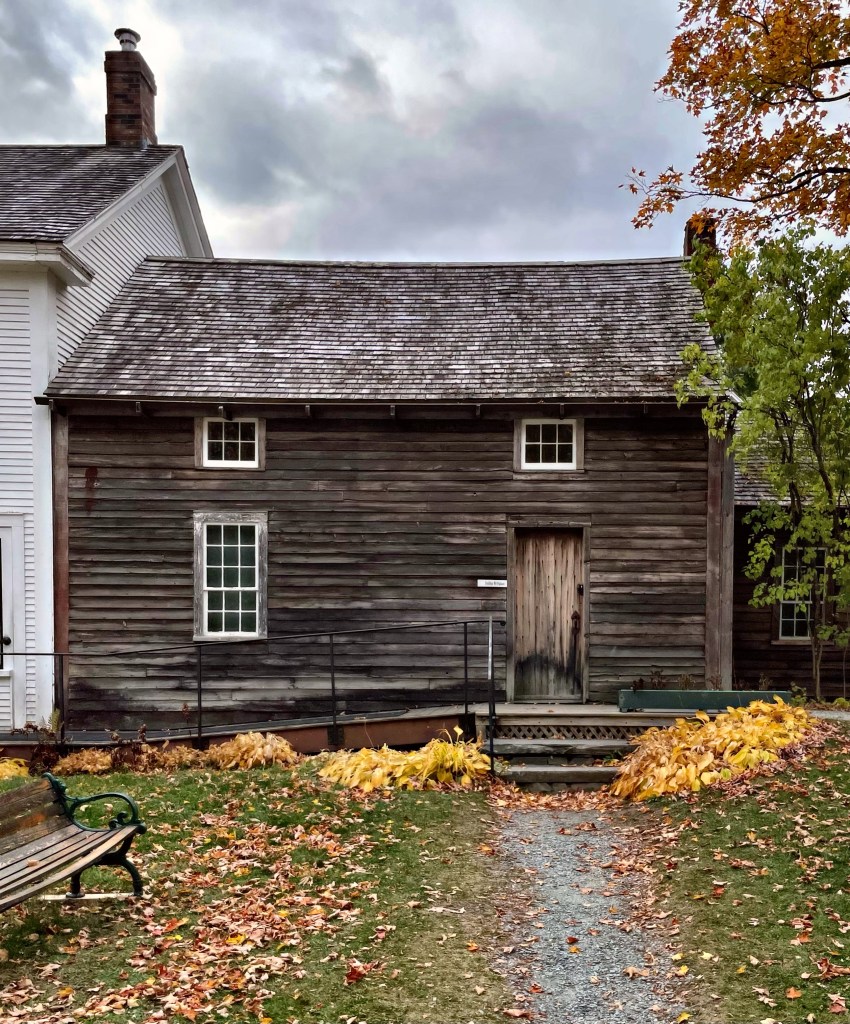
The highlight of the town of Brownington, Vermont is the Old Stone House Museum & Historic Village, a collection of amazing 19th century architecture set amongst the rolling hills of the Northeast Kingdom. One of the buildings in the village is this structure, the Alexander Twilight House. Alexander Twilight (1795–1857) was born in Corinth, Vermont, on September 23, 1795. He was raised by a fair-skinned mother, Mary Twilight, and a mixed-race father, Ichabod Twilight. Twilight entered Middlebury College in 1821 and graduated in 1823, possibly making him as the first person of color to graduate from an American college. Alexander Twilight accepted the call and moved to Brownington to serve as the town’s reverend. He also served as headmaster of the Orleans County Grammar School. To meet growing enrollment needs, he designed, raised funds for, and built the first granite public building in Vermont, Athenian Hall, which contained classrooms and a dormitory. He had this Federal style house built in the village, large enough to house some students in his home. Before building his Federal style home, he lived in a much smaller, vernacular home, which was added onto the rear of this home as an ell (later separated by the museum). Elected to the Vermont General Assembly in 1836, Twilight became the first African American to serve in a state legislature in the United States. In 1847, after conflicts with the Orleans County school administrators, Twilight moved to Quebec, Canada for five years, but then returned to serve as headmaster in Brownington. He died on June 19, 1857 and is buried in the Brownington churchyard.
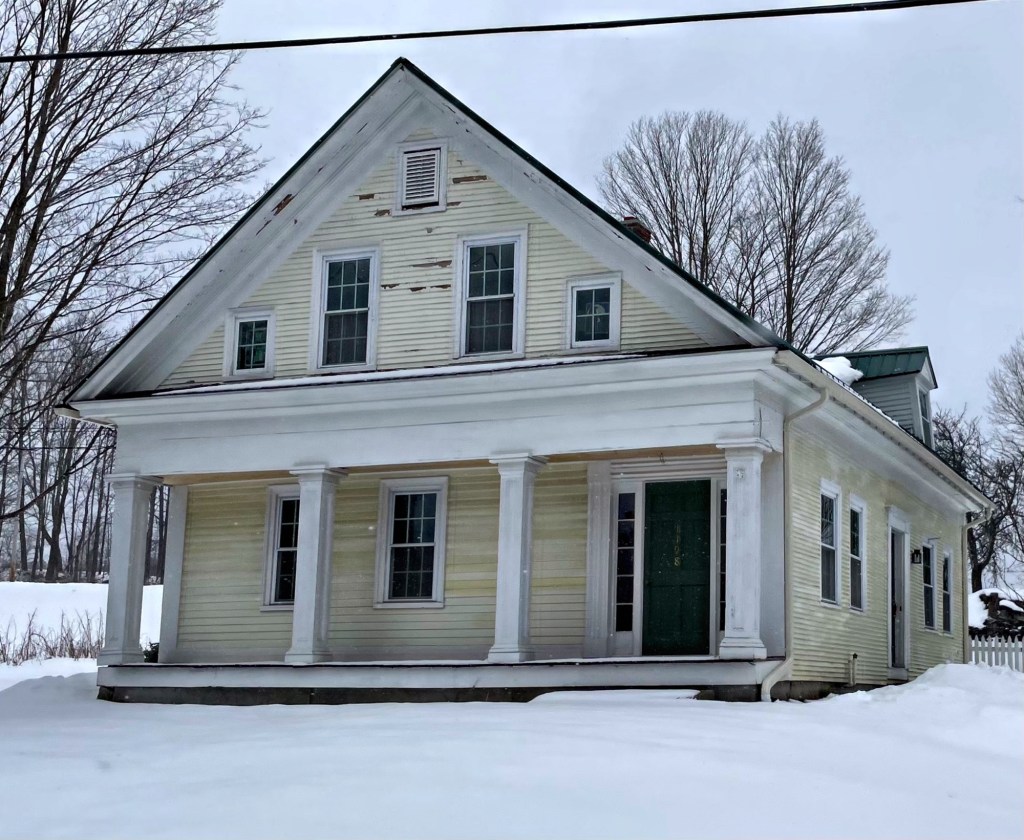
Welcome to Brownington, Vermont! This small, rural town sits in the Northeast Kingdom region of the state and was granted to Daniel and Timothy Brown in 1790, and named after their family. One of the first roads in Orleans County went through Brownington, connecting Greensboro to Derby. Brownington Village was once a stopping point for stagecoaches traveling between Boston and Canada. This Greek Revival style house was built in 1843 along the stagecoach route to Canada and was built for Thomas C. Stewart. Thomas Carlisle Stewart (1804-1865), an attorney and prominent member of town who was the son of Amherst Stewart, one of the town’s founders. The Stewart home has its gable end extending over the recessed front porch, reading like a temple-front home.
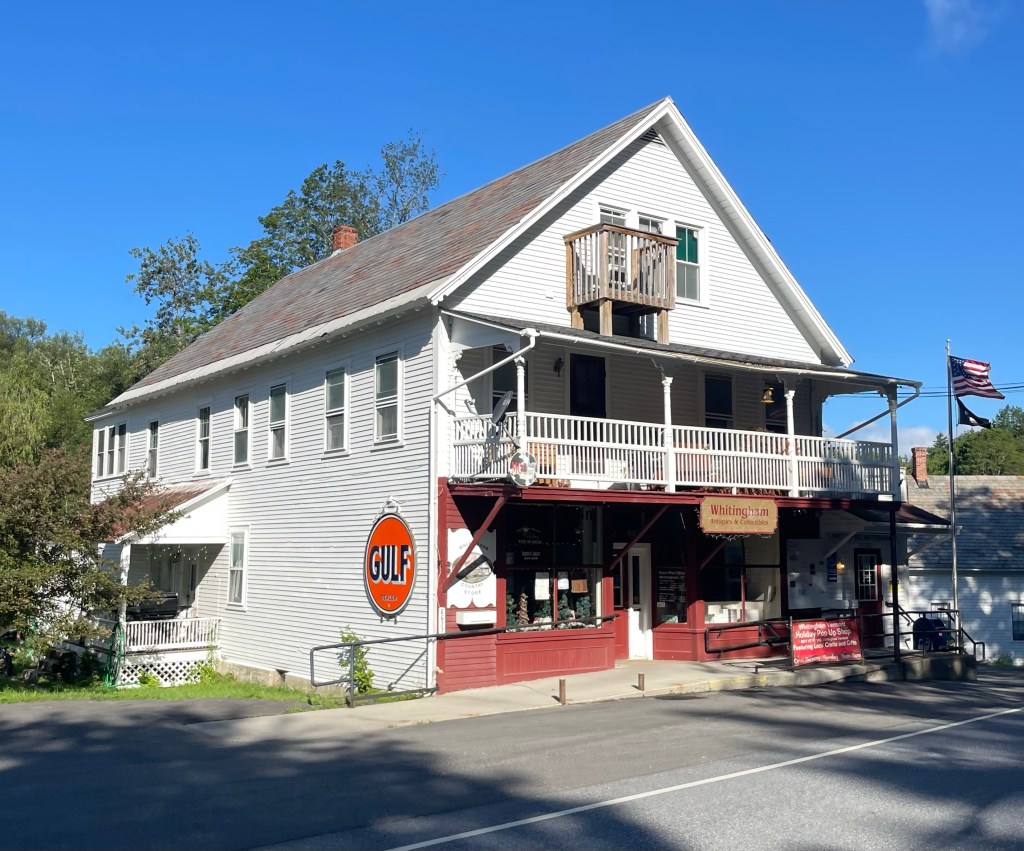
To me, Vermont is synonymous with Vernacular architecture. The state obviously has high-style and architect-designed buildings all over, but the character of the state (to me) is based around local builders, local materials, and local traditions. The patchwork of towns and villages in Vermont all have one thing in common, at least one general store. These buildings serve as an informal meeting place or community center where residents and visitors alike can hear the local gossip and events taking place. The general store in Whitingham, Vermont is located in the middle of the village, perfect for stopping in. The building was constructed in the first decade of the 20th century, replacing a former hotel/tavern on the site. The late-folk Victorian style store exhibits some decorative columns and storefronts, likely produced at one of the working lumber mills in town at the time. The store was originally built by Arthur and Carl Wheeler as the “Wheeler Brothers Store” but after 15 years changed hands and became the “F.W. Jillson & Son Store”. Since then, the Jillson’s opened up an antique store in the building which serves as a multi-use facility (collectively as a country store). Keep it local Vermont!
The township of Moretown, Vermont was chartered on June 7, 1763 by Governor Benning Wentworth of New Hampshire. The original charter contained approximately 23,040 acres of land to be divided into about 65 shares of proprietors. Active settlement did not occur until after the Revolutionary War with early buildings constructed on the Winooski River (the northern boundary of the town) and subsequent development along the Mad River (which cuts through the middle of town). Saw and grist mills were built and the town developed as a rural farming and industrial community on the rivers. The Moretown Town Hall was erected in 1835 in the Greek Revival style. It has a pedimented portico with Doric columns that support a large pedimented gable peak in imitation of a Greek temple. Like most buildings in the Mad River Valley, the building is unapologetically Vernacular which means it relies on local materials, local builders, and not on architect-designed finishes. This is an aspect of Vermont architecture that makes the state so charming.
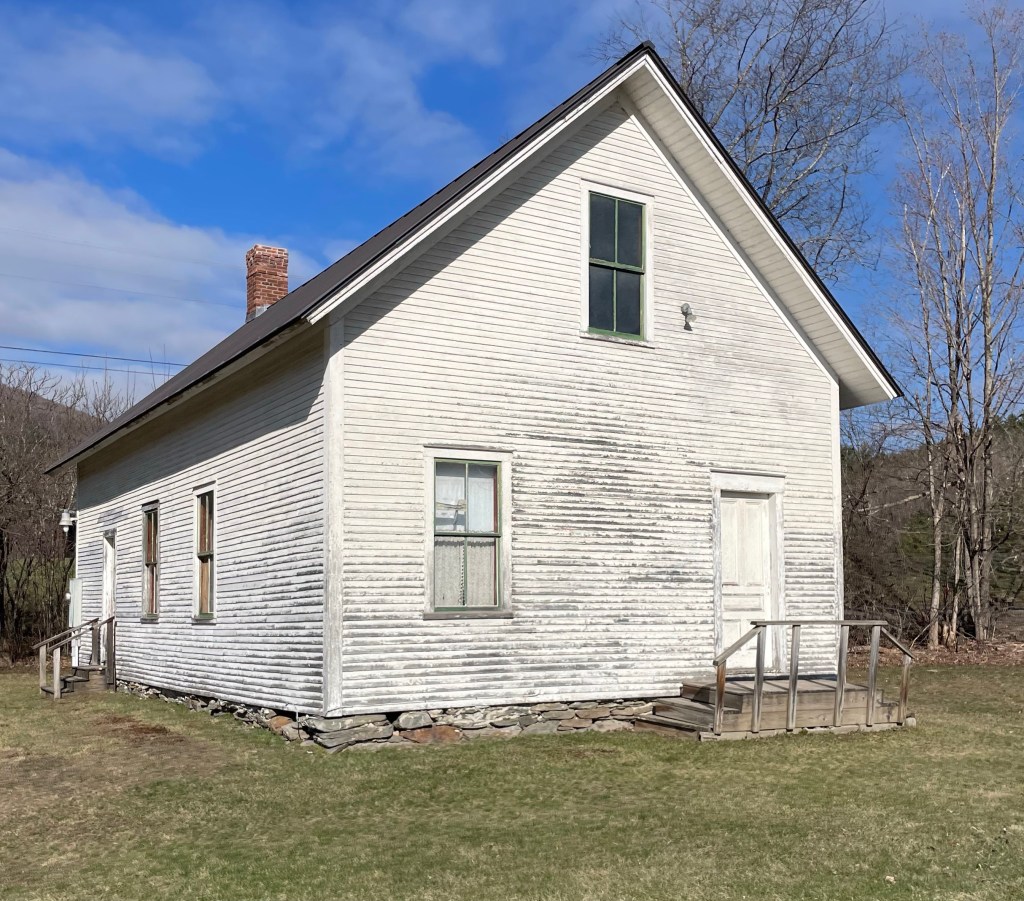
This is the first church ever built in Duxbury, Vermont. On December 18, 1854, at the South Duxbury schoolhouse, representatives from six denominations in the newly formed town, gathered to form the First Union Society of Duxbury. The participants were: the Congregationalists, Universalists, Free Will Baptists, Protestant Methodists, Episcopalian Methodists, and the Adventists. Twenty-five names appear on the original subscription list, indicating the pledged money or materials that each would contribute to the construction of the church. Samuel Cook Turner was contracted to build the church, with pews inside purchased by individual families to help fund the construction. The building is vernacular and modest due to the rural character of the congregations and town’s location, but it has a more Classically inspired door enframement. In 1890, funds were gathered for a church hall, which sits nextdoor. The meeting hall would serve as the meeting space for a temperance organization known as the “Independent Order of the Good Templar”. The church hall appears to have some deferred maintenance, but both buildings together share an early history of a rural and often overlooked small Vermont town.
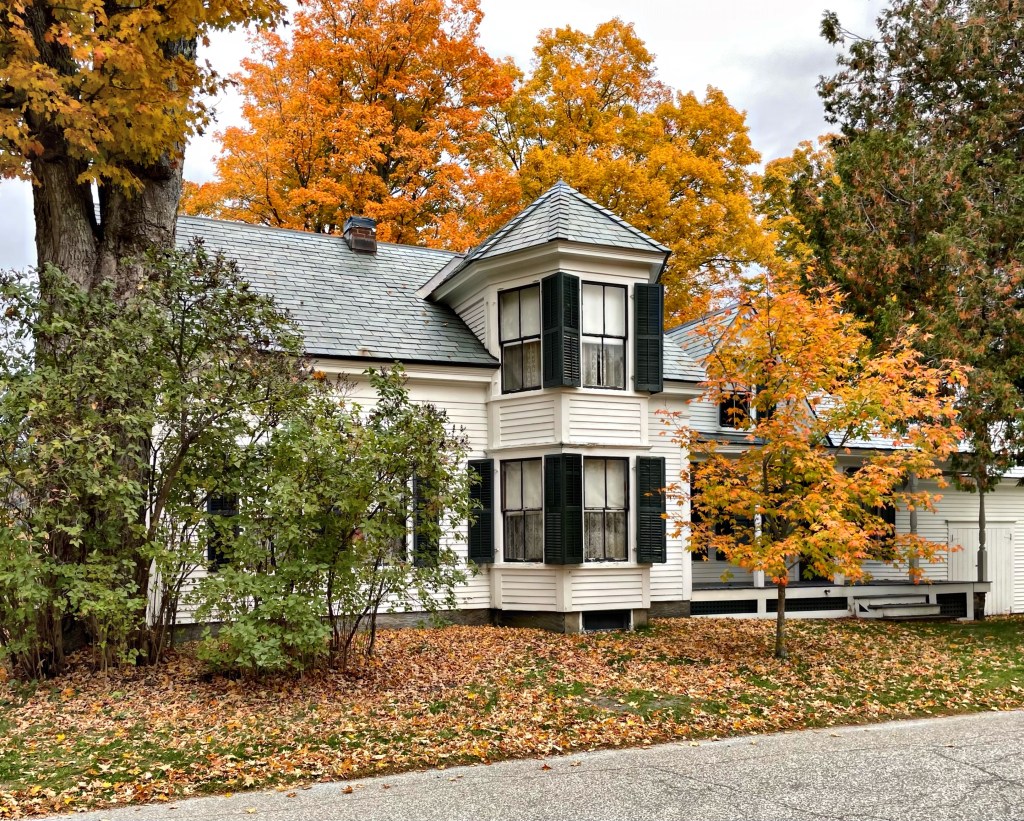
In 1876, a four year old Calvin Coolidge moved to this house in sleepy Plymouth Notch, Vermont, which was purchased by his father and he lived here continuously until 1887 when he began to attend the Black River Academy at nearby Ludlow, Vermont. The house was likely built in the mid-19th century as a modest Greek Revival cape and was Victorianized in the late 19th century by Calvin Coolidge’s father, when he added the two-story bay window, dormer, and side additions. The house remained in the Coolidge family until 1956 when it was given to the State of Vermont as part of the Calvin Coolidge Historic Site.
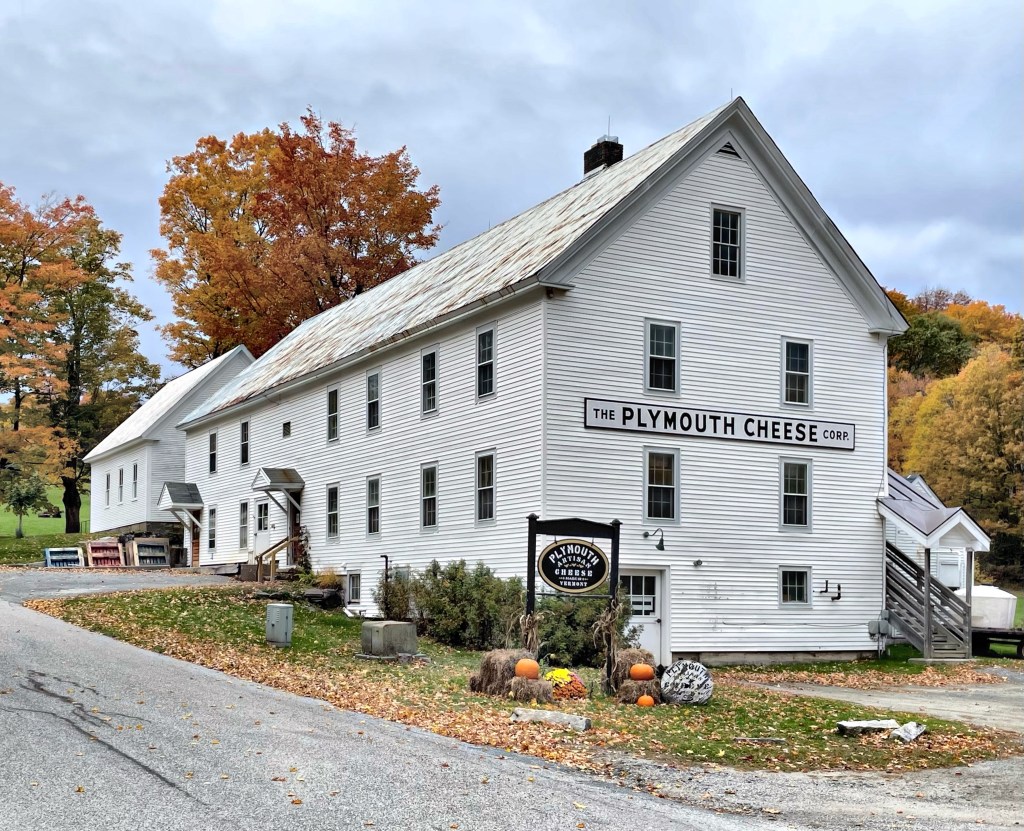
Does it get more Vermont than a cheese factory?! The Coolidge Cheese Factory in Plymouth Notch, Vermont was built in 1890 by Col. John Coolidge (President Calvin Coolidge‘s father), James S. Brown, and two other local farmers so that they would have a convenient market processing milk produced by their farms into cheese. The vernacular building was a short walk from the original Coolidge home and is evocative of many such buildings in rural Vermont. The cheese factory continued to operate until the 1930’s. The factory was renovated in the early 1970s in honor of President Coolidge’s 100th birthday and now produces cheese according to the original formula. The cheese would make a great Christmas gift!
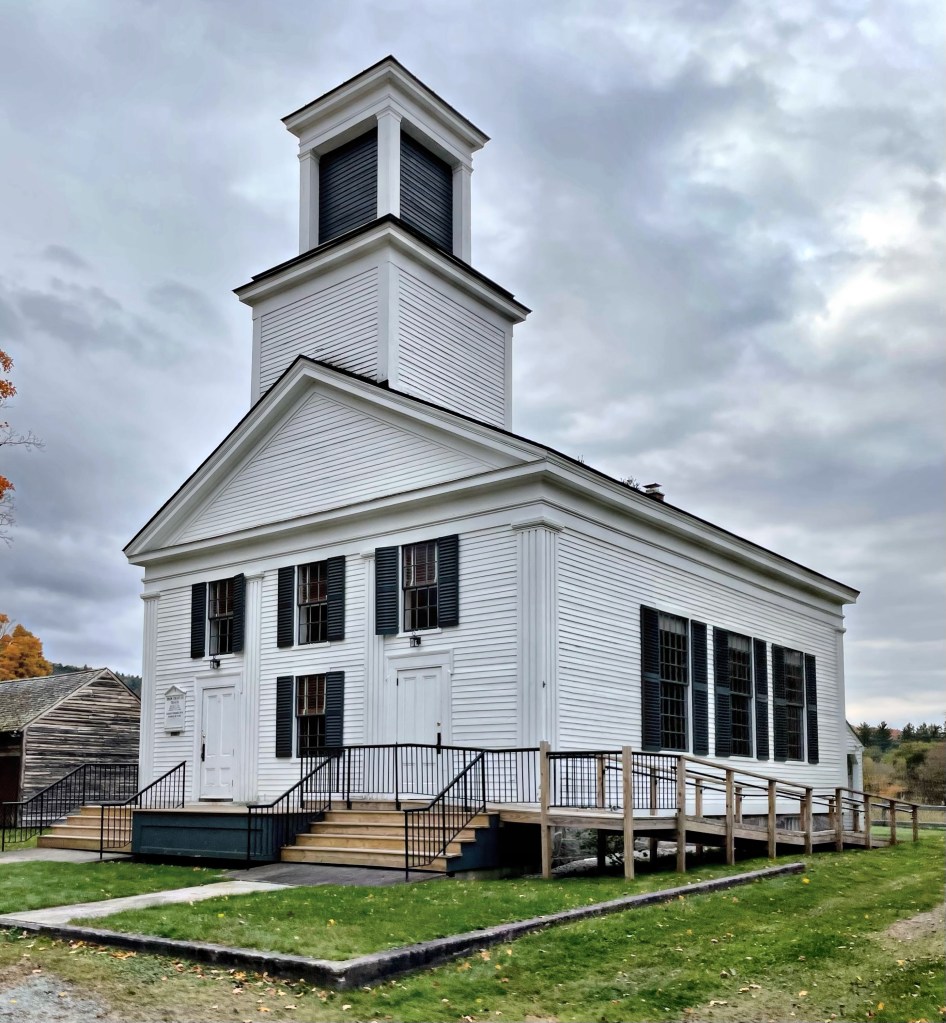
Located next to President Calvin Coolidge’s birthplace and the Coolidge Family store, the Union Christian Church of Plymouth Notch in Vermont stands as another of the village’s well-preserved buildings with direct ties to the former president. The church was built in 1840 as a modest, vernacular Greek Revival building with a two-stage tower and originally was the town’s meetinghouse. The building was dedicated as a Congregational church in 1842. President Coolidge attended services here as a child and later when visiting his hometown as Governor of Massachusetts and President of the United States. In 1942, the building became a union church for all congregations.
Built before 1835, this typical country store in Plymouth, Vermont, consists of a two-story main block with a one-story storage ell on the southern (left) side, each of frame and clapboard with gabled roof. The building was the village’s country store and was owned by the Coolidge Family, made famous by Calvin Coolidge, the 30th President of the United States. This store was built years before a home for the Coolidge Family was built attached at the rear. The attached house was the birthplace of President Calvin Coolidge in 1872, and the building was where after the death of President Warren Harding, Col. John Coolidge, Calvin’s father, a notary public, administered the presidential oath of office to his son in the family dining room at 2:47 a.m. on August 3, 1923. The old house and store are preserved by the State of Vermont as a living museum to President Coolidge and his family.
The President Calvin Coolidge State Historic Site in Plymouth, Vermont preserves the birthplace and childhood home of Calvin Coolidge, the 30th President of the United States. This iconic historic village appears much as it was during Coolidge’s lifetime. The homes of the Coolidge family, their relatives and friends are joined by the 1840 church, 1890 schoolhouse, cheese factory, and historic agricultural structures and barns. More on all of these later. First up is the birthplace of President Coolidge. This squat 1 1/2-story dwelling was built in 1840 at the rear of the Coolidge Family store which fronts the main road. By the 20th century, the old home was altered, but was restored in 1971 just in time for the 100th birthday celebration by the State of Vermont for Coolidge, dedicating the village as a historic museum.
The last (but certainly not least) building in Dorset, Vermont I’ll be featuring is the Manley-Lefevre House aka. Marble House! This stunning Federal period home was built around 1820 by Martin Manley (1783-1856) on land originally owned by his father George. The house is constructed of ashlar marble that was quarried with hand tools from the lower quarry located approximately 200′ behind the site of the house with dressed marble finished in town and brought back for installation at the lintels, sills, and door surround. In 1907, Edwin Lefevre, Sr. (1871-1943) traveled by train from Bronxville, New York to Dorset at the suggestion of the artist Lorenzo Hatch, with the intention of locating a summer residence for his family. They purchased this home, which became known as “The Old Stone House” and hired Eugene J. Lang, a New York architect, to remodel the house, design a kitchen wing and remodel the barn into a garage (1909). While in Italy, Lefevre fell in love with the formal gardens there, and wanted something like this for his country estate. Upon his return, he retained garden designer Charles Downing Lay to design the gardens that surround the house. The country estate is now home to The Marble House Project, a multi-disciplinary artist residency program.
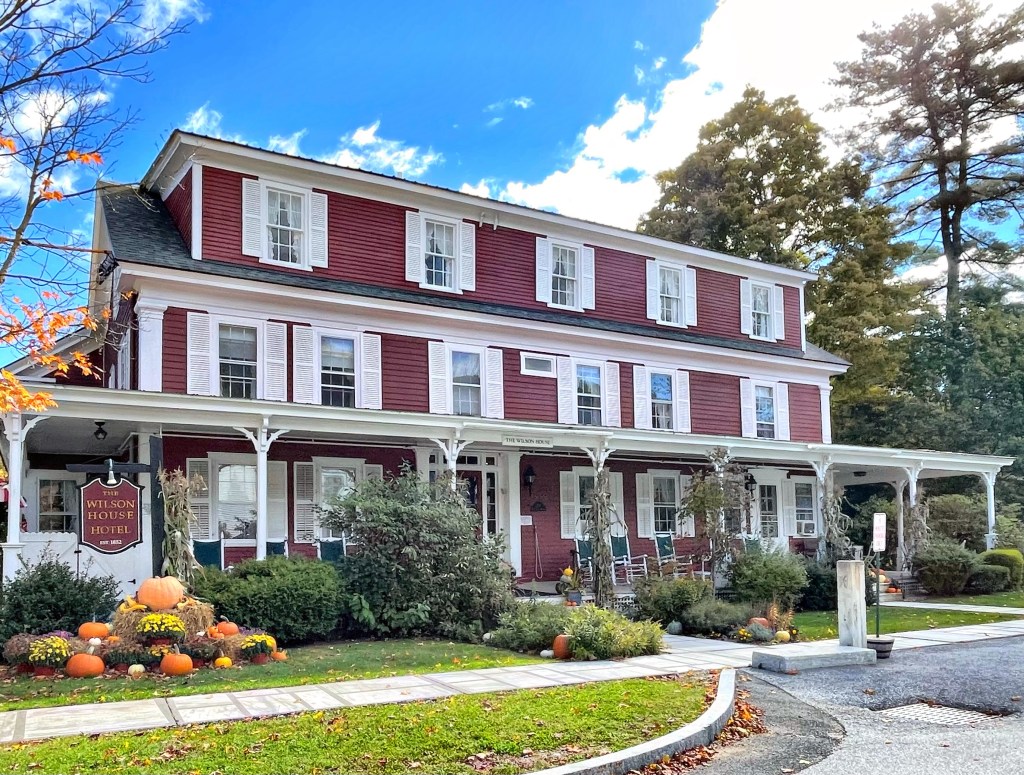
This building, the largest building in East Dorset Village, was constructed and opened as a hotel in 1852 and has ties to one of the most influential organizations in America. Entrepreneur Ira Cochran built this hotel the same year the railroad came to town, capitalizing on the influx of business and new laborers travelling to the once sleepy town now dominated by the marble industry. By the end of the 19th century, the building was owned by the Griffith family. On November 26, 1895, William (Bill) Griffith Wilson was born here, behind the bar of the hotel during a snowstorm. As a child, he moved away until the age of 11, when he returned to East Dorset to live with their maternal grandparents, the Griffiths. Bill would later go on to become the co-founder of Alcoholics Anonymous. The building would eventually sit vacant and dilapidated until Albert “Ozzie” Lepper, Wilson’s friend, purchased the property in the late 1980s and made it into a living memorial to Bill Wilson, renovating The Wilson House with the help of volunteers’ time and talent. The hotel reopened in 1998 under the historic name. The Wilson House was later established as a nonprofit organization to ensure that Wilson’s memory, spirit, and purpose in life continues on for decades to come. Today, visitors come to the Wilson House from all corners of the world. Many of them are in recovery themselves, while others are history buffs who simply want to visit the homestead, which was added to the National Register of Historic Places in 1995.
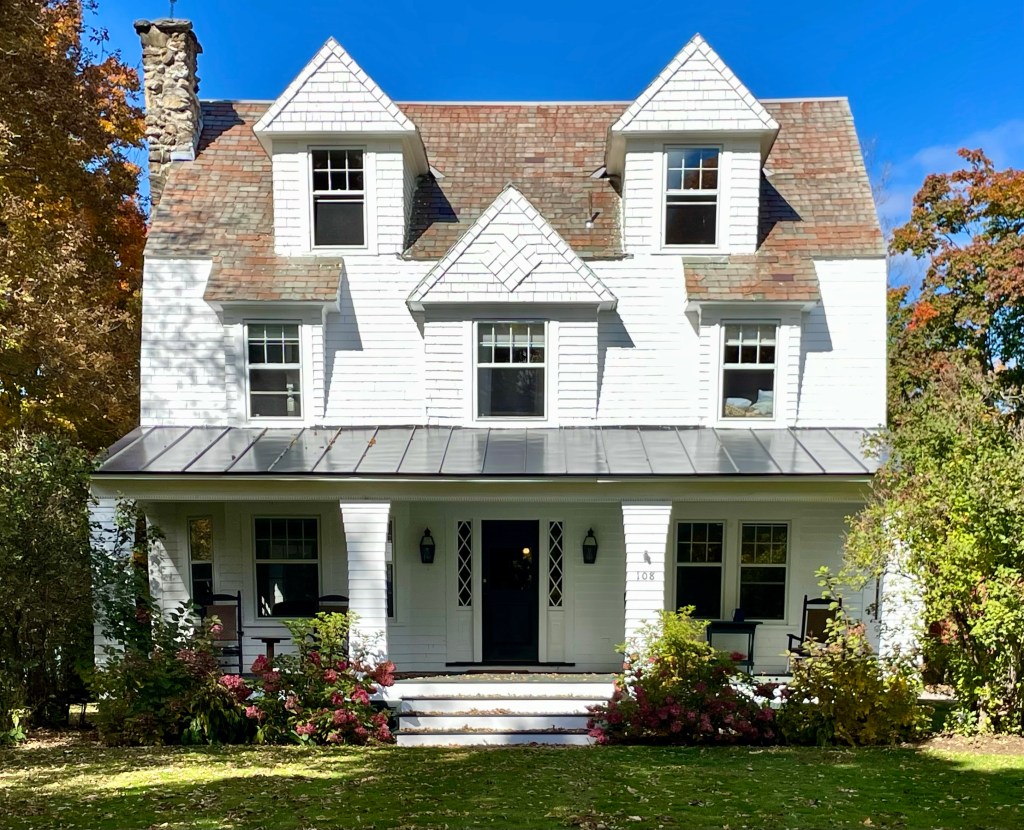
The former Dorset Methodist Church sat on this property from about 1840 to 1900 until they merged with the United Church of Dorset. A Philadelphia physician, Dr. John Herr Musser (1856-1912), built this vacation home in 1906, and passed away just six years later. His widow Agnes Harper Musser (1856-1941) and their children continued to vacation here until after WWII. The home is a rare example of the Shingle style in Dorset and was painted the bright white to fit in with the more traditional New England village vibe, but it would be better-suited with a period- and style-appropriate paint scheme. The home is now offered for short-term/vacation rentals.