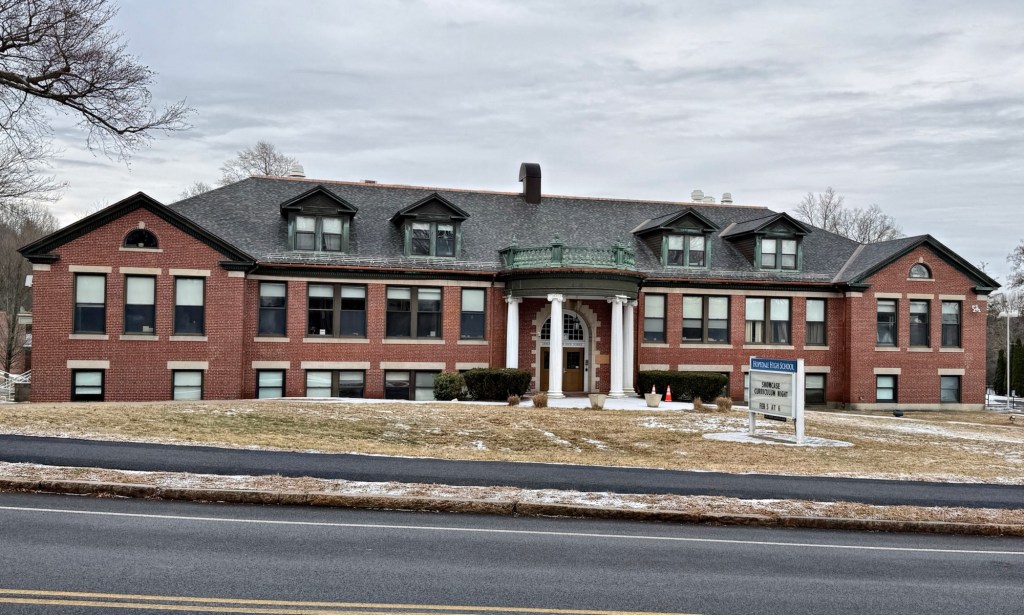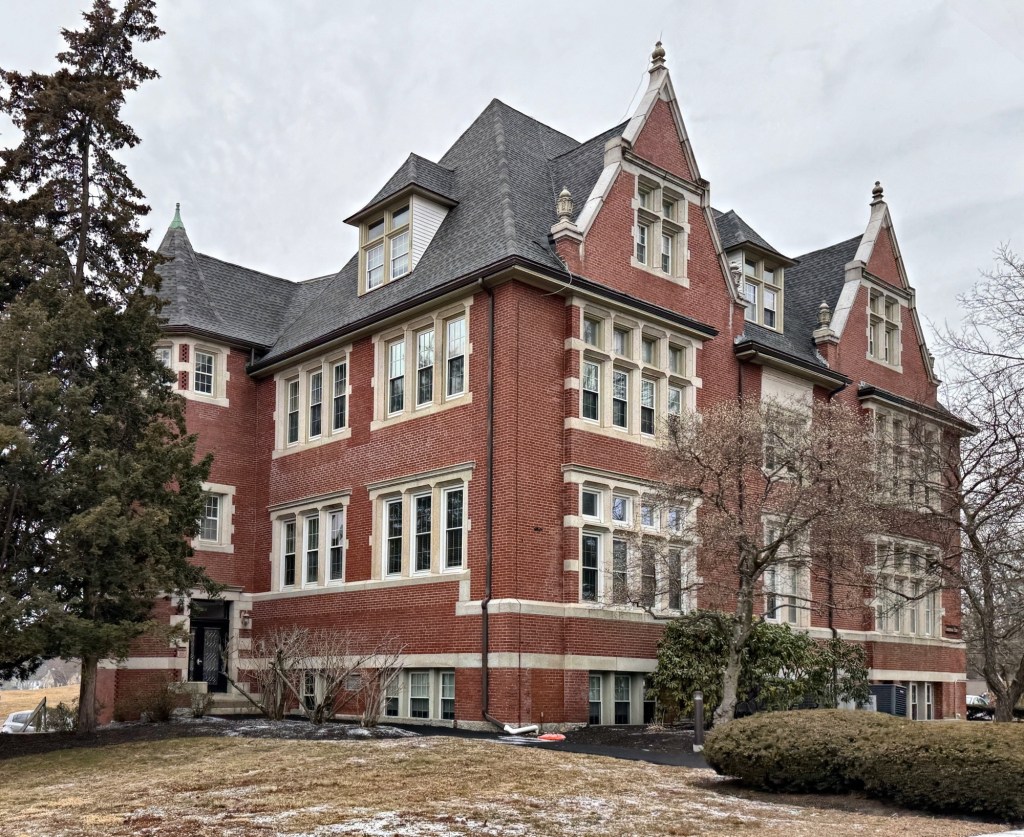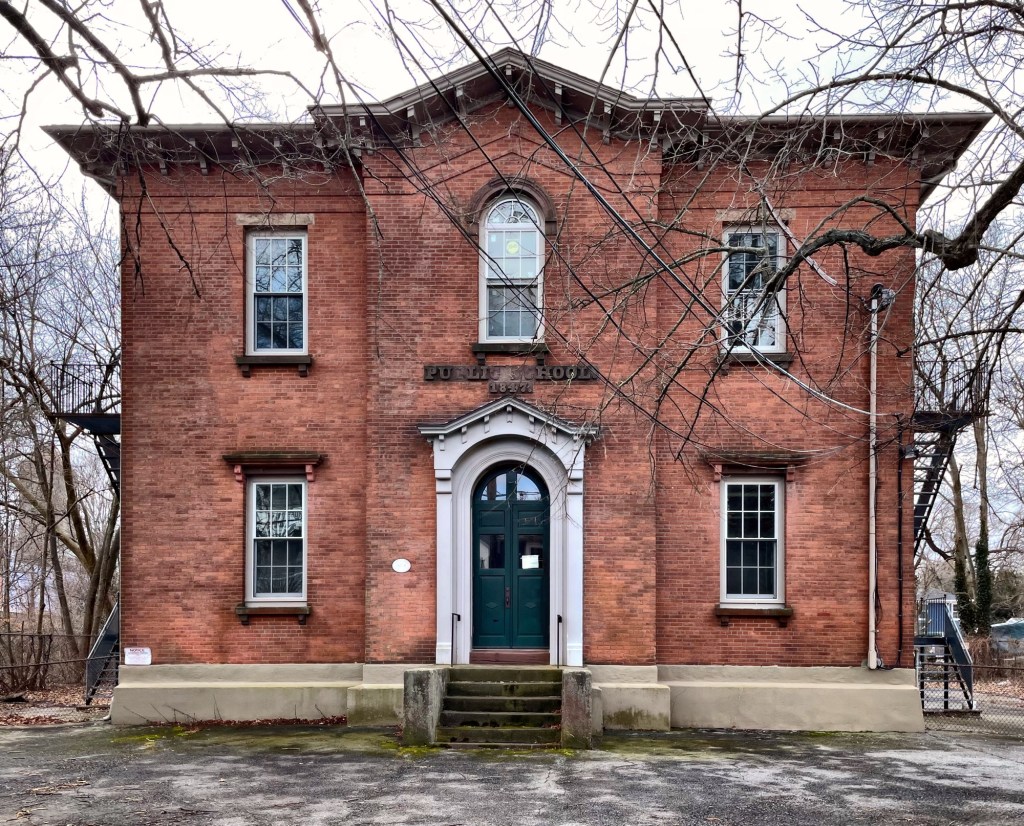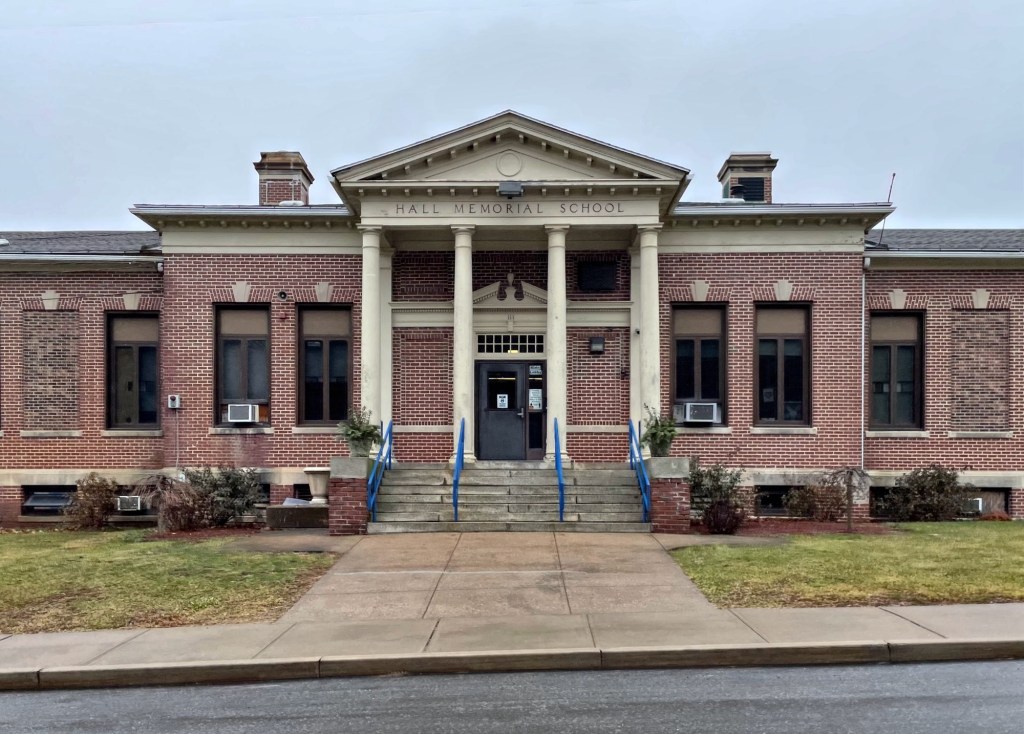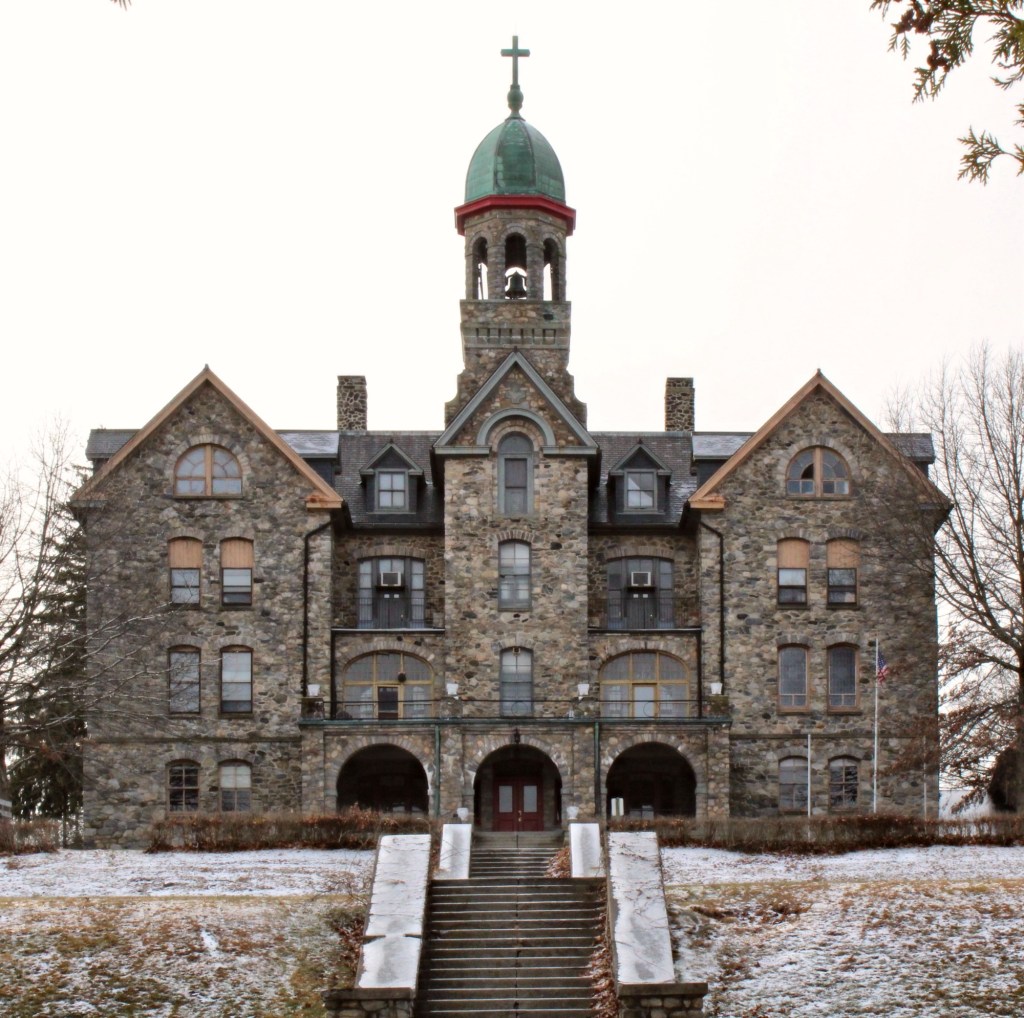
Mount Saint John School // 1908

The former Mount Saint John School in Deep River, Connecticut, sits atop a hill on the western banks of the Connecticut River and is a visual landmark in every sense of the word. The school was founded by the Diocese of Hartford, who acquired the site in Deep River and began construction on the present building in 1907. Completed by 1908, the stone building (architect not known at this time), served as an industrial school for 100 boys in the Hartford region aged 8-16. The school, led by the Xaverian Brothers, was intended to educate troubled young men in the Catholic faith and learn working skills for a profession. The use changed numerous times throughout the 20th century, and ended up becoming the Mount Saint John School. Then under the Norwich Diocese, the school became known as the Mt. Saint John School. The school closed years ago and the historic building and surrounding campus’ future are uncertain.

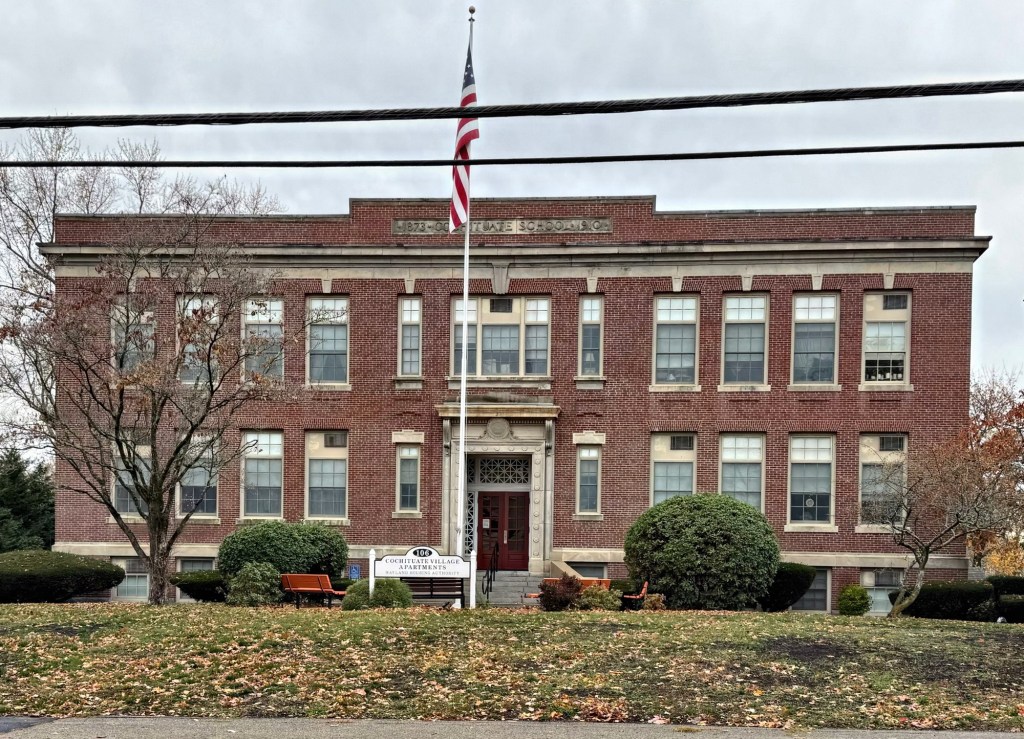
Cochituate School // 1910

The Cochituate School in Wayland, MA, was built in 1910 to educate the Cochituate Village’s growing student population. The industrial village was dominated by shoe manufacturing with workers largely consisting of first- and second-generation European immigrants who moved to New England for work. Boston architect, Willard P. Adden, designed the school, which replaced an earlier schoolhouse on the site that was outgrown. The two-story, brick school was expanded following WWII, when a long rear ell with classrooms and a cafeteria was designed by Perry, Shaw & Hepburn. In the 1990s, the old Cochituate School was renovated and converted to senior housing administered by the Wayland Housing Authority.

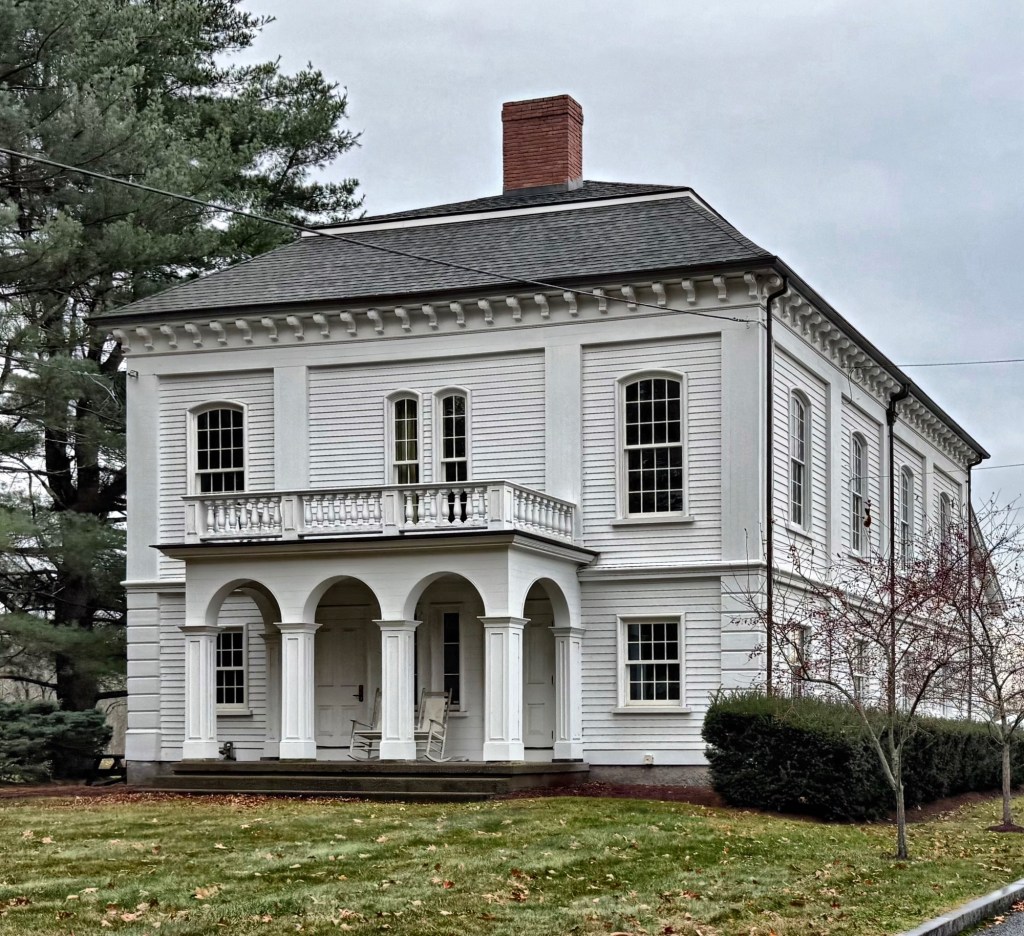
Old Wayland High School // 1855

In 1854, at the annual Town Meeting at Wayland, residents voted to build the community’s first High School, this structure, which was completed in 1855. The roughly square building is Italianate in style with the round arched windows and bracketed cornice, but with some holdover features common in Greek Revival architecture, including the tall pilasters dividing the bays, and projecting portico supported by square paneled columns. A few years after opening, the new High School was so underused, the local grammar school held some classes here. By the 1880s, high school students were sent to school outside of town. As the town population began to increase and the size of the student body necessitated a new high school. The town considered repair of this building, which had suffered from neglect, or construction of a new building. In the end, money was appropriated to build a new High and Grammar School in 1896. The town had the first school moved slightly on the town lot to allow space for the new, second school, and sold the 1850s schoolhouse to the local chapter of the Independent Order of Odd Fellows, known as Pequod Lodge. The second high school was demolished in 1978, over a decade after the present High School was built by The Architect’s Collaborative (TAC). In 1978, the Old Wayland High School was sold to the neighboring Trinitarian Church and has been used for administrative purposes and church meetings.

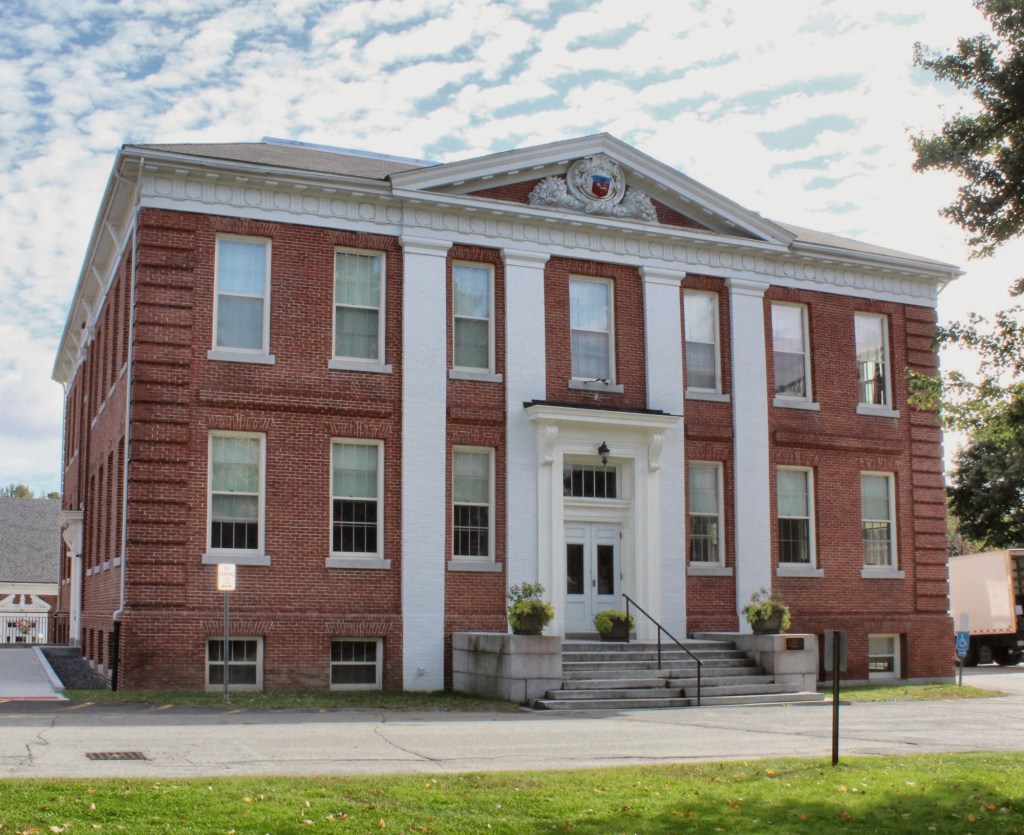
Lancaster Central School // 1904

Located across the Town Common from the iconic Bulfinch Church in Lancaster, Massachusetts, this handsome 1904 Colonial/Classical Revival style school building was designed in response to its neighbors and Colonial context of the town of Lancaster. At a Town Meeting in 1903, a local building committee determined that “Bulfinch Colonial” would be the best style for the architecture for a new high school that would be built in the town center, with Herbert Dudley Hale, selected as the architect for the planned two-story brick building. The Center School had been used continuously as a public school until 2001, when it outlived its utility as school facility in town, which was vacated for years until grant funding and a restoration of the building, now known as the Prescott Building, for Town Offices, including the Lancaster Historical Commission. The facade is dominated by its seven-bay symmetrical façade featuring brick
corner quoins, double-door entrance, and two-story white-painted brick pilasters framing the entrance and “supporting” the pediment that contains the town crest in high-relief.

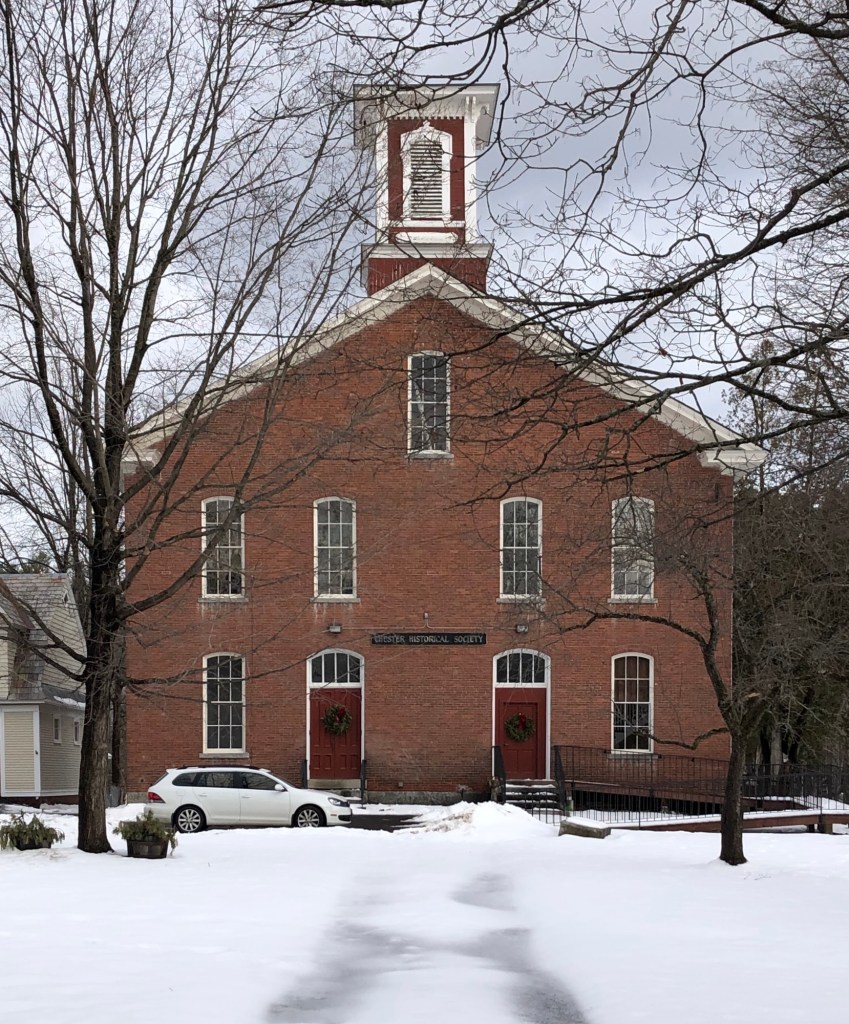
Chester Academy – Chester Historical Society // 1884

The town of Chester, Vermont, is one of the best small towns in the state for architecture lovers! Don’t believe me? I will prove it in this upcoming series. Located in Chester Village, the town’s center, this handsome brick building set off the main street, was built in 1884 as the town’s high school, replacing an 1814 private academy formerly on the site. The private academy closed in 1881, and the building was sold to the town, who by 1884, demolished the original structure and erected the current Italianate style building. The building served as the town high school until 1911, when a new high school was constructed nearby. The elementary and junior high school operated from here until the 1950s, when a modern school was constructed in town. Since 1950, the former academy building has been used by the Chester Art Guild, and currently is leased from the Town by the Chester Historical Society. The structure retains its architectural character down to the segmental arched windows and cupola.

Simonsville Schoolhouse // 1856

One-room schoolhouses like this example in the Simonsville area of Andover, Vermont, have been commonplace throughout rural portions of New England where children of most ages would share the classroom and be taught everything from basic spelling to math. The Simonsville schoolhouse was built in 1856 and is a typical example of a vernacular one-room schoolhouse in rural New England, with no frills or ornament, just a house of learning. The Simonsville Schoolhouse was converted to a residence sometime in the latter half of the 20th century and has been renovated, keeping the basic form and interior floorboards from the 1850s. The school-turned-home is currently (2025) listed for sale.

Forbes Public High School // 1924

The former Forbes Public High School in Westborough, Massachusetts, is an excellent example of a civic building in the Classical Revival style. Built in 1924 for a growing suburban community, the building was constructed as the town’s high school with the grounds and substantial funding donated by Francis and Fannie Forbes, life-long residents of town with Francis having roots going back to the earliest settlers here. The building was permitted in late 1924 and plans were drawn by the firm of Ritchie, Parsons & Taylor. who designed the large school with stone and brick construction, large arched windows, and pilasters breaking up the bays. Inside, the new building had 14 classrooms, a gymnasium, a shop room, and cooking rooms, all with fine carved woodwork. After WWII, Westborough further consolidated its schools, and built a new High School nearby. This building was repurposed as the Forbes Municipal Building, containing city offices and the Police Department headquarters.

Former Eli Whitney School // 1907

Built a few decades after and located behind the Harvey School in Westborough, Massachusetts, the former Eli Whitney School is a landmark example of an educational building designed in the Neo-Classical style. Built between 1906-7, the school building replaced an earlier school on the site that was outgrown and outdated. Designed by architects Cooper & Bailey, the building stands two-stories tall with a central pedimented pavillion containing the entry that is framed by monumental fluted columns. The school was named after Eli Whitney, the famous American inventor, born in Westborough, who is widely known for inventing the cotton gin in 1793, one of the key inventions of the Industrial Revolution, and later moving to New Haven and manufacturing weapons. When Westborough schools consolidated into modern facilities in the second half of the 20th century, this building was then occupied by the YWCA, and have rented the facilities from the town until it was purchased in 2000.

Harvey School // 1883

Built to meet the needs of an expanding and prosperous community, the Harvey School in Westborough, Massachusetts, was built as a neighborhood school and is both historically and architecturally significant. Located on Phillips Street, a residential, tree-lined street just north of the commercial center of town, the Harvey School was built in 1883 under the supervision of Dr. Edwin Bayard Harvey, a local doctor who served on the town’s School Committee and as superintendent of schools from 1887-1890. As a State Senator he introduced a bill in 1884, which became law, to provide free textbooks for schoolchildren of Massachusetts. The Queen Anne style school building was in plan, designed by Dr. Harvey, who hired the Worcester-based architectural firm of Barker & Nourse, to furnish plans and design the building itself. The school would eventually close in 1980 as many local schools were consolidated, and the building was rented to the Boy Scouts and the Westborough Community Chorus. Recent attention on the under-utilized building has initiated more discussion on the future of the building, which may eventually house a regional emergency communications center.

Canterbury Center District School // c.1860

The Center District Schoolhouse of Canterbury, Connecticut, sits behind the village church and is the town’s best-preserved example of a district schoolhouse. Built c.1860, the vernacular, Greek Revival one-room schoolhouse served the central village through the 19th and into the 20th centuries with its twin entry, double-hung windows to allow light and air into the classroom, and a belfry with bell to notify pupils when class was about to start. Like many similar one-room schools in rural New England, pupils attended class with neighbors and siblings in the small, intimate classroom of varied ages.