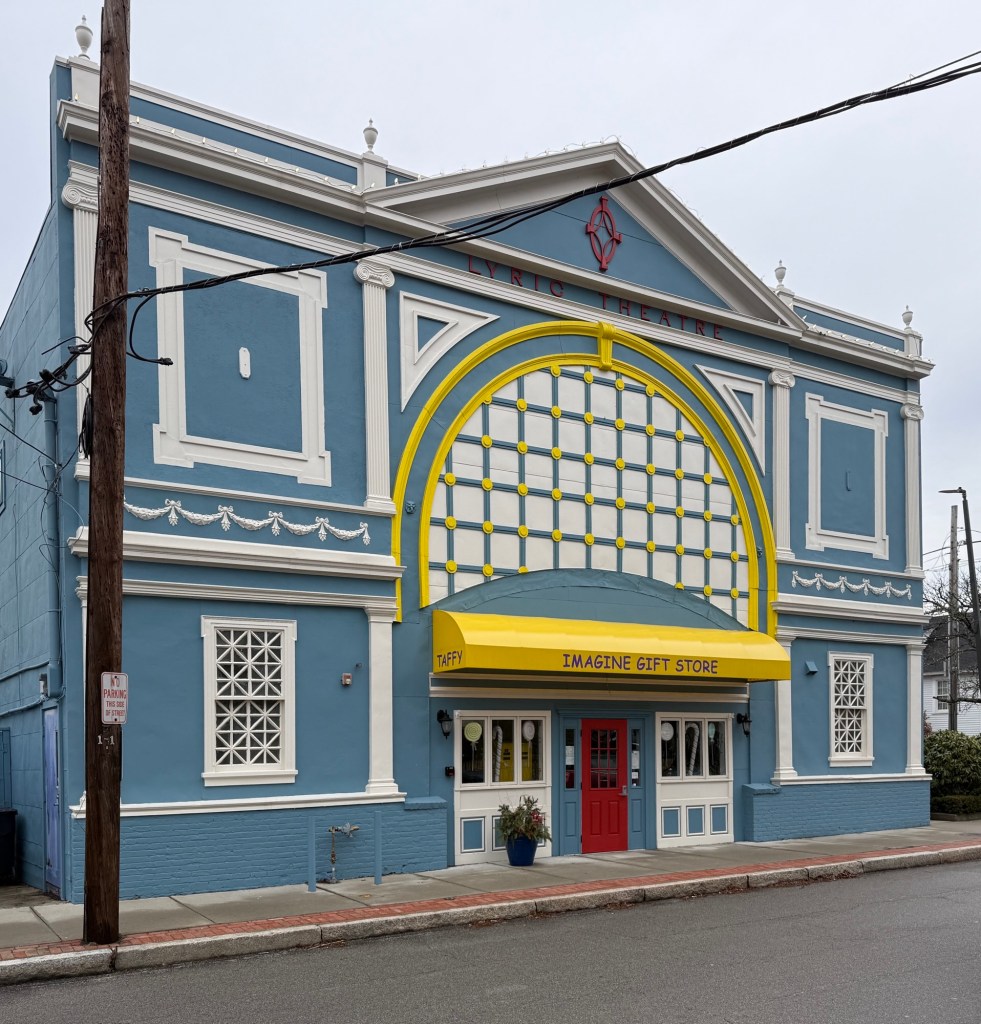
The most whimsical and unique building in Warren, Rhode Island, is this architectural landmark, the former Lyric Theater on Miller Street. Built in 1914, the building historically had a large projecting marquee, and today retains the large blind arch with applied ornament in the form of Ionic pilasters, panels, frets, and swags to decorate the facade. The Lyric remained active as a motion-picture theatre until 1967 and was converted to retail use in the 1980s, becoming an antique store in 1992.
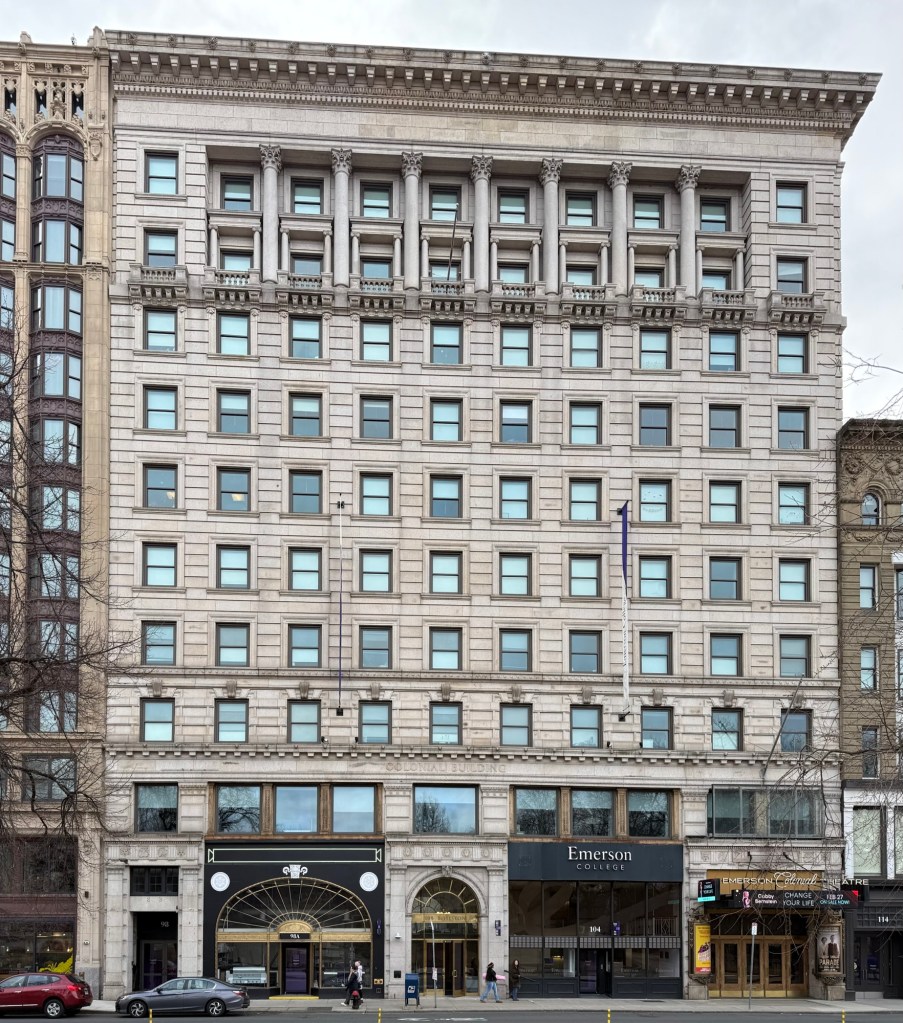
One of my favorite buildings on Boylston Street in Boston is the ten-story Colonial Theater Building, a landmark Classical Revival style structure of stone. Built in 1899, the Colonial Theater replaced the original Boston Public Library building (1855) which was demolished by 1898, and relocated to Copley Square. The Colonial Theater was designed by famed theater architect, Clarence Blackall and is said to be the oldest, intact theater in Boston. The theatre first opened its doors for a performance of Ben-Hur on December 20, 1900 with a sold out show. Ben-Hur operated with a cast and crew of 350 people and featured eight live horses on stage in full gallop during the chariot race scene, with the play being so mechanically and technically extraordinary it was featured on the cover of Scientific American. While cheekily named the Colonial Theater, the interior theater spaces were anything but. The spaces originally contained murals and Baroque style finishes, many of which remain today. Beyond the 1,700-seat theater, the building contained between 250-300 professional offices. The building is owned by Emerson College, who underwent a massive restoration project of the building with Elkus Manfredi architects. Allowing the oldest Boston theater to shine again!
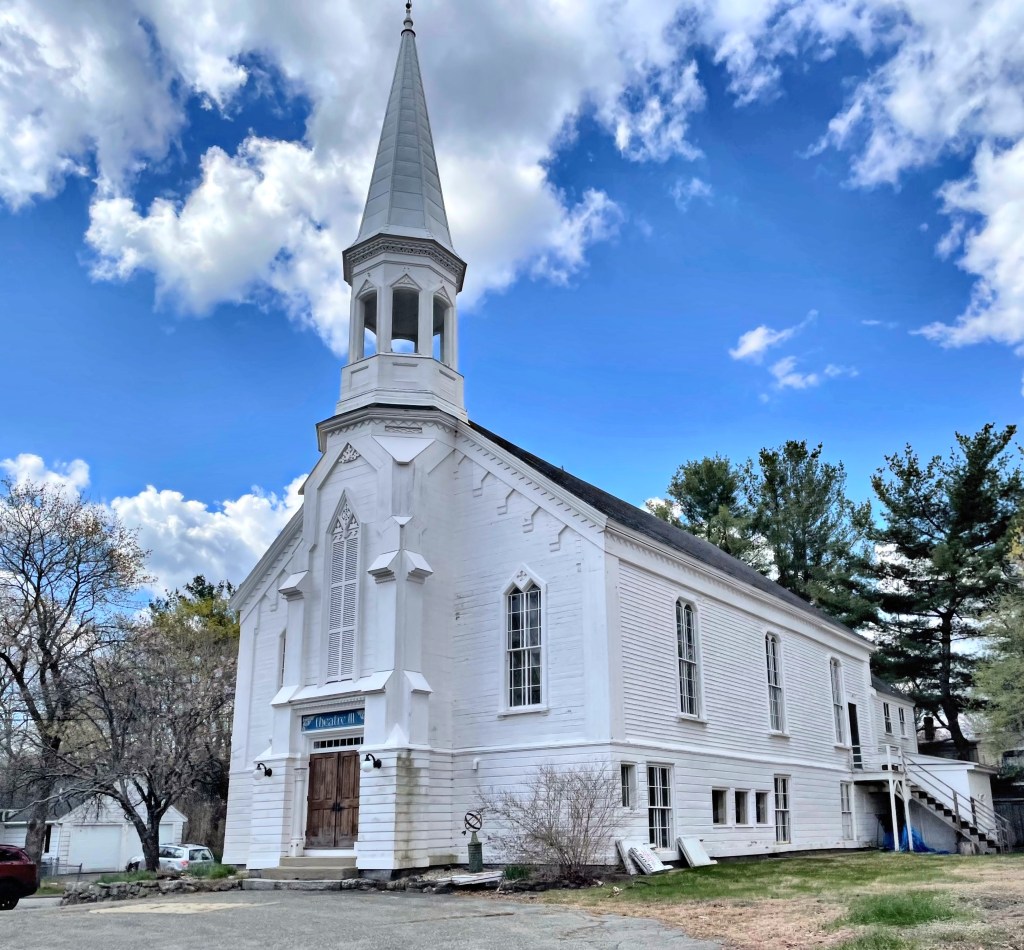
This beautiful church in Acton, Massachusetts was built in 1868 by the Universalists of West Acton who sought a house of worship closer to their homes, rather than taking horses to the other part of town every week. The building exemplifies the influence of both Gothic Revival and Italianate styles on rural churches of the time. Gothic elements include the double pointed lancet windows with quatrefoil ornament, buttresses, and pointed lancet panels on the tower and belfry. Italianate elements include the rusticated base and the corbel table at the eaves. Religious services ceased in 1925. At that time, the church building was bought by leading men in the village who gave the building to the West Acton Women’s Club, which began in 1890 by Lucy Mead (the wife of Oliver Mead, who built the Mansard home nearby). In the 1950’s, the church was used as a community center. It is now home to a local performing arts center, Theatre III Box Office.
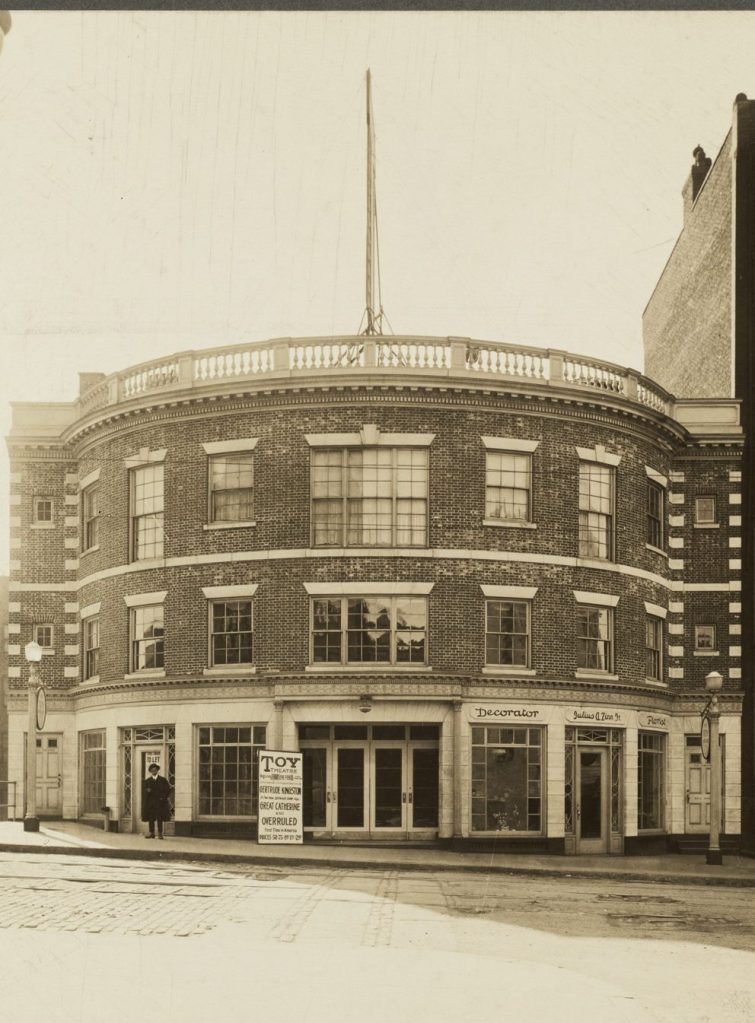
When the Toy Theatre on Lime Street in Beacon Hill (last post) was formed in the early 20th century, the members of the small (but growing) theatre group of well-connected artists and actors had their sights on something with permanence. By 1914, the group had funding and acquired land on Dartmouth street, a block away from Copley Square, and ground was broken to build a large new theatre. The fashionable Colonial Revival style building featured a large rounded bay and was constructed of brick and limestone. The theatre group could not support the building, and it was rebranded as the Copley Theatre within a couple years. Continuing the bad luck, the City of Boston decided to extend Stuart Street by 1921, and this building was along the proposed route. The street was extended and a new “Copley Theatre” was built on Stuart Street, a stone’s throw from this building. And so goes the short-lived history of the Toy Theatre.
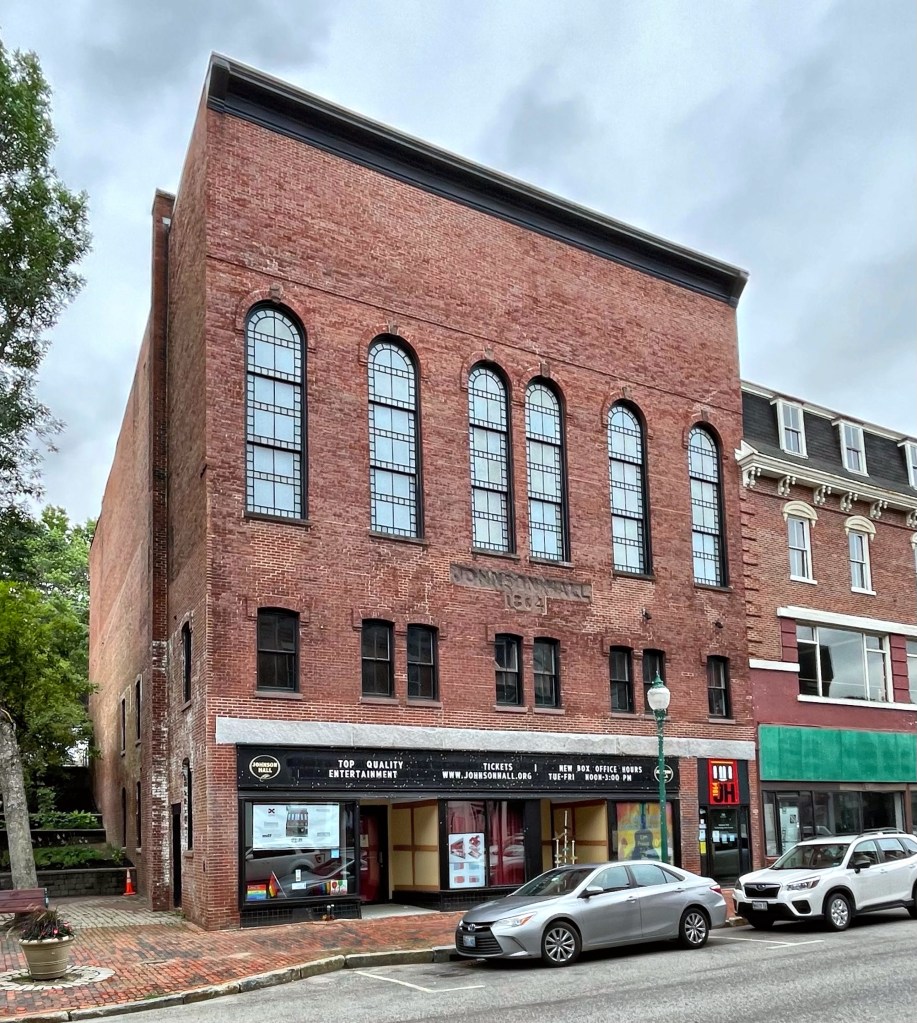
After heading west to seek his fortune in the California Gold Rush, Gardiner resident Benjamin Johnson, moved back to his hometown and immediately spent money to buy one of the finest hotels in town. He renamed the hotel Johnson House and served as the manager of the hotel through the American Civil War. The hotel included a two-story stable to the side which allowed visitors to keep their horses and carriages nearby. In December 1864, he completed a two-story vertical addition which added a large hall with gallery above for events and shows, retaining the stable on the ground floor. The demarcation of the two sections is evident from the windows on the main facade and the difference in brick. The hall opened to great fanfare, and with Johnson as manager, hundreds of plays, musicians, and events were held in the event space, which made Gardiner a major hub for socio-cultural life in Kennebec County. In the 1880s, he added a new wood floor upstairs which allowed the hall to be used for rollerskating, a very popular update. Not long after, the stable was converted to commercial space at the ground floor, and upstairs an opera hall. Benjamin died in 1903, and his widow, Henrietta took over, and kept-up with the times, changing the upstairs hall to a moving pictures and silent film theatre. The theatre closed in the mid-20th century, like so many other small local theaters. Good news though! A group of locals is working to fully restore all three floors of Johnson Hall, creating a new state-of-the-art performing arts theater, while maintaining the architectural character of the building.
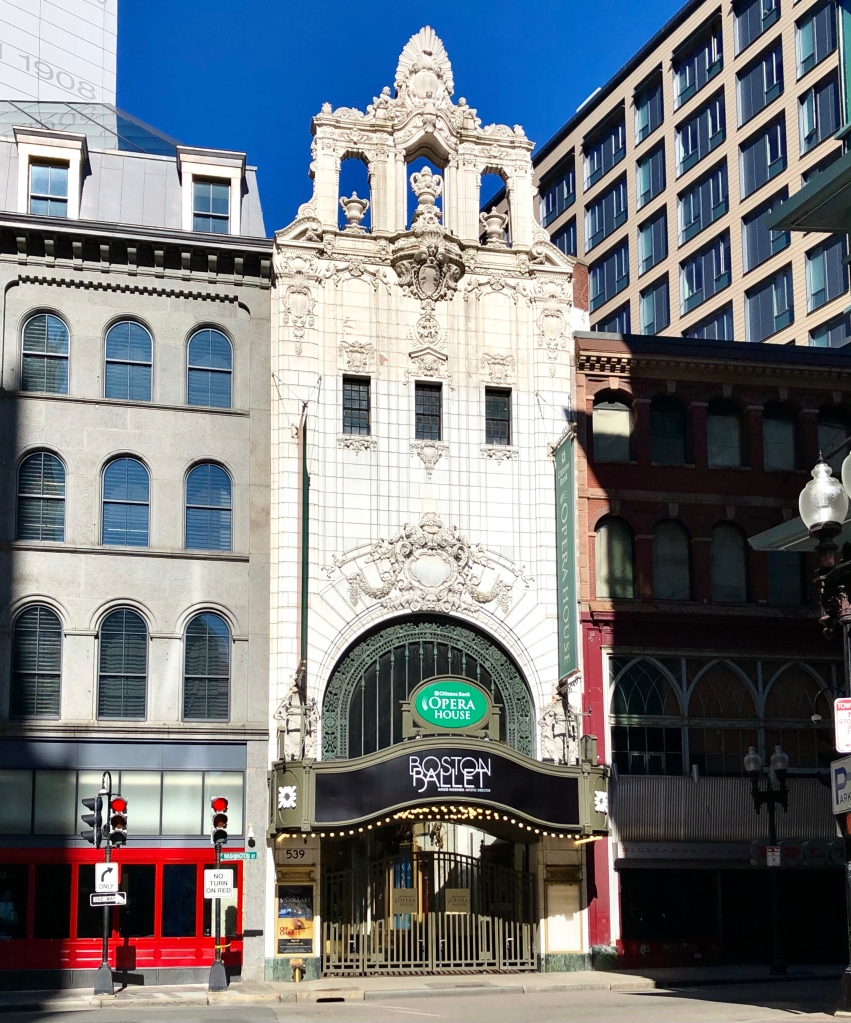
Not to be confused with the former B.F. Keith’s Boston Theatre (last post), the B.F. Keith Memorial Theater on Washington Street, remains as one of the most sophisticated architectural compositions found in Boston. The Keith’s Memorial was one of his most elaborate designs of the prominent theater architect Thomas W. Lamb. The B. F. Keith Memorial Theatre was erected under the close personal supervision of Edward Franklin Albee as Albee’s tribute to the memory of his late partner and friend, Benjamin Franklin Keith. For that reason, it was built with a degree of luxury in its details and design that is almost unrivaled. On October 23, 1928, just before the theater opened, the Radio-Keith-Orpheum (RKO) company was formed and became the owner of the theater after consolidations and mergers. The Keith Memorial theater opened on October 29, 1928, presenting first-run films along with live vaudeville. By 1929, the theater had converted to showing only films and remained a leading Boston movie showcase through the 1950s. In 1965, the theatre was purchased from RKO by Sack Theatres, and the new owners refurbished the building, and renamed it the Savoy Theatre. The theater used the frontage, formerly used by the B.F. Keith’s Boston Theatre on Tremont Street to showcase a large marquee. In the early 1970s the massive arch framing the opening between the stage and the auditorium was bricked up, and a second auditorium was installed within the stage. The theatre was then named the Savoy 1 & 2. The twinned theatre continued to operate as a pair of film houses until 1978, when it was bought by the Opera Company of Boston, who renamed the building the Boston Opera House. After a decade, the group could not maintain the ornate building and The Opera Company closed the theatre in 1991, and the building began a period of rapid deterioration. In the early 2000s, the gorgeous building was restored and re-opened as the Citizens Bank Opera House, which (pre-Covid) runs a steady rotation of touring Broadway productions, Boston Ballet Nutcracker holiday shows and more. Also, if you havent been inside the building for a tour, you are missing out!
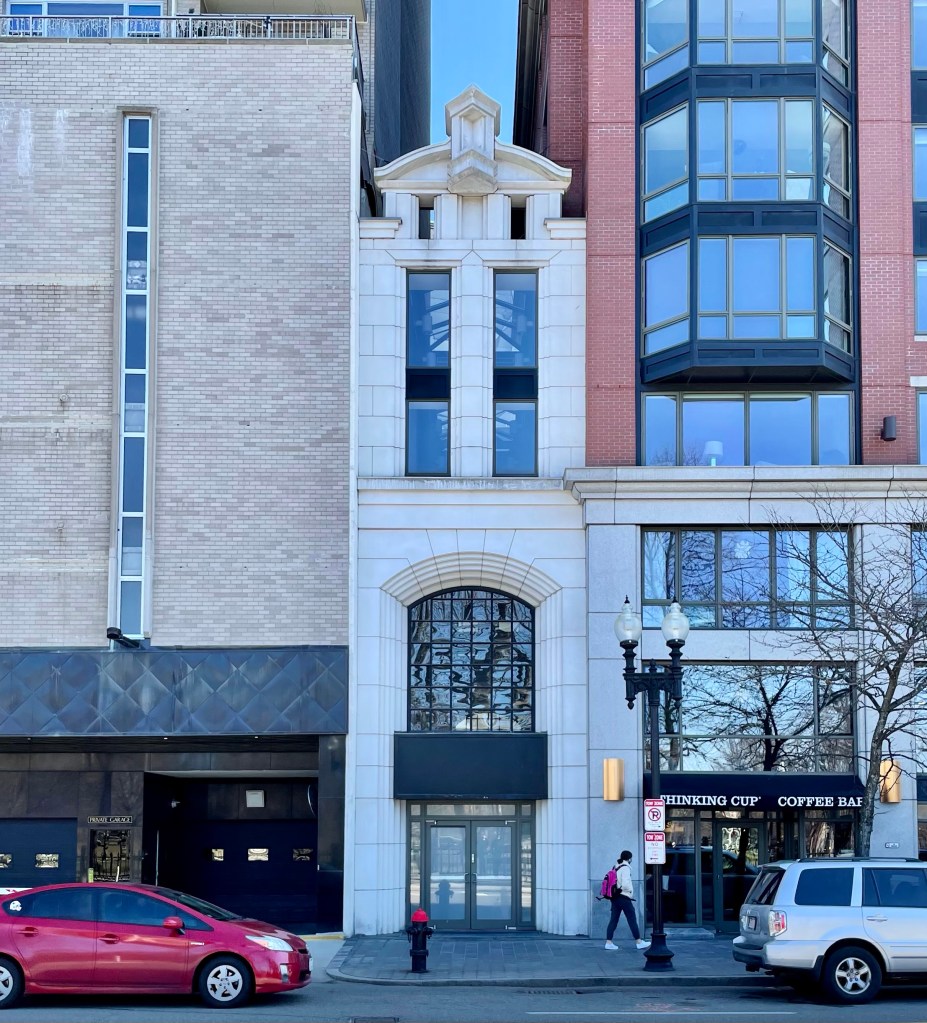
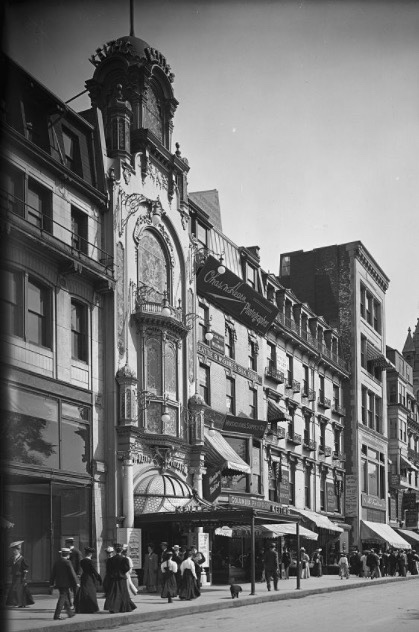
The other day, I was walking in Boston Common along Tremont Street, when I noticed this oddly ornate building wedged between larger, modern buildings. I HAD to investigate! The building was actually constructed as an arcade/covered walkway which ran to Mason Street behind, with a tunnel running under that street into the B.F. Keith’s Theatre. In 1892, Benjamin F. Keith and his business partner E.F. Albee purchased land off Mason Street, a scarcely trafficked street between the busy Tremont and Washington Streets in Boston’s Theater District, with the goal of creating the city’s finest vaudville theatre. The duo hired J. B. McElfatrick & Son, architects who specialized in theatres, to design the new B.F. Keith’s. Due to the site being wedged between two main streets, entrances were built off both Tremont and Washington with flashing lights and marquees, guiding patrons inward. The Tremont facade was especially grand so that B. F. Keith’s New Theatre could be advertised on, and approached directly from, Boston Common, with lights flooding the park. The theater opened in 1894 and was over-the-top with intricate details and sculpture all over, appealing to the city’s wealthy as a place to see the arts. Although it was primarily a vaudeville house during Keith-Albee’s ownership, famed inventor Thomas Edison demonstrated his new Vitascope movie projector here on May 18, 1896. This was the first projection of a movie anywhere in Boston. As live shows made way for motion pictures, the theater adapted, but suffered around the Great Depression when would-be patrons decided to save their limited money. In 1939, the theater was converted to a movie theater named the Normandie. The theater was demolished in 1952 for a surface parking lot to provide better service to the Opera House (originally B.F. Keith’s Memorial Theatre, confusing I know) and Paramount Theater. Today, all we have left of the once beloved B.F. Keith’s Theater is the small annex, which is virtually unrecognizable from historic images as most of its decoration and the top two stories were removed.
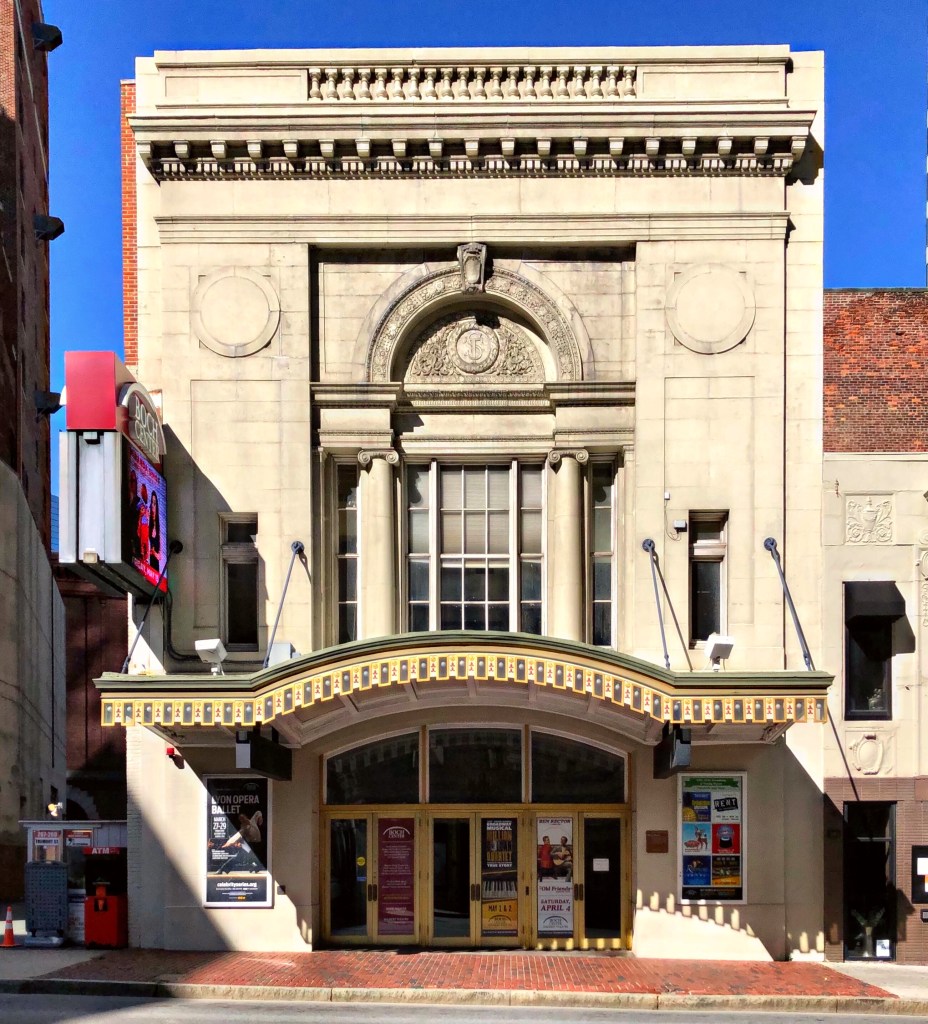
One of the many iconic theaters on Theater Row in Downtown Boston, the Shubert Theater packs a punch for one of its size. Designed in 1908 and originally named the Lyric Theatre, the theatre was built for live performances. The theatre was named in 1910 after Sam S. Shubert, known as the founder of the independent theatre movement. Shubert was the oldest of three brothers and the first to become involved in theatre management in the 1880’s. At the age of just 26, Sam Shubert died due to a train wreck in 1905, and his brothers Lee and Jacob went on to continue their brother’s empire, which included theatres in Boston, New York and Chicago, which operates after their deaths as the Shubert Organization. In February 1996, the Wang Center signed a 40-year lease agreement to operate the theatre with the Shubert Organization, which continues to own the building and property; the theatre reopened after renovation in November 1996. The Boch family became the namesake of the center in 2016, making the full name of the theatre the Shubert Theatre at the Boch Center.
 Buildings of New England