E. A. Durgin House // 1870

Would you just look at this house?! Massachusetts may have the most Second Empire/Mansard style houses in the United States, but some really stand out. This home in Stoneham, Massachusetts was built around 1870 for local shoe dealer Erastus A. Durgin. The mini mansard home is pretty typical besides the prominent square tower with a steeply pitched gable roof that stands over the entrance. Charming!

Juniper Ledge Cottage // 1889

Ellen Kemble (Bartol) Brazier was born in New York City in 1844, the eldest of four children of Barnabas and Emma Bartol. Her father had many business interests in sugar refining and the family was able to travel the world from his wealth and success. The family spent most of their time in Philadelphia, but like many of the city’s wealthy residents, they often summered elsewhere. Ellen Bartol married Joseph Harrison Brazier in 1866 and they had two children. When her father Barnabas died, Ellen inherited some of his remaining fortune and as a part of high society, she had a summer cottage in Kennebunkport built. Working with Maine architect John Calvin Stevens, she oversaw the designs of Juniper Ledge, this gorgeous, eclectic shingled residence in the Cape Arundel summer colony. Ellen would summer at the cottage until her death in 1925, but before she died, she joined her daughter in the 1910s and 1920s at Women’s Suffrage events and fundraisers, helping to pass the 19th Amendment, allowing women the right to vote in the United States. Ellen is buried in the West Laurel Hill Cemetery in Philadelphia next to her husband, not far from her parents.

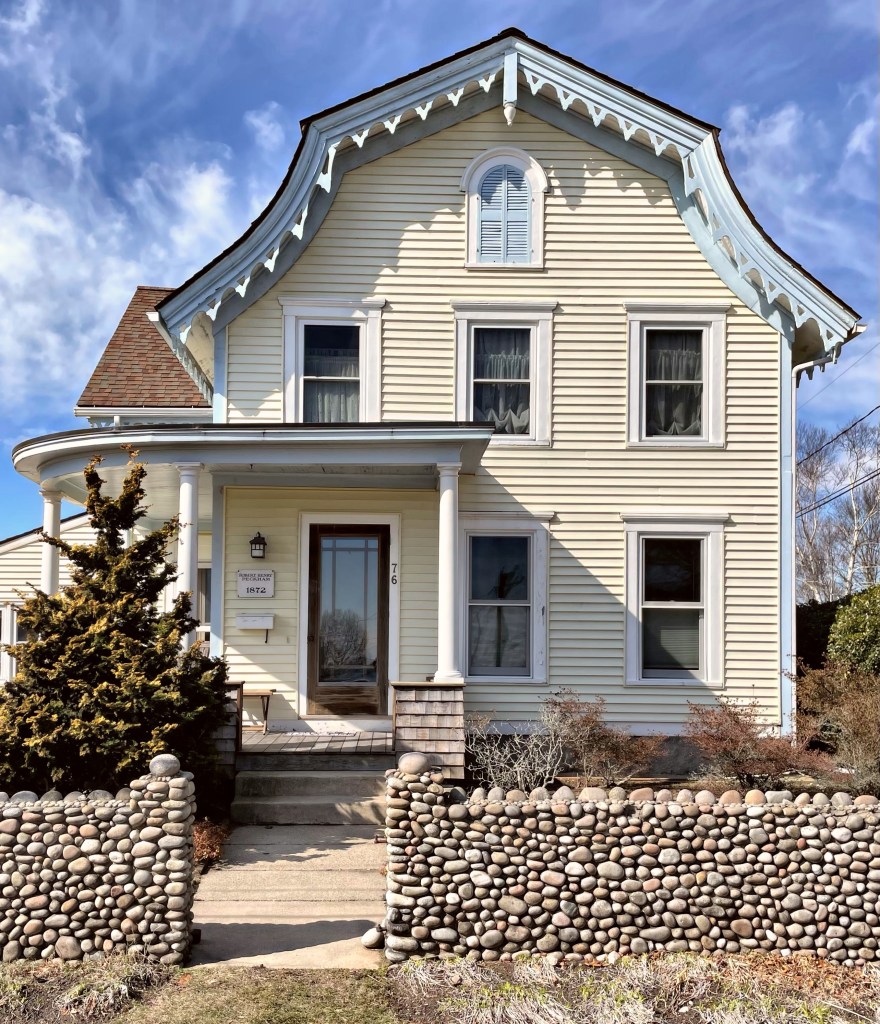
Robert Henry Peckham House // 1872

Another of Noank’s stunning Victorian-era seaside cottages is the 1872 Robert Henry Peckham house which is located across the street from the village’s most ornate cottage, the Deacon Robert Palmer House (featured previously). The house exhibits a gambrel roof which reads as a mansard roof at the side elevations. A round arched window is set into the gable end. Decorative cut bargeboards add much complexity to the design. It appears that in the early 20th century, as Noank was re-establishing itself as an artist colony, the owners added the small wrap-around porch and stone garden wall.

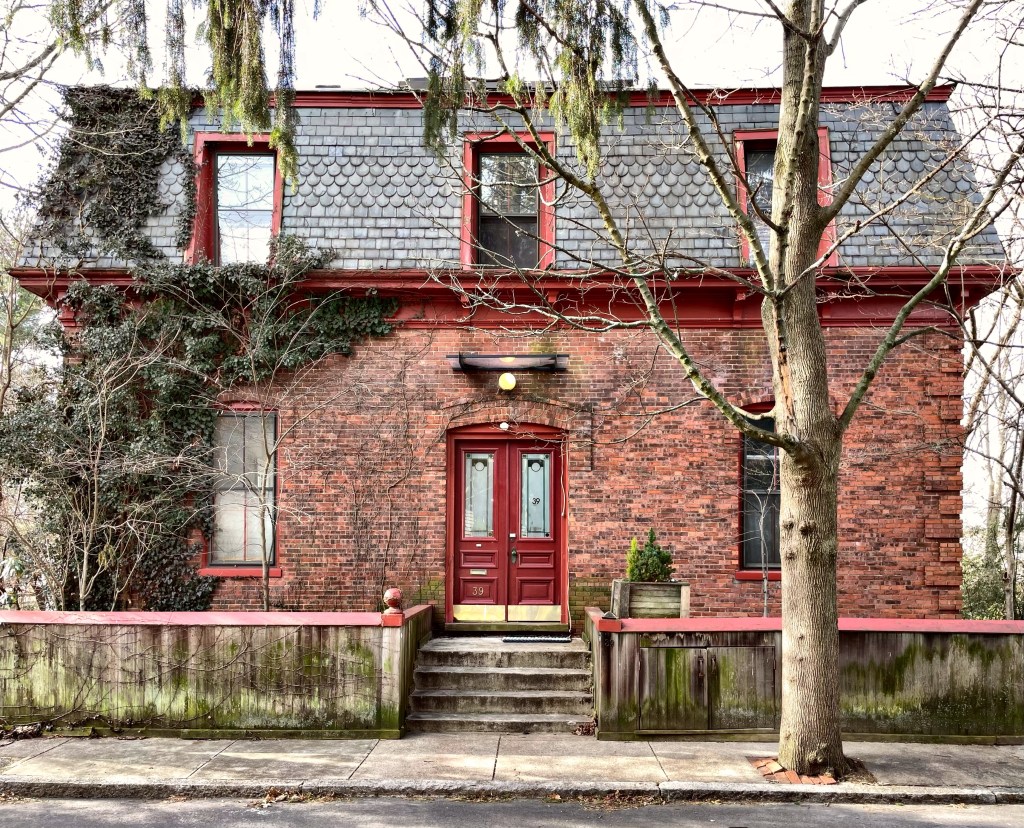
Dadmund-Glennon House // 1875

Boston’s many unique neighborhoods have some amazing hidden architectural gems. It always helps to get out and explore by walking or biking your city to see things from a different perspective than a car or bus. This brick mansard house sits on a quiet dead-end street in the Stonybrook section of Jamaica Plain and was built in the mid-1870s for Joseph A. Dadmund, a coppersmith. From the 1880s-1920s, the house was occupied by the Glennon Family, who built two large wooden stables in the rear yard, both of which remain to this day.

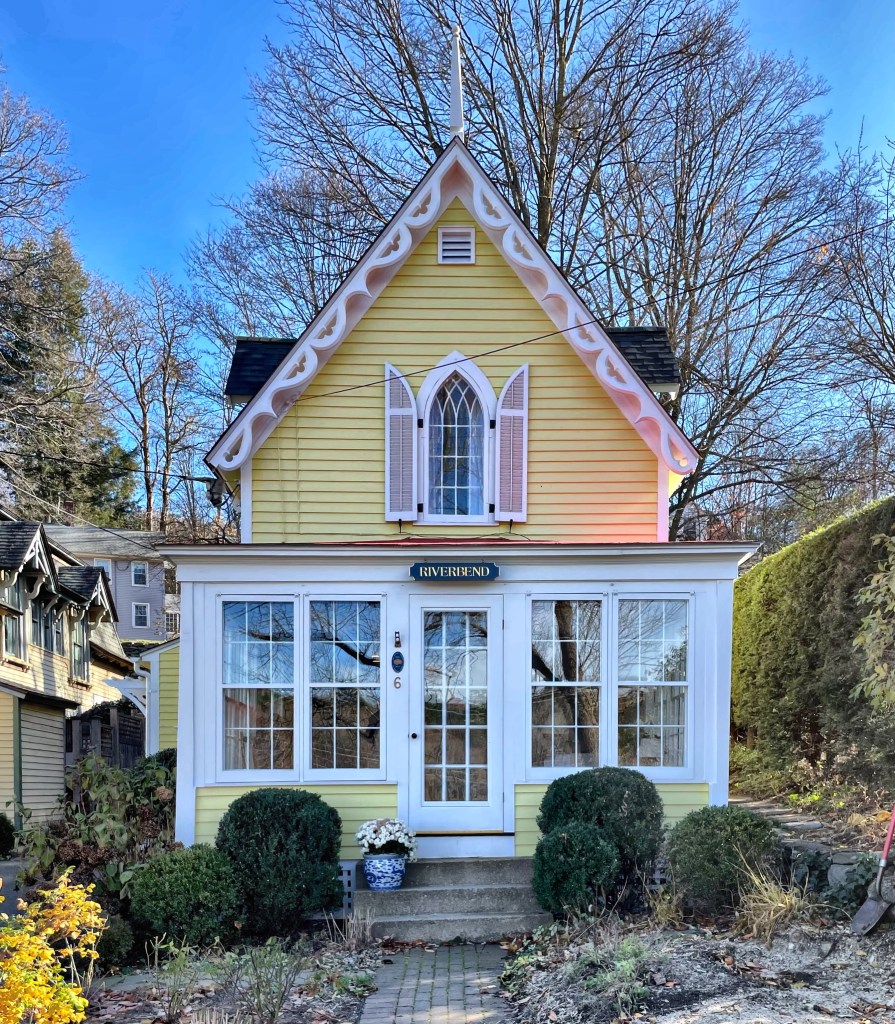
Riverbend Cottage // c.1860

No, this is not Martha’s Vineyard, it is Collinsville, Connecticut! Perched on a hill near the banks of the Farmington River, this quaint little Victorian cottage is one of the better-preserved examples of worker’s cottages in the former industrial village. I could not locate much on the house’s history, beyond that it may have once been part of a larger home, and moved to this site in the 20th century.