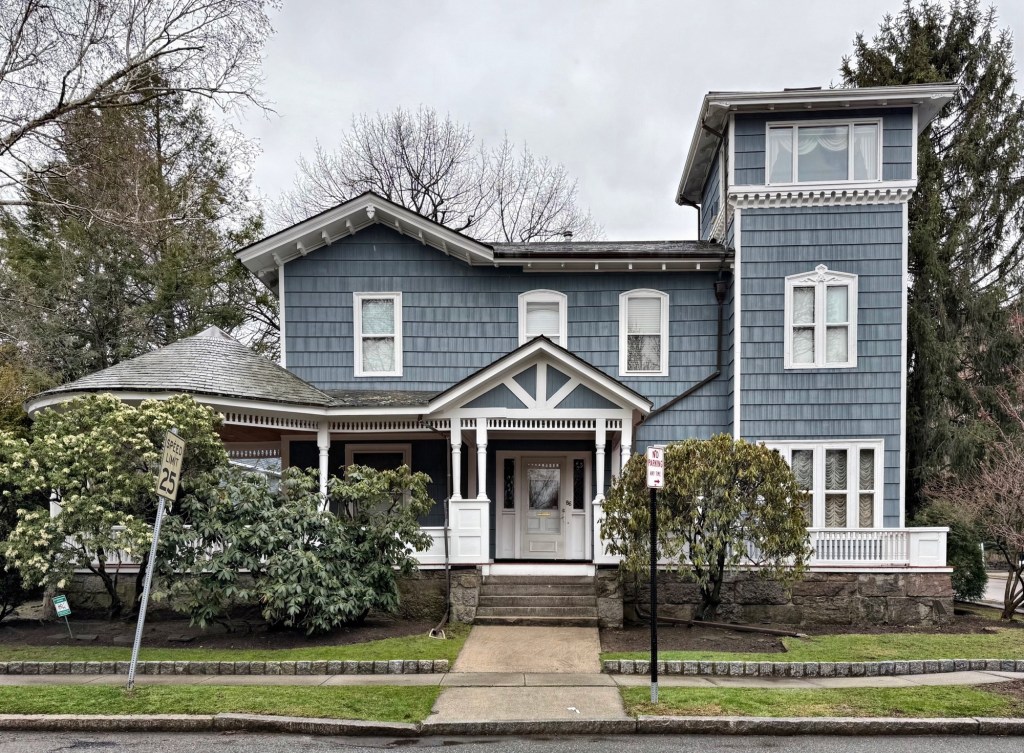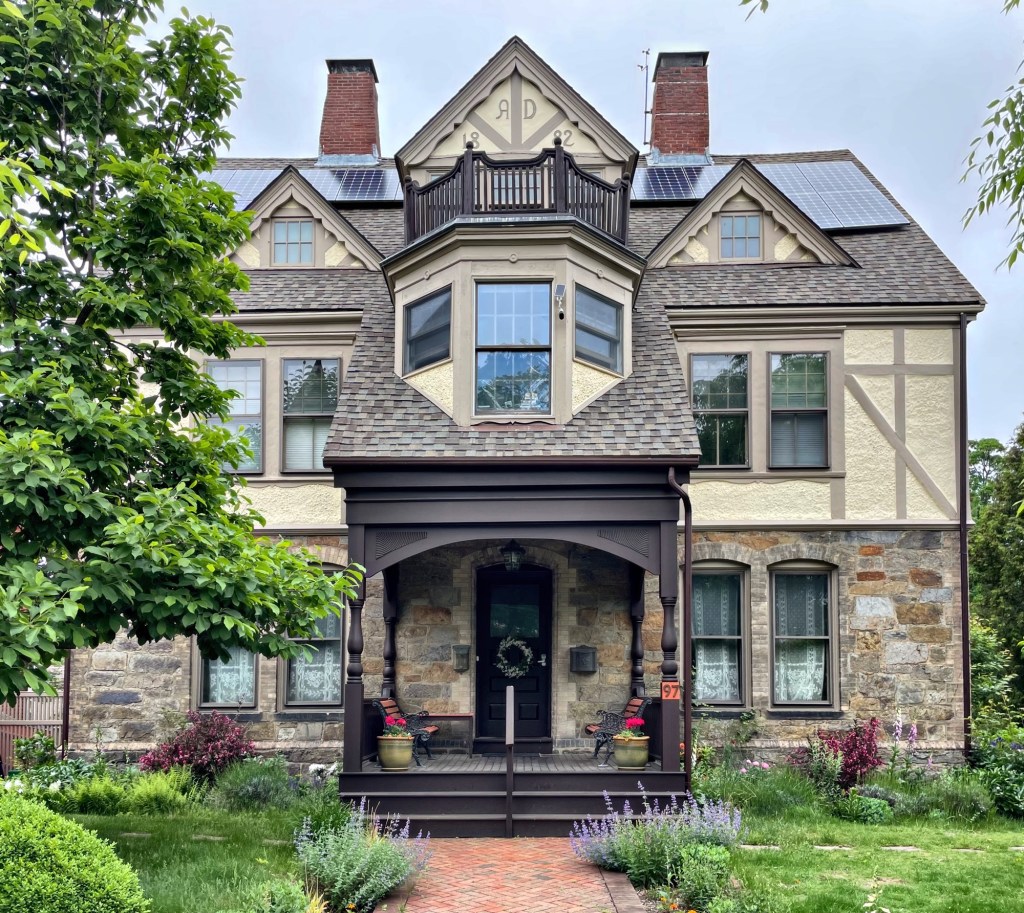
Henry S. Chase House // c.1882

One of the many “hidden” gems of old houses in Brookline is this charmer on Francis Street, just west of the Longwood district. The residence was built by 1882, by Henry Savage Chase (1825-1885) who lived in a larger stone mansion across St. Paul Street (no longer extant). This house was rented out by Chase, possibly to friends and remained in the family for decades. This early Queen Anne style dwelling (and likely the main house) was designed by architect Edgar Allen Poe Newcomb, a relatively unknown architect of the period. The house has an irregular plan with varied siding and materials, with applied ornament that has survived intact for nearly 150 years.

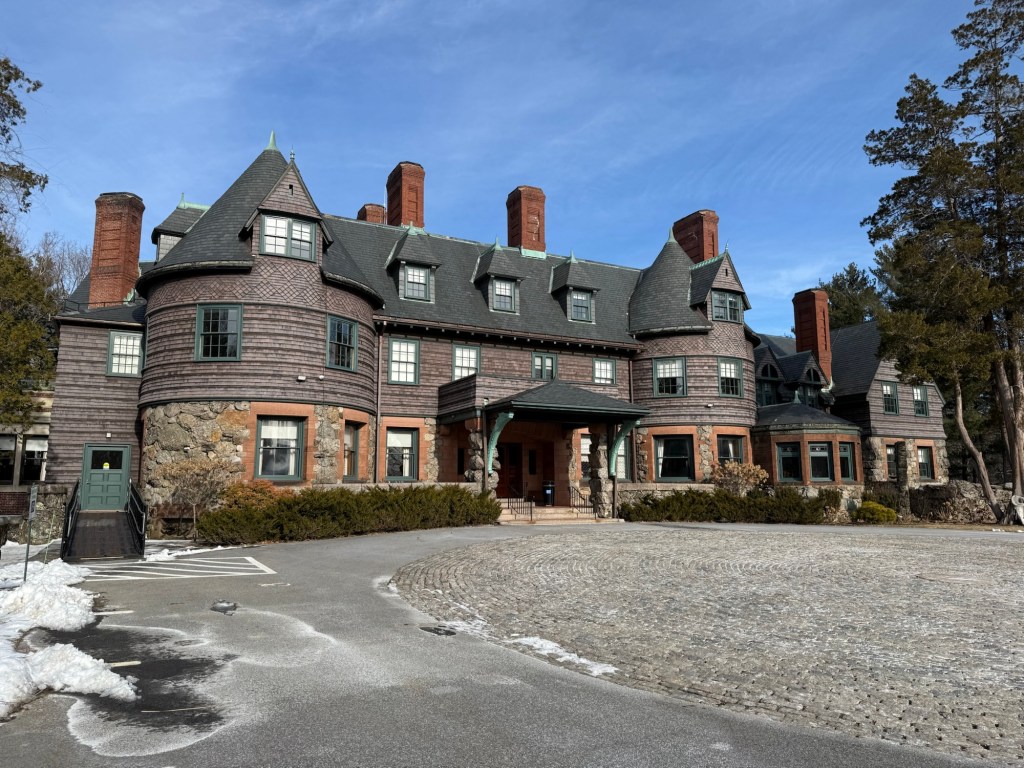
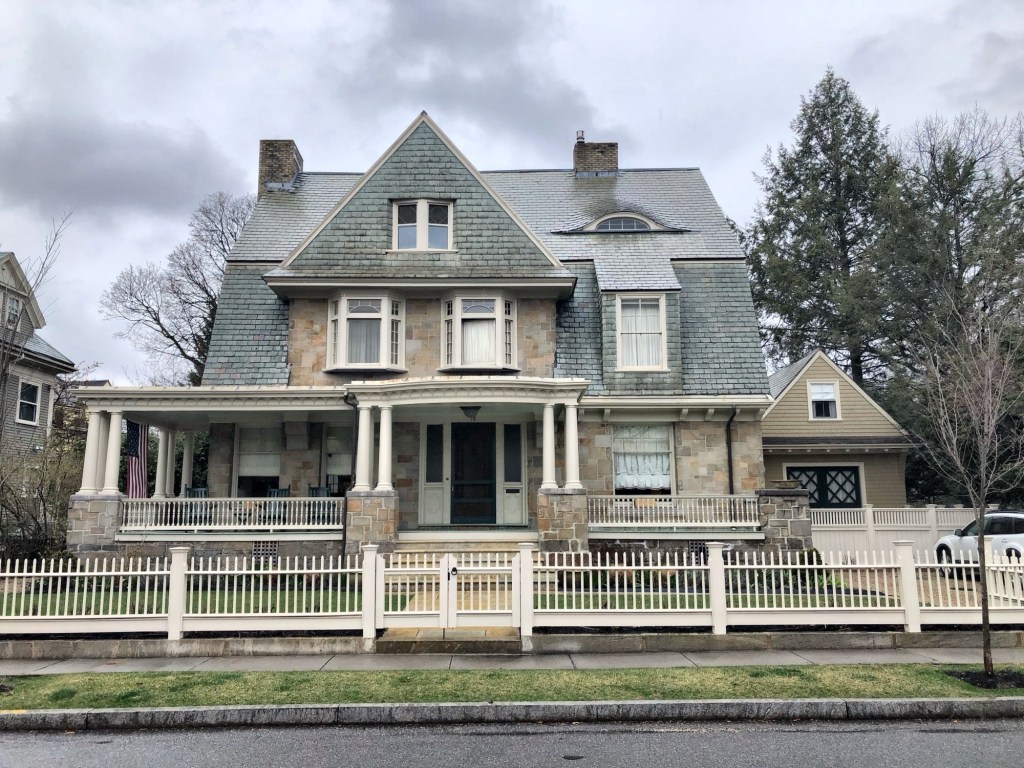
James W. Clapp House // c.1869

In 1868, James Wilkinson Clapp (1847-1931) married Eliza Tuckerman and they soon after moved into this large Victorian-era house on St. Paul Street in Brookline. James was the second son of Otis Clapp, a politician, publisher, and promoter of homeopathy. Otis Clapp operated a large homeopathic pharmacy, Otis Clapp & Son, which continued as a business after his death, evolving to encompass different areas of medical technology. It was one of the oldest-operating pharmaceutical manufacturers in the United States by the time it was acquired by Medique in 2008. The business allowed James, at about 22 years old, to build this stately home for him and his new wife to move into. The residence is Second Empire in style with Stick style ornamentation, and while mostly obscured by vegetation all year, it commands the heavily trafficked corner of Brookline.

Potter-Leland House // c.1888

Francis Street in Brookline, Massachusetts, has some of the finest Queen Anne Victorian residences in the Boston area. This is the Potter-Leland House, built by 1888 by William Potter, a wealthy shoe manufacturer and businessman who developed rental housing in the neighborhood not far from his house on Kent Street. He built this just before the larger Queen Anne duplex was built nextdoor from plans by Rand & Taylor, architects, and it was rented out as a single-family income-producing property. Various exterior wall textures, irregular massing, and turned supports on the front porch contribute to the Queen Anne character of this house, but the real showstopper is the rounded bay projection with three, 25-over-1 (yes you heard that right) curved sash windows! The property was later purchased by Herbert M. Leland, a broker.

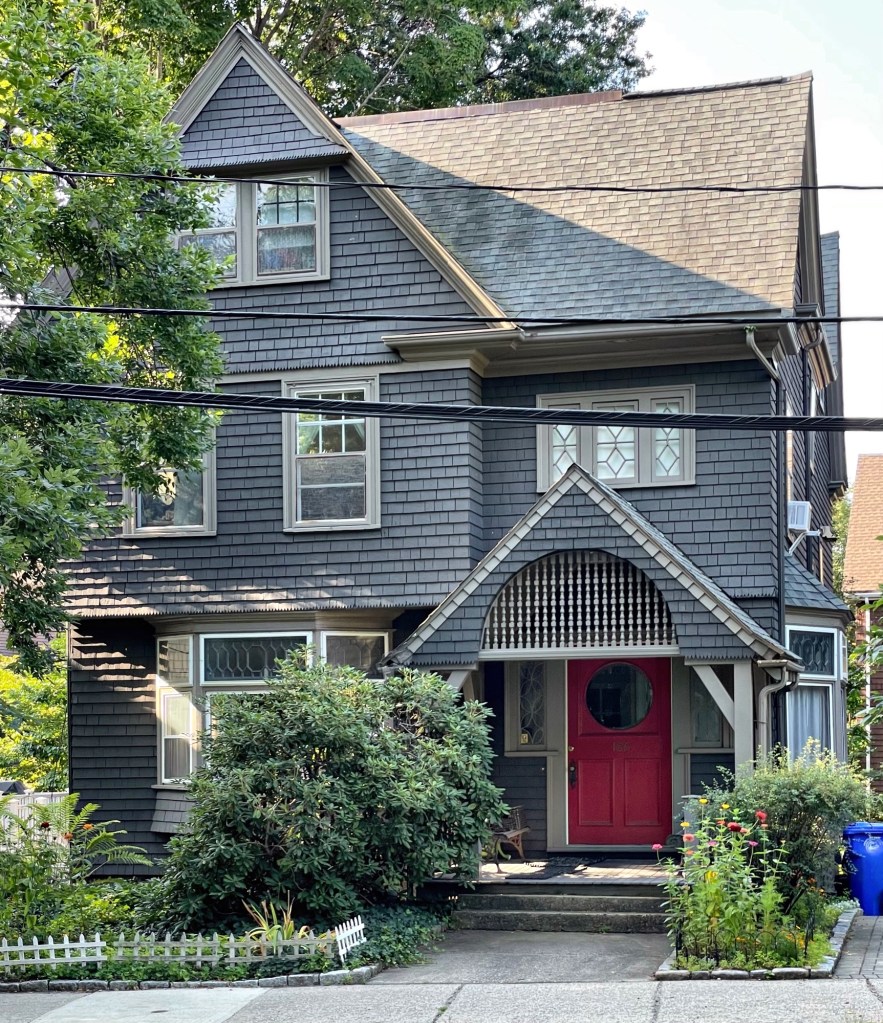
William Potter Rental House // 1889

William W. Potter, a shoe manufacturer and businessman, and his wife, Isabella Abbe Strickland Potter, lived in the Longwood section of Brookline and became active in the surround areas development in the last decades of the 19th century. William bought land off Kent Street and began to lay out house lots, becoming a developer overseeing construction of stately Queen Anne Victorian rental properties marketed to upper-middle-class residents. For this house on Francis Street, he commissioned architects George Rand and Bertram Taylor, who were known for producing stylish residential designs for the middle class in the Boston area. The massive property was a duplex, providing units to two lucky families! The building has just about every hallmark feature of the Queen Anne style including: the conical roof on a rounded corner bay, a complex roofline, asymmetrical plan, varied siding/materials, and applied ornamentation. In the 1920s, the house was owned by Simmons College, and used as a boarding house. Luckily, the property was restored and now is one of the finest residences in the neighborhood.