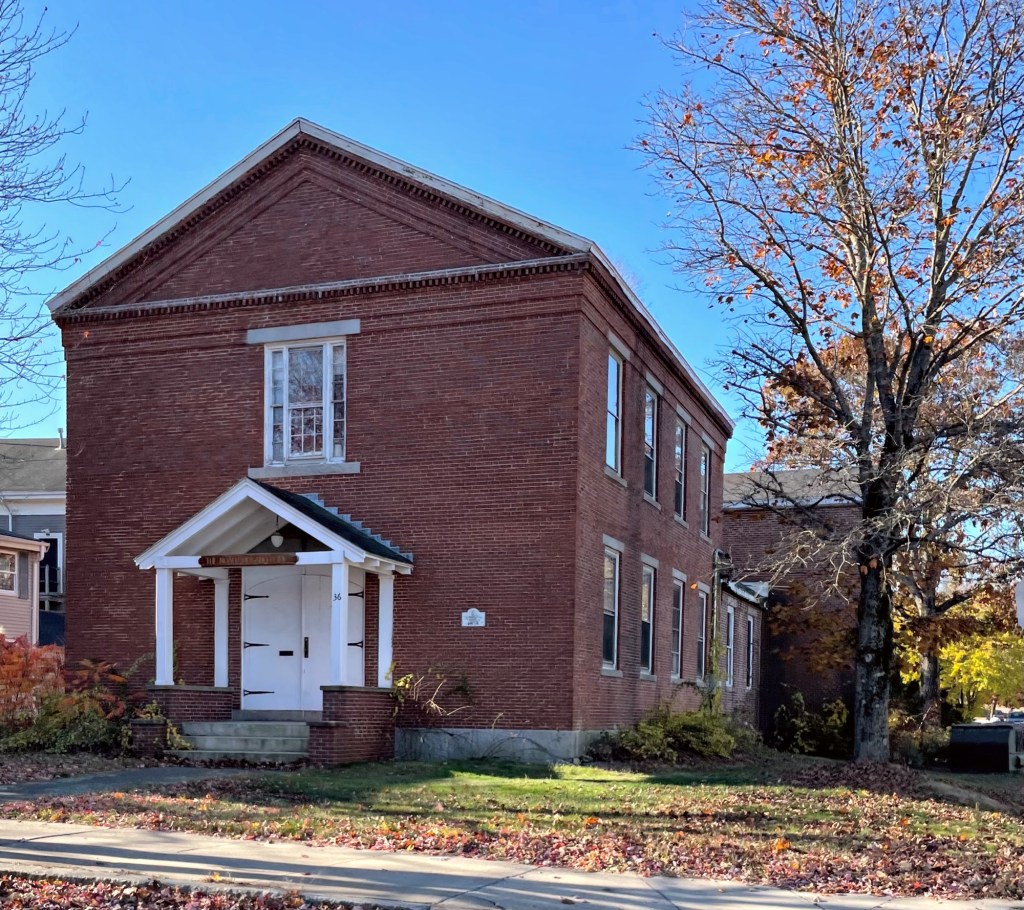
Georgetown Brick Schoolhouse No. 4 // 1854

Constructed in 1854 for intermediate and high school classes at a time when one-room schoolhouses were still the rule in Georgetown, this well-preserved brick building is a reminder as to how far education and schooling has come. As nearby one-room schools consolidated and after the new Central School Building (now Georgetown Town Hall) was built in 1905, this Greek Revival school building was converted to town offices. The town was still fairly small, so the offices only occupied the ground floor, and the town rented the upper floor to the All Saints Episcopal Church, who purchased the building in 1917 and occupied it for nearly 50 years. They likely added the Craftsman style entry porch. The church was deconsecrated in 1966, and the building sold in 1970 to the Noack Organ Manufacturing Company, who added an assembly room at the rear.

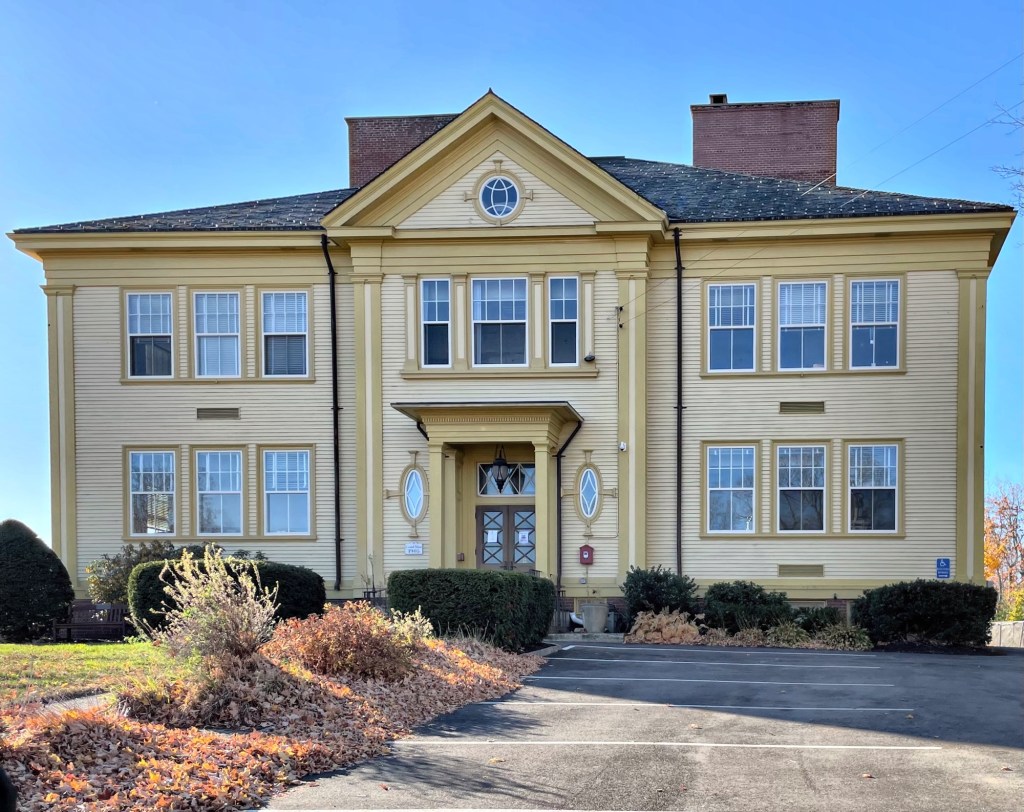
Georgetown Town Hall // 1905

Welcome to Georgetown! The Georgetown Central School, now known as the Memorial Town Hall, stands near the historic commercial center of Georgetown, Massachusetts, a rural community in Essex County located about 28 miles north of Boston. The two story wood-frame building was built in 1905 to a design by the Boston architectural firm of Cooper and Bailey, and located at the site of an earlier one-room schoolhouse built in the 18th century. It was Georgetown’s first multi-room school building, and was built after the town’s first high school/town hall burned down in 1898. The Colonial Revival style school building was eventually outgrown and was no longer needed as an educational facility. It was converted to municipal offices in 1974, a use that has remained ever since. The town has taken pride in this building, restoring much of the exterior details and slate roof.

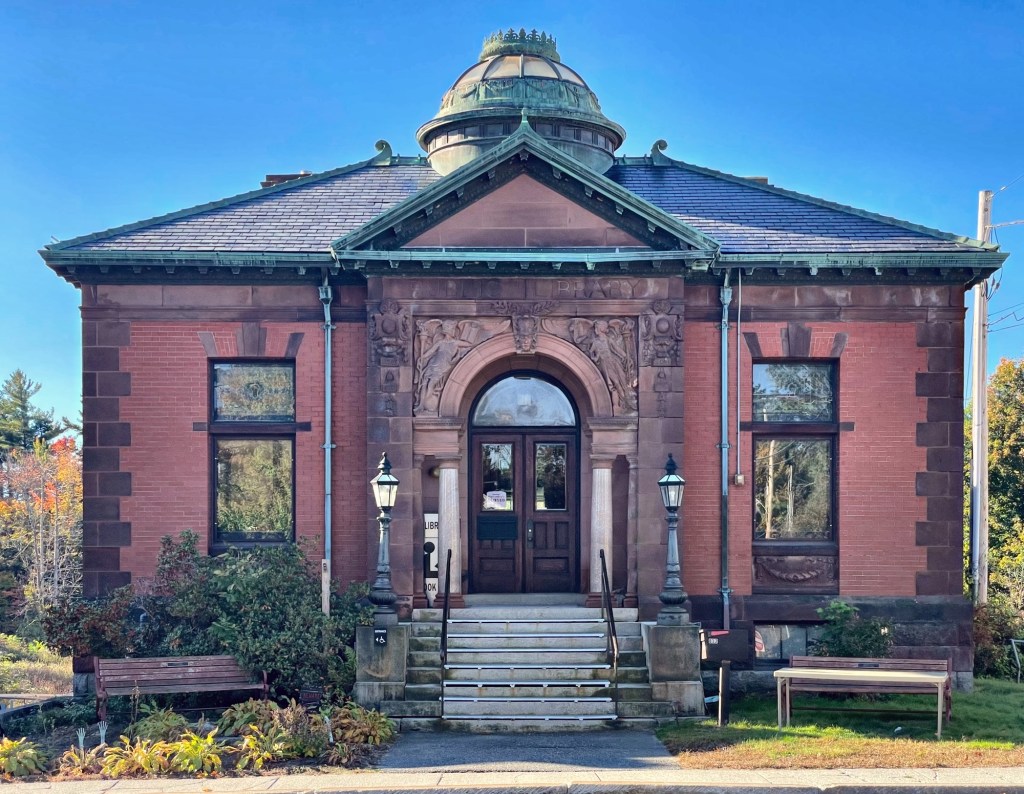
Ashby Public Library // 1902

The Ashby Public Library in Ashby, Massachusetts, was built in 1902, completely funded by a donation from Edwin Chapman (1841-1915) who lived across the street from the new library. Mr. Chapman was raised in Ashby and became a wealthy Boston-area merchant in the meat trade by the late 19th century. Before this library was built, the town’s library collection was housed in the Wyman Tavern. The building was designed by architect Henry M. Francis in the Neoclassical style with Romanesque detail in brick and brownstone to make the building fireproof. The library was added onto in the rear in 2006 by The Galante Architecture Studio, which is recessed and mostly visible from the rear parking area. The addition is Modern in style to distinguish itself from the main library building.

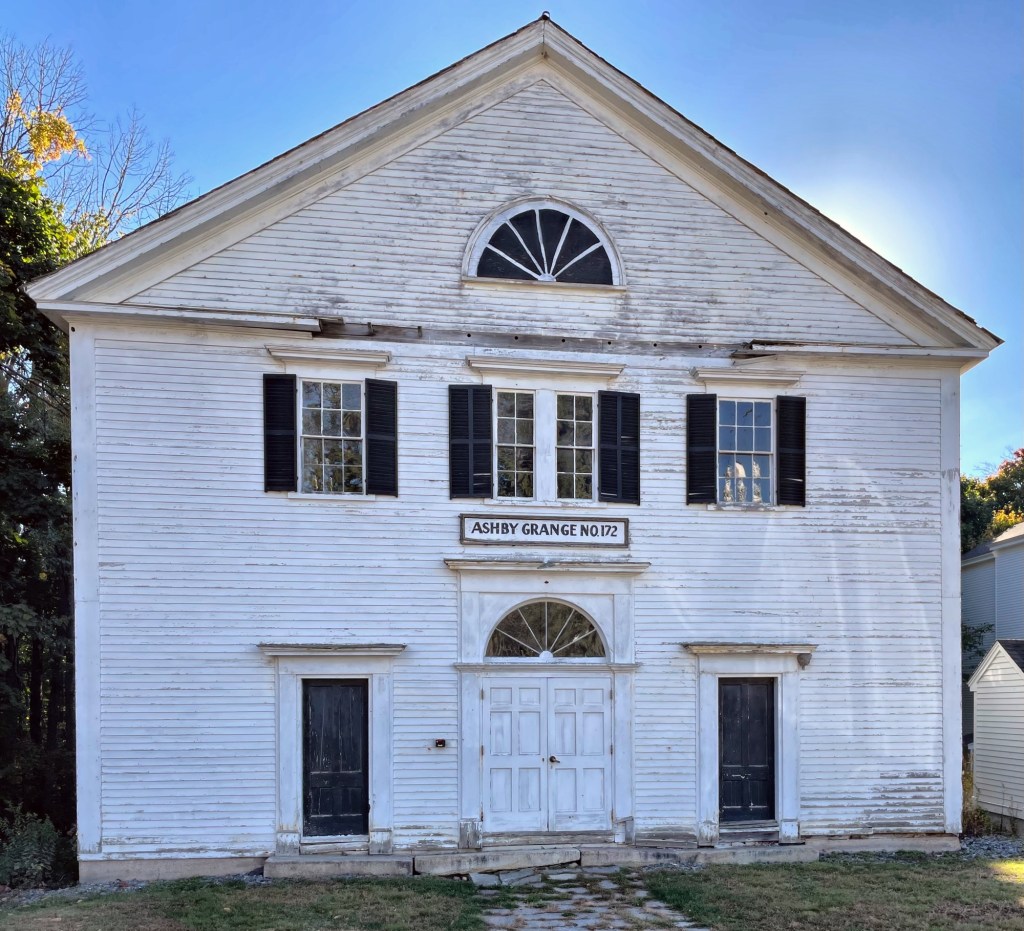
Old Ashby Academy – Ashby Grange Hall // 1820

In 1819, less than a decade after the First Parish Church in Ashby, Massachusetts was built, a group of parishioners split to form their own congregation, erecting this Federal style building as its new house of worship a year later. The congregation grew and eventually would build a new church, the Ashby Congregational Church, in 1835. The building was soon after, sold to a group of citizens interested in starting an academy. In 1836 they opened Ashby Academy, which offered education beyond the eighth grade for those who could afford it. Ashby Academy closed in 1860 and the Town of Ashby purchased the building in 1864 for a high school and town offices, a use that remained until a new school was built in 1902. Since the 1970s, the building has been occupied as a local grange hall, and maintained by a local group, the Friends of the Ashby Grange Hall. The building is a significant, transitional Federal/Greek Revival style building in town with its pediment and elliptical windows.

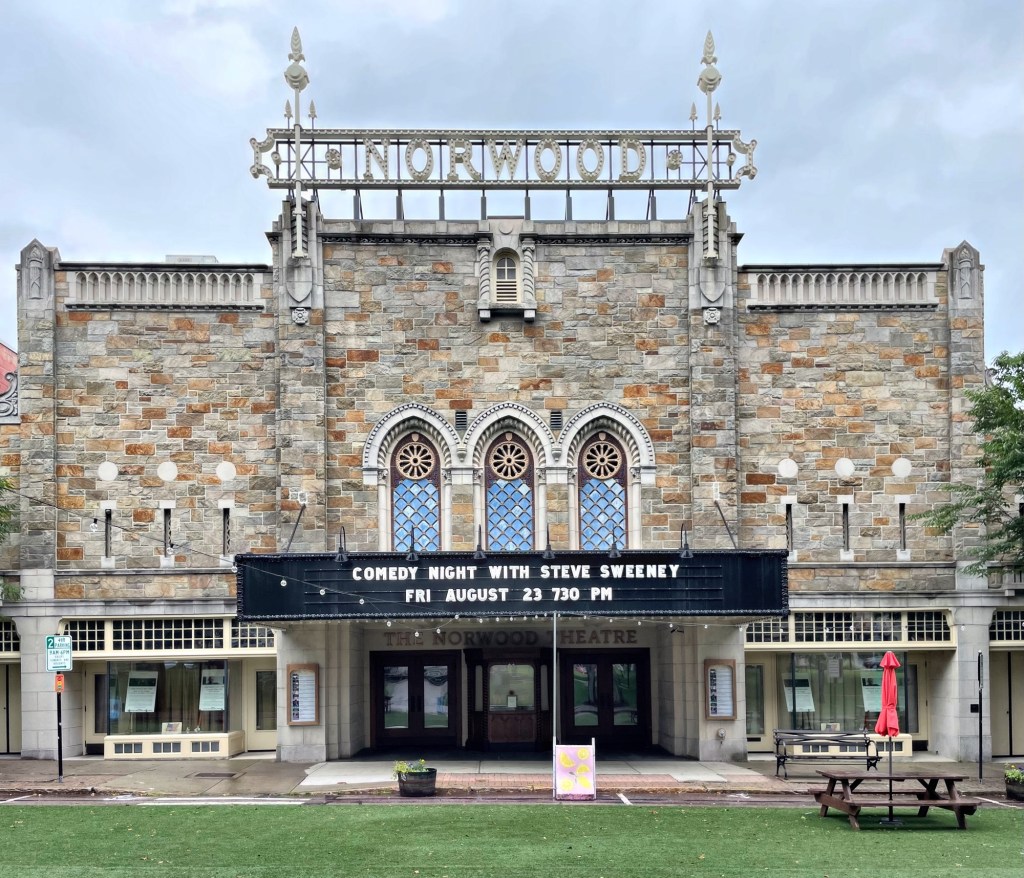
Norwood Theatre // 1927

The Norwood Theatre was built in 1927 as a high-style showpiece for the re-invigorated downtown of Norwood, Massachusetts. Built at the same time as the Norwood Town Hall building, the building was constructed at a time of great development in the town, as local entrepreneur and philanthropist, George Willet and landscape architect Arthur A. Shurcliff, created a plan to evolve Norwood from a sleepy rural town to a commercial center. Architect William G. Upham is credited with designing the theatre and he enjoyed a prolific career which encompassed the design of masonic temples, commercial blocks, theatres, homes, and of course, the Norwood Town Hall. The Norwood Theatre was designed in a high-style Spanish Renaissance Revival style and was designed for motion pictures but also included a stage for possible vaudeville and theatrical productions. By the mid-20th century, a Modern sign covered much of the original facade, and lasted until the building came under its current ownership in 2010. A careful two-year restoration brought the theatre back to its former glory.

Norwood Town Hall // 1928

Norwood Town Hall represents the achievement of landscape architect Arthur A. Shurtleff and local financier, George Willet, to transform the village center of Norwood, Massachusetts from a sleepy rural village to a thriving commercial and cultural center of town. Plans for the municipal building began as early as 1919, with this building serving as both a town hall and memorial to the Norwood men who died in all previous wars. The building would not be completed until 1928. Designed by Norwood architect, William Upham, the building is a landmark example of the Neo-Gothic Revival style and its main feature, the 110-foot bell-tower which houses a 50-bell carillon, towers over the town common.

Sylvia Store // 1879

This charming commercial store was built in 1879 as one of five similar commercial buildings constructed on Nantucket as investment properties by Robert McCleave (1809-1878), a retired whaling captain. Located on Orange Street, this store was long occupied as a neighborhood grocery store, before the days of supermarkets with seas of parking. Antoine Sylvia Jr. (1835-1906), an Azorian-born merchant on the island purchased the property 1879 from McCleave and operated a grocery store at this location until his death in 1906. His wife, Elizabeth C. “Lizzie” Sylvia (1850-1929), retained the property and operated a shop where she sold wallpaper. In 2015-16, the façade was restored with the installation of a salvaged façade of nearly identical detail and dimensions built at 106 Main Street in 1869 also by McCleave. This façade was salvaged for re-installation here when that building was demolished in 2001. The Sylvia Store was given a preservation easement after the restoration, preserving it for another 150+ years to come!

Tourists Hotel // 2018

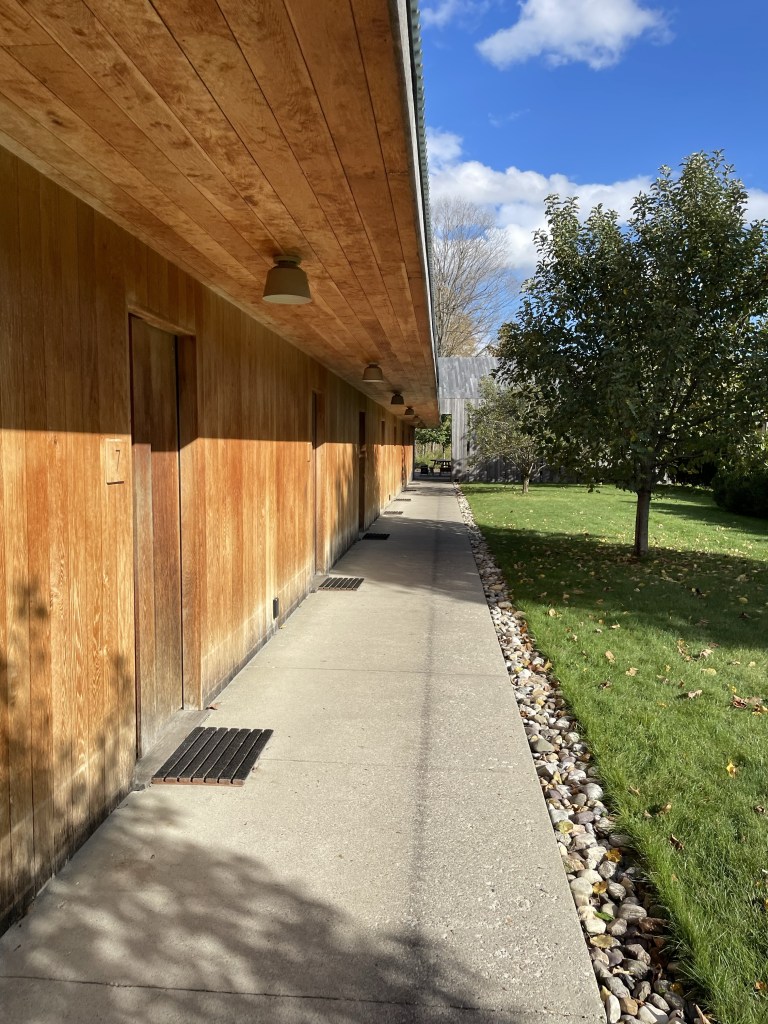
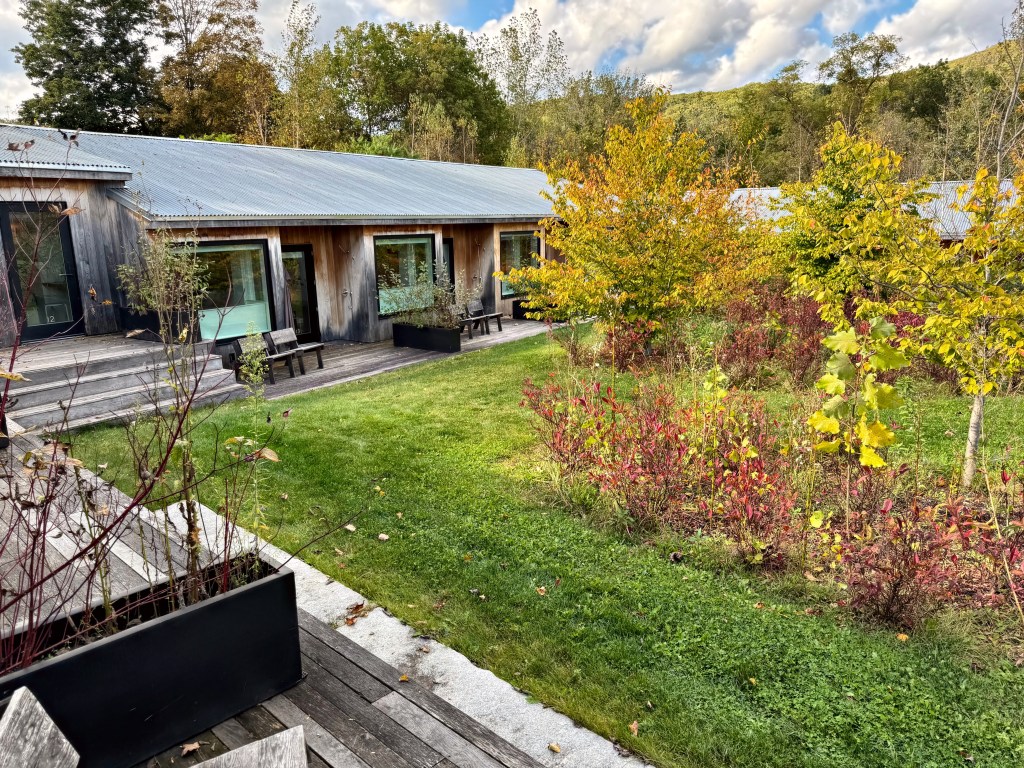
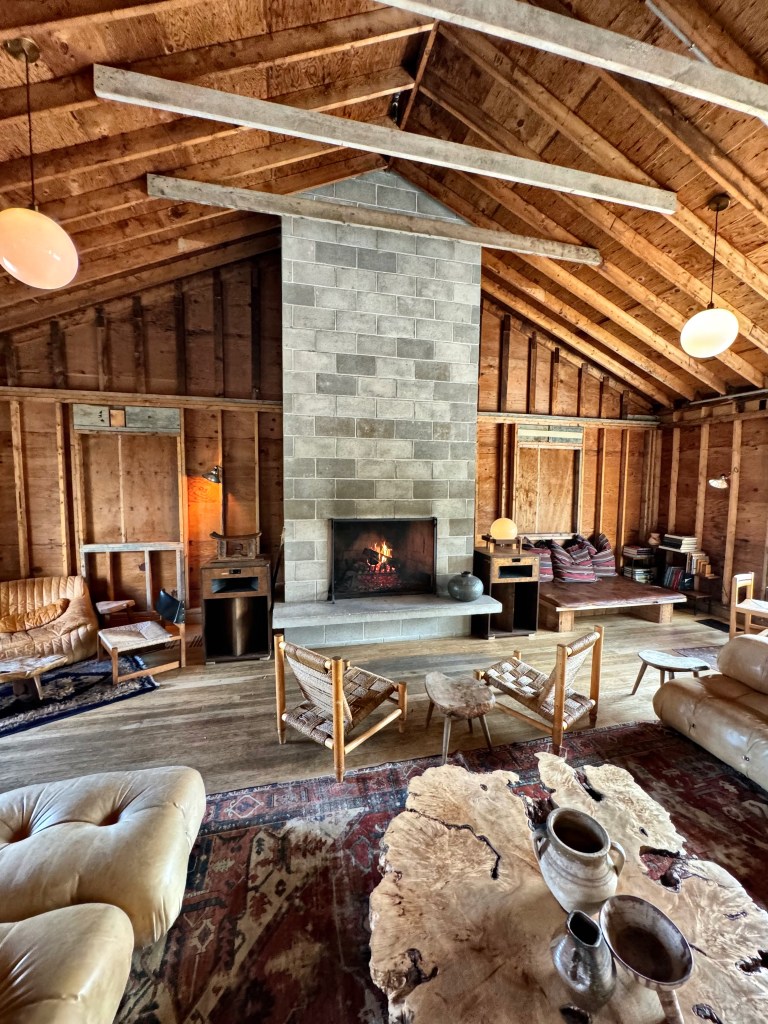
This past weekend, I had the absolute pleasure to stay at one of New England’s coolest new hotels, Tourists Hotel! Located in the industrial-turned-artistic town of North Adams in the Berkshires of Massachusetts this elevated, 48-room hotel modernises the aesthetic of a classic American motor lodge with contemporary design that feels cozy and inviting. The site was originally home to the Redwood Motel, a prototypical 1960s motel on the Mohawk Trail, a designated scenic tourist route which became popular in the automobile era of the 20th century. The reimagined motel was developed by Broder a Boston-based developer who worked with architect Hank Scollard and landscape architecture firm Reed Hilderbrand to design the new hotel. U-shaped in plan, the main part of the hotel surrounds a central courtyard with native flora. Facades are wrapped in white oak planks with the intention to blend the architecture with the surrounding woods. My favorite part was that the rooms have sliding glass doors which open to private decks which make rooms feel more personable. On the crisp fall day, the lounge was an amazing space to cozy up with some spiked cider and chat with other guests. An unexpected treat was to learn that the grounds include dozens of walking trails running along the Hoosac River with a suspension bridge that stretches 220 feet across. Pictures do not effectively showcase how special Tourists is, both in the design details and the attention to detail the staff had during my stay. If you are ever in the Berkshires for a weekend trip, I highly recommend you check them out!