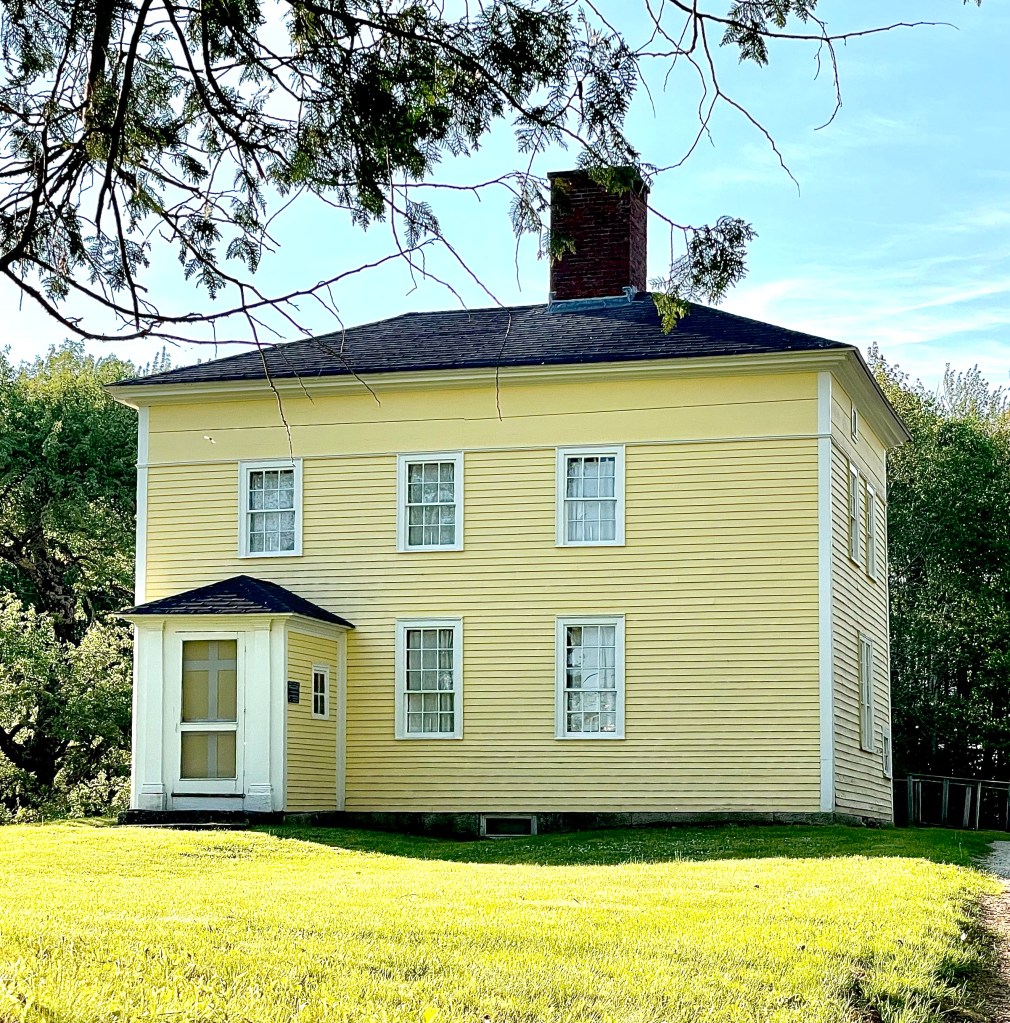
Jonathan Fisher House // 1796

Jonathan Fisher (1768-1847) was born in New Braintree, Massachusetts, and educated at Harvard College Divinity School. In the record of Plantation No. 5, (now Blue Hill), the selectmen voted to invite the Rev. Mr. Fisher to preach for four months in the summer of 1795. After his four month stint, the committee approached him, asking if he would stay and make the town his home, he accepted. He first built a primitive house which was outgrown by the time he had three children growing up in it! He had the current home built in 1814, attaching the original home as a rear ell (addition). Reverend Fisher died in 1847. His wife Dolly, died in 1853. At the end of the nineteenth century, Jonathan Fisher’s grandchildren decided to renovate the house. In 1896, they tore down the original house of 1796 and replaced it with a two-story addition to their grandfather’s 1814, giving it the current configuration. When the Fisher grandchildren who had been living there left Blue Hill, a number of local citizens concerned for the future of the building made arrangements that eventually led to the transfer of ownership of the house to a local non-profit foundation, the Jonathan Fisher Memorial, and made it possible for the house to be opened to the public. The Fisher House is open for tours in the summer.
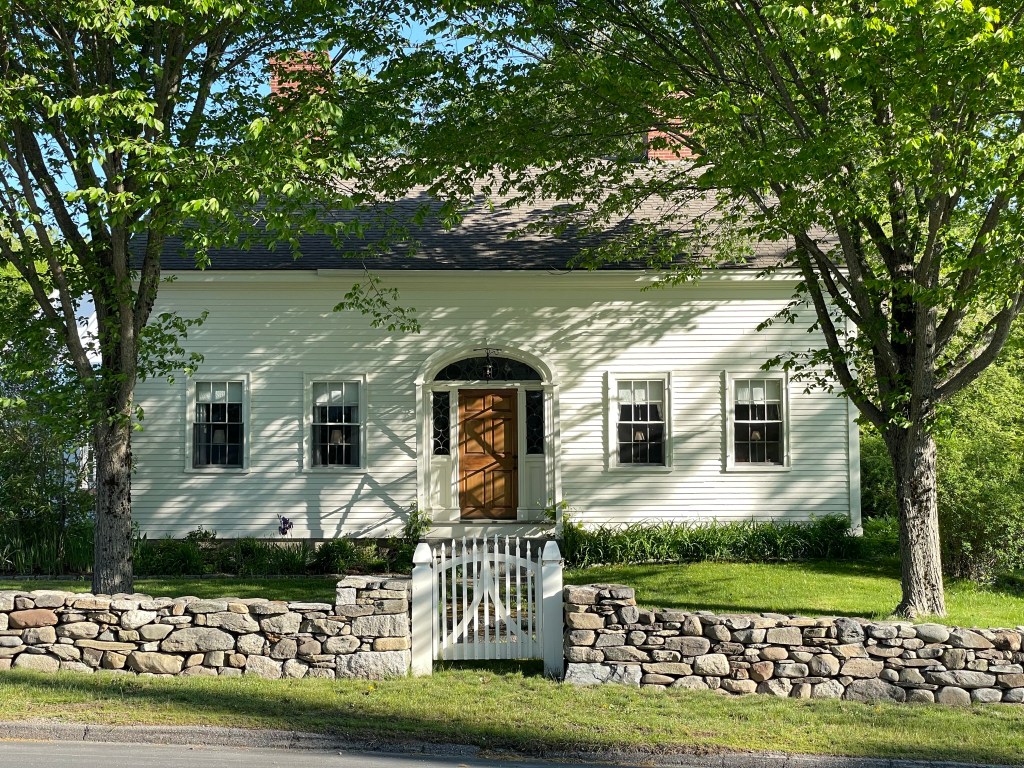
Clough-Hinckley House // 1832

This charming Federal style cape in Blue Hill Maine was built in 1832 by Moses P. Clough, a sea captain seemingly as a wedding gift to his new bride of that year, Sally Prince. He resided in the home off-and-on between excursions and trips at sea until his untimely death at sea in 1836 of bilious fever, possibly caused by malaria. After his death, his widow Sally, remarried and moved to Cherryfield, Maine. The old family home was sold to Bushrod W. Hinckley, an attorney who was involved in the town affairs. Today, the old Clough-Hinckley home is known as Arborvine, a great restaurant known for using local, farm-to-table ingredients. The home is excellently preserved by the owners, down to the leaded glass fanlight and sidelights at the entrance. Swoon!

Holt House – Blue Hill Historical Society // 1815

The Holt House in Blue Hill, Maine, was built in 1815 by Jeremiah Thorndike Holt, grandson of Nicholas Holt who brought Blue Hill’s fifth family from Andover, Massachusetts in 1765. Jeremiah was one of the first to locate at the head of the bay, in what is now the center of Blue Hill village. He was an influential businessman who kept a store at what became known as the Pendleton House, engaged in shipping, and became the town’s second postmaster. After Jeremiah died in 1832, his widow turned the house into the town’s only inn and tavern. In 1851 their son, Thomas Jefferson Napoleon Bonaparte Holt (what a name!) and his family occupied the house. It stayed in the family for over a hundred years until the Blue Hill Historical Society bought the Holt House and made it their headquarters in 1970. The Holt House remains as a well-preserved Federal style home in this part of Maine.

Pendleton House // 1826

Large commercial blocks like this can really transport you back a century or more! The Pendleton House in Blue Hill, Maine was built in 1826 by Jonah and Jeremiah Holt. The brothers were born in Beverly, Massachusetts and their family settled in Blue Hill, likely to work in the shipbuilding industry. Originally called the Brick Block, the building was a storefront for the Holts. In the 1870s, the building had fallen into disrepair, and was seized from its owner, Frederick Holt (Jeremiah’s son), by the Blue Hill Academy, from whom Nathan Pendleton purchased the building. As an 1877 issue of The Ellsworth American stated: “Blue Hill needs a hotel. There have never been so many strangers and visitors. Five hundred men are working in the quarries.” From the massive demand for lodging in town, tied to industry, Pendleton opened the building as a hotel in 1878, possibly adding the mansard roof at that time. The building became known as the Pendleton House for a number of years and was purchased by John M. Snow in 1888, who added porches to the building. Sadly, the porches were removed in the 20th century, but the old Pendleton House remains a fixture in Blue Hill and is home to small businesses with housing above.

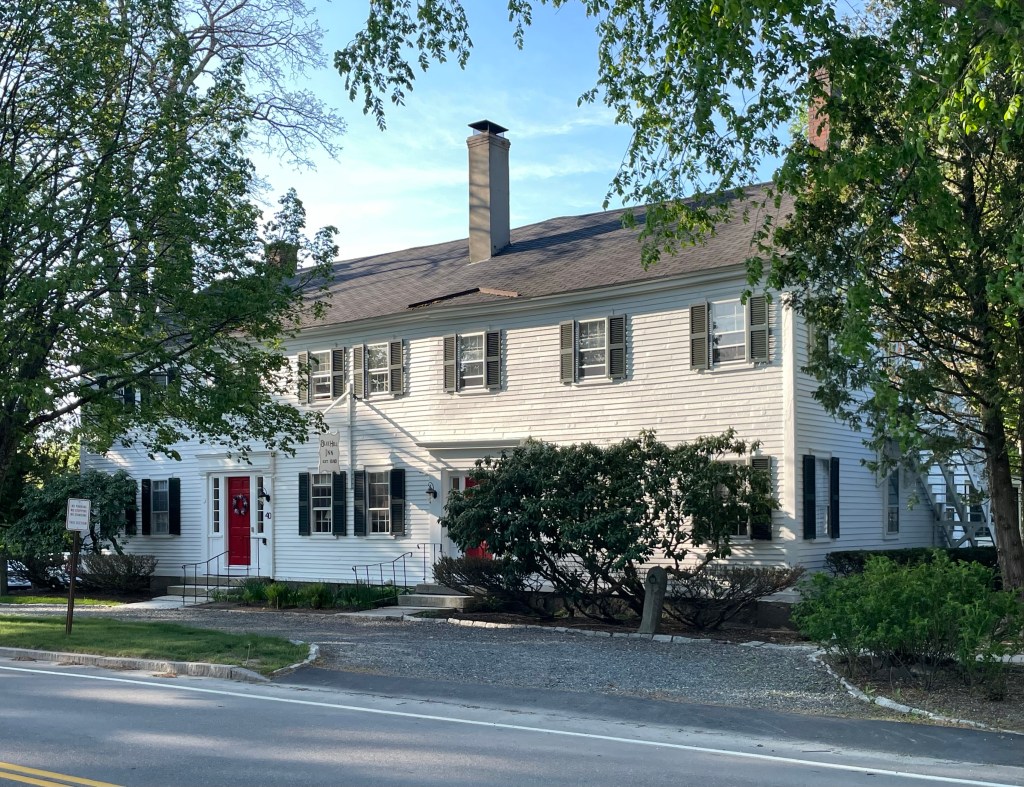
Blue Hill Inn // c.1830

The major part of this structure in Blue Hill, Maine was built as a house around 1830 by Edward Varnum Stevens. Stevens started an inn in his home likely after his marriage to wife, Susannah Hinckley. When Edward died in 1857, the property was acquired by Haskell W. Hinckley in 1858, who was possibly Susannah’s brother. Hinckley was a sea captain and his wife, Fanny Hinckley operated the hotel here for 50 years, known as the Blue Hill House. The hotel became a social center for the community and became a gathering place for many. The structure, now known as the Blue Hill Inn, continues to welcome visitors today. The elongated Federal/Greek Revival style house is excellently preserved inside and out, and guests can stay in one of the 11 gorgeous suites inside, which take you back in time.

George Stevens House // 1814

George Stevens (1775-1852) was born in Andover, Massachusetts and settled in Blue Hill, Maine. He became a ship owner and merchant, making a name (and wealth) for himself in town and he showed an interest in education for the growing village. He erected this home in 1814 for his family, which seemingly employed Asher Benjamin’s house plans in the Federal style, popular builder’s guidebooks at the time. With his eyes towards education, George Stevens sat on the board of trustees for the Blue Hill Academy which flourished under the guardianship of the local Congregational Church and trustee president Rev. Jonathan Fisher. He chafed under Congregationalist dominance and wished for a non-denominational local academy. In 1832, he offered to give a thousand dollars and a piece of land to the Blue Hill Academy. His offer included this provision, “The institution shall be put on a liberal scale that all denominations shall have equal rights and privileges.” The Academy trustees said, “no.” As a result, George Stevens provided in his will that after his death and that of his wife this homestead, 150-acres of land, and a large portion of his personal property should be used to establish an academy, an “alternative” academy. In 1891 the Maine State Legislature incorporated George Stevens Academy, leading the “Old Academy” to cooperate with the
new institution, merging their boards and finally becoming a non-denominational academy. The school continues as a highly respected academic institution and retains the name of its founder, George Stevens.

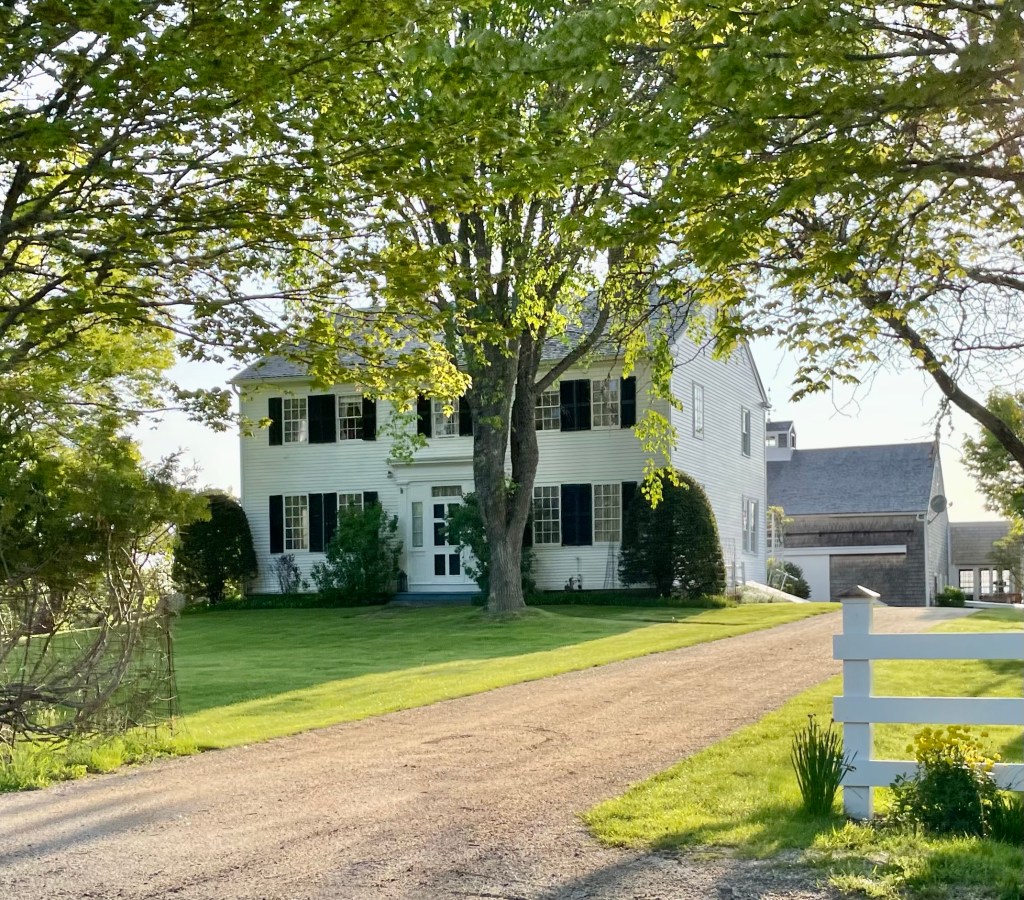
E. B. White House // 1795

The coast of Maine has long been a refuge for those looking for an easier way of life and access to natural splendor. One of the more well-known residents of Maine was author E.B. White, who lived on this farm in Maine for 48 years. The estate sits on 44-acres and was built in 1795 for William Holden by Captain Richard Allen, a local housewright. The property was purchased by E. B. White in 1933 as a summer residence, but it became a full-time home where he and his wife, New Yorker editor Katharine Angell, raised sheep, geese, chickens, pigs, even spiders all with a historic barn and tire swing. Sound familiar? It is from this house that he wrote the iconic children’s book, Charlotte’s Web (and Stuart Little) among others. White was a private person, and despite his internationally famous books, he did not advertise the location of his home while he was alive. In 1977, he convinced an interviewer to report that “he lives in ‘a New England coastal town’, somewhere between Nova Scotia and Cuba“. Katharine died in 1977, and E. B. in 1985. The property was inherited by their son, who summered there for years. The most recent owners, Robert and Mary Gallant of South Carolina, who have summered there for the past 30 years and preserved the house immaculately, selling it a few years ago.

Aldrich House // c.1790

An unknown builder erected this Portsmouth house during the 1790s. Thomas D. Bailey lived here in 1836 when his grandson, Thomas Bailey Aldrich, was born up the street in the Laighton House (featured previously). Thomas Bailey Aldrich (1836-1907) became a revered American poet and author. Although he grew up in New Orleans and New York City, some of his fondest childhood memories were of the years 1849 to 1852 when he lived with his grandfather in this house. Later, from 1877 to 1883, the Society for the Benefit of Orphan and Destitute Children ran their Children’s Home in this building. Thomas Bailey Aldrich died on March 19, 1907. A few months later, on August 1, 1907, the Thomas Bailey Aldrich Memorial Association purchased this building, restored it to the time period when Aldrich was a boy here, and opened it as a memorial museum. The Aldrich House was acquired by Strawbery Banke museum in 1979, and it remains a historic house museum.

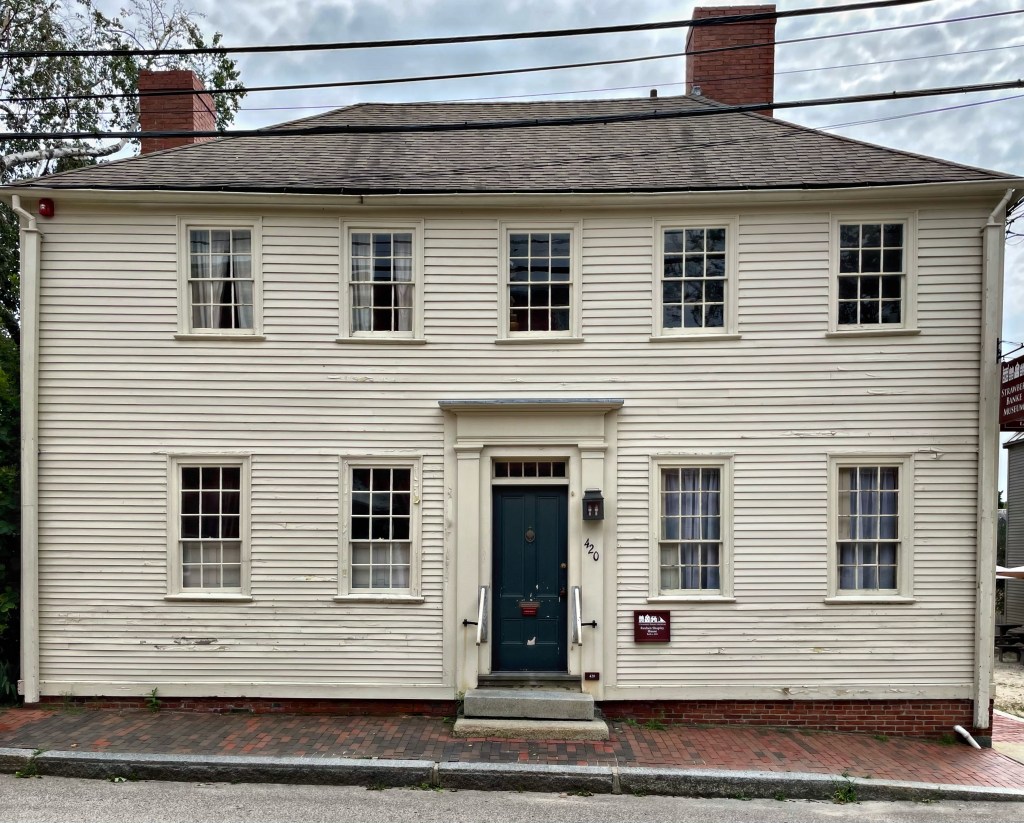
Reuben Shapley House // 1813

Captain Reuben Shapley (1750-1825) was a Portsmouth mariner, merchant, and shipbuilder born on the Isle of Shoals in 1750. He was married to Lydia Blaisdell Shapley, and they had one daughter, Nancy, who died in 1802 at the young age of 17. Shapley bought this house lot in 1790 and erected a barn or outbuilding on the lot, which was nextdoor to his main house. On the evening of August 13, 1811, a sailing ship owned by Captain Shapley, the Wonolanset, caught fire. According to Nathaniel Adams’ 1825 book, Annals of Portsmouth, the ship “had arrived from sea about an hour before, laden with hemp, cotton, molasses, naval stores and flour, and lay at Shapley’s Wharf.” Although townspeople tried to extinguish the blaze, the fire persisted, and they were forced to cut the vessel loose and let it drift safely out into the river and away from other vulnerable ships and warehouses. Captain Shapley’s loss was estimated at $12,000. After this, it appears Reuben got more involved in real estate, and either converted his old barn or built new, this house in 1813, Captain Shapley died in 1825, but the house continued as part of his estate until 1831. The house is now well-preserved and a part of Strawberry Banke’s campus in Portsmouth.

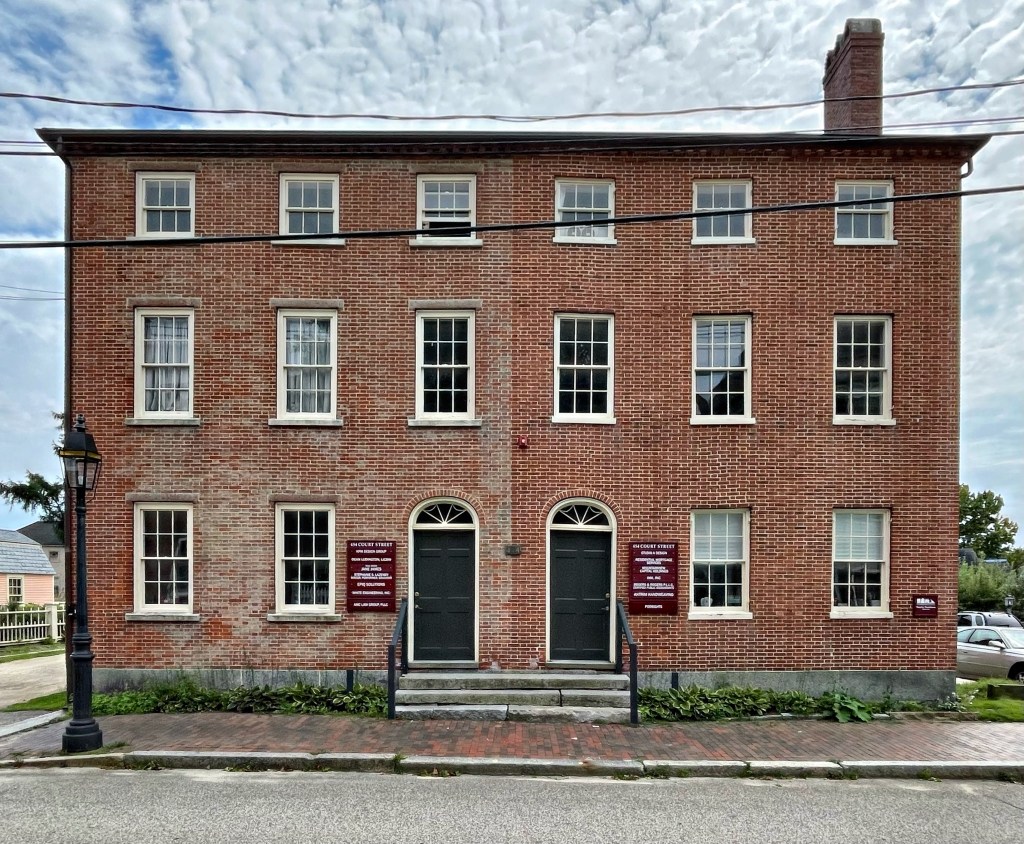
Shapley Townhouses // 1815

The Shapley Townhouses in Portsmouth, New Hampshire sit on Court Street and were built around 1814-15, after the Great Portsmouth Fire of 1813 had destroyed the center of town. It was constructed to conform with the new Brick Law that required all new buildings in downtown Portsmouth to be built of “fireproof” brick. The paired townhouses are unusual in the city as a particularly well-preserved example of a Federal period double-house. The house was built by Captain Reuben Shapley, a ship’s captain and merchant. In about 1973, this building was remodeled into a temporary home and counseling center for troubled youth. Suffering from deferred maintenance and the direct proximity to the Strawberry Banke Museum, the Strawberry Banke Foundation purchased the double-house who rent out spaces inside to offices, providing a revenue stream to maintain and further showcase the history of the port town.