Dixmont Corner Church // 1834

Dixmont, a small rural town in central Maine was originally originally a land grant by the Commonwealth of Massachusetts (of which Maine was then a part) to Bowdoin College, which sold the first settlers their land for profit to build on their campus. As a result, the town was originally called “Collegetown”, which was obviously short-lived. Dr. Elijah Dix (1747-1809) of Boston, who never lived there but took an interest in its settlement, encouraged others to settle there, and when the town was officially incorporated in 1807, it named itself after Dix, as Dixmont. A “malignant fever” broke out among the settlers in the early years, also killing Elijah Dix while in Dixmont on a trip there in 1809, he was buried in the Dixmont Corner Cemetery. Elijah was the grandfather of reformer and nurse Dorothea Dix. The early settlers had this church built by 1834 by Rowland Tyler, a local master builder whose only other documented work is the 1812 City Hall of Bangor. The Dixmont Corner Church is one of Penobscot County’s oldest Gothic churches and also exhibits some Greek/Classical elements.

Troy Meeting House // 1840

Located in the rural town of Troy, Maine, the 1840 Troy Meeting House is a classic example of a type of meeting house or church that was built by some rural communities in the state in the decades prior to the Civil War. Built as a Union Church, without a specific denomination, the building served the members of the Troy Meeting House Society, and by extension as the only church in the town. The building features both Greek Revival and Gothic Revival stylistic details on the exterior and its design is similar to others in the surrounding towns, likely being from the same builder.

Westover School // 1909

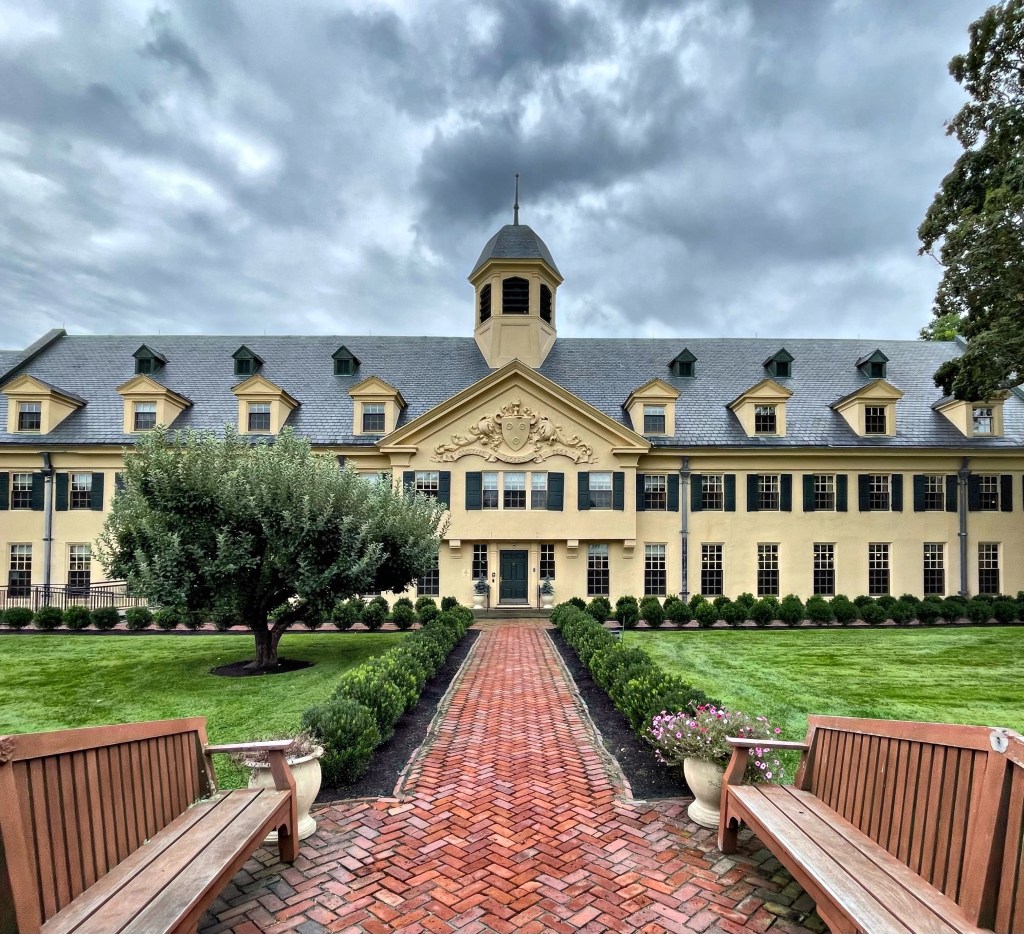
At the heart of the rural community of Middlebury, comprised largely of Connecticut farmers, far from the hustle and bustle of the world, Mary Robbins Hillard (1862-1932) sought to create a girls school to “provide young women with a liberal education in a community which would contribute to the development of their character, independence and sense of responsibility.” To accomplish this, they needed a school, and Mary hired her good friend (and architect) Theodate Pope Riddle to design the private girl’s school campus and main buildings on a site fronting the town green. The school opened in 1909 with125 pupils, slightly over capacity. For the design Theodate Pope Riddle – who was one of the first American women architects and a survivor of the sinking of the RMS Lusitania – took inspiration from English Arts and Crafts and historical precedence in English schools with large open courtyard plans. Originally finished in a gray stucco, the building enclosed a quadrangle at the rear. Inside, administration offices, reception rooms, living rooms, a library, gymnasium, chapel, dining rooms, infirmary, and (of course) classrooms lined the interiors on a closed loop to allow students and teachers access to all parts of the building without ever stepping outside in the cold New England winters. The Westover School remains active and one of the highest ranked private schools in the area today, and with a more cheery yellow coat!

David Bradley House // c.1803

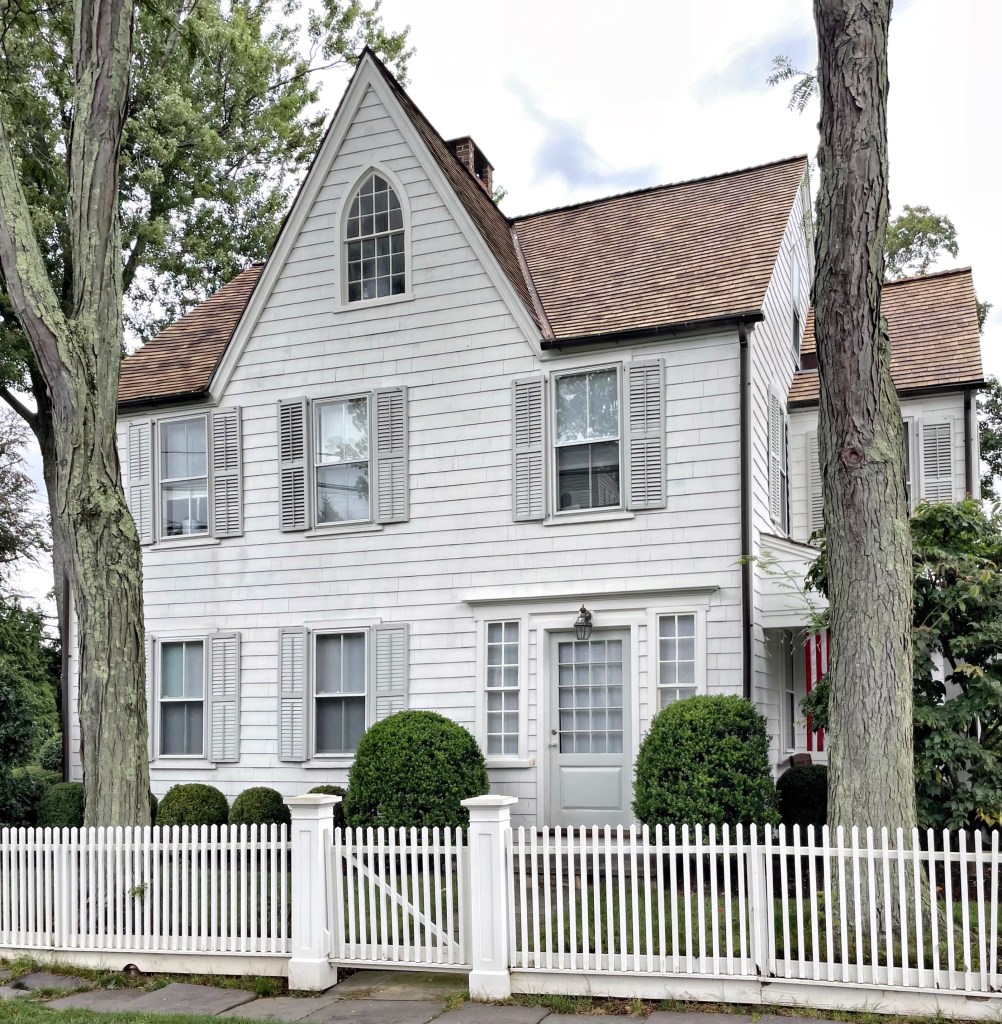
According to a dated board in the attic, this house was built c.1803! The David Bradley House on Old South Road in Southport, Connecticut is a great example of a traditionally designed house that does not need all the bells and whistles to stand out! The house was owned for a number of years by David Bradley, who worked as the village’s postmaster. It was David who likely added the Gothic Revival gable with lancet window and a (since removed) front porch.

Trinity Parish Chapel, Southport // 1872

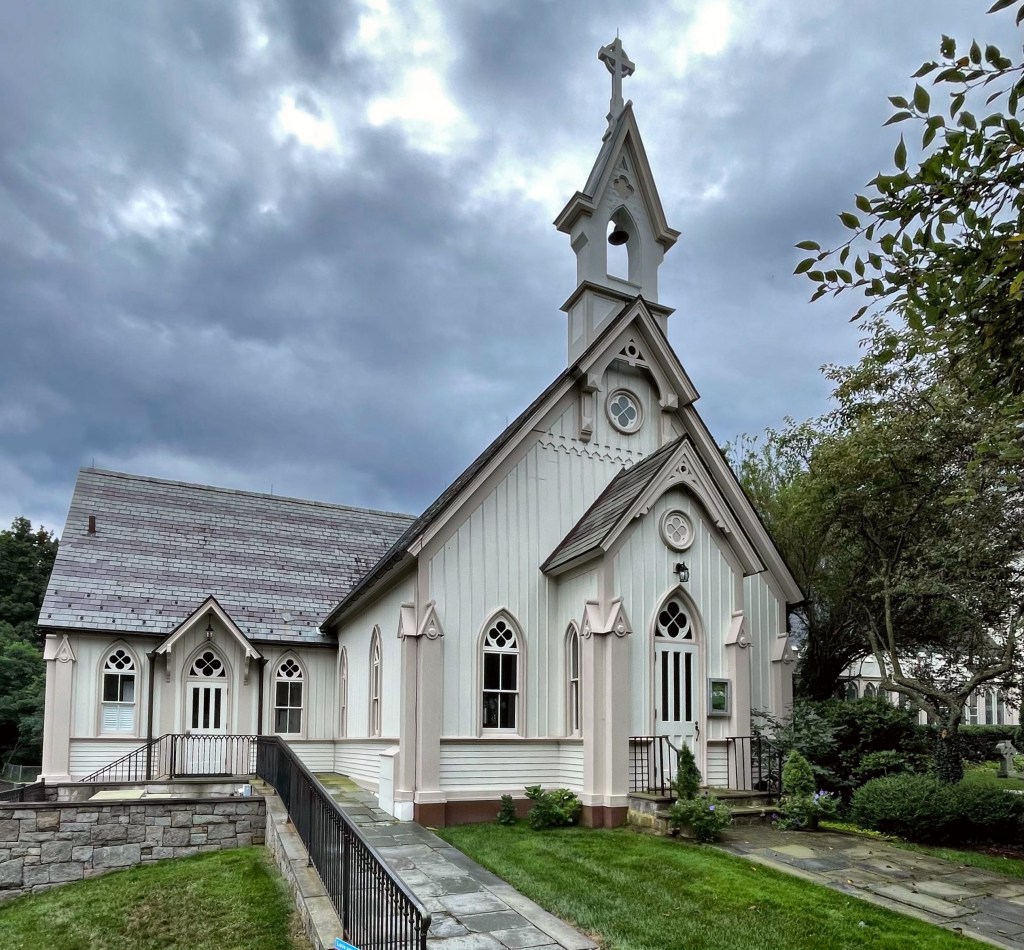
The Trinity Episcopal Church in the Southport section of Fairfield, Connecticut was established in 1725. As the parish and town grew, a large and architecturally stunning church was erected in 1862, and housed services for some of the wealthiest and well-connected residents of Connecticut. During Rev. Edward Wells’ rectorship, it was decided that a parish school was needed, and as an ardent believer in religious training, he started planning for a new chapel for use as a school. The Trinity Parish Chapel was designed by Southport architects Disbrow & Taylor and erected 1871-72. This Gothic Revival building is an excellent example of the rural church architecture which enjoyed widespread popularity throughout the country during the mid 19th century. Designed on a simple rectangular and decorative wooden bell cote, the small chapel’s board-and-batten siding and modest though strong Gothic details create a composition which compliments the more grand church just steps away. The chapel was originally built as a free-standing building, but was connected by a large, brick addition in the 20th century.

Former West Acton Universalist Church // 1868

This beautiful church in Acton, Massachusetts was built in 1868 by the Universalists of West Acton who sought a house of worship closer to their homes, rather than taking horses to the other part of town every week. The building exemplifies the influence of both Gothic Revival and Italianate styles on rural churches of the time. Gothic elements include the double pointed lancet windows with quatrefoil ornament, buttresses, and pointed lancet panels on the tower and belfry. Italianate elements include the rusticated base and the corbel table at the eaves. Religious services ceased in 1925. At that time, the church building was bought by leading men in the village who gave the building to the West Acton Women’s Club, which began in 1890 by Lucy Mead (the wife of Oliver Mead, who built the Mansard home nearby). In the 1950’s, the church was used as a community center. It is now home to a local performing arts center, Theatre III Box Office.

Litchfield Community Presbyterian Church // 1844

Litchfield, New Hampshire remained a rural agricultural town on the eastern banks of the Merrimack River from its founding by white settlers until after WWII when it rapidly became a bedroom community for nearby NH cities and Boston. The area’s Presbyterian residents needed a place to worship, separate from the more common congregationalists, and they built this Gothic and Greek Revival style church near the geographic center of town, a stone’s throw from the Merrimack River. The building features lancet windows, tracery, and a two-tiered belfry with classical pilasters and Gothic finials at the tower.

Horatio Harris Villa // 1857

Not much remains of one of Roxbury’s once grand rural estates, but as there is some left, I want to feature it before it’s all gone, possibly any day now! Horatio Harris was born in Dorchester (present-day South Boston) in 1821 and ran a prominent auction house in Boston. He built his country estate in Roxbury beginning in 1857 in the Gothic Revival style, adding on and updating numerous times. During the Civil War, the firm of Horatio Harris & Co. obtained the contract to sell at auction all goods which were confiscated by the United States’ land or naval forces and brought to Boston. He made a lot of money and added to his land holdings and estate house in Roxbury. The mansion’s construction was timely as Roxbury was transitioning from a rural town, with farms and country estates of wealthy Boston merchants, to a streetcar suburb, increasing the land value of his holdings. The estate included nearly 30 acres of meandering paths, a lake with an island, outbuildings, and an observation tower – one of which remain today besides the ruin of the former mansion. Horatio died in 1876, in the decades following his death, his heirs began subdividing the estate, developing some and selling other plots off for houselots. By the early 1900s, Jewish people began moving into Roxbury, mixing with the predominantly Yankee population. By 1915, the Harris manor house was owned by the Hebrew Alliance of Roxbury, Inc. By the 1920s, they expanded facilities, adding a school building to the front of the former Harris Mansion, completely obscuring the facade of the old estate. In the 1940s, the upper stories were removed. Seemingly the death knell of the old Harris Villa was a fire in 2019, which gutted much of the remaining original fabric of the estate. All that remains is a bay window, some window trim details and a Gothic porte-cochere at the rear of the estate. See it before it’s too late!

First Congregational Church of Nantucket // 1834

The First Congregational Church is one of Nantucket’s most prominent historic landmarks and is prominently located on a hilltop, being one of the first buildings you’ll see when arriving to the island by ferry. Constructed from a design by Samuel Waldron, a Boston housewright, the present church blends the Greek and Gothic Revival styles elegantly into a single composition. The interior of the church was painted with architectural trompe l’oeil paintings by E.H. Whitaker of Boston in 1852. The steeple was removed in 1849, likely from engineering concerns and high winds on the island. In 1968, the steeple was reconstructed from historic drawings by Philip Graves of Ames & Graves.

Dorset Congregational Church // 1909

Arguably the most high-style building in the quaint village of Dorset, Vermont is the Congregational Church, which appropriately sits on Church Street. The original congregational church in Dorset was located in nearby Maple Hill Cemetery. When the wood structure burned in 1832, an new wooden church was built on this site. The second wooden building burned in 1907, and then this church was built, but of fireproof construction. Jordan Greene, an architect from New York, designed this Neo Gothic Revival style in the historic district. The church was constructed by the contracting firm of O. W. Norcross, partner in the Norcross-West Marble Company, which donated the building stone from its South Dorset quarry. The design is dominated by a massive square central tower that ascends its facade and is capped by pinnacles. Behind the tower, the gable-roofed church is built of rough-faced Dorset marble laid in patterned coursed ashlar and trimmed with dressed stone. How many other marble churches can you think of?