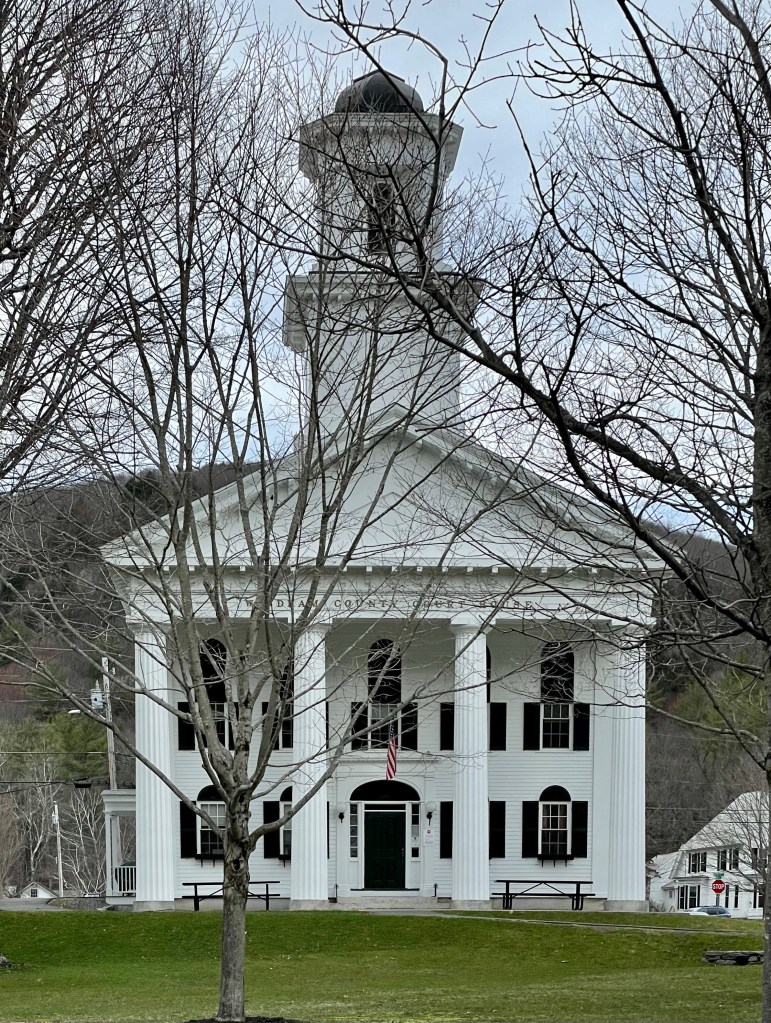
When the Windham County courts were transferred from Westminster in 1787, they were housed in the village known as Newfane on the Hill. Four decades later, influential residents convinced their townsmen to shift the village down to their land in a flat part of town, a location better suited for waterpower and commerce and ease of travel in the winter months. The first two buildings constructed were the courthouse and jail on a common. The village center grew rapidly as people moved old buildings down the hill and remodeled them or built anew, establishing a particularly unified townscape. This courthouse building is very stately for such a small town and packs an architectural punch. The two-story building is capped with a belfry and was designed in the Federal style with fan motifs over the windows and door. In the 1850s, nearby Brattleboro tried to usurp Newfane’s county seat status, so they in turn expanded the courthouse, raising the ceiling on the upper floor and adding the monumental Doric portico and pediment to give the building a decidedly Greek Revival appearance.
Located on a hillside in rural Dummerston, Vermont, you will find Naulakha, one of the most significant properties in the region. Naulakha (pronounced now-LAH-kuh) was built in 1893 for Rudyard Kipling an english journalist and author born in British India, an upbringing which inspired much of his professional work. In 1892, Kipling married Caroline Balestier, who was born into a prominent New England family. The couple honeymooned in Vermont near Carrie’s family home. The couple would settle in Vermont in a cottage which was soon outgrown, leading the couple to buy 10 acres of land from Carrie’s brother Beatty Balestier and built their own house. The new Shingle-style home they had built was named Naulakha after a book written by Rudyard and Caroline’s late-brother Wolcott. Kipling wanted a home that merged the distinctive qualities of the Indian bungalow with those of the American Shingle Style and he worked closely with his architect, Henry Rutgers Marshall of New York City, a Balestier family friend to achieve this.
The rectangular mass of the home parallels the contours the hill upon which its sited, and sits atop a raised fieldstone basement salvaged from stone walls on the property. From the home, Kipling wrote some of his most influential work, including the Jungle Books (1894, 1895), Captains Courageous (1896,The Seven Seas (1896), and The Day’s Work (1898). Sadly, the Kipling’s moved out of Naulakha after just a few years, largely from familial disputes with Caroline’s brother, Beatty. The family removed to England where they settled, though Rudyard always mentioned how much he missed his secluded life in Vermont. The property was then purchased by the Holbrook family, who made slight modifications to the property, but all maintaining the original design and feeling. In 1992, the British-based Landmark Trust acquired Naulakha as its first American building, later creating the Landmark Trust USA to maintain the property and more. The Landmark Trust USA rents out Naulakha and the adjacent carriage house for short-term rentals to provide revenue for maintaining these properties.
For more on my stay at the absolutely stunning Kipling Carriage House, check out my later blog post here.
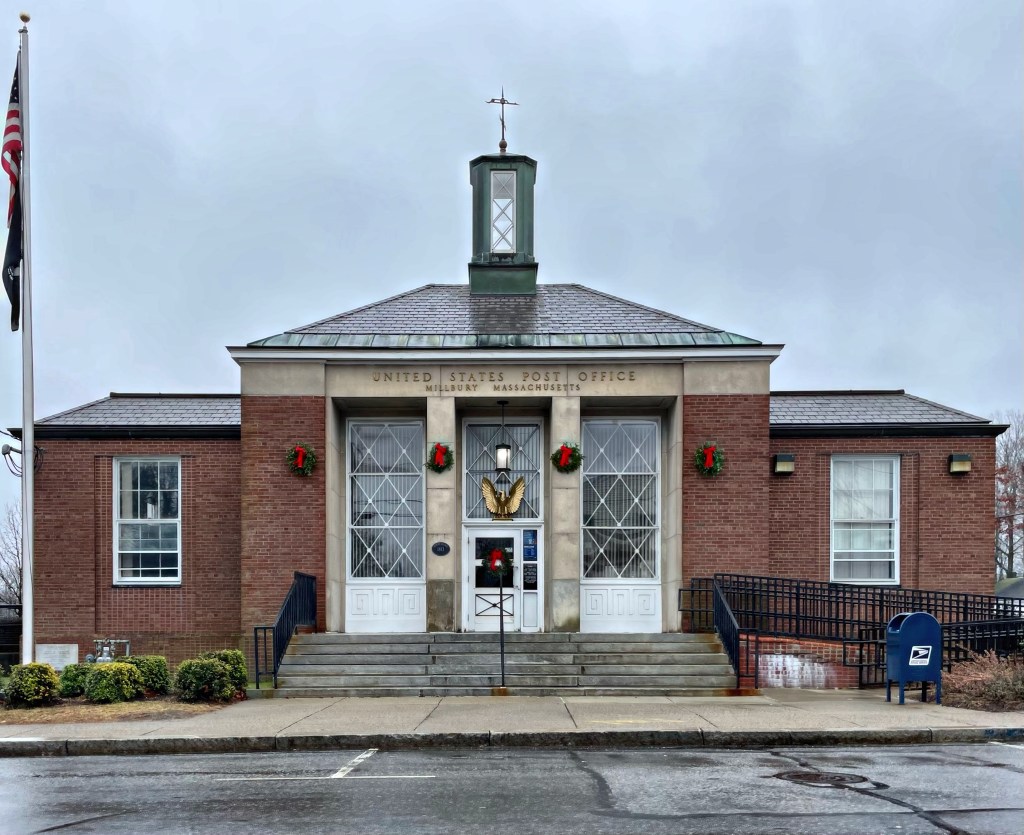
Located in downtown Millbury, MA, the town’s local post office stands as a great example of Art Deco and Colonial Revival architecture styles, showing how well different styles can be incorporated into a single, complimentary design. The Millbury Post Office building was constructed in 1940 from plans by Louis Adolph Simon, who served as Supervising Architect in the Office of the Supervising Architect for the U.S. Treasury from 1933 until 1939, when the office was moved to the Public Works Administration / Works Progress Administration. The post office was designed at the tail end of the New Deal programs to help stimulate local economies by building infrastructure and providing jobs to locals. Inside, a mural “An Incident in the King Philip’s War, 1670” was painted by Joe Lasker and installed in 1941 and was “revivified” in 1991.
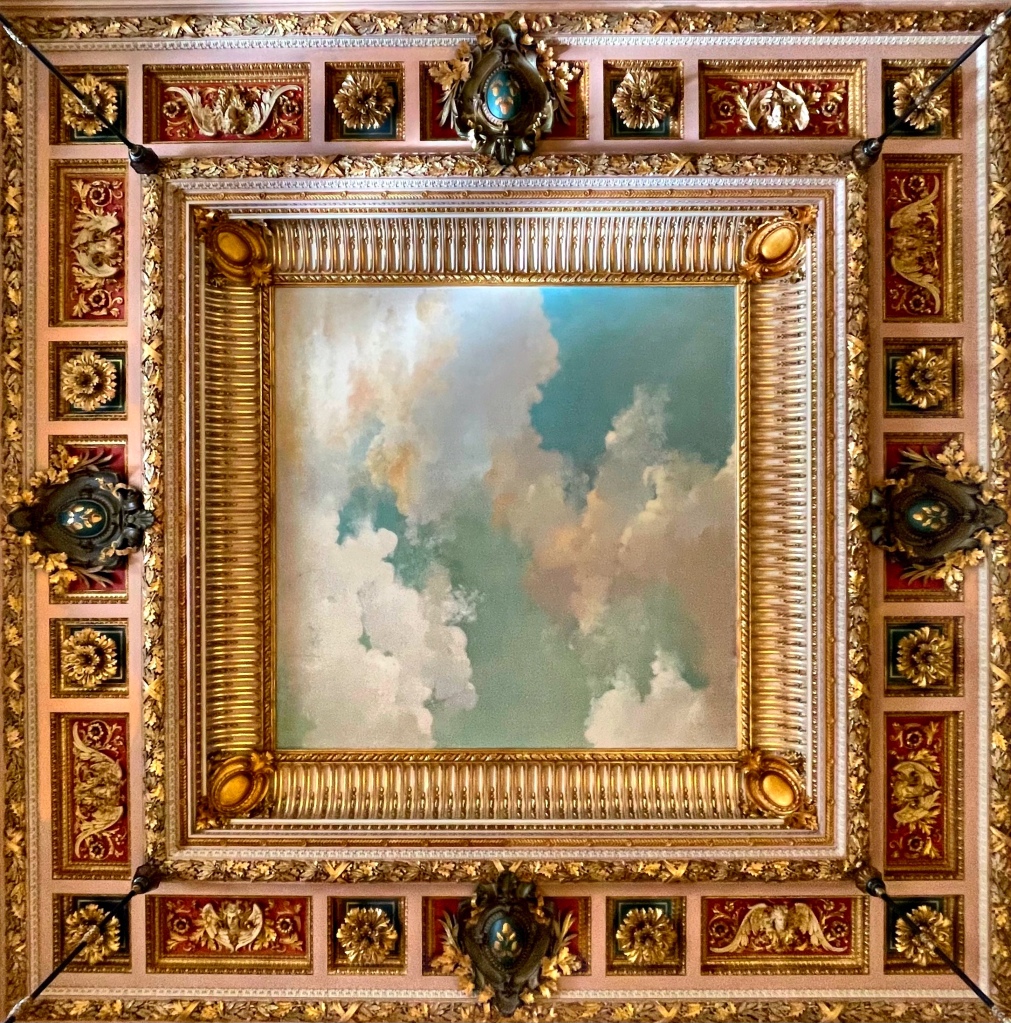
Merry Christmas from The Breakers! This 1895 Gilded Age mansion is the best to explore during December, when the halls are decked and stunning Christmas trees adorn the lavish rooms (learn more about the mansion in my last post) When you walk into The Breakers, you enter the Great Hall. Architect Richard Morris Hunt designed the Great Hall after the open-air courtyards in Italian villas, but enclosed due to the tough New England winters. The palatial space (measuring 50 foot square), even if crowded by tourists trying to get the perfect shot on their smartphones, feels spacious yet somehow welcoming given the art museum-like detailing. The walls are made of carved limestone from Caen on the coast of France and adorned with plaques of rare marbles. Elaborately carved pilasters decorated with acorns and oak leaves support a massive carved and gilt-cornice which surrounds a ceiling painted to depict a windswept sky, further expressing the open-air courtyard feeling envisioned by Hunt, the architect. Four bronze chandeliers dangle from the gilded ceiling, and flood the room with warm light, evoking warm summers in Italy.
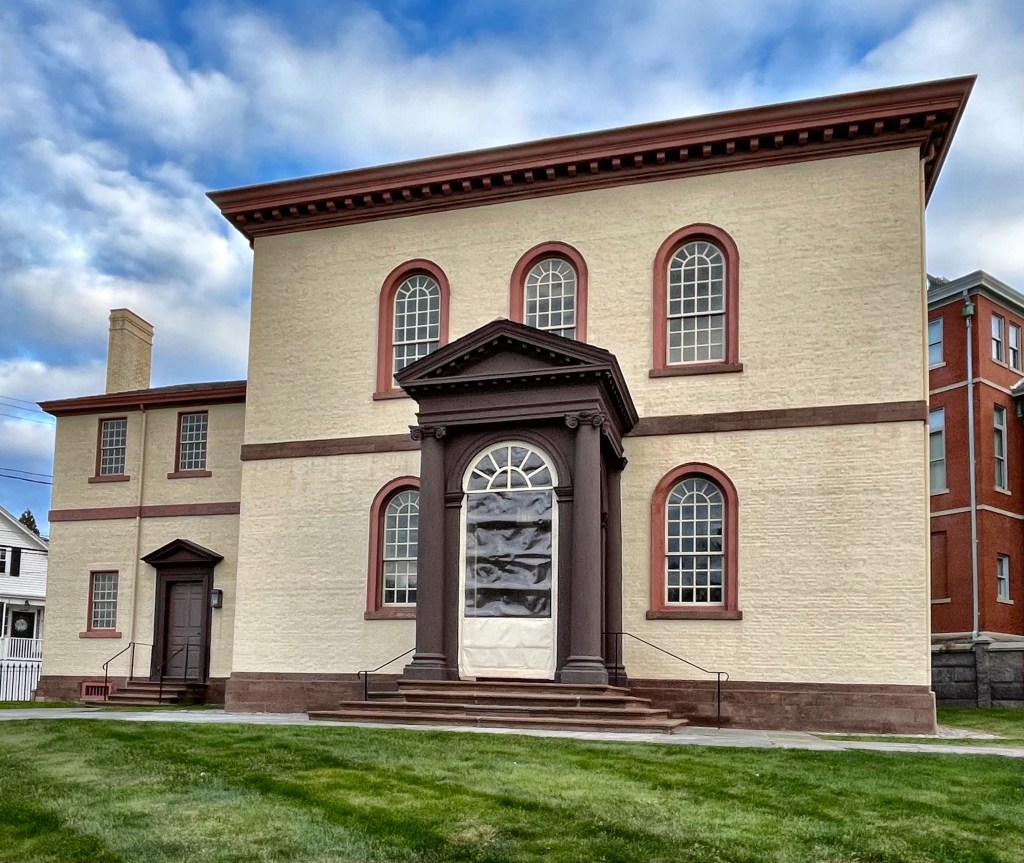
While Newport is arguably best-known for the Newport mansions from the Gilded Age, there are soooo many amazing buildings from the Colonial era, including some of the most significant and historic in the United States. Touro Synagogue in Newport is the oldest synagogue building still standing in the United States, the only surviving synagogue building in the U.S. dating to the colonial era, and the oldest surviving Jewish synagogue building in North America (for reference, second-oldest extant synagogue in North America was built in 1833, seventy years later)! Its history begins in the 17th century when the small but growing colony of Newport received its first Jewish residents possibly as early as 1658. The earliest known Jewish settlers arrived from Barbados, where they participated in the triangular trade along with Dutch and English settlements. By 1758, the Jewish population had grown sufficiently that there was a need for a house of worship. The Congregation now known as Congregation Jeshuat Israel (Salvation of Israel) engaged Newport resident Peter Harrison to design the synagogue. Harrison, a British American merchant and sea captain, who was self-tutored in architecture, studying mostly from books and drawings. By the time he designed Touro Synagogue, he had already completed iconic buildings including Newport’s Redwood Library and King’s Chapel in Boston. Construction began on the “Jews Synagogue” in 1759, which was completed years later in 1763. The building is one of the most significant buildings in America, and is open to tours where you can see the immaculately restored interiors.
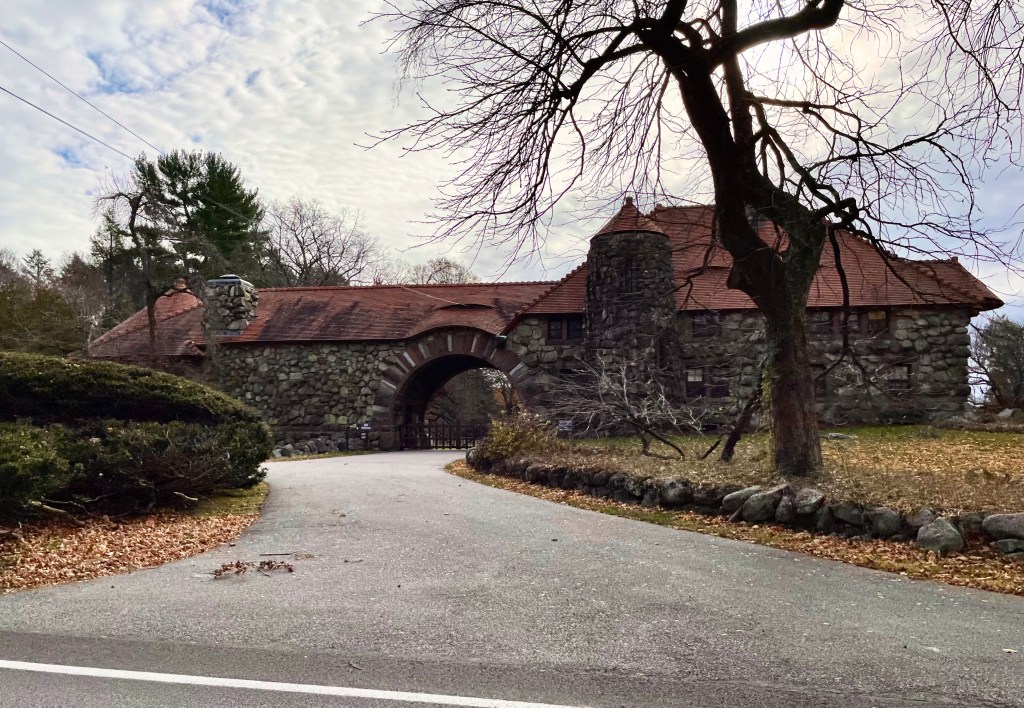
In 1880, twenty years after Frederick L. Ames built his rural estate “Langwater”, he felt the need to give the property more rural character, especially given the close proximity to the Ames Shovel Works. Emulating old European estates with gatehouses, Ames hired star-chitect Henry Hobson Richardson, to design a gate lodge at the entrance to his property, fitting of one of the richest men in Massachusetts. Richardson’s design for the gate lodge was oriented longitudinally and is bisected by the arched entry to the estate. The large room on the left was intended to serve as a storeroom for flowering plants, and the two-story portion had a caretaker’s residence on the lower floor and a “bachelor hall” for men’s socializing and spill-over bedroom. The building uses glacial boulders found on the expansive grounds and older stone walls, with trim of Longmeadow brownstone. The bright red terracotta roof contrasts boldly with the rough stone walls. The building is one of the most beautiful structures I have seen, but can be difficult to photograph without trespassing. Ugh!
This late 19th century home in Marion was built for Florence and Walton S. Delano, a descendant of the great Delano family in Massachusetts. Walton worked in nearby Wareham at A. S. Gurney and Company, dealers in coal, grain and flour. The house is unique as it is in the American Foursquare form, a type of home built in the late 19th and early 20th centuries. The hallmarks of the style include a basically square, boxy design, two-and-one-half stories high, usually with four large, boxy rooms to a floor, a center dormer, and a large front porch with wide stairs. This example stands out for the shingle siding, flared eaves and rubblestone foundation. Swoon!
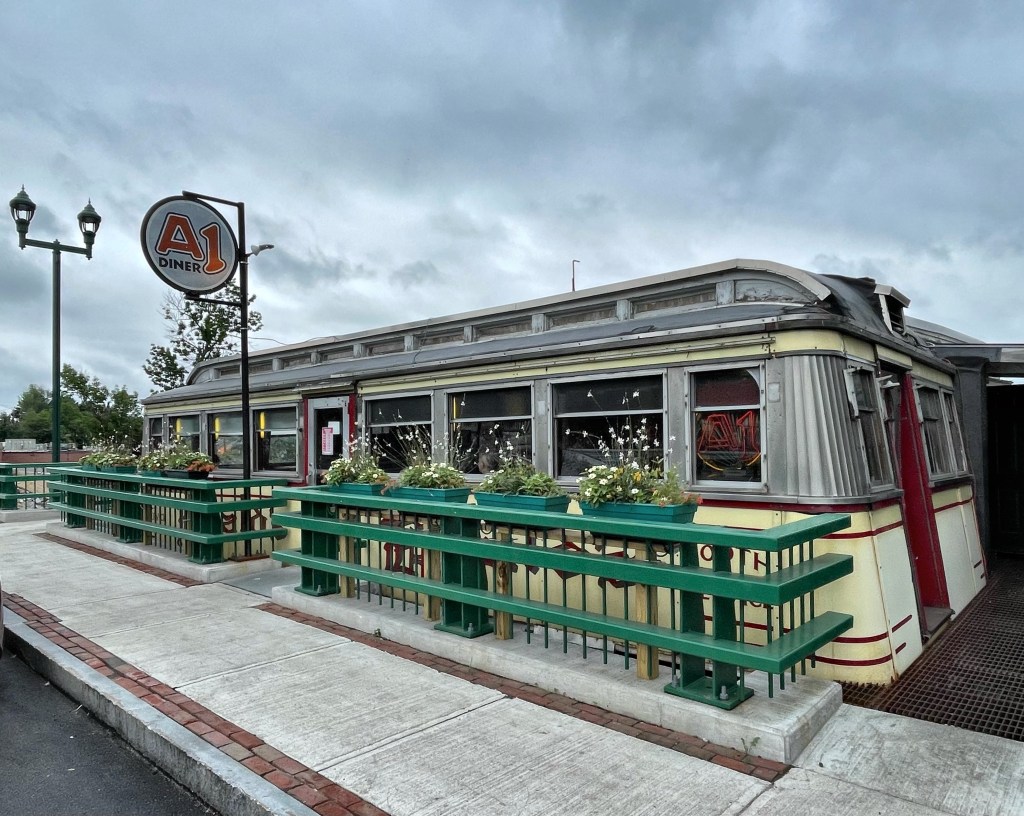
Arriving by truck in 1946 from the Worcester Lunch Car Company factory in Worcester, Massachusetts, this piece of Americana has served dishes to Gardiner, Maine workers, families, and tourists for nearly a century. The diner opened as Heald’s Diner under the ownership of Elmer “Eddie” Heald. The Worcester Lunch Car Company began in 1906 and which shipped ‘diners’ all over the Eastern Seaboard. The first manufactured lunch wagons with seating served busy downtown locations, and due to their compact size, and ability to be easily moved, were great options for young businessmen and immigrants looking to start in the food industry, think Triple-deckers for restaurants. The Gardiner, Maine location is special as the diner itself is situated about 20 feet in the air on stilts, due to the location near the Kennebec River, which often flooded downtown. Heald sold his diner in the early 1950s, and it was sold again to Al “Gibey” Gibberson who named the diner after himself, Al’s Diner and ran it until he sold it in 1988, to owners who didn’t name it after themselves but called it the A1 Diner instead, likely as the “l” in Al looked like a 1. The diner is quintessential roadside American history inside and out, and the food is even more impressive. Do you have an old diner near you?
The Beebe-Phillips house in Waterford, CT, was built in the 1830s by Orrin Beebe (though some accounts say it was built for his wife Lydia after his death), and is an excellent example of a traditional full-cape house in Connecticut. The home is a vernacular example of the Federal style with no frills or expensive details. The house was originally located elsewhere in town but was moved to its current site on Jordan Green in 1974 by the Waterford Historical Society, next to the Jordan Schoolhouse.
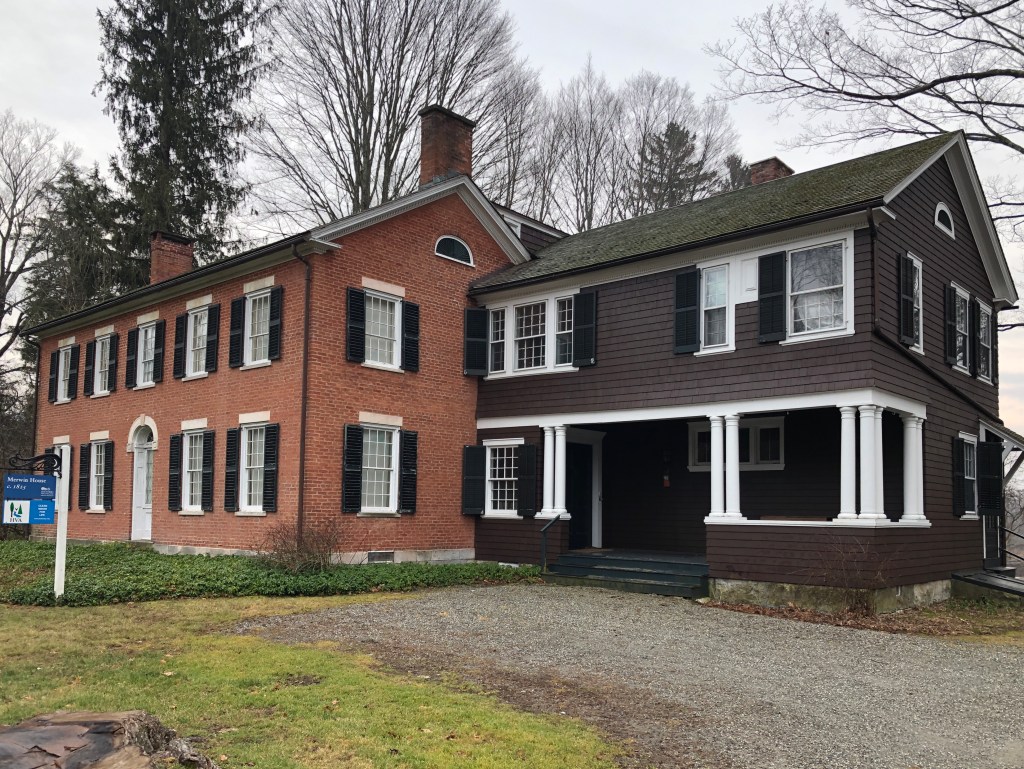
In about 1825, Francis and Clarissa Dresser built this charming brick Federal house in the rural town of Stockbridge, MA. Just 25 years later, the railroad arrived to town, connecting it to Connecticut and New York to the south, opening the town up as a leisure destination for wealthy city dwellers looking to escape the noise and congestion of the city. The period following the Civil War through World War I saw the Gilded Age reach the Berkshires. With artists, writers, financiers, and industrialists flocking to the rural hills of western Massachusetts for seasonal escapes. In 1875, William and Elizabeth Doane, wealthy New Yorkers, purchased Merwin House from the Dresser family to use as a summer retreat. As the Doane family grew to include two young daughters, Vipont and Elizabeth, they added a Shingle Style side addition to the original brick structure. The home became known as “Tranquility”, even after the home was willed to daughter Vipont. After a couple marriages, Vipont married Edward Payson Merwin, a New York stockbroker. Historic New England acquired Merwin House in 1966, shortly after the death of Marie Vipont deRiviere Doane Merwin, known as Vipont. It was her desire to leave Merwin House as a museum, as her will states, “as an example of an American culture which is fast becoming extinct.” The space is occasionally open for tours and is partially occupied by the Housatonic Valley Association.





 Buildings of New England