Howard Athenaeum // 1846-1962

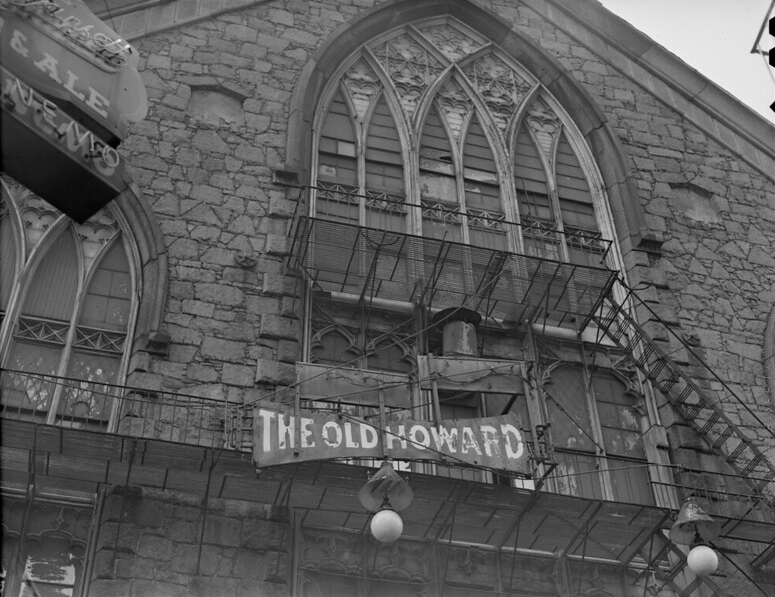
One of the more iconic theater buildings to ever stand in Boston was the Howard Athenaeum, later the Old Howard, which stood on the former Howard Street in Downtown Boston. The origins of the building begin in 1843, when a flimsy, tent was built to serve as a church for the small Millerite sect. The small but loyal congregation eventually abandoned the site following disappointment with the minister’s promise that the world would end in 1844. After Armageddon failed to materialize, the founder of the sect, William Miller, an ex-Deputy Sheriff from Poultney, Vermont, was discredited and the Millerites moved on. After running their former minister out of town, several church members (who had given up all their worldly possessions in preparation for their trip to heaven,) decided to recoup some of their losses by selling the property to Messers Boyd and Beard, who opened a theater here in 1845. A fire destroyed the structure, and it was replaced by a larger, fireproof building that same year. The new building was constructed in 1845 and was designed by architect Isaiah Rogers in the Gothic Revival style with massive granite blocks from Quincy.

The Howard Athenaeum saw many iconic performers and historical events in its 100 years. A young John Wilkes Booth, played Hamlet at the Howard before becoming famous for a more nefarious deed in Washington in 1865. Also, Sarah Parker Remond, a Black anti-slavery activist and lecturer with the American Anti-Slavery Society (and later a medical doctor), had bought a ticket through the mail for the Donizetti opera, Don Pasquale, but, upon arriving, refused to sit in a segregated section for the show. She was forcibly removed and pushed down a flight of stairs. She eventually won a desegregation lawsuit against the managers of the Howard Athenaeum and received $500 in a settlement.

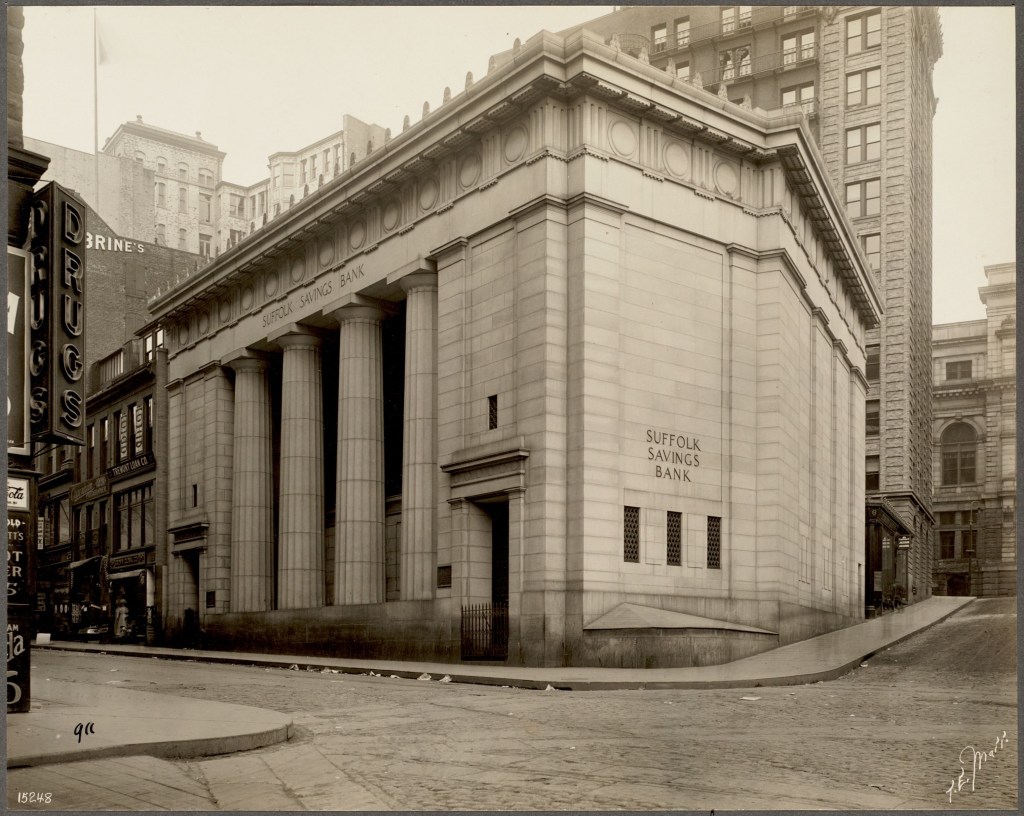
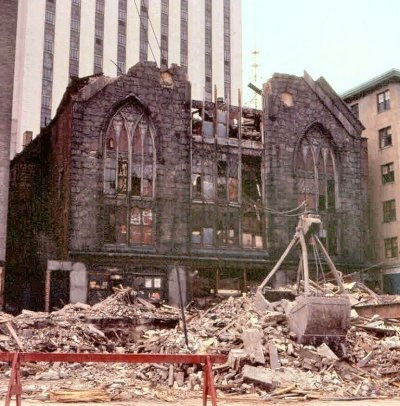
The theater was quickly deemed obsolete and second-tier compared to more modern theatres built nearby. By the mid-20th century, the Old Howard was largely featuring burlesque shows. To keep bringing in audiences, the burlesque performances got more risqué with each year. As a result, the Boston vice squad made the Old Howard the object of their attention. The Boston Vice squad made a 16 mm film during one of their raids in 1953 and captured on film the performance by “Irma the Body”. This film footage resulted in an indecency hearing which eventually led to the closing of the Old Howard in 1953. A fire a few years later along with Urban Renewal led to the demolition of the Old Howard by 1962. Like the former Suffolk Savings Bank (featured previously), the present Center Plaza Building is on the site.
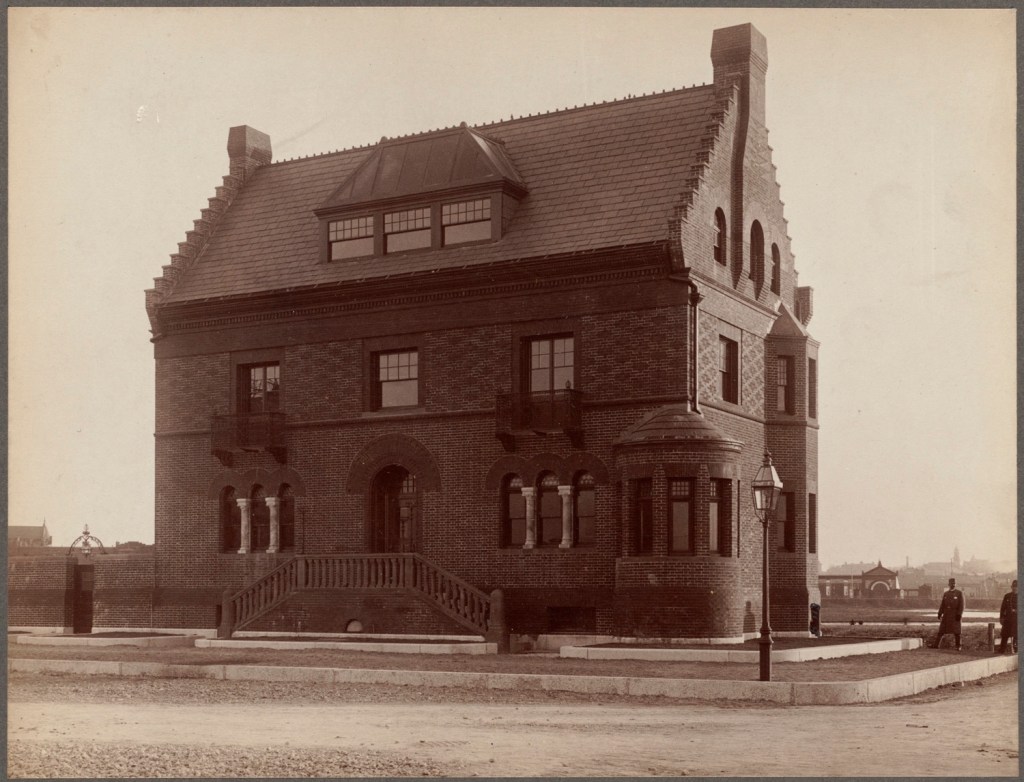
Kate and Charles Page House // 1888-2001

C.1888 photo courtesy of BPL collections

In 1888, Kate and Charles Page purchased a house lot in the sparsely developed Fenway section of Boston. The corner lot at Westland and Parker (renamed Hemenway) provided views to natural scenery and access to many Boston amenities. The couple worked with architect Herbert Langford Warren, who had previously apprenticed under the great H. H. Richardson. Warren took many of the common motifs seen in Richardson’s own style, but he was also a fan of the Arts and Crafts Movement, with its love of fine handicraft. You can see that in the elaborate diaper-patterned brick and in the stepped gables. The gables were a revival of a motif from old Flemish, Dutch, and Scottish architecture, sometimes called corbie-step gables, because corbies (crows) liked to stand on the steps. The interior was just as stunning, with massive brick arches, fanciful woodwork, and a prominent stairhall at the entrance. The couple was likely inspired to hire Warren by their son, Walter Gilman Page, a young artist who maintained a studio space in the home for some time. The home was sold out of the family by 1912. In 1917, the whole house was lifted up one story and a strip of retail stores was inserted beneath it. The original arched entryway then became a second-floor window. It was replaced with a taller building by 2003. Interestingly, upon the opening, the Commissioner of the Boston Parks and Recreation Department and long-time Boston Preservation Alliance Executive Director stated that the 1888 house “looked like a missing front tooth” and was happy to see it demolished.

Suffolk Savings Bank // 1906-1967

The Suffolk Savings Bank for Seamen and Others was incorporated in 1833 as a banking institution catered to seamen and merchants who received their earnings after a trip in cash, and wanted a secure place to store their funds. At the time, these men were among the richest in the city, and the bank did very well. It later became a national bank in 1865 and membership boomed. The bank grew and grew until the early 20th century, and it needed a new banking house that showcased their stability, but also provide a visual embodiment of the security their institution provides. The bank’s board hired world-renowned architect Cass Gilbert to design a new building, which would be located on one of the busiest corners in Downtown Boston at the corner of Tremont Street and Pemberton Square. The Classical Revival building was constructed of Hallowell Granite and featured four monumental columns recessed into the Tremont Street facade. Minimal windows allowed for security, while a domed skylight covered in a cap provided light into the rounded banking room below. Inside, the walls and floors were of marble with a tile coffered ceiling. The building lasted until 1965 when Urban Renewal brought the wrecking ball. The bank was demolished by 1967 for the present Center Plaza building in Government Center.

King’s Head Tavern // 1691-1870

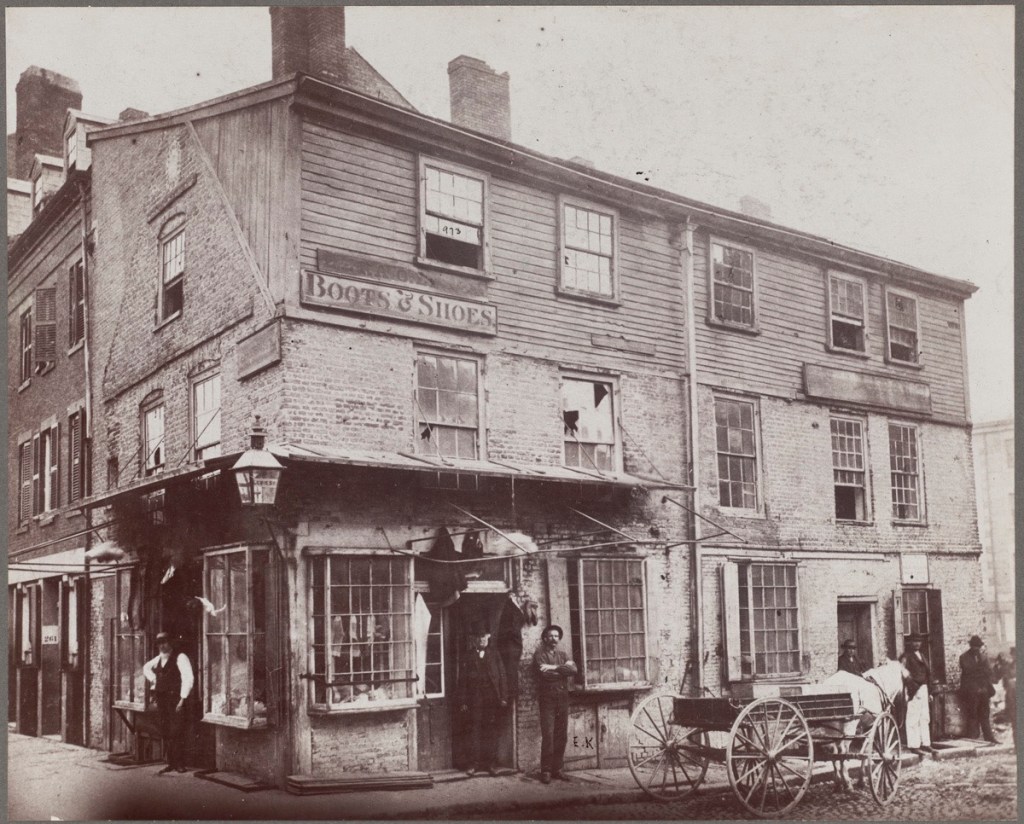
Another of Boston’s Lost buildings is the King’s Head Tavern, an old establishment that was built in the early days of Boston and rebuilt following a fire in 1691. It stood on the corner of Lewis and North Streets, in the North End near Scarlett’s Wharf. Due to its proximity to the harbor and wharfs, it became the first place weary sailors stopped to get a drink on solid ground. The two-story, brick tavern was capped with a gambrel roof, which was later filled with wooden additions giving the structure a boxy look. The establishment was named the King’s Head Tavern after a popular London tavern of the same name. Like much of the North End, surging immigrant populations put immense strain on the built environment and many older buildings were demolished in the late 19th and early 20th centuries for tenement housing. The old King’s Head Tavern was demolished in 1870, just two years after the photo was taken.

Downe-Tremere House // c.1674-1896

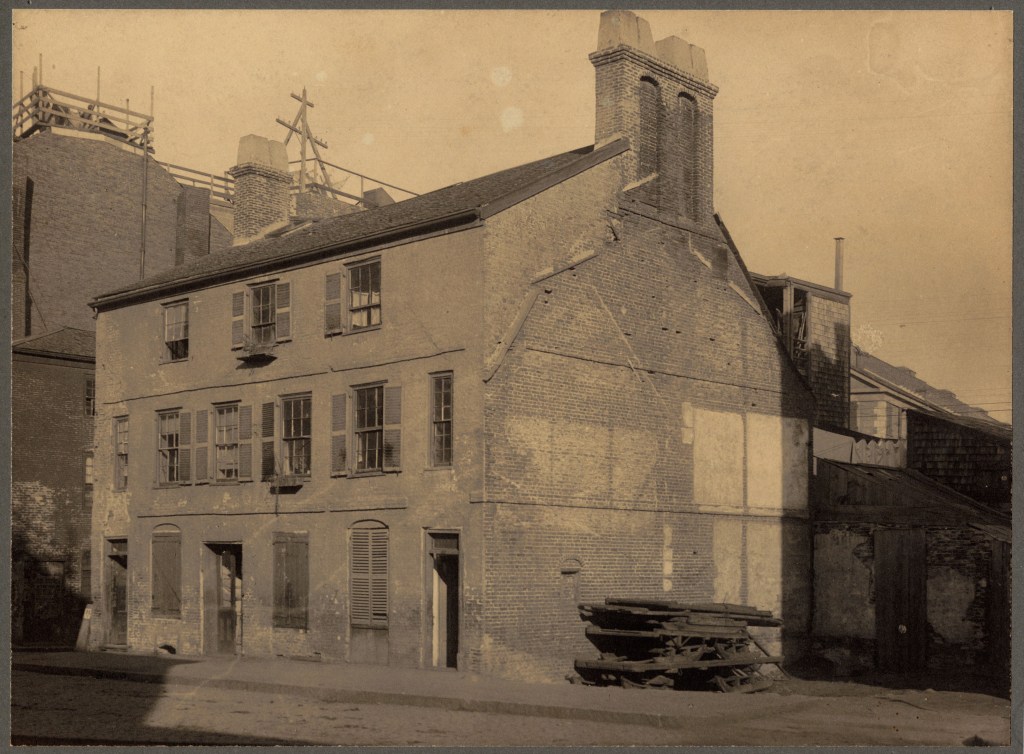
Image c.1896 courtesy of Boston Public Library.

One of the finest First Period Houses to have been built in New England was this brick mansion, formerly on North Street in Boston’s North End. On December 29, 1674, John Paine conveyed his property including a dwelling house to William Downe his new son-in-law. It is unclear when the house was built, but it was completed by the time of sale to William. Luckily, the house was constructed of brick, which likely saved it from the Fire of 1676. In later centuries, the building was converted to commercial use. After the Civil War, the property was owned by the Tremere Family, who rented out commercial space and held tenements in the floors above (the third floor was added, filling in the space between the two end chimneys which were added in the early-19th century. The property was razed in 1896 for the present tenement building on the site.

Harlow House // c.1909

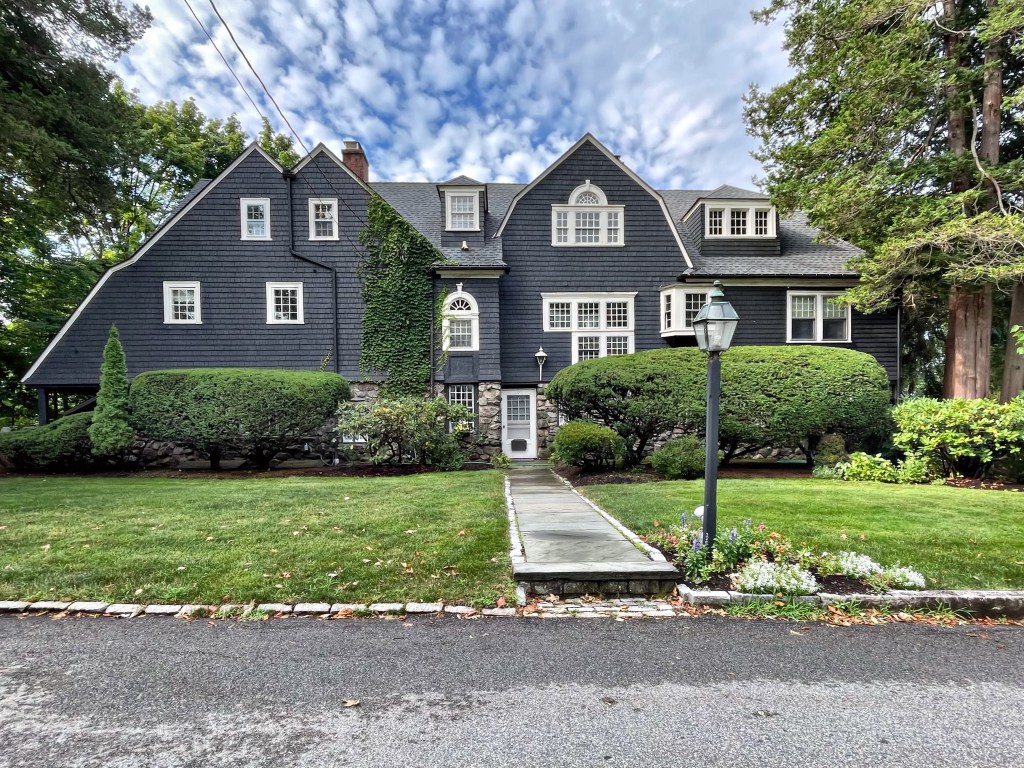
Located on a dead end street in Waban, you’ll find this stunning Shingle style property, which rambles on forever! The house was built in the first decade of the 20th century and blends the Shingle style with the ever-popular Colonial Revival style. I could surprisingly not locate the architect for the house, but I’d guess that it was designed by the architectural firm of Longfellow, Alden, & Harlow, the last of which, Alfred Branch Harlow, shared a last name with the original owner of the home, Arthur Brooks Harlow. (And the same last name as Louis K. Harlow, an artist who lived one street away in a similar style home). I am not sure if these two were related, but thats my hunch. If anyone wants to do more digging on this and share the story with me, I’d be so grateful!

Winona and Winslow Blanchard House // c.1915

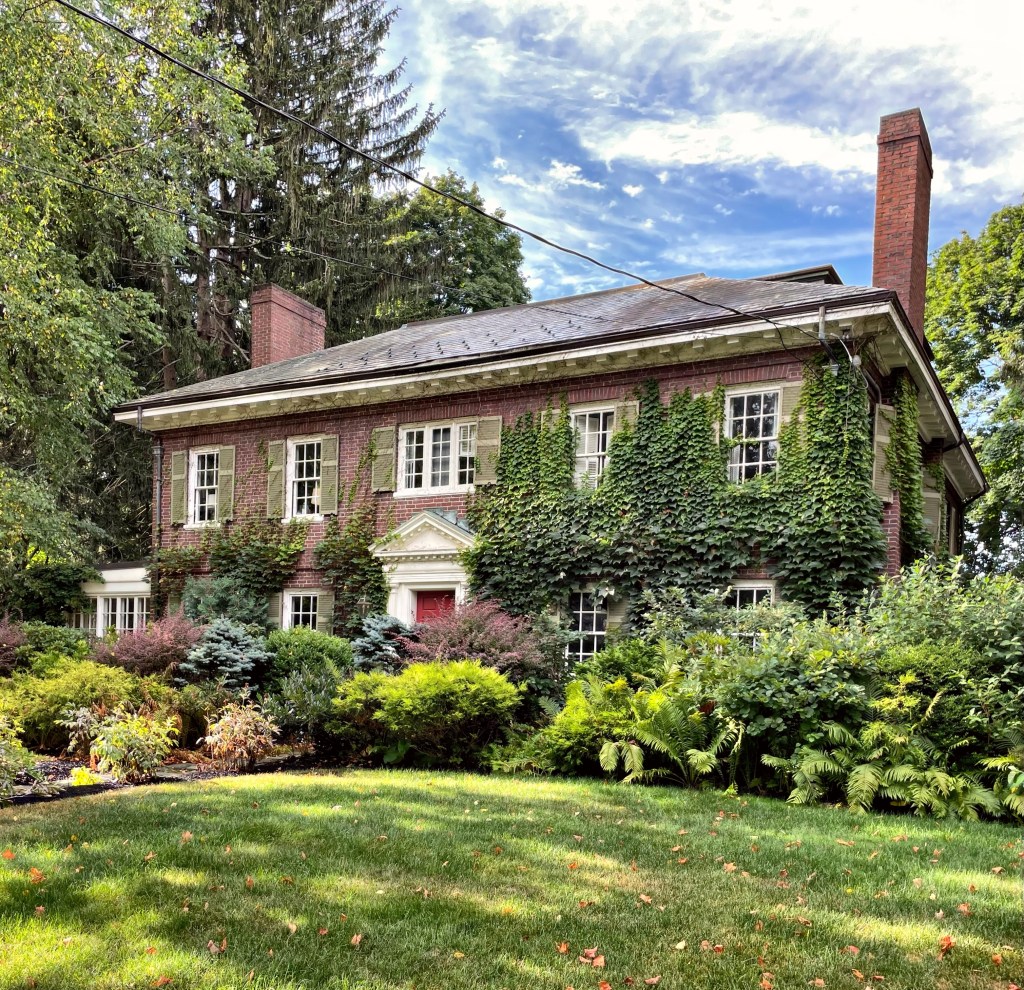
This Colonial Revival house on Pine Ridge Road in Waban Village, Newton, is one of a handful of the brick houses in the neighborhood, and one of the more refined examples of the style in the neighborhood without architectural embellishments from other styles. The home was built around 1915 for Winslow Blanchard and his wife Winona. Winslow was an engineer who served as President of the Blanchard Machine Company in Cambridge. It is probable that the couple hired Dorchester-based architect Edwin J. Lewis to design the home; as Winona grew up in the Ashmont section of town where Lewis lived. Additionally, the couple hired Lewis to make alterations to their recently completed home in 1919. The house retains its original slate roof, front door with pedimented entry, and is covered in climbing ivy, which isn’t great for the masonry but looks so good!

Wilkinson House // 1908

Waban Village in Newton, Massachusetts has dozens of amazing examples of early 20th century residential architecture, possibly the best collection in the Boston area! This Arts and Crafts style residence was built around 1908 for William and Delia Wilkinson the former of the two owned the William H. Wilkinson Company, which manufactured oiling devices and oil cups for steam engines. Delia, his wife, owned their family home under her name. The home is an excellent example of the Craftsman style, with stucco siding, thick rounded column supporting the inset porch, oh and that catslide roof!!

Thomas M. James House // c.1900

When the Waban section of Newton got a rail line connecting it to Boston, development boomed! Architects who lived in other parts of the Boston area saw an immense opportunity, not only for work, but for a bucolic setting where they could also reside. One of these architects that lived and worked in Waban was Thomas Marriott James, who in the early 20th century, designed and moved into this house on Pine Ridge Road. James was also born in Cambridge but received no academic architectural training. By 1893, Boston directories record that he was a draftsman at the office of Eugene L. Clark, a prolific designer of suburban homes. His residence in Waban blends the Shingle and Colonial Revival styles under a broad gambrel roof. The verandah is inset and has segmental bays with shingle posts as supports. The kneewall is also shingled, adding to the composition.

LeClear House // c.1915

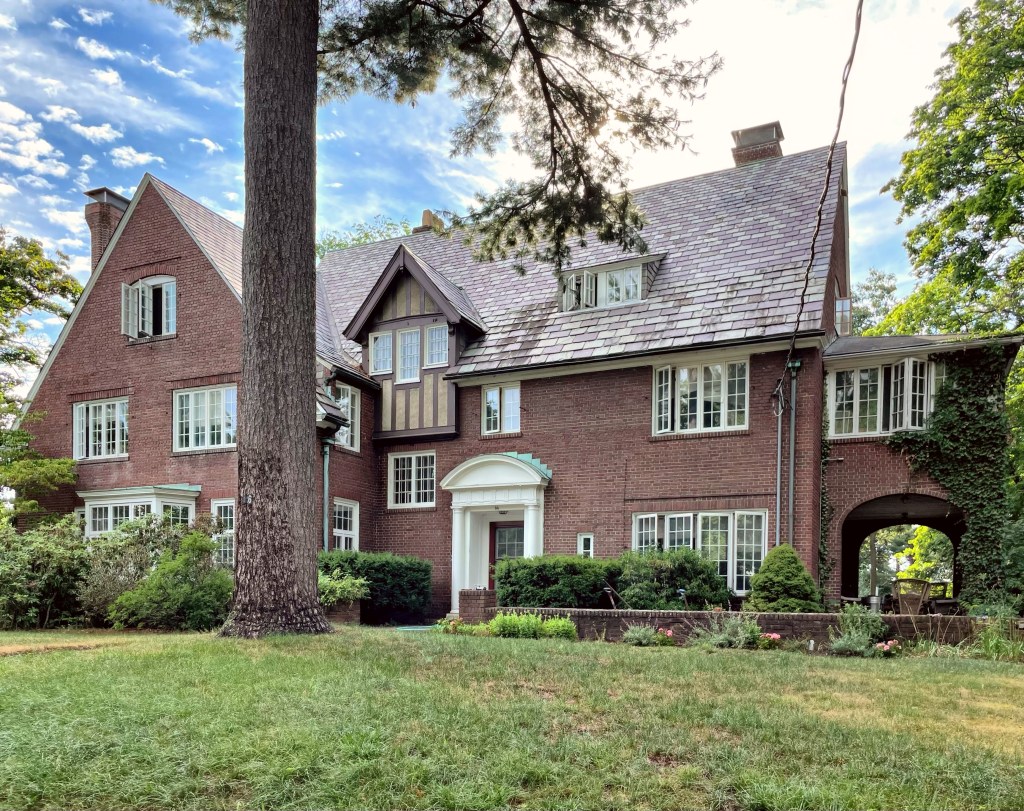
Waban in the late 19th and early 20th centuries was a hotbed for architect-designed houses as their own residences. This Colonial Revival/Tudor Revival style estate was designed by Gifford LeClear (1874–1931), a prominent architect in the Boston area. Gifford LeClear was born in Rutherford, New Jersey to Thomas and Cornelia (King) LeClear. He was educated in the private schools in Boston before entering Harvard University. He graduated with a Bachelor of Arts degree in 1895 and Master of Arts in 1896. He then worked for a year in the engineering department of the West End Street Railway before forming his partnership with Densmore in 1897. The partnership of Densmore & LeClear was formed in April 1897, practicing as mechanical and electrical engineers. One of the firm’s major projects in this role was the design of the building systems for the new campus of the Harvard Medical School in Boston.