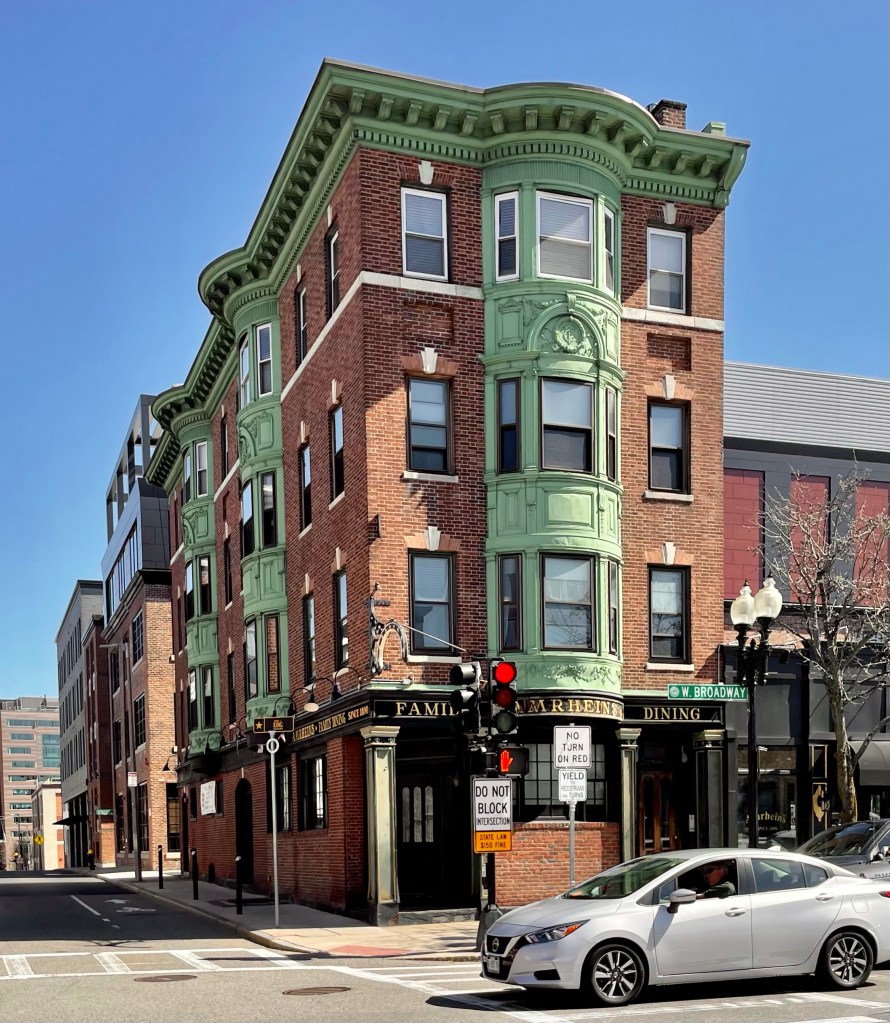
Thomas Casey Building // 1896

Located on West Broadway in a section of South Boston that has almost been stripped of all of its architectural character and history, sits this historic commercial building, which soon may face the wrecking ball. This building was constructed in 1896 for Thomas Casey, an Irish liquor dealer. He hired Irish-born architect Charles Donagh Maginnis who emigrated to Boston at age 18 and got his first job apprenticing for architect Edmund M. Wheelwright, the city architect of Boston, as a draftsman. The result was a four-story Colonial Revival commercial building, significant for the series of rounded copper bays and cornice. Of special note, there are wreath inlays designed into the bays between the third and fourth floors with the letters “T” and “C” within, representing Thomas Casey. Years after the building was constructed, it was purchased by Emma A. Amrhein, and has – until recently – been home to Amrhein’s Restaurant and Bar. The local landmark had two (unconfirmed) claims to fame; the oldest hand carved bar in America and the first draft beer pump in Boston. The large property was sold, and the developers proposed a large housing development on the site, retaining the Casey-Amrhein building. However, some have recently pushed for the demolition of this building to make the project slightly larger than would be with the historic building.

West Monitor Barn // 1903

There is something about red barns that just scream Vermont! Located in Richmond, the West Monitor Barn is one of the best-preserved large barns in the region. The West Monitor Barn was constructed in 1903 by Uziel Whitcomb. At the turn of the century when agriculture represented 70% of the American economy, the Whitcomb’s operation was one of the most successful; at a time when the average farm had eight cows, the Whitcomb’s had hundreds. Hay and grain were planted and harvested by hand and horse. More than 175 cows were milked three times a day by hand inside of this barn. Milk went from cow to pail, to can, and then was driven to market by horse and wagon. It was an operation that represented the epitome of hand-powered farming, and was an operation admired nationwide. The farm was so large and eventually shut down decades later, leaving the iconic barn to decay. A new owner purchased the structure and began a massive restoration project which took years. About 40% of the timbers in the reconstructed barn are original and the rest have been carefully and accurately re-fabricated. In addition, the stone foundation and walls are all original stone – quarried by hand from the back fields. The East Monitor Barn also on the property is in fair condition and could use the same updates. The barn is now commonly used as a venue for weddings and other special events!

Jonesville Academy // c.1868

Jonesville Academy, located in the village of Jonesville in Richmond, Vermont is a large wooden school building constructed in the Italianate style around 1868 . It is remarkable for its high-style in a rural setting with its engaged center entrance tower, and ornate Italianate bracketing. Jonesville Academy was one of nine schools in the town of Richmond, and operated as a high school for this village. The village of Jonesville also included a railroad station, hotel , hardware stores, several mills, and homes. The village dwindled in the mid-20th century after WWII, and the town consolidated schools as buses and personal automobile made traveling to school much easier. The town deaccessioned the school and it was acquired by a private citizen for use as a personal residence, a use it retains to this day. Oh to see the interior of this baby!

Washington Congregational Church // 1840

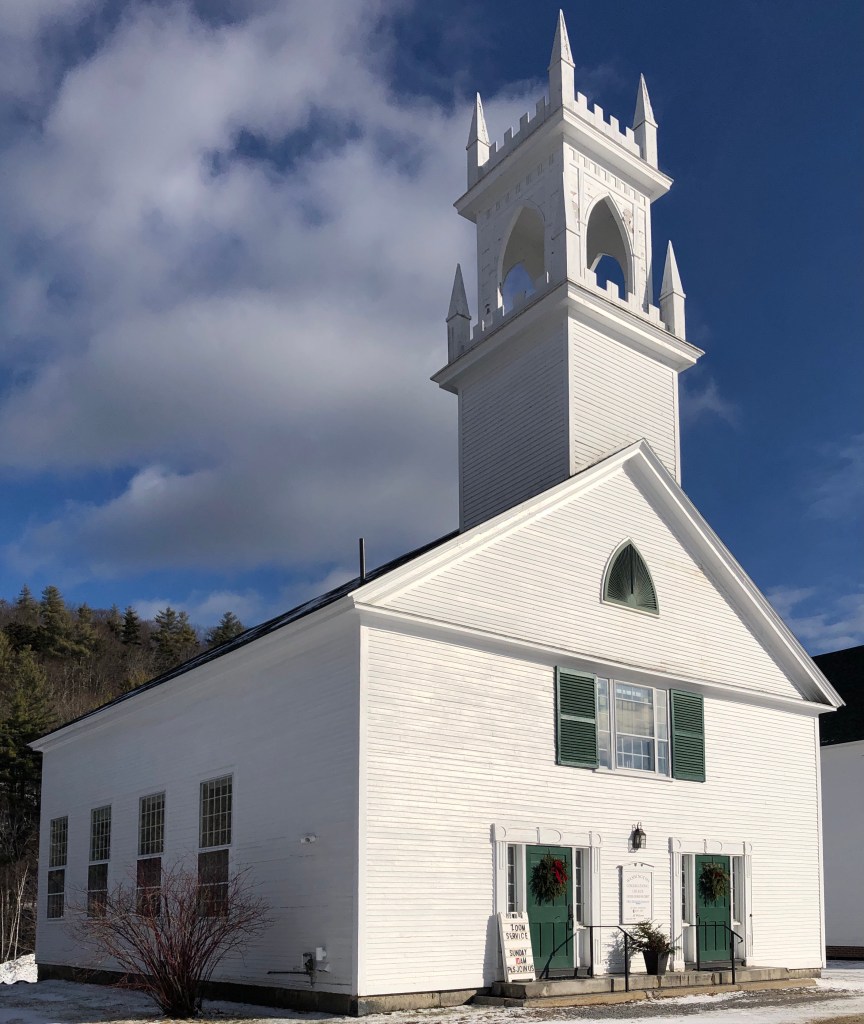
Located adjacent to the Washington Meeting House and Central Schoolhouse on the Washington, New Hampshire Town Green, the Washington Congregational Church perfectly compliments the collection of vernacular buildings here to create a very cohesive, three-building historic district. The church is dominated by a Gothic-inspired two stage square tower adorned by pointed pinnacles and crenellation. The building, constructed in 1840, is a great example of a Gothic Revival vernacular church building in rural New Hampshire and has been well-maintained over the years. In 1960, a fire in the church resulted in several thousand dollars worth of damage. A full basement was built under the church in 1985 to provide space for Sunday School classes and events. The simple arched sanctuary has remained in keeping with the original interior design, and features wide board wainscoting and wooden pews, taken from the old Meeting House.

Wheatleigh // 1893

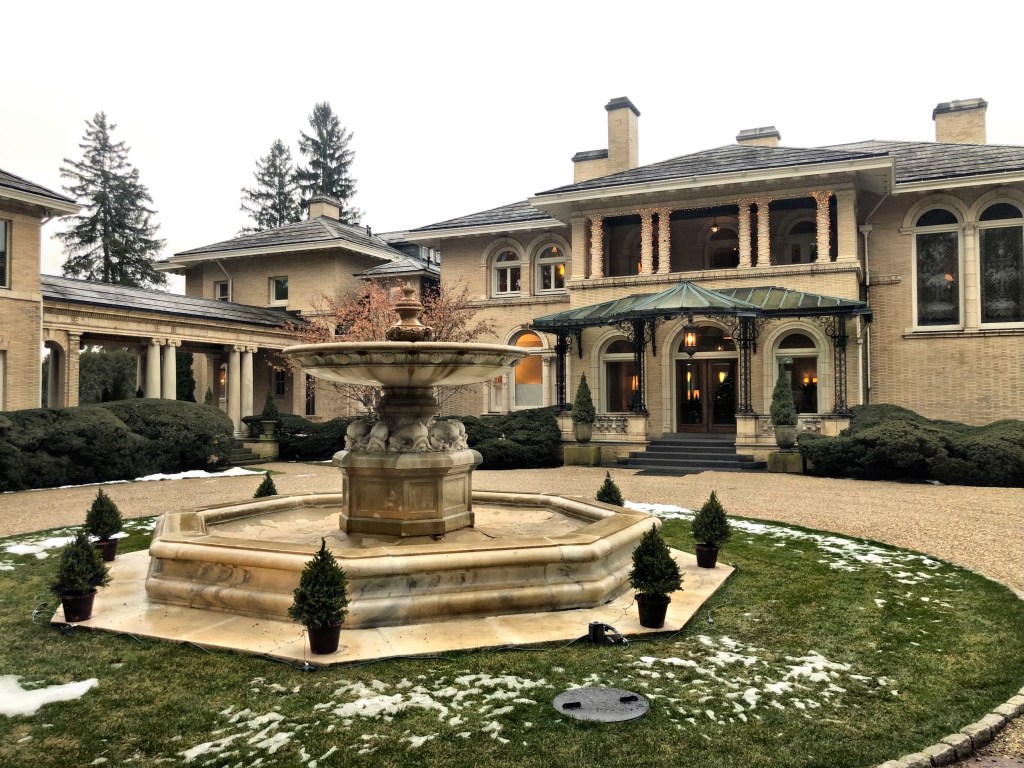
Designed in 1893 by the Boston architectural firm of Peabody and Stearns, Wheatleigh is an early example of Renaissance Revival architecture which became popular for country estates in the early 20th century. The estate was constructed for Henry Harvey Cook, who purchased over 250-acres of forest and lawns overlooking Lake Maheenac for his summer “cottage”. Cook was a New York-based businessman who made his fortune in the railroad and banking businesses, and he wanted a summer house to escape to every year. He named his home “Wheatleigh” as an homage to his family’s ancestral home, Wheatley, Oxfordshire. The mansion is approached by a circular drive that terminates in a formal entrance court partially enclosed by a buff brick wall and evergreen trees, centered on an octagonal marble fountain decorated with a shell and leaf motif. Upon Cook’s death in 1905 Wheatleigh passed to his daughter, Georgie, the Countess de Heredia. Under her ownership the formal garden was opened for evening worshipping services and musical events. Following de Heredia’s death in 1946 the property was divided and changed hands numerous times. In 1976 the mansion and 22 acres were opened as a resort hotel, known as the estates historic name. The Wheatleigh remains one of the most esteemed luxury hotels in the country.

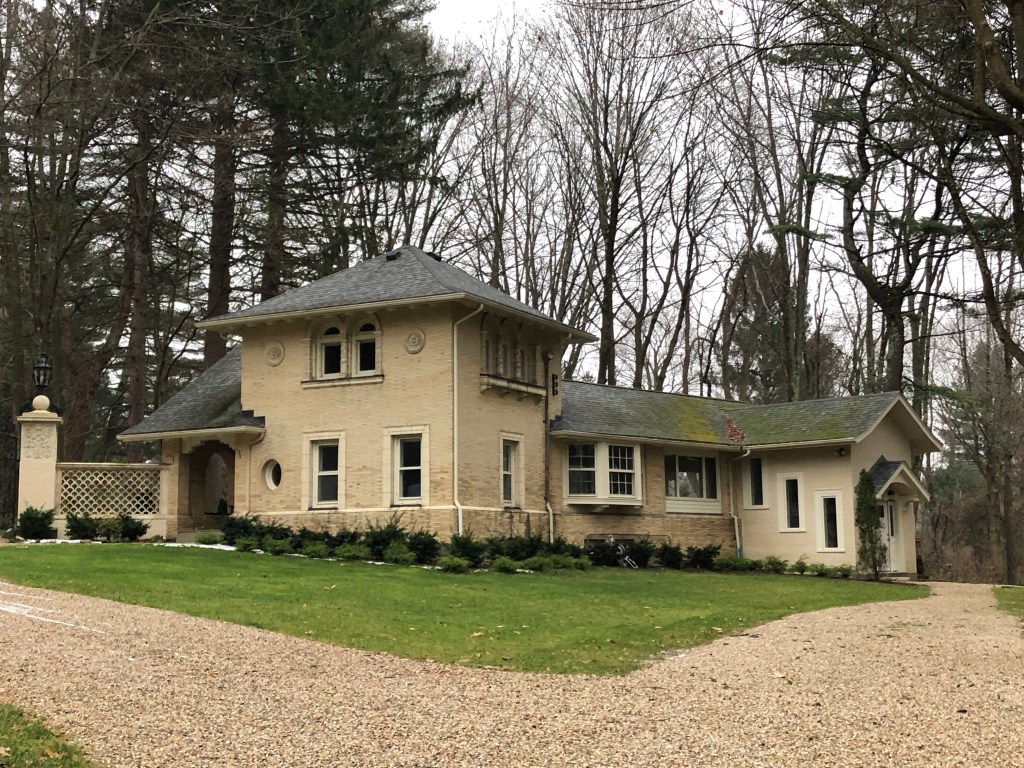
Wheatleigh Caretaker’s house (1893)

Hollis Hunnewell House // 1870

In 1870, when Boston’s new Back Bay neighborhood was being developed, Hollis Hunnewell and his wife Louisa, decided to erect a mansion to establish themselves in the burgeoning neighborhood. Hollis was the first son of Horatio Hollis Hunnewell, the businessman and railroad tycoon who made a fortune, eventually developing a family compound in nearby Wellesley. The couple hired esteemed architect Charles Brigham to design a home on the prominent corner lot that would live up to the Hunnewell name, and he did not disappoint. Just three years after the home was completed, they added a one-story addition, adjacent to the alley to quell a wind-tunnel effect that was occurring down the alley. In December, 1876, a fire broke out in the home, trapping maid Annie O’Hara at the top floor where she died. After the fire, the Hunnewell’s decided to renovate the home, adding the prominent corner tower with cresting. Hollis died in 1884, leaving his wife and two children alone in the home (along with the housekeepers, maids, and other help) until her death in 1890. The home is an excellent example of late Second Empire architecture in Boston, and it showcases the immense wealth some distinguished families had in the region in the 19th century. Today, the 13,000 square foot home is occupied as a single family home, assessed at over $17.5 million!

Osborn House // 1772

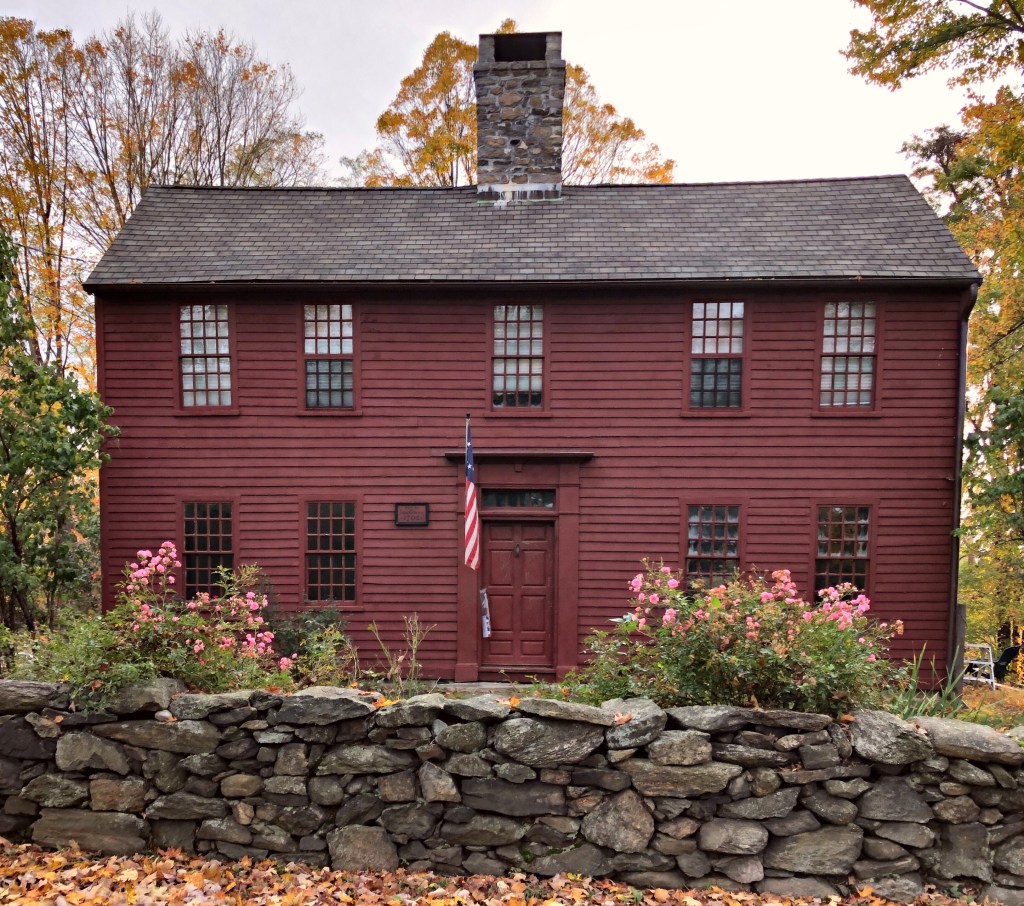
This homestead in Fairfield, Connecticut is situated on the edge of what was formerly called Pequot Swamp, and was originally built by Stephen Osborn in 1772. It is said to be the third Colonial dwelling erected in this part of the town and was left undisturbed by the British when they burned Fairfield in 1779 and raided various sections of the country along the shore. The home was originally located a few blocks away, but was moved in the 1950s when the highway (I-95) was routed through this part of Fairfield. The saltbox Georgian home was documented prior to the move by the Historic American Buildings Survey (HABS).

Forest Hills Cemetery Bell Tower // 1876

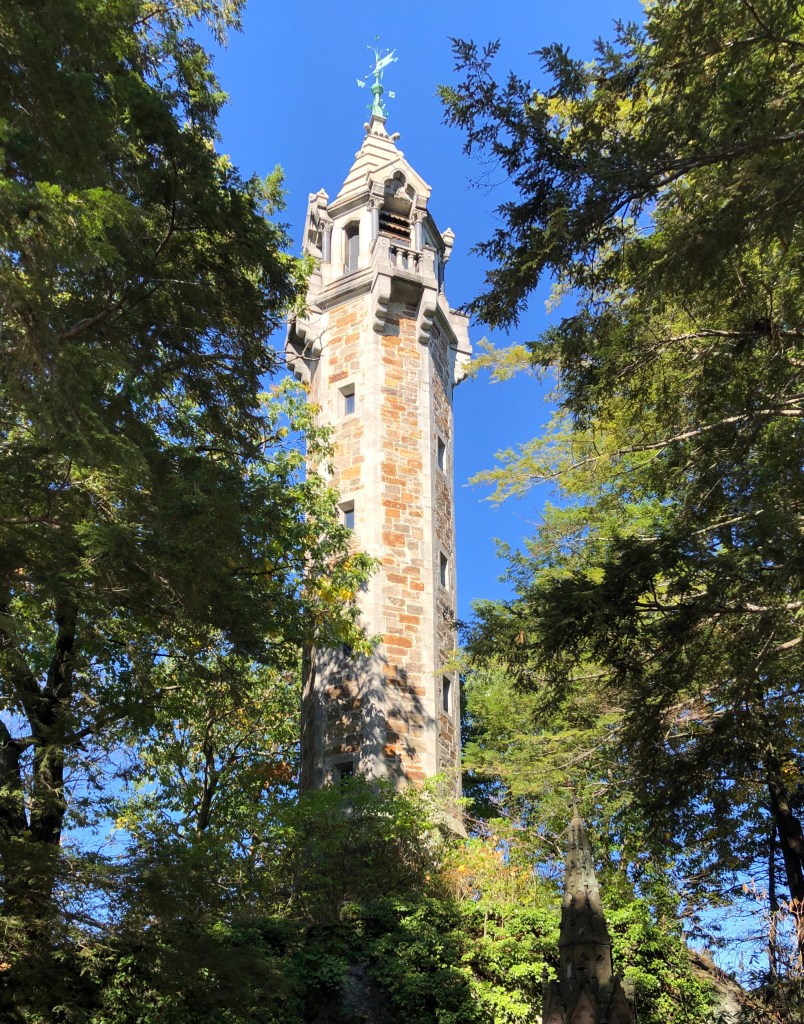
The bell tower at Forest Hills Cemetery is an octagonal Gothic revival structure located on Snowflake Hill just past the entrance gate and administration building and was completed in 1876. The 100-foot tower is constructed of Roxbury puddingstone and trimmed with granite. The roof is clad with granite tiles and topped with an ornate copper weathervane. Originally its swinging bell tolled, but it has since been replaced with an electronic carillon. The bell tower rises dramatically from massive
outcrop of Roxbury puddingstone known as Snowflake Hill which is offset by smooth lawns and Victorian planting beds. While the large trees surrounding partly obscure the tower, it truly is a stunning building.

John W. Loomis House // 1740

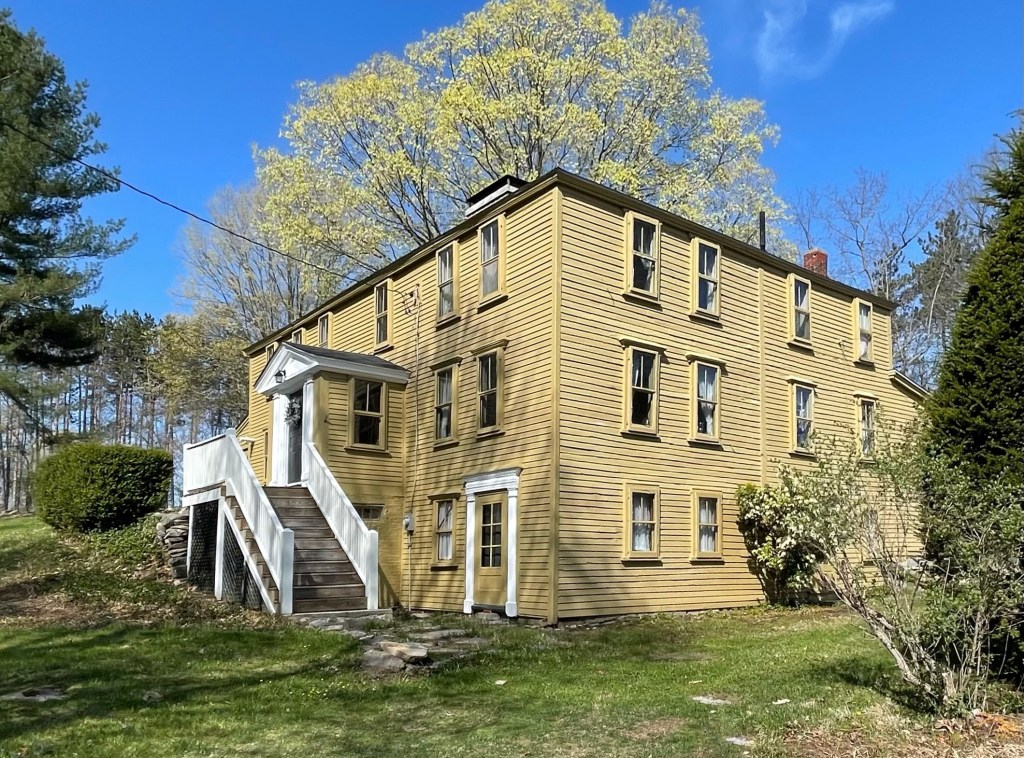
This stunning home on Main Street in Suffield, CT was apparently built in 1740. By the 1840s, it was purchased by John Wells Loomis, and altered to fit the then-fashionable Greek Revival style, replacing the center chimney with two chimneys, adding pilasters and a Greek Revival entry. John Loomis was the head of the Loomis family which made a fortune in the tobacco industry in Suffield, rolling and shipping products as far away as California. Before his death, John Loomis built his son George a house nearby, knowing that his son would carry on the business, which he did until a couple years after his father’s death when he sold the business and moved to New Haven.

Milo M. Owen House // c.1840

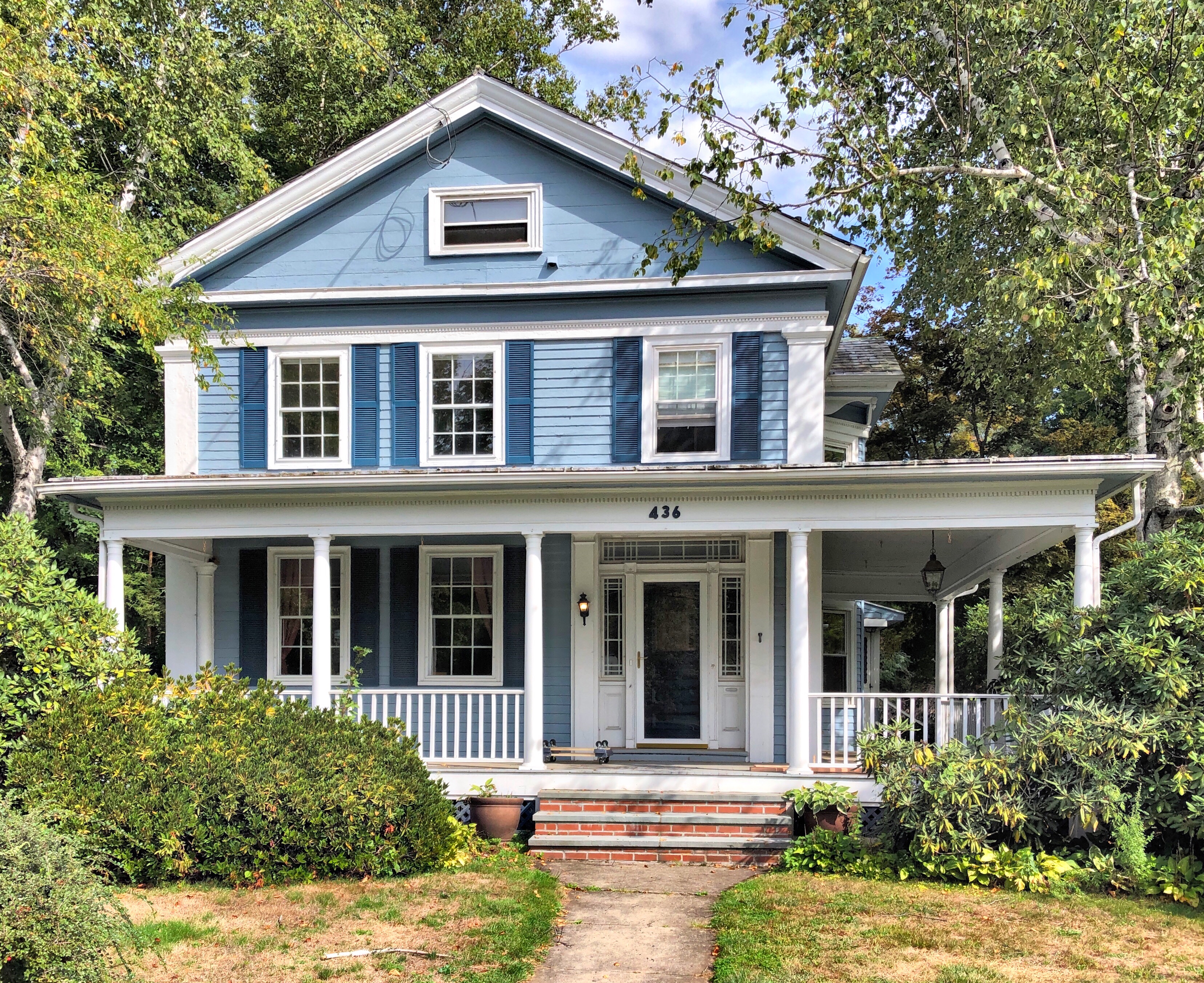
Located on Main Street in Suffield, this Greek Revival home stands out for its perfect proportions, entry detailing, and the large 20th century porch. The home was likely built around 1840 for Milo Milton Owen (1811-1886), within a year of his marriage to Martha Alderman in 1839.