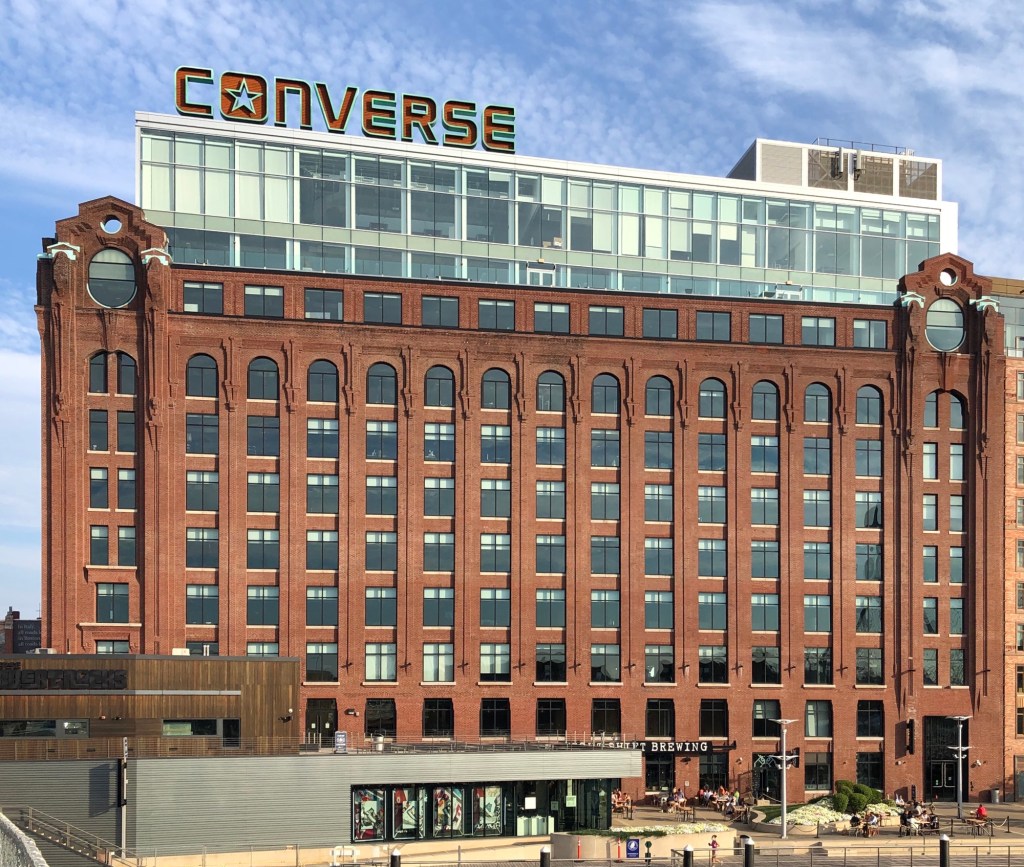
Former Schrafft’s Candy Factory – Converse HQ // 1907

Possibly my favorite building in the Bulfinch Triangle/North Station area of Boston is this brick behemoth. Known as the Schrafft’s Candy Factory, Hoffman Building, Lovejoy Wharf, Submarine Signal Building, etc., the building was constructed in 1907 from plans by Codman & Despradelle and first-occupied by the Schrafft’s Candy Company. It held the candy makers until 1928, when Schrafft’s moved to Charlestown, building their massive factory in Sullivan Square. A landmark in the Panel Brick style of architecture, prevalent in industrial and multi-family structures in the late 19th and early 20th centuries, the old factory saw many later uses from cold storage, to a Submarine Signal Co. before it was largely vacant by the end of the 20th century. Through Preservation Tax Credits and grants, developer Related Beal was able to reimagine the building, restoring it to its former glory. The Architectural Team (TAT) oversaw the renovations and expansion of the building with a glass crown with the project accommodating the corporate headquarters for world-renowned sneaker manufacturer, Converse.
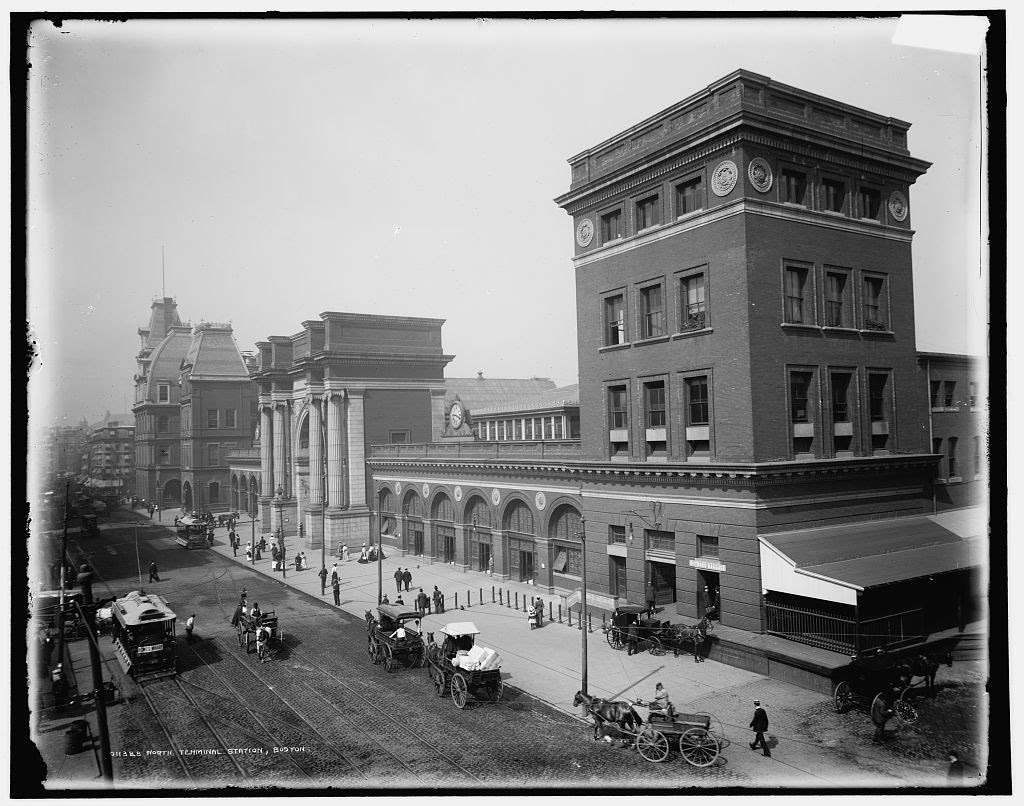
Old Boston North Union Station // 1893-1927

Photo courtesy of Library of Congress.

By the 1890s, many of the regional train lines in New England consolidated and as a result, union stations were built. All north-bound train lines including the Boston & Lowell and Boston & Maine railroads would consolidate into North Union Station with southbound trains consolidated into South Station. North Union Station, actually three adjoined buildings, was completed in 1893 and included the former Boston & Lowell Station, a Second Empire masterpiece which dated from 1873. The other sections of Union Station were designed by the firm, Shepley, Rutan & Coolidge, and comprised of an office tower at the rightmost section and a central building serving as the main entrance and concourse with waiting rooms and baggage holding. The central entrance exhibited an elaborate columned block of brick with stone trimmings. The station lasted until 1927 when the entire complex was razed for the new North Station (The Boston Garden), which itself was replaced. The demolition of the Old North Union Station was one of the biggest architectural losses in Boston’s history, a stain on its historical legacy only compounded by the sterile development we see there today.

Old Pierce School // 1855

Located in the heart of Brookline Village, the old Pierce School sits tucked away behind the Brookline Town Hall and other municipal and institutional buildings. The school was built in 1855 at a cost of $15,000 and later expanded in 1904 from plans by Julius Adolphe Schweinfurth, a prominent local architect. Julius had two brothers who also were architects:  A. C. Schweinfurth, who worked out of California and Charles F. Schweinfurth, out of Ohio. The Pierce School was named after Reverend John Pierce, noted pastor of the Walnut Street church during the mid 19th century. He and his wife, Lucy Tappan Pierce, were active leaders in the abolition movement in Brookline. The school was expanded a number of times until the 1970s, when the present Pierce Elementary School was built, in an unsympathetic Modern design that does little to enhance the busy street. As expected, the 1970s school will soon be demolished and replaced by a new, $212 million school. The old Pierce School will be incorporated into the new development.

Second Church of Christ, Scientist, Roxbury // 1915

Breaking ground in 1915, this early Modern church building must have turned heads when it was being built in Roxbury! In October, 1907, a fine lot of land with a house on it, at the corner of Elm Hill Avenue and Howland Street, was purchased for eighteen thousand dollars by a group of Christian Science followers. In October, 1911, a building committee of five was elected by the church, and by the summer of 1914 the building fund had made such satisfactory growth that ground was broken and work for the new structure begun in September. The congregation hired the illustrious architectural firm of Shepley, Rutan, and Coolidge to design the edifice of classic and imposing design. Constructed of gray tapestry brick with limestone trimmings, the auditorium seated upwards of one thousand members, under the dome roof. Today, the building is occupied by Grace Church of All Nations.

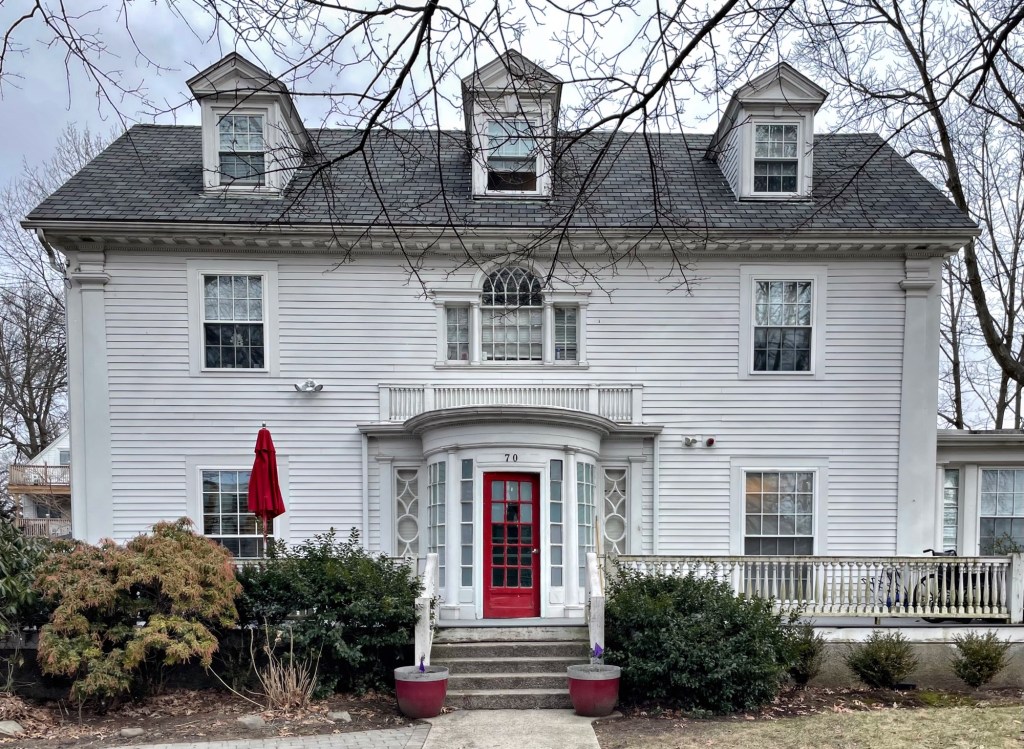
Pinderhughes House // c.1916

As much of the streets north of Franklin Park were developed in the early 20th century, a mix of middle-class apartment buildings and stately single-family homes began to sprout up. Boston contractor Hugh Nawn hired architect Julius Adolphe Schweinfurth to design this house, seemingly on spec, as an income-producing venture. Schweinfurth was employed by the architectural firm of Peabody and Stearns and worked as chief designer there until 1895, when he opened his own practice. His design for Mr. Nawn was this stately Colonial Revival style mansion, similar to Nawn’s own home just across the street, which overlooked Franklin Park. After WWII, Roxbury’s population saw an increase in Black residents, who began to be pushed out of the South End due to increased cost of living. This home was purchased by Dr. Charles A. Pinderhughes (1919-1998), Chief of Psychiatry at the Veterans Administration Medical Center in West Roxbury who also taught at Boston University, Tufts, and Harvard. He was engaged in the local chapter of the NAACP and advocated for African American residents when Urban Renewal began to destroy much of the surrounding neighborhood by the Mayor and Boston Redevelopment Authority. The Pinderhughes House is a well-preserved architectural landmark that also has ties to a more recent and overlooked history of the neighborhood. I hope this house stays like this forever!

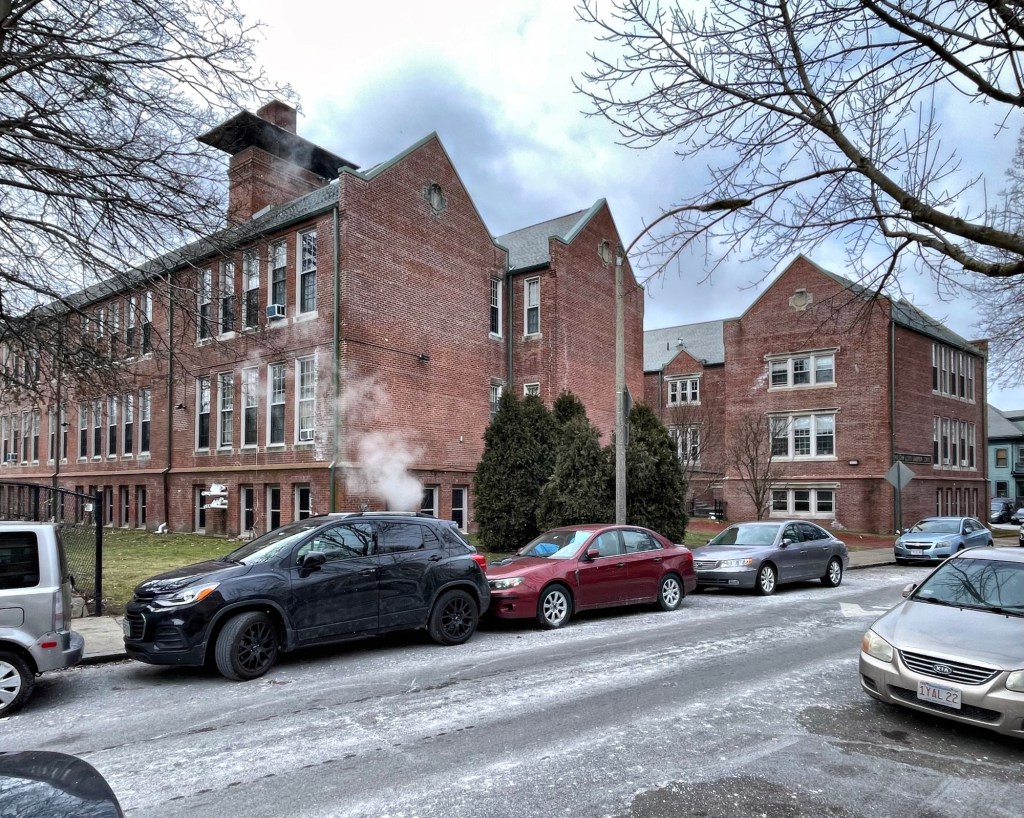
William Lloyd Garrison School // 1910

Tucked away in a residential neighborhood, the William Lloyd Garrison School in Roxbury’s Washington Park neighborhood is among one of the more successful school building designs of the early 20th century. Built in four stages between 1910 and 1929 to service a growing neighborhood over time, the school is named for abolitionist William Lloyd Garrison, who formerly lived in a home relatively closeby. The school complex consists of several different sections organized around a central courtyard and joined by passageways, all designed by the extremely underrated architectural firm of Newhall & Blevins in the Tudor style. Following the period of Urban Renewal in the neighborhood, the school district built contemporary schools and deaccessioned older schools. Today, the former William Lloyd Garrison School houses apartments.

Hutchings-Pfaff Gatehouse // c.1884

Once located at the entrance to the Hutchings-Pfaff Mansion, this small stone gatehouse is all that remains of a great Roxbury estate. Built of locally quarried Roxbury Puddingstone decades after the main house was completed, the Victorian Gothic style cottage surprisingly survived the subdividing of the large property and was sold as a private home in the early 20th century. It is uncommon to see these types of outbuildings survive into the 21st century, so I hope to see this charming cottage survive another 150 years!

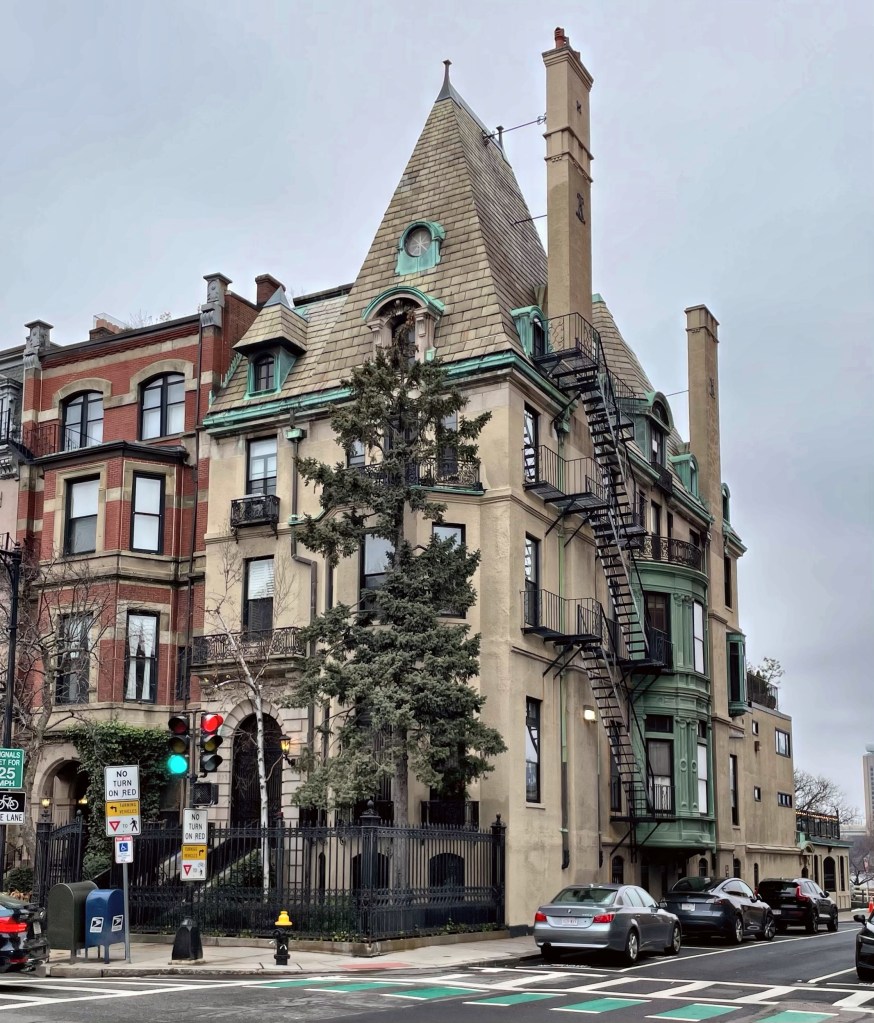
Pope-Barron Townhouse // 1871

Merry Christmas to those who celebrate! As there is no snow on the ground in Boston, I wanted to share a house with a prominent pine tree, which resembles an oversized urban Christmas tree on Beacon Street. This house at the corner of Beacon and Fairfield streets was built in 1871 by architect and builder Frederick B. Pope on speculation. It did not sell as quickly as he would have hoped, and it took two years for it to finally sell at public auction in 1873. The relatively modest brick Second Empire style house was bought and sold numerous times until March 1905, when the residence was purchased by Clarence Walker Barron, a prominent publisher and journalist. In 1903, he purchased Dow Jones & Company and from 1912 until his death in 1928, he was its president. During this period, he was also de facto manager of The Wall Street Journal, he expanded its daily circulation, modernized its printing press operations, and deepened its reporting capabilities. In 1921, he founded Barron’s National Financial Weekly, later renamed Barron’s Magazine. Barron pushed for the intense scrutiny of corporate financial records, and for this reason is considered by many to be the founder of modern financial journalism. In 1920, he investigated Charles Ponzi, inventor of the “Ponzi scheme”. His aggressive questioning and common-sense analysis helped lead to Ponzi’s arrest and conviction. For his Boston townhouse, Barron hired the firm of Cram, Goodhue & Ferguson to completely renovate the dwelling with an extra floor, limestone facades, and more bold roof design.

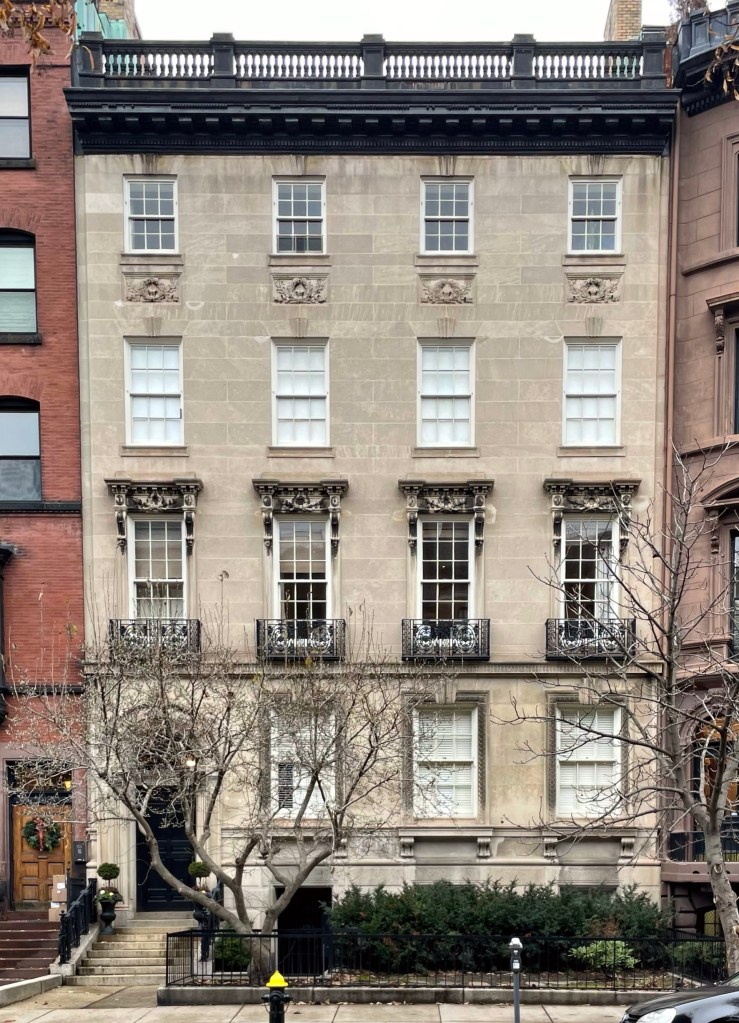
John and Gertrude Parkinson House // 1902

Teardowns have always been a common occurrence in cities, though replacement buildings from before WWII tended to be more substantially designed and built. This stately manse on Beacon Street in the Back Bay was built in 1902 on a lot previously comprised of two townhouses! This residence was built in 1902 for John and Gertrude Weld Parkinson from plans by the renowned firm of Peabody and Stearns. The Classical Revival style house has a limestone face and chunky stone lintels at the second floor to break up the facade. After income tax was introduced in the early 1900s and changing economic conditions for wealthy homeowners shifted, large single-family homes were no longer the norm. This home (and many others in Back Bay) was converted to a multi-family apartment building and today is home to eight condo units.

Freeport Street Power Station // 1896

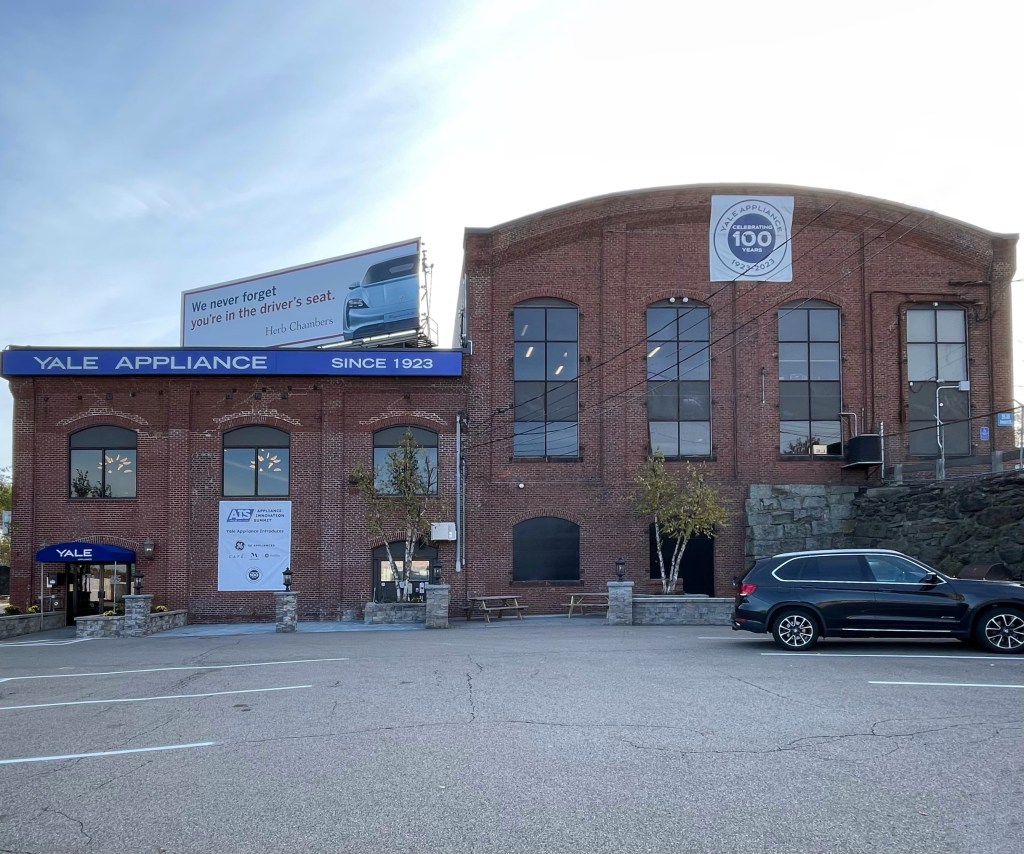
The West End Street Railway was established in 1887 originally as an offshoot of a land development venture, but it rose to prominence when it merged several independent streetcar companies into a single organization. Over the next decade, it became the primary operator of public street transit within the Boston area! During this time, the company maintained one of the largest street railway systems in the world, the first unified streetcar system in the United States, and first electrified system in a major US city. Now, it’s the infamous MBTA. How far they fall… Power plants were needed all over the city to provide electrical power for the company’s street cars, this was the fourth (and final) power station built, and it powered the Dorchester, Neponset, Ashmont and Milton lines. The station was constructed in 1896 on the shores of Dorchester Bay, which allowed for coal to be delivered in barges to the plant. Old stone walls formerly lining the shore can be seen to this day. Landfilling in the second half of the 20th century and the construction of I-93 have since cut off the building from the shore. Eventually the building was sold off and today is home to Yale Appliance, good thing none of their products are coal powered!