Wilson Chapel – Andover Newton Theological School // 2007

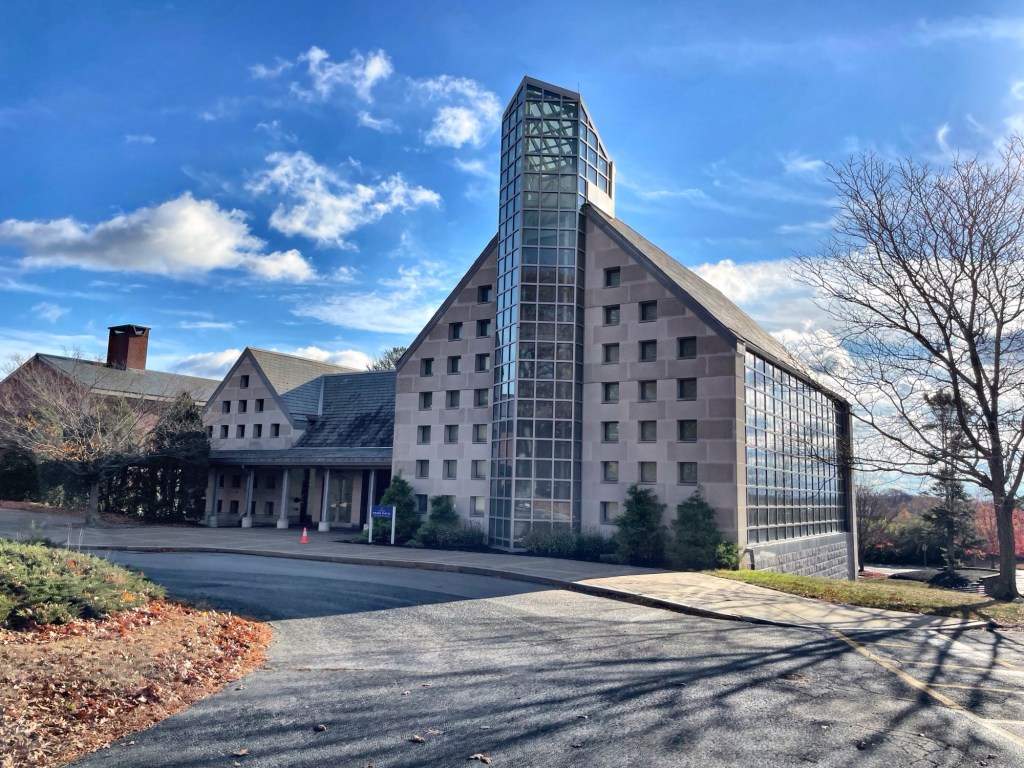
The last building constructed on the former Andover Newton Theological School in Newton, Massachusetts, was Wilson Chapel, located at the edge of the campus. The building is a modern interpretation of the traditional New England meetinghouse, and was completed in 2007 from plans by Context Architecture. The limestone building is punctuated by a grid of square punched windows and raised panels with the primary facade dominated by a glass tower, resembling the more traditional steeple. To me, the building does an excellent job at respecting the basic forms of a New England chapel, while utilizing contemporary materials and design elements to distinguish it as a 21st century structure.
All Saints by-the-Sea Episcopal Church // 1905

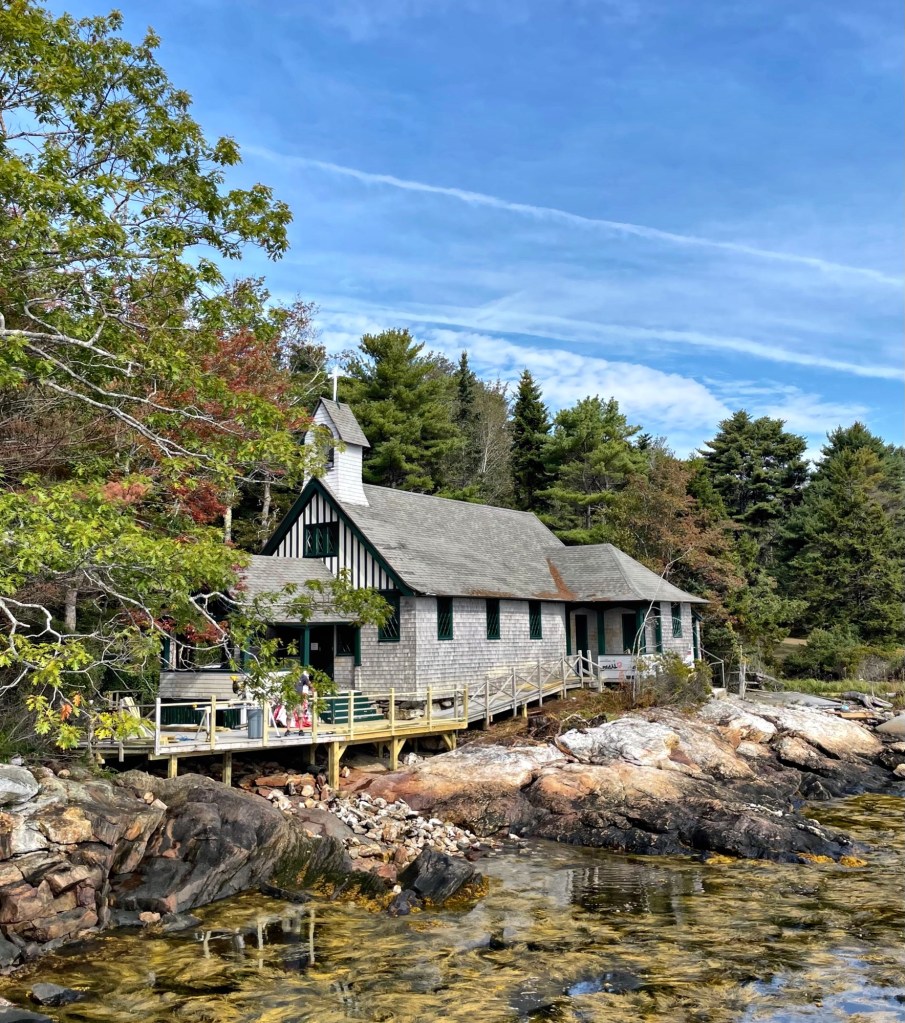
Possibly my favorite type of building in Maine are the historic Episcopal summer chapels that sprouted up along the coast in the late 19th and early 20th centuries. This is the All Saints by-the-Sea Episcopal Church of Southport, Maine, an island community with many summer residents. This church had its beginnings when Reverend John Thomas Magrath of Gardiner, Maine, would visit Southport in the summers and hold services for rusticators under the oak trees or in the cottage living room if the weather was poor. Eventually, a member of the congregation purchased a lot on the east side of Southport on the rugged coastline, and planning began for a chapel. In 1905, the chapel was designed by architect, Albert Hall in a rustic blending of the Shingle and Tudor styles. The building exhibits shingle siding with half-timbering, the original diamond-pane windows, and a large entry porch off the entrance.

Highland Cemetery Chapel // 1903

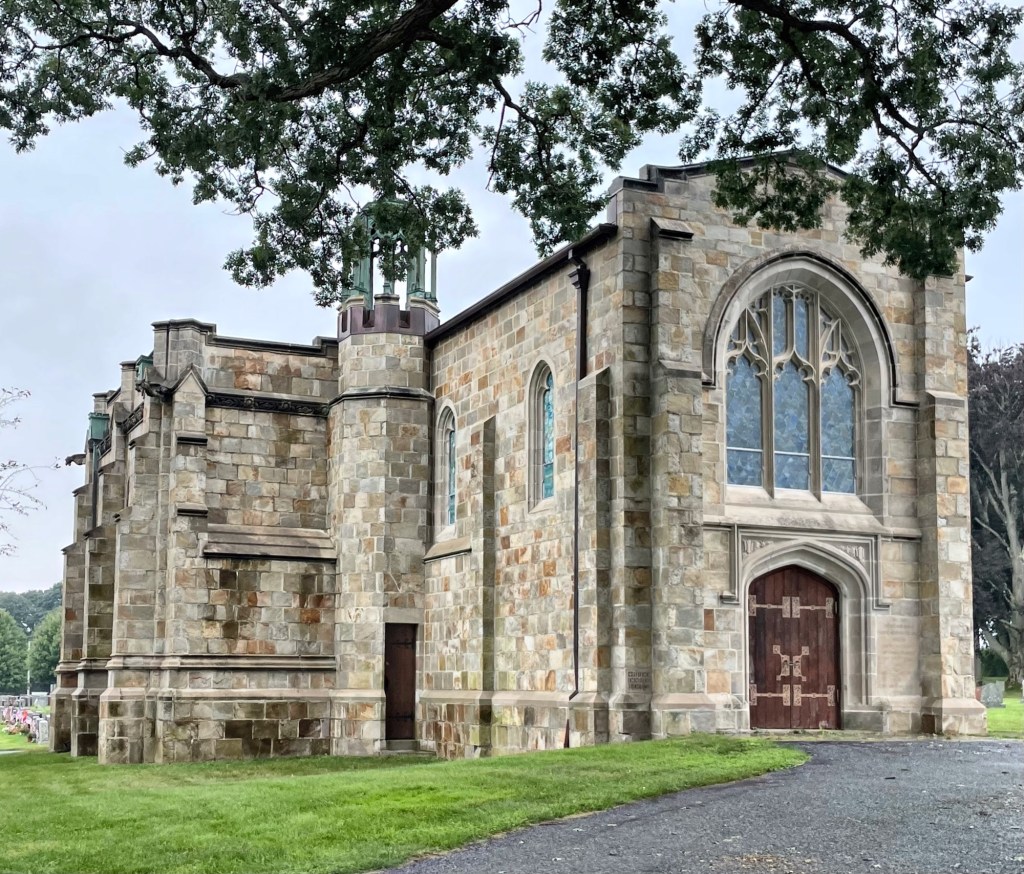
Tucked away in Highland Cemetery, a typical looking cemetery in Norwood, Massachusetts, you will find a masterpiece chapel designed by one of the great architects of the Arts & Crafts movement. The Highland Cemetery was established in 1880 becoming the town’s second and primary burial ground. The town’s first burial ground was the Old Parish Cemetery which is located in the center of town on a 3/4-acre hill and because of its limited size and the difficult terrain; there was no room for growth. The rapidly developing town required a second cemetery and laid out Highland View on the outskirts of the village. In 1903, the Chapel of St. Gabriel the Archangel, also known as the Day Memorial Chapel, was erected at the center of the cemetery. The Chapel, which also acts as a mausoleum, was donated to the town by Lewis and Anna Smith Day in memory of their parents. Their only stipulation was that the chapel be available for use free of charge for any resident who desired to do so, no matter their religion or race. Esteemed architect Ralph Adams Cram designed the chapel in the Neo Gothic Revival style. Fred Holland Day, a renowned photographer and publisher, was the only child born to Lewis and Anna and he was a close friend of Ralph Adams Cram and Bertram Grosvenor Goodhue, likely leading to their commission here in Norwood. F. Holland Day lived in a Tudor mansion in town, modified from his childhood home. The Cemetery Chapel remains a seminal building for its genre and time.

Wildwood Baptist Chapel // 1910

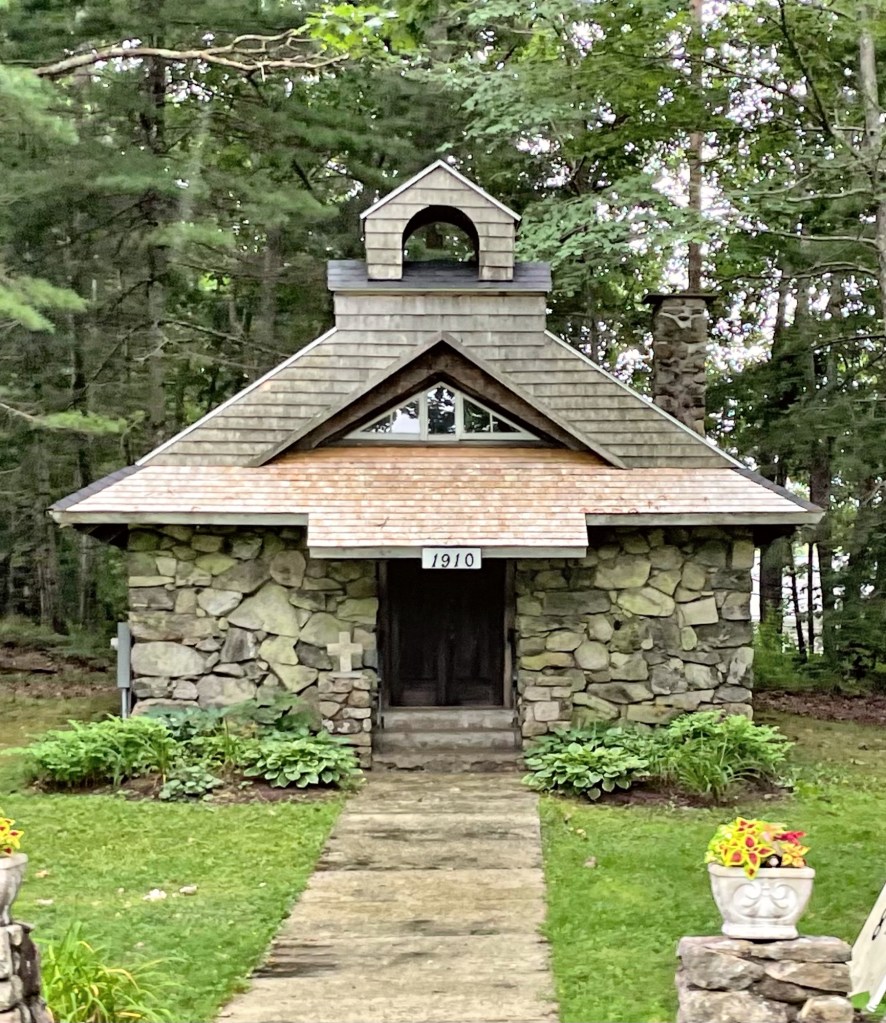
Tucked away on a wooded lot, away from the main villages of Kennebunkport, Maine, the Wildwood Baptist Chapel sits on the side of the road looking like a scene from a storybook. The chapel was built in 1910 for Baptists residing in the Wildes District of town, between the busier Kennebunkport Village and Cape Porpoise. The stone used in the construction of the chapel was taken from nearby properties and assembled on site by a skilled mason who built the walls with a Shingle style roof. Services here were limited and eventually ceased in earnest in 1935, as personal automobile allowed residents to travel to the church in the village for services. The poorly insulated chapel and small fireplace made the sanctuary inside difficult to heat in the cold winter months. The chapel is maintained well to this day, and is primarily used for summer services and special events.

Dutch Arms Chapel // 1875

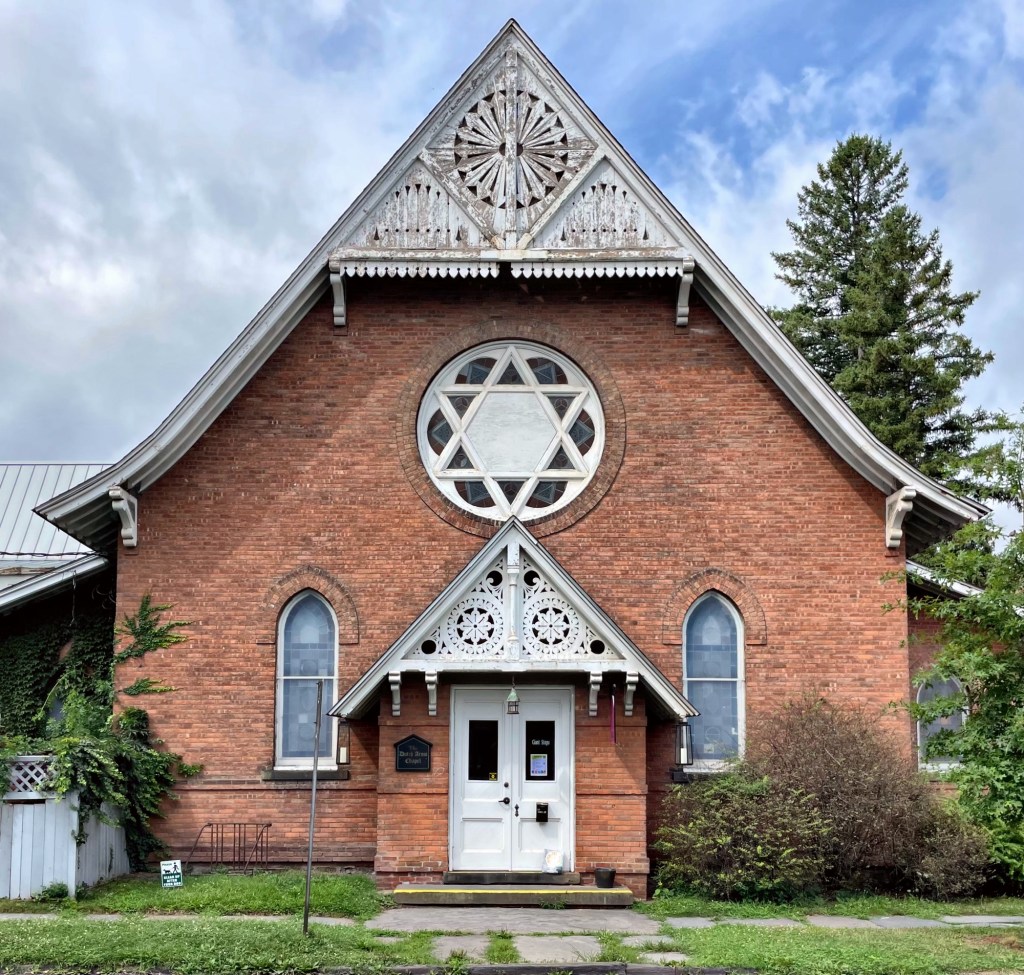
Tucked away on a side street in Saugerties, New York, this Victorian Gothic chapel has recently been given a new life for the arts. The chapel was constructed in 1875 as part of the Reformed Church of Saugerties (1852), designed by famed architect James Renwick, Jr., the architect of St. Patrick’s Cathedral in Manhattan and the Smithsonian in D.C. The architect of the chapel is not clear, but it retains similar detailing and materials to the main church. The structure was used for smaller religious meetings and a sunday school for decades until it eventually closed. The chapel was recently acquired by Isabel Soffer and Danny Melnick, co-founders of Hudson Valley Live, and has been restored and transformed into The Local: a year-round, multi-arts venue, breathing new life to the building and culture to the artistic town.

Vesper Hill Children’s Chapel // 1960

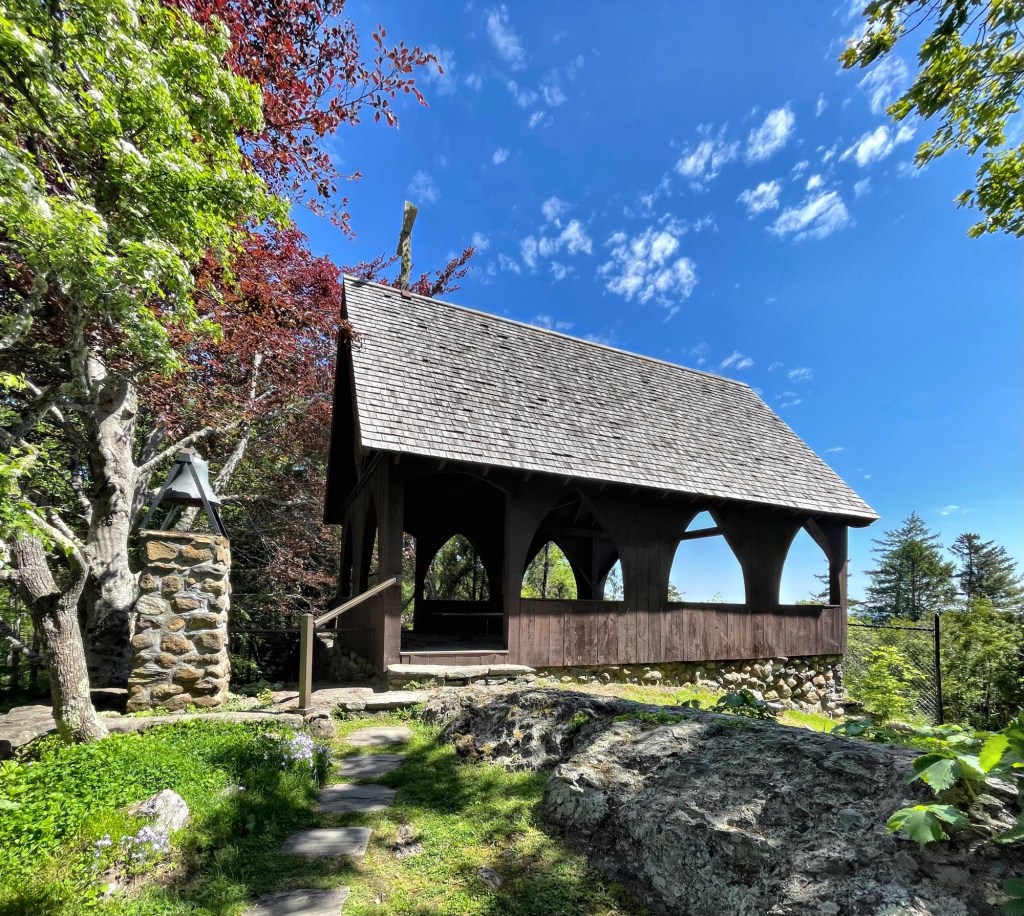
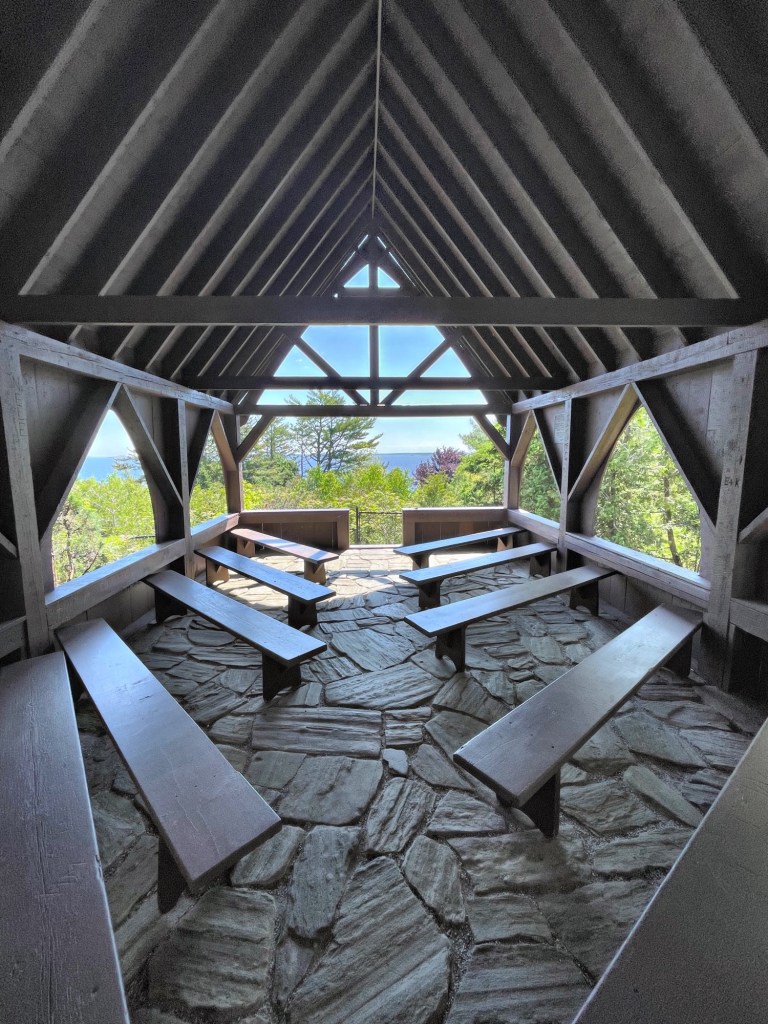
After the Tamarack Lodge hotel of Rockport, Maine, burned down in 1954, nearby resident Helene Bok began to envision what would be the best use of the charred landscape. Her project became the Vesper Hill Children’s Chapel, an absolutely stunning outdoor chapel that is open to the public. Her dream was to build a refuge that would be open for all people and “speak in and of itself of the beauty, goodness and truth of nature, life and God.” It is not clear to me who the designers were, but the structure and grounds are elegantly sited on the hill, overlooking the harbor in the distance. Helene planned the chapel to partially sit atop the rustic stone foundation of the former hotel on the site, with an open post-and-beam wooden structure above. After Helene’s death, Elmer Crockett, a designer for years on the Olmsted staff in Maine, oversaw the grounds and maintained a biblical herb garden. The chapel is today approached by a roofed stairway and surrounded by mature trees and locally harvested stones. It is truly a hidden gem in Mid-Coast Maine.

Card Memorial Chapel // 1898

Cemetery chapels are fairly uncommon, but always a must-see when exploring a new place. These small charming buildings help bridge the gap between life and death and are often adorned with a permanence not seen in our lifetimes. This is the Card Memorial Chapel in the Spring Brook Cemetery of Mansfield, Massachusetts. The chapel was erected in 1898 as a memorial to 31-year-old Mary Lewis Card, who died in 1896. Mary’s parents, Simon W. Card and Mary J. Card, founded S.W. Card Manufacturing Company in 1874. The Mansfield-based company did very well and manufactured tap and die tools locally, shipping them all over the country. Before her abrupt death, Mary Lewis Card was set to marry architect Charles Eastman, who is credited with designing the memorial to his late-fiance. The chapel borrows from the Romanesque and Victorian Gothic styles, and is constructed of red brick laid with a tinted mortar atop a foundation of Quincy granite. The various roof sections are sheathed in green slate. The building displays a cross plan with a central tower rising forty-two feet from the ground to the apex, topped by a steeply pitched pyramidal roof. The building was restored years ago and still looks great!

Yale University – Battell Chapel // 1874

As the Old Campus of Yale was being enclosed at its north and east by Farnam and Durfee halls, architect Russell Sturgis was again tasked to design a new building, but for a corner site; though this time, he would design a college chapel. Built between 1874–76, it was funded primarily with gifts from Joseph Battell. Succeeding two previous chapel buildings on Yale’s Old Campus, it provided space for daily chapel services, which were mandatory for Yale students until 1926, which were all-male and mostly Protestant. The large stone chapel is constructed of New Jersey brownstone with decorative elements in sandstone. The design of the Victorian Gothic chapel is great, but how it sits with the entrance unceremoniously dumping out to the end wall of Durfee Hall leaves much to be desired.

Channing Chapel – Winter Harbor Public Library // 1888

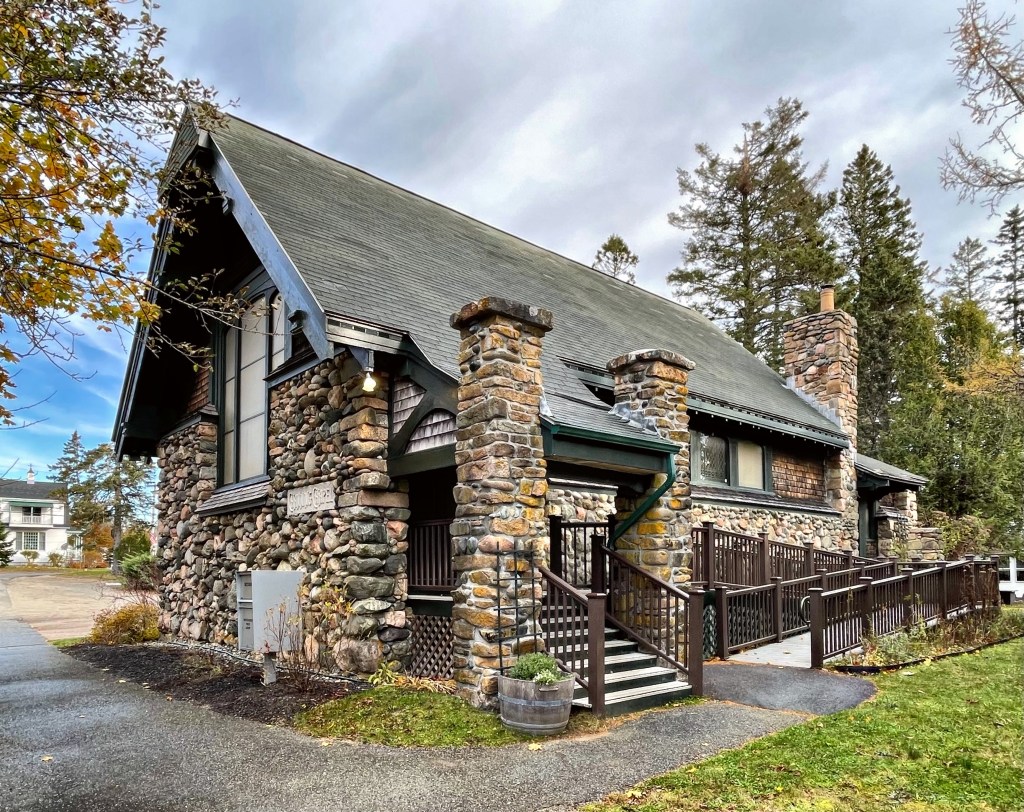
At a time before women could vote or be admitted to the American Medical Association, Almena Guptill (1842-1914) left her small home on Harbor Road to graduate from Boston University of Medicine in 1876 and become a respected Boston physician. She married David Flint (1816-1903), a successful lumber dealer and philanthropist. Almena met David when treating his late wife in Boston. The two, both widowers, married in 1891. Being a staunch follower of William Ellery Channing and believing that there was sufficient interest in Unitarianism here, Flint felt that there was need for a meeting place in his summer town of Winter Harbor. He had this chapel built adjacent to his summer house in the winter of 1887-1888, having field stones brought to the site of the future chapel by people of the village sliding them over ice in the winter. I could not locate the name of the architect of the building. The chapel was deeded to the American Unitarian Association and was later gifted by the association to the Town of Winter Harbor in 1958, the town would sell the property that year. In 1993, a preservation group purchased the chapel and sold it in 1999 back to the town. It now houses the Winter Harbor Public Library. Talk about full-circle!

St. Sergius Chapel // 1932

Formerly known as “Churaevka,” the community known today as Russian Village in Southbury, Connecticut, was established in 1925 as an artistic community for Russians who fled to America after the Russian Revolution of 1917. The village was created by two Russian writers, Count Ilya Tolstoy, the son of Leo Tolstoy (the author of War and Peace and Anna Karenina), and the famous Siberian novelist George Grebenstchikoff. Although Tolstoy was first to discover the area while visiting his translator in Southbury, it was Grebenstchikoff who dreamed of establishing a cultural center and planned to create a rural community of cottages where Russian writers, artists, musicians and scientists could live and flourish statestide. The village was named after a mythical Siberian village mentioned in the works of Grebenstchikoff and the centerpiece is this chapel, St. Sergius Chapel, which was built in 1932-33 from plans by Nicholas Roerich. The small square-plan chapel was likely built of stone gathered from the neighborhood.