King-Murdock House // c.1894

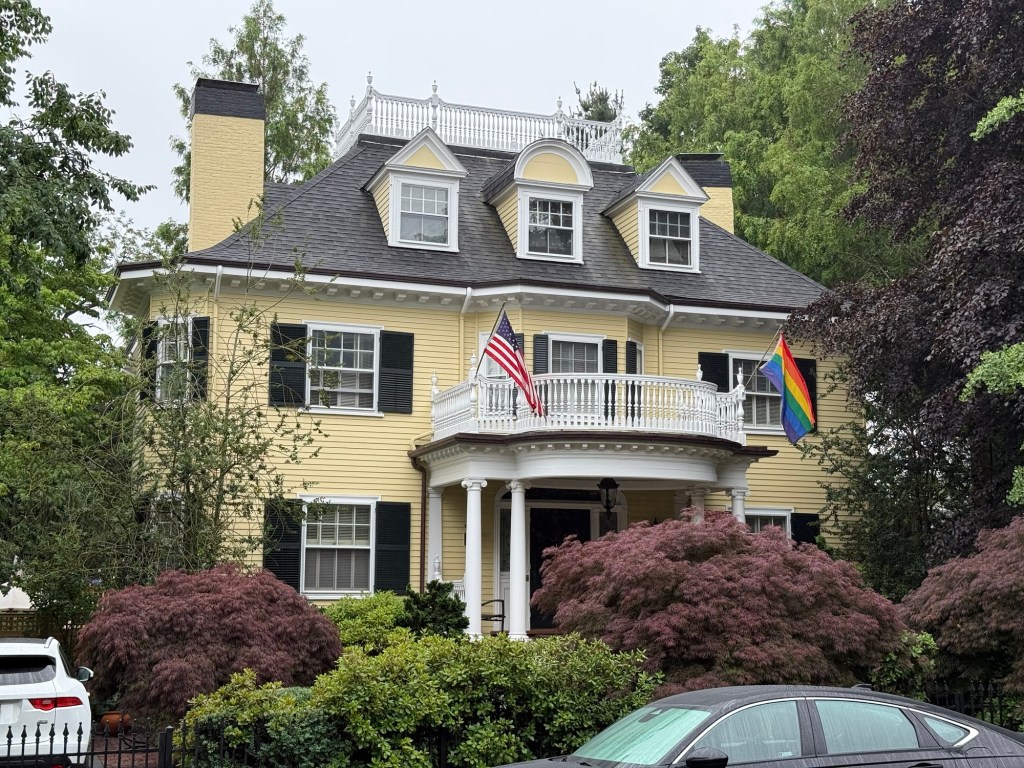
Located on Ashmont Street in the Ashmont Hill neighborhood of Dorchester in Boston, this handsome Colonial Revival style residence was one of many large homes constructed here at the end of the 19th century. This house was built by 1894 for owner Franklin King and rented to tenants for supplemental income. Franklin King was part owner of the E & F King Company, a major paint and stain manufacturer in Boston. Franklin died in 1898 and the property was inherited by his son, Samuel Gelston King, who continued to rent the home. A notable renter of the house was Harold Murdock, a cashier and amateur historian and author who wrote various books of everything from the American Revolution to the Reconstruction of Europe. The architect is said to be Clarence Blackall of Cambridge, which makes sense as this house is clearly the work of a trained architect. Symmetrical in plan, the center-hall residence features a preserved entry portico, hipped roof, and detailed dormers.
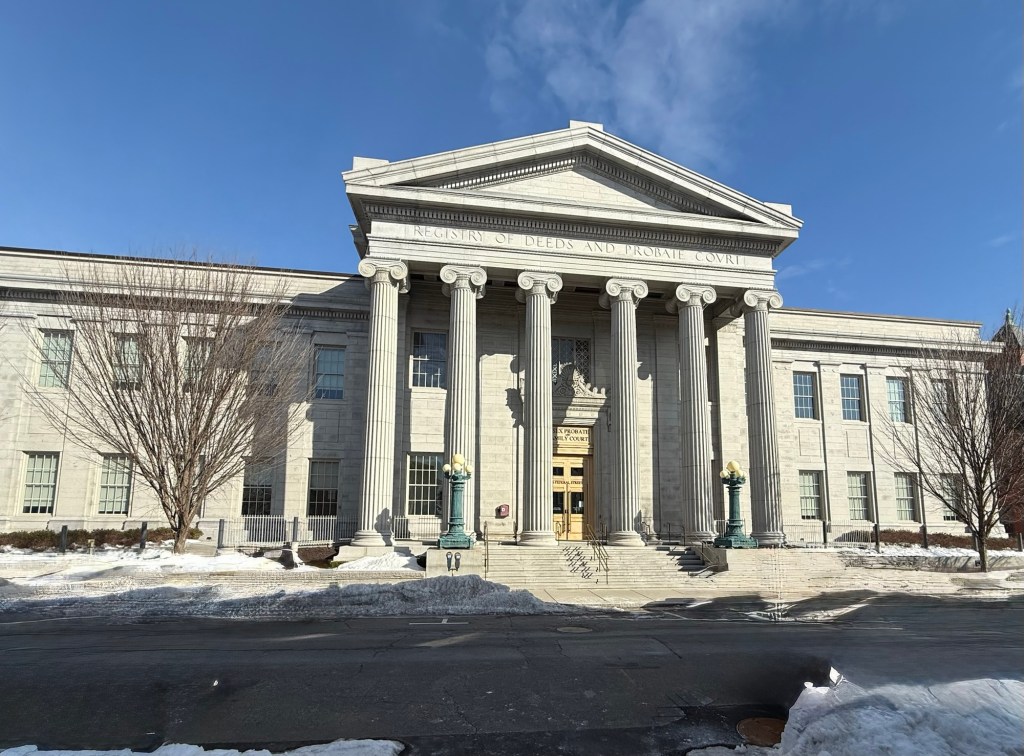
Essex County Registry of Deeds // 1909

The Essex County Registry of Deeds and Probate Courthouse on Federal Street in Salem, Massachusetts, was built in 1909 from plans by Boston architect, Clarence Blackall. The Neo-Classical courthouse adds to the rich tapestry of Civic buildings there, showcasing the ever-evolving tastes in architecture as the buildings become more contemporary as you move westward down the street. The two-story granite and cast-stone faced brick masonry building is cross-shaped in plan, consisting of a three-bay wide gable-end entrance with Ionic porch of six fluted columns supporting a dentilled entablature and pediment. The central bay within the entry porch contains a large double-door entrance with elaborate architrave and a scrolling pediment incorporating Classical motifs and a Greek god bust. The building underwent a massive restoration in 2017, and was renamed the Thaddeus Buczko Building after retired First Justice Thaddeus M. Buczko.

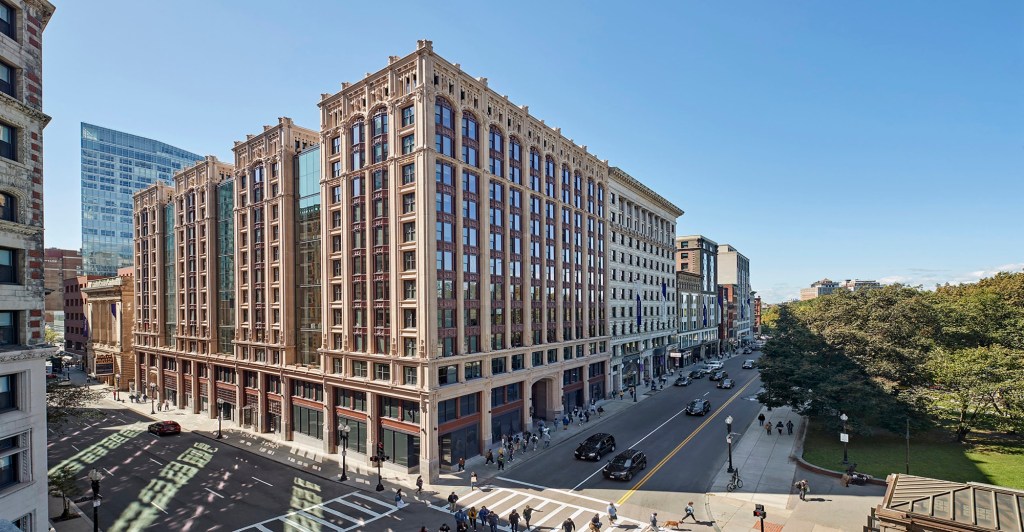
Little Building // 1917

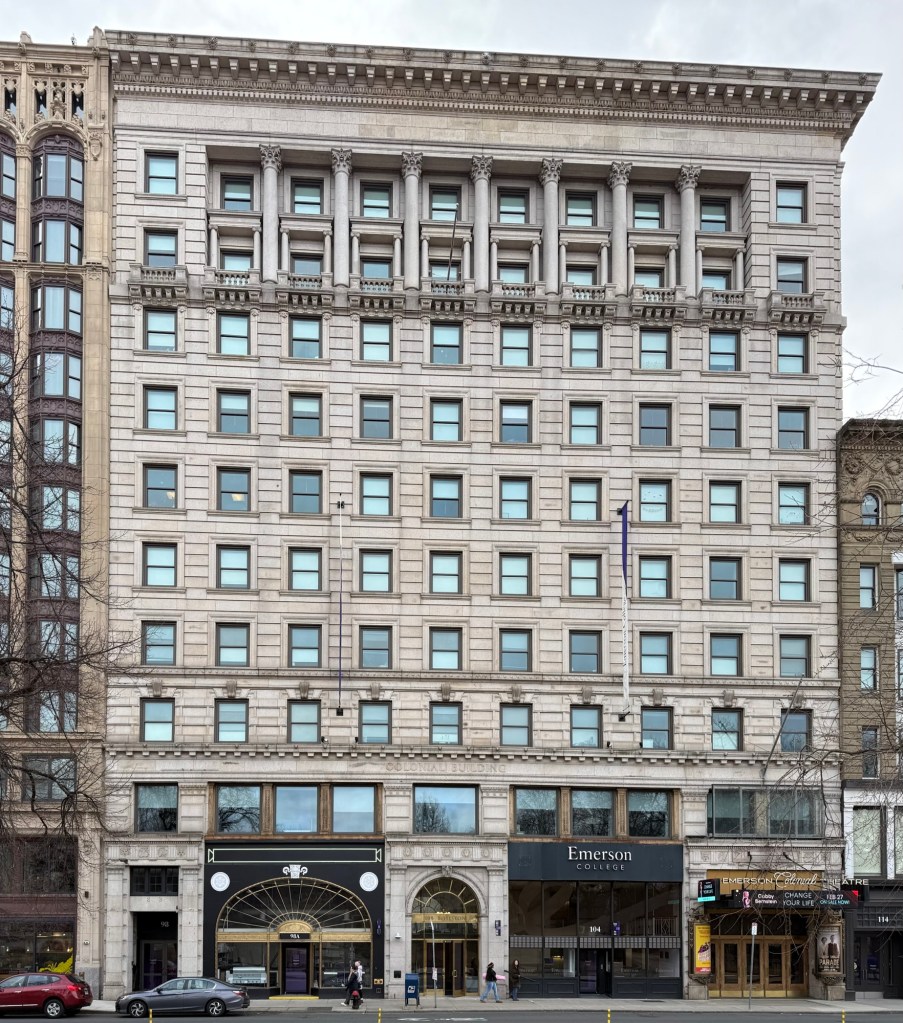
The Little Building sits prominently at the busy corner of Boylston and Tremont streets overlooking the Boston Common. Like the Colonial Theater next door, the Little Building was designed by architect Clarence Blackall and named after its developer and owner, John Mason Little. Blackall designed the Little Building in the Neo-Gothic style with a steel frame and a two-story Tudor-arched entrance on Boylston Street. The original facade was granite and cast stone, and the floors were made from reinforced concrete. The building replaced the Hotel Pelham which occupied the site since the 1850s. After being completed in 1917, the Little Building was considered significant enough that it was featured in American Architect and Building News, highlighting many architectural details inside and out. The Little Building was advertised as a “City Under One Roof” with 600 offices, dozens of shops, a post office, restaurants, and connections to the nearby subway and theaters. Emerson College purchased the Little Building in March 1994 for $5 million and converted the building to dormitories. After years of deteriorating masonry, Emerson College hired Elkus Manfredi Architects to oversee a full renovation of the building, including a sweeping facade restoration and the insertion of three glazed elevations between street-facing light wells. The “new” Little Building is a splendid re-imagining of a historic building, showing how old buildings can be renovated to meet contemporary uses through well intentioned design and care.

Colonial Theater Building // 1899

One of my favorite buildings on Boylston Street in Boston is the ten-story Colonial Theater Building, a landmark Classical Revival style structure of stone. Built in 1899, the Colonial Theater replaced the original Boston Public Library building (1855) which was demolished by 1898, and relocated to Copley Square. The Colonial Theater was designed by famed theater architect, Clarence Blackall and is said to be the oldest, intact theater in Boston. The theatre first opened its doors for a performance of Ben-Hur on December 20, 1900 with a sold out show. Ben-Hur operated with a cast and crew of 350 people and featured eight live horses on stage in full gallop during the chariot race scene, with the play being so mechanically and technically extraordinary it was featured on the cover of Scientific American. While cheekily named the Colonial Theater, the interior theater spaces were anything but. The spaces originally contained murals and Baroque style finishes, many of which remain today. Beyond the 1,700-seat theater, the building contained between 250-300 professional offices. The building is owned by Emerson College, who underwent a massive restoration project of the building with Elkus Manfredi architects. Allowing the oldest Boston theater to shine again!

Norwood Odd Fellows Building // 1912

In the early 20th century, Norwood, Massachusetts, shifted from sleepy rural town to a commercial and population center with a population tripling in size between 1900 and 1930. Located on Washington Street, the town’s main commercial street, the Odd Fellows Building stands as a reminder of the historical importance to charitable and social organizations. Designed by Boston architect Clarence Blackall, the three story building is characterized by a boxy rectangular form, yellow and tan masonry with limestone and granite trimmings, and its somewhat minimal detailing. Built in 1912, the building’s first floor was designed to contain two stores, the second floor housed the club rooms and meeting hall, and third-story containing restrooms and a kitchen. The Classical Revival style building is one of the larger and more significant commercial structures in the town center.

Temple Ohabei Shalom // 1927

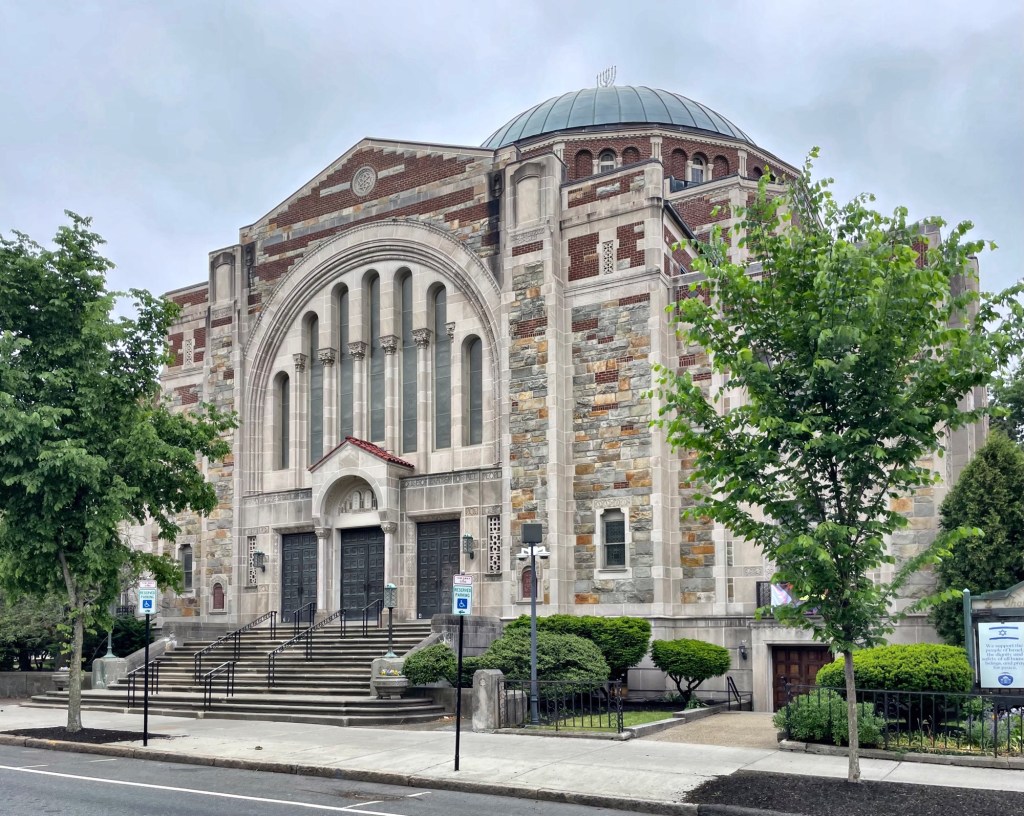
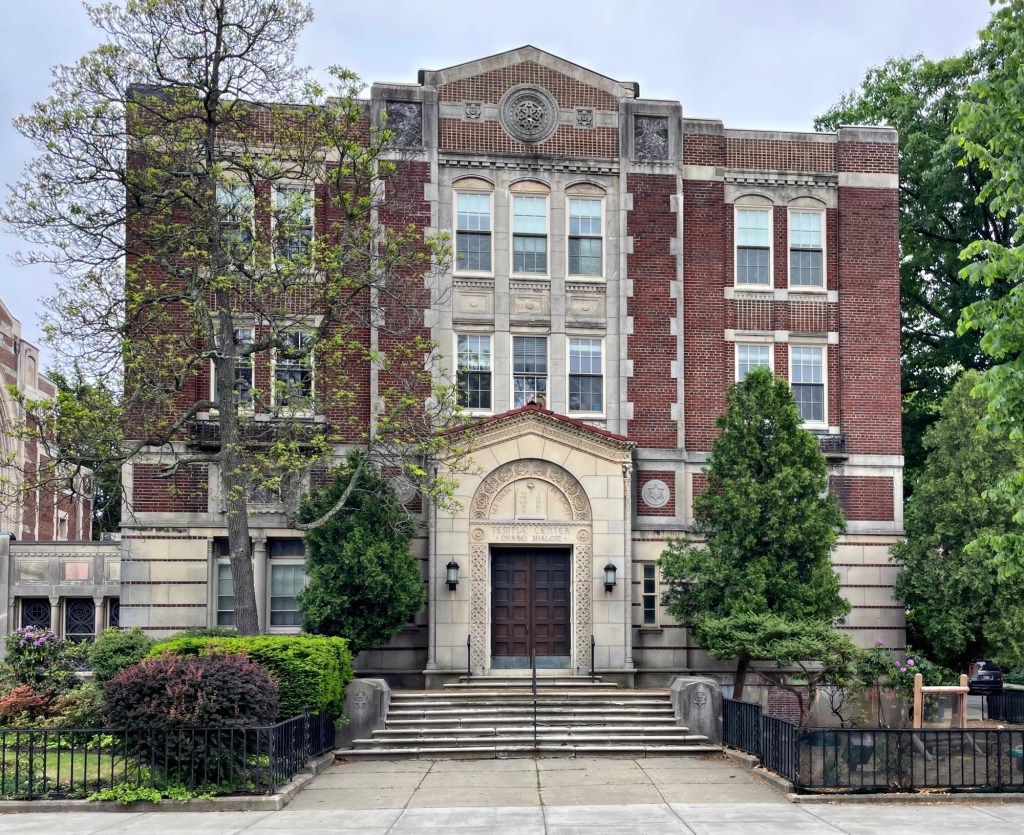
The congregation of Ohabei Shalom is the oldest jewish congregation in the greater Boston area and the second oldest in New England. It was formed in 1843 and was the first formal congregation in Boston. After a smaller space, they purchased the former South Congregational Unitarian Church on Union Park Street in the South End of Boston. The congregation split over ideological differences and the decision was made for one half of the congregation to build a new temple in Brookline, where many of the members began to move to. Land on Beacon Street, just west of the Longwood section of Brookline was purchased in 1921, and it would be four years until a temple center (now the hebrew school) was built in 1925. The larger temple was built just after on the corner of Beacon and Kent streets in Brookline from plans by Clarence Blackall, a noted architect in the area. With its lively use of polychromatic masonry and Byzantine ornament, all surmounted by a great copper dome, the congregation boasts the most architecturally outstanding synagogue in the Boston region and it has been maintained well for the almost 100 years since it was built.

School Building


Sears-Amster Cottage // c.1865

Prior to 1850, the area today known as the Longwood neighborhood of Brookline remained largely farmland on the banks of the Muddy River, the border of Boston. In the first half of the 19th century David Sears (1787-1871) and Amos Lawrence (1814-1886), both prominent Boston businessmen, bought up large tracts of what had been Sewall’s estate. The arrival of the Brookline Branch Railroad (now the MBTA Green Line D branch) served as an impetus to develop the area more fully. Some of the houses built by Lawrence and Sears became homes to friends and business associates, but neither lived in the area. One of the rented houses built and rented by David Sears is this Second Empire cottage likely built in the 1860s. The house was long-rented to wealthy families until the Sears heirs sold the house to Nathan Leo Amster and his wife, Estelle Dreyfus who was raised in Boston. Nathan L. Amster was a railroad executive who eventually became president of the Manhattan Railway Company. When the purchased the cottage, the Amster’s hired Boston architect Clarence Blackall to renovate and “modernize” the home, which added the Classically inspired elements. The couple did not appear to live in the house long, as they spent most of their years in their Fifth Avenue NYC residence. The Sears-Amster Cottage remains an important early house in the Longwood development of Brookline.