Church Farm // 1821

Here is your reminder that you can find amazing, high-style historic houses even on the most remote back roads in New England! This is Church Farm, located in Ashford, Connecticut, in the state’s Quiet Corner (northeast section of the state). The main part of the Church Farm house was built by Zalmon Aspinwall (1769-1844) and Mary Snow Aspinwall, his wife, in 1821; it is believed the house incorporates an earlier dwelling built in 1791 by Robert Snow in the ell. The Aspinwalls were a well-to-do Mansfield Center family, with more than 1,500 acres of land. Zalmon Aspinwall, who was related by marriage to the Snows, also held mortgages on several other Ashford farms. In the 1840s the house came into the hands of Lucinda Aspinwall Church (1807-1876) and her husband John Church. John was primarily a farmer, with 135 acres under cultivation in 1850, probably most as pasture and fodder for his 140 sheep, with which he raised wool. Subsequent generations of the Church Family retained ownership of this property Church Farm as the family homestead and country retreat. Servant rooms were added to the ell, and a large barn (said to be the second largest in Windham County) were built in the 1890s. The large Colonial Revival portico, added c.1930 to replace Victorian verandas, completed the house’s transformation into a country estate. The property was most recently gifted to the Eastern Connecticut State University Foundation, Inc., in 2007 by Joseph and Dorothy (Church) Zaring, and the house and grounds are maintained by the University.
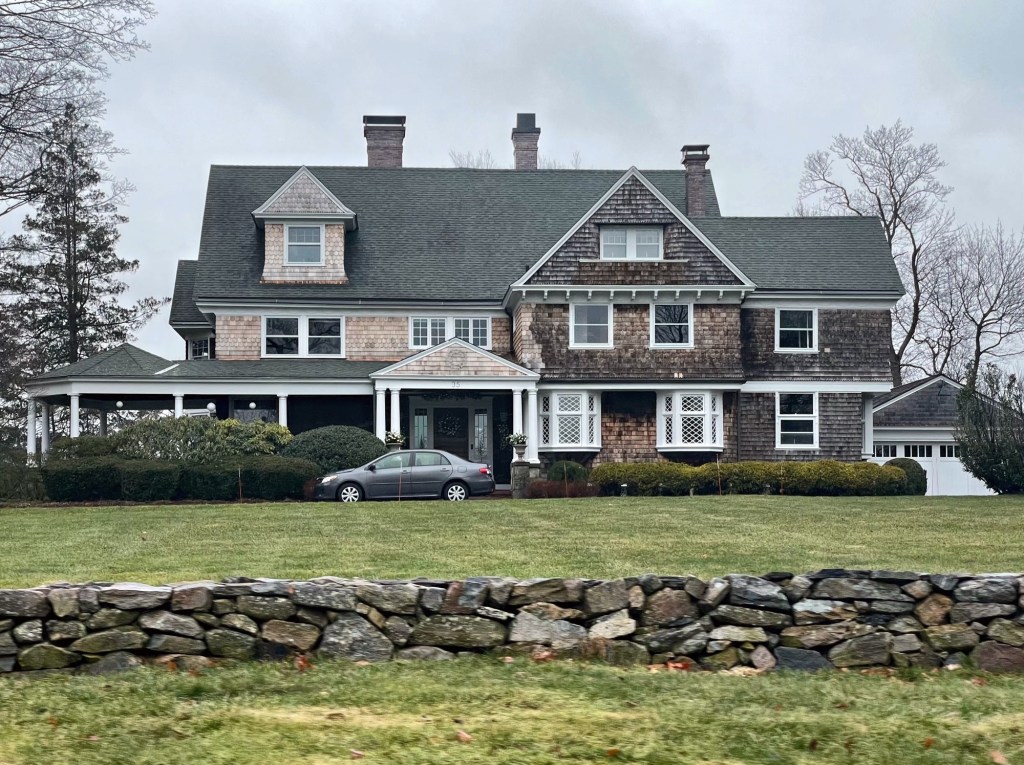
Overlook Mansion // 1882

Raised in an intellectual home of his widowed father, William Allen Jenner (1844-1915) graduated from Middlebury College as the youngest in his class with highest honors. He would go on to graduate from Columbia Law School and be admitted to the New York Bar in 1867, becoming a partner in a prestigious New York City law firm. Outside of practicing law, William Jenner studied and authored textbooks on the Latin language and was an avid horticulturalist. His landscape architecture passion was fulfilled when he purchased a large house lot on High Ridge Road in Ridgefield Connecticut, and built this home in 1882, named “Overlook”, where he and his family would spend their summers outside of the city. Mr. Jenner and his wife, Josephine Curtis Jenner, raised three daughters between New York and Ridgefield. One of their daughters, Anna, would marry Sterling Foote, a New York City cotton broker. The Foote’s would inherit Overlook and spend their summers here until their death. The Queen Anne/Shingle style mansion showcases the shift of Ridgefield from sleepy farming town to summer destination for wealthy New York residents, a trend which continues to this day.

Maynard Estate // 1901

One of the largest summer estates in Ridgefield is this Neoclassical residence on Peaceable Street, which was built in 1901 for Effingham Maynard and his wife Helen. Maynard was a partner in Clark & Maynard, a New York publishing house. Local lore states that the Maynard Family hired New York architect Stanford White, to design this property, but no definitive proof could be located to substantiate that rumor. The Olmsted Brothers landscape architecture firm designed the grounds which were elaborate with gardens and outbuildings. The two unmarried Maynard daughters, Mary and Helen spent their summers here every year until their deaths in the 1950s.

Lewis June House // 1865

The Lewis June House sits on North Salem Road in northern Ridgefield, Connecticut, and is one of the finest Second Empire style homes in this part of the state. The c.1865 home was built for Lewis June (1824-1888), who was in the circus business, and it replaced an earlier home on the site that burned. Lewis June was a partner in the June, Titus and Angevine & Co. Circus that as early as 1842 toured 85 towns in six states. The circus wintered in Ridgefield. Past owners have since found many horseshoes, largely of small horses, on the property, suggesting that June kept the circus’ horses and ponies on this property. The home has been preserved thoughtfully and was listed on the National Register of Historic Places in 1984.

Benedict House // c.1740

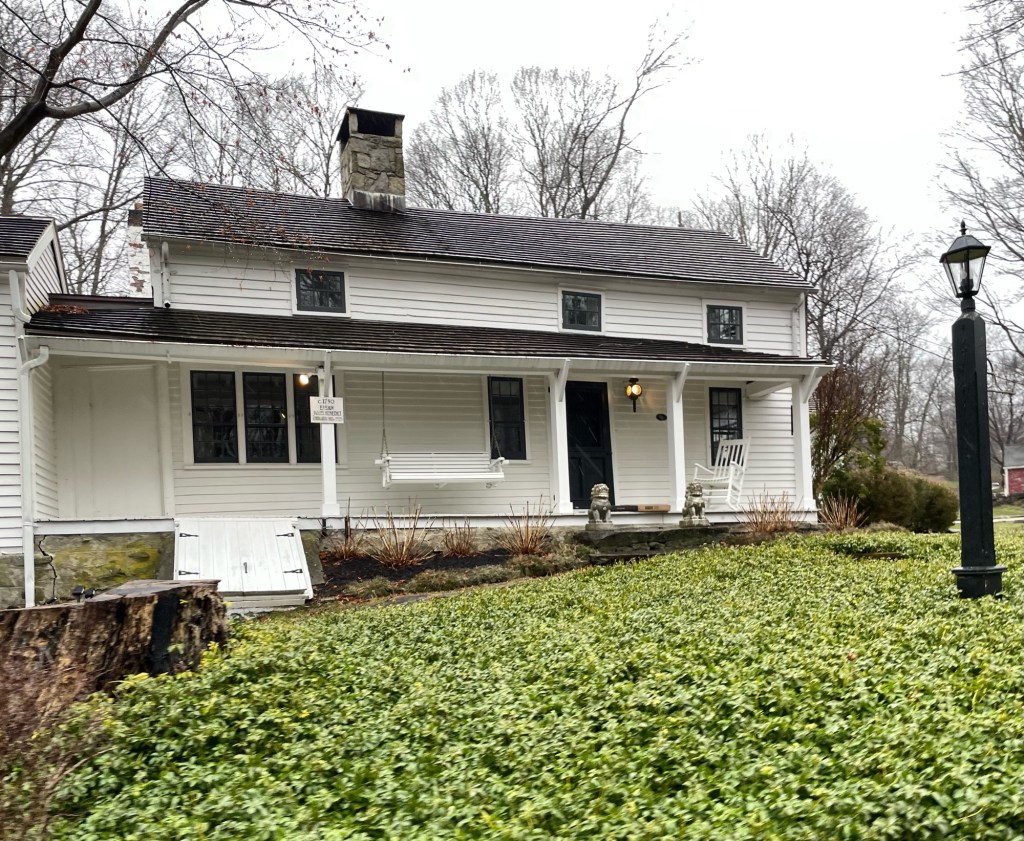
The Benedict House in Ridgefield, Connecticut is a stunning Colonial-era cottage that was once the home of a cobbler, who had his shop on the property. The Benedict family, headed by James Benedict, Sr., were original proprietor settlers of Ridgefield. This house and shop have been attributed to James’ son James Benedict (1685-1762), who owned the land and was a shoemaker and deacon of the Congregational Church. Ensign Benedict was also a fence viewer, a term new to me. Fence viewers had power to make and enforce rulings regarding escaped or trespassing livestock, the location of fences, and, above all, maintenance of fences. With fences so crucial to keeping livestock where it belonged, loose boards and rotting posts were big concerns. The fence viewer could even compel a property owner to pay for needed maintenance or repair conducted by a neighbor if he or she failed to keep up their fence properly. The property left Benedict family ownership in 1848, and it was later extensively restored by renowned architect Cass Gilbert, who bought the property in 1920. Cass Gilbert also restored a few other Colonial-era houses in town. It was later the home of Robert and Mildred Wohlforth, both writers of note and six-decade residents of Ridgefield.

Ashton Croft Mansion and Carriage House // c.1892

Tucked behind the Jesse Lee Memorial Church on Main Street in Ridgefield, you will find this stately Queen Anne/Tudor Revival estate. The ‘Ashton Croft’ Manor House, now called Wesley Hall, is part of the Jesse Lee Memorial United Methodist Church complex and it has been modified several times blending two distinct styles into a single, pleasing composition. This house was originally constructed by Henry and Elizabeth Hawley circa 1892 in the Queen Anne style. The house was later sold to Electa Matilda Ziegler, a wealthy New York City widow in 1912, who reconfigured the structure to include half-timbering on the gables and upper story walls in the Tudor Revival style. She spent summers at a mansion in Darien, Connecticut, and would sell her Ridgefield property to Sanford H.E. Freund, a New York City attorney. The local order of Odd Fellows bought the estate from the Freund family in 1956. Three years later, the organization sold most of the property — retaining the carriage house for its lodge — to Jesse Lee Methodist Church, which planned to eventually build a new church there to replace the old one at Main and Catoonah Streets. Today, the entire former Ashton Croft estate is owned by the local Methodist Church and is known as Wesley Hall.

David Scott House // 1714

One of the oldest extant houses in Ridgefield, Connecticut is this charmer, which was moved not once, but twice! The house was built for David Scott (1678-1760), an Irish-born resident of the town, who purchased one of the town’s original Main Street house lots which sat undeveloped. Scott had abandoned his wife, Mary in Ireland, and settled in Ridgefield, entering into a new relationship with Elizabeth St. John. A woman scorned, Mary unexpectedly arrived in America and filed suit against her husband, citing Elizabeth as the “pretended wife of David Scott.” A judge awarded Mary three acres of her husband’s land. David Scott and his second wife lived at this 1714 house until they moved in 1740. His property (which included two enslaved Africans) was sold to Vivus Dauchy, a Frenchman. In the 1920s, as the Scott House section of Main Street commercialized, the owners relocated this house to Catoonah Street, building a commercial block in the former location. After numerous other owners, the most recent owner, The Ridgefield Preservation Trust (now the Ridgefield Historical Society) put it to use as a new historical society headquarters, after saving the Colonial-era home from demolition for stores and a parking lot! It was relocated to its current site and has been meticulously restored.

Wheeler-Tyler House // c.1750

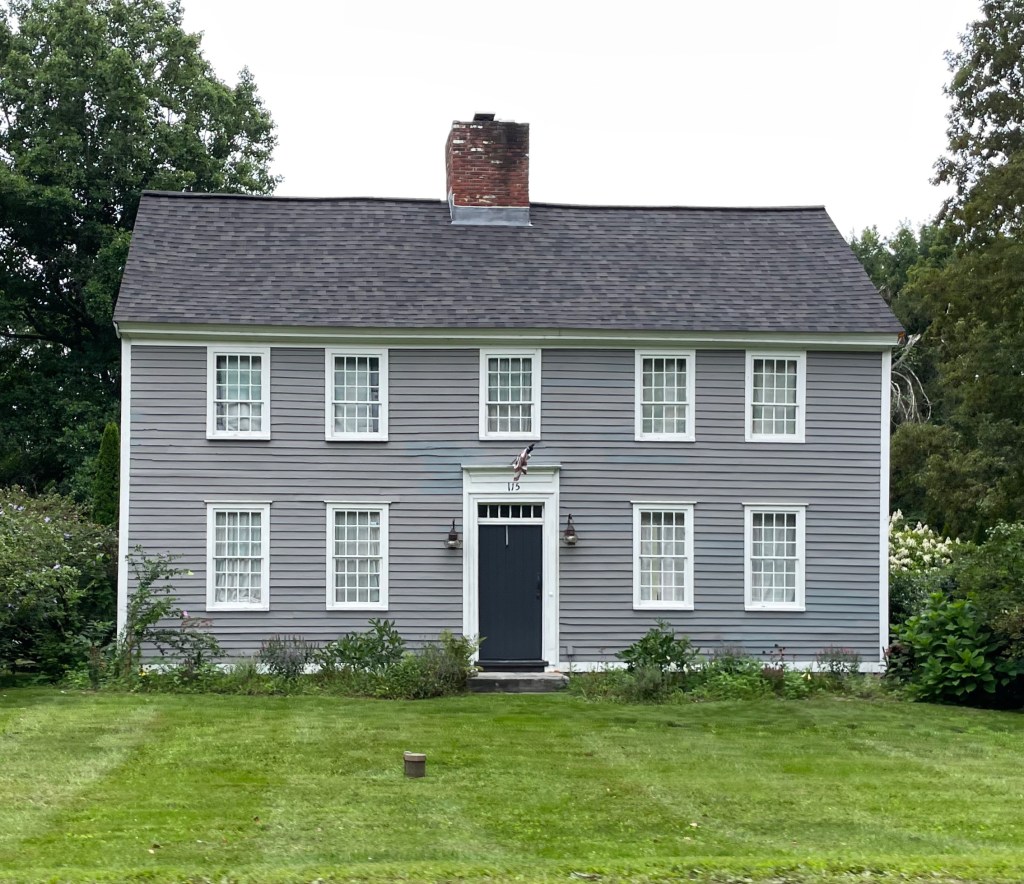
Less is definitely more when it comes to old Colonial houses! One of several pre-Revolutionary buildings in the South Britain Historic District is this residence, which was the home of South Britain’s first physician, Dr. Wheeler, in around 1750. From 1807-1822 the property was owned by Rev. Bennett Tyler, who would later become the fifth President of Dartmouth College. The house is a classic 18th century homestead of wood-frame construction with a side gable-roof, symmetrical five-bay façade, simple paneled entry door with a rectangular transom, and a central chimney. This is a beauty!

Smith-Pierce House // c.1829

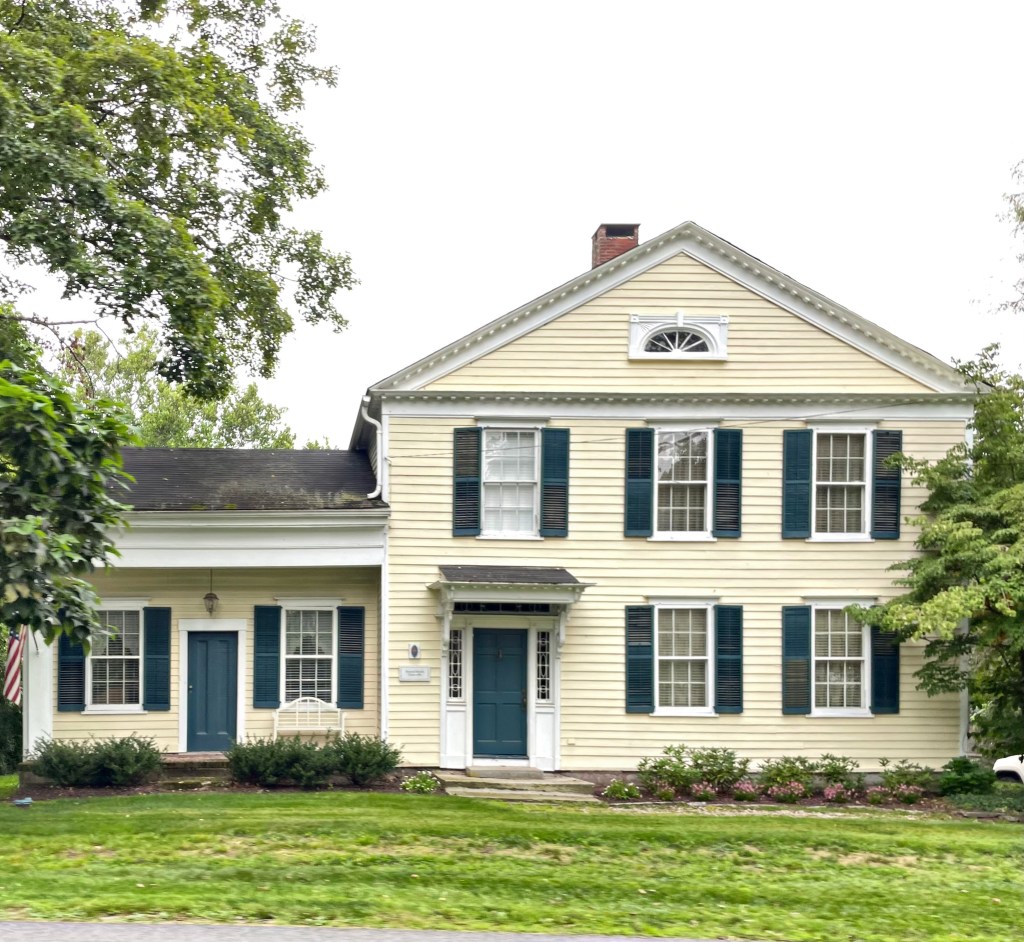
This transitional Federal-Greek Revival style house sits on the main street in South Britain, Southbury, Connecticut. The based on the style, the house was likely built around 1829 for Samuel Smith (1804-1856) who married Caroline Curtiss that year. Federal elements include the entry at the gable end, a pedimented facade embellished with modillions, and a doorway with sidelights and a leaded transom. Some moldings, the six-over-six windows and the simplicity of design are Greek Revival. It is one of the best preserved old houses in this part of Southbury.

Benjamin Downs House // c.1830

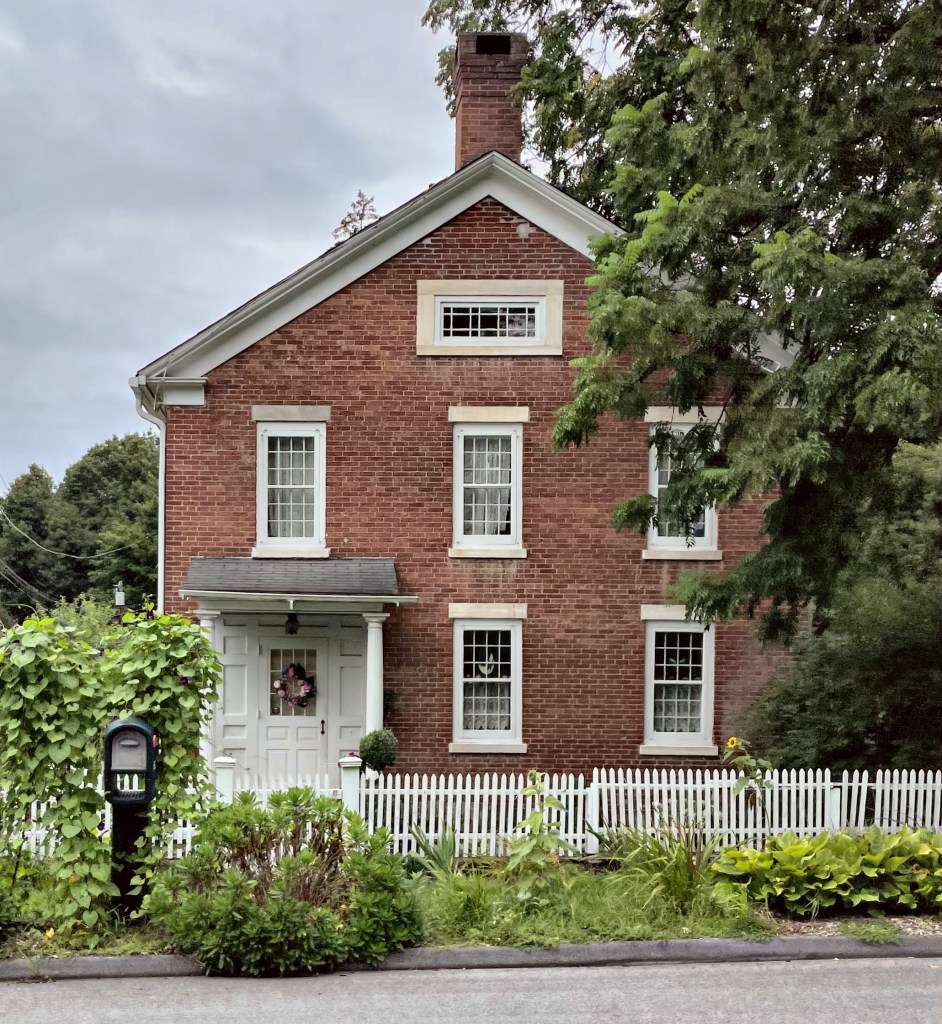
Located a stone’s throw from the Judson Manville House (last post) another uncommon brick Greek Revival style house in South Britain, Connecticut, this house stands out for its outstanding proportions and well-preserved exterior. This residence was built around 1830 for Benjamin Downs on the site of his family’s old property. The simple lines, portico at the entry supported by Ionic columns, and the window in the gable are all typical of the period.