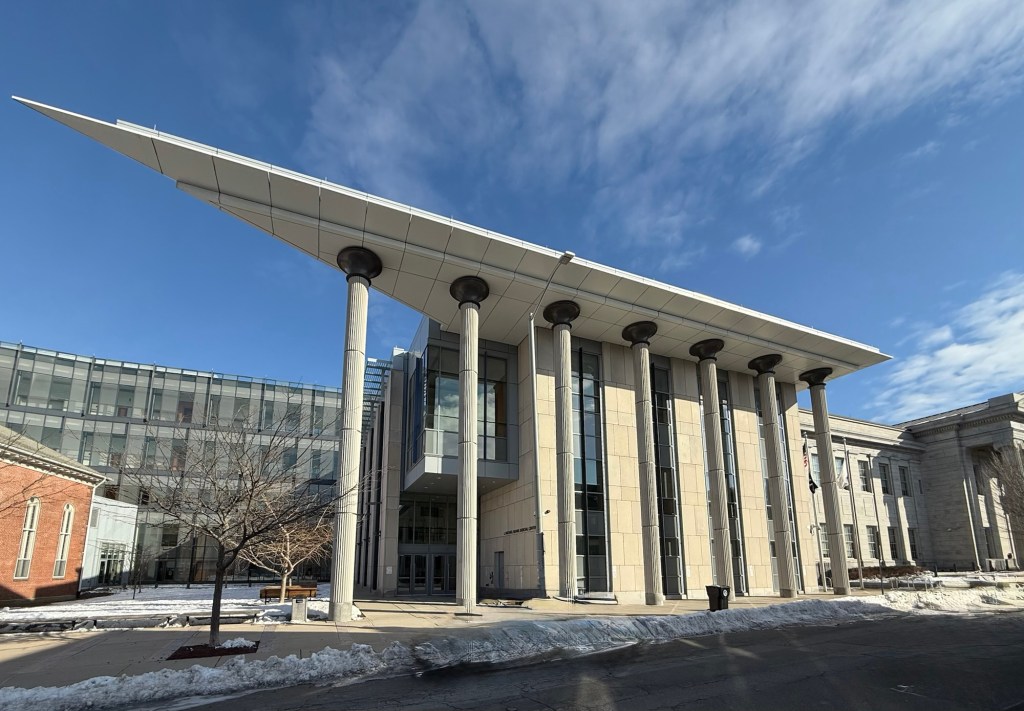
In 2005, the Commonwealth of Massachusetts announced plans to build a new court complex on Federal Street in Salem to replace the aging 19th century courthouses. A site adjacent to the 1909 Registry of Deeds and Probate Court was selected, but with one issue, a Federal-period historic Baptist Church was already on the site. The church was purchased from the congregation and moved down Federal street, and construction began on the new contemporary judicial center. Designed by Goody/Clancy Architects, the building takes design cues from the historic courthouses on the street, with a modern interpretation of the Classical architecture and Corinthian columns found nearby. Opened in 2011, the complex was named after late state representative, J. Michael Ruane, and incorporated the former 1805 Baptist Church as the new Essex Law Library.
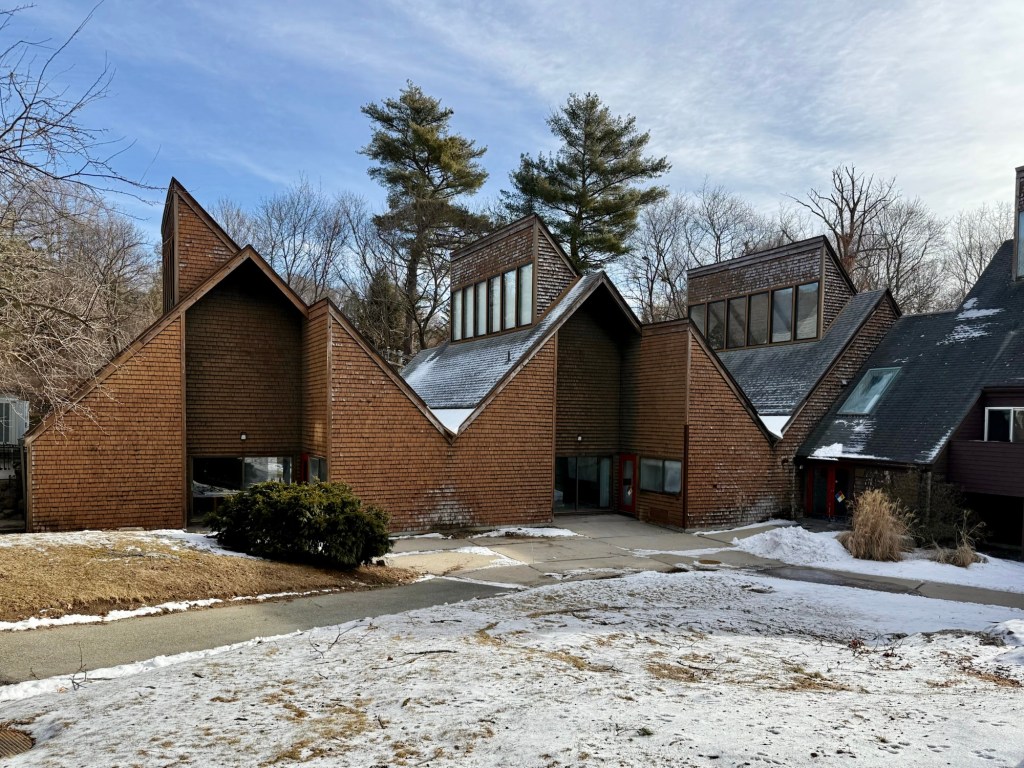
Completed in 1974 for the now defunct Pine Manor College in Brookline, Massachusetts, this interesting Contemporary/Shed style building is modern, yet employs materials and a general form that fits into its surrounding context. When Pine Manor College received a grant by the Abercrombie Foundation, planning began immediately to design and build the Abercrombie Fine Arts Wing of the school. The building was designed by Paul J. Carroll & Associates, and features a bold roofline with clerestory windows, used to provide ample natural light for the classroom and art studio spaces inside. The building remains a part of the newly established Messina College, a Boston College campus enrolling first-generation high-financial need students, giving all an opportunity for education, no matter their circumstances.
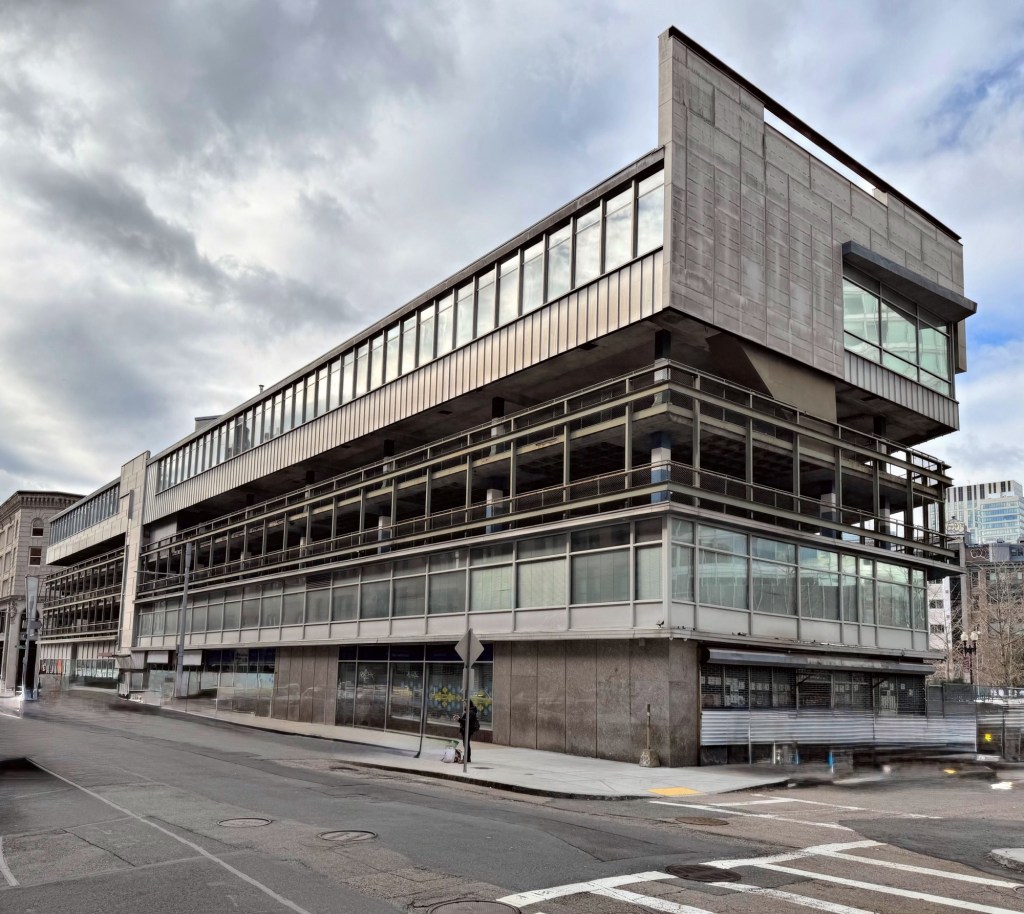
Few buildings in Boston showcase the evolution of its neighborhood (or bring out the architectural critics) quite as well as the Lincoln Street Garage in the Leather District of Boston. This Post-WWII mixed use building was originally constructed in 1956, on the former site of the United States Hotel (1839), one of the first major hotels in the nation, which was razed in 1930. The original building was designed by architect Archie Riskin, and stood three stories high with parking on half of the second floor and on the 3rd floor and roof. A fifth floor of office space was designed and constructed by 1959 also by Riskin. Due to its site at the edge of a historic commercial/industrial district and adjacent to the Central Artery, a raised highway that snaked its way through Downtown Boston, the building was minimally visible and faded away to obscurity until the late 1990s when the highway was buried under the city as part of the “Big Dig”. The open scar and subsequent re-greening of much of the former highway spaces necessitated the owners to re-work the building, due to its newfound gateway presence into the neighborhood. Brian Healey Architects renovated the building, adding an additional floor of offices and reworked facades. The result is a Post-war mixed-use hodgepodge of a building that expresses its use visually on each floor in a no-nonsense way, making it a unique urban building. Additionally the building has long been rented to small businesses, almost all Asian-owned with direct ties to the Chinatown and Leather District neighborhoods. Recent plans have been approved for a new office tower on the site and supported by preservation groups stating that “the existing garage is historically significant or beneficial to the neighborhood”, but to me, the further erasure of quirky buildings for more out-of-context developments is not the way to go.
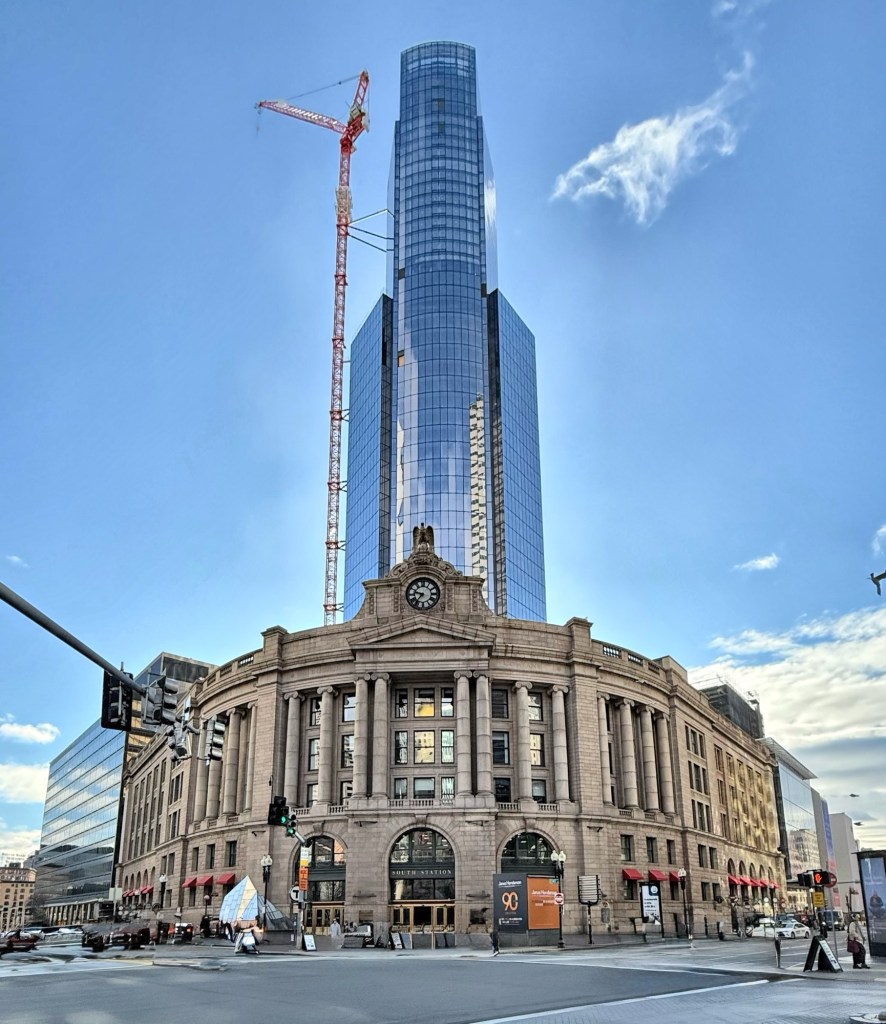
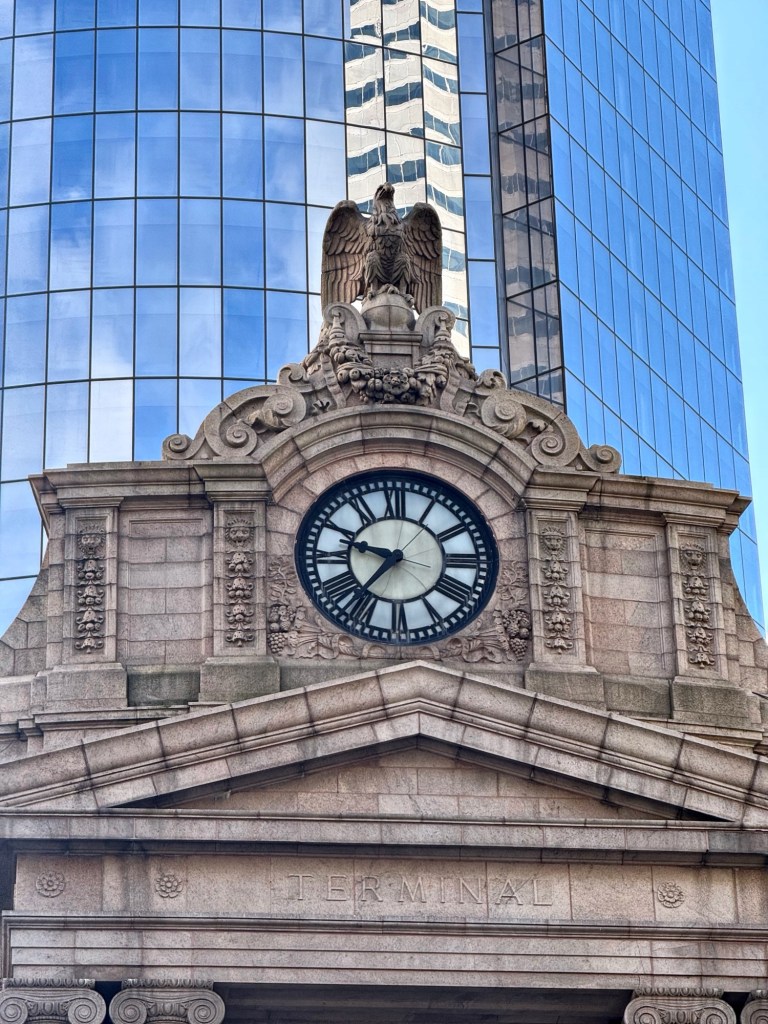
When the railroads serving Boston were first laid out and built, each line stopped at its own terminal which created a dysfunctional and cumbersome travel experience for those entering or leaving the city. The Boston Terminal Company, established in 1897, was charged with the task of consolidating service from the four terminals at a single terminal, a union station (similar to North Station), for routes south of the city. South Station was designed by architects were Shepley, Rutan and Coolidge of Boston and quickly became New England’s busiest transportation center. The five-story Classical Revival style station built of stone is an architectural landmark with three-story Ionic colonnade crowned by a clock surmounted by an eagle, stands above the triple-arched brick masonry lower level corner entrance. While the station handled 125,000 passengers each day during World War II, post-war passenger rail traffic declined in the US. South Station was sold to the Boston Redevelopment Authority in 1965 and (surprise!) they demolished portions of the building and later developed plans to demolish the rest of the station and replace it with a multi-use development including a new train and bus station with large parking garage. Luckily for everyone, the BRA failed in this endeavor and the building remained to the point where public transportation is again invested in and beloved and the building has since been restored. Recently, a glass “crown”, known as South Station Tower, a 51-story designed by Pelli, Clarke & Partners, with new office space, luxury residences, and a redesigned, arched interior concourse (which in my opinion, is the best part). The redevelopment is a push towards transit-oriented development and blends new and old in an innovative way.
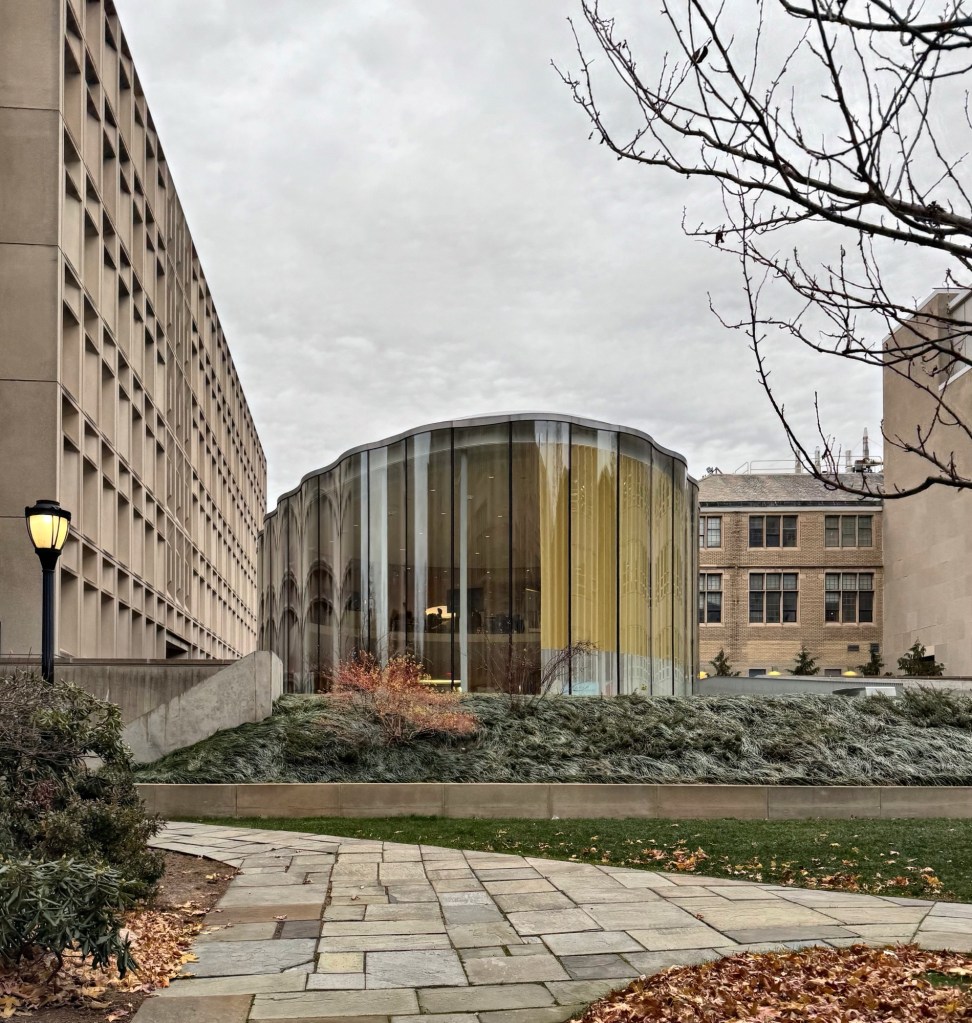
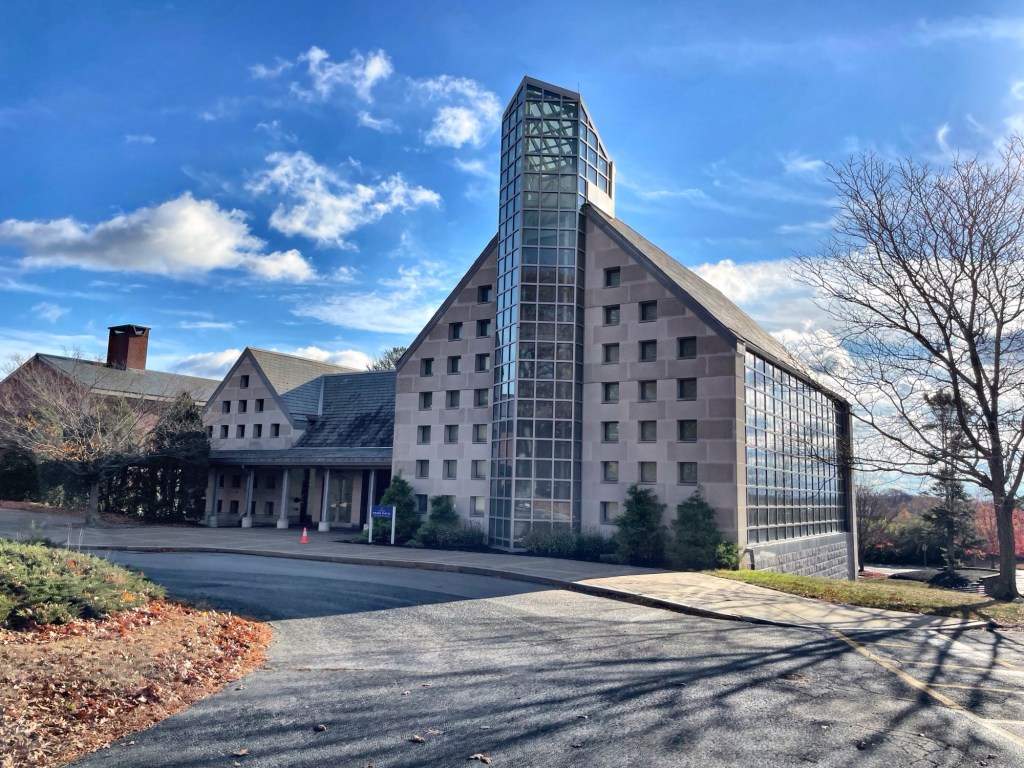
The last building constructed on the former Andover Newton Theological School in Newton, Massachusetts, was Wilson Chapel, located at the edge of the campus. The building is a modern interpretation of the traditional New England meetinghouse, and was completed in 2007 from plans by Context Architecture. The limestone building is punctuated by a grid of square punched windows and raised panels with the primary facade dominated by a glass tower, resembling the more traditional steeple. To me, the building does an excellent job at respecting the basic forms of a New England chapel, while utilizing contemporary materials and design elements to distinguish it as a 21st century structure.
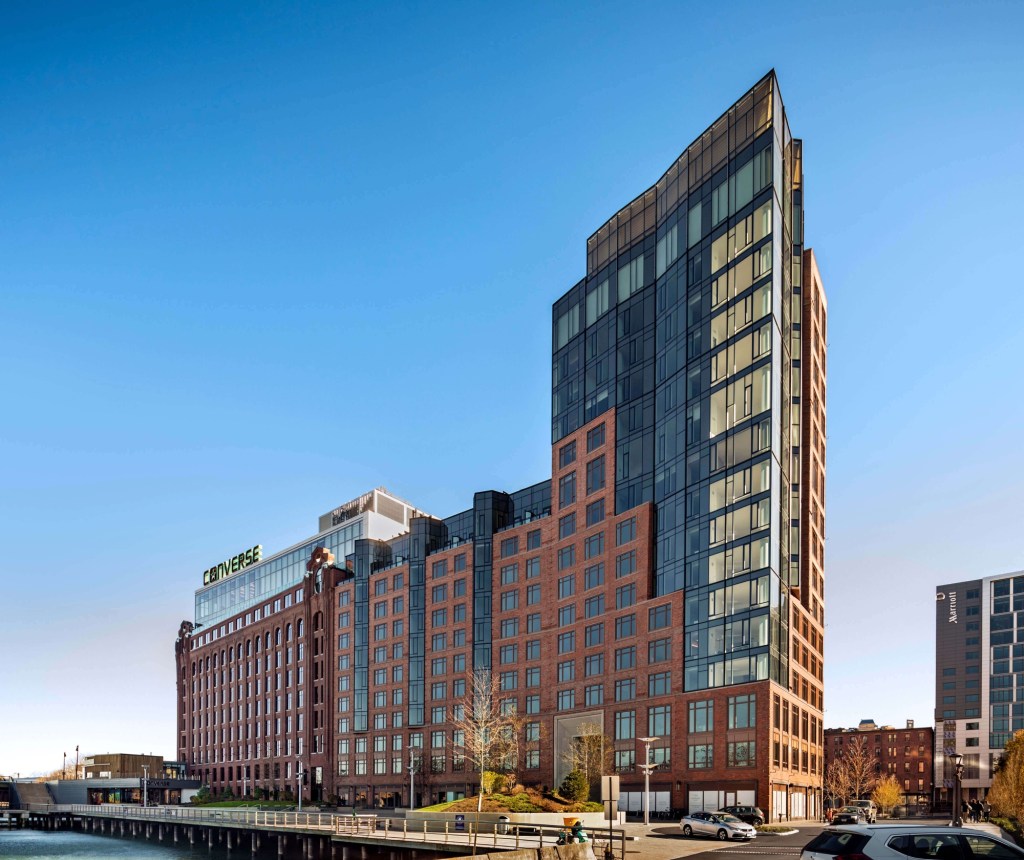
New buildings in Boston rarely are contextual and so often take no cues from their surroundings, but Lovejoy Wharf, one of my favorite 21st century buildings in the city breaks that mold. Completed in 2017, the contemporary building is clearly modern, but takes important cues in the design and materials to relate it to the surrounding industrial context surrounding the site. The Lovejoy Wharf condominium building was designed by the great Robert A.M. Stern Architects and incorporates red brick facades, stacked bay windows, and a glass curtain wall, which effortlessly blend old with new. A glass tower breaks free from the masonry mass at its corner, which leads into the denser, more modern West End buildings while the eastern side closely follows the old Schraft’s Candy Factory (now Converse Headquarters building) brick industrial style. Additionally, the developer, Related Beal, took a gamble by not including parking in the facility, hoping the unit owners would instead use local public transportation (or walk), it seems to have been a success and promotes healthy urbanism. What do you all think of this contemporary building?
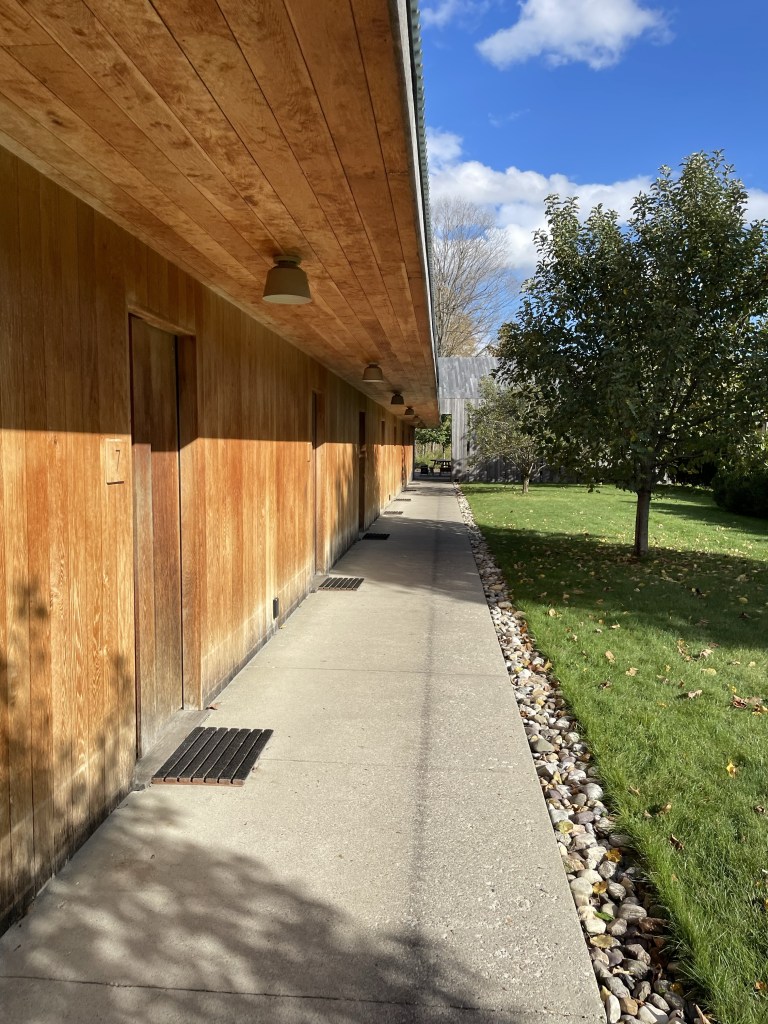
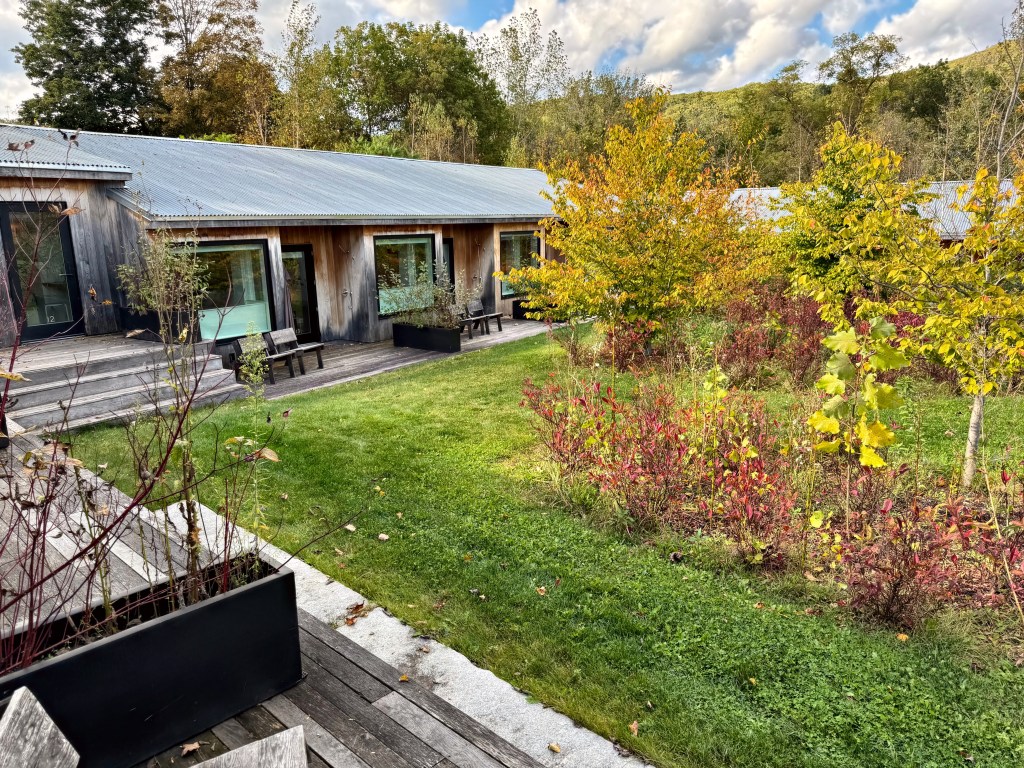
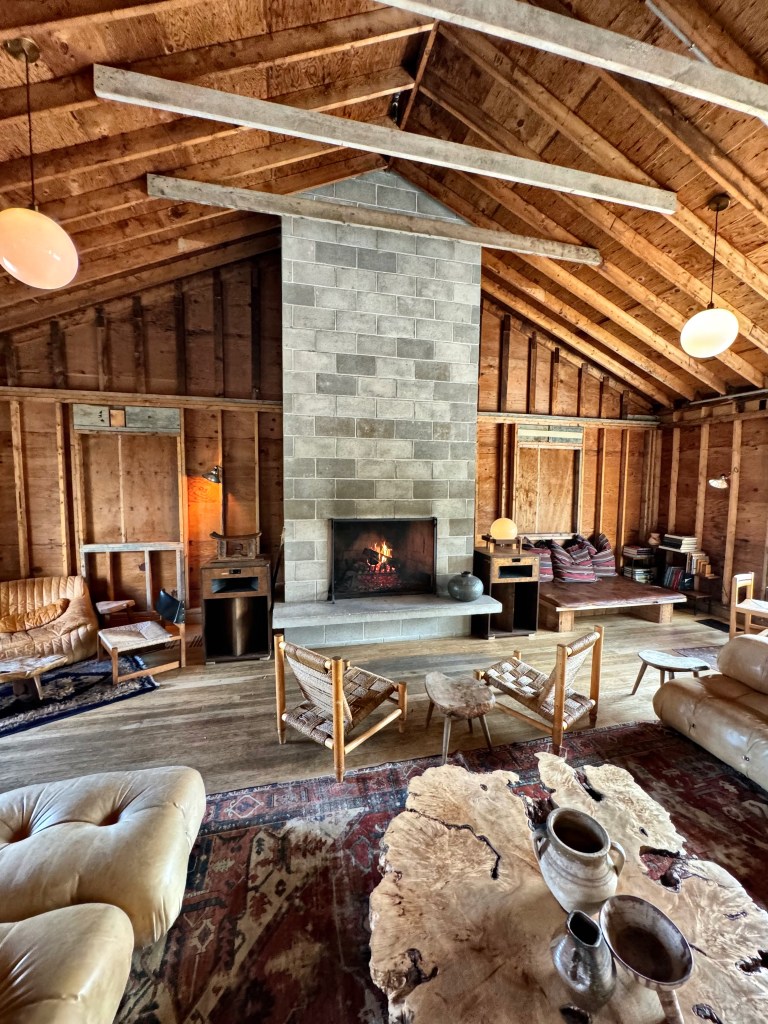
This past weekend, I had the absolute pleasure to stay at one of New England’s coolest new hotels, Tourists Hotel! Located in the industrial-turned-artistic town of North Adams in the Berkshires of Massachusetts this elevated, 48-room hotel modernises the aesthetic of a classic American motor lodge with contemporary design that feels cozy and inviting. The site was originally home to the Redwood Motel, a prototypical 1960s motel on the Mohawk Trail, a designated scenic tourist route which became popular in the automobile era of the 20th century. The reimagined motel was developed by Broder a Boston-based developer who worked with architect Hank Scollard and landscape architecture firm Reed Hilderbrand to design the new hotel. U-shaped in plan, the main part of the hotel surrounds a central courtyard with native flora. Facades are wrapped in white oak planks with the intention to blend the architecture with the surrounding woods. My favorite part was that the rooms have sliding glass doors which open to private decks which make rooms feel more personable. On the crisp fall day, the lounge was an amazing space to cozy up with some spiked cider and chat with other guests. An unexpected treat was to learn that the grounds include dozens of walking trails running along the Hoosac River with a suspension bridge that stretches 220 feet across. Pictures do not effectively showcase how special Tourists is, both in the design details and the attention to detail the staff had during my stay. If you are ever in the Berkshires for a weekend trip, I highly recommend you check them out!
New England is home to just three projects by world-renowned (and sometimes maligned) architect Frank Gehry. To me, architecture is best when it makes you stop, look, critique, and comment on it. Architecture is an art, and it should evoke emotion and discussion. Gehry’s work does just that. His only project to date in Boston is located at the corner of Newbury Street and Massachusetts Avenue in the Back Bay, a project I would assume most don’t realize was a Frank Gehry design. The building was originally built as a seven-story office building (originally planned as eight stories) over an MBTA station lobby in 1918. Designed by Arthur Bowditch, the building was completed a year later, built of buff brick and concrete. The Boston Elevated Railway Company (BERy) moved into the top floors of the building and it became known as the Transit Building. The construction of the Massachusetts Turnpike in the 1960s removed neighboring buildings to the south, exposing the southern, unadorned façade of the building. By 1986, owner-developer Richard Cohen began a major renovation of the building with Tower Records as the main tenant. Gehry worked with local architects Schwartz-Silver who added an eighth floor with a cornice support by angled struts. The south and east sides of the building were sheathed in lead-coated copper with the street-facing west and north sides retaining their original brick and stone, but with added glass canopies supported by more angled struts. As housing became more desirable, the top five floors were converted into 54 condominiums. The design is timeless and showcases how new and old can work together in a juxtaposition of styles well! What do you think of the building?
As many of you likely agree with me, most contemporary architecture and buildings in Boston (and in many U.S. cities) is bland and mundane, but there are some projects that really stand out for creative and contextual designs. Tilia in Jamaica Plain is one of the latter! When the Massachusetts Bay Transportation Authority (MBTA) began accepting bids for the development of an undeveloped linear parcel along Washington Street just south of the Forest Hills T-stop, developers jumped at the opportunity. Urbanica Inc., a local design/development group had the winning proposal which consists of approximately 110‐120 residential units in buildings of varied density ranging from a larger apartment building to more human-scaled townhouses. Led by architect Stephen Chung with Kamran Zahedi as developer, the design for the townhouses specifically is a contemporary nod to the triple-decker form we see so much in the surrounding area. The varied color and recessed sections provide a lot of depth and character to the development along the streetwall.
Few architects today continually put out good designs for new construction. One of those firms is Robert A. M. Stern Architects (RAMSA), who designed The Clarendon, a high-rise apartment building catty-corner to the tallest building in New England, the Hancock Tower. The Clarendon rises 32-stories atop a five-story limestone base, which relates to the scale of the base of the Old John Hancock Building (across the street). Above, the building is clad in the traditional Boston palette of red brick and limestone, but expressed in a way that relates to its modern neighbors with two-story recessed masses that break up the sheer height of the building. Above the base, the building sets back to create elevated green spaces and to mitigate wind conditions caused by the John Hancock Tower. Together the design features and materials provide a nod to historical context in Boston, while being unapologetically Modern. Part of the appeal for me is how this building does not command the corner, but adds to the rich layered fabric in this section of the Back Bay.