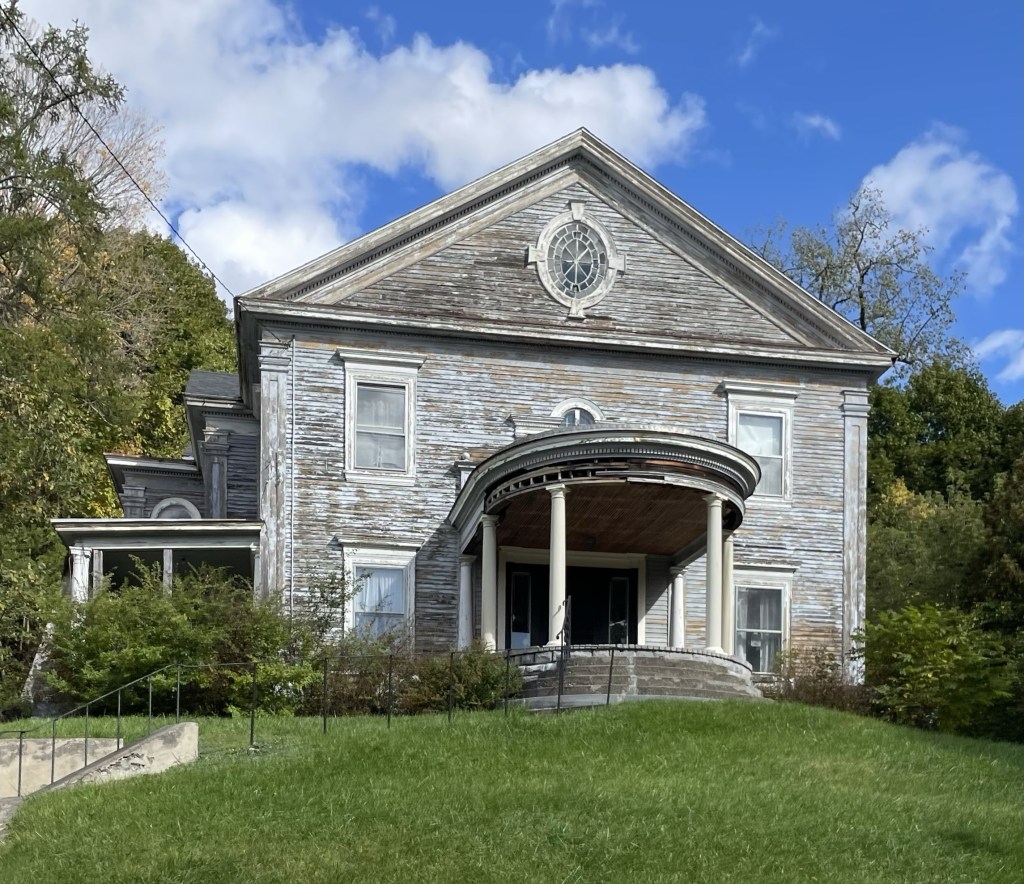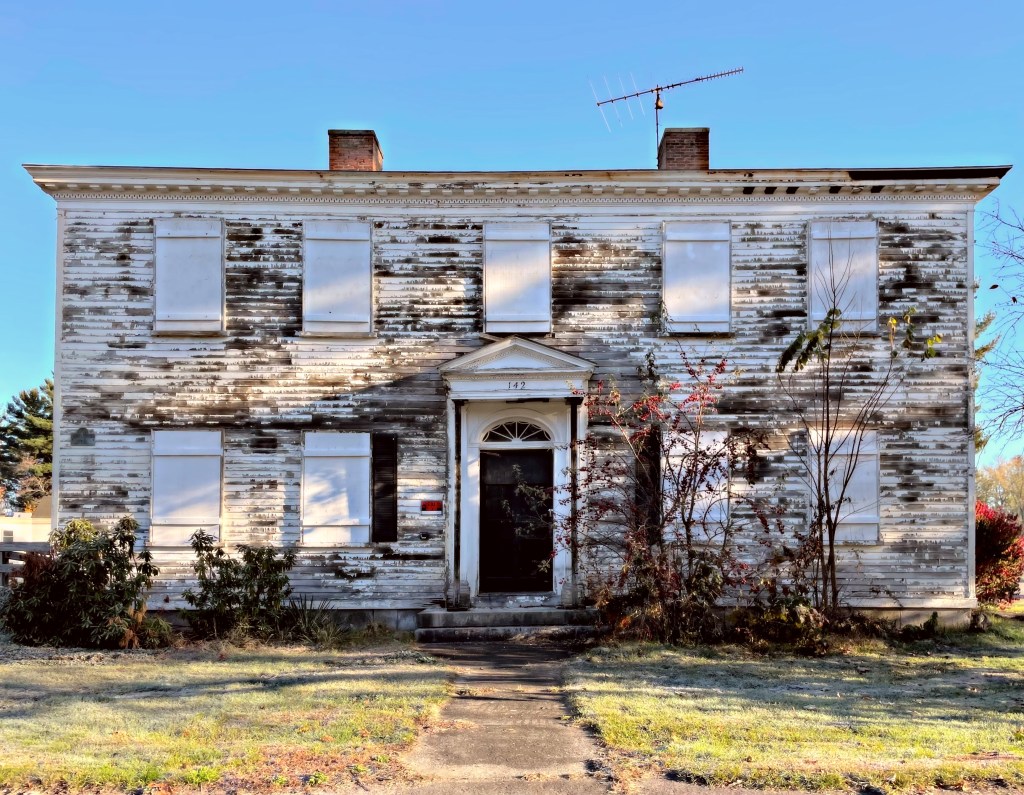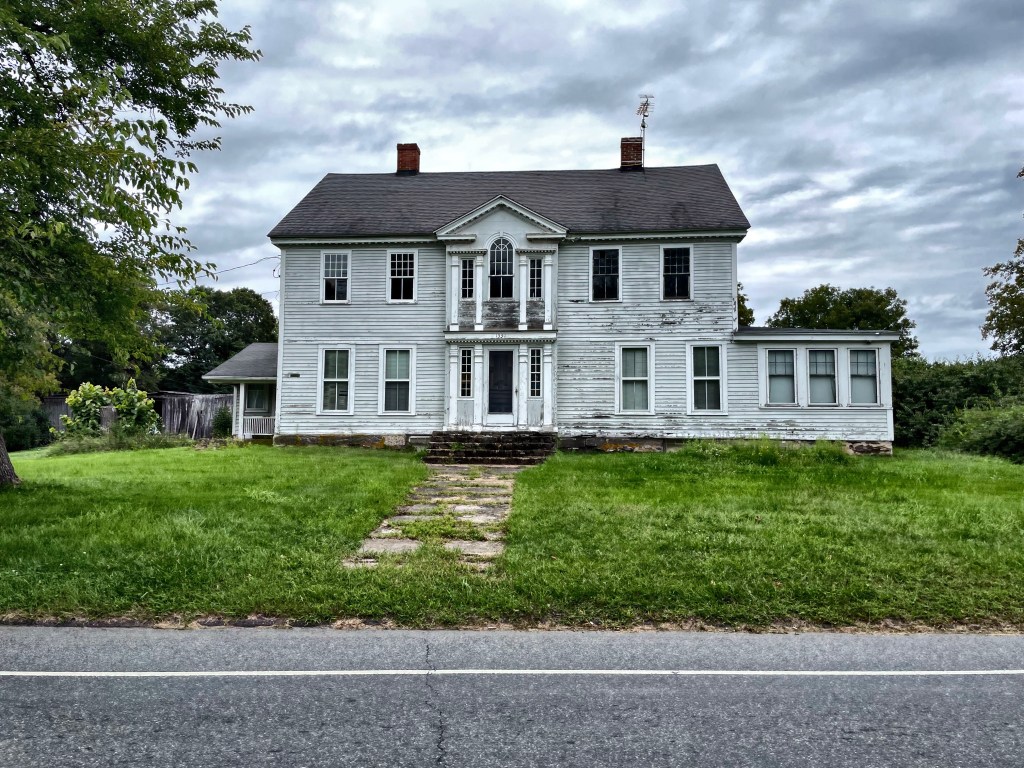
Ashe House // 1898

North Adams, like many formerly industrial towns and cities in New England has some amazing old Victorian and Colonial Revival houses built before the factories closed. Luckily for us, this town still has many unaltered residences, with some needing more love than others. This is the Ashe House, built in 1897-8 for Patrick J. Ashe and wife Katherine O’Brien. Classical details from many different styles make this house unique. An oval window dominates the traditional Greek facade which includes a pediment and side pilasters. A palladian window sits over the elliptical porch which is supported by columns. This one has so much potential!!

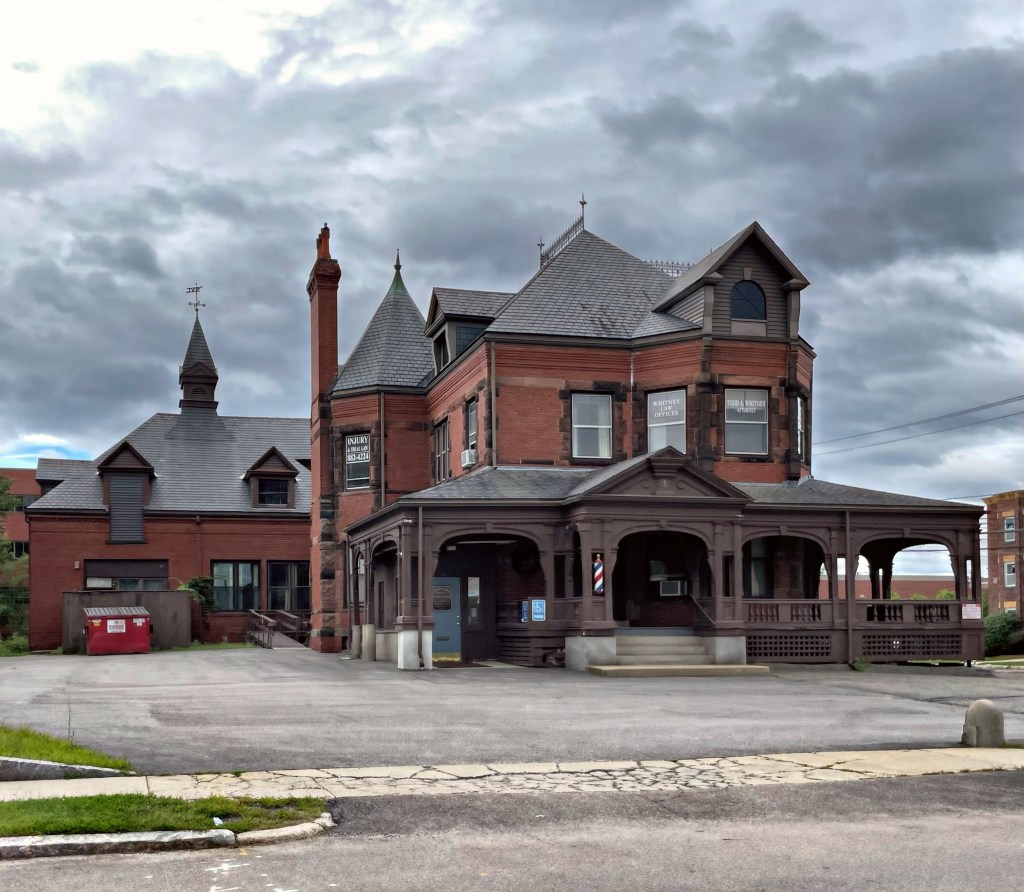
Charles and Asenath Burke Mansion // 1889

One of the finest homes in Nashua, New Hampshire is this stately brick and brownstone mansion at the corner of Main and Prospect streets. It was built for Charles Horace Burke (1850-1912) and his wife, Asenath Burke (1856-1943) in 1889 as one of the most up-to-date residences in the city. As a young man, Charles was known as “the busiest businessmen” in Nashua. He would become the president of the Nashua Iron and Brass foundry as well as the director of the Second National Bank. In 1878, he was the city’s tax collector and he served as Mayor from 1889 to 1890, soon after he had this estate built. As mayor, Mr. Burke was responsible for the building of the Soldiers and Sailors Monument in Abbot Square and the Court Street Police Station. As Mayor, Burke also improved the sewage system, streets, sidewalks, and highways of Nashua. He hired architect Charles J. Bateman to furnish the plans for the house, which would take over a year-and-a-half to build. Bateman would later be named City Architect for the City of Boston, designing schools, firehouses, and more during his time there in 1893-4 and 1898. The house is a high-style Queen Anne Victorian home of brick with brownstone trim. There is an intact former carriage house at the rear. The house was inherited by Charles and Asenath‘s only child, a daughter, Tena, in 1914. She sold it two years later to Dr. Augustus W. Shea and his wife, Lucy. When Lucy passed away in 1948, her daughter sold the property to the Nashua Medical Center. It has seemingly been used as offices ever since. The large corner lot and adjacency to a large medical center across the street have me worried that this property may be threatened in the future for redevelopment, here’s to hoping Nashua can preserve this significant and architecturally grand estate! Thank you to the Nashua Historical Society for assistance researching this post!

Giddings Homestead // c.1800

This old gambrel-roofed home sits on the beginning of Pautipaug Hill Road just outside the industrial village of Baltic, in Sprague, Connecticut. The house’s history is a little unclear, but it shows up on historic maps as being owned by W. Giddings. This appears to have been Walter Giddings (1788-1854). Walter may have built or inherited this property from his father Nathaniel, who died in 1809. Walter married Laura Lucretia Fillmore in 1811 and they had four children. Laura died in 1827 at just 37 years old and Walter remarried within a year to Lydia Lathrop Ladd. The property remained in the Giddings Family at least into the second half of the 19th century. It was later “Victorianized” with two-over-two windows, side and front porches, and a octagonal bay window. The home has been suffering from deferred maintenance for over 15 years (as far back as Google maps goes) and was listed for sale, so here’s to hoping this old beauty survives!

Everett Masonic Hall // 1910

Further up Broadway from Everett City Hall, you’ll find the town’s Masonic Hall, a now-vacant institutional building which contributes to the diverse streetscape and character of Everett’s built environment. The local Palestine Lodge of the Masons in Everett originally met in its original lodge, built in 1870. A corporation known as the Everett Associates, which included only Masons, subsequently constructed the original Masonic Building. The property burned in a fire in 1908, leading to a new building campaign by members. A site was acquired further up Broadway, and the groundbreaking was held on June 11, 1910, led by Everett Mayor Charles Bruce, a past master of the Palestine Lodge. Mayor Bruce also served as the chair of the Building Committee. In his remarks at the groundbreaking, Bruce noted the membership of the lodge as over 500 men! Inside the cornerstone, members placed: original papers from the former Masonic Building, a history of the Palestine Lodge, a list of lodge members, photographs, news articles, and other ephemera. The Boston architectural firm Loring and Phipps was responsible for the design of the building, which is constructed of water-struck brick and is of the Classical Revival style. After WWII, membership declined sharply, and the organization sold the building in the 1980s. From the mid-1990s to 2019 the building was owned by the Islamic Association of Massachusetts, and suffered from deferred maintenance. The red “X” on the building is for firefighters not to enter the building in case of fire or emergency. Luckily, the building was purchased and the new owner hopes to convert the building into housing, preserving the structure and using Historic Preservation Tax Credits. Fingers crossed!!

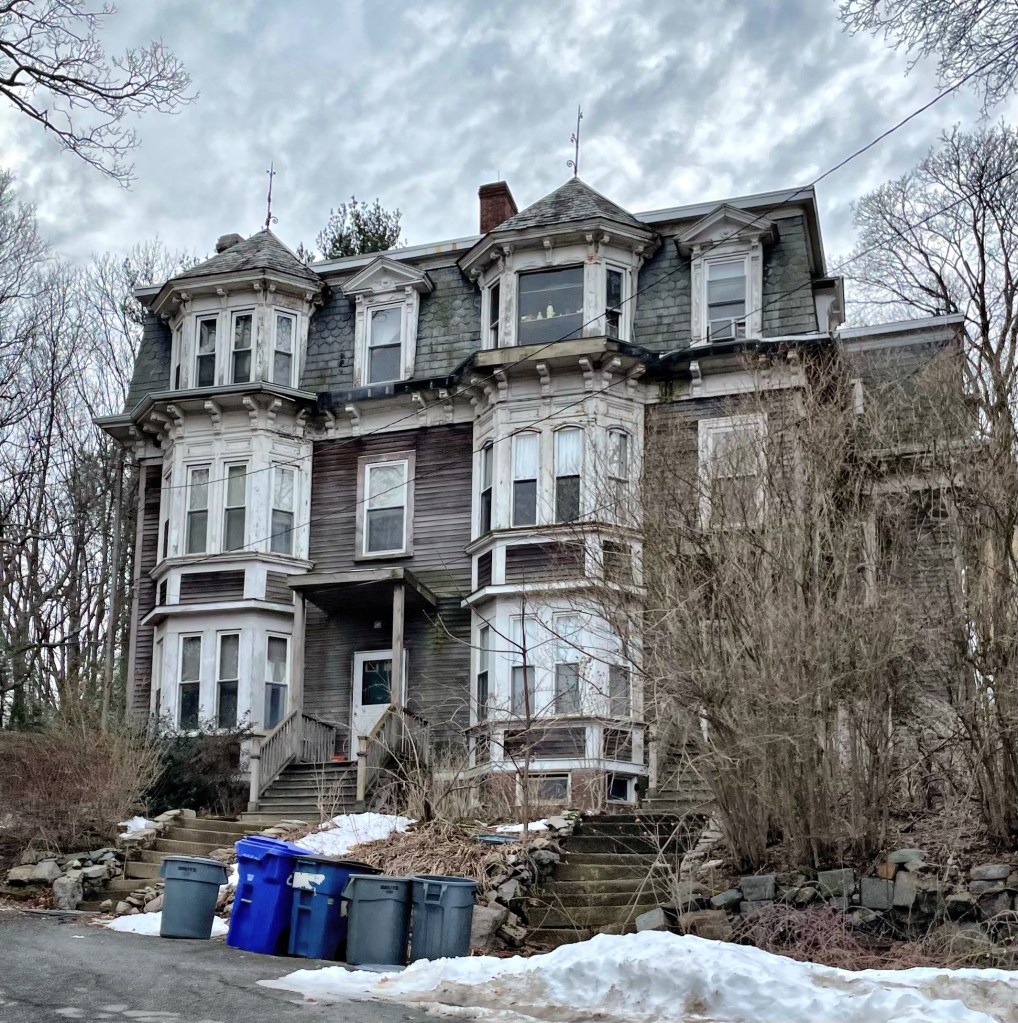
Susanna Cary Rental Property // c.1884

Isaac Harris Cary’s land holdings adjacent to Forest Hills Cemetery in Jamaica Plain, Boston, saw a surge in value when the cemetery and Forest Hills Station were constructed, opening up the area for development. After Isaac’s death in 1881, his unmarried daughter Susanna, built this large Second Empire style building contributes to the varied 19th century architecture of the street. This double-house was constructed around 1884, seemingly as a rental property which provided Susanna income while residing nearby. The two units suffer from some deferred maintenance, but are excellent examples of the Second Empire style in a double-house form.

Cudworth House // c.1790

This house in Assonet Village in Massachusetts has SOOOO much potential, I just want to save her! The Cudworth House was built at the end of the 18th century, possibly for John Cudworth a mariner who owned a wharf just across the street. By the mid-late 19th century, the home was renovated, given the steep gable, bracketed details, and projecting entry. The house has seen better days, and needs some serious TLC to bring it back to livable conditions.

Update: A fire in August 2022 damaged the property. It is unclear at this time as to the condition and future of the home.

Freetown Village School // 1794

The Freetown Village School was originally built in 1794 as a lawyer’s office. At that time, it was half as wide as its current configuration. Around 1800, the office became a private academy for children of sea captains and ship-builders in Assonet. In 1858, the Town of Freetown purchased the building and turned it into a public school. By 1906, the school was enlarged and given the Colonial Revival detailing we see today. Like many smaller schools in New England, this school building was outgrown after WWII, and converted to other uses for the town, with uses from committee meeting space to storage. The schoolhouse was finally abandoned at the end of the 20th century, and stood empty. The roof developed leaks and water infiltration became a serious problem. In 2011, the Town approached the Massachusetts Historical Commission for an Emergency Grant, and was granted $30,000 for the preservation and restoration of the decaying building. The roof has been replaced and structurally repaired, but more work is to be done. I can’t wait to come back and check up on this beauty.

Assonet Congregational Church // 1808

The Assonet Congregational Church, now the United Church of Assonet was originally known as the Town Church and was organized in 1704. In 1807, fifteen residents of town, all from prominent families, gathered to ‘‘manifesting the desire to enter into a Church estate.’‘ Land was deeded to the church in 1807, and the Federal style edifice was constructed the next year. Documentation on its construction is limited, with research stating, “we can only speculate on the construction of this beautiful Church
building. It is believed that Ebenezer Peirce (1777-1852) of Assonet and Middleboro was the master builder assisted by ship builders of the village. Mr. Peirce sent his sloop “Unicorn” to the Penobscot River region in Maine to procure most of the lumber.” The church is in great condition today, even retaining its bell, cast by Paul Revere, and original box pews. Sadly, in October 1910, the steeple was struck by lightning and the acorn top blew off. The 1880s clock was damaged but repaired. The steeple was re-installed or reconstructed, but deferred maintenance required the church to remove it and the Revere bell in the early 2000s until funding could be gathered to restore, nothing yet. What I wouldn’t do to see the original acorn top of this steeple again!

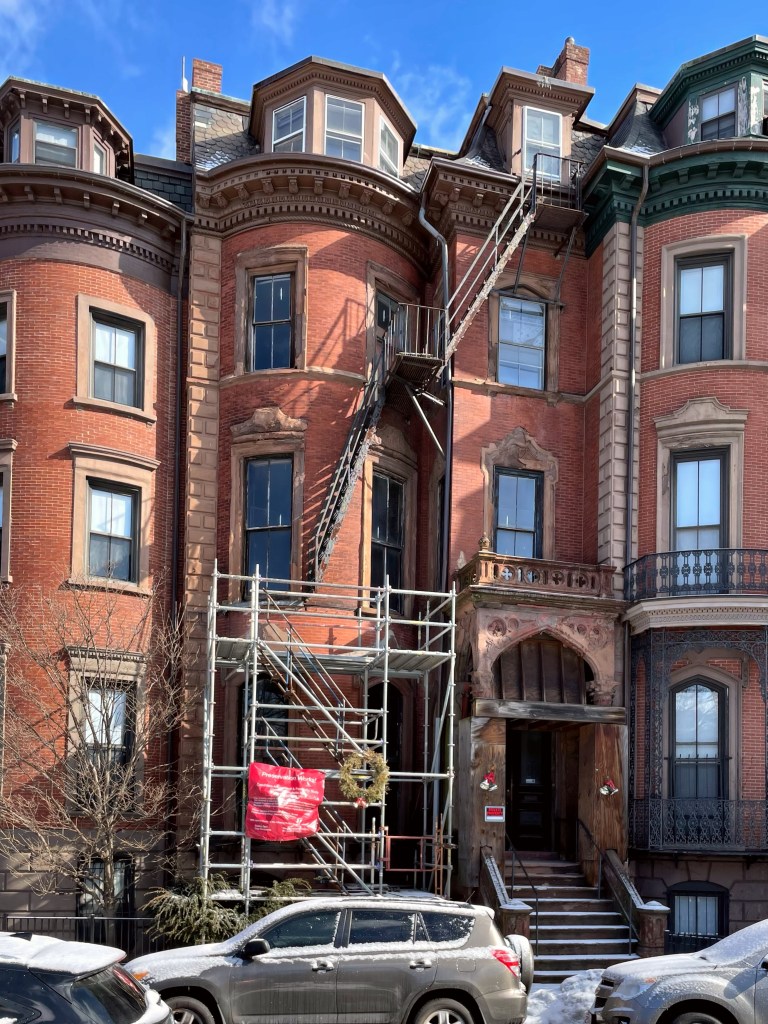
League of Women for Community Service Building // c.1860

Just a block away from the Women’s Service Club Building (last post) on Mass. Ave in Boston, you’ll find this landmark, with both architectural and cultural significance. The townhouse (along with the house next door) was built around 1860 for William and Martha Carnes. William Rice Carnes was a fine lumber importer and furniture maker, bringing in high-quality mahogany and rosewood to Boston, aligning with the Victorian era housing and furniture boom here, he made a lot of money. Inside his home, he showcased the quality and durability of his product, much of which remains today. It is believed that the house was a stop on the Underground Railroad, with the connected basements of the two houses (#558 and #560) providing an easier escape in the event of a slave-catcher coming by. After William died, the property eventually sold to Nathaniel W. Farwell of Maine on October 29, 1868. The Farwell family occupied the house only until 1910, and as evidence of the decline of the South End, it stood empty until 1920 when it was sold to the League of Women for Community Service, a pioneering Black women’s organization. The League emerged from the ‘30s and ‘40s and as late as the 1950s as a safe place and a popular gathering place for African Americans in Boston. Many hotels at the time were not willing to accommodate Black patrons or charged so much that events there were unattainable. Coretta Scott King lived in the home while she attended college at the New England Conservatory and honed her amazing singing skills. It is at the home that she and Martin Luther King Jr. – then a student at Boston University – likely had dates and began their courtship. The LWCS has recently received funding through grants to preserve and restore the landmark to her former glory.

Women’s Service Club of Boston // c.1860

This historic rowhouse in the South End of Boston was home to the Women’s Service Club, a social and volunteer organization made up of Black women to uplift Black Bostonians of varied backgrounds, including soldiers, students, migrants and mothers. “464,” as some locals admiringly called it, was formed in the early 20th century as Boston. The city, once known as “Freedom’s Birthplace” and the “Athens of America” as a hub of abolitionist activity leading up to the Civil War, saw extreme segregation in housing and education for its Black residents by the early 20th century. From this, local activist Mary Evans Wilson organized a knitting group in 1917 to support soldiers of color fighting in World War I. An estimated 350 women joined the group, donating their talents to produce scarves and gloves for servicemen. Humanitarianism guided the activity of the Women’s Service Club’s over the next half century. This building was purchased in 1919 and operated as part-meeting space and part-settlement house. “A Home Away from Home,” as some described it, the building offered affordable shelter to female workers, migrants, and college students barred from on-campus housing due to racist policies. One of the club’s most prominent members was Melnea Cass (1896–1978), who served as its President for more than fifteen years. Cass initiated the Homemakers Training Program which certified domestic workers so they would be assured a liveable minimum wage, social security and other benefits. The club continues to do great work, but could use funding to restore the landmark building!