Heywood Brothers & Wakefield Co. Building // 1897

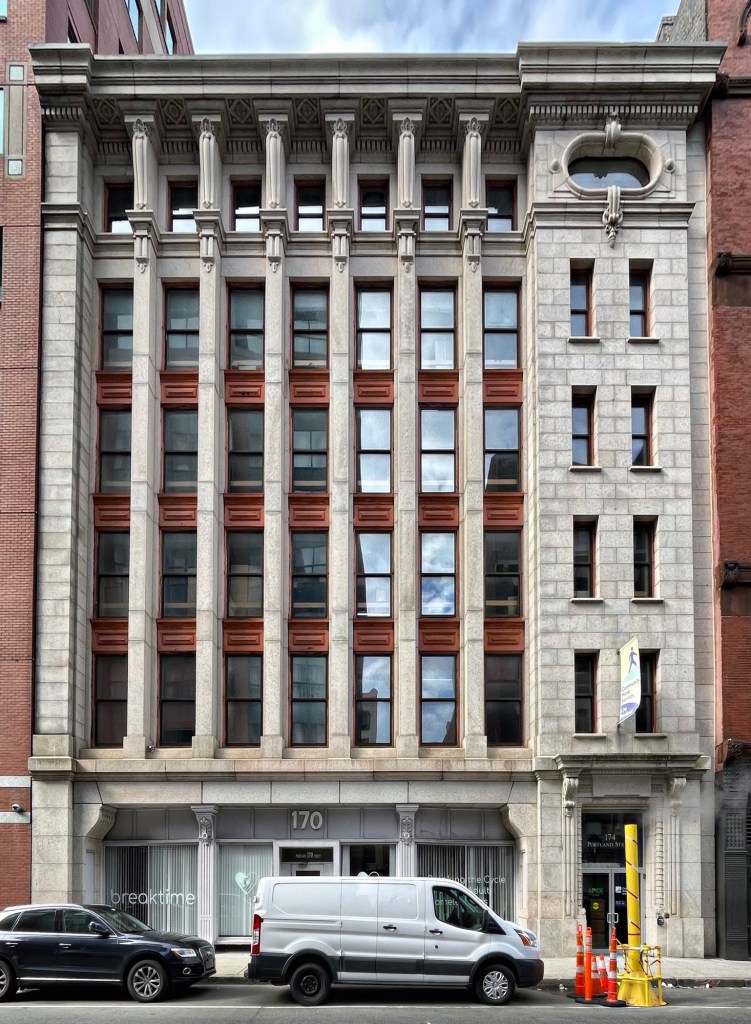
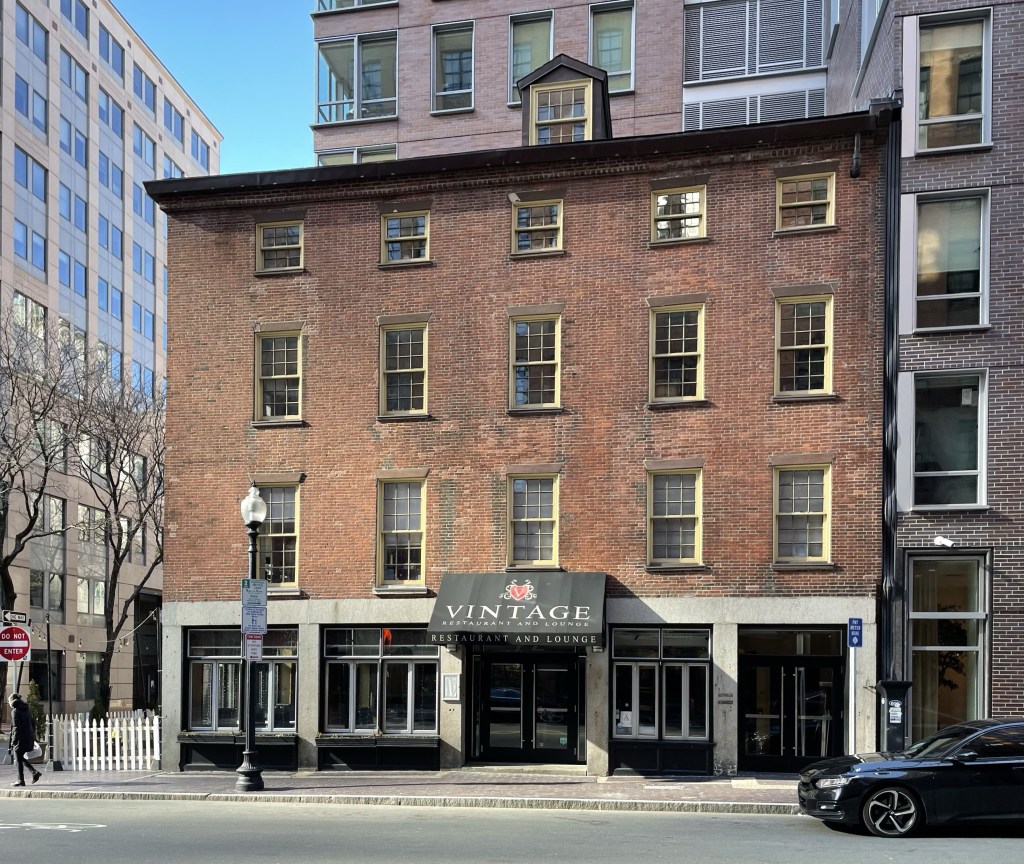
Nearly a decade after the heirs of Peter Bent Brigham and his wealthy estate erected the Peter B. Brigham building in the Bulfinch Triangle Historic District of Boston, they would again develop more of the block the trust owned, building this stately commercial building. Much of the Peter Bent Brigham Building was rented to the Heywood Brothers & Company and Wakefield Company, both furniture makers. Heywood Brothers was established in 1826, Wakefield Company in 1855, with both firms producing wicker and rattan furniture. The companies merged in 1897 and moved into this building constructed by the Brigham estate that same year. The building was designed in a unique version of the Beaux Arts and Classical Revival styles by relatively unknown architect Stephen Russell Hurd Codman (1867-1944), a first cousin of more famous architect and interior designer, Ogden Codman. Stephen Codman opened a firm with the French-born architect, Constant Desire Despradelle, designing some landmark buildings in Boston together. The Heywood Brothers & Wakefield Company Building on Portland Street is a distinctive granite-faced building standing six-stories tall with engaged box columns spanning four floors and dividing the bays of the facade.
Broad Street Association Building // 1805

One of the few remaining Federal period buildings in Downtown Boston is this survivor located on Broad Street, one of the best streets in the city! The building was constructed for the Broad Street Association, which was made up of members: Uriah Cotting, Harrison Gray Otis, Francis Cabot Lowell and other prominent Boston entrepreneurs with the goal to upgrade Boston’s waterfront south of Long Wharf which comprised of an outdated system of individual wharves. The organization hired the esteemed Boston architect, Charles Bulfinch to furnish plans for the building, of which they paid him $100. While this modest example of the Federal style is not Bulfinch’s best work, is is notable as he was largely responsible for changing the architectural face of Boston, not only through own designs, but also through influence on other architects and builders of the time. This building was long owned by Francis Cabot Lowell and was rented out to commercial ventures, including some of the later decades of the 1800s when it was occupied by C. D. Brooks, a maker of pickles and preserves. The building was restored by CBT Architects in 2005 as part of a larger redevelopment of the block which includes a mid-rise apartment building, Folio.

Pagoda Building // c.1850-1917

For the last on this series of Lost Boston buildings, I present this little-known landmark which was once neighbors to the Old State House. The Pagoda Building as it was named, was located on the corner of Washington and State Streets and was one of the tallest buildings on the street upon completion. The seven-story building of Quincy granite exhibited round arched windows and an interpretation of a belvedere at the roof which served as a penthouse. The building’s upper six stories were residential, including the spectacular Oriental penthouse at the top, with retail space at the ground floor. The architect was a recent immigrant from Britain named George Snell, who clearly made a name for himself, later entering a partnership with James R. Gregerson. The Pagoda Building, which was originally an early “skyscraper” in Boston was quickly surpassed in height and floor plate size and was deemed inadequate for such a prominent location. It was demolished by 1917.

Burdett Building // 1928

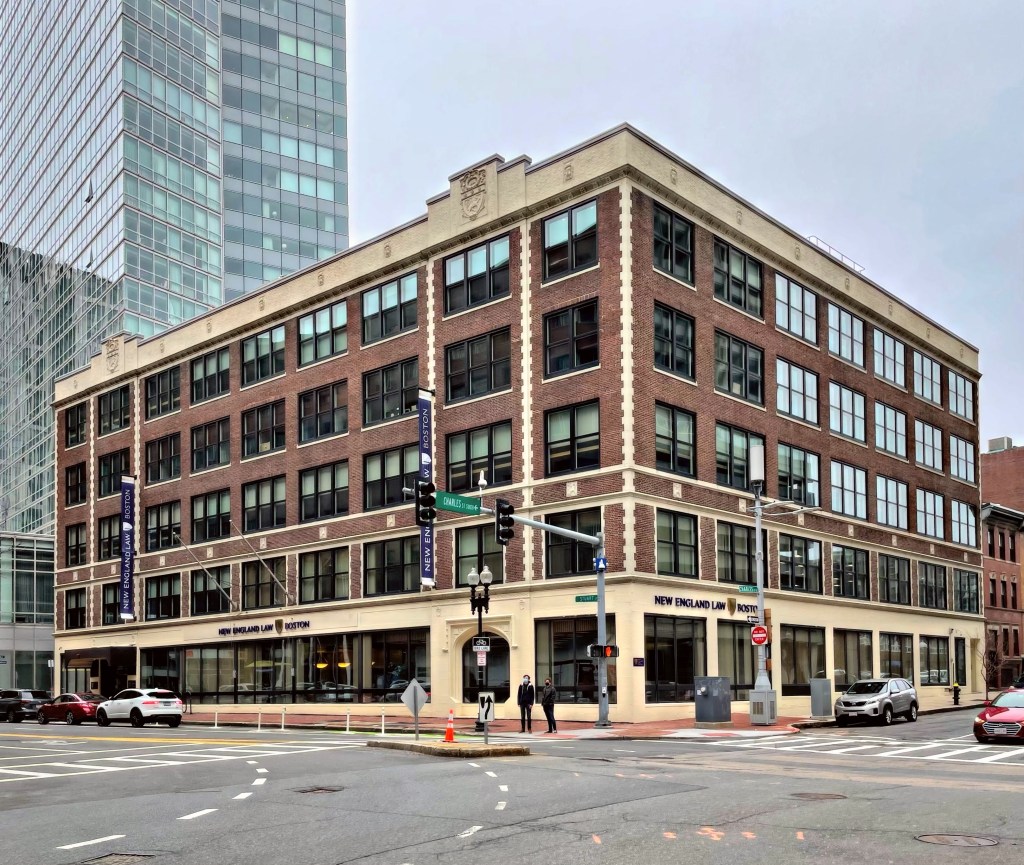
In 1921, Stuart Street was widened and extended between Boston’s Back Bay and Bay Village neighborhoods, which necessitated razing of all buildings along the route. From this, new lots were platted along the street where once thriving businesses were. Some relocated and others rebuilt. In 1927, the Park Square Corporation purchased seven contiguous lots at the corner of Stuart and Charles Streets and began construction of a large office building with storefronts on the ground floor. The Burdett Building opened in 1928. The building was built for Burdett College, which was founded in 1879 and focused on business and shorthand courses for students as a junior college. Architect Thomas H. James wanted the building to be like the new buildings at Princeton and Yale. The design featured Gothic inspired entrances and stone carvings of books and lions. Burdett College occupied the building until the 1950s and it was subsequently sold. By 1980, the building was acquired by the New England School of Law, who occupy it to this day as a place of learning.

Paine’s Furniture Factory // 1871

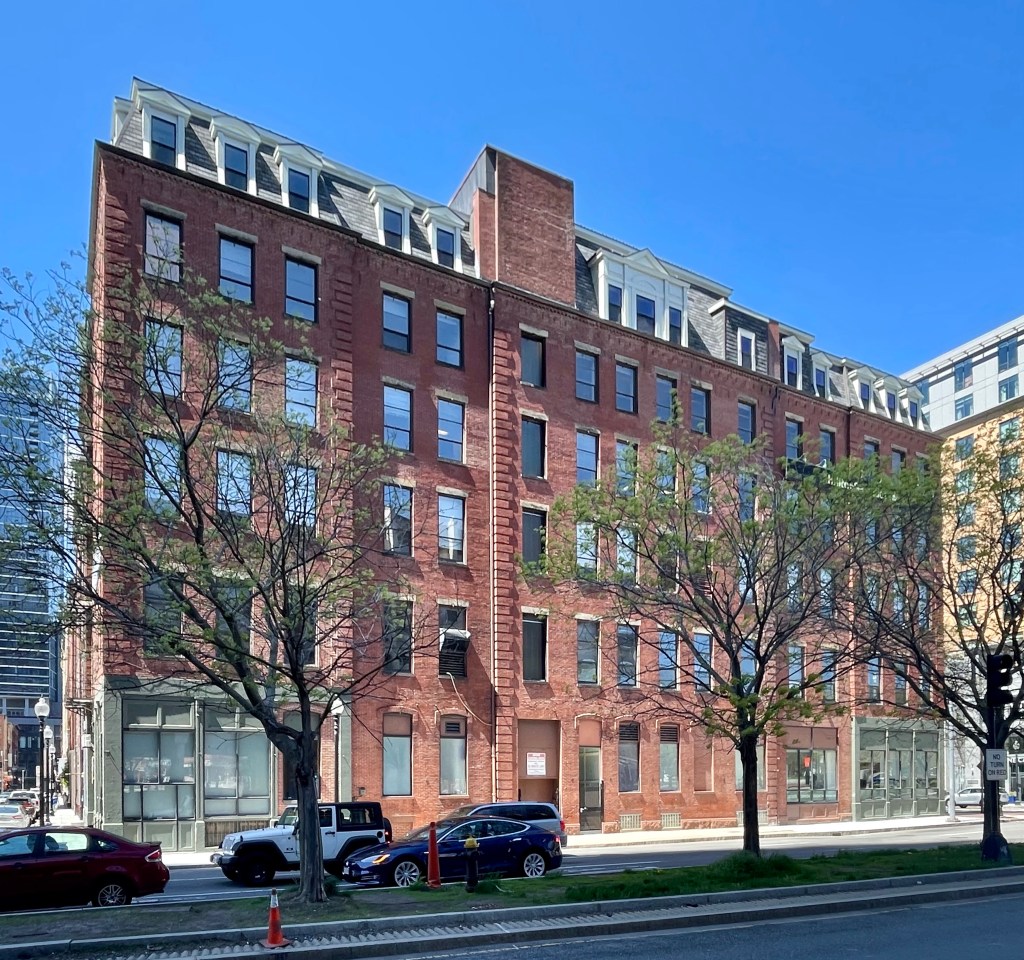
Founded in 1835, Paine’s Furniture Company was at one time the largest furniture manufacturer and dealer in New England and had a nationwide business. The company was founded by Leonard Baker Shearer, who was joined in business in 1845 by John S. Paine, his son-in-law. Upon the death of Shearer in 1864, the name of the firm was changed to Paine’s Furniture Company. The company occupied a couple wooden and metal buildings on this site in the Bulfinch Triangle until a fire destroyed the complex. The growing firm took this opportunity to hire one of the most successful architect Gridley J. F. Bryant who worked with a colleague, Louis P. Rogers, to design the fire-proof building. The Second Empire style building with mansard roof was split into three sections with the rear two rented out to other companies, while Paine’s occupied the south-facing (main) facade. When Paine’s moved to their new building in the Back Bay, they sold this building and later alterations severely diminished the original design of the building. The current hodgepodge of alterations creates a mess of what was once an undeniable architectural landmark.

Kneeland Street Station // 1847-1918

All Aboard!! The Kneeland Street Station was built at the southern edge of Downtown Boston in 1847 for the newly established Old Colony Railroad Company. By the early 1840s, the city of Boston had six major rail lines connecting it with other places including Lowell, Maine, Fitchburg, and Salem to the north, Worcester to the west and Providence to the southwest. The southeastern part of Massachusetts had yet to be served by a rail link to Boston. On March 16, 1844 the Old Colony Railroad Corporation was formed to provide a rail connection between Boston and Plymouth. Construction of the line began in South Boston in 1844 and the line opened to Plymouth in 1845. The company needed a more accessible station to the residents and businessmen of Downtown Boston, so they acquired a large parcel of land on Kneeland Street to extend the line. The corporation hired architect Gridley James Fox Bryant, who designed this stunning railroad station constructed of brick with strong stone trimmings. As was common, a large clock was affixed to the building to allow waiting passengers to know how long they would be waiting. From 1845 to 1893, the Old Colony railroad network grew extensively through a series of mergers and acquisitions with other established railroads, serving lines to Providence, Newport, Fall River, New Bedford and down the Cape. The railroad was acquired in 1893 by the New York, New Haven and Hartford Railroad, and sought to consolidate the many local stations into a larger building. They soon after began construction on Boston’s South Station, re-routing lines to that new building. They sold off the excess stations, including this one on Kneeland Street, and it was eventually demolished in 1918.

Western Union Building // 1930

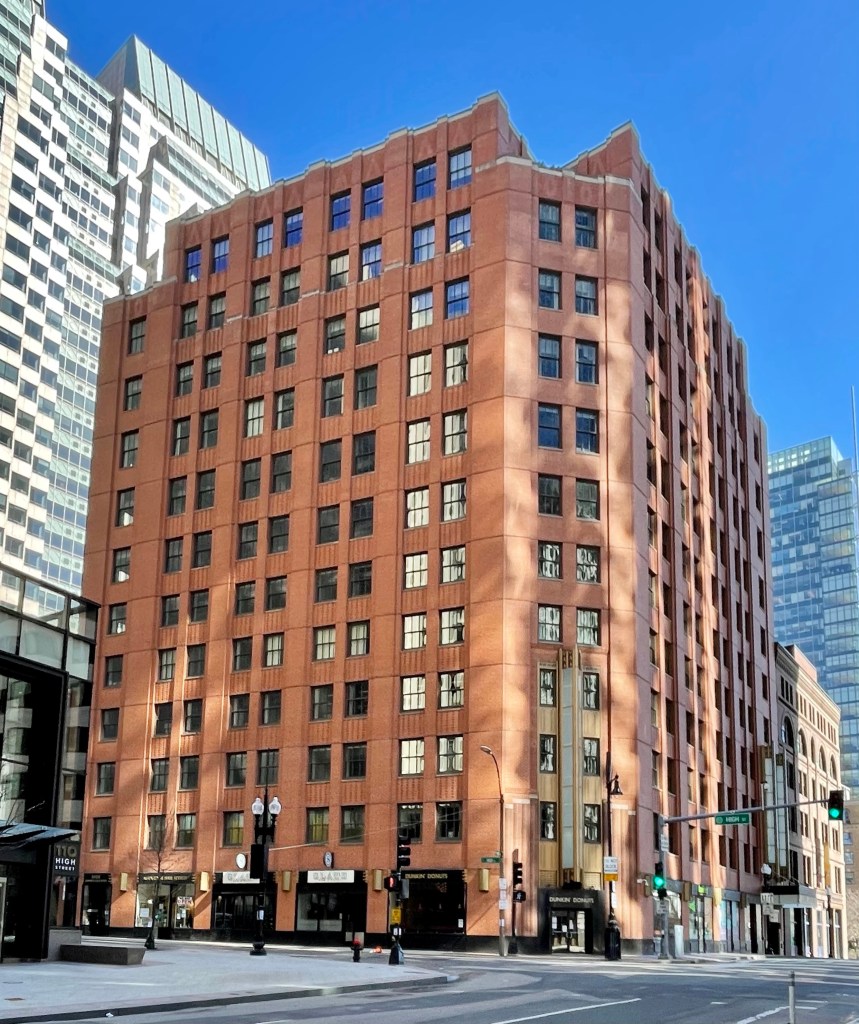
While Boston doesn’t have as many iconic Art Deco buildings as New York or Chicago, we do have some that pack a punch! Located at the southern end of Downtown Boston, the Western Union building at the corner of Congress and High streets served as a headquarters for the third district in Western Union’s eastern division. Western Union was founded in 1851, and ten years later, built the first transcontinental telegraph line. The company made a brief foray into the telephone field but lost a legal battle with Bell Telephone in 1879 and thereafter concentrated solely on telegraphy. In the 20th century, Western Union diversified its operations to include: leased private-line circuitry, a money order service, as well as telegrams and mailgrams. The company’s Boston building was designed at the same time as their New York City headquarters, designed by Ralph Thomas Walker, and the buildings are strikingly similar, just with the Boston building on a smaller scale. The building in New York is among my favorite Art Deco buildings ever, as the use of red brick in varied patterns creates such a stunning composition. Amazingly, in 2004, water infiltration behind the original brick façade of the Boston building necessitated the removal and replacement in-kind of the entire brick façade. The existing signage and light fixtures, designed in the Art Deco style were added at that time.

B. F. Keith’s Boston Theatre // 1894-1952

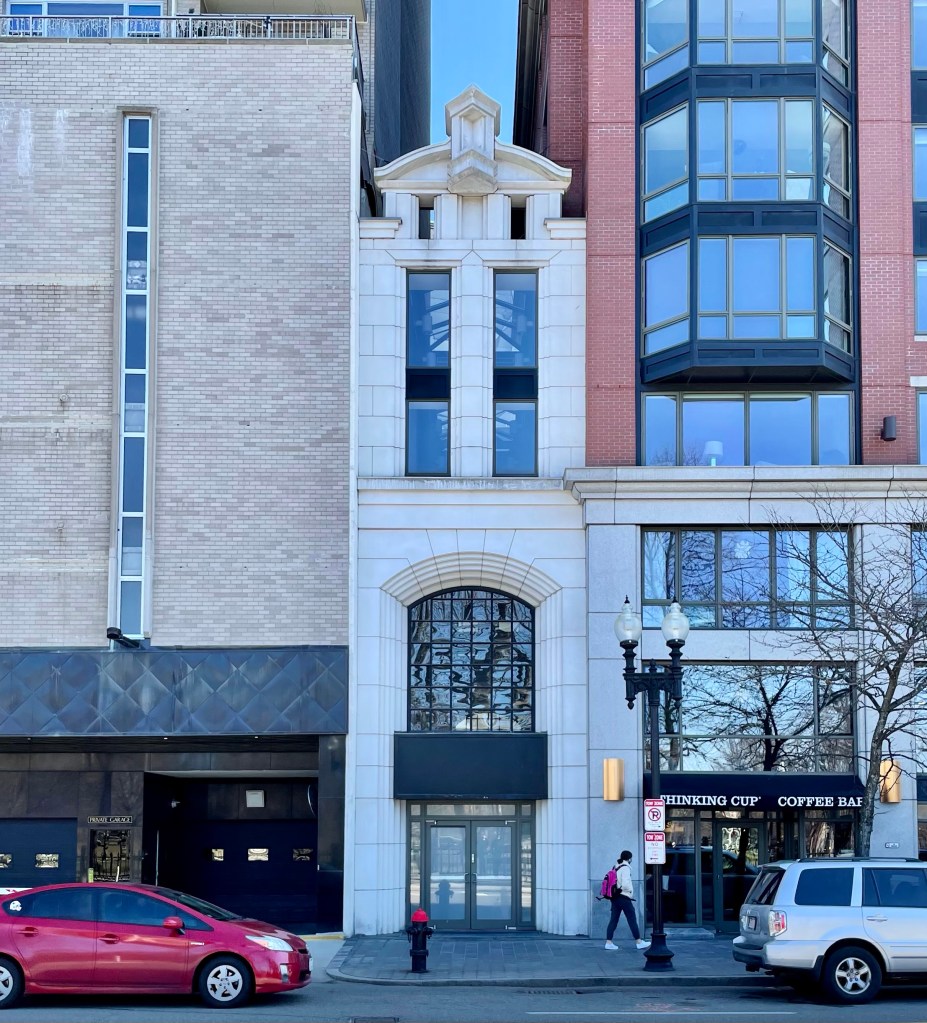
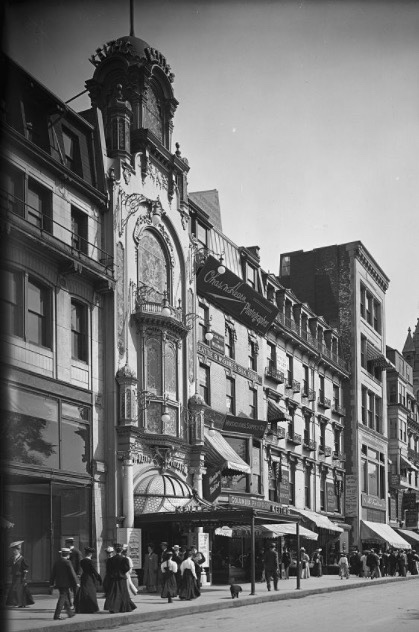
The other day, I was walking in Boston Common along Tremont Street, when I noticed this oddly ornate building wedged between larger, modern buildings. I HAD to investigate! The building was actually constructed as an arcade/covered walkway which ran to Mason Street behind, with a tunnel running under that street into the B.F. Keith’s Theatre. In 1892, Benjamin F. Keith and his business partner E.F. Albee purchased land off Mason Street, a scarcely trafficked street between the busy Tremont and Washington Streets in Boston’s Theater District, with the goal of creating the city’s finest vaudville theatre. The duo hired J. B. McElfatrick & Son, architects who specialized in theatres, to design the new B.F. Keith’s. Due to the site being wedged between two main streets, entrances were built off both Tremont and Washington with flashing lights and marquees, guiding patrons inward. The Tremont facade was especially grand so that B. F. Keith’s New Theatre could be advertised on, and approached directly from, Boston Common, with lights flooding the park. The theater opened in 1894 and was over-the-top with intricate details and sculpture all over, appealing to the city’s wealthy as a place to see the arts. Although it was primarily a vaudeville house during Keith-Albee’s ownership, famed inventor Thomas Edison demonstrated his new Vitascope movie projector here on May 18, 1896. This was the first projection of a movie anywhere in Boston. As live shows made way for motion pictures, the theater adapted, but suffered around the Great Depression when would-be patrons decided to save their limited money. In 1939, the theater was converted to a movie theater named the Normandie. The theater was demolished in 1952 for a surface parking lot to provide better service to the Opera House (originally B.F. Keith’s Memorial Theatre, confusing I know) and Paramount Theater. Today, all we have left of the once beloved B.F. Keith’s Theater is the small annex, which is virtually unrecognizable from historic images as most of its decoration and the top two stories were removed.

1906 image courtesy of Library of Congress.

Hennessy’s Bar // c.1826

St. Patricks Day in Boston is not the same this year. It has been a year since I have been crammed into a dimly lit, wood-paneled Irish Pub, with a pint of Guinness and good conversations with strangers. So for now, I will drink my sorrows in highlighting one of many Irish pubs in Boston, Hennessy’s. The building was constructed as one of a row around 1826 along with the adjacent buildings on the block (today containing Son’s of Boston and Blackstone Grill). All four buildings were identical and stood 3-1/2 stories as Federal style commercial buildings with retail space at the ground floor and office or residences above. The buildings were sold off separately and in the 1960s, this building was acquired by the Charlestown Savings Bank, who thought to “Colonialize” the building. They removed 1-1/2 stories and altered the openings at the ground floor (it could have been MUCH worse). The bank moved out just decades later and the building has since been home to Hennessy’s.

Commonwealth Trust Company // 1908-c.1974

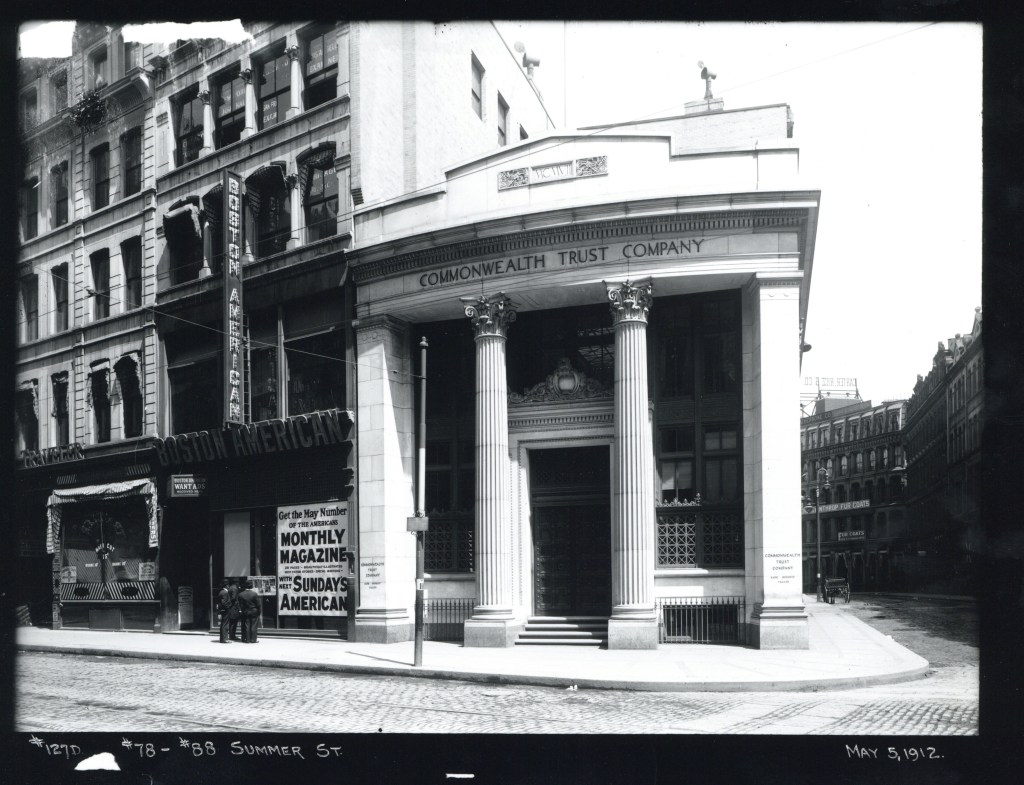
Ca. 1910 image courtesy of Boston Public Archives.

Located at the corner of Summer and Devonshire Streets in Downtown Boston, the Commonwealth Trust Company’s two-story marble banking house commanded the corner, despite its short stature. The building, completed in 1908, was constructed with Lee marble and decorated with ornate wrought and cast-iron grilles over windows. The building was designed by the architectural firm of Parker, Thomas & Rice in the Classical mode with large, fluted Corinthian columns and boxed corner pilasters framing the recessed center entrance, Corinthian pilasters ran along the side facade. At the inside, the building was coated with Cararra and Blanco marble with paneled oak offices. At the ground floor, offices and banking stations framed the outer walls, with the safety deposit boxes located on the second floor. The building was demolished by the 1970s and replaced with a one-story minimalist Modern building (I could not figure out why the former building was razed). The new building was demolished after a few decades with a larger building, better fitting the commercial district.

Old State House // 1713

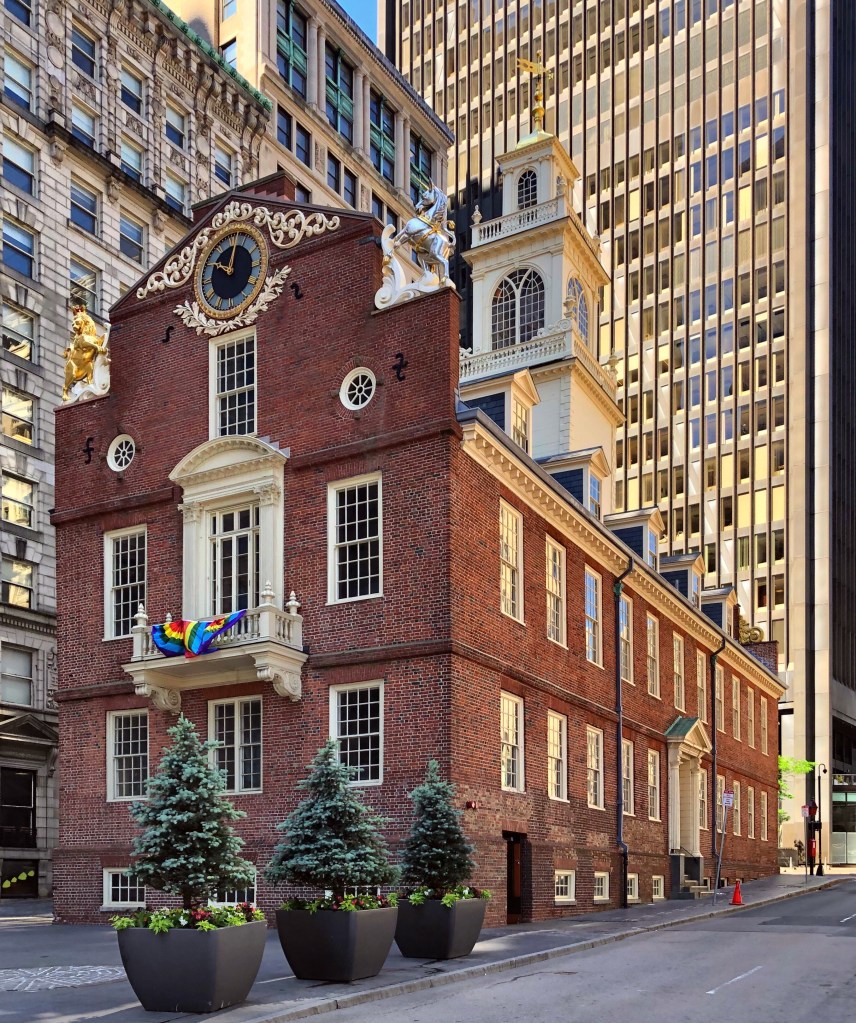
Nestled among the towering skyscrapers of Downtown Boston, the Old State House stands proudly, giving us a glimpse into pre-Revolutionary life and events. Happy Fourth of July!

Built in 1713, the “Town House” as it was originally known, served as a merchants’ exchange on the first floor and the seat of colonial and later state government on the second floor throughout the 1700s. The royal governor, appointed by the King of Great Britain, held his office in the building until 1775, and from the balcony gave voice via decrees and speeches to the King 3000 miles removed from London. Above the balcony, a lion and unicorn—royal symbols of the King of Great Britain—graced the main façade facing the public square.

“A cobblestone circle beneath the Old State House balcony marks the site of the 1770 Boston Massacre. Tensions ran high in Boston in early 1770. More than 2,000 British soldiers occupied the city of 16,000 colonists and tried to enforce Britain’s tax laws, like the Stamp Act and Townshend Acts. American colonists rebelled against the taxes they found repressive, rallying around the cry, “no taxation without representation.” On the frigid, snowy evening of March 5, 1770, Private Hugh White was the only soldier guarding the King’s money stored inside the Custom House on King Street. It wasn’t long before angry colonists joined him and insulted him and threatened violence. Calling reinforcements, a group of British soldiers stood near the Town House and were pelted with snowballs and rocks, with one soldier firing out of panic. Once the first shot rang out, other soldiers opened fire, killing five colonists–including Crispus Attucks, a local dockworker of mixed racial heritage–and wounding six. The event was one of the flashpoints which began the American Revolution.

Six years later, on July 18, 1776, Colonel Thomas Crafts read the Declaration of Independence from the balcony of the Old State House as a statement of strength from where the King’s declarations were given just years prior.

Hotel Touraine // 1897

The Hotel Touraine at the corner of Boylston and Tremont Streets in Boston was built in 1897 as one of the most luxurious hotels in the city. Designed by the local firm of Winslow and Wetherell, the Jacobean Revival style building commands the well-trafficked corner opposite the Boston Common. Early articles described the hotel as “a large and sumptuously equipped house, with internal decorations in the style of the Chateau de Blois (a French chateau). Winslow and Wetherell appeared to have been inspired by the Louis XII wing of the Chateau, as many design elements of the hotel closely resemble it. The hotel was advertised as having 350 rooms valued at $2 a night up to $3 a night for a room with a private bath. Separate men and women’s parlors, a library, and elevator service made the hotel desirable for the upper-class Bostonians and visitors to the bustling Downtown area. The hotel’s rich clientele eventually began frequenting the larger hotels near Copley Square and the stature of the Touraine slipped with a changing Downtown character. By the 1960s, the hotel closed and was converted to apartments.